
By Yingxianxian Liu (U5907338)
ANU Intrepid Landcare is an open association that offer opportunities for everyone who has an interest in landcare, habitat restoration, and environmental conservation. It cooperates with Wandiyali Restoration Trust and many land managers. It continually provides various activities with many of them closely related to the knowledge taught in environmental courses at ANU. For students who want to apply their knowledge in the field, ANU Intrepid Landcare is the first choice. For people who do not have much experience with landcare but still have interest in it, then come and start your first experience with the group members of ANU Intrepid Landcare.
Work Experience
I had the honour of participating in the “Grasshopper Gully – Restoration and Bushwalk” event on October 4th. The main purpose of this activity was to restore habitats by planting eucalyptus and wattle seedlings provided by Greening Australia. Greening Australia provides non-governmental support for landcare and habitat restoration. The restoration area is located between Jerrabomberra and Googong, NSW. We first met the land manager Carolyn and discussed the strategy and goals for the day. We planned to plant trees that could cover the gap and connect several patches nearby in order to prevent further habitat loss, which can be seen in Figure 1.
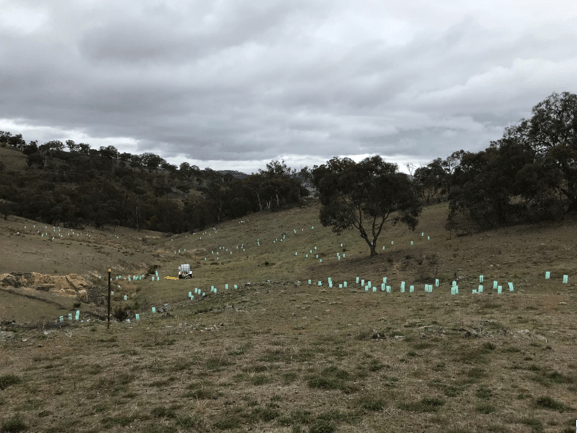
Figure 1. New seedlings to re-fill the gaps and create a corridor between the patches.
Philip Gibbons also mentioned in the biodiversity conservation course that habitat loss remains the greater threat to biodiversity. Habitat fragmentation is one of the major factors driving further habitat loss. Therefore, establishing corridors could give species more living space and more chances to survive when one patch has a natural disturbance or diseases. The process of gene flow can be guaranteed, too.
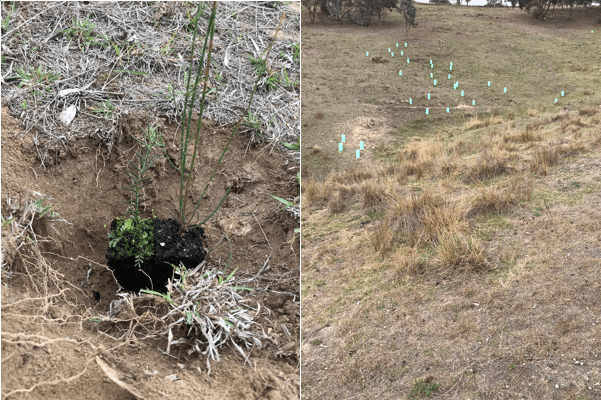
Figure 2. Preparations for the planting.
Planting Process
Firstly, the depth and width of the hole should properly fit the seedlings, which will help the seedlings to adapt to a new environment within a short time. Then, never choose to plant near the grass. Grass will despoil the nutrients from the seedlings, which could decrease the efficacy of the restoration (Figure 2). After we settled the seedlings, we needed to isolate them using triangle plastic shells and install a stick. The plastic shells protect the seedlings from being destroyed. Also, the shells can help the workers to recognize where they have already planted and how many areas have been worked on. Two ways of settling the plastic shells are shown in Figure 3.
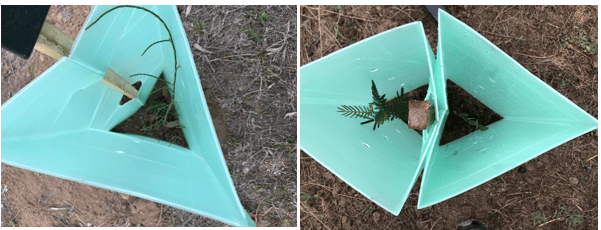 Figure 3. Final view of the new seedlings.
Watering the plants was the final but also necessary step. Watering the plants can keep the soil around the new seedlings moist, which helps them grow. Based on the research, I found that covering the revegetation area with mulch or wood chips can improve the viability of the seedlings. On the one hand, mulch can inhibit weeds from growing, excluding most of the competition that the seedlings could have. On the other hand, the mulch cover can also help to maintain the soil moisture, which is very helpful to the seedlings adapting to the new environment. We did not use mulch in this activity, but this idea could be considered for the next restoration event.
Interesting Discovery
There was ere one interesting discovery during my volunteer experience I would like to share. We found a wombat hole in the grassland of the restoration area. It can be seen in Figure 4. The wombat left but the hole was very new, as we could still feel the moisture of the soil. This was a really good sign showing the ecosystem of this area was gradually being restored.
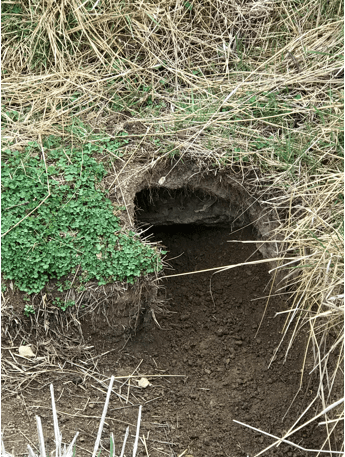
Figure 4. A new wombat hole
Reflecting on my day with ANU Intrepid Landcare, I was so glad that I could talk to these people and work with them. Although it was quite exhausted at the end, I still thought it was worthwhile. Come and start your journey with us, let us bring more ‘green’ back to our lives.
Reference
https://www.greeningaustralia.org.au/what-we-do/

 Biodiversity Conservation
Thanks for sharing Yingxianxian Liu. Phil