
Ankita Unnikrishnan, u7147717

What is a nest box?
A nest box is a man-made wooden enclosure which is designed to mimic the habitat of species that rely on hollows for survival. It helps to provide a space to nest and shelter wildlife and raise their offsprings. They are commonly used to house birds and vary in sizes- some boxes are designed to accomodate mammalian species such as bats. The prominence of nest boxes have increased in the last few decades due to extensive decline of bird habitats. Some factors include urbanisation, deforestation and natural disasters such as bush fires.
Nest Boxes at Namadgi National Park
For my work experience, I shadowed two Phd students studying the effectiveness of nest boxes at Namadgi National Park. This is a protected area located in the northern end of the Australian Alps. There are about 83 nest boxes placed in the national park from the year 2020. These were placed after the bush fires as an alternative to hollow bearing trees. I administered the checking of 10 sites in the area- we observed the inside of the nest boxes with a camera to check for any sign of habitation. We also studied the species of eucalypt and the effect of fire on the tree. There were two main types of nest boxes- one for birds and one for bats; with sizes ranging from small, medium and large.
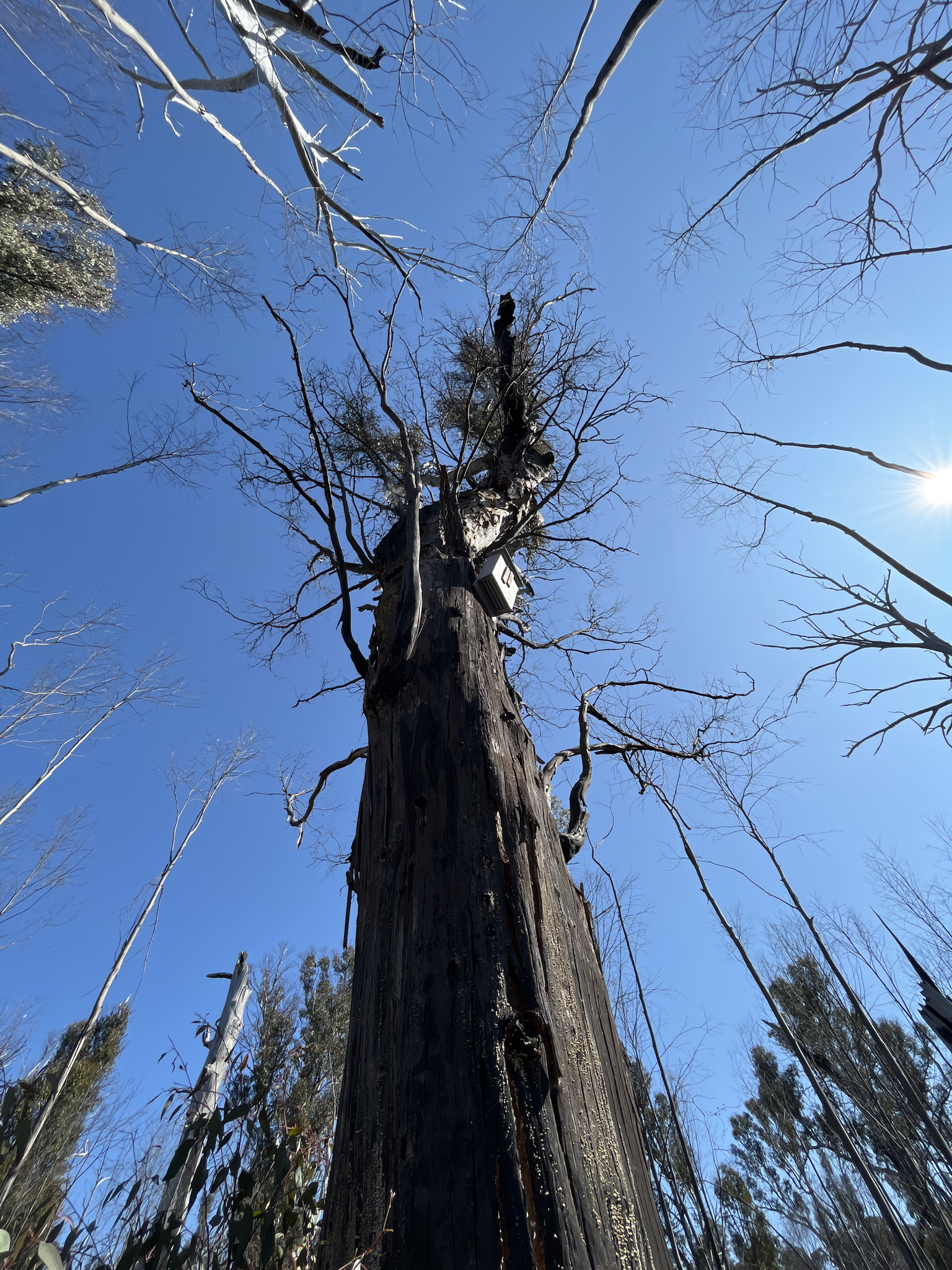
Are Nest Boxes Effective?
In my findings, all 10 nest boxes were empty. This is probably because it takes a 100 years for hollows to form and with the displacement of species from their natural habitats, it would take time for them to acclimatise to the newly introduced nest boxes. Some studies show that it takes nearly a decade for nest boxes to be utilised and surveyed. As a means of biodiversity conservation, the project needs a big funding as well as labour. As the boxes are primarily made of wood and/or concrete, it tends to attract termite or wear off with time. This results in additional cost of maintenance and falling of nest boxes is also common.
A disadvantage of nest boxes are they can act as ecological traps if they are placed in sites that do not deem them essential. The conditions of the local environment need to correlate with the reproductive biology of the species that are targeted. So, in conclusion, we need might need to wait and see if this is a viable conservation method and hope that it does not further damage the ecosystem (that we have damaged in the first place!)
I made a small comic with a very bad humour. Check it out!

 Biodiversity Conservation
I love the cartoon!