
Elise Chua u7132703
Clearing of native vegetation has been an ongoing driver of biodiversity loss in Australia since European invasion. In Australia, over 19% of land is in protected areas, but almost a third of our bioregions have less than 10% of their area protected. Temperate grasslands are favoured for agricultural use, and are therefore inadequately represented in formal protected area networks. Bush Heritage Australia purchases properties to conserve in these underrepresented landscapes, and safeguards them with conservation covenants.
Scottsdale Reserve is one such property, formerly cleared for farming. Prior to clearing, this area would have contained the now Critically Endangered yellow-box gum grassy woodland and natural temperate grassland. One of the main projects undertaken at Scottsdale is the restoration of these vegetation communities.
Replanting at Scottsdale
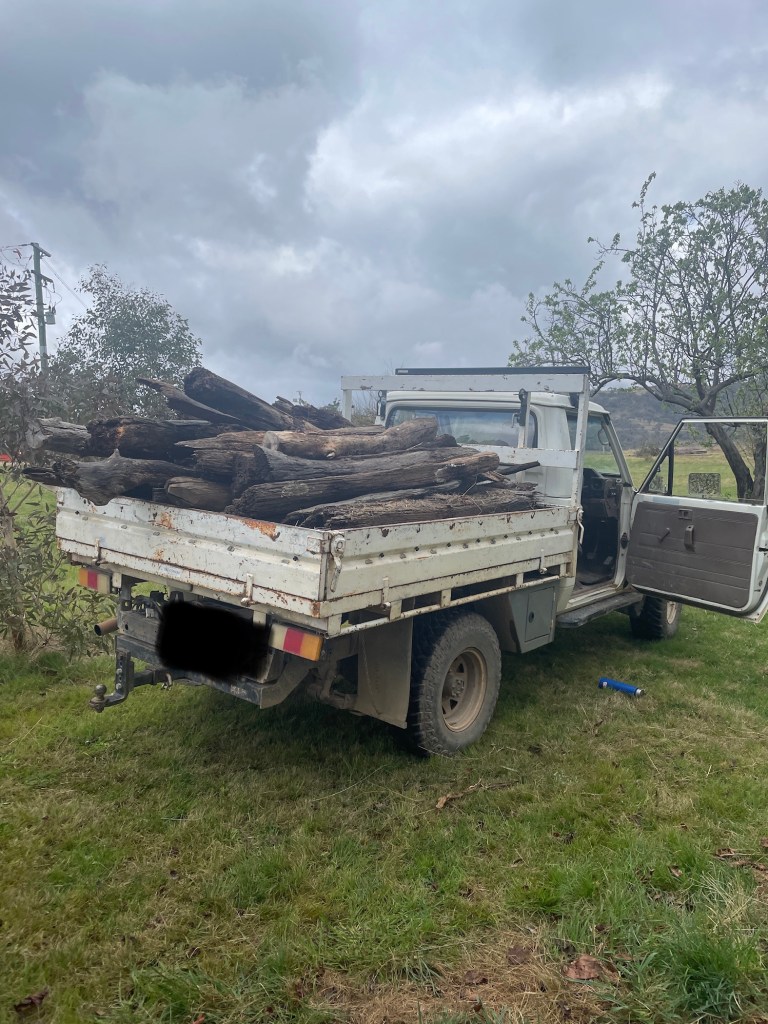
Over a day, we planted 338 trees, shrubs and graminoids along Applebox Creek, that were key species of yellow-box gum grassy woodland. But ensuring long-term persistence of revegetated sites is just as important as putting plants into the ground. Each shrub and tree planting was accompanied by a mycorrhizal fungi tablet to help with nutrient uptake and plant growth. We also added coarse woody debris in-between plantings, to encourage habitation by birds, reptiles and Antechinus. Most of the graminoids we planted were along the bank of the creek, where there was evidence of gully erosion and suspended sediment in the water. Revegetation can stabilise the bank and remediate sodic soils, reducing the risk of erosion in the future.

Monitoring
The story doesn’t stop there, as replanting native woodlands that had evolved under specific pressures for thousands of years is not a short-term venture. Bush Heritage Australia monitors the survival and health of replanted stands, to identify patterns in successful and unsuccessful plantings, and adapt their strategies accordingly. Long-term monitoring will reveal whether the fungi tablet helps growth and survival of the trees and shrubs, which can help inform revegetation efforts at other sites.
Bush Heritage Australia monitors for other features of a healthy ecosystem, like richness and abundance of reptiles and birds. Local eradication of invasive species can have rapid effects, such as increases in bird diversity and native seeding with removal of African lovegrass. But the full effects of woodland revegetation won’t be seen for at least a decade. This highlights how important the monitoring at Scottsdale is, for future ecologists evaluating the stand we planted!
A fixed state of degradation
Phil Palmer from Bush Heritage Australia spoke to us about disturbed ecosystems being in a ‘fixed state of degradation’, where the level of disturbance is so high that natural regeneration is unlikely to occur. Yellow-box gum grassy woodland would have a hard time establishing on pastures covered by weeds, perennial exotics and with only a few isolated trees. But the work done by Bush Heritage Australia and volunteers can help to break this fixed state. A woodland can’t be built in a day, but the foundations for one can.

Many thanks to Phil Palmer and Bush Heritage Australia for this experience.
Word count: 497

 Biodiversity Conservation
A great account of what Bush Heritage is doing at Scottsdale! Phil