
Cassandra Murrell (u6650485)
Undeterred by social distancing restrictions or late-night curfews, thousands of eligible bachelors have been gathering in huge numbers after dark all over the ACT. Meeting in the shady parts of nature reserves, where they can hide relatively unseen, these camouflaged males have started SINGING! So, who are these lovesick choristers? It is certainly not the ADFA boys, instead, it’s an army of frogs.
Rugging up throughout October 2020, I joined a network of volunteers across the ACT as part of Frogwatch, an initiative run by the Ginninderra Catchment Group. Our task was to help survey frog numbers and their habitat, to assist in creating an annual frog census for the Canberra region.
So why do we care about frogs?
Answer: Because they are really cute…

(Photo by Cassandra Murrell 6/10/2020)
Well yes, but frogs are also a very useful indicator species of water quality, their behaviour casts light on how our climate is changing and globally their numbers are in serious decline.
“With their permeable, membranous skin, through which respiratory gases and water can pass, and their shell-less eggs laid in water, they are sensitive to even low concentrations of pollutants in water and soils.”
– Saskia Beudel and Anke Maria Hoefer
The ponds that we are surveying are on the very edge of Canberra’s growing urban sprawl, to the west of MacGregor and Holt. These areas are coming under increasing urban stress, so we are using frogs to gauge the ecosystem’s health.
Unfortunately, physical trapping/camera trap techniques are less effective when it comes to these slippery nocturnal amphibians, so the easiest way to gauge their species distribution and population size is from eavesdropping on their late-night singing sessions!
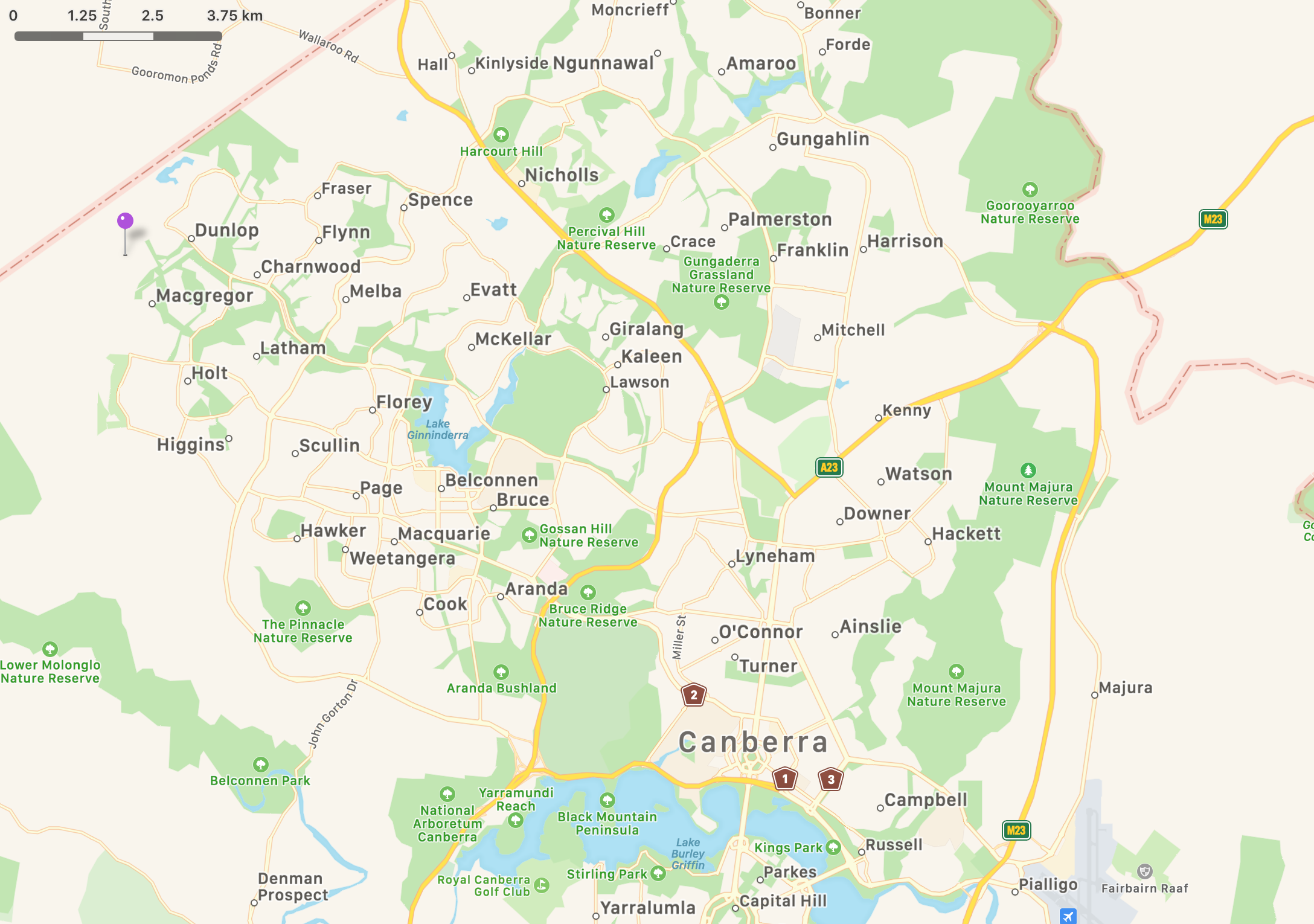

Our role
My small team is responsible for surveying four ponds in West Belconnen each Tuesday of this month. After a training session and a couple of hours of listening to practice recording of frog sounds (my neighbours think I am insane), we descended on the ponds: collecting air and water temperature measurements, noting particular features (such as water depth and surrounding vegetation) and most importantly identifying the numbers of each species of frog that we could hear.
This may sound easy, but unless you are as experienced as ACT Frogwatch Co-ordinator: Anke-Maria, it definitely took us a little while to get our ears connected. Here is one of our recordings, featuring a chorus of my favourite little slippery singers – Pobblebonk Frogs!
Croaking a warning about our changing climate
The goal of Frogwatch initiative is to create a long-term record of frog populations and mating seasons, which eliminates the noise from year-to-year variability. Most frogs only call during mating season, which is triggered by temperature and rainfall. While population size and species makeup provides useful information on biodiversity, it has also revealed an interesting change in their phenology – the timing of biological events such as mating. When comparing the results of recent Frogwatch years, to data collected by Will Osborne in the 1980s-90s, we see that frogs are now starting their mating calls earlier in the season – showing the impact of a warming climate.
Winter breeders (Common Eastern Froglet and Whistling Tree Frog)
Early/mid-spring breeder (Plains Froglet, Smooth Toadlet, Striped Marsh Frog and Spotted Grass Frog)
Late spring/summer breeders (Peron’s Tree Frog and Eastern Banjo (Pobblebonk) Frog)
Timeline showing the mating periods for frogs found in the ACT region. While frogs mating seasons are spread throughout spring and summer, warmer temperatures could see more overlap in breeding seasons and greater competition for resources/survival.
The power of citizen science
For many in the community, including myself, it is often difficult to get a sense of the impacts of climate change. We hear constantly of the need to reduce our emissions, slow global warming… but for city-dwellers it is difficult to see the effects first hand.
Frogwatch offers Canberrans a valuable way of contributing to a meaningful research project and seeing the impacts that we humans are having on the world around us. If you are interested in volunteering this season or next year, find out more at https://ginninderralandcare.org.au/frogwatch/.


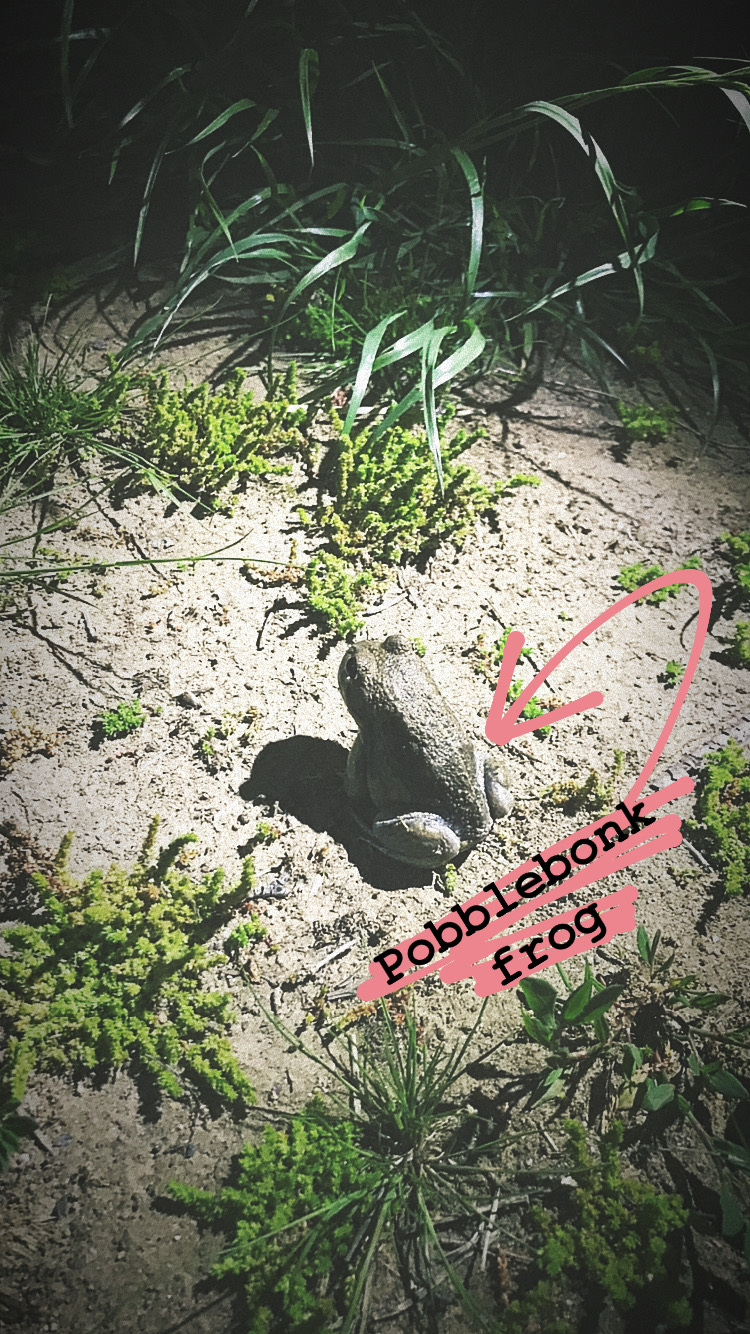
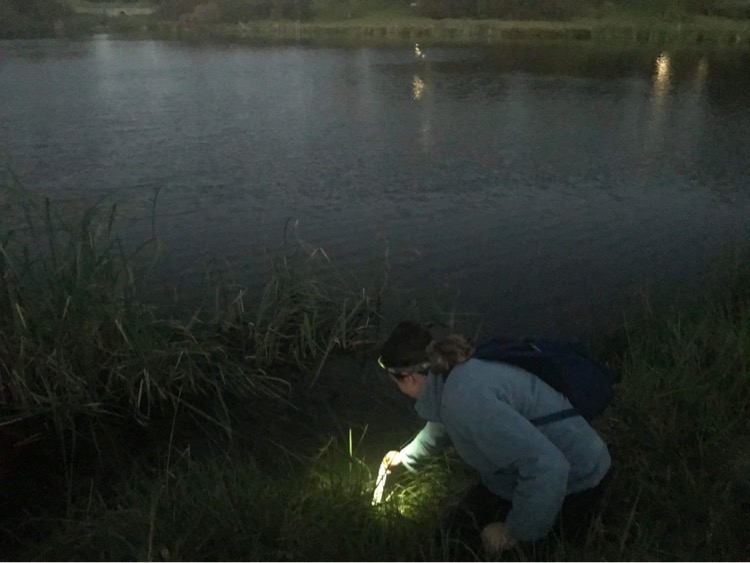

A few photos from our Frogwatch, collecting water temperature at various locations. Over the last two weeks we have seen a number of frogs, including a number of Common Eastern Froglets, Spotted Grass Frogs and finally this Pobblebonk! (Photos: Cassandra Murrell and Isabella Howard)
Bibliography
Beudel, S. (2018). Friday essay: frogwatching- charting climate change’s impact in the here and now. The Conservation, [online]. http://theconversation.com/friday-essay-frogwatching-charting-climate-changes-impact-in-the-here-and-now-98161 [Accessed 10 Oct. 2020].
Beudel, S. and Hoefer, A.M. (2019). Frogwatch Climate Change Study. Wetlands Australia, [online] 31. Available at: https://www.environment.gov.au/water/wetlands/publications/wetlands-australia/national-wetlands-update-february-2019/frogwatch [Accessed 10 Oct. 2020].
Campbell, A. ed., (1999). Declines and Disappearances of Australian Frogs. [online] Canberra: Environment Australia. Available at: https://www.environment.gov.au/system/files/resources/7de68015-f93b-4064-bed6-b2e21d16b5bd/files/frogs.pdf [Accessed 5 Oct. 2020].
Hoefer, A. M., and Starrs, D. (2016) One pond fits all? Frogs as an indicator of urban wetland health. Final Report to Upper Murrumbidgee Waterwatch. Ginninderra Catchment Group, Canberra. Available at: http://www.act.waterwatch.org.au/Files/frogs/Hoefer_Starrs_Wetland_Indicator_Final_Report.pdf [Accessed 10 Oct. 2020].
Lindenmayer, D., Margules, C. and Botkin, D. (2000). Indicators of Biodiversity for Ecologically Sustainable Forest Management. Conservation Biology, 14(4), pp.941-950.
Lowe, K., Castley, J.G. and Hero, J.-M. (2015). Resilience to climate change: complex relationships among wetland hydroperiod. Marine and Freshwater Research, [online] 66, pp.886-899. Available at: https://www.publish.csiro.au/mf/MF14128 [Accessed 9 Oct. 2020].

 Biodiversity Conservation