
Ming Hui Choy (u6575435)
Scottsdale Reserve
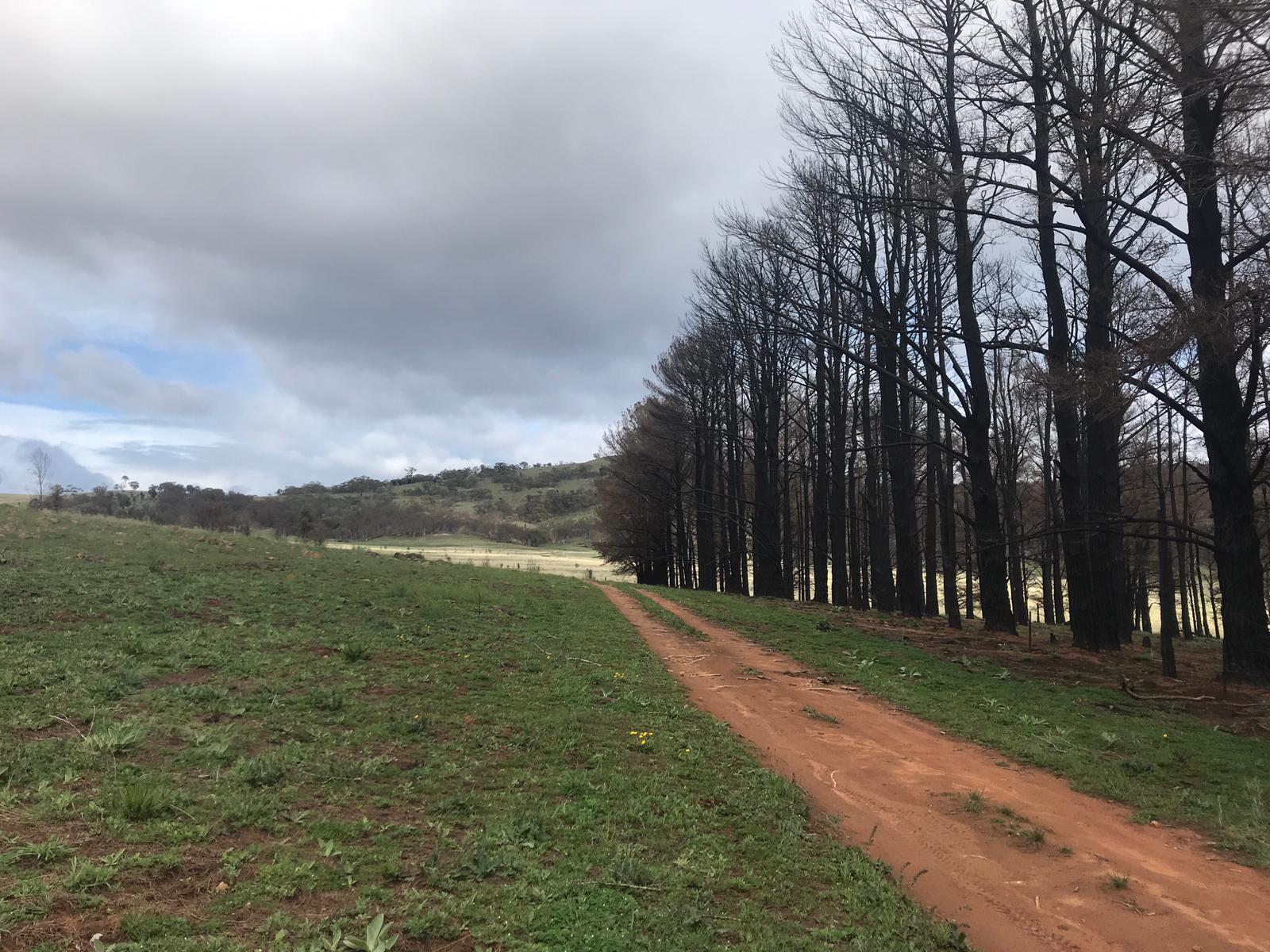
On the 9th of October, I headed down to Scottsdale Reserve with Dr David Freudenberger, his team, and two other fellow students. Scottsdale Reserve is located 75km south of Canberra and the entire reserve area of 1,328 hectares is owned by Bush Heritage Australia, with restoration work concentrated on 300ha of the property. In 2014/15, David conducted hundreds of native plantings in the reserve with his students to restore the landscape and investigate their survival in the area. Species planted were Eucalyptus and Acacia trees, and Cassinia and Bursaria shrubs. Unfortunately, the plantings were affected by the Orroral Valley fire that occurred at the start of this year and parts of the reserve were burnt.
Our task
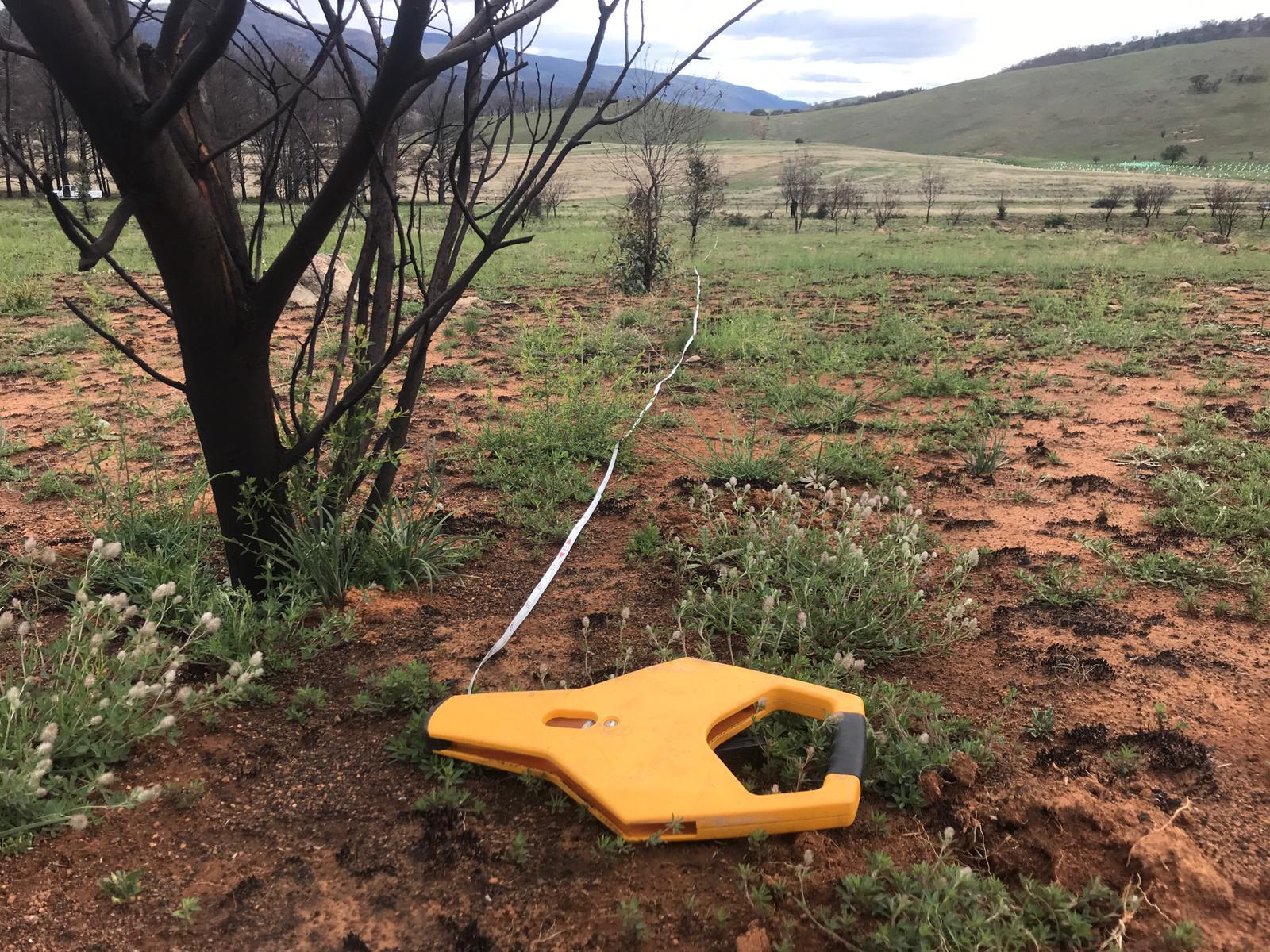
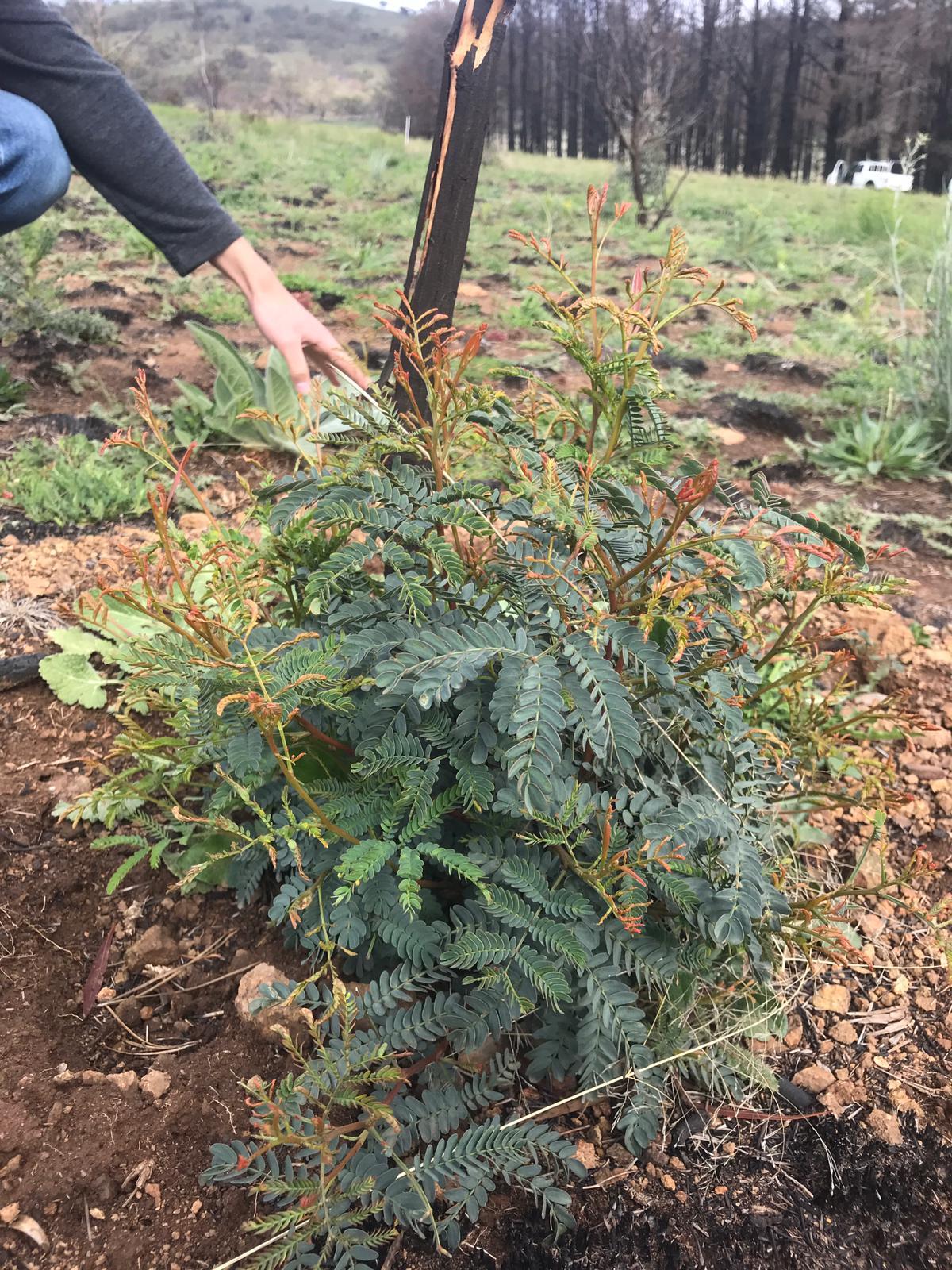
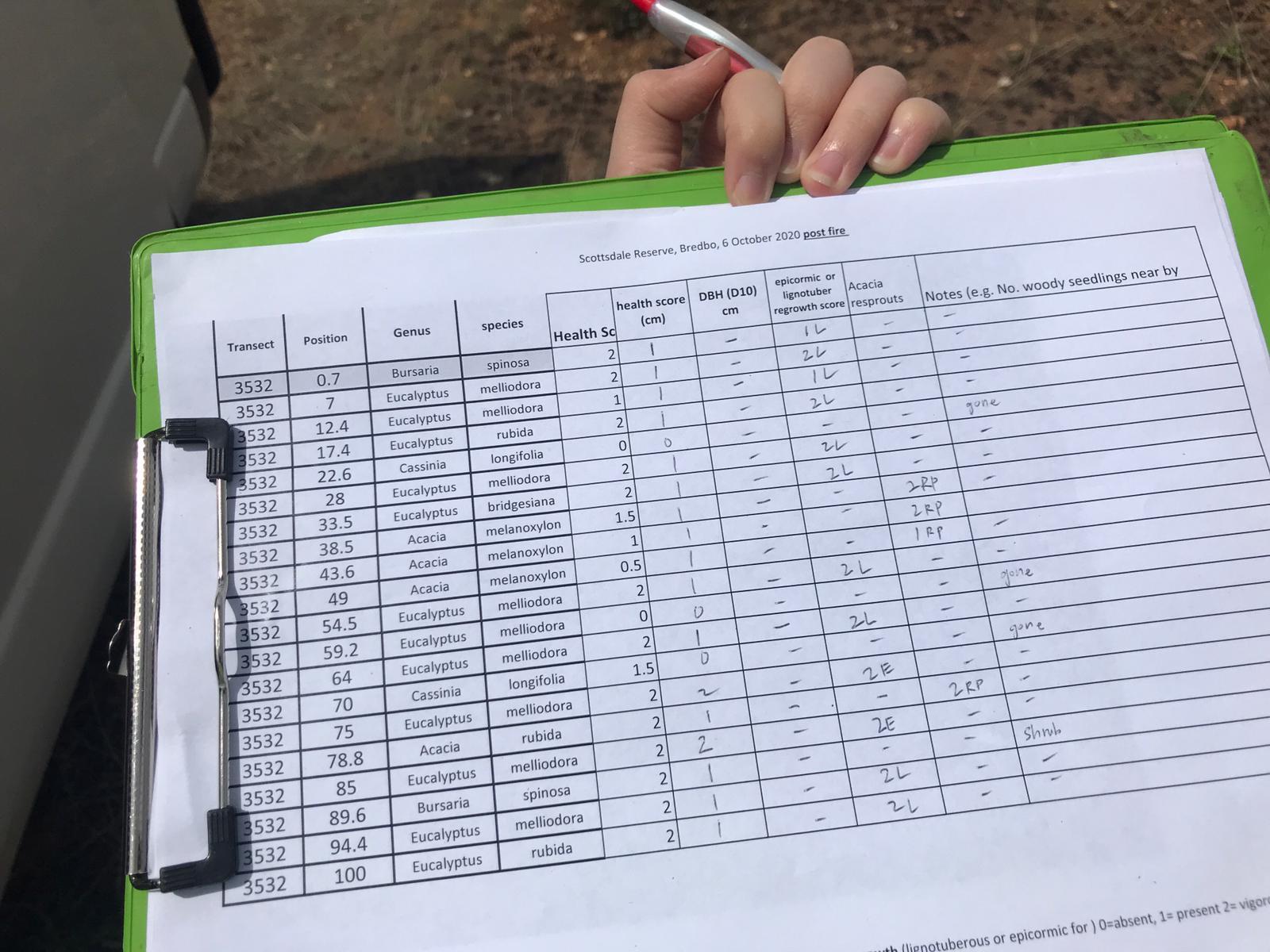
In order to monitor the regeneration and growth of these plantings since the fires, David has borrowed our help to conduct vegetation surveys. These surveys will also potentially help inform David on his ongoing research looking into the survival rates of volunteering plantings. We were tasked with inspecting the plantings along several 100-metre transects around the reserve based on a scoring system. Each plant was allocated both a health and regrowth (i.e. epicormic, lignotuber, root plates, seedlings) score ranging from 0 – 2, with 0 indicating its death and absence of regrowth and 2 reflecting its good health and abundance of regrowth (refer to Figure 4). As many of the plants are still in their juvenile phase after regenerating from the fires, measurements of DBH was not necessary. However, David mentioned that these measurements will be needed in the near future for the accounting of carbon credits for the carbon market which Scottsdale Reserve is actively participating in.
Results and insights
Looking at the results, it was very heartening for us to learn that the survival rate of the plantings is extremely high, with David making a preliminary guess of > 90% survival rate. While the fire damage to the plantings was extensive, we noted that high levels of post-fire regeneration which serve as an indicator for resilience, occurred in almost all of the plants except for the Cassinia species. Given the effects of climate change on increasing fire intensity and frequency in Australia, the resilience of native eucalypts and acacias will be important for their long-term survival in a changing fire regime and in the ecological restoration of degraded landscapes. Native vegetation has the potential to create self-sustaining ecological communities resilient to periodic disturbance and should be actively incorporated into restoration efforts.
A little can go a long way
At the end of this experience, I gained an even greater appreciation for volunteers after knowing that their contributions are making a significant difference to the conservation of our ecological communities. A little can go a long way, and I believe I too can create positive changes for the environment by participating in more volunteering activities into the future. The future of ecological restoration is in my (our) hands, literally.
Word count: 500 words
Acknowledgements
Deepest gratitude to Dr David Freudenberger for providing this volunteering opportunity and sharing his knowledge, Shoshana Rapley for sharing her field experience, Peter O’Rourke for his role as a photographer/videographer, and my fellow students who came along with me. Also to the first magpie who swooped me at Scottsdale Reserve, you will be remembered.
Literature referenced
- Collins, L., 2019. Eucalypt forests dominated by epicormic resprouters are resilient to repeated canopy fires, The Journal of ecology, 108(1): 310-324.
- Diffenbaugh, N. S., Singh, D., Mankin, J. S., Horton, D. E., Swain, D. L., Touma, D., Charland, A., Liu, Y., Haugen, M., Tsiang, M. and Rajaratnam, B., 2017. Quantifying the influence of global warming on unprecedented extreme climate events, Proceedings of the National Academy of Sciences – PNAS, 114(19): 4881-4886.
- Hnatiuk, S., Rayner, I., Brookhouse, M. and Freudenberger, D., 2020. Survival of native seedlings planted by volunteers: The Lower Cotter, ACT case study, Ecological management & restoration, 21(2): 151-154.
- Lipoma, M. L., Gurvich, D. E., Urcelay, C. and Díaz, S., 2016. Plant community resilience in the face of fire: experimental evidence from a semi-arid shrubland, Austral ecology, 41(5): 501-511.
- Pickup, M., Wilson, S., Freudenberger, D., Nicholls, N., Gould, L., Hnatiuk, S. and Delandre, J., 2013. Post‐fire recovery of revegetated woodland communities in south‐eastern Australia, Austral ecology, 38(3): 300-312.
- Smith, F. P., Prober, S. M., House, A. P. N. and McIntyre, S., 2013. Maximizing retention of native biodiversity in Australian agricultural landscapes—The 10:20:40:30 guidelines, Agriculture, ecosystems & environment, 166: 35-45.


