
Water Bugs are known to be a reliable and useful indicator on the health system of streams, rivers, wetlands and ponds. There are various types of water bugs and each type requires particular environmental conditions to be able to grow, reproduce and survive. Some water bugs are sensitive to water pollution others are tolerant. On the 26th of September 2018, I had the opportunity to join the Water Watch Ginninderra Catchment Group for surveying water bugs. The water bug survey data was collected from Ginninderra creek from three sites GIN020, GIN024 and GIN011 (upstream to downstream). The Stream Invertebrate Grade Number- Average Level 2 (SIGNAL 2) was used as a scoring system to identify water bugs.
The water bugs was collected using net then are transferred to the buckets that is filled with water. Once there is enough to sample then it is poured into the white tray. From the white tray and with a clear sunlight we are able to identify and differentiate water bugs. The spoons and pipets are used to collect the water bug from the white tray then transferred to the ice-cube tray according to the same Order/type of water bugs. The magnifying glass are only used if the water bug cannot be identified by naked eyes. The number of water bugs collected per type in every site is at 200 maximum and the total is then estimated. After identifying the water bugs they are taken back to the same area they are collected.

Figure 1: Ginninderra creek water bug survey
The various types of Water Bugs are classified into seven major groupings or in hierarchy categories (top-down) – Kingdom, Phylum, Class, Order, Family, Genus and Species. For this survey the water bugs were classified from the category called Order. The total number or types of water bug collected was nine. From the nine water bugs, there was only one type of water bug that is very sensitive and sensitive to pollution found in all three sites (refer to Figure 2).
Interestingly, the type of water bugs and abundance decreases as sample is collected downstream. This decrease is attributed to certain factors with large impact from ongoing urban developments where the sediments, storm water, natural process are washed or blown into the creek. The sediments and storm water (toxic chemicals that might affect water bug) accumulate in the creek and increases the level of turbidity (water colour) as such when it rains, Ginninderra creek water turns brown. This affects the sunlight reaching the organic materials that water bugs feed on and also their movement around the creek. Additionally, through natural process during winter when the leaves, grasses are blown into the creek they decompose and turns into algae evident to the three sites having an abundance of algae. The sensitive water bugs are the most vulnerable to pollution as a result it declines in number (biodiversity, food chain & habitat loss) and are hardly found in Ginninderra creek because it is located near urban areas.

The Images are referring to Figure 2

Figure 3. Very sensitive to most pollutants. Figure 4. Sensitive to most pollutants. Image source: Canberra nature map.
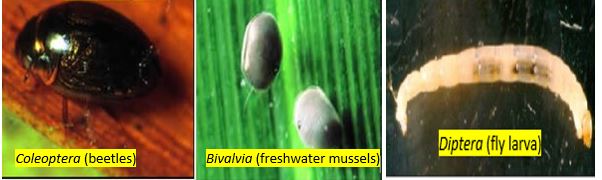
Figure 5. Moderately tolerant of most pollutants. Image Source: Canberra nature map & John Goordeham.
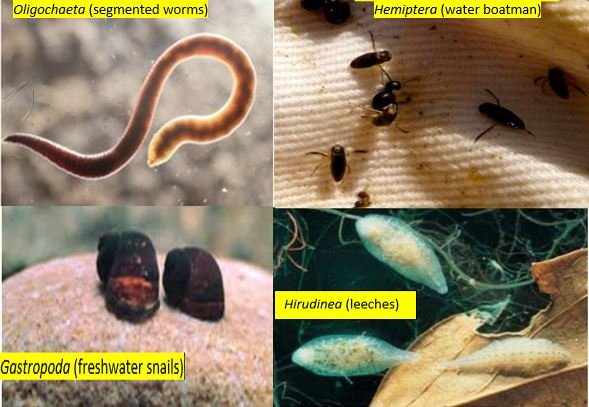
Figure 6. Very tolerant to most pollutants. Image source: Canberra nature map, Frank Sawyer & Crankshaft publishing.
Conclusion
Defining why water bugs matter is important, it determines the health systems of Ginninderra Creek. The survey undertaken to determine its importance involves a series of steps by following procedures to define their existence and how sensitive are water bugs to pollution. The survey draws concluding remarks that in the future, continuing urban development will contribute to loss of water bugs and their biodiversity. In this context, water bugs monitoring can provide the platform for analysing different health of river, ponds, lakes, and stream systems.
By: u5686629
References
Canberra nature map, Mayflies (Ephemeroptera), viewed 3 October 2018, https://canberra.naturemapr.org/Community/CategoryGuide/298.
Chessman B, 2003, SIGNAL 2 – A Scoring System for Macro-invertebrate (‘Water Bugs’) in Australian Rivers, Monitoring River Heath Initiative Technical Report no 31, Commonwealth of Australia, Canberra.
Elwood, W.J., Newbold, D.J., Triumble, A.F., and Stark, R.W., 1981. ‘The limiting role of phosphorus in a woodland stream ecosystem: Effects of P enrichment on leaf decomposition and primary producers’, Ecological society of America, vol. 62, Issue 1, pp. 146-158.
Sawyer, F., 2009, Water boatman (Order Hemiptera, Family corixidae), viewed 02 October 2018, https://www.flickr.com/photos/25651248@N05/albums/with/72157614132039120
The water bug company, ALT KEYS v1.5 2017, viewed 2 October 2018, http://www.thewaterbug.net/attachments/ALT_KEYS_v1.5_withorderkeyback.pdf.
The-Crankshaft Publishing, Class Hirudinea, (Leeches), viewed 02 October 2018, http://what-when-how.com/animal-life/class-hirudinea/
Water bug company pty Ltd, 2018, Agreed level taxonomy (ALT), viewed 02 October 2018, viewedhttp://www.thewaterbug.net/ALT.html.

 Biodiversity Conservation
Fascinating work. Thanks for sharing it. Phil