
Failure to Fund
The 2014-2015 Australian Budget’s Lack of Support for Biodiversity Conservation
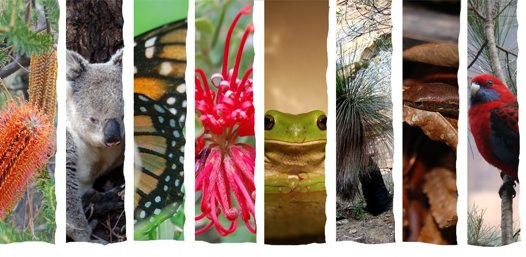
Martin Pueschel
The Problem
Over 1,700 ecological communities and their species are defined as threatened and at risk of extinction in Australia due to the degradation of the environment. According to the Australian government, this is due to –
|
|
|
|
|
|
The Australian government’s vision for biodiversity is to be valued both in its own right, as well as for its vital contribution to human existence, and to ensure that biodiversity remains healthy and resilient to threats http://www.environment.gov.au/biodiversity/publications/australias-biodiversity-conservation-strategy-summary. The question looming is why then has so little funding been allocated to solve these issues and reach the goals?
The Budget
Biodiversity loss requires funding to mitigate further loss (Ahrends, A., Burgess, N.D., Gereau, R.E., Marchant, R., Bulling, M.T., Lovett, J.C., Platts, P.J., Wilkins Kindemba, V., Owen, N., Fanning, E. & Rahbek, C. 2011, “Funding begets biodiversity”, Diversity and Distributions, vol. 17, no. 2, pp. 191-200) yet here is nothing in the 2014-2015 Australian Budget about biodiversity conservation. Nothing. There isn’t a single cent of the Australian Budget being spent directly on biodiversity conservation http://www.budget.gov.au/2014-15/content/overview/download/Budget_Overview.pdf on page 27 and only a single page has been allocated to summarize environmental spendings.
The breakdown of environmental spendings within the 2014-2015 budget http://www.budget.gov.au/2014-15/content/bp2/html/bp2_expense-11.htm is more of a breakdown of environmental savings. Almost every section states how much the government will be saving over the next few years to put toward the repair of the budget and fund priorities. In addition to reducing funding, the government has allocated a total of less than $800 million dollars each year toward the environment (Text box 2). To put this into perspective, this amount is thirty times less than what the government has allocated to the Defence Force.
The 2014-2015 Budget Annual Break Down
What On |
How Much |
|
| Native Tree Planting | 12,500,000 | |
| Presence in Antarctica | 17,000,000 | |
| Asia Pacific Rainforest Summit | 800,000 | |
| Bureau of Meteorology | 100,000 | |
| Coastal Waterway Health | 2,325,000 | |
| Dandenong Weed & Fuel Load Control | 1,000,000 | |
| Emission Reductions | 500,000,000 | |
| Sydney Cumberland Conservation Corridor | 2,500,000 | |
| Clean Up Australia | 200,000 | |
| Kimberley Cane Toad Eradication | 250,000 | |
| Climate Change Research | 1,000,000 | |
| Landcare | 250,000,000 | |
| Orangutan Re-introduction into Indonesia | 150,000 | |
| Great Barrier Reef | 1,142,857 | |
| Solar Power for selected towns | 700,000 | |
| Whale & Dolphin Protection | 666,666 | |
| TOTAL |
$790,334,523 |
The Impacts
The cuts to funding have threatened to severely impact biodiversity itself Amato, G. & DeSalle, R. 2012, “Assessing biodiversity funding during the sixth extinction”, BioEssays, vol. 34, no. 8, pp. 658-660 and the livelihood of many smaller environmental groups such as the Environmental Defenders Offices (EDO) who provide thousands of people each year with free legal advice on pollution, water issues, environmental and planning laws related to new building and mining developments and indigenous and heritage issues. Their lawyers are often also involved in attempts to prevent local extinctions of species due to clearing activities http://www.abc.net.au/news/2013-12-18/funding-cut-to-environmental-defenders-offices/5164934. Environmental groups such as these received virtually no notice of the funding cuts which has forced many of them to close their doors. The closure of these environmental groups has the potential impacts for an increase in the number of threatened species and extinctions with less funding to assist in their protection.
Funding the Future
Without government assistance the future of biodiversity in Australia has now fallen into the hands of Non-Government Organizations http://en.wikipedia.org/wiki/List_of_environmental_organizations#Australia as well as research through universities and generous donations. Biodiversity Conservation NGOs already play a critical role at all levels of biodiversity conservation as does the community sector which the government is also expecting to rise to the occasion http://www.environment.gov.au/system/files/pages/7f9e57ff-57be-4b64-a462-bf248c6f7087/files/id920-ncssa-05062009.pdf . The following steps in prioritizing funding for threatened species must be considered more so now than ever before –
| I. Define objectives | |
| II. List biodiversity assets | |
| III. Weight importance of assets | |
| IV. List possible management options | |
| V. Estimate benefit of each management option | |
| VI. Estimate likelihood of success of management | |
| VII. Estimate cost of each management option | |
|
VIII. State constraints such as time and budget |
What You Can Do
As an Australian citizen, we hold the right to vote, so next time you’re in the polling booth, make sure you’ve done your research into potential government leaders and their action plans toward budgeting for biodiversity conservation. Donating funds to conservation organizations and volunteering your time to help out will also be a step towards winning the fight against biodiversity loss in Australia.
Further Reading
Primack, R.B. 1992, Funding for Biodiversity Research, Blackwell Scientific Publications.
Williams, N. 2002, “Biodiversity challenge to funding priorities”, Current Biology, vol. 12, no. 12, pp. R405-R406.
By Katie McPherson u5450984 – Student of Biodiversity Conservation at the Australian National University

 Biodiversity Conservation
Great topic highlighting the sad state of funding for the Australian environment. Do you have any ideas about how environmental funding in Australia compares with other countries? I think that would be an interesting comparison…and whether, with more funding, greater conservation benefits result – or whether we are able to do more with less?
Pingback: Adapting to realistic constraints of eradications: an ‘action-portfolio’ framework that improves ecological benefit and reduces cost | The Applied Ecologist's blog