
u5632637 – Caroline Nunes Luiz
Introduction:There is a company in Brazil, called EMBRAPA (The Brazilian Agricultural Research Corporation). It was established in 1973 as a public company and it is present in all states of Brazil, employing more than 9,000 people, and over 2000 researchers. Its mission is to provide feasible solutions for the sustainable development of the agricultural sector through knowledge and technology. The company is engaged with a lot of research around the country, and a large variety of activity in agro energy, agribusiness, food technology, biotechnology, nanotechnology, animal production and forestry.

In June of 2012 I applied for an internship at a branch in the state of Rio de Janeiro, South east Brazil. And because of the high competition I did not start working as a researcher immediately. Once I got in, I volunteered in some different projects with different researchers that had an extensive background in distinct areas, one with Recovery of degraded areas, and the other one with Landscape Ecology.
Inside the landscape ecology projects, there were a lot of opportunities to work with farmers and environmental educational programs. And with that, begin to introduce the role of the portion of rain forest to the well being of the communities that live nearby.
Why this area?The Atlantic Forest was one of the largest rain forests of the Americas, and used to originally cover a large portion of the Brazilian coast, around 150 million ha (Fig. 1), in highly heterogeneous environmental conditions.

Figure 1. Comparison of the portion of Atlantic forest in the year of 1500 and 2012 around the states of Sao Paulo and Rio de Janeiro.
The Atlantic Forest is currently distributed in 245,173 forest fragments. The largest fragment is located in the Serra do Mar, mainly along the coastal mountains of the state of São Paulo, and extends from the state’s southern border northwards into the southern part of the state of Rio de Janeiro. This forest has a big biodiversity, and suffers a huge pressure from increasing urbanization and the expansion of conventional agriculture.
Field work: So as a volunteer at EMBRAPA, some researchers and I began to visit some of the fragments around the southern part of the state of Rio de Janeiro, as shown in the map above (figure 1).
 Figure 2. A view from the farm and the Fragment of Atlantic Forest nearby.
Since it is not common to the farmers in Brazil to manage their small forests, our goals were to give the farmers a panorama of the importance of preserving the small fragments of this forest nearby their houses/productions and what analyze what these portions represents to them. We passed through many farms, and a lot of farmers refused to collaborate with us. However, between some farmers that agreed, we chose (or maybe he chose us) to start working with this organic farmer called Luizinho (figure 3.), in Sao Jose do Vale do Rio Preto, RJ, that had 2 ha of Atlantic forest near his house, and less than 1 ha of organic food production.

Figure 3. The farmer Luizinho, showing his organic property to us.
The farmer, Luizinho, has been working for over 20 years in this farm and he came to us and said that the most important thing to him was to maintain this high quality of life that he had for his kids and wife. With a big diversity of birds singing early morning and during the sunset, the cooler weather provided by the forests, and the wind breaking. He did not have a technical knowledge to know why was so important to preserve the existent forest, but he enjoyed all the benefits from it, and he really wanted to maintain that. Besides the organic farm, he wanted to work with us to enhance the quality of the fragment. So he came with this idea of implementing an Agroforest system around the edges with species that he could sell some of the fruits or flowers or even consume some, but he did not know how, and which species were important for it.
Activities: We started to study the area, and see what the species that naturally occurred there were. By selecting some parts of the edges analyzed the canopy openness taking pictures of the gap, with a fish eye camera (Figure 4.), and measuring the sun light that was reaching the ground, identified the species of seedlings (Figure 5.) that were growing nearby and all the seeds/fruits that we found in these selected areas (Figure 6.). Linking what was important to conserve the fragment with what the farmer wanted, we came up with some species that could be planted. We put some native species that he could consume or sell the fruits as Theobroma cacao, Euterpe edulis and Euterpe oleraceae (Figure 7 and 8).

Figure 4. Fisheye camera capturing the gap canopy.

Figure 5. Seedling selected and being identified.
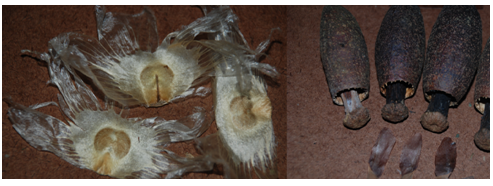
Figure 6. Tabebuia sp. Seedlings on the left and Cariniana estrelensis fruis and seeds on the right.
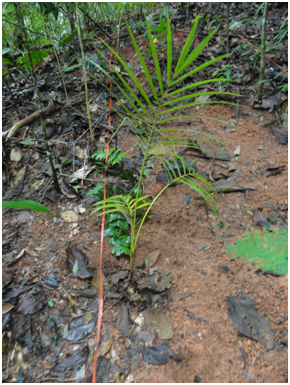
Figure 7. Euterpe edulis seedling (Palm tree that have a really good fruit to consume).
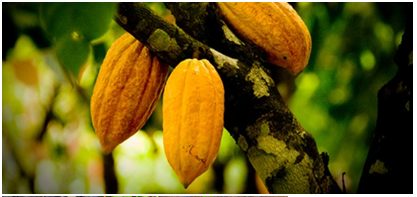
Figure 8. Theobroma cacao found naturally inside the fragment.
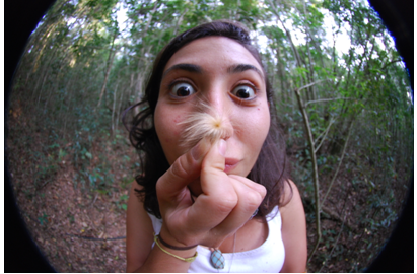
Figure 9. Me showing a fruit that we found around the site.

Figure 10. The crew after a long day of field work.
It was my second work experience during graduation, before I came to Australia and I had learned a lot from the people that I worked with. Not only the PhD’s that had been to university but the farmers and their families with a special knowledge about the land passed through generations. It is so important to take into consideration everything that their grandparents pass to them, and put that together with the technical knowledge that we learn at school. Summing up, this work is still happening, and before I came to Australia, the species that we introduced to compose the edges were successfully growing. Although is too early to tell if these species will be good in the future to supply a production activity, we do know that they are helping the fragment do reconnect and enhance its biodiversity. Once I go back to Brazil, I will probably get back to this project and check how everything is going.

 Biodiversity Conservation
How interesting! It would be great to know more about how (1) extensive agroforestry practices are in the region, and (2) how effective agroforestry practices are in conserving biodiversity in this region. There is certainly some contention surrounding how effective agroforestry/land sharing is in conserving biodiversity – and the work being done here would serve as an ineteresting case study in this broader literature!