
What’s the problem?
On a sunny Monday morning (30th March to be exact) I was on my way to 1300 hectares of bush heritage, commonly known as Scottsdale Reserve. Approximately 300 hectares of this land was previously subject to high intensity agricultural practices that threatened the ecosystem and its biodiversity. This includes rare species of birds, animals, fish, reptiles and endangered grassy box woodlands.
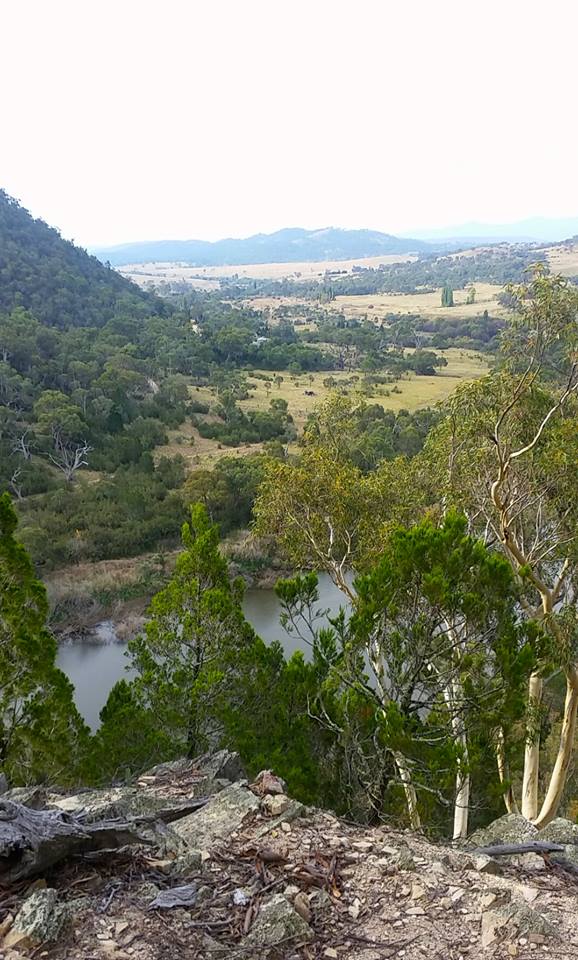
The picturesque view within Scottsdale Reserve.
How is the problem addressed?
Restoring this land is no easy task. But with the help of volunteers from Greening Australia (funded by the Bush Heritage and the government), there is an aim to rehabilitate the 300 hectares through plantations of key species.
On top of this, ongoing monitoring of the planted vegetation is required and this is where myself, a fellow student and Dr David Freudenberger stepped in to lend a hand. Our task was simple. View the plant. Check its status. Measure its height. Then repeat for the neighbouring plant. However, when you’re battling through dense thistle, locating plants with missing ID tags and assessing approximately 270 individuals across 10 different sites, you quickly become aware of the effort required to carry out said task. Not to mention the time spent plucking the spikes and seeds from your clothing following your previous ordeal. This just goes to show that while scientific evidence provides reasoning for conservation, the effort required to carry out the necessary action takes time, and definitely takes a lot of effort.
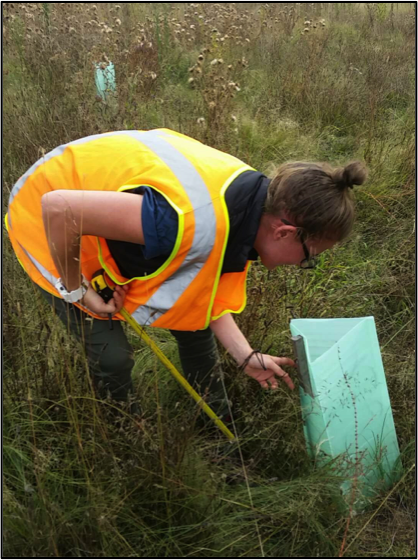
A student assessing the health of a seedling.
And what does this information provide us with?
After translating the information onto an excel spreadsheet, we were then able to calculate the mortality rate across each of the sites and evaluate any project achievements.
A big part of this work is being able to communicate it to the wider community, which was something I was gratefully able to experience first hand. We were introduced to a group of journalists who spent some time interviewing David Freudenberger and photographing our work. This engagement aims to increase conservation awareness and community engagement for future volunteer opportunities.

Media interviewing Dr David Freudenberger about conservation efforts within the reserve.
Current efforts to restore the land have proven to increase biodiversity, reduce the growth of weeds and increase soil stability in areas prone to erosion. However, as mentioned previously it takes time and effort, as well as large community involvement and necessary funding. While much of this effort has been focused on restoring Scottsdale Reserve, I hope to see (and volunteer in) future projects that apply these techniques in order to restore ecosystems on a larger scale.
u5351921.
Further reading
http://www.bushheritage.org.au/places-we-protect/new-south-wales/scottsdale

 Biodiversity Conservation
Some interesting – and challenging – work! It would be great to have statistics on how Scottsdale has increased biodiversity, decreased weeds and increased soil stability. What kinds of agricultural activities took place at Scottsdale in the past that led to declines in biodiversity? Land clearing, grazing, cropping, fertilisation? Land-use history would lend some really useful context to your blog about Scottsdale.