
Mount Majura and its neighbouring reserve Mount Ainslie contain an incredible amount of biodiversity from the Canberra Spider Orchid, to the critically endangered Yellow Box-Red Gum Grassy Woodland.
For a number of years, I’ve been searching for a local conservation group, that doesn’t require access to a car, and with suitable hours. Friends of Mount Majura (FOMM) have a current workshop on Friday mornings with the occasional Sunday and the Mount Ainslie Weeders are both conservation groups aimed at restoring and enhancing the biodiversity through weeding and planting
Your weeding tools
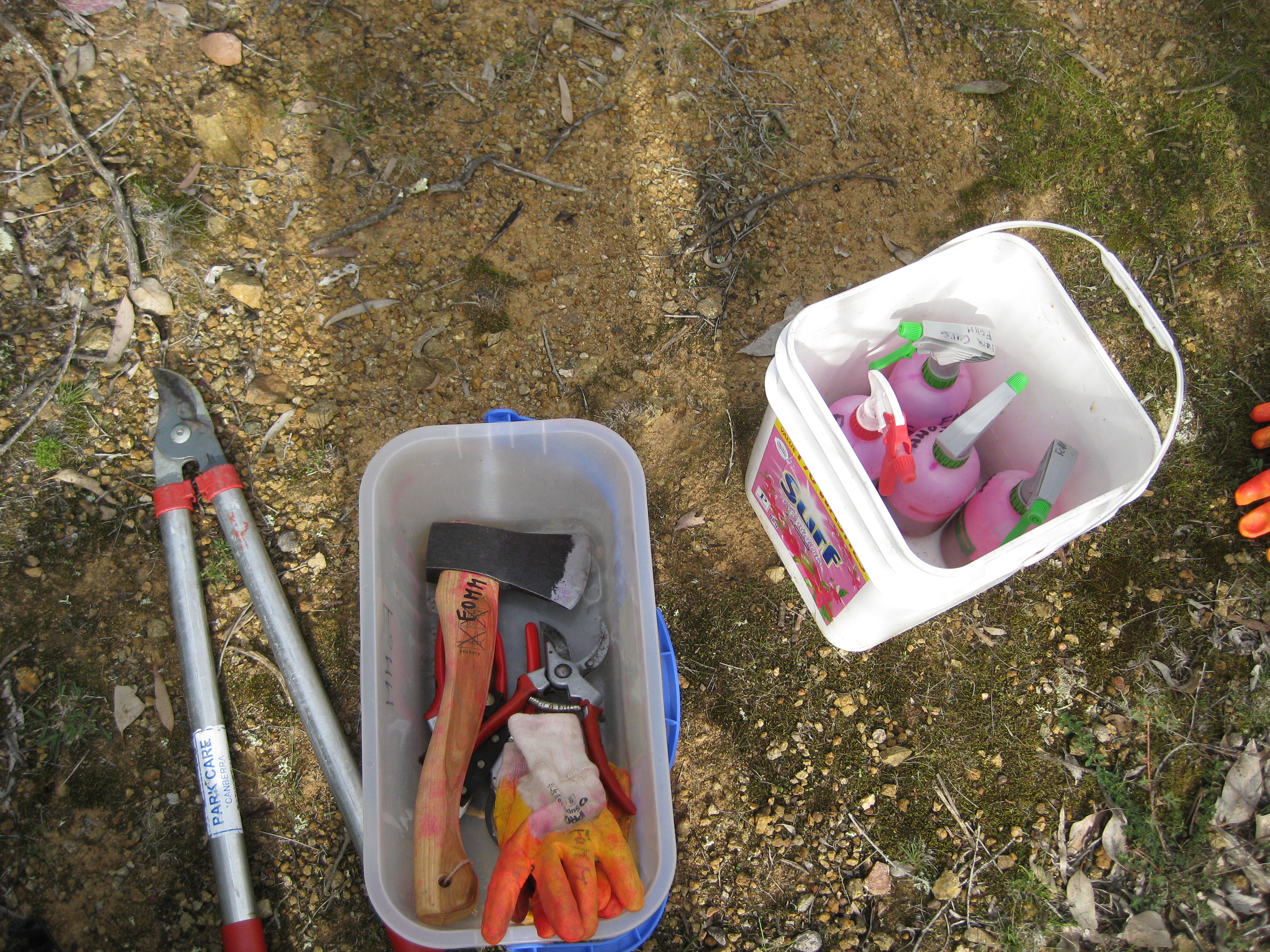
Weeding Tools
- 1x pair of small clippers
- 1x Large shears
- 1x axe
- 1x pair of gloves
- 1x spray bottle of herbicide- a mix of 1:1 water and glyphosate coloured pink
The native garden plant Cootamundra wattle and other woody weeds didn’t get introduced to Majura and Ainslie the way most people would think. They creep over back fences or grow from gardening
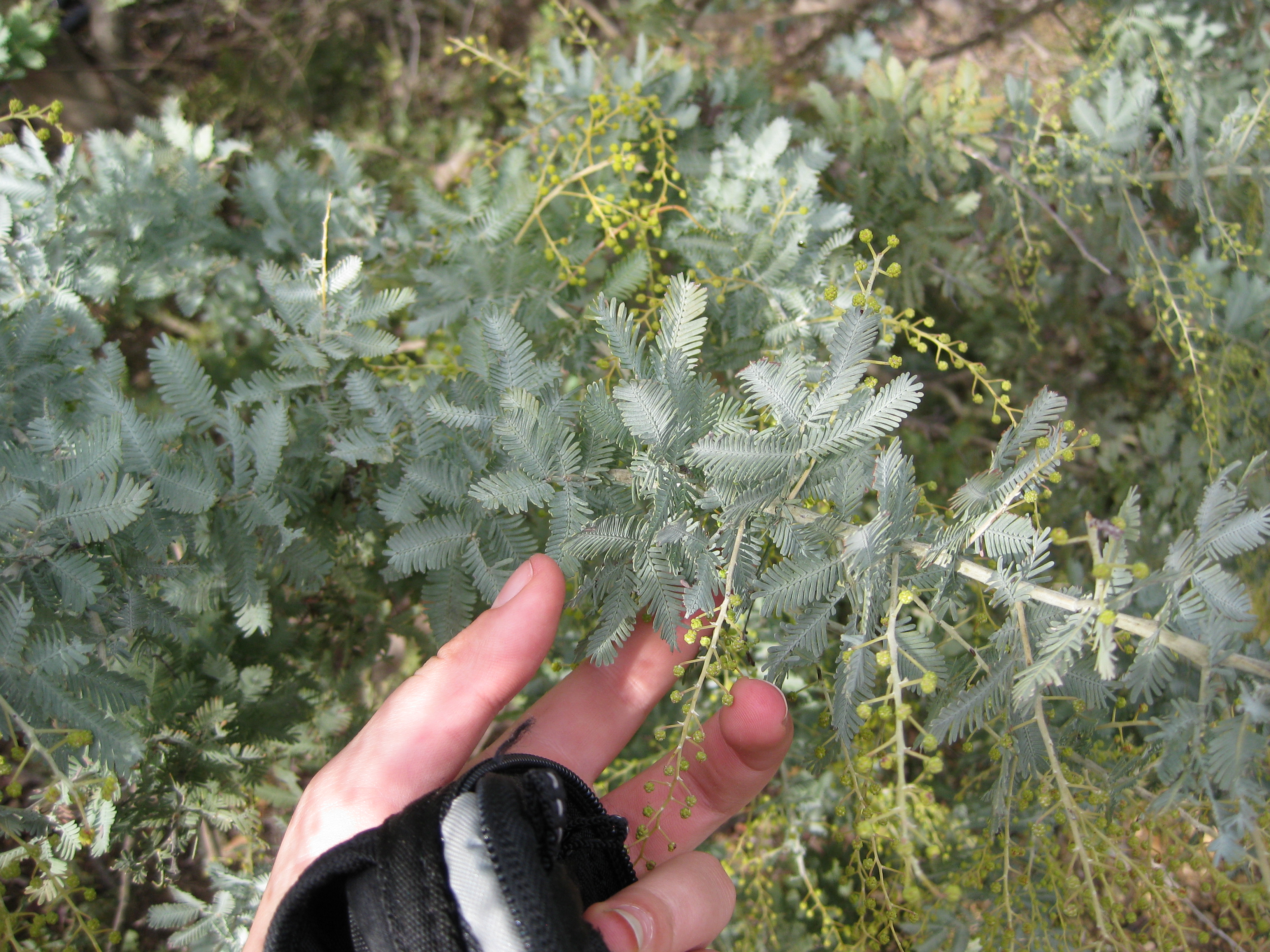
An example of a Cootamundra wattle leaf, not to be confused with the silver wattle
clippings dumped in the middle of the bush. Small Cootamundra and other weeds can be dealt with using shears; however some larger individuals have to be ringbarked, except that the axe cuts are sprayed with herbicide which the plant absorbs when it retrieves the sap, poisoning itself.
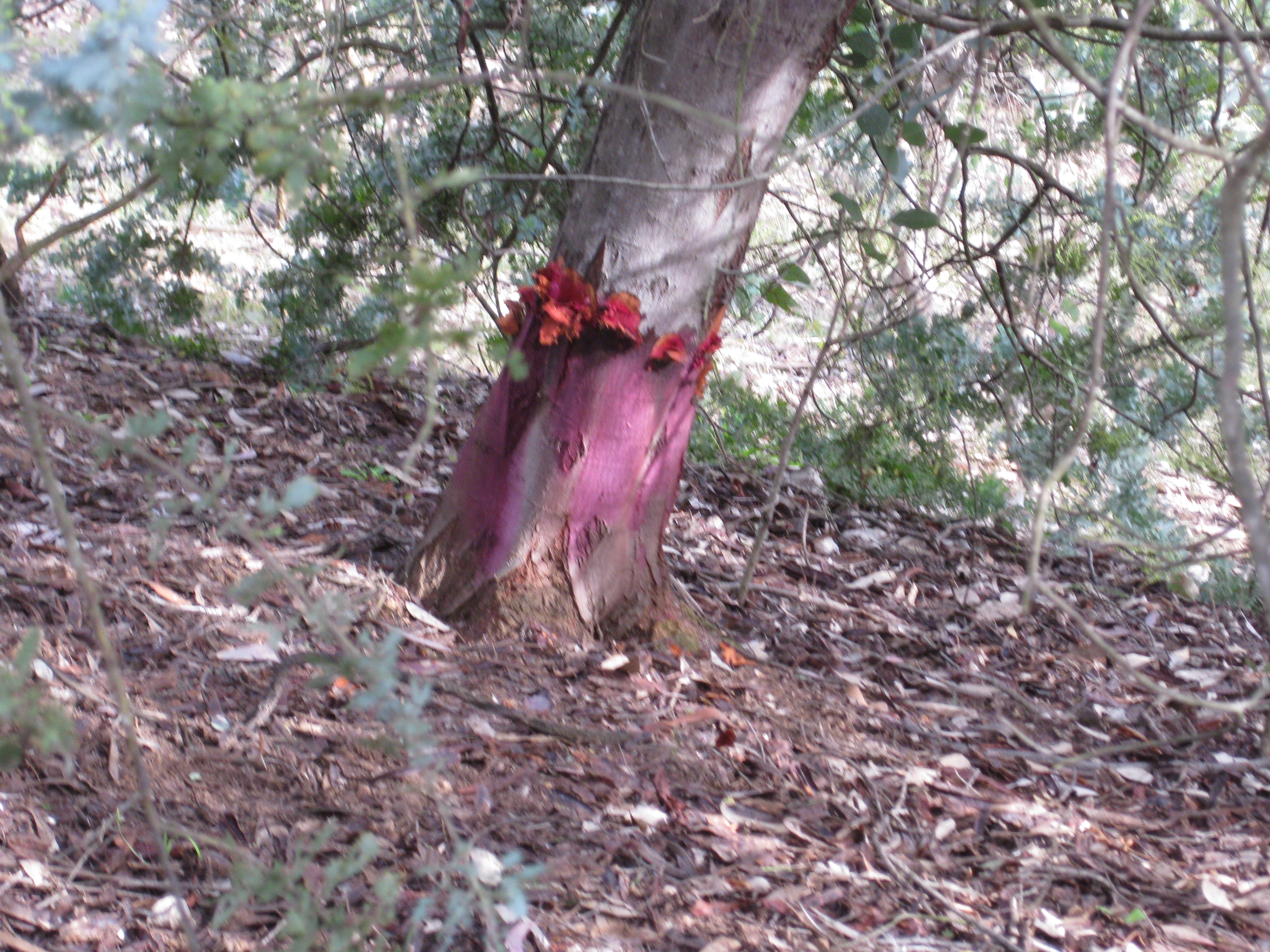
A Cootamundra Wattle that was ringbarked and sprayed with the herbicide a year ago.
Some people might find it odd that the native Cootamundra wattle is also viewed as invasive however like introduced weeds; it takes up resources and room that should instead be used by the local natives which are a part of the Majura-Ainslie ecosystem.
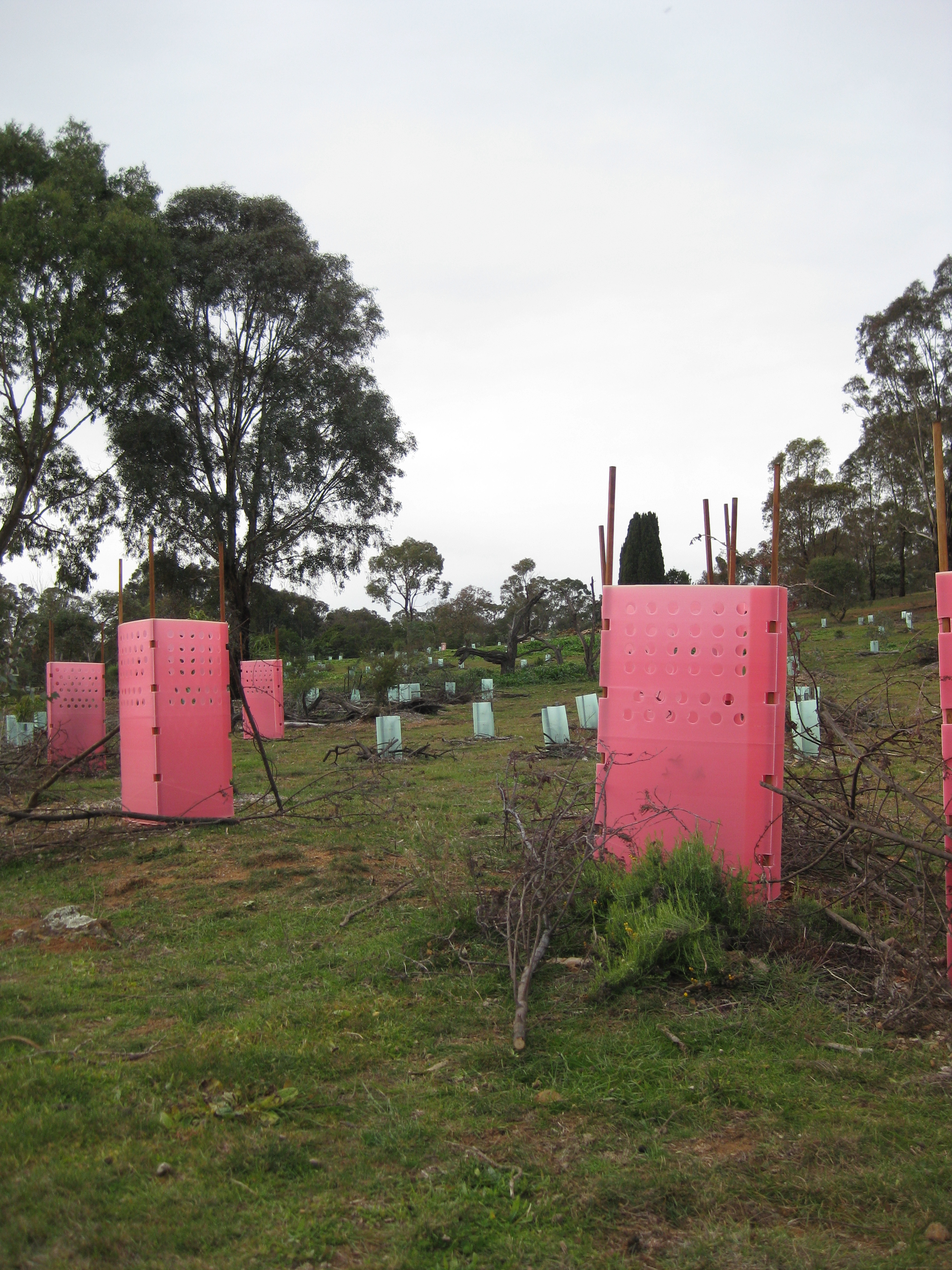
So the other activity involved in restoring the area’s biodiversity is planting back the native trees. So far FOMM volunteers have replanted eucalypts, silver wattle a local native, acacias and everlastings.
Your tools
- Water-retaining crystals, wet/dry
- Trowel
- Wet newspaper-a source of extra carbon and weed suppression
- Mulch
- ½ a bucket of water
- 2x poles + 1x Tree-guard

Tree-guards
Each hole should have a trowel-ful of water -retaining crystals, mixed into the soil. You’ll want to fill the hole about level with the bottom of the potting mix before carefully filling in the soil around it, so that it covers the potting mix. Place the newspaper around the new plant, but not touching, and then set up the tree-guard. The first pole should be four finger widths from the plant before you hammer it into the ground. The actually hammering can be difficult, thanks to previous land use. There used to be cattle and car racing which has heavily compacted the soil, which makes it really hard to dig the poles into the ground.
The mulch has the combined job of retaining water, which as you may have noticed is a limiting factor in Australian landscapes, and preventing birds from stealing the newspaper. Afterwards each plant gets a reward of about ½ a bucket of water.

A newly planted apple-box sapling
For those interested in the more fuzzy, furry and feathered side of things, on the 15th of June, FOMM are getting together to plant Drooping She-oak on Mount Majura. She-oak is an important habitat for the Glossy Black Cockatoo an endangered species. Other events coming up are the National Tree Planting Day on the 27st of July and of course the normal workshop every Friday morning.
Caitlin O’Meara (U5185879)
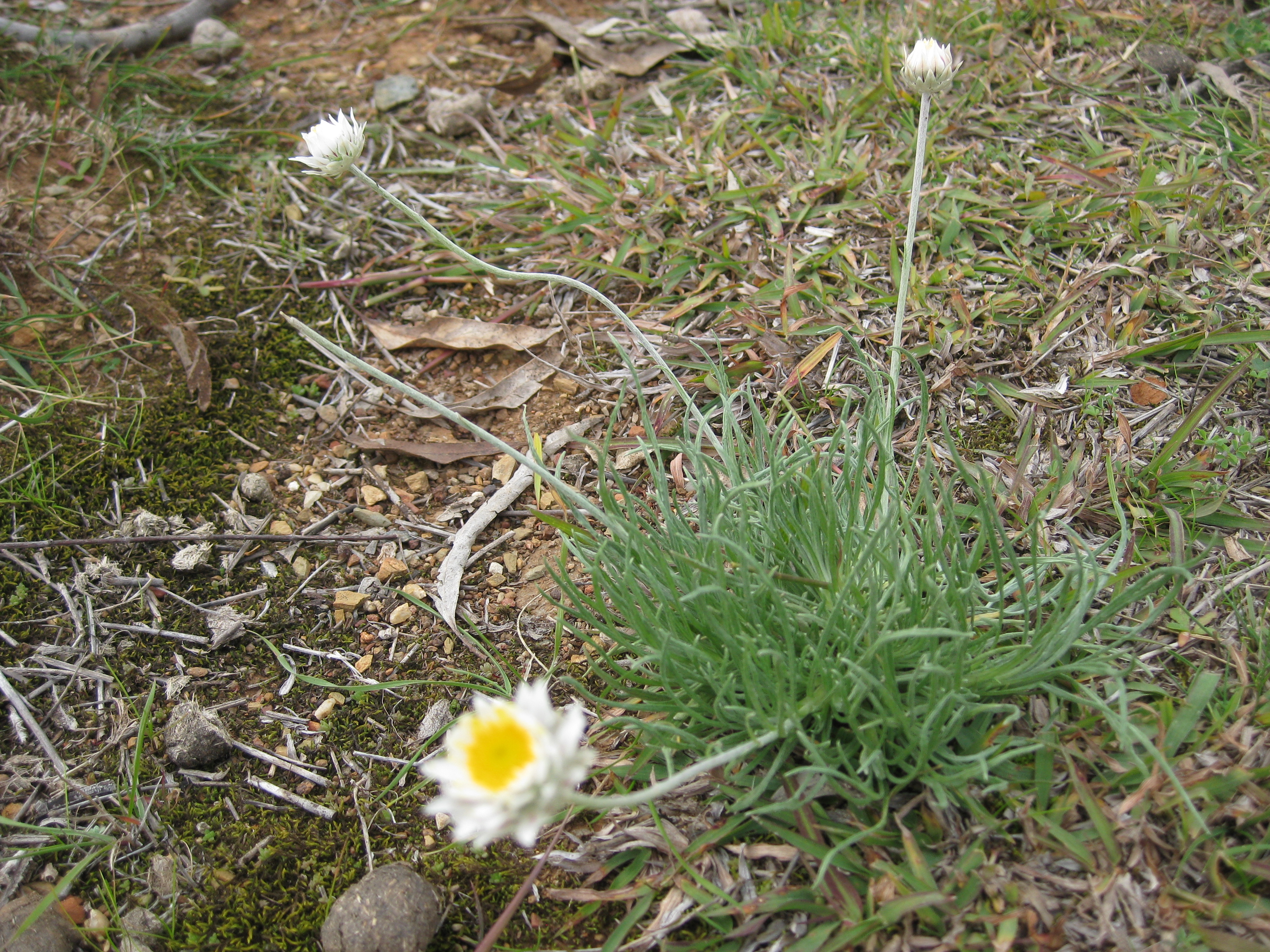
A little hope. This paper daisy is naturally occurring, no human intervention required, meaning that the area is once again supporting these plants and they can be reintroduced and hopefully create a self-sustaining population.

 Biodiversity Conservation
Friends of Mt Majura really do a great job and their leader, Waltraud, is as committed to conservation as they come. Can you add your name to the blog? Phil
Whoops sorry Phil, to use to using wattle. It’s Caitlin by the way, and yeah Waltraud’s great, I mean people talk about being “enthusiastic” and all, but it’s really, really nice knowing that there are some people who actually, really enjoy doing this kind of work.