
It is widely accepted that farm forestry can have a range of benefits to biodiversity. The manager of “The Gums” property near Penshurst, Western Victoria, is acutely aware of the benefits that farm forestry can have for his property and the native biodiversity. Consequently, he is investing in farm forestry riparian networks on his property. The planters consisted of people that I went to school with in Hamilton. We did 2 days of planting on the property over the Easter break. Between us we were able to plant 450 native trees on a sloped area on the property as part of the planned habitat zone on the property. We planted three types of trees in the habitat zone: Manna Gum, Black Wattle and Black Acacia. The manager chose the species.

The tree-planting day. Fellow planters in action
Target Zone
Prior to the planting, the sloped area had noticeable degradation as a result of decades of grazing. The slope had an existing smattering of native tree and shrubs, mostly acacias. The soil on the slope was of poor quality and the grasses appeared to be lacking in water. The aim of the planting was to transform this degraded section of paddock into a fenced-off reserve habitat of native trees and shrubs.
Objectives / Benefits
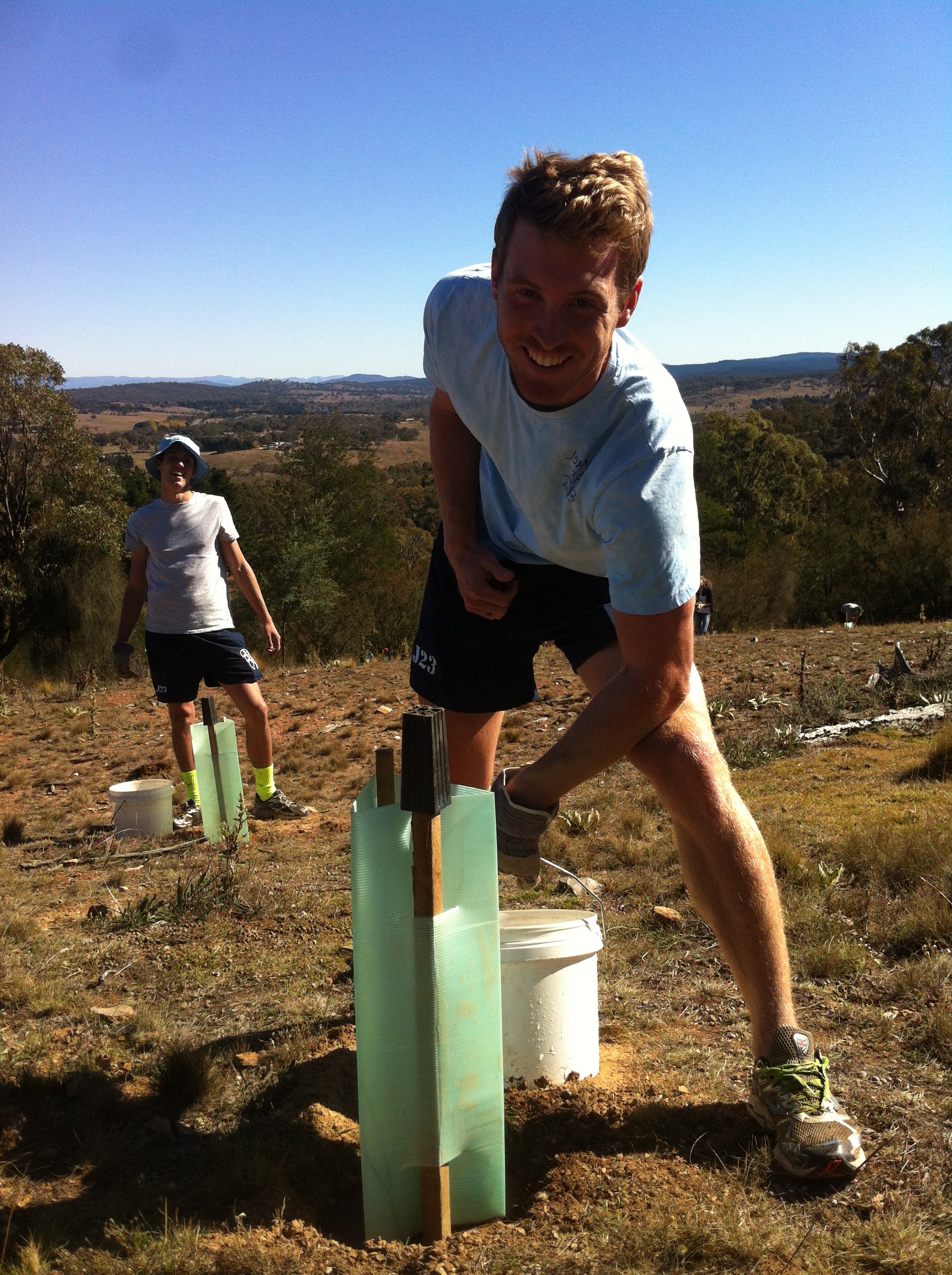
An enthusiastic planter shows off his handy work
Benefits range from increased plant species diversity, structural improvements to vegetation and provision of habitat for native fauna, to improvement of soil ecosystems and water quality. Despite the wide range of benefits, the manager says that he is most interested in the providing habitat for birds. He aims to double the abundance of native bird species on the property by 2020. This, he says, will improve the resilience of the farm to a variety of threats, most notably, insect pest invasion. Native birds provide an effective insect culling function for the property, as well as neighbouring properties. The manager is trying to convince his neighbours to invest in similar ventures to increase the resilience of the region and is having varied degrees of success with this.
Funding
The project has hybrid funding; a portion from the Glenelg Hopkins CMA, and a portion provided privately by the farm management. The planting was performed by volunteers.
How site was selected
The site was chosen because it currently in relatively poor condition (salinity, poor soil quality, erosion) and needed improvements. The costs of improvement were considered to be relatively low compared to the potential benefits. It’s location in relation to other riparian zones was another factor.
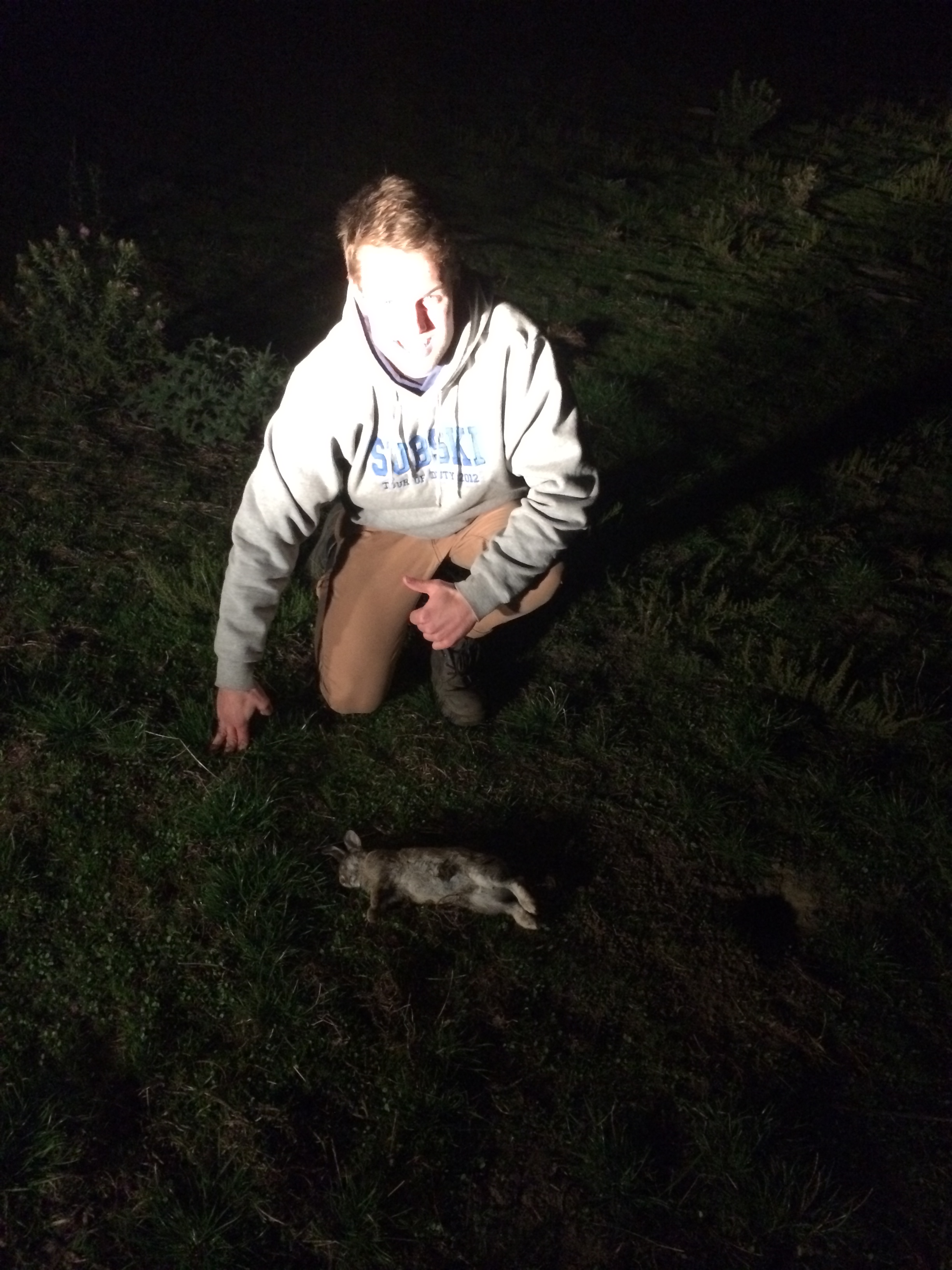
First victim of the introduced species cull. We targeted rabbits, foxes and feral cats
Additional work
In addition to the tree planting, we did some extra work that evening for the benefit of biodiversity. We undertook a pest control program (we shot foxes and wild cats). Cats, in particular, are a serious threat to native species. They prey on native mammals and birds and have had a big impact on vulnerable species in Australia.
Conclusion
This is an ongoing program by the farm manager and constitutes a small portion of the overall farm forestry network on the farm. The benefits of the program will be felt by the farm and the flora and fauna on the property.
George Mackarness (u4851352)

 Biodiversity Conservation
Thanks George. It’s great you made an effort to travel to Victoria over the break to get some experience. Phil