A Burning Issue: Bushfire Recovery in Namadgi National Park

Marlon Taylor u6735195

In the summer of 2019-2020, much of Australia’s eastern seaboard was devastated by fire. Scars of this so-called Black Summer linger; affected ecosystems are still in the process of rejuvenation and recovery. The ACT’s Namadgi National Park was particularly hard hit by the Black Summer fires. The majority of the southern portion of the park was burned by the Orroral Valley fire. Developing strategies to help the Namadgi NP recover from the fire has been the subject of a body of research following the Black Summer fires. One such study, by PhD candidate Heather Burns, examines whether artificial shelter structures can be useful tools for the recovery of small mammals and reptiles.  

Australia’s Missing Mammals

Australia has the worst record in the world for mammal extinctions since European arrival in the 1700s. The majority of these extinctions consist of small to medium sized mammals, which have been decimated by introduced predators. Conserving Australia’s remaining mammals is of high priority, especially considering many are threatened by predation from introduced species. Previous research indicates that small mammals are more vulnerable to predation after disturbance events, such as bushfire. Bushfire removes shelter structures such as woody debris from landscapes, a habitat element known to be of importance to both mammals and reptiles. Heather’s study addresses this vulnerability, asking whether the introduction of artificial shelters made of woody debris can assist with the recovery of small mammal populations following fire events.
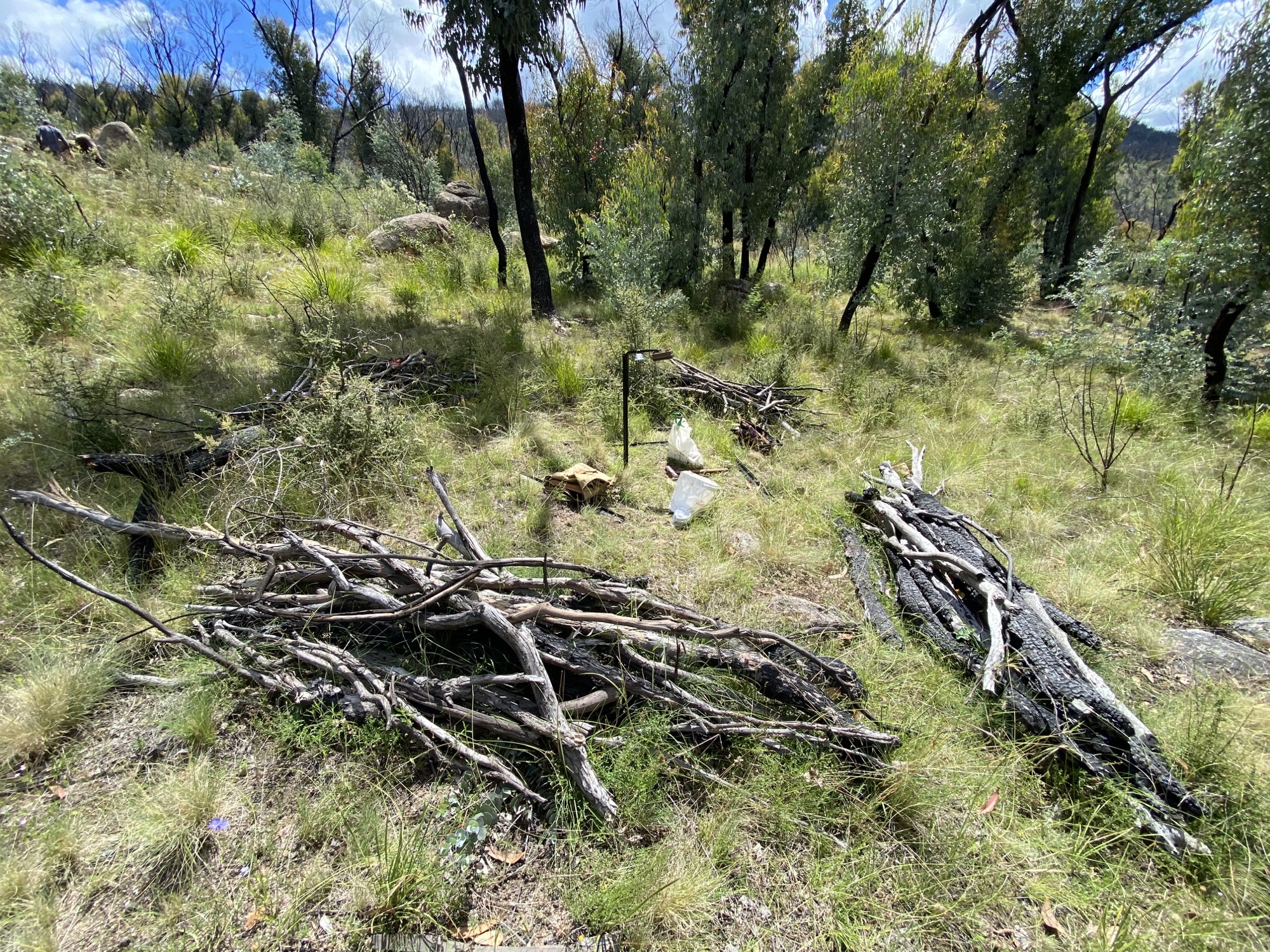
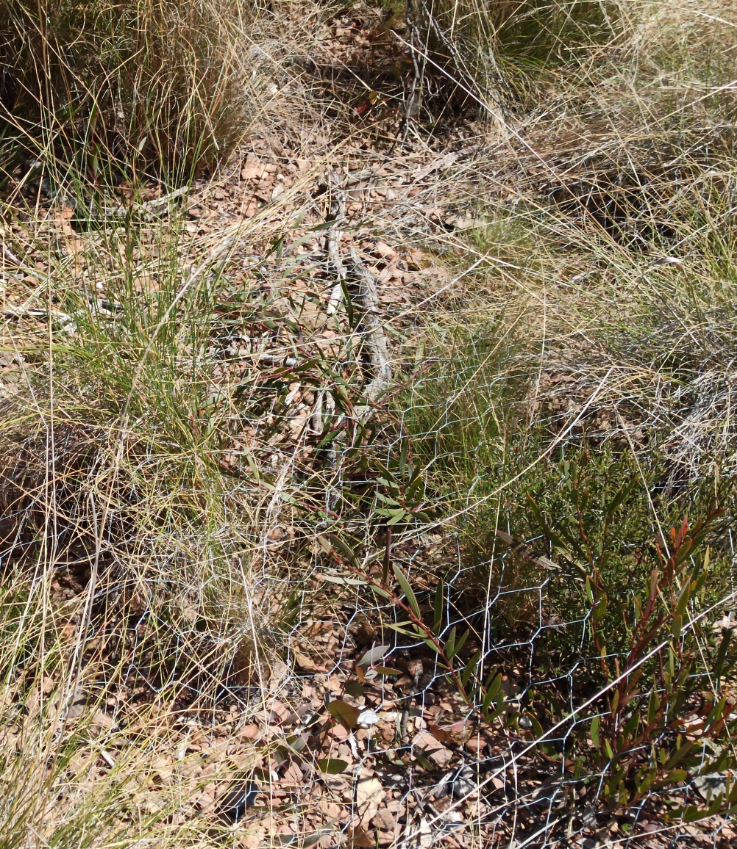
An example of some woody artificial shelter structures used in Heather’s study. Photo: Heather Burns

The Road To Recovery

Heather’s study sits in a broader suite of research projects investigating bushfire recovery in Namadgi NP. Her study is examining whether artificial shelters made of wood piles, chicken wire, or a combination of both, attract more mammals and reptiles than elsewhere in the environment. At each site she has a camera trap used to record all the animals that pass through and are using the shelter sites. Although no data has been published just yet, the camera traps have turned up some interesting observations. The camera traps have recorded some mammals that typically avoid burnt areas, such as the long-nosed bandicoot (Perameles nasuta), suggesting perhaps the shelters are working as desired. Unfortunately, the camera traps are also recording a large quantity of introduced rodents such as House Mice (Mus musculus) and Black Rats (Rattus rattus).

The Long-nosed Bandicoot (Perameles nasuta) typically avoids burnt areas but was captured by camera traps at a burnt study site. Photo: Heather Burns

A Formidable Frequency of Future Fires

Research into bushfire recovery is more valuable now than ever. Projections continue to indicate that increased frequency and severity of bushfire is likely should global temperatures continue to warm. The Black Summer fires have acted as something of a wakeup call to Australia, the future has arrived. While fire is an important part of many Australian ecosystems, including those in Namadgi NP, many of these systems are not adapted to the kinds of fire regimes that we will likely experience as global warming continues. As a result, the importance of understanding how to adapt, and how to help ecosystems adapt, to these changing conditions cannot be overstated. Studies into strategies for bushfire recovery, such as Heather’s, will provide an essential knowledge base from which to plan future management of bushfire prone areas.

Acknowledgments

Thanks to Heather Burns for providing background to the project and photographs.
Posted in Uncategorized | Leave a comment

Trash talk with the ACT government: Litter picking with ParkCare at Pine Island Reserve  

By: Malin Andersson (u7523350)

It was one of the first warm and sunny days of the semester and I arrived early to Pine Island Reserve. After standing in the sun for a few minutes I had managed to calm down, it was my first time driving in left-traffic so I had to take a moment to appreciate that I’ve made there in one piece. The other volunteers started rolling in and I quickly realized that I was going to be (1) the only girl, (2) the only non-retired person and (3) the only first-timer there. It turned out to be a very nice morning; we had coffee, talked about what brought us there and most importantly picked up litter. 

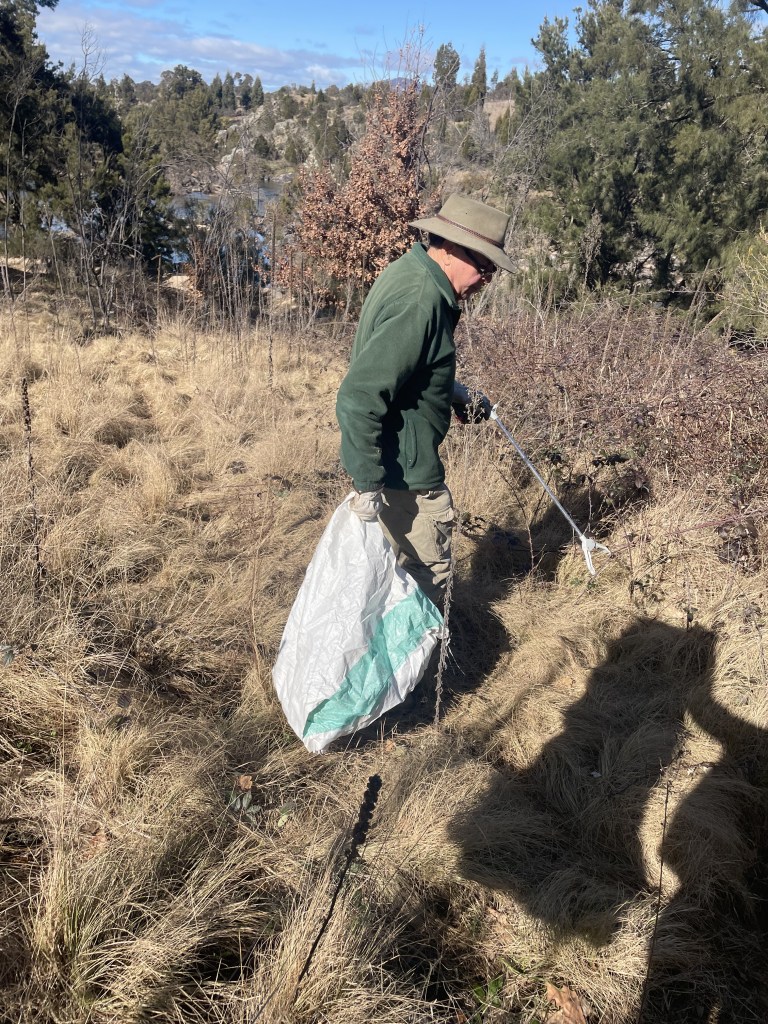
Litter picking by one of the volunteers.

In the southern parts of Canberra, on the banks of the Murrumbidgee River, is the popular Pine Island Reserve located. The reserve, created in 1980, is famous for its plantation of pine trees and is equipped with picnic areas, BBQ’s and toilettes. Due to its popularity and the nearby suburb Greenway Pine Island is prone to littering, causing not only a disturbance to the beautiful scenery but can also harm the nearby wildlife. What are the impacts of littering?

Pine Island Reserve parking lot with ParkCare truck.

The impact littering and human activity has on Pine Island 

Littering, mainly plastic debris, affects animals both physically and chemically. Microplastics can bind additives and pollutants which can affect reproductivity, immunity and protein production in both terrestrial and aquatic animals. Since Pine Island is right by the Murrumbidgee River the litter can easily enter the stream and effect the animals living there, for example by causing congestion from the animals accidentally consuming it. Studies show that the amount of litter in riverine areas is positively correlated to the nearby population density, suggesting that the Pine Island may be more exposed than reserves and national parks located in the outskirts of Canberra rather than close to suburbs. The disturbances caused by close by human activity also affect the biodiversity of a site for multiple reasons. One example is that people’s gardens often contain exotic species that may spread to the nearby nature, potentially competing out the native flora. At Pine Island reserve they have problems with blackberry bushes, which is one of the most widely spread invasive plant species in Australia. ParkCare organize activities to improve the natural environment on Pine Island. Who are they?

Blackberry bushes at Pine Island Reserve

ParkCare Volunteering & conservation work being done at Pine Island 

ParkCare is an initiative created by the ACT government. It has four different divisions focusing on different things. I volunteered for Ranger Assist, which is about helping rangers working for the ACT government with various tasks. It can be everything from picking up litter to helping with revegetation for erosion control to removing weeds. 

ParkCare does more at Pine Island than just picking up litter. They’ve had big projects with planting pine trees (Pinus sp.), River red gum (Eucalyptus camaldulensis) and Messmate stringybark (Eucalyptus obliqua) by the riverside to (1) help prevent erosion in to the Murrumbidgee River and (2) to create understory vegetation in the landscape for habitat to the wildlife. 

Revegetation of Pine and Eucalyptus trees by ParkCare at Pine Island Reserve.

Conclusion 

Initiatives like this allow people who might need a sense of community to meet like-minded people while also improving the natural environment around them. Picking up litter is a very straightforward task that quickly improves the environment for both animals and humans. 

Posted in Uncategorized | Leave a comment

A Prickly Situation: The 2022 Mulligans Flat Echidna Sweep

Moss Thompson – u7119579

The Woods and Wetlands Trust has been facilitating an Echidna Sweep over two weekends annually at Mulligans Flat since 2016. Monitoring echidna populations is critical to ensuring the sanctuary remains a healthy natural ecosystem.

Ecosystem Engineering Echidnas

Short-Beaked Echidnas (Tachyglossus aculeatus) are classed as Least Concern by the IUCN, but influence the success of threatened species and ecosystems. Echidnas are important ecosystem engineers, and move 200 cubic metres of soil each year through burrowing. Bioturbation improves soil quality allowing seeds to germinate and creating better habitat for invertebrates.

Mulligans Flat

Conservation in protected areas is effective at protecting and monitoring threatened species, despite low ecosystem representation and size adequacy on broad scales. Mulligans Flat Woodland Sanctuary (MFWS) encompasses over 1250 hectares on the northern border of the ACT. The sanctuary was first established in 2004 and is the largest, most intact, contiguous area of the critically endangered Box-Gum Grassy Woodland in public ownership. Since the eradication of introduced predators, MFWS has also been an important experiment for research and studies into biodiversity conservation and the restoration of threatened species. This includes extensive monitoring as the predator-proof fence has effectively created an ‘island effect’ for many species, so we must ensure populations don’t increase or decrease rapidly. 

Map indicating regions of MFWS for the sweep. The general route of the yellow team is illustrated as an example. (Image: Millie Sutherland Saines)

The Project and Results

Volunteers searching for echidnas (Photo: Moss Thompson)

In the absence of predators including feral cats (Felis catus) and foxes (Vulpes vulpes), echidnas have been proliferating in MFWS. Monitoring is essential to maintain healthy echidna populations within MFWS and essential because of the ecosystem service they provide to the critically endangered habitat. 

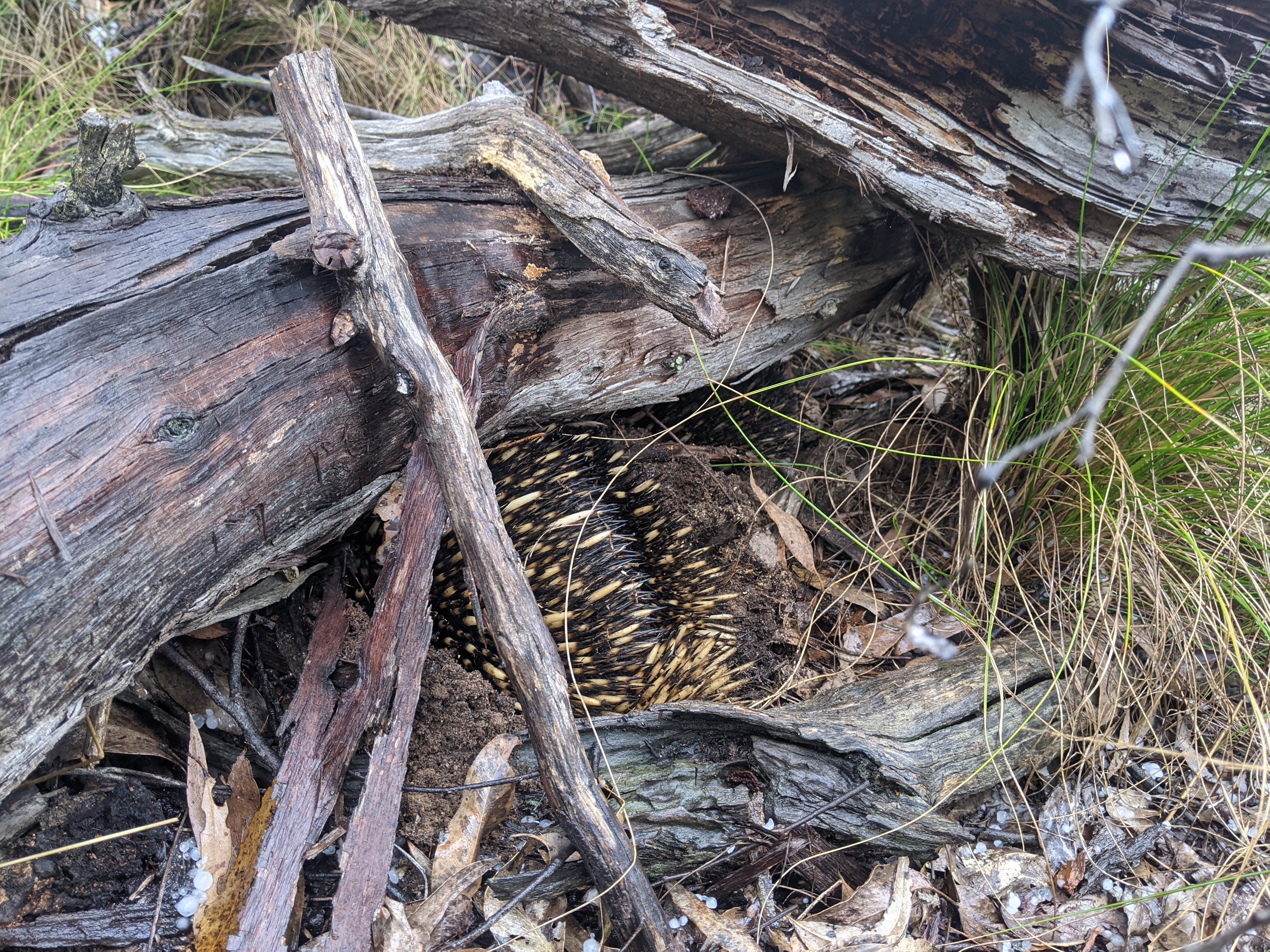
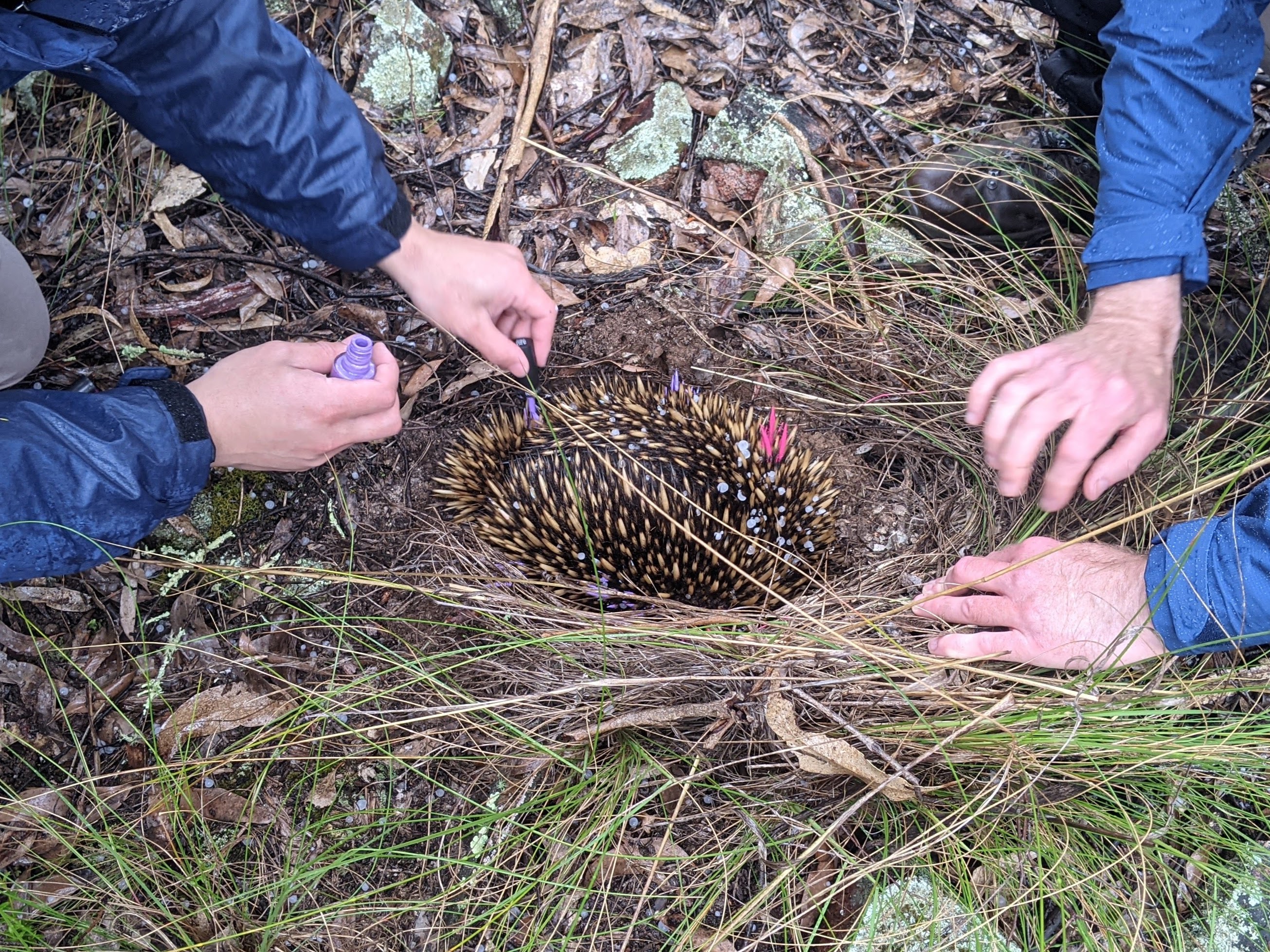
Every Spring around 50 volunteers participate in the Echidna Sweep over two weekends in 6 teams patrolling areas of MFWS in a transect to locate any Short-beaked Echidnas that could be found in the sanctuary. A capture-mark-recapture method is employed where in the first week, all echidnas found are counted and painted with a unique pattern of nail polish consisting of 6 coloured spots on spines. And in the second week, the same areas are searched and echidnas found that were counted in week one are marked with a frontal red spine and all new echidnas are marked with a unique colour combination. This allows for population estimate statistics to be conducted.

We found four unmarked echidnas in our area during week two and they were recorded as below. The number refers to the unique colour combination they were painted with. 

(A) Table of recorded Echidnas from Yellow Site Weekend 2 (B) Example of unique colour identification for unmarked echidnas (Photo: Moss Thompson)

Head Ecologist Millie Sutherland Saines notes that population counts can be biassed by environmental conditions. In wetter years, grass growth and ground biomass makes finding echidnas more difficult; echidnas are more likely to stay in burrows and are obscured by rain or fog during adverse weather conditions making population counts less accurate. Over recent years populations have been increasing, but data is skewed by recent wet years.

At the end of the day …

The engagement of the public in contributing to ongoing research at MFWS is making an essential contribution to Citizen Science in the ACT. This engages the community with research and enables the collection of more data.

If you want to get involved with next year’s Echidna Sweep find more information here: https://www.mulligansflat.org.au/volunteer.

Acknowledgements

Thank you to Millie Sutherland Saines for answering our questions and providing past data from the Echidna Sweeps.

WORD COUNT: 509

Posted in Uncategorized | Leave a comment

Fire and (M)ice: The recovery of small mammals and reptiles in Namadgi National Park after the 2020 bushfires

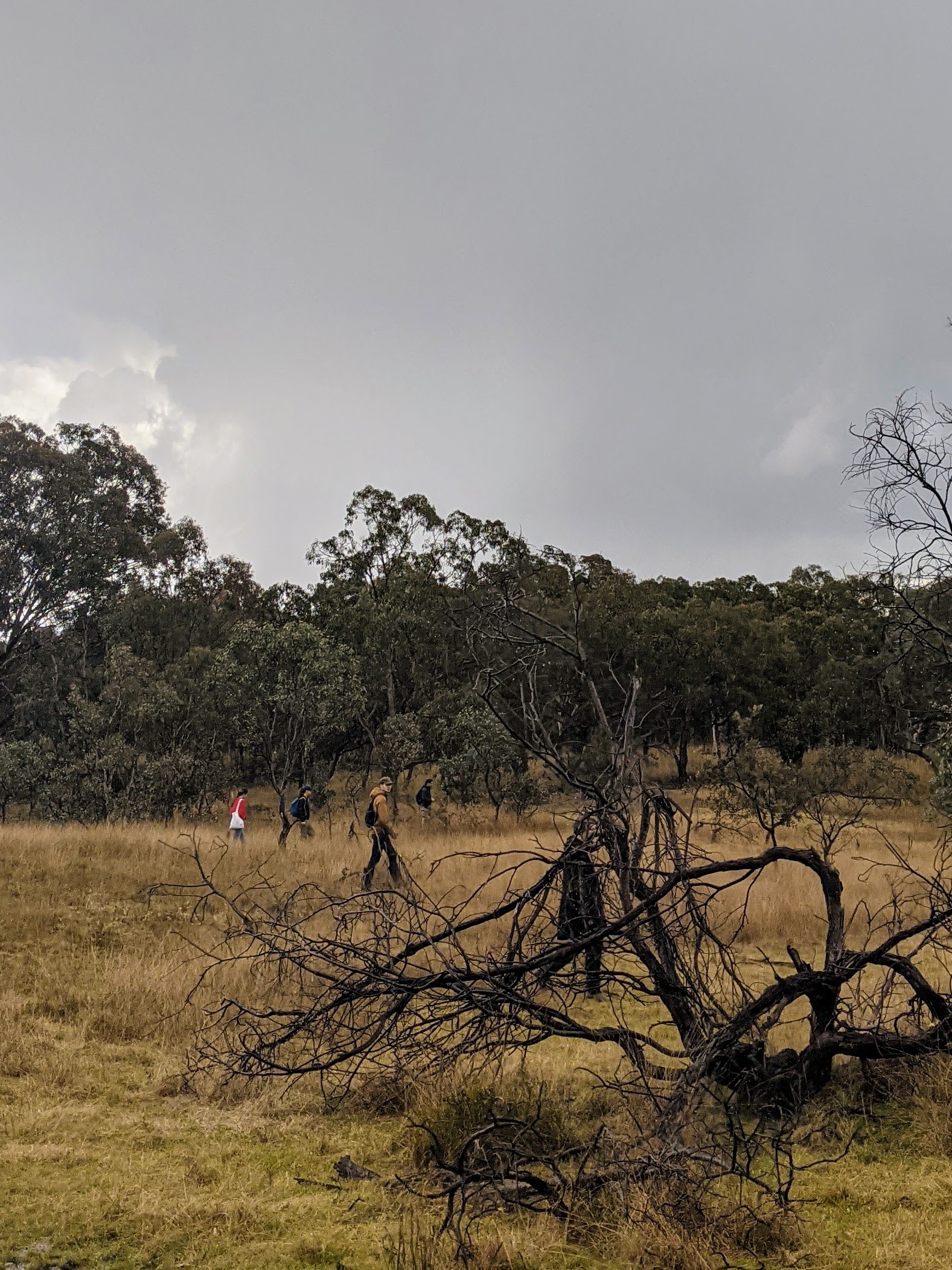
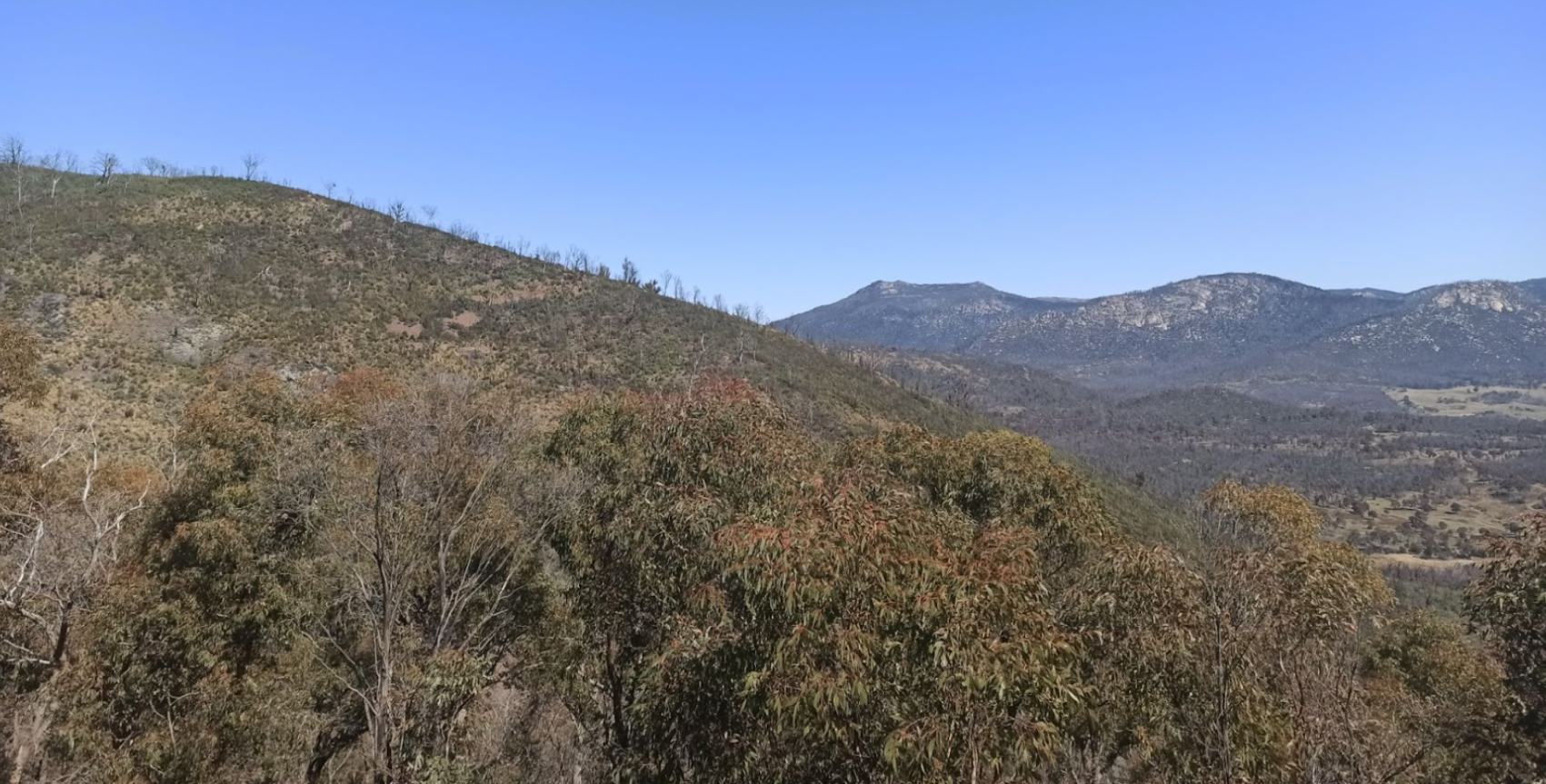
The Namadgi National Park slopes in 2022. Photo taken by author.

The 2020 wildfires which ravaged much of south-east Australia had a tremendous impact on the ACT region’s wildlife and ecosystems. Namely, 80% of the Namadgi National Park‘s (NNP) surface was burned, leaving behind a greatly damaged landscape.

Small mammals and reptiles are generally known to be vulnerable in post-fire conditions, due to an absence of proper shelter to protect them for predators. In the NNP, species such as antechinus, house mice, skinks, bush rats, bandicoots and brush-tailed possums were left exposed to opportunistic dingoes and cats, benefitting from an obstacle-less hunting areas.  

The ACT government implemented many post-fire recovery strategies for human infrastructure and health as well as for wildlife. Heather Burns and her research project were part of one such strategy. Heather’s research aims to understand the condition of these vulnerable species in the years following the fires and what management actions would help them regain pre-fire populations and habitat. Heather and her team focus on whether adding piles of coarse woody debris across the park would be used by small mammals and reptiles as shelter. Indeed, such infrastructure is highly valuable to species of small sizes for protection and habitat, and become rare in burned landscapes. 

Thus, during an approximately two year long study, Heather is monitoring the activity of said species on different sites, displaying characteristics which may reveal whether piles of woody debris are in fact used by the small mammals and reptiles. Eighty sites regrouped by fours are scattered accross the park, each equipped with monitoring equipment, and forming twenty seperate blocks. In each block, one site displays piles of wooden debris covered by chicken wire for increased predator protection, one site displays uncovered piles of wooden debris, one site uses chicken wire alone, and a final site has no modifications. To attract life under the camera, some tuna and sesame oil is spread on a cork tile… delicious !

Once the study period is over, Heather will have to sort the (hopefully) plentiful pictures of curious mammals and reptiles. If coarse woody debris indeed does offer an attractive shelter opportunity to the target species, then more activity should be recorded on the sites displaying such infrastructures. If this is the case, Heather’s research findings could be used to guide the ACT government’s management actions. Coarse woody debris could indeed become a main strategy to increase shelter availability for these species, in the NNP. Otherwise, the government and other relevant bodies can learn from Heather’s findings, and focus their efforts and available funding on other strategies, or researching other actions, which could help the park’s biodiversity bloom again.

Post by Eloise Saint-Girons – u7523576

Sources

ACT Planning and Sustainable Development Directorate. (2022, October 8). Bushfire recovery – Our recovering ecosystems. Www.environment.act.gov.au. https://www.environment.act.gov.au/nature-conservation/conservation-research/bushfire-recovery-ecosystems 

ACT/NSW Rapid Risk Assessment Team. (2020). Orroral Valley Fire Rapid Risk Assessment Namadgi National Park. Unpublished report. https://www.environment.act.gov.au/__data/assets/pdf_file/0003/1495236/orroral-valley-fire-rapid-risk-assessment-namadgi-national-park.pdf 

Brown, J. K., Reinhardt, E. D., & Kramer, K. A. (2003). Coarse woody debris: Managing benefits and fire hazard in the recovering forest. Gen. Tech. Rep. RMRS-GTR-105. Ogden, UT: U.S. Department of Agriculture, Forest Service, Rocky Mountain Research Station. 16 P., 105. https://doi.org/10.2737/RMRS-GTR-105

Leahy, L., Legge, S. M., Tuft, K., McGregor, H. W., Barmuta, L. A., Jones, M. E., & Johnson, C. N. (2015). Amplified predation after fire suppresses rodent populations in Australia’s tropical savannas. Wildlife Research, 42(8), 705. https://doi.org/10.1071/wr15011

Sutherland, E. F., & Dickman, C. R. (1999). Mechanisms of recovery after fire by rodents in the Australian environment: a review. Wildlife Research, 26(4), 405. https://doi.org/10.1071/wr97045 

Wintle, B. A., Legge, S., & Woinarski, J. C. Z. (2020). After the Megafires: What Next for Australian Wildlife? Trends in Ecology & Evolution, 35(9). https://doi.org/10.1016/j.tree.2020.06.009

Posted in Uncategorized | Leave a comment

Verbascum thapus – a threat to biodiversity in the Ginninderry Conservation Corridor

References

ALA, 2021. Verbascum thapsus L., Atlas of Living Australia. Available at: https://profiles.ala.org.au/opus/weeds-australia/profile/Verbascum%20thapsus (accessed 16 September 2022).

DCCEEW, D. o. C. C., Energy, Environment and Water, 2021. Australia’s State of the Environment 2021, Available at: https://soe.dcceew.gov.au/overview/pressures/invasive-species-and-range-shifts

GCT, 2021. Weed Managment Plan Ginninderry Conservation Corridor, Ginninderry Conservation Trust, Canberra. Available at: https://biodiversityconservationblog.com/wp-content/uploads/2022/10/441ce-weedmanagementplan_final.pdf (accessed 19 September 2022).

GCT, 2022. Our Mission, Ginninderry Conservation Trust. Available at: https://www.ginninderry.org/our-mission (accessed 19 September 2022).

Ginninderry, 2018. Ginninderry Conservation Corridor 2018-2023 Managment Plan, ACT. Available at: https://ginninderry.com/wp-content/uploads/2021/08/Attach-A-Ginninderry-Corridor-POM-1.pdf (accessed 15 September 2022).

Groves, R. H., Boden, R. W. and Lonsdale, W. M., 2005. Jumping the garden fence : invasive garden plants in Australia and their environmental and agricultural impacts / a CSIRO report for WWF-Australia by R. H. Groves, Robert Boden and W. M. Lonsdale,

DAWR, D. o. A. a. W. R., Australian Weeds Strategy 2017 to 2027,, Department of Agriculture and Water Resources,

WeedsAustralia, 2021. A weedy problem, Centre for Invasive Species Solutions (CISS). Available at: https://weeds.org.au/overview/ (accessed 19 September 2022).

Posted in biodiversity conservation, invasive species, Landcare, Volunteer work, weeds | Tagged , | Leave a comment

Verbascum Mullein Weeding, Greater Biodiversity Issues, and how we could adapt in the face of an impossible task.

By Dominic Vorreiter. Word Count: 539

Working With Ginninderry and Weeding

This year I worked with the Ginninderry Conservation Trust in their Conservation Corridor that contains the Western Border of the ACT and NSW. 

(Photo Credit: Google Maps, 2022)

For two hours I helped workers at the Trust remove Verbascum Mullein, an invasive weed that looks like this.

(Photo Credit: Me, 2022)

Verbascum and it’s issues

Verbascum presents a wide range of issues to the health of native plants and crops. Verbascum leaves a wide, spread outwards, and angle downwards into the pistil (center), Verbascum grows to be large and spreads quickly, it can dominate the landscape and stop other smaller native plants from getting adequate sunlight, and rain, and as such it chokes them out. Luckily, Verbascum is quite easy to remove with a mattock, (as pictured)

(Photo Credit: Me, 2022)

as it can be easily dug into and removed. However due to how fast spreading it is, hand weeding is only effective at stopping small localized areas.

Problems with weeds and Verbascum

If you’re reading this, I imagine you’re already aware of the issue of weeds for both native plants, agriculture, native animals. If not, I’ll make it quick, Invasive Weeds are often fast-spreading and dominate the ecological niche they find themselves in, while it is commonly believed that weeds have to be non-native to be invasive, this is a misconception. If a plant is transported from one area to another, it may find itself thriving in this area, and will take advantage of the new land. In doing so they take away resources from other plants which leads to other plant species dying, or having their liveable zone shrink. Furthermore, many weeds are not safe for consumption and as such many herbivores are unable to eat them, and with the dying of native plants, many herbivorous creatures are also pushed out of their niche looking for new food sources and can cause ecological damage to other sites they move to. Because of the potential ecological harm of weeds, methods of dealing with them are continuously looked into and there are many ways to deal with weeds; there is no one solution for weeds. While we were able to clear a significant portion of Verbascum, it took time and manpower that the Trust doesn’t have consistent access to the manpower needed to quote our supervisor

“Yeah, the amount of Verbascum I could clear in two hours would have very little impact”Bridie Noble

Furthermore several weeds such as St John’s Wort are unable to be hand removed due to their extensive root structure. Unfortunately due to how widespread Verbascum is in the corridor, full eradication is not possible, and the Trust will have to focus on containing, and preventing it from spreading further.

Benefits of Verbascum

To conclude, I’d like to touch on an interesting aspect of Verbascum I came across in my research; Verbascum is often used as an ingredient in herbal medicine in North America, Europe and Asia and is effective as an anti-inflammatory. Not only that, but there has been research into the positive effects of weeds in Grasslands, which the Corridor is. As such, a possible avenue for the future of the Trust and the Corridor is to use the Verbascum, rather than just eradicate it as this is a much more feasible venture.

References

Eland, R. 2021. Weed Management Plan. Ginninderry Conservation Trust

Maclaren, C et al. 2020. An ecological future for weed science to sustain crop production and the environment. A review. Agronomy for Sustainable Development, 40, 24.

Martin-Fores, I et al. 2017. Weed abundance is positively correlated with native plant diversity in grasslands of southern Australia. PLoS One, 12, e0178681.

Naughton, M. 2007. St John’s Wort. NSW DPI

Vogl, S et al. 2013. Ethnopharmacological in vitro studies on Austria’s folk medicine–an unexplored lore in vitro anti-inflammatory activities of 71 Austrian traditional herbal drugs. J Ethnopharmacol, 149, 750-71.

Posted in Uncategorized | Leave a comment

Putting Roofs Over Fluffy Heads: Mitigating Habitat Loss From Wildfires.

By U7524147

The 2020 wildfires have hammered various woodland ecosystems in Australia, amounting to unprecedented damages to flora and fauna across the nation. As climate change promotes longer, more frequent and more intense wildfires, the risk posed to biodiversity increases. Developing and refining methods to make ecosystems more resilient to such megafires might become ever more important in ensuring the security of Australia’s biodiversity. My work experience with PhD candidate Heather Burns from Fenner School explores the use of artificially constructed structures to help population recovery in small animals from post-fire ecosystems.

Wildfires burn away understorey vegetation and woody debris that serve as refuge for many small animals, leaving the surviving population with few shelters and vulnerable to predation. In fact, predators, including invasive ones such as cats, reportedly actively seek out burnt areas for hunting opportunities. To combat this, Burns proposes the construction of piles of branches and logs to serve as shelter for small mammals and reptiles, relieving predatory pressures and helping with population recovery. Chicken wire is layered over the piles in some sites as an additional defense against predators as they allow smaller animals to pass through but prevent larger predators from accessing the habitats. 

A camera pointed at a cork board baited with tuna and sesame oil is mounted at each site. The abundance and extent of animals captured on the camera serves as a proxy for the amount of animals taking up residence in the wood piles. Burn then examines the data to determine the effectiveness of these artificial habitats across sites of varying burn severity and also to determine whether the addition of chicken wire increases residency rate.

These structures attempt to manage the threat of changing fire regimes and invasive pests on biodiversity. Should the structures prove effective, the potential lies in its scalability as these structures are cheap and easily built. Rangers and land managers can quickly deploy these structures following a wildfire, when support for these small animals are most urgently needed. Furthermore, during past wildfires, many Australians have expressed sympathy for the affected fauna and many have helped such as by building water points for animals. These easily implemented structures can be another avenue for citizens to partake in wildfire recovery efforts, expanding the reach and scale of mitigation. 

Yet, despite the potential of the project, I cannot help but feel it is simply another band-aid on an ever-increasing problem. Climate change will result in worse and worse fires. Invasive species already have well-established populations that are costly to manage. All the while the mismanagement of land leaves the native bush more vulnerable to fire events. Mitigation efforts such as Burn’s are crucial in buying time and relieving some pressures on biodiversity loss. But no matter how innovative and efficient such programs are, as long as the underlying drivers such as energy use, growing consumption and the prioritization of short term financial gain over land are not addressed, I am afraid that much of Australia’s biodiversity hangs by a fraying thread.

(All images courtesy of Heather Burns)

Posted in Uncategorized | Leave a comment

Digivol’s Online Volunteers Prepare for the Super Parrot Conservation Challenge in ACT

Siwei Feng – u6774335

The Superb Parrot currently listed as Vulnerable under the Environment Protection and Biodiversity Conservation Act 1999; it is an iconic species of the critically endangered box-gum grassy woodlands of south-eastern Australia. There is a lack of information about the breeding biology and movements of the Superb Parrots. These knowledge gaps are a major obstacle to effective conservation management of this bird, and it is currently difficult to conduct ecological assessments of this species and to make conservations and planning without basic ecological information. The Superb Parrots in the Australian Capital Territory Digivol project provided by Michael Mulvaney, aiming to track the breeding success of superb parrots in the ACT where is an important breeding region for the species.

Threats to Superb Parrot

“Superb Parrot populations have been hammered by deforestation.” – Dr. Mulvaney.

Habitat Loss – The key threat to the Superb Parrot is the widespread clearing of box-dominated Woodland, 95%, of the bird’s woodland habitat has been gradually cleared. The loss of hollow-bearing trees poses a challenge to Superb Parrots conservation in ACT: suitable super-parrot nests take more than 120 years to develop.; and super parrots strongly prefer to breed in nests previously occupied by Superb Parrots.

Examples of nest-site competition. A female superb parrot defends her nest against crimson rosellas. Copyright: Website- Atlas of Living Australia/ Digivol.

Nest competition – The demand for hollow nest extends far beyond the Super Parrot species, with other species of hollow visitors becoming nesting competitors to the Super Parrot.

“……the introduced European Starling remove superb Parrot eggs from a tree hollow and occupied the hollow themselves – and predation of chicks on one occasion by a Brown Goshawk and probably predation of chicks by the Australian Kookaburra on one occasion.” – Dr. Mulvaney

Climate change – The core range of the Super Parrot is expected to shift populations southeastward in the ACT and north as these further range contractions occur in key areas of the species’ migration, especially as these further range contractions occur. It means that amount of sight will increase in ACT region.

Though set up the monitoring cameras to track super parrot breeding behavior. Motion-activated cameras were deployed on trees that repeatedly showed signs of super-parrot breeding behavior. Checked and redeployed the camera every 2-3 weeks.

Some examples of superb parrot in hollow taken by monitoring cameras in ACT region. Copyright: Website- Atlas of Living Australia/ Digivol.

“There’s no way I can look through 1 million images!”- Dr. Mulvaney

Citizen scientist

As citizen science evolves, Digivol collects large amounts of data through volunteer work. Participate remotely in the Super Parrot research project while leveraging the efforts of a large number of volunteers to drive progress.


In one of the images, crimson rosellas appeared at a strange angle.
Copyright: Website- Atlas of Living Australia/ Digivol.

Interesting things to discover by volunteering in front of a computer. The animals never pose for the camera in the way they should, the photos are always blurry. The process of identifying species is always the most nerve-wracking but also the most fun, as the animal in the photo may be in a variety of movements and poses, or only have a part of its body, or hiding in a corner you never thought possible. It’s like playing hide-and-seek or a guessing game, but you need to be familiar with the characteristics and appearance of the various bird species in order to get high scores (accuracy) in this “game.”

Who would have thought that they could contribute so much in this way? The purpose of studying super-parrots is achieved by using your fingers and your brain.

Learn more about the konwleage about Superb Parrot: https://youtu.be/2ba6bX2616c

Posted in Uncategorized | Leave a comment

The destructive critter we don’t understand: Evidence-based science needed to manage the Common Brushtail Possum

By U5810546 

When it comes to possums taking up residence in your home, I was of the belief that one must wait until a council worker passes by, and you can ask them to remove it. This is what my Mum does living in rural Australia, where you know every council worker by name. When I moved to the city, I learnt the hard way, that if you did not know the council worker, you cannot ask them into your home for a possum removal. Perhaps this inability to ask the council worker is why the ANU has wasted millions of dollars in an attempt to rid their buildings of this “pest”. Or this is what I thought, before I assisted in my first possum watch.  

The problem

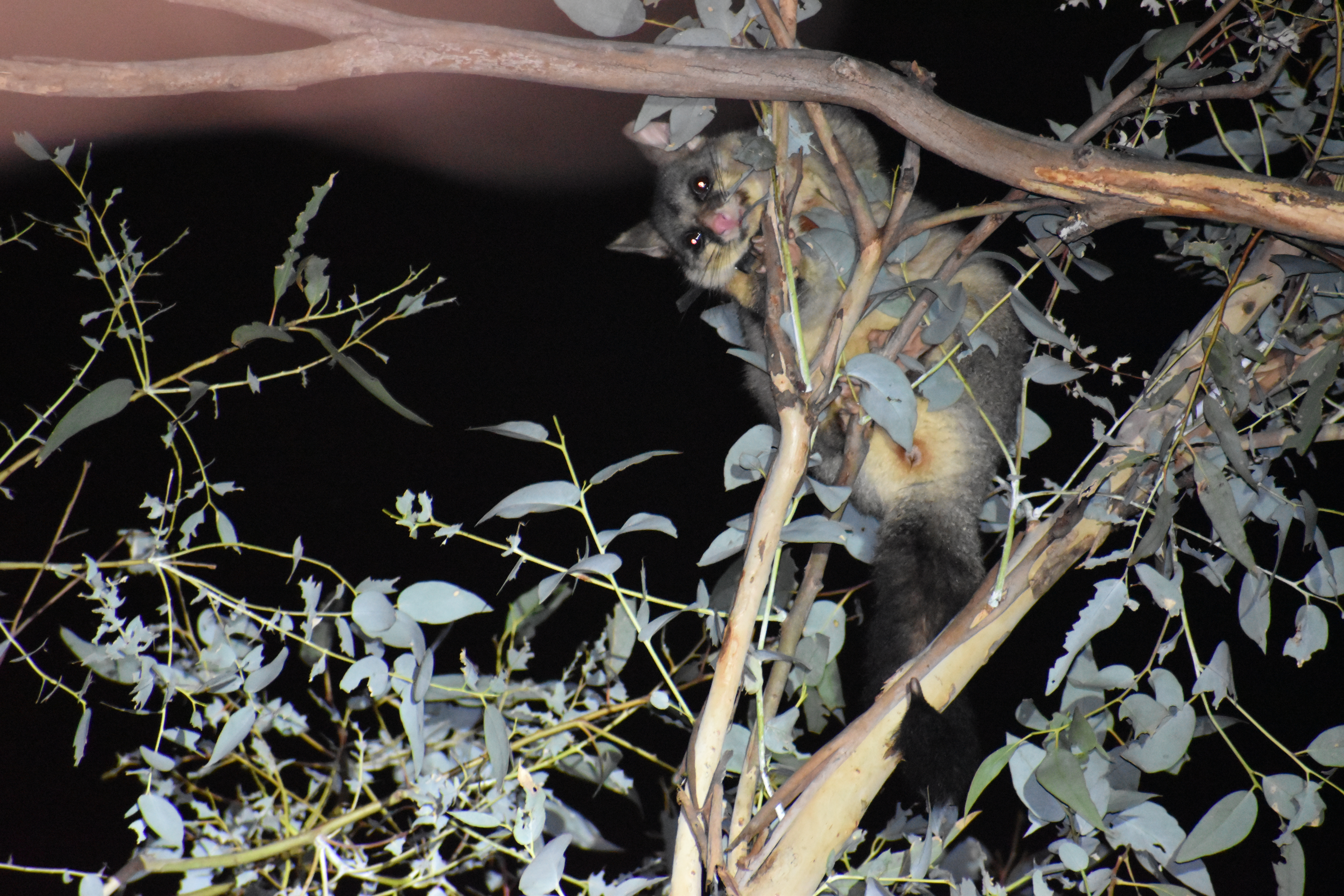
The Common Brushtail Possum on ANU’s Acton campus. Photo by Divyang Rathod

The Common Brushtail Possum on ANU’s Acton campus. Photo by Divyang Rathod

The Common Brushtail Possum (Trichosurus vulpecula) is one of the most widespread marsupials in Australia. Despite being a native animal, the Brushtail is in constant conflict with the urban environment, due to the damage they cause to buildings in which they “unofficially” inhabit. Under the Nature Conservation Act 2014 the Brushtail has the right to exist in urban areas, despite the significant “conflicts with humans resulting from their nesting activity in buildings. Including noise and visual disturbances, structural damage, and large financial tolls to repair and prevent building damage” (Kenyon-Slade). For the ANU, this damage, and attempts to keep 
the Brushtail out of buildings, is causing significant financial strains. 

The ANU’s management (or lack thereof)

Despite estimates of up to AUD 2 million being spent on “possum proofing” 
an individual building on the ANU’s Acton campus, the institution still lacks the evidence-based science required to effectively manage the Brushtail. Caitlin Kenyon-Slade is an honours student at the ANU whose research will bridge this critical gap in science-based management.


A building where we are currently stag watching. Photo taken at 8:35. No possums had been seen. My own photo. 

Through assisting Kenyon-Slade with stag watching, I have experienced the practical requirements of this research. Over an hour, from sunset, we conduct counts of Brushtails entering and exiting buildings by trees“Stag watching enables us to collect data on the type of trees possums are using to acc ess buildings. Using the data, we can implement informed management decisions such as how far to trim trees back from buildings, and what trees are ideal candidates to install tree guards.” (Kenyon-Slade)

Future management

Kenyon-Slade’s research design indicates that the management of the conflict between the Brushtail and the urban environment is simple and cost effective when informed by adequate data. As Kenyon-Slade states; “This research will contribute valuable in a field where it is lacking and contribute cost-effective solutions to help solve the wider issue of man’s conflict with wildlife”. Despite 
the collection of this data being laborious, it is vital to ensuring that 
further funding is not wasted on science lacking management. 
With the number of staffing cuts ANU has forced over “a lack of funding” 
surely they do not have any more money to waste on their possum problem. 

Posted in Uncategorized | Leave a comment

Dieback in the Snowys – Why are all the trees dying?

Oliver Medd – u6702346

A team of Masters student researchers at the ANU are working to find the answers to the cause of a dieback event, affecting snow gums in the Snowy Mountains region of NSW, and how to properly save the iconic local flora.

The Snowy Mountains of New South Wales are a region rich in Australian poetic history. The rolling snowy peaks and crystal streams are experienced by many bushwalkers, skiers, snowboarders, mountain bikers and holidaymakers both from around Australia and globally year-round. However, there is a noticeable change occurring within the peaks. Large deaths of the snow gum forests within Kosciuszko National Park are turning landscapes from green canopies to skeletons of bare wood.

Masters researcher Jessica Ward-Jones, is looking to find the answers to the cause of the current dieback event in the Snow Gum populations within Kosciuszko National park, and where it is occurring.

The Snow Gum (Eucalyptus pauciflora), more specifically the sub-species niphophila, are the highest growing trees in Australia, growing around the snow line within the park at around 1600 to 1900 meters in altitude. Their presence within the park increases the water yield taken from the atmosphere, influencing the health of the understorey and wildlife within the area. Due to their location, the Snow Gum is adapted to high rainfall and soil moisture content, therefore the tree’s drought tolerance is very low.

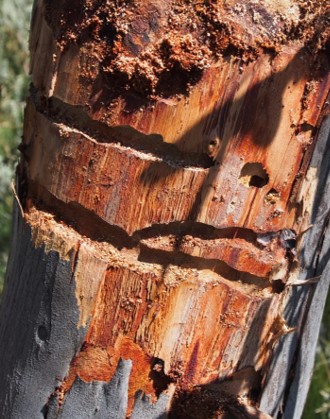
Feeding galleries on a Snow gum, Photo: Matt Brookhouse

Two factors are thought to be influencing the current dieback event in Snow Gum populations around the Snowy Mountains. The first factor is thought to be drought and the increasing frequency and intensity of hotter, drier periods in the area. These conditions reduce the available water intake for the tree species and cause stress. The second factor is the Longicorn beetle, part of the Phoracantha genus. These are wood-borer beetles that are native to Australia, feeding on the tissue under the bark of stressed trees. The beetles feeding habits forms trench-like galleries which eventually cut off nutrient supply and effectively ‘ring-bark’ the tree. The two factors are closely related in the presence of dieback, as the stress in the snow gum trees during drought increases their vulnerability to attack from longicorn beetle.

A volunteer researcher in the field, Photo: Oliver Medd

Jessica, fellow researchers, honours supervisor Prof. Matt Brookhouse and a team of volunteer researchers (including myself) travelled to Kosciuszko National Park mid-December of 2019 to collect data on the occurrence of Snow Gum dieback. Data on the presence of Longicorn beetle damage and spatial data on the location and conditions correlating with the presence of tree death was collected. The data was spatially logged using portable computers linked to GPS, with pre-determined transects followed and data taken at consistent points along each transect. Each tree, within a radius of each point, was recorded for their size, general health, and any evidence of beetle damage.

In total, 2315 trees were measured, and the data produced some interesting results.


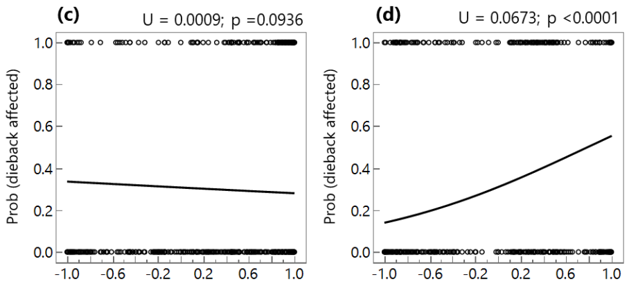
Probability of Dieback presence in relation to slope and elevation – Jessica Ward-Jones

The results suggest that the presence of dieback in the snow gum communities within the park was stronger on steeper slopes at lower altitudes where conditions were less favourable to snow gum growth. This suggested the dieback affects already more stress prone trees to a greater extent. Also, it was found that slopes with an easterly aspect show higher evidence of dieback in snow gum trees.

Other influences on the presence of dieback were observed. Previously burnt communities of snow gum within the park showed a greater resistance to dieback, where the unburnt communities had a higher probability of dieback occurrence. The presence of ski resort parks also displayed correlation with dieback probability, with resort areas being more open and in historical stock grazing routes with less vegetation, more soil loss and compaction and thus more rainfall runoff observed.

The implications of the work done by Jessica and her colleges will provide better information to educate future dieback outbreak predictions within the Kosciuszko National Park, as well as other sites of similar dieback within Australia. Her findings will also work to improve and inform targeted management strategies to protect the snow gum communities within the park in the future.

An interview with researcher Jessica Ward-Jones about her work with the dieback in the snow gums community of the Snowy Mountains can be found here:

I’d like to thank Jessica for her time to talk with me about her research.

Posted in Uncategorized | Leave a comment