Sustainable Development and The Superb Parrot

Image 1: Female Superb Parrot taken at Justice Robert Park, Photo credit: Marina Fillipe

Introduction

As part of a recent work experience project I participated in a survey to measure the prevalence of Polytelis swainsonii, commonly known as the Superb Parrot, in the Sutton region outside Canberra.  The work was commissioned by a property developer and was conducted by Capital Ecology, a company that specialises in identifying, recording and assessing ecological value.  Such surveys can help in understanding the ecology of native species, such as the Superb Parrot, which is critical in formulating plans to ensure the species’ survival.

What is the importance of the Superb Parrot?       

The Superb Parrot is a threatened bird species that nests in tree hollows of Box Gum Grassy Woodland. The species plays an important role in helping to propagate grassland seeds whilst also having significant cultural and aesthetic value.  Superb Parrots choose their nests, which comprise of small hollows of around 10 cm in width, in either Eucalyptus rossii or Eucalyptus blakelyii. The male birds are bright green with a long narrow features, and back-angled wings; the females have duller colours. The parrots are found mainly in the south-eastern parts of Australia and are known to occur at a higher frequency in and around the ACT, specifically a site in Sutton which is earmarked for property development.
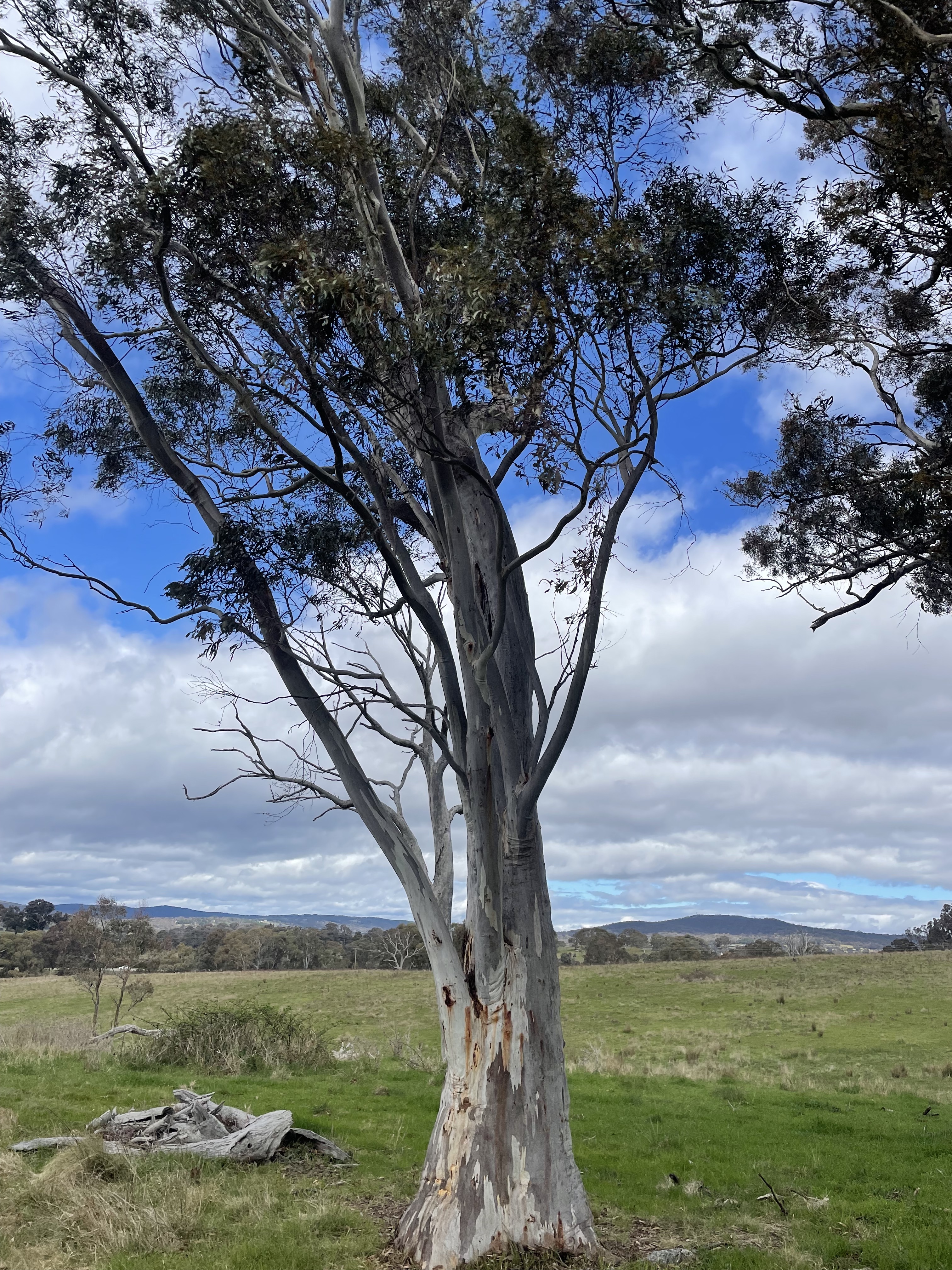
Image 2: One of the several trees that are know nesting sites for the superb parrot at the development site in Sutton, photo credit: u6946901

Property development and Biodiversity – can we find that happy medium?

With an ever-increasing population, no one can deny the need for these developments, but it should be sustainable and not come at the expense of native species, especially those already vulnerable to extinction as a result of human development.  Plans are afoot in the Sutton region to build residential allotments in parts of the Woodbury Ridge Estate. As with all property development there is a need to clear land, which will result in some biodiversity loss. Capital ecology along with the developers have put an emphasis on coming up with a plan to minimise the effects of any loss of biodiversity for the Superb Parrot by conserving known hollow bearing nesting sites. In this case, with increased community involvement stewardship sites have been introduced. These are specified areas of land in which the owner of the property manages the biodiversity conservation in exchange for biodiversity credits that have financial value and can be traded and used as offsets. There are several of these sites implemented in the plan giving hope to the prospect that sustainable development is achievable in the face of urban expansion.

Thanks to Capital Ecology

Due to the hard work of private companies like Capital Ecology biodiversity stands a fighting chance against the unfortunate sprawl of property development.  In this particular case, their work may help to change the lowly ecological status of the Superb Parrot through monitoring and awareness studies.  Capital Ecology has a track record of improving biodiversity in Canberra and the surrounding regions having provided input into the Kama Nature Reserve and the future of the ‘Molonglo 3’ urban development area in the ACT. While the great work of Capital Ecology conserves endangered populations biodiversity conservation requires effort from all stakeholders, especially land developers, and the introduction of stewardship sites is a good way to encourage developers to take biodiversity conservation seriously.

I really enjoyed the time I spent working with Capital Ecology.  Catherine Ross, who took me out for the day, taught me a lot about the company and how they operate. I would like to thank her and the whole Capital Ecology team for providing me with this great opportunity and I would encourage anyone with an interest in our natural environment help out in similar studies.   

u6946901, word count: 584

References

Capital Ecology (2022). Woodbury Ridge Estate, Sutton, NSW – EPBC Act Preliminary Documentation. Final 01 – 6 January 2022. Prepared for Capital Plus 1 Woodbury Ridge Pty Ltd. Authors: S. Reid and R. Speirs. Project no. 3088.

Davey, C., 1997. CANBERRA BIRD NOTES. Registered by Australia Post – publication No NBH 0255, 22.

Davis, A., Major, R. and Taylor, C., 2013. Housing Shortages in Urban Regions: Aggressive Interactions at Tree Hollows in Forest Remnants. PLoS ONE, 8(3), p.e59332.

Ecology, C., 2022. [online] Capitalecology.com.au. Available at: <https://www.capitalecology.com.au&gt; [Accessed 15 October 2022].

Manning, A., 2003. A multi-scale study of the Superb Parrot (Polytelis swainsonii): implications for landscape-scale ecological restoration. A thesis submitted for the degree of Doctor of Philosophy of The Australian National University,.

Rayner, L., 2020. Superb Parrot Conservation Research Plan. Superb Parrot Conservation Research Plan – Bango Wind Farm,.

Stojanovic, D., Rayner, L., Cobden, M., Davey, C., Harris, S., Heinsohn, R., Owens, G. and Manning, A., 2021. Suitable nesting sites for specialized cavity dependent wildlife are rare in woodlands. Forest Ecology and Management, 483, p.118718.

Posted in Uncategorized | Leave a comment

Let me show you how to thistle: Weeding at Mount Majura

By Kristoffer Halkjær, u7525482

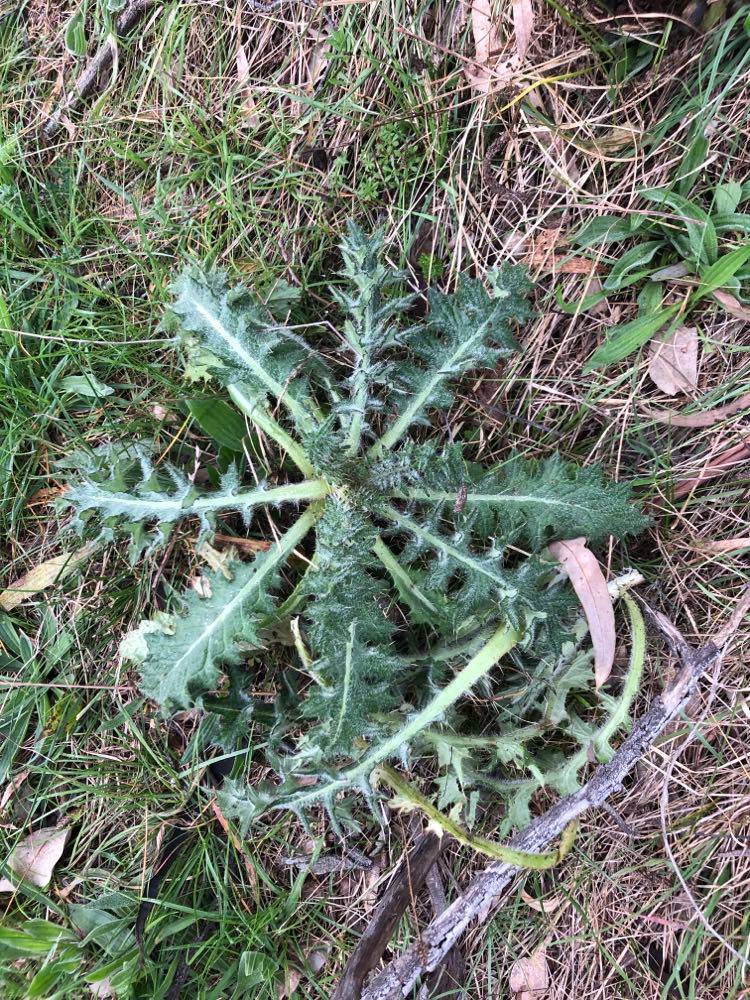
Different weeds are spreading like a pandemic across Australia. One of these wretched creations, seen from an Australian perspective, are Carthamus lanatus or perhaps better known as saffron thistle. As a participant of The friends of Mount Majura (FoMM) weeding session, my job was to find these thistles and pull them from the ground using a pickaxe.

What even is a weed?

A weed is a plant, that causes damage outside of its natural occurring environment. The damage can be towards many things but it is most often against the local ecosystem. The weed can often outcompete native species for water, light, and nutrients. This lowers biodiversity in the local area.

The Monday morning experience

Photo of the map over Mount Majura Nature Reserve, photo by Kristoffer Halkjær, 2022.

The Friends of Mount Majura meets weekly on Monday mornings. The group was a collection of adults and children in all ages. The equipment consisted of gloves, pruners, pickaxes, big bags, and herbicides. The route was planned from home, so my job was just to follow along. The people I met were very welcoming and I got to learn a lot about the reserve and the different native species and weeds. The FoMM have earlier had success with controlling the thistle at an old sheep camp, so they know from experience what works. What works is hard work, since they used three years on lowering the amount significantly. The three years are necessary since, most seeds have germinated at this point.

Photo of Carthamus lanatus by Kristoffer Halkjær, 2022.

Quiz 1) Test your knowledge on Mount Majura. In what year did Mount Majura become a Nature Reserve? Answer at the bottom
a) 1989
b) 1993
c) 1997

How does it spread?

On the day of the volunteering work, I was told to just pull the thistles up from the root and place them upside down. Putting the plant upside down was done in order to distinguish it from the other thistles, that were yet to be pulled. But I was surprised, that the thistles didn’t need to go in the big weed bag we brought to the side. This was due to it not being the season for seed spreading, so no flowers were present on the plant. Saffron thistle actually doesn’t spread as fast as other weeds. The seed is too heavy to fly particular long. It is, however, able to float in water as well as being carried by stock or other kinds of mechanical transportation.

Tools used for weeding, photo by Kristoffer Halkjær, 2022.

Quiz 2) Test your knowledge on thistles. How tall can a saffron thistle become? Answer at the bottom
a) 50 cm
b) 100 cm
c) 150 cm

What can you do about it?

The easy answer would be to suggest you join the Friends of Mount Majura for their weekly weeding. This will help the yellow box – Red gum grassy woodland of Mount Majura on a small scale. But in order to make a really significant change, help must come from a bigger scale. So go out a make your voice heard. Get people to understand the real issue we are facing. Perhaps even join government. It is a tough battle but the alternative is the continued decline of biodiversity!

Acknowledgment

I would like to thank the Friends of Mount Majura for their work in preserving Mount Majura Nature Reserve and teaching me about their mission. I would also like to thank Prof. Phil Gibbons for giving me the opportunity to get some experience in volunteering and for running an amazing course.

References

[1] NSW Government, 2021, Weeds, Available at: https://www.environment.nsw.gov.au/topics/animals-and-plants/pest-animals-and-weeds/weeds (Accessed 30 October 2022)

[2] Government of Western Australia, 2017, Saffron thistle: what you should know, Available at: https://www.agric.wa.gov.au/declared-plants/saffron-thistle-what-you-should-know (Accessed 30 October 2022)

[3] Waltraud P, 2014, Saffron Thistle Weed Blitz @ The Fair, Available at: https://majura.org/event/saffron-thistle-weed-blitz-the-fair-2/ (Accessed 28 October 2022)

[4] Linnaeus C, 2021, Carthamus lanatus L, Available at: https://profiles.ala.org.au/opus/weeds-australia/profile/Carthamus%20lanatus (Accessed 30 October 2022)

[5] The Australian Association of Bush Regenerators, 2022, WHAT IS A WEED?, Available at: https://www.aabr.org.au/learn/what-is-a-weed/ (Accessed 30 October 2022)

[6] Queensland Government, 2020, Saffron thistle, Available at: https://www.daf.qld.gov.au/__data/assets/pdf_file/0011/75395/saffron-thistle.pdf (Accessed 29 October 2022)

[7] Shorten C, 2007, Saffron Thistle, Available at: http://cdn.connectingcountry.org.au/press/wp-content/uploads/2015/11/11162442/Saffron-Thistle.pdf (Accessed 30 October 2022)

Answers for quiz; 1b, 2c.

Posted in Uncategorized | Leave a comment

How can we protect our native animals on private land?

u6939856

Word count: 498

Despite having only 5 percent of the world’s land mass, 7 to 10 percent of all species on Earth are Australian, gifting the continent with an incredible amount of biodiversity. However, in the last 200 years, we have suffered the largest decline in biodiversity of any continent, so it is incredibly vital that we increase our efforts of conservation.

Biodiversity conservation on private land is an essential part to ensuring as much of our environment is being protected as possible, and one of the key threats to our indigenous species is the introduction of invasive species. South-west of Canberra, the Wandiyali—Environa Wildlife Sanctuary’s mission is the sustainable protection of Australia’s natural environment. This involves the establishment of a predator-proof fence to facilitate the protection of existing native species as well as the translocation of endangered native mammals. These mammals include the Brush-tailed Rock-wallaby (Petrogale penicillate), the Eastern Quoll (Dasyurus viverrinus), and the Eastern Bettong (Bettongia gaimardia). However, they are often predated by foxes and cats which are responsible for the extinction of 24 native mammal extinctions and counting.

Figure 1. The predator-proof fence at the Wandiyali—Environa Sanctuary (Wandiyali—Environa Trust, 2020).

A predator-proof fence ≠ A wombat-proof fence

To keep foxes and cats out of the Sanctuary, $1.2 million from the Federal Government’s Environment Restoration Fund was put forward to establish a 400ha haven within the Sanctuary, much of which went towards the development of the predator-proof fence. Upon visiting the site, the gate had been installed with intermittent, sturdy, vertically swinging wombat gates to allow them to move throughout the Sanctuary freely. In places where the wombats had dug underneath the fence as they were following their established, natural routes, the caretakers at Wandiyali were installing additional wombat gates. By taking cues from the wombats’ paths, the Sanctuary is working to create a safe haven for native mammals whilst ensuring the least interruption of natural processes.

Figure 2. Example of a wombat gate in a predator-proof fence (CSIRO, 2022).

Hollowhogs: Is innovations best at its simplest?

In addition to invasive species, the threat of habitat loss through deforestation has reduced the number of tree hollows in Australia and thus reduced impacted populations of hollow-dependent animals. At least 300 types of Australian animals rely on hollows for homes, including 28% of reptiles, 42% of mammals, and 17% of bird species. Within the Sanctuary, the application of the unique wood carving tool known as the Hollowhog has been created to make large internal cavities through small entry holes in both alive and dead wood. As it does not damage the tree’s cambium, the carving process does not disrupt the tree’s growth. Throughout the Sanctuary, the Hollowhog has been employed as a tool to attract primarily bird species such as the Scarlet Robin (Petroica boodang) to increase the numbers of naturally occurring native bird life. Additionally, to increase the Threatened Woodland Birds’ habitat, greater midstory planting and the placement of coarse woody debris throughout the Sanctuary has been added.

Figure 3. David Larcombe indicating a hollow created by a Hollowhog (Van Duyl, 2022).

Thus, the tactics of predator-proof fences and the provision of hollow habitats are effective tools for biodiversity conservation on private land at the Wandiyali—Environa Sanctuary.

Posted in Uncategorized | Leave a comment

Ca-nope-y cover: The importance of complex multi-story habitat for biodiversity

U7117233 – Lucy Stuart

Biodiversity conservation in urban environments is a growing area of concern for environmentalists. Ongoing global population growth and the housing affordability crisis are driving new housing developments into biodiversity hotspots, creating questions around how to best manage competing land uses. On the 7th of October (after one reschedule ironically due to weather!), myself and some peers from ANU headed out to Ginninderry for work experience. Although wet, we trudged out to the West of Belconnen to the housing development ready and keen to participate in the planting of mid-story habitat in the development.

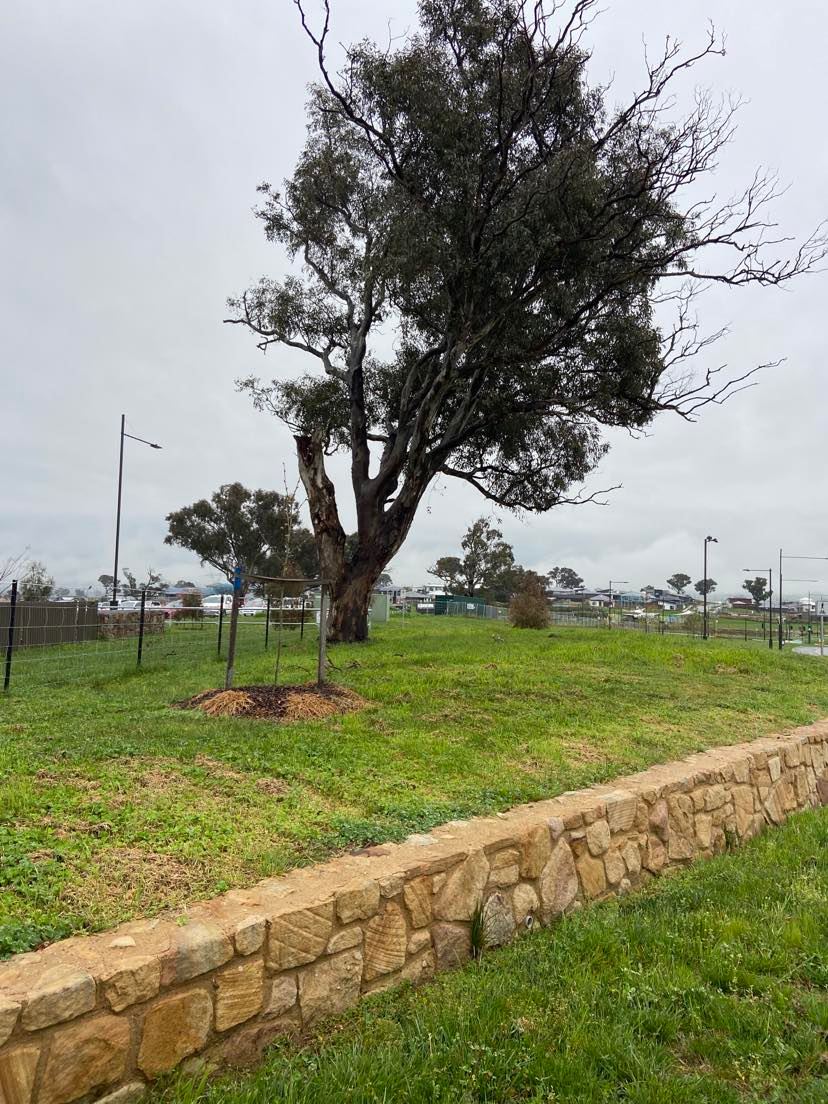
Two examples of Ginninderry’s remnant trees with a stark lack of mid-story habitat.

Why is this important?

The developing suburb of Ginninderry boasts a ‘sustainable community of international significance’, prioritising the conservation of old remnant trees. It is known that remnant trees provide valuable habitat for a variety of species within their hollows. In order to conserve these trees, the space of about 3 house blocks must be spared. Ginninderry has achieved maintaining 80% of remnant trees for biodiversity through the efforts of environmental consultants, partners, and developers within this project. Although this is a sacrifice of about $200 000 per tree in favour of environmental outcomes, it means that there is a lack of complex environmental structure in the urban landscape as older trees were prioritised. Complex vertical and horizontal habitat is particularly important for bird diversity, changing the patterns of bird behaviour. Additionally, there is also a target to achieve 30% tree cover within the development, however, this figure currently sits around 21%. Thus, the need to revegetate urban areas with smaller shrubs and trees is apparent for greater biodiversity benefits.

So what happened?

Unfortunately, upon our arrival at Ginninderry the rain got heavier and eagerness levels rapidly decreased! We decided aginst planting the tubestock and instead walked through the development with Matthew Frawley, the Urban Design and Landscape Manager. As we walked, Matthew was able to point out different urban design features implemented to benefit biodiversity outcomes. This included the conservation of remnant trees, water senstive design and specific housing regulations. This was still a vaulable learning experience, higlighting the need to balance differing land values in the face of population growth. 

Interestingly, upon returning to the site at the end of the month, the mid-story revegetation was still unfinished. I am very intrigued to see how this development plays out in the long term and I wish the team all the best in completing and maintaining their biodiversity targets.

Posted in Uncategorized | Leave a comment

Work experience on citizen science

u6535405 – See Cheng

Unlike other bloggers, I did my work experience indoor as I have experienced a knee injury. Therefore, I have chosen the online work experience opportunity for my work experience in Atlas of Living Australia (ALA), where they provide platform for different organization for citizen science job opportunities. Citizen science are usually performed by citizens that helps scientist on data collection and analysis in relation to the natural world. Although the impression of citizen science are usually boring and repetitive, I actually enjoy this experience and surprisingly convenient. Moreover, this experience make me realise the importance of citizen science, where the general public can contribute their own frames and knowledge while exchanging knowledge from the scientific research. Furthermore, Citizen scientists can give out different feedback from the project which can improve the measures and contribute ideas of a scientific research.

There are 3 types of expedition in ALA, which is collection labels, historical documents and wildlife spotter. In this work experience I have chosen collection labels an wildlife spotter. As I am an international student, I am not too familiar with cursive writing so I didn’t choose historical documents for part of my job experience.

Wildlife Spotting

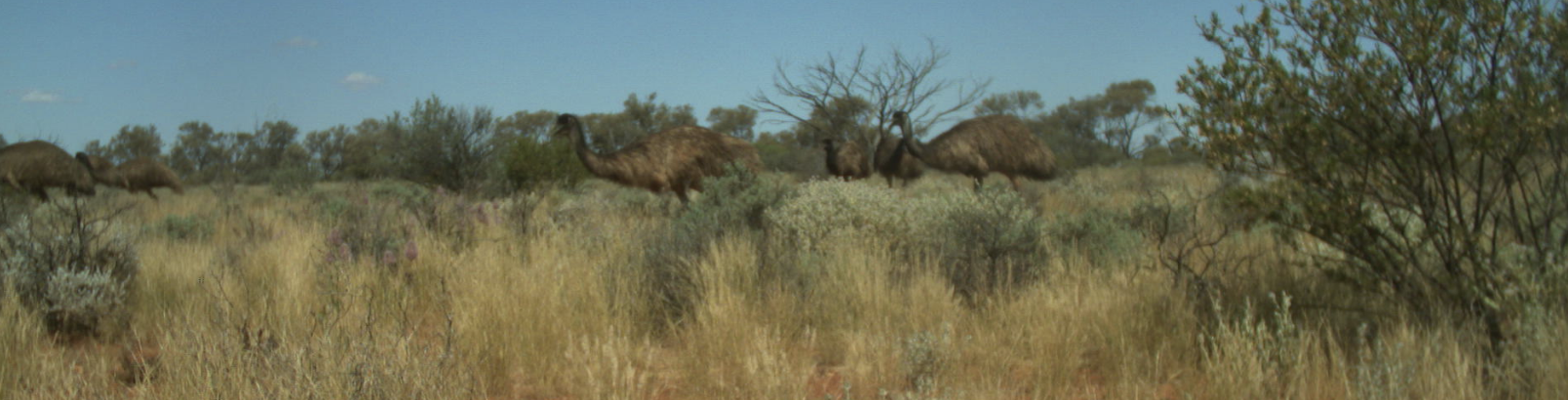
How many Emus are in the picture below?

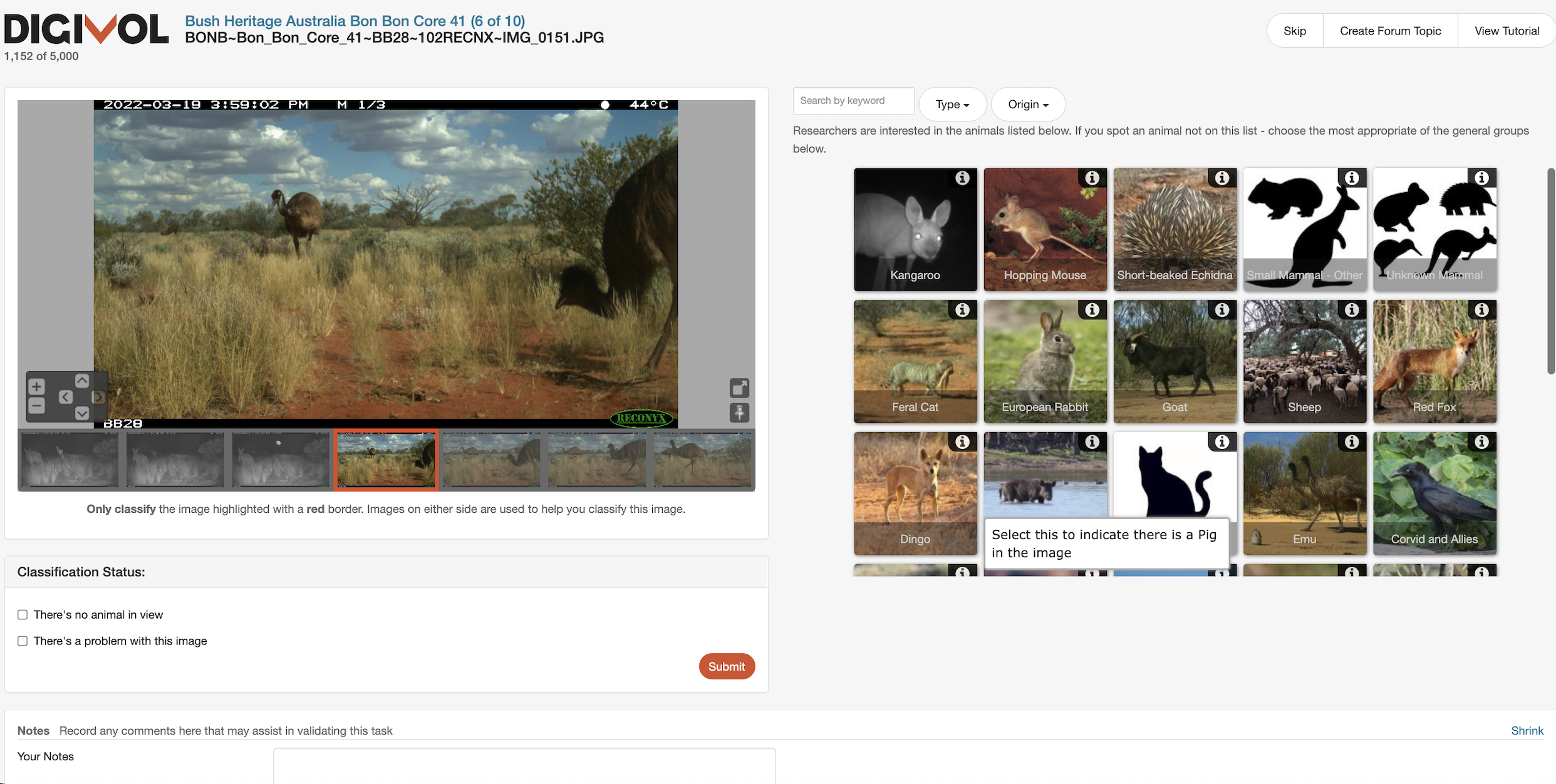
I have participated the Bush Heritage Australia (BHA) Bon Bon Core 41 programme. The BHA uses camera to record animal activities, citizen scientists are required to assist with the identification of the key species . DigiVol is a tool to identify species by providing image from wild camera and manually tick on the indicates animals appear in the image.

I have monitored over 500 wildlife camera shots and cost me around 3 hours which is captured in Bon Bon Station Reserve. DigiVol is a application that provide user interface for citizen science while giving me different challenges like the photo above or like a completely dark photos. In order to provide an accurate result, we have to go through frames from back and forward.

This experience makes me feel like a puzzle game where we need to go through the picture carefully while choosing the correct species. Although there are no endangered animal appeared during the experience, I still find it interesting and sometimes challenging.

Collection Labels

Transcribing the information from the original label into digital data for the Victorian School of Forestry (VSF) is our expedition for collection labels. Multiple samples of small branch or flowers from Eucalypts trees, which is collected back in the 60,70s, will be access and transcribe into data. Information will be available on Australian’s Virtual Herbarium and Atlas of Living Australia.

I have transcribed 5 if the collections. The most interesting part of this expedition is when I had come across a collection that were sampled in Dec 1944. I am really glad as the documents are full of historical values. Moreover, I have realise how technology intervene science as most of the samples data may include GPS locations while the sample from 40s only gives out approximate locations.

Posted in Uncategorized | Leave a comment

Modifying the Modified Landscape

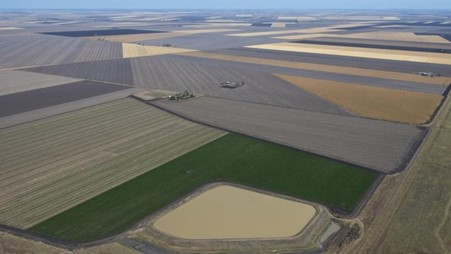
Around 55% of the Australian land mass is used for agriculture, resulting in a vastly modified landscape. Images such as the one below are a common sight across Australia, vast plains of land used for cropping or livestock with not much evidence of what the land once looked like.

The modification in both land management and the physical landscape has resulted in degradation of biodiversity. This degradation has occurred through management practices such as land clearing, resulting in fragmentation of vegetation. Land clearing has resulted in increased soil salinity, greater impacts of edge effects and introduction of weeds.

What is Scottsdale?

With such a large amount of Australia’s land being highly modified how can we work to restore and repair the damage that has been done to biodiversity? This is the work that Bush Heritage Australia is working on.

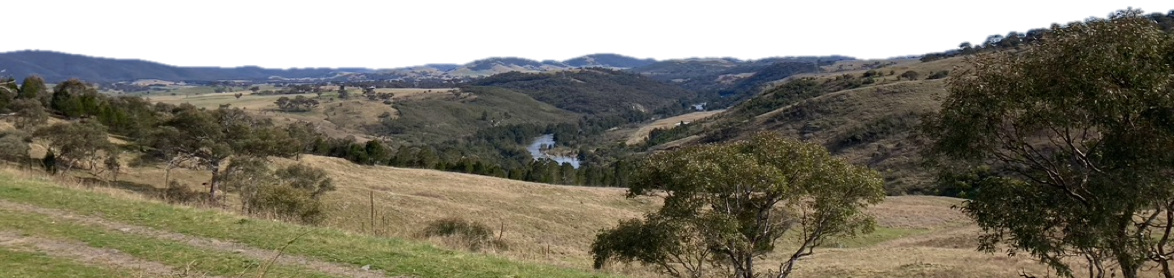
Specifically, in Australia’s south-eastern temperate grazing zone around 80-95% of land has been cleared for production. It is in this region where Bush Heritage Australia has Scottsdale Reserve – a 1,328-hectare property about an hour South from Canberra. Scottsdale Reserve was purchased by Bush Heritage Australia in 2006 where it at the time was used for grazing livestock. As a result of this the site has experienced around 300 hectares of land clearing resulting in introduction of weeds such as African Lovegrass. Further, the location of the site is significant as it is critically endangered yellow box woodland, further highlighting the importance of restoring the landscape.

What is done there?

In order to regenerate the landscape from a highly modified agricultural land Scottsdale conduct a number of activities. These activities range from tree-planting, weed and pest control, monitoring and research. Through undertaking these activities Scottsdale Reserve plays a wider role in providing a biodiversity corridor between Kosciusko and the coast known as K2C.

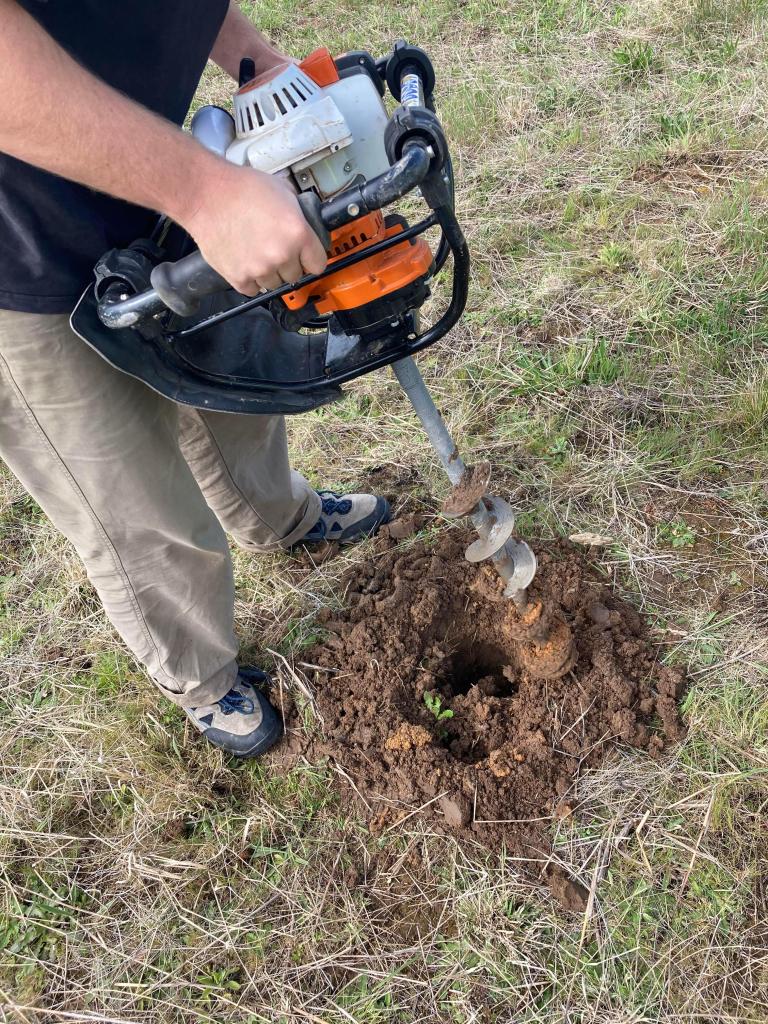
When we visited the reserve we took part in riparian restoration, this involved planting key species of the yellow box woodland such as Apple Box, Red Box, Wallaby grass, Poa Tussock and even some Snow Gums. Further, some course woody debris made up of old fences were scattered around the site to provide a number of ecosystem services. These include; slowing water down to increase the amount absorbed into the soil and creating habitat allowing for movement of insects and birds. The images below display the process of auguring and the area planted.

Sites such as Scottsdale Reserve and organizations like Bush Heritage Australia are playing essential roles in regenerating Australia’s highly degraded and modified landscape. This work is highly reliant on labour and as a result a large portion of land regeneration work is reliant on volunteers. This is something that both brings community together and as well as providing opportunity to educate the wider public. However, this reliance on volunteers is also a vulnerability in the operations of NGO’s where circumstances such as COVID-19 seeing a volunteer reduction of 65.9% across Australia can significantly impact efficiency of work. However, moving forward the process of restoring Australia’s landscape is long and will require many helping hands but with the help of groups such as Bush Heritage Australia it is bright.

Many thanks to Phil Palmer and Bush Heritage Australia for having us.

u7120722

509 words

Posted in Uncategorized | Leave a comment

Romeo, Romeo, wherefore art thou Romeo? Problems with cat containment compliance in Canberra

By Stuart Viney u5955036

Romeo has gone roam about in Straithnairn!

He’s been on a suburban stroll, searching for his star-crossed lover, Juliet. But there never has been a tale of more woe than this of Juliet and her Romeo, for Juliet has been locked up in the castle that is Canberra’s cat containment laws. In fact, Romeo should have been locked away in that castle too, but this feline game of find and seek highlights the issue of compliance in Canberra’s cat containment laws.

What is cat containment?

As part of the ACT Cat Plan 2021 – 2031, across the entire ACT, all cats born after July 1 2022 are required to be kept on their owner’s premises 24 hours a day, 7 days a week. In newer suburbs, including Straithnairn, this rule applies to all cats, regardless of their age.

Why do we need cat containment?

The ACT Cat Plan recognizes that while cats are often thought of as pets, they are also considered a pest species. Cats are known to become predators of a litany of native species. It’s estimated that the Canberra cat population can kill over 100000 native birds, small mammals, reptiles, and frogs each year. Across Australia, feral cats pose a risk to 142 threatened species. In all likelihood, Romeo isn’t hungry for love, he’s just plain hungry, and I bet that a critically endangered regent honeyeater (Xanthomyza Phrygia)would be the perfect sized meal for him.

So clearly something needed to be done about Canberra’s cat concerns. Eradication of Canberra’s cat population would be completely infeasible in terms of logistics and community backlash. Instead, containment was deemed the most realistic management option, and the most likely to produce positive outcomes for the threatened species which the ACT government is trying to protect.

How can cat containment be improved?

The troubling thing about Romeo’s missing poster, aside from missing the perfect opportunity to quote the play which he was named after, is that it was found in Straithnairn, a cat containment suburb. There should not be any posters for missing cats in cat containment suburbs because there should not be any opportunities for a cat to go missing! It shows that cat owners are either ignoring the containment laws, or unable to properly abide by them. The current response to breaches of containment is through education, or failing that, a measly $300 fine.

But Romeo is not alone in escaping the confines of containment, each year the ACT RSPCA takes in over 700 lost cats, and those are just the escapees which were found. That might give Romeo hope that his romantic getaway might result in reuniting him with Juliet, but it also shows that the current compliance measures are not enough.

Feral cats kill over 1 million native Australian birds each year. Image credit: ABC

The time for education is over! It is time for a plague of penalties to be prescribed upon the houses which cannot contain these cats. Strict and significant fines should apply protect the native species which are suffering. All pet cats in the ACT must already be micro-chipped, so tracking down the owners of a found feline should not be difficult. I propose that there should be a ransom of at least $1000 for the return of any lost cats which have been found after breaching the compliance laws. If the ransom cannot be paid then the found cats will become fortune’s fool, and be destroyed. Money from this ransom could be used to fund conservation actions for the species which are threatened by feral cats. This would only penalize the owners of lost cats which have been recovered, however the threat of financial or emotional harm coming from allowing cats like Romeo to go roam about should elicit greater containment compliance from Canberra’s cat owners.

References

Barratt, D.G. (1998). Predation by house cats, Felis catus (L.), in Canberra, Australia. II. Factors affecting the amount of prey caught and estimates of the impact on wildlife. Wildlife Research, 25(5), p.475. doi:10.1071/wr97026.

City Services (n.d.). Cat containment. [online] ACT City Services. Available at: https://www.cityservices.act.gov.au/pets-and-wildlife/domestic-animals/cats/cat-containment.

Department of the Environment (2015). Threat abatement plan for predation by feral cats. Canberra: Commonwealth of Australia.

Environment, Planning, and Sustainable Development Directorate (2021). ACT Cat Plan 2021-2031. Canberra: ACT Government.

RSPCA ACT (2021). Annual Outcomes Report 2020/2021. Canberra: RSPCA.

Posted in Uncategorized | 1 Comment

Weeding Between the Lines: the Problem of Common Mullein in Ginninderry, and What is a Weed Anyway?

Madeleine Bessell-Koprek (u7132499)

What is common mullein and why is it a problem?

Walking through the Ginninderry Conservation Corridor, looking over the Murrumbidgee river and across to the mountains, you could be forgiven for happily thinking you are in a beautiful, healthy ecosystem. But right under your feet is one of the greatest threats to Australian biodiversity: weeds. Indeed, in NSW weeds are the second greatest threat to biodiversity after land clearing/habitat loss. Here we will examine one introduced weed species: common mullein (Verbascum thapsus)- the spreading, soft, leafy plant that abounds the slopes of the conservation corridor.

Common mullein, native to North Africa, Europe and Asia, was introduced to Australia in the late 1800s as a garden plant. The introduced species is highly problematic because its large, spreading leaves smother native plants and grasses, restricting their access to nutrients, rain and sun. Additionally, common mullein is a prolific seeder, each plant producing between 180,000 and 240,000 seeds. The seeds remain in the seed bank for prolonged periods of time, sometimes retaining their germinative powers for 100 years.

When is a weed a weed?

We have established that common mullein is a weed, and a problem to the Ginninderry region. But what, exactly, is a weed? This question is more complex and divisive than it might first appear. “Weediness” is not a specific, ecological trait or inherent characteristic, but rather a human-imposed judgement call. Many might consider a weed to be a plant that is encroaching beyond its native range, but as ecosystems shift (particularly in the context of climate change) many species spread beyond their historic ranges. Does this mean they are necessarily weeds? Other definitions of weeds state that they are species that cause problems to the environment or humans. This can quickly become highly subjective. So, does this mean the concept of a “weed” is too subjective and human-centric to be of use? Not necessarily. It does mean we need to be careful of how we use the term, and realise that it is not a universal, ‘scientific’ concept, and means different things in different environmental and social contexts.  

Managing common mullein- what can you do?

Regardless of your exact definition of a weed, common mullein is clearly a problem to native species in Ginninderry, and requires active management. Current management of the common mullein in Ginninderry is centred around the manual removal of the weed. This is overseen by the Ginninderry Conservation Trust, who’s employees manually remove the weed with a mattock. Additionally, community work groups of volunteers, armed with enthusiasm and mattocks are critical in managing the weed.

Furthermore, the Ginninderry Conservation Trust employers encourage anyone walking through the conservation to corridor to, quite literally, kick out common mullein when you see it. So, to conclude, if you feel like blowing off some steam and helping in the conservation of Ginninderry, take a stroll and kick out some common mullein.

All images taken by author

References

Alba, C. and Hufbauer, R. (2012). Exploring the Potential for Climatic Factors, Herbivory, and Co-occurring Vegetation to Shape Performance in Native and Introduced Populations of Verbascum thapsus. Biological Invasions, 14(12), pp.2505–2518. doi:10.1007/s10530-012-0247-4.

Atlas of Living Australia (n.d.). Species: Verbascum thapsus (Aaron’s Rod). [online] Atlas of Living Australia. Available at: https://bie.ala.org.au/species/https://id.biodiversity.org.au/node/apni/7027305 [Accessed 22 Oct. 2022].

Ginninderry Conservation Trust. (n.d.). Ginninderry Conservation Trust. [online] Available at: https://www.ginninderry.org/ [Accessed 21 Oct. 2022].

IUCN (2018). Guidelines for Invasive Species Planning and Management on Islands. doi:10.2305/iucn.ch.2018.15.en.

NSW Department of Planning and Environment (n.d.). Widespread Weeds. [online] NSW Environment, Energy and Science. Available at: https://www.environment.nsw.gov.au/topics/animals-and-plants/pest-animals-and-weeds/weeds/widespread-weeds [Accessed 21 Oct. 2022].

Posted in Uncategorized | Leave a comment

The ACT’s Endangered Striped Legless Lizards: Giving them a leg to stand on

Tianna Clarkson – U7524109

Meet the Lizard

Photo: Ian R McCann, Musuems Victoria

To an outside observer, it might come as a surprise that the unassuming grasslands of the Australian Capital Territory are rich with diversity of life. One of the species to call these areas home is the Striped Legless Lizard (Delma impar). Despite being snake-like in appearance, the Striped Legless Lizard is a type of gecko, having lost its legs throughout its evolution.

Found only in south-eastern Australia, this lizard is listed as endangered on a global scale by the IUCN. Unfortunately, the species is threatened by large-scale habitat loss. Since European settlement in Australia, much of their grassland habitat has been lost, with only 0.05% remaining of what once was. Now, native temperate grassland is a critically endangered habitat nationally and endangered in the ACT.

Grassland at Jerrabomberra. Photo: T. Clarkson

As if it wasn’t concerning enough that the lizard’s habitat is so threatened, there are also many direct threats to the lizard. In the ACT, urban development is a major threat to the species. Road networks and housing developments increasingly divide the landscapes in which the lizard lives, limiting movement between populations. On top of this, grazing, both by livestock and kangaroos, degrades the quality of the grassland that the lizard depends on.

So, what’s being done about it?

This is where ACT Parks and Conservation comes in. They run a yearly tile-check monitoring program throughout the spring, keeping an eye on the lizard’s population sizes.

This is part of two government initiatives: The Striped Legless Lizard action plan and the ACT Native Grassland Conservation Strategy which lay out goals to conserve the Striped Legless Lizard and native temperate grassland respectively.

In the field

Lizard populations are monitored across the ACT, from Gungahlin to Jerrabomberra, using artificial shelters, which in this case, are roofing tiles. The idea behind this is that the lizards will choose to shelter underneath the tiles, making them easier to find and count.

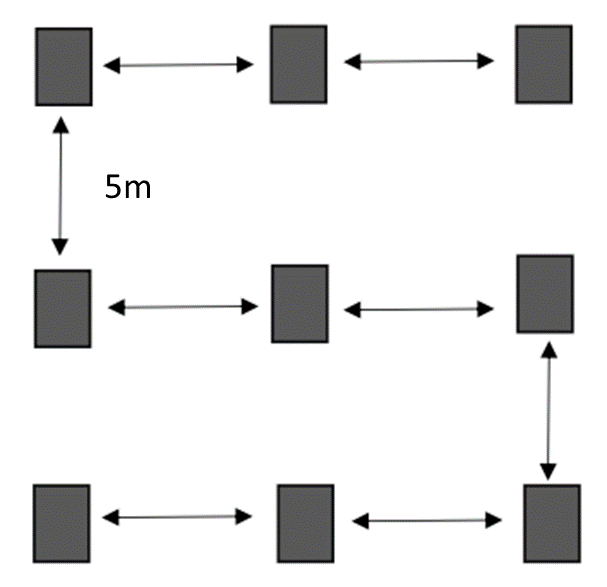
I joined Emily and Emma from ACT Parks and Conservation to help set up the monitoring sites in late August and early September. Our job was to arrange tiles into 3 x 3 grids, the outer 8 of which would be turned over during tile checks.

Making the most of the opportunity, the tile checks also involved counting any other species that hid underneath the tiles. Even when just moving the tiles we saw species like the Delicate Skink (Lampropholis delicata) and Spotted Marsh Frog (Limnodynastes tasmiensis) who had decided to make the stacks of tiles their home!

Why does this matter?

This monitoring not only helps to conserve the Striped Legless Lizard, but also helps to protect their grassland habitat by making sure that conservation of the whole ecosystem is more well-informed. This means that this project can also benefit other threatened grassland-dwellers such as the Perunga Grasshopper (Perunga orachea), Golden Sun Moth (Synemon plana), and the Grassland Earless Dragon (Tympanocryptis pinguicolla). That’s a win-win!

Posted in Reptile | Tagged , , , , , | Leave a comment

Public greenspaces – a tool for conservation?

By Liam MacLeod (u7288792)

Earlier this year, I was fortunate enough to have the opportunity to observe and work on some different greenspaces within the Ginnninderry development, situated in West Belconnen, ACT. A short description of these treatments is outlined below:

Treatment 1: Traditional ‘park-like’ management

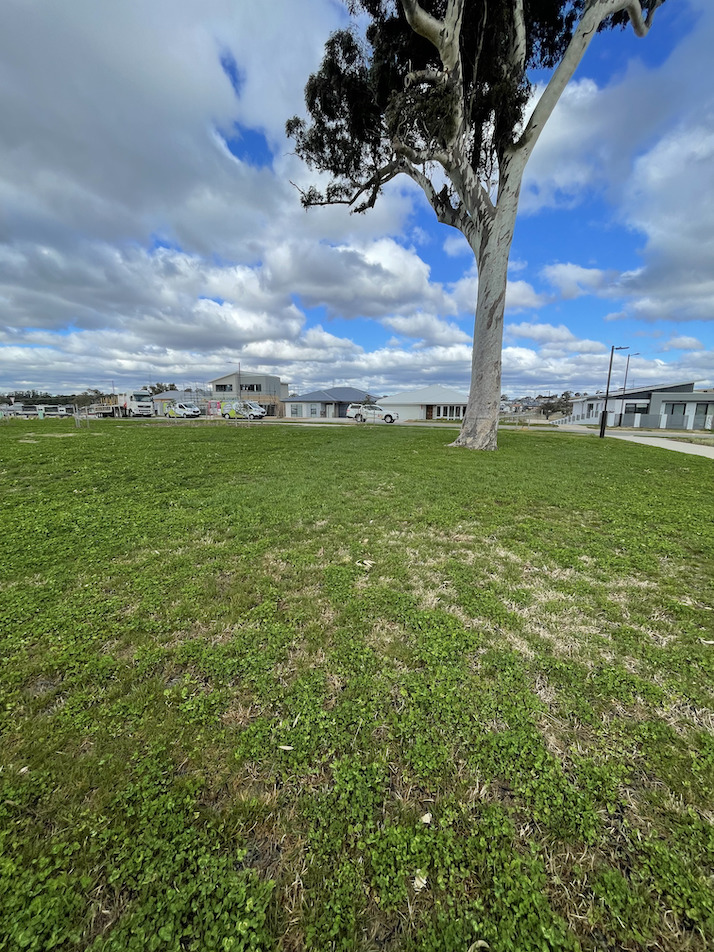
This treatment involves a modified box-gum grassy woodland environment, with an intact mature eucalypt surrounded by a ground layer almost entirely comprised of exotic weeds and grasses. The trees are trimmed, and dead limbs removed for public safety. Grasses are mown as needed, and there is no planting or sowing of native grasses/ground-cover species.

Treatment 2: Mulching and mass planting

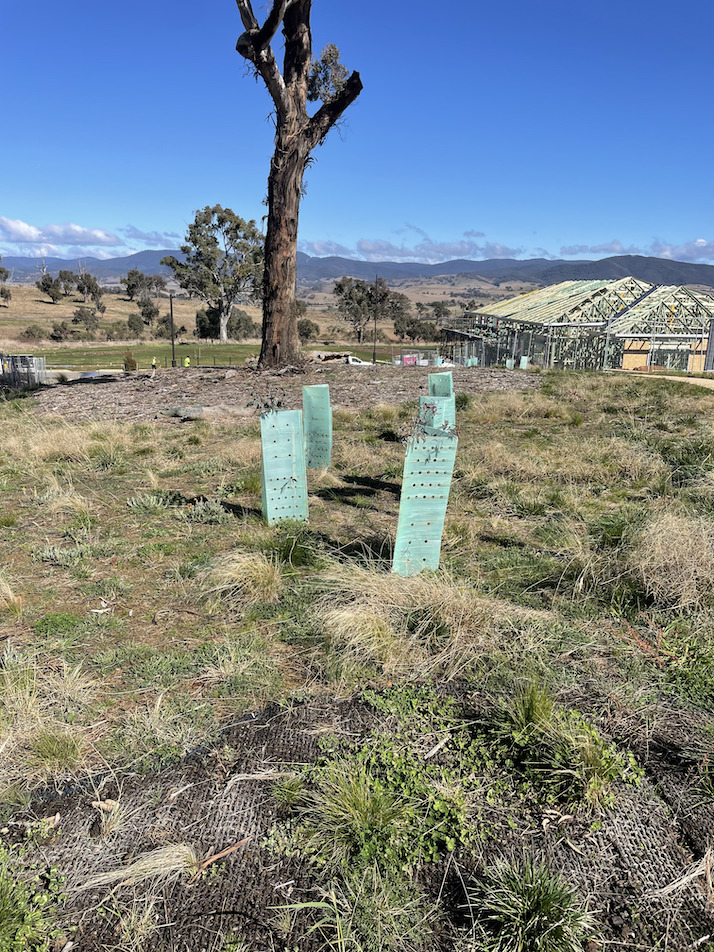
This treatment involved extensive mulching around an existing mature eucalypt. Mid-storey shrubs were then strategically planted in high-density clumps surrounding the large tree, as to create a “protected” area, with minimal foot traffic. These shrubs create a dense, complex habitat for birds. Logs are also introduced to the mulched area, and fallen branches are retained within the area.  

Treatment 3: ‘Best-practice’ community restoration

This treatment involves significant management and restoration of box-gum grassy woodland. Topsoil is removed until an adequate phosphorus level is achieved, with specific conditions required for this soil removal. The grounds are then seeded with numerous native shrub and grass species, such as Australian fingergrass and kangaroo grass, and mid-storey trees such as the Coastal Tea Tree. The goal of this resource-intensive treatment is to completely restore the box-gum woodland habitat within an urban greenspace.

What are the treatment goals?

These treatments have different goals and desired outcomes. A ‘park-like’ treatment of a greenspace aims to maintain an area for recreational and community use with minimal resources, keeping it safe and easy to maintain.

The mulching and mass planting treatment aims to increase biodiversity, attracting different species with dense mid-layer shrubs. This treatment is considered a middle-ground, whereby biodiversity goals are considered, as well as creating an aesthetic and easily maintained space.

Lastly, a full community restoration aims to create an in-tact box gum grassy woodland environment within an urban greenspace. This treatment requires significant resources and maintenance, with weeding, planting and seeding all required to maintain native ground and mid layers.

What did I do to help?

I spent the day assisting members from the Riverview Development group maintain a ‘best-practice’ full restoration greenspace. This involved a number of activities, including the weeding of exotic, invasive weeds such as the White Clover and Paterson’s curse. After extensive hand weeding, we planted some Coastal Tea Trees, with the hope of restoring some mid-layer cover and creating some more complex habitats for bird species.

This treatment is an uphill battle, with a way to go before these greenspaces are completely restored. However, even just one full day of weeding and planting made a noticeable difference, with the hope of increased biodiversity within these greenspaces. 

Note: all photos were taken on 30/08/2022 by me

References:

  • Cole, I., Prober, S., Lunt, I., & Koen, T. (2017). Establishment of native grasses and their impact on exotic annuals in degraded box gum woodlands. Austral Ecology42(6), 632-642.
  • Le Roux, D. S., Ikin, K., Lindenmayer, D. B., Blanchard, W., Manning, A. D., & Gibbons, P. (2014). Reduced availability of habitat structures in urban landscapes: implications for policy and practice. Landscape and Urban Planning125, 57-64.
  • MacKenzie, A., & Gibbons, P. (2019). Enhancing biodiversity in urban green space; An exploration of the IAD framework applied to ecologically mature trees. Urban Science3(4), 103

Posted in Uncategorized | Leave a comment