Biodiversity conservation and the importance of local consciousness

While researching listed threatened species to write up an information sheet for a ENVS3039 practical, I found out that Singapore (my native country) actually has a mention on the IUCN Red List of Top 100 most threatened species in the world (Baillie & Butcher, 2012): the Singapore Freshwater Crab (Johora singaporensis) is a small freshwater crab which can only be found in 2 small areas in Singapore, a stream in Bukit Timah Nature Reserve and a drainage canal in Bukit Batok. Coincidentally, I have lived adjacent to those areas for more than a decade and visited them frequently but have remained ignorant until a chance Internet search in a foreign land.

Singapore Freshwater Crab (Photo by Choy Heng Wah)

Singapore Freshwater Crab (Photo by Choy Heng Wah)

The problems with biodiversity conservation

The rate of biodiversity loss is not slowing despite commitments (increases in protected areas etc.) by world leaders through the 2002 Convention of Biological Diversity to achieve a significant reduction (Butchart, et al., 2010). Biodiversity hotspots (areas especially biodiversity-rich and threatened by human activities) have a higher 1995 population density of 73 people/ km2 than the world as a whole (Cincotta, Wisnewski, & Engelman, 2000). Urbanization causes the most lasting loss of biodiversity conservation (McKinney, 2002). All these problems point to the rise in human population as the root cause of biodiversity loss and the failure of governmental action to stem the losses. People are now much more likely to be knowledgeable about ecosystems across the world from documentaries and to be interested in helping biodiversity conservation but become biased and devalue the biodiversity significance of “ordinary” landscapes (Hanski, 2005).

The solution

Combining all of the above, a solution to the root of the problem is instilling of local biodiversity consciousness into current elementary education. I remember my biology lessons in secondary school being about Darwin’s finches in the Galapagos, genetic bottlenecks and the African cheetah and so on. All these broad concepts can just as easily be described using local species instead of using biology to teach history (Feinsinger, Margutti, & Oviedo, 1997). Using local ecology to teach concepts in biology and ecology can bring a sense of connection for students as well as building an awareness of place, the local ecology and how we fit into the ecosystem, something which was naturally instilled in primitive tribes from dependence on the natural environment (Kawagley & Barnhardt, 1998). Using cookie-cutter textbooks and rote teaching can be efficient but only serves to further alienate humans from the natural environment. Gruenewald (2003) gives a good overview of the history and concepts of “place-conscious education”.
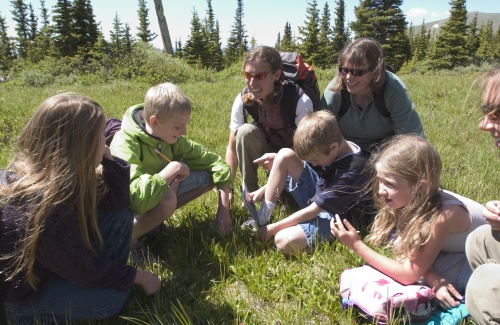
Young student field trip to Niwot Ridge (Photo by C.A. Cass (CU Boulder))

Young student field trip to Niwot Ridge (Photo by C.A. Cass (CU Boulder))

The reasons

I believe this solution would attack the problem at its root (humanely), judging from the research from the book Nudge: Improving Decisions about Health, Wealth and Happiness (Thaler & Sunstein, 2008), which states that people usually choose the default option in the absence of a specific instruction and so modifying our early education has a far greater chance to adjust people’s mindsets.

It can solve the problems shown above by increasing local biodiversity knowledge in the local populace and binds the local people more tightly to a sense of place, increasing political activism (Gruenewald, 2003); understand that even ordinary landscapes are important sources of biodiversity (Hanski, 2005) and helping people acknowledge the existence of ecological limits and refute the assumption that unlimited growth in the global economy is possible and desirable (Gruenewald, 2003). An increased human population is unavoidable but perhaps education can reduce the rate of growth and make people better neighbours with native biodiversity.

Further thoughts

Prominent scientist Dame Jane Goodall recently wrote an article for Inside Story titled “The humility of local consciousness” (Goodall, 2013) and there is an increasing push towards local consciousness from aspects such as sourcing local produce to biodynamic farming. What do you think about increasing local consciousness in biology teaching? Is it relevant in your opinion?

Junyan Tan (Junior) – B.Eng/B.Sci

Works Cited

  1. Baillie, J. E., & Butcher, E. R. (2012). Priceless or Worthless? The world’s most threatened species . London: Zoological Society of London, United Kingdom.
  2. Butchart, S. H., Walpole, M., Collen, B., Strien, A. v., Scharlemann, J. P., Almond, R. E., et al. (2010). Global Biodiversity: Indicators of Recent Declines. Science, 328(5982), 1164-1168.
  3. Cincotta, R. P., Wisnewski, J., & Engelman, R. (2000). Human population in the biodiversity hotspots. Nature, 404, 990 – 992.
  4. Feinsinger, P., Margutti, L., & Oviedo, R. D. (1997, March 1). School yards and nature trails: ecology education outside the university. Trends in Ecology & Evolution, 12(3), 115-120.
  5. Goodall, J. (2013, February 13). The humility of local consciousness. Retrieved April 11, 2013, from Inside Story: http://inside.org.au/the-humility-of-local-consciousness/
  6. Gruenewald, D. A. (2003). Foundations of Place: A Multidisciplinary Framework for Place-Conscious Education. American Educational Research Journal, 40(3), 619–654.
  7. Hanski, I. (2005). Landscape fragmentation, biodiversity loss and the societal response. EMBO Reports, 388 – 392.
  8. Kawagley, A. O., & Barnhardt, R. (1998). Education Indigenous to Place: Western Science Meets Native Reality. Retrieved April 16, 2013, from Alaska Univ., Fairbanks. Alaska Native Knowledge Network.: http://www.ankn.uaf.edu/EIP.html
  9. McKinney, M. L. (2002). Urbanization, Biodiversity, and Conservation. BioScience, 52(10), 883-890.
  10. Thaler, R. H., & Sunstein, C. R. (2008). Nudge: Improving Decisions about Health, Wealth, and Happiness. London: Yale University Press.
Posted in Uncategorized | 2 Comments

Modelling the way for conservation

Think tree hollow simulation Maturetree and the Species-Area Curve – models have been used extensively in our attempts to unravel the complexity of nature, allowing us to better understand ecosystem processes.  Models enable us to simulate these processes by illustrating scientific research, which make them a useful tool to aid decision making in conservation. Recently in Nature, Purves et al. (2013) justifies the need to take modelling in the field of ecology to the next level by building General Ecosystem Models (GEMs).

The comment made in Nature (Purves et al. 2013) can be accessed here http://www.nature.com/nature/journal/v493/n7432/full/493295a.html

The comment made in Nature (Purves et al. 2013) can be accessed here http://www.nature.com/nature/journal/v493/n7432/full/493295a.html

GEMs are analogous to circulation models in climate science and simulate the broad-scale structure and function in ecosystems – the largest scale in the definition of ‘biodiversity’. In other words, fundamental ecosystem processes that drive the distribution and abundance of organisms such as feeding, reproduction, migration and death would be encoded in a GEM, defining the ‘rules at play’ in entire ecosystems.

Parrotfish chomping off a coral. Photo taken in Christmas Island.

Parrotfish chomping off a coral.

Ultimately, GEMs will provide a common framework for different types of ecosystems on multiple scales. With GEMs, ecologists could effectively model population changes, assess overall ecosystem health and resilience, and even explore how any ecosystem may respond to pressures such as climate change and habitat fragmentation over time.

Need to know which/how many trees we can remove/how often we can remove them from a temperate forest such that the system recovers and maintains its resilience in the long term? With GEMs, we will have an answer given what we already know about our ecosystems.

Is it possible to compute such complex systems?

The authors acknowledge the challenges in GEM-building – starting from convincing ecologists that they can and should be built. Yet, the task does not seem impossible with positive outcomes from a prototype. In GEMs, organisms are grouped into ‘cohorts’ based on their function in the system.

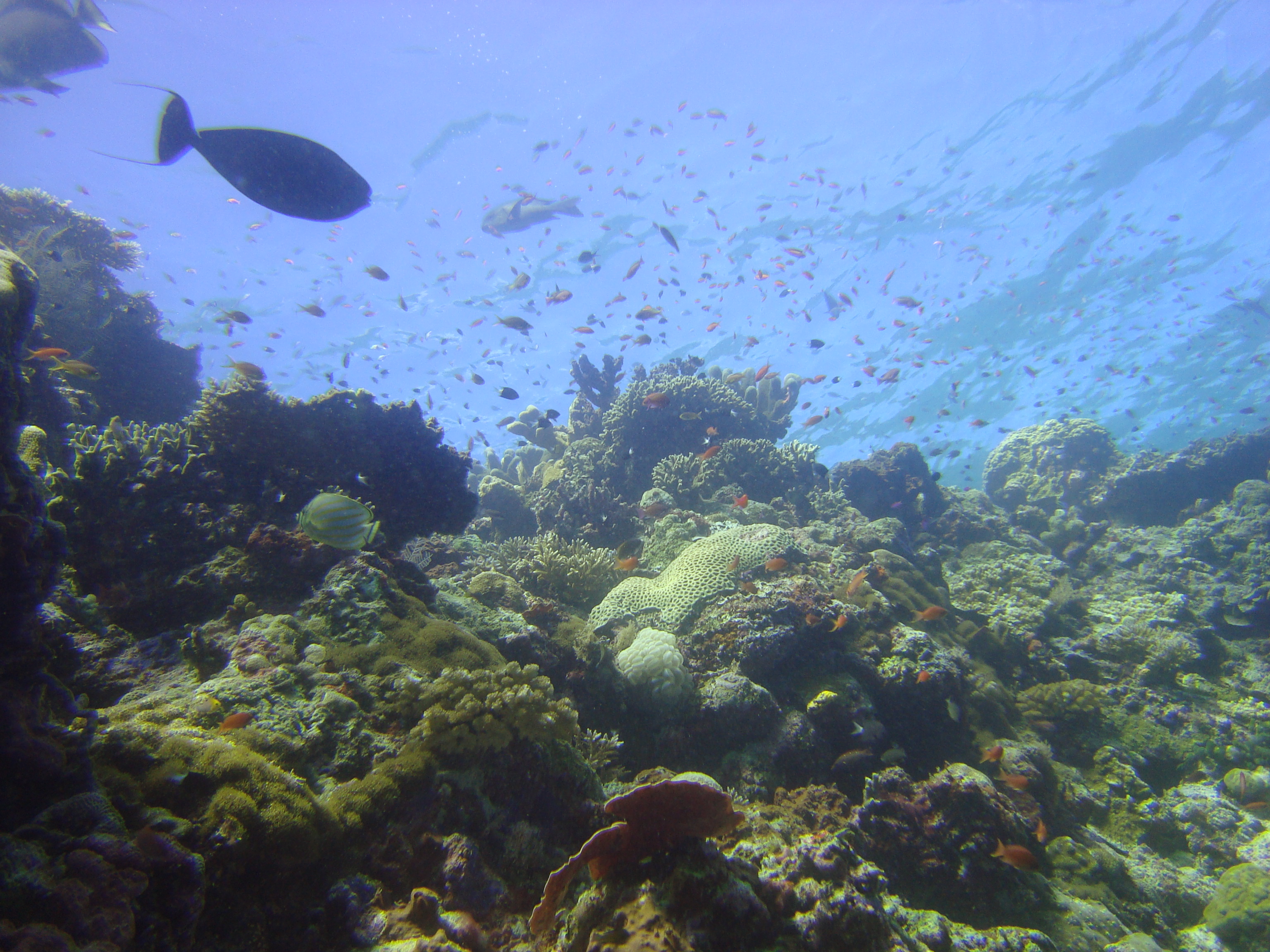
A tropical ecosystem in Palau

A tropical ecosystem has too many species and it would take a very long time to describe all of them. By grouping organisms that are similar enough based on their functions, we could model ecosystems based on these groups.

DSC02264

Coral reefs are extremely diverse ecosystems. An integrated tool for modelling marine ecosystems incorporating biophysical, economic and social factors, Atlantis, has been developed by CSIRO.

GEM potential

“Throughout the history of ecology, most researchers have resisted abstraction because ecological complexity is so obvious in nature … But comprehensive species-specific data will always be in short supply (at least 80% of the millions of species of Earth are undescribed), so a better understanding of ecosystems demands a broad-brush approach.”

With a large proportion of species undescribed, and probably even going extinct without us knowing, perhaps the function and resilience of entire ecosystems should take priority in conservation. To know how and what to conserve we have to understand the system first, and by attempting to build GEMs we can also identify areas in need of more research to allocate funds effectively.

In this article, Stirzaker et al. (2010) explains the concept of a requisite simplicity in understanding complex systems: where conceptual clarity and scientific rigour is retained while discarding some detail. This is different from being simplistic, which leads to error.

GEMs could provide a requisite simplicity in biodiversity conservation, especially because it delivers integrated information that is useful at an implementation level. Not forgetting socio-economic-political factors, GEMs will definitely not be the only guide in decision-making. With an urgent need to respond to biodiversity in decline, ecologically sound GEMs could enable ecologists to identify solutions and predict ecosystem responses in a timely and cost-effective manner.

Although the construction of actual GEMs may seem far-fetched, I feel that the rationales behind GEM-building are very logical, and it will be interesting to see more developments like this in the field.

Cheers,
Isis Lim / BSc
(The photos in this post were taken by me)

Posted in Uncategorized | 1 Comment

The Moral Pitfalls of the Triage System


Image

PHOTO: Atlas of Living Australia

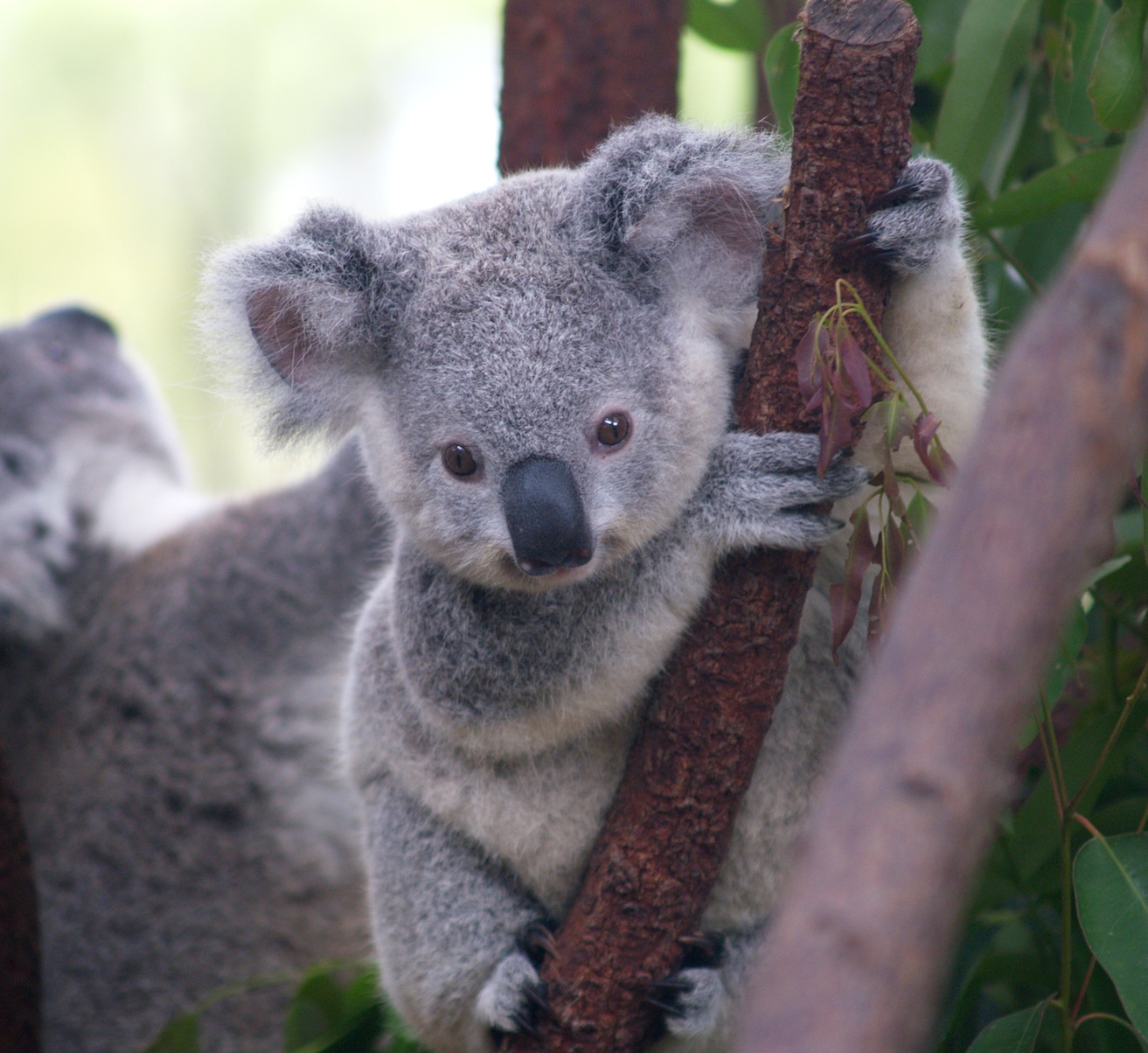
Look at this photo of a baby koala. Sqqquueee!!! It’s so cute! Look at her fluffy ears! Look at her big nose and button eyes! We know that koalas are on the decline in all States and Territories except Victoria; we all know that these insanely cute marsupials are facing habitat loss and degradation due to agriculture, new roads, expanding urban areas and forestry. We know they took a hard hit when they were hunted for their soft, thick pelts in the early part of last century.

Enter the triage system.

‘Triage’ is a term mostly used in medical circles and it means prioritising patients based on the severity of their injuries. In conservation it means using a decision support system to decide which species or system to preserve: What are the chances of this species doing well if we support it? How much will it cost? What’s the cultural significance of the species? It is rare or taxonomically distinct (i.e. has few living relatives)? For something like the koala, it will do pretty well in these questions; it’s a big draw for tourism, it’s important in Australian culture, it’s the last of its family (Phascolarctidae) and it’s cute and fluffy so when policy makers and groups want to protect it people say ‘Ahh, how nice.’

The darker side of the triage system is that not all animals are cute and fluffy, not all of them have a high social standing and so the funding just won’t be allocated to them because they don’t meet the criteria. Think of the Grassland Earless Dragon. These lizards are tiny, about 1.5cm long and they live in the grasslands of NSW, the ACT and Victoria. The little dragons have been facing habitat degradation from farming (mostly livestock) for decades and are now threatened by the spread of wind farms as well, farms set up along the ridge in the grasslands they call home.

I haven’t heard of earless dragons before, I hear you say, are they cute?

Yes, they are, they’re gorgeous! That shouldn’t matter though, we should protect all species, regardless of their cuteness or social utility. We created the problems they are facing – habitat destruction and fragmentation, pollution, invasive plants and animals, climate change – so we should fix it. Morally, it’s not okay to push another species (never forget that we are merely clothed apes; Homo sapiens, the cousins of chimps and gorillas) to the point of being endangered then say ‘Oh, but you don’t meet the cut/fluffy/social utility/inexpensive criteria so you’re just going to have to make do.’ Funding is always limited and resources always scare but the bottom line is that humans don’t have the right to decide the fate of other species* because we have decided other things are more worth our money; everything should be protected. We need to change our values so that the triage system becomes obsolete because there is always enough funding to conserve everything. Look at this little dragon. Can you look him in the eye and tell him he’s not precious enough to protect?

Image

PHOTO: Museum of Victoria 

Miriam Adams-Schimminger, Bachelor of Science, Person Who Gets Very Squueky About Cute Animals

*The debate around humans messing with evolution through making some species extinct while preserving others comes in here. It’s a really interesting line of thought and I recommend you follow it.

———————————————————————————————————-

Interested in finding out more?

Earless dragons in Victoria:

http://www.dse.vic.gov.au/__data/assets/pdf_file/0015/103407/Earless_dragon.pdf

Koalas in Queensland:

http://www.ehp.qld.gov.au/wildlife/koalas/legislation/pdf/conservation-plan-06-16.pdf

Koalas in Victoria:

http://www.dse.vic.gov.au/__data/assets/pdf_file/0004/106852/Koala.pdf

Conservation Triage:

http://conservationbytes.com/2009/03/27/classics-ecological-triage/

Posted in Uncategorized | Tagged , , , , , , | 3 Comments

To Booderee, and Beyond! The Value of Applied Practice for Students of Biodiversity Conservation

Apprentice learning has been a key contributor to human cognitive evolution. We learn complex skills best by doing them, while observing expert practitioners and sharing knowledge with our peers.

Field trips offer students studying the environment a rare opportunity to put our theoretical knowledge into practice; an opportunity for which we are all grateful. Yet it is not often that the knowledge created in our practice has immediate application for real-world conservation efforts. In a world where we are increasingly aware of the immediacy of biodiversity decline, this can be frustrating. Any opportunity to contribute to current biodiversity research and management has incredible value that extends beyond our own student learning.

Last Friday, 22nd of March, a group of undergraduate and post-graduate ANU students in a course called Biodiversity Conservation made our way to Jervis Bay for a weekend-long field trip. Jervis Bay is located in Booderee National Park, where Professor David Lindenmayer’s team from the ANU Fenner School of the Environment is working collaboratively on a research project with managers of the Park. This project looks at animals’ responses to fire in Booderee, after the major fire event of December 2003.

The aims of our field trip were to experience and evaluate different wildlife survey techniques, to identify vertebrate fauna present in the park, and to contribute to the records of these fauna kept by Lindenmayer’s team.

What did we do?

We deployed camera traps and cage traps at 20 survey sites within Booderee NP, which we checked twice over the two days.

Nicki Munro shows students how to assemble camera traps.

Nicki Munro shows students how to assemble camera traps.

 Phil Gibbons shows students how to set cage traps and safely remove trapped fauna for examination.

Phil Gibbons shows students how to set cage traps and safely remove trapped fauna for examination.

At each of the sites, we also recorded animals at the artificial habitat—corrugated iron, railway sleepers and roof tiles—that had been placed by Booderee researchers for the refuge of small mammals, reptiles and frogs.

 A student lifting artificial cover to check for vertebrate and invertebrate fauna.

A student lifting artificial cover to check for vertebrate and invertebrate fauna.

What did we find?

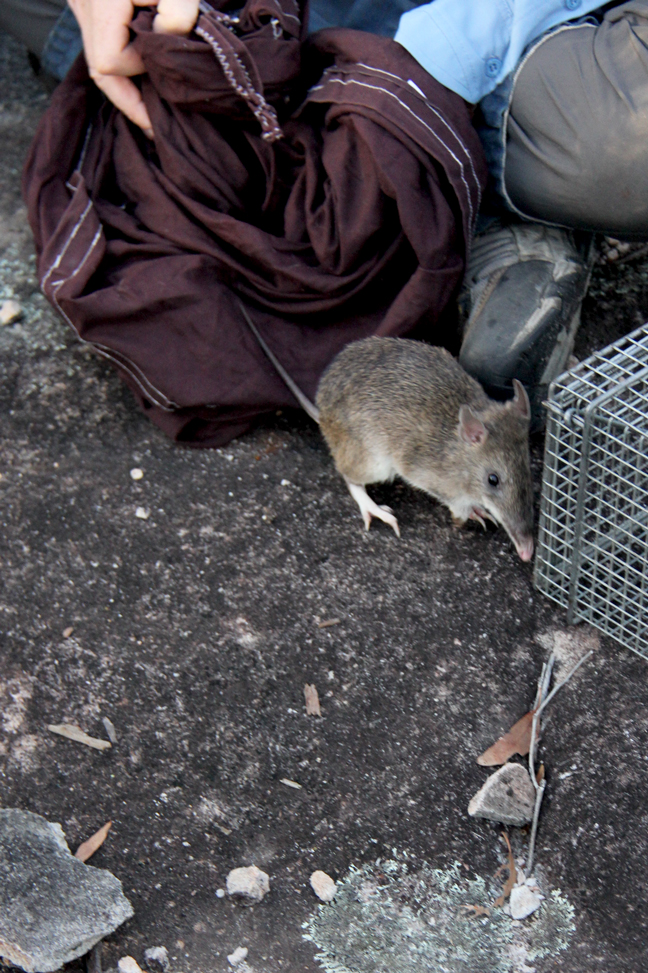
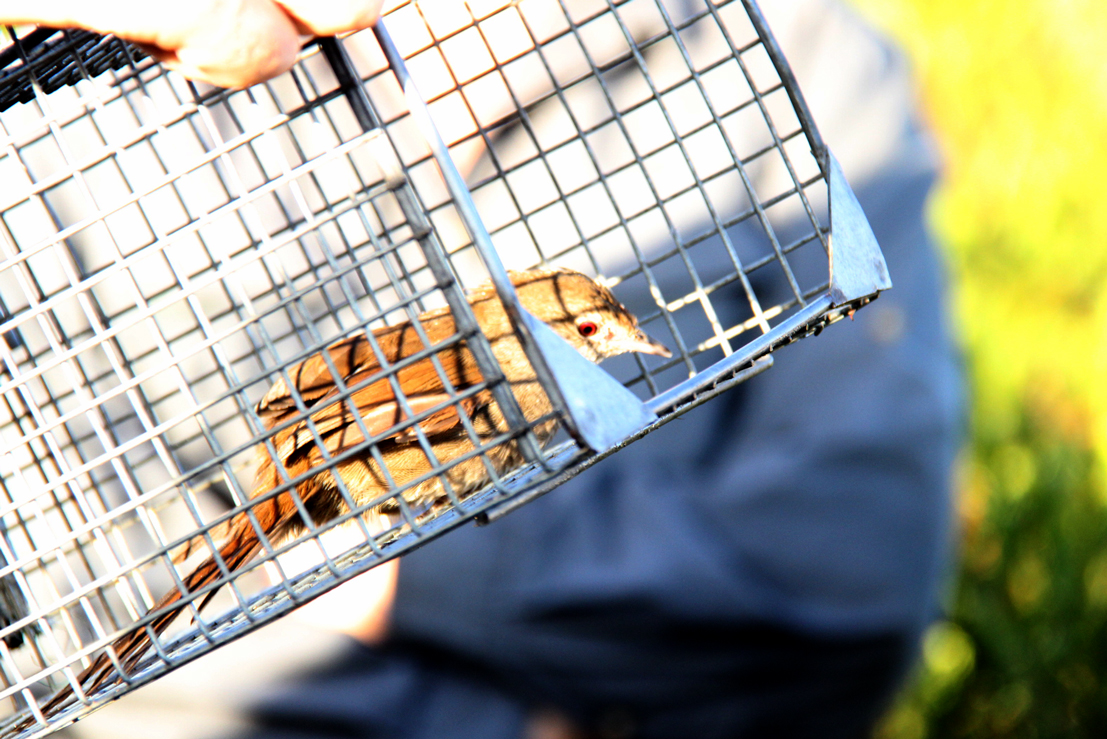
Over the weekend, we were lucky enough to catch a large number of animals that are native to Booderee NP, including antechinuses, common brushtail possums, bush rats, eastern bristlebirds and even the rare long-nosed bandicoot!

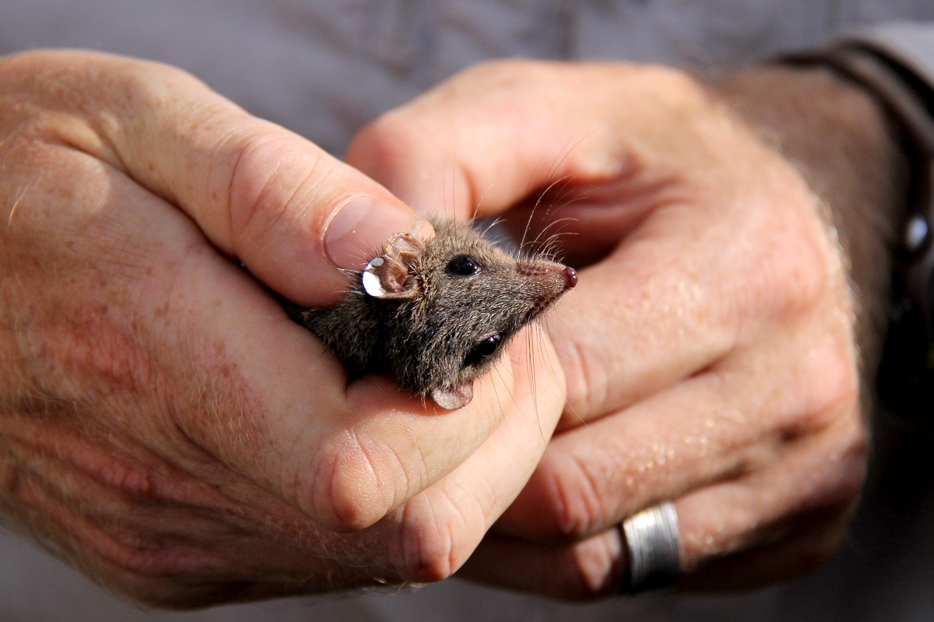
The antechinus is a small carnivorous marsupial that is hard to hold on to!

The antechinus is a small carnivorous marsupial that is hard to hold on to!

This one was female.

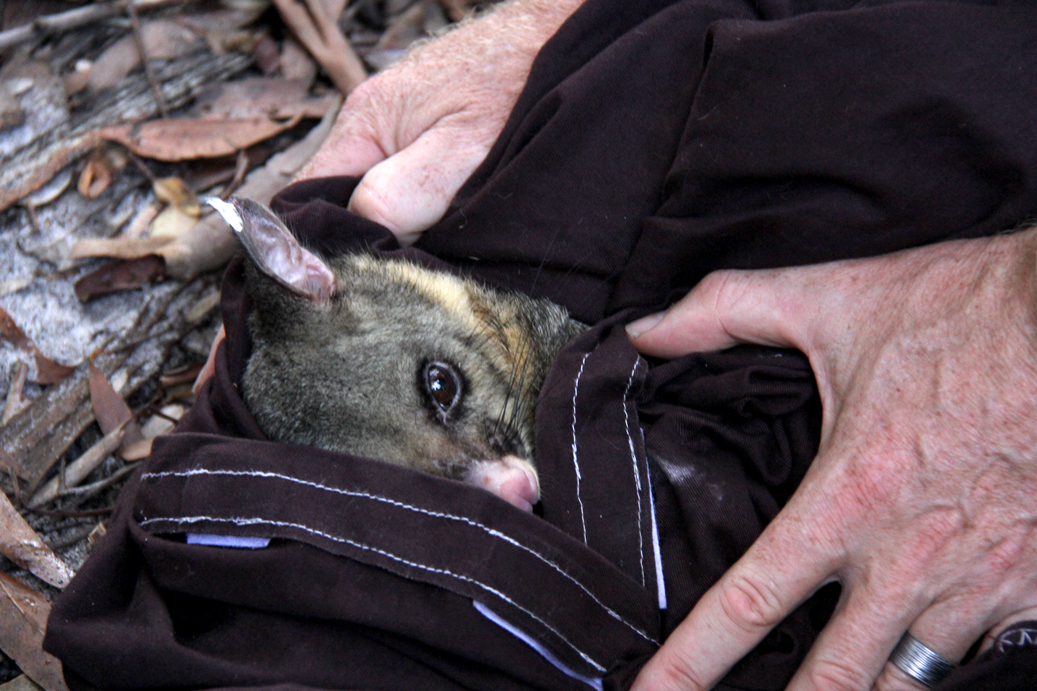
This brushtail was female.

 We were taught how to handle and determine the sex of common brushtail possums.

We were taught how to handle and determine the sex of common brushtail possums.

 Bush rats are quite common in Booderee NP.

Bush rats are quite common in Booderee NP.

It is a rare find!

The long-nosed bandicoot is a rare find!

Phil teaches us about the long-nosed bandicoot.

Phil teaches us about the long-nosed bandicoot.

The eastern bristlebird is an endangered species but is quite common in Booderee NP.

The eastern bristlebird is an endangered species but is quite common in Booderee NP.

Turning over the artificial habitat also revealed some small-eyed snakes, delicate skinks and garden skinks, and these were also added to the survey records.

“Yay, furry animals!” But that’s not where it ends…

We had a fun weekend in Booderee NP, and learned a lot about endemic vertebrates and their habitats, different surveying methods, and the importance of clear record-keeping. The practical field experience gave us a strong knowledge base, and our follow-up reports are likely to consolidate this learning. But our hands-on experience has also made a significant (albeit, small) contribution to real-life biodiversity research. This is what made it truly special.

I believe that applied learning is a crucial element of environmental studies that is often overlooked. Even while we are still apprentices in biodiversity conservation, we have the capacity to produce good data and lend a hand with management activities. As a field, biodiversity conservation could gain a lot by encouraging more applied learning opportunities for students, including volunteering. I feel privileged to be a part of a course that already allows me to impact positively on the environment. Yet, one day, I hope to see applied learning become the norm for tertiary environmental education across Australia.

Alison Tandy, BSc/BA (Biology & Anthropology)

Posted in Uncategorized | Tagged , , , | 5 Comments

Getting real about the conservation of threatened species

We need to save threatened and endangered species from extinction – it’s a fundamental value that is instilled in children. If humans are causing animals or plants to become extinct then it is our moral duty to something about it. But do all species really need to be saved?

If we stopped conserving pandas and left them to their own devices they would eventually die because of our impact on the planet. However what would the repercussions actually be? Pandas do not contribute to maintaining their ecosystem (that we know of) and they are very expensive to conserve due to their small habitat, strange diet and susceptibility to disease. With the funds currently being used to prolong pandas we could focus on conserving other species which are an integral part of their ecosystem, less expensive to manage and can return to stable populations.

Some species are a drain on resources to conserve: In the years 1989–1991, 54% of U.S. funding for conservation of threatened species was devoted to conservation of just 1.8% of all U.S. threatened species. Some conservation strategies such as translocating species can actually worsen ecosystems. We may conserve one species which actually preys on another threatened species. The rivet popper hypothesis likens the earth to a plane and individual species as rivets on the wings: you can lose some species that are not ‘key stone species’ as some are functionally redundant due to others who provide the same services but others are essential to the plane’s integrity. One very important thing to note is that we cannot know how many species we can lose before the wings fall off.


Joseph et al. have created an excellent model for prioritising conservation efforts through species importance, costs involved in conservation and the likelihood of long-term success which is a great improvement on most current biodiversity conservation plans. By scoring the species conservation proposed projects across multiple parameters such as efficiency, benefit, taxonomic distinctiveness, cost, probability of success and threat status, optimal conservation can be achieved with the resources available. This model works for species that are currently on threatened species lists however as Nicky Munro spoke about in a lecture it would be more productive to focus on minimising the initial threat – especially when they affect multiple species. Following Joseph et al.’s model some species would be allowed to become extinct.

There is a threshold of how many species can become extinct before dramatic changes are caused to the ecosystem. This depends on the extinct species not being keystone species or ecosystem engineers.

There is a threshold of how many species can become extinct before dramatic changes are caused to the ecosystem. This depends on the extinct species not being keystone species or ecosystem engineers.

My main point is: we cannot save every species and we do not need to save every species. If an extinction occurs in an area with high species richness then there is often little loss of function in the ecosystem (see figure 1). We should use Joseph et al.’s model to prioritise conservation efforts to key stone species in a way that will minimise costs and provide a high chance of success (similar to Pia Lentini’s lecture on planning a reserve system). Underscoring all our conservation efforts should be an acceptance that we will not save everything so let’s make the things that we do save the important ones not the cute ones.

Posted in Uncategorized | Tagged | 2 Comments

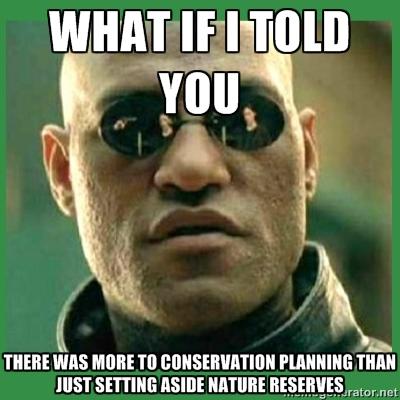
Enter the matrix: why and how policy makers need to start thinking about more than just nature reserves.

What if the ecological concept of “matrixes” was more than just a great opportunity for puns? What if Australia hits the IUCN target of 17% original vegetation only to create a costly, unrepresentative area of low quality national parks? What if that brush-tail possum living above your garage door and pillaging your veggies was actually an untapped subject for biodiversity conservation?

Image

Perhaps the network of garages and crawlspaces on the urban fringe aren’t a conservationist’s treasure, but commonly and quietly you will hear exclaimed “90% of our natural assets are on private land!”. This seems to have been framed by policy makers as a symptom, an ailment of those pesky property rights and the unhelpful (?) farmers that own great swaths of our country. It is costly (both in money and time) to purchase and convert private land into those official and hopefully effective national parks.

The alternative? Consider the matrix in conservation planning as equally as you would consider a reserve.

There needs to be more innovation and alternative ways of conserving land. What about letting the people that live around or own the matrix to look after it? Already there’s been an emergence of offsets and bio-banking, but to my knowledge this doesn’t contribute a national “Matrix plan”. There are grant programs available, but not targeted in a cohesive biodiversity scheme- something tangible that people can engage with.

And the best part…beyond the initial costs of education and engagement with governmental/scientific organisations, the landholder could care for and monitor the landscape for a hundredth of the cost of a reserve.

Some habitats may be easier for citizens to conserve than others. In our studies on Box gum grassy woodlands (highly cleared and endangered!) there are simple measures to endorse biodiversity. Farmers can graze there.What is evident is that there are no pathways to allow this to happen. Take a local farmer at Gold Creek station as an example. He wants to manage the biodiversity on his land but isn’t recognised. Shouldn’t this be easier?
http://m.canberratimes.com.au/act-news/moves-on-the-fringe-to-stop-the-sprawl-20130315-2g6lb.html)

Developers too have the potential to facilitate a suburban matrix. Googong township is one close to my area that I am keeping a particularly close eye on, despite looking like nothing more than a building site stripped of topsoil at the moment.
http://googong.net/sustainability/parklands.php.
Perhaps legislative change wasn’t even necessary in this case? The effectiveness remains to be seen.

I don’t want to say “Everyone on board the new discipline of conservation outside of reserves! Abandon reserves! Innovation! Buzzwords!”. But it seems frustrating that unreserved and perfectly good land in the matrix remains unmanaged for biodiversity purposes. If conservation planners could take this approach they might be able to imagine a connected and effective place for wildlife on agricultural, even suburban, land.

Don’t get me wrong, reserves are still important as an intensive area for conservation. They’re also already more flexible than they’ve been in the past (compare Yellowstone vs. The Lakes District for an example), but it is a big commitment to create a reserve and some areas will always miss out.

Essentially land need not be zoned as exclusive to biodiversity, and then everything else as the matrix. I say nurture a culture where biodiversity can be acknowledged and stewarded without being in a reserve.

Katelyn Kummer, Bachelor of Interdisciplinary studies (sustainability)

Posted in Uncategorized | Tagged , , , , , , | 2 Comments

A Story of Change

Dear friends,

I am writing this piece with an aim to share a different perspective of biodiversity conservation in Vietnam. Biodiversity conservation in Australia appears to me very advanced; and public awareness of conservation is extensive. Vietnam is a developing country, yet there are still many poor farmers. Promoting biodiversity conservation in a context where farmers and their families struggling to search for food in daily lives seems quite an awkward thing to do. The conflict between biodiversity conservation and hunger & poverty reduction is challenging.

I came across this paper and thought of sharing with you some information that I found encouraging ‘Combining biodiversity conservation with poverty alleviation – a case study in the Mekong Delta, Vietnam’ (Tran Triet, 2010. Aquatic Ecosystem Health & Management.).

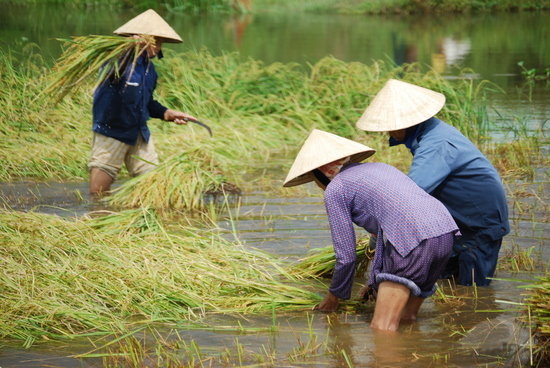
maybe-the-toughest-job-in-vietnam-rice-farming-hoi-an

The case study provides an interesting Story of Change for farmers’ livelihoods in a wetland protected area of 2,890 hectares in Phu My commune, Kien Luong District, Kien Giang province, southern Vietnam. This wetland ecosystem supports the last remnant of Lepironia grassland in the Mekong Delta. The wetland was threatened by economic push e.g. booming price in shrimp aquaculture amongst other pressures.

Facilitated by Vietnamese academics and international supporters, farmers have changed their over-harvesting practice of Lepironia grassland. Sustainable use of Lepironia promoted whilst providing income from products made from Lepironia. On average, mat making can earn 30,000 VND/day i.e. A$1.4/day. A handbag making can earn 50,000 VND/day i.e. A$2.3/day. The area witnesses more Sarus crane counts e.g. 45  in 2005, 41 in 2006, and 131 in 2007.

Turning from previously an area threatened to shift to shrimp-farm to now included in the newly established Kien Giang Biosphere Reserve approved by UNESCO in 2007 is a good news from conservation perspective isn’t it. There still are issues and challenges to be facing. The case study identifies lessons learned as well as sustainability.

I thank you very much for reading. Image credited from google source.

Posted in Uncategorized | 1 Comment

Why is biodiversity important? It is not quite as straightforward as we are being told.

Biodiversity provides a large number of goods and services that sustain our lives. Protecting biodiversity is in our self-interest. Biological resources are the pillars upon which we build civilizations. Nature’s products support such diverse industries as agriculture, cosmetics, pharmaceuticals, pulp and paper, horticulture, construction and waste treatment. […]” (Convention on Biological Diversity 2010)

Who considers this to be a conclusive statement? Well, I don’t. It is an example of the media’s simplified way of reporting on the importance of biodiversity that I suppose leaves most people uncertain about why exactly biodiversity is meaningful. Let me try and shed some light on the issue.

Nature, biodiversity, ecosystem services and biological resources are not the same thing, but often treated as such. It is quite obvious that certain ecosystem services such as the provisioning with biological resources (such as food, pharmaceuticals etc.) are essential to our lives. But why do ecosystems need to be diverse in terms of species and genes to provide their services?

This is not clear in the first place as biodiversity doesn’t necessarily enhance productivity: just consider industrialized agricultural and silvicultural production systems as opposed to natural systems. Furthermore, ecosystem services such as erosion control, oxygen production, water purification and the like depend on a system’s physical properties rather than its actual diversity (less diverse systems might get the job done as well).

So, what does biodiversity actually do?

  • It sustains ecosystem function

There is evidence of beneficial effects of biodiversity on ecosystem resilience—the capability of and ecosystem to respond to disturbances. However, uncertainty remains about how much biodiversity is needed to sustain ecosystem functions as they depend on functional groups rather than on individual species or genes (the diversity-stability debate).

  • It sustains evolutionary potential

You might call it resilience on a larger scale. It is the ability of ecosystems to adapt to a changing environment. The more diversity there is, the more likely there are varieties of genes and species able to cope with changing conditions, ensuring the ecosystem’s functionality and the provision of vital ecosystem services in the long run. Similarly, agriculture depends on a certain gene pool (including wild types) for purposive crossbreeding in view of changing environmental conditions.

The bottom line: Biodiversity sustains what ecosystems provide

Scientific evidence of correlations between diversity and ecosystem functions is not irrefutable (yet). BUT business as usual given the high human-induced pressure on biodiversity is risky. We are continually popping rivets on spaceship earth, only knowing about the importance of what we lose when it is lost. While natural resources grow again if depleted to some extent, a lost gene, species or ecosystem that has been evolving for millions of years will be lost forever.

As a precaution, we have to take care of what there is. Not only because it is, or may prove, useful. I think that ultimately, utilitarian arguments (including much of the ecosystem services concept) are not enough to justify why biodiversity conservation is important. They suggest that we can still pay later if we fail to act now. Rather than portraying the diversity of life as a mere resource to be exploited, we have to promote awareness of everyone’s responsibility to help preserve an asset that is precious beyond economical value.

Excursus: Is biodiversity all we need to care about in nature conservation?

  • Some habitats naturally contain relatively few species but are nonetheless endangered (such as for example certain peatlands, tundra and desert habitats). Focusing on “biodiversity hotspots” alone is therefore not sufficient.
  • Heavily modified habitats can potentially be more diverse than natural habitats as disturbances create niches for pioneer species and and/or exotic species (example: traditional cultural landscapes). In these cases, there is a trade-off between naturalness and biodiversity, so biodiversity may or may not be the principal conservation objective.
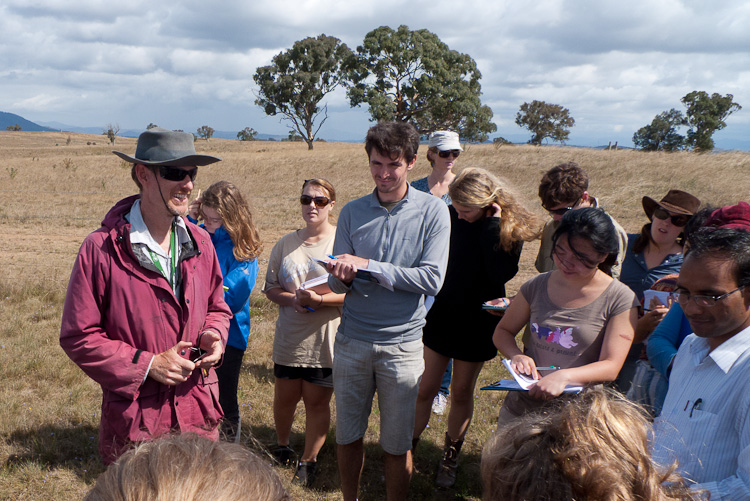
Field trip to a natural temperate grassland north of Canberra (22/02/2013) – a habitat under anthropogenic pressure.

Field trip to a natural temperate grassland north of Canberra (22/02/2013) – a habitat under anthropogenic pressure.

Constantin Harrer, exchange student from ETH Zürich, environmental sciences BSc

Further reading:

Posted in Uncategorized | Leave a comment

Biodiversity in decline

…the evidence from changes in extent, composition and quality of vegetation communities, and from case studies on selected species, points towards continuing decreases in population sizes, geographic ranges and genetic diversity, and increasing risks of population collapses in substantial proportions of most groups of plants, animals and other forms of life across much of Australia (Australia State of the Environment , 2011).

The above conclusion wasn’t by a conservation organisation wanting to shock, or an academic researcher trying to secure funding for their research. The above conclusion headlines the Australian Government’s latest State of Environment Report. And this conclusion is not an isolated one. The Living Planet Index indicates that biodiversity loss is a global phenomenon (Figure 1).

Image

Figure 1. The Living Planet Index indicating trends in populations for terrestrial, freshwater and marine species from 1970 to 2000.

Why should the loss of biodiversity concern us?

It’s a reasonable question. Why, in a world with poverty, disease, war and inequality should the decline of biodiversity be a priority to redress?

The answer is that biodiversity enriches our lives in many ways, provides essential ecosystem services that support life and we are obligated to future generations – and other species – to pass on biodiversity in an equal or better state than the state in which it was presented to us.

Part of the problem with “biodiversity” is that it is such an all-encompassing concept (the variety of life) that it is difficult to pin-down or quantify in a way that is readily understandable.

One way the value of biodiversity is illustrated is with a metric that motivates many people and policy-makers: dollars. In their synthesis report, The Economics of Ecosystems and Biodiversity estimate that:

  • conserving forests avoids greenhouse gas emissions worth US$3.7 trillion,
  • 30 million people globally are relient on the products of coral reef ecosystems and
  • urban trees of Canberra reduce energy costs and sequester carbon worth $20-70 million (research undertaken by Assoc. Prof. Cris Brack at the Fenner School of Environment and Society, The Australian National University).

Of course, it is simplistic to calculate the value of biodiversity using utilitarian criteria alone. There are aesthetic, recreational, educational and ethical reasons to conserve biodiversity. These are just harder to articulate and quantify.

What can we do about biodiversity loss?

So, if we agree that biodiversity is valuable and important, then how do we mitigate its decline? There are many known reasons for biodiversity loss. If solutions to these causes of decline were easy then biodiversity loss wouldn’t be an ongoing issue. One thing that is common to many biodiversity issues is that they involve conflict with stakeholders seeking other outcomes – often economic.

Finding a pathway through these challenges is what this course and blog is about. In this blog, university students enrolled in a third-year undergraduate and post-graduate course called “Biodiversity Conservation” will share their experiences and perspectives based on what they have read, who they have heard and, importantly, what they have seen with their own eyes.

I hand this blog over to our next generation of biodiversity managers.

Dr Philip Gibbons
Fenner School of Environment and Society
The Australian National University

Posted in Uncategorized | 1 Comment