Survival of the Fittest

Have we halted the course of natural selection through our conservation efforts?

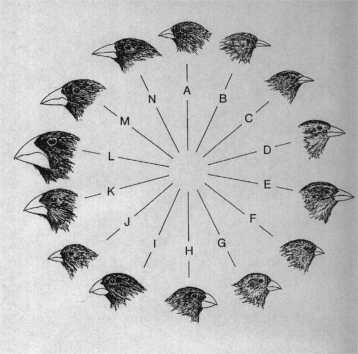
Natural selection is a process by which only the best-adapted individuals produce the healthiest young; these young continue to carry the adaptations into the next generation, essentially weeding out the weak. An example of this adaptation process can be seen in Darwin’s Finches.
6a00e552f1c77b88340111685820c4970c-800wi Image provided by Google

Further reading can be found in the paper: Darwin’s Finches by Michaela Hau and Martin Wikelski.

 These small birds developed their unique beaks to suit their individual environments, eating either insects or fruit and nuts. Some of these finches even became adept tool users.

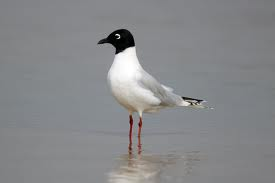
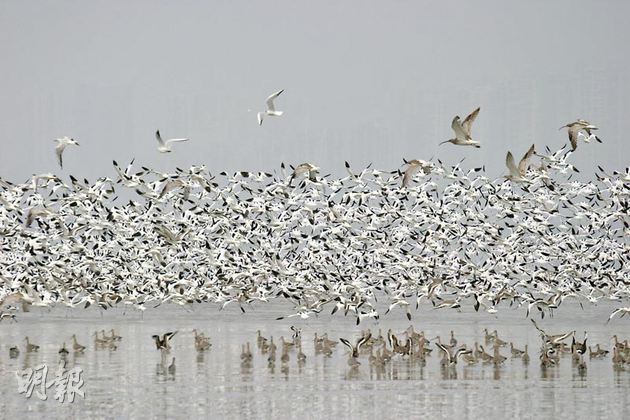
Adaptation can take different forms, not just a physical adaptation such as the shape of a beak; the Red Tailed Hawk has taken quite comfortably to making the ledges, nooks and crannies of the bustling city of Manhattan its nesting grounds. When one thinks of a busy bustling city and the birds residing there it’s usually Pigeons and Seagulls. These birds have adapted and grown accustomed to our presence, even associating us with a free meal or two.
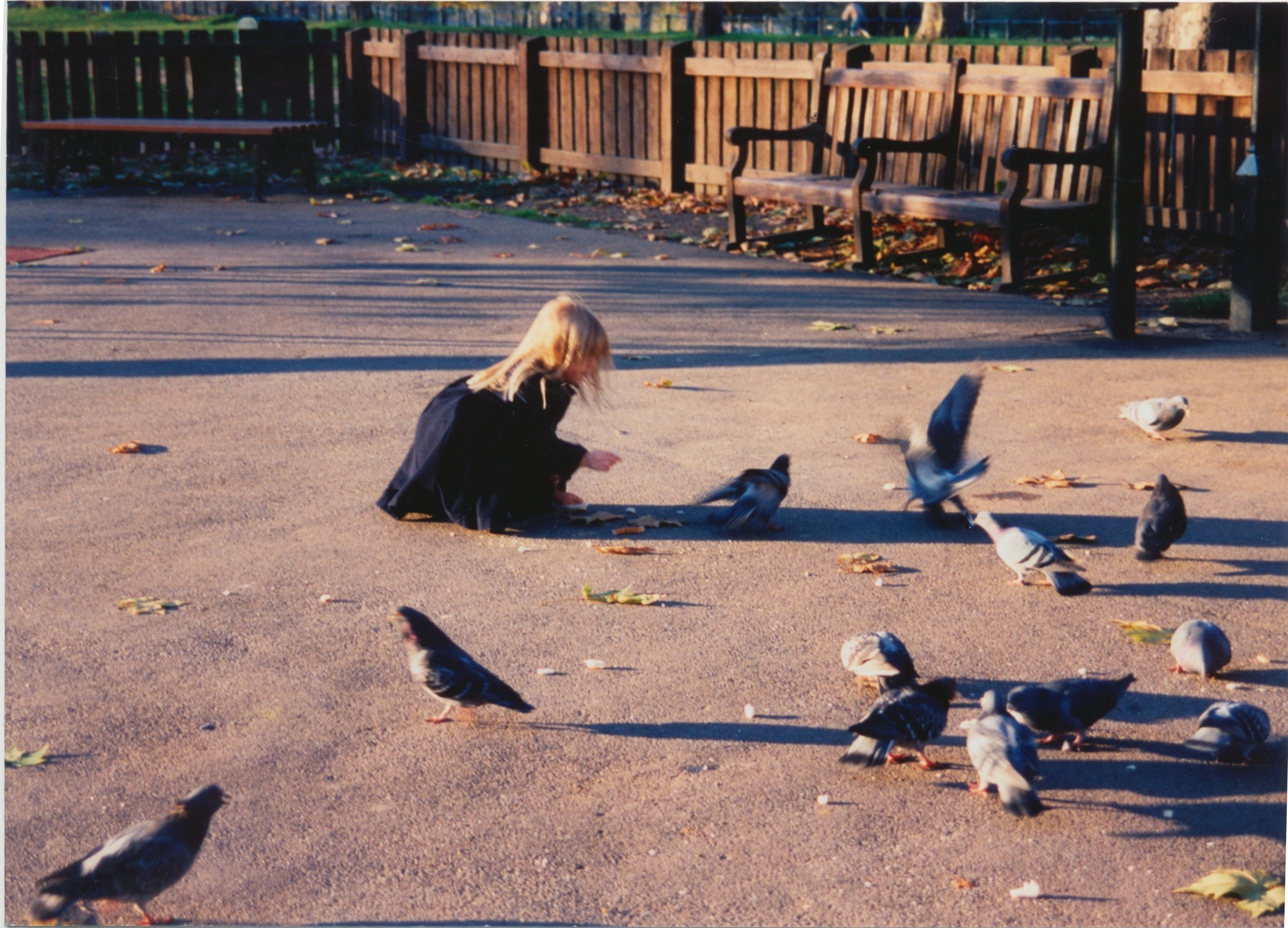
 Hyde park London

These Pigeons of Hyde Park in London sought me out for a meal.
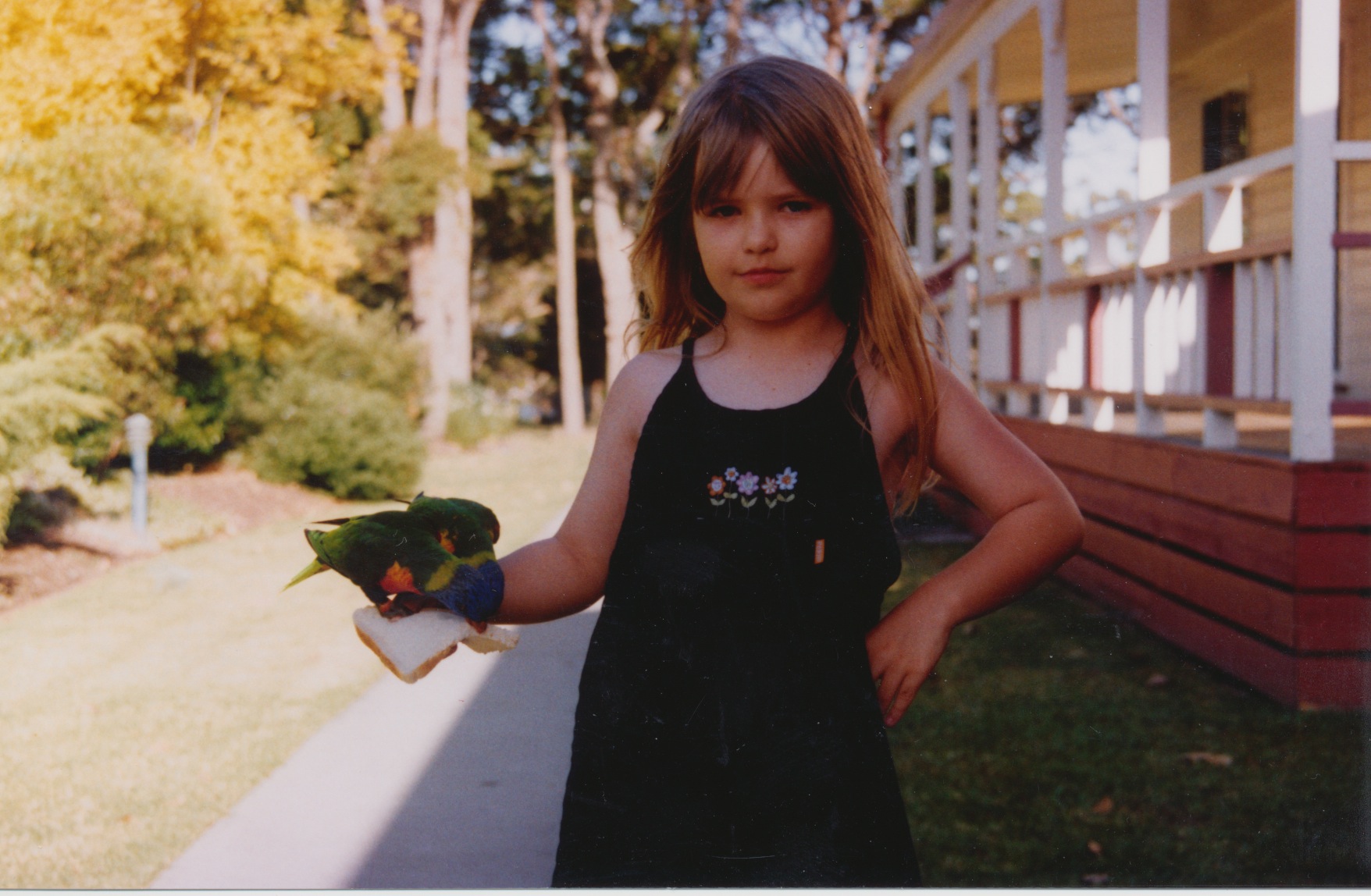
 Terrigal ACT

The Rainbow lorikeets in Terrigal ACT receive a meal, though I was not impressed with the numbers when compared to the flocks found in London.

 Conservation seeks to save as many species as possible. Creatures such as the cute Giant Panda are doomed to extinction, and this is not necessarily due to human activities. The Giant Panda females only ovulate once a year in the spring meaning only one chance to produce offspring. They also have only one major food source, Bamboo, which makes up 99% of their diet and also provides them with the water needed for survival. One chance to reproduce and one major food source makes them more vulnerable to extinction as apposed to the Red Tailed Hawk, Pigeons and Seagulls who have adapted quite well to eating our fish and chips. Yum.

Conservation efforts are put in place to see that creatures such as the Giant Panda can stick around so that future generations can wonder, “how did they survive?”

If we were to look at the causes/reasons behind the ‘need’ for conservation efforts we see that humans have either added new threats or accelerated old ones, to the point where there is not enough time to allow adaptation to take place. These are the usual man-made culprits such as deforestation, hunting, urban sprawl and climate change. However, the main reason for this blog entry was to highlight the idea that conservation efforts, while having good intentions, may be fruitless in the long run… but we should still try.

Ciao,

Stacey Manton

Posted in Uncategorized | 1 Comment

The Paradigm for River Conservation and Restoration of Ciliwung River, West Java, Indonesia

Screen Shot 2013-05-27 at 9.06.59 PM

Figure 1: The Ciliwung River basin map. Flowing from the Tugu Puncak in Bogor through to Jakarta in the West Java Province. 
(Department of Environmental Engineering, Jakarta)

The Ciliwung River Basin is one of the largest river systems in Indonesia, flowing along a 97km narrow corridor from the Tugu Puncak in the mountains near Bogor, through the Jakarta metropolitan area, and terminating in the sea in Jakarta Bay.

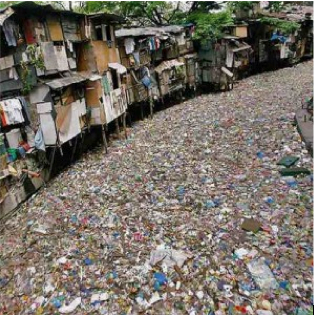
The Ciliwung is a major water source for the large municipalities of Bogor and Jakarta, and its waters are also utilised for local transportation, for agricultural irrigation, and for general household uses in many small communities along its banks, including illicit slum-dwellers living next to the river in Jakarta. The river has a recent history of extensive waste dumping and silt build-up; toxic inputs from household and industrial chemicals; congested riverside dwellings; and man-made obstructions such as bridges and dams. These have all resulted in considerable increases of the frequency and volume of wet season flooding in Jakarta, dramatically declining water quality,  and loss of biological diversity.

“The Ciliwung is now recognised as one of the most exploited, congested and polluted rivers in the world”

(River Foundation Jakarta)

In late 2012, following previous government-sponsored river management efforts (for example, PROKASIH), the governor of Jakarta proposed a new expansion of the Ciliwung river as one solution to these on-going challenges, especially the flooding. However, parts of this US$190 million project will involve building more dykes, dredging canals, and overhauling four reservoirs over the next five years (Jakarta Post, 2013), as well as relocating 30,000 people living in slums along the river’s banks to various regions around Jakarta. This will all amount to more human-induced alteration of what was once a natural river.

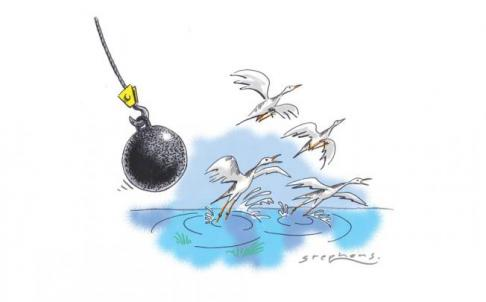
Figure 2: Dredging in Ciliwung River for channel deepening and expansion
Human alteration of River ecology

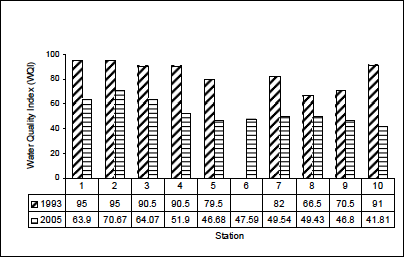
Rivers with highly altered and regulated flows lose their ability to support natural processes and native species (N. LeRoy Poff et al, 1997). According to a study conducted by Jakarta’s Biology Research center, from 1953, when research began, to the early 21st Century, the Ciliwung River was home to 18 types of native crustaceans, 187 types of native fish, and 62 reptile species. Today, only 9 crustacean species, 23 fish species, and 14 reptile species survive in the river. Moreover, an analysis was undertaken from 1993 to 2005 by the Department of Environmental Engineering on the water quality of the river. As shown in Table 1, water quality has drastically decreased at all sites tested from the quality originally measured in 1993.

Screen Shot 2013-05-27 at 9.15.52 PM

Figure 3: Elicit slum dwellings residing along the Ciliwung River and subsequent river pollution in Jakarta city. Photo taken from google.

 
Screen Shot 2013-05-27 at 9.17.32 PM

Figure 4: Comparison of Water Quality Index (WQI) on different sites from 1993 – 2005. The water samples were analyzed using WQI which are based on the procedure adopted in International Sanitation Foundation – Water Quality Standard by Ott (1978).


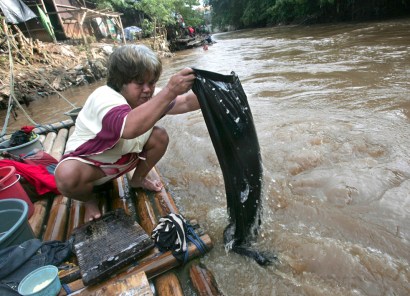
Figure 5: Local resident carrying out day-to-day washing in the Ciliwung River. An example of a contribution pressure to the Ciliwung River. Photo taken from google.
 

Sustaining Ecological Integrity

“Society’s ability to maintain and restore the integrity of river ecosystems and flowing water systems depends largely on their natural dynamic character”

(N. LeRoy Poff et al, 1997)

The plans to dredge areas along the Ciliwung to deepen its channels; to build more dykes across it; and to overhaul four reservoirs along its course to remove silt buildup and increase water storage together can only be short-term solutions to reduce wet season flooding of metropolitan Jakarta.

By contrast, fundamental long-term river conservation and management solutions, as emphasized by N. LeRoy Poff et al (1997), involve coordinated actions to restore the river’s natural flow variability and connectivity. By removing waste swelling, re-connecting rivers to floodplains, and enhancing the quality and capacity of wetlands, river restoration increases natural storage capacity and reduces flood risk as a long term solution (RESTORE). In turn, it will incrementally restore ecological integrity of the river for native species diversity and the needs of local residents.

Screen Shot 2013-05-27 at 9.21.59 PM

Figure 6: Illustrates the significance of Natural Flow Regimes and its five critical components to regulate ecological processes in river ecosystems: the magnitude, frequency, duration, timing, and rate of change o hydrologic conditions. These components influence integrity both directly and indirectly on other primary regulators of integrity: water quality, energy source, physical habitat, and biotic interactions.
(N. LeRoy Poff et al, 1997, Pg. 769)


Alexandra Dunbar | Australian National University

Posted in Uncategorized | 2 Comments

Cats versus Native Cats

Cats versus  Native Cats


Martyn Ellis


When it comes to describing pet cats words like loveable, intelligent and affectionate spring to mind. However there are other words to describe them: cunning, calculating and a major threat to biodiversity in Australia. In Australia it is estimated that 3.8 million kills by domestic cats of native animals occur each year (EPA 2010).

What are our other options of pets you say? What about our own native cat, the Quoll. Quolls are Australia’s largest carnivorous marsupial and are considered a keystone predator. There are four species of quolls in Australia: the northern, spotted-tailed, eastern and western quolls. Since 1770, all four species of Quoll through a combination of human modifications to the environment and the introduction of cats, quoll populations have declined dramatically. These impacts have meant that all four of Australia’s Quoll species are now either vulnerable or endangered under the Environment Protection and Biodiversity Conservation Act.

AQ2(Credit: Michael Barritt)

Current legislation in Australia prevents most native animals being kept as pets or bred for sale. However, for some animals it is seen as a great way of conserving them and boosting their public image. Dr  Paul Hopwood from the University of Sydney stated

“Because people bond with their pets, it would generate interest in why these creatures are going extinct in the bush. By focusing on rare and endangered animal species the revenue from the animals sale could be used to supplement the scarce funds available for conservation and reintroduction programs in the wild”

AQ1Photo: Jonathan Webb.

Dr Meri Oakwood from the ANUand Dr Paul Hopwood from the University of Sydney surveyed 20 scientists and wildlife carers which have had experience with quolls. The conclusions were:

“Overall, it appeared that dietry components essential were readily available, housing was simple, Quolls were rarely demanding on time, mostly healthy and rarely stressed.’ Oakwood says. `Specialist attention, such as veterinary, was only required occasionally and no adverse human health effects were observed.”

Oakwood & Hopwood studies have suggested that there are definite possibilities towards Quolls being kept as house-pets and that a pilot study is recommended based on a captive breeding colony of quolls, whose offspring would be placed with carers as trial house-pets.

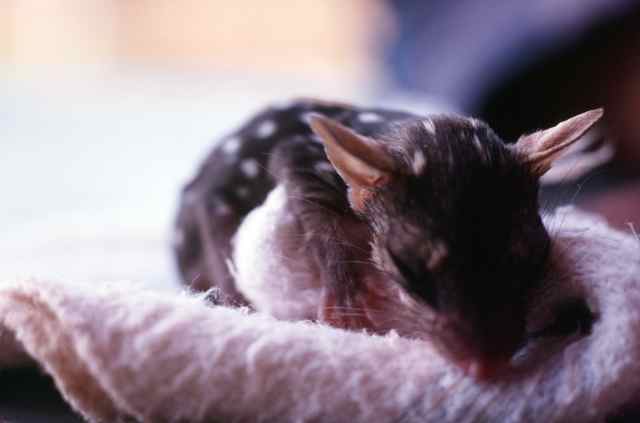
quoll(Critter the Quoll when first obtained. Photo P Ellis)

 As someone who has had firsthand experience in keeping and raising a Quoll in Northern Territory in a house I cannot recommend them highly enough. They are very friendly, low maintenance, playful, intelligent and are easily toilet trained. When we moved “critter” was given to a captive breeding program in Darwin and was eventually released back into the bush.

Posted in Uncategorized | 1 Comment

Biodiversity Conservation Mistakes on Campus

Plantings of the invasive Chilean Needlegrass adjacent to threatened native grasslands


I recently learnt about a shocking example of biodiversity management on our very own campus. A new building was built in an endangered ecological community of White Box – Yellow Box – Blakely’s Red Gum grasslands. Whilst development at the expense of biodiversity conservation is an ongoing issues, there is a further sad part of this story. When the builders completed the building, there was an area of disturbed grassland that needed rehabilitation to prevent erosion. The contractors planted this to grass, and finished their job.

However, the tough, quick-growing grass they chose was Chilean Needle Grass, Nasella neesiana. This plant is listed as a weed of national significance and Iaconis (2004) estimates that is the weed of greatest threat to indigenous grasslands in south-eastern Australia. Weeds threaten biodiversity by competing with locally indigenous species for water, nutrients and habitat space. Chilean needlegrass is a prolific seeder. Its seeds spread easily and can remain viable after long periods in the seedbed, such that it quickly dominates the landscape. Thus, whilst planting Chilean Needle Grass may have achieved some landscape restoration aims, it poses a significant threat to the biodiversity of the adjacent remnant grasslands.

Controlling the spread of this grass now requires significant inputs, which could have been avoided if the area was appropriately restored initially. This case demonstrates a need to embed specific ecological knowledge into our institutions. In this case, contractors needed to be presented with clear guidelines of which plants were appropriate to plant. This could have been implemented by the university in their building contract or the commonwealth government through approvals under the Environmental Protection and Biodiversity Conservation Act 1999. Ideally, the university should ensure that staff responsible for ongoing grounds maintenance are trained in biodiversity management. They could then implement ecological restoration of construction sites, including planting native species, or using an artificial earth stabilisation technique instead of planting noxious weeds. Research carried out by ecologists not a few kilometres away in the Fenner School of Environment and Society could inform biodiversity management.

There is some good news for biodiversity on campus. The ANU has produced a draft management plan for biodiversity. Facilities and Services have now appointed a staff member to manage this and other significant biodiversity areas. You can also volunteer to assist ANU Green (our environmental division of Facilities and Services) with weed management to protect threatened species in the grasslands on campus. Biodiversity conservation does not just happen in nature reserves, it is also relevant on campus, and even our own backyards. So let’s ensure we all have the basic ecological knowledge and structures to contribute.

Leucochrysum albicans (Hoary sunray) is one of many endangered species in the grasslands at ANU.

More information:

ANU’s Draft Biodiversity Plan

Weeds of National Significance

Chilean Needle Grass:
Iaconis, L.J. (2004). Identification of Chilean needle grass, Nassella neesiana – a Weed of National Significance, in B.M. Sindel & S.B. Johnson (eds), Weed Management: balancing people, planet, profit. Papers and proceedings of the 14th Australian Weeds Conference, held 6-9 September 2004, Wagga Wagga. Weed Society of New South Wales.

Text and image: Heidi Congdon, Australian National University (heidi.congdon@anu.edu.au)

Posted in Uncategorized | Tagged , , , | 1 Comment

Towards an integrated conservation ethology

So lately I’ve been reading this book by Paul Ehrlich called “The Machinery of Nature”. The book provides a neat overview of how evolution has led to the biodiversity of life which exists today. Particularly interesting was a chapter which outlines the ways in which animal species have evolved complex social behaviours. It refers particularly to selection, and how organisms share a singular goal of passing on genes. The thought struck me as I was reading that something so important in the evolution of species should be equally important for conservation of these species. As it turns out, whilst the integration of animal behavioural studies (ethology) and conservation biology has improved in recent years, it is still left comparatively lacking (Berger-Tal et al 2011). Sutherland (1998) for example finds far fewer mentions of conservation in animal behaviour research than in equivalent population or genetic studies.

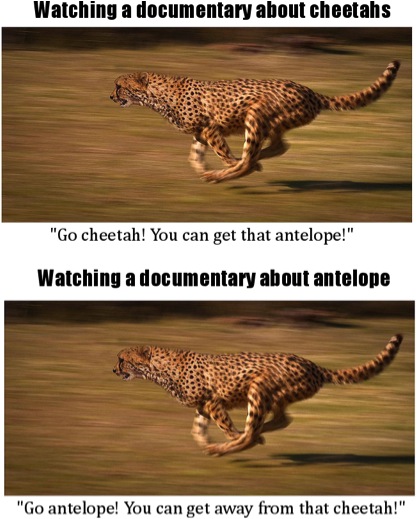
So why isn’t conservation often considered in studies of animal behaviour? Could it be an intentional oversight? Berger-Tal et al. suggest a lack of a disciplinary framework; Sutherland suggests a prejudice exists towards “more exciting” research. I however find it difficult to believe that anyone who studies animal behaviour could place any less significance on species protection. Indeed, as I (and I’m sure anyone else who’s watched an Attenborough documentary) could attest, the more you learn about an animal’s behaviour, the more you feel personally invested in its survival.

image from Wikimedia commons

cheetah image from Wikimedia commons

Through trying to put myself into an ethologist’s shoes, I can suggest two further possible explanations for why this lack of integration might exist:

#1. The subjectivity often required in interpreting behaviour makes it tricky to apply to conservation with certainty. Behavioural theories can be amended if they’re deemed inaccurate, but species cannot be brought back from extinction.

#2. Behaviour can adapt quicker than physical characteristics to selection pressures, and thus can vary significantly on an intraspecies level (Alexander 1976). What works for one population in this instance might not work for another.

“You may be rare, but your behaviour is making my conservation choice difficult” – source markcarwadine.com

Improving the linking of research would benefit both disciplines, as they are to some degree reliant on each other (Clemmons and Buchholz 1997). Without conservation, ethology stands to lose valuable research species. Without ethology, effectiveness of conservation efforts may be hampered by a lack of behavioural knowledge. For example behaviour is critical in how species can persist in fragmented habitats, and in the reintroduction of captive species into the wild.

With a continuing decline in species the role of ethology can only increase in importance. The barriers to a knowledge resource so valuable for conservation need to be removed.

Author: Richie Southerton (contact via: u4539971@anu.edu.au)

References

Alexander, R. D. (1974). The evolution of social behavior. Annual review of ecology and systematics, 5, 325-383.

Berger-Tal, O., Polak, T., Oron, A., Lubin, Y., Kotler, B. P., & Saltz, D. (2011). Integrating animal behavior and conservation biology: a conceptual framework. Behavioral Ecology, 22(2), 236-239.

Clemmons, J. R., & Buchholz, R.(1997). Linking conservation and behavior. In: Clemmons, J. R., & Buchholz, R. (eds.) Behavioral approaches to conservation in the wild, Cambridge University Press, 3-22.

Ehrlich, P. (1986) The Machinery of Nature. Collins.

Sutherland, W. J. (1998). The importance of behavioural studies in conservation biology. Animal Behaviour, 56(4), 801-809.

Posted in Uncategorized | Leave a comment

“Good intentions” and the need for evidence-based intervention

The introduction of evidence-based interventions in human medicine is one of the great success stories of the last millenium. There has been a massive increase in the quality of life over the past 100 years, due in a large part to better healthcare.

The basis for these advances is evidence-based medicine: the use of scientific principles to improve the success of management interventions over time.

The modern medical approach is relatively recent. In 1796 a bloke called Edward Jenner conducted what was, at the time, a very daring intervention. He took the pus from a milkmaid infected with cowpox, and injected it into an 8 year old boy. This child was then injected with smallpox, which at that stage had a 50% mortality rate and caused disfigurement of survivors. The “vaccination” was successful and the child did not develop the disease.

Jenner had a theory about vaccination, which he demonstrated effectively through this experiment.

This daring management intervention provided two important pieces of information:

  • That vaccination was viable,
  • That audacious intervention strategies can provide information that significantly improves future management strategies.

This second piece of information was critical to the success of modern medicine. The key concept is to design trials that test hypotheses, to inform future strategies for effective care of a complex system which is undergoing some disorder of structure or function. It works for medicine and it must be adopted by environmental managers. 

It could be argued that many who consider themselves “modern environmentalists” are equivalent to 18th century “doctors”. Medical interventions at this stage were generally based on good intentions. This included bloodletting,  yoghurt enemas and dosing with radium “to invigorate patients”.  Some current environmental practices will turn out to be just as disastrous/hilarious as these historical medical practices.

The thing is, until we test for efficacy, we cannot determine which environmental interventions are equivalent to vaccination and which are equivalent to bloodletting.

Good intentions are not sufficient if there is not a robust system for testing the efficacy of the management interventions. Conservation science must learn the critical lesson from modern medical science: interventions must be designed to test hypotheses, and not be based on good intentions.

Unfortunately, biodiversity continues to decline at an alarming rate despite the expenditure of considerable resources. Species extinctions continue, and often the cause is unclearSometimes the causes are understood, however there is no robust testing of different intervention strategies.

A recent review authored by Fenner researchers found it was exceedingly rare that publications on environmental and biodiversity management incorporated active management approaches. This means that most environmental managers are not adapting their strategies to take into account the outcomes of past interventions.

It is not acceptable to continue with well-intentioned management strategies that do not result in effective care of the environment. Conservation science needs to learn the 200-year-old lesson from medical science. Resources must be spent on good experimental design, monitoring for effectiveness, and dissemination of the resulting knowledge, and must not be wasted on good intentions and poor outcomes.

Further thoughts

The comparison with medicine obscures some important challenges for biodiversity monitoring. One major issues is the sheer scale and diversity present across each continent and ecological region. Existing information systems are fragmented (see further reading below) and high-level organisation will be needed to establish standards and categories for data. Existing research tools such as meta analysis will need to be integrated into this higher level organisation. Cataloguing the current health of ecosystems is similar in scope to the human genome project, and will require a similar level of resources and research intensity.

However, unlike medicine, conservation science can be practised by normal people, not just white-coated lab nerds. Successful biodiversity monitoring will inevitably embrace motivated volunteers, supported by social networks. Researchers are aware of these issues and continue to seek solutions.

The advance of technology has provided amazing tools to a fortunate group of people (if you are spending time reading this blog through an electronic device then you are in this group!). We must utilise the incredible opportunities to harness technological advancements. Nearly everyone we know carries a portable hand-held computer, which incorporates a GPS, camera and data transfer capabilities. These are the perfect tools to begin cataloguing biodiversity, and with some organisation, monitoring the effects of audacious management strategies, in order to improve future conservation decisions.

Author: Ed Cram

More info

Lindenmeyer and Gibbons (2012) Biodiversity Monitoring in Australia (Book

Examples of existing information systems:

Landsat satellite imagery

Australian Soil Resource Information System ASRIS

Flora of Australia Online

National Vegetation Information System NVIS

Atlas of Living Australia ALA

Posted in Uncategorized | Tagged , , , , | 2 Comments

Engaging People in Biodiversity

In an increasingly urbanised society, it’s difficult to truly interest the public with the ever-declining state of the environment. After all, they pay taxes to protect national parks, and they only get to enjoy them on a holiday every now and then. If only they explored the beautiful environment on their doorsteps. Maybe then they would be more engaged in the conservation of biodiversity.

About an hour and a half drive from Canberra there are amazing wet forests that straddle the Great Dividing Range above the Budawang National Park. Due to discontinued military activity and the rugged terrain, the Budawangs are one of the best-preserved environments in southeast Australia, comprising dry exposed heath through to the wet forests above.

About an hour and a half drive from Canberra there are amazing wet forests that straddle the Great Dividing Range above the Budawang National Park. Due to discontinued military activity and the rugged terrain, the Budawangs are one of the best-preserved environments in southeast Australia, comprising dry exposed heath through to the wet forests above.

So why do I care about biodiversity? I am studying to become an ecologist because I am curious as to how different environments function. I also hope that my work will help to protect these environments. However this interest was not born out of my education, or a sense of concern for the welfare of the environment. As a teenager, my older brothers would take me out on bike rides in the mountains surrounding Canberra. Traveling through the region, I noticed the diverse array plants and animals and how they have all found their own niche, in a gully, or an exposed ridge for instance. Over time I began to appreciate the complexity and diversity this region has to offer, and it is now in my interest to maintain it.

The endangered box gum grassy woodlands north of Canberra are interspersed with frost hollows that make for a beautiful sunrise. Photo courtesy of Simon Wilson

The endangered box gum grassy woodlands north of Canberra are interspersed with frost hollows that make for a beautiful sunrise. Photo courtesy of Simon Wilson

The problem is, for many people, a genuine appreciation of the natural world only occurs on an occasional basis, in some distant, well-publicised world heritage area. Yet a short morning run or bike ride, a Sunday afternoon drive, or a camping trip on a long weekend could reveal a far more remote and untouched wilderness. The biodiversity that they once only really cared about as a sense of duty, now regularly enriches their life.

Roughly an hour’s drive east of Canberra lies the diverse forests of Tallagandra State Forest, home to endangered velvet worms.

Roughly an hour’s drive east of Canberra lies the diverse forests of Tallagandra State Forest, home to endangered velvet worms.

As people begin to engage with the biodiversity right on their doorstep, their interest and concern for its conservation will most likely increase. This concern will lead to greater public support for the conservation of biodiversity. Further more, they may become involved in local conservation groups, and become more aware of their environmental footprint.

Namadgi National Park is home to a wide range of environments from the gnarly windswept Snow Gums (E. pauciflora) on the tree line, through to the sphagnum moss bogs which are home to the endangered Northern Corroboree Frog (Pseudophryne pengilleyi).

Namadgi National Park is home to a wide range of environments from the gnarly windswept Snow Gums (E. pauciflora) on the tree line, through to the sphagnum moss bogs which are home to the endangered Northern Corroboree Frog (Pseudophryne pengilleyi).


I encourage all of you to go on an adventure and explore some of the beautiful and diverse landscapes around where you live, whether it be in Canberra or another town or city. And importantly, spread the word, take friends and family along, and challenge yourself to explore everything there is on offer. Not only will it have positive impacts on your mental and physical health, you will be creating support the conservation of biodiversity.


If you don’t know where to get started talk to your local outdoors store or an adventure club (such as the mountaineering club at ANU), or feel free to contact myself. TAMS also has maps and brochures for most of the nature reserves here in Canberra

By Nicholas Wilson

Posted in Uncategorized | 2 Comments

Nurturing Vultures in Nature: Restaurant Dining?

I have been to this place several times, but my last trip to the Nawalparasi district in Nepal, 100 km south west of Kathmandu, the capital city, in 2012, was different.  I was filled with curiosity and excitement about this trip because I was going to visit a restaurant. This restaurant, unlike an ordinary restaurant to which people go for good food and ambiance, is completely different because it has a unique clientele base- vulture. Vultures are identified as critically endangered scavengers of Nepal, India and Pakistan. It is the world’s first community-managed vulture restaurant and information center.

Vultures are a keystone species in the terrestrial ecosystem, providing a significant ecosystem service by disposing of carcasses. They are also culturally important birds.  According to Hindu mythology, vultures fought to free Sita- the wife of god-king Rama- from the clutches of demons. Similarly, vultures are central to the Buddhist funeral practice called ‘sky burial’, where a human body is kept in an open space to be fed by vultures.

Despite their ecological and cultural importance, vultures are now critically endangered….

Vultures usually nest in large tall Bombax trees (Bobax ceiba). Their population declined across the region in the first half of the twentieth century but remained steady in the Indian subcontinent, because of the abundant supply of livestock carcasses. Until a couple of decades ago, there were more than 50,000 nesting pairs in Nepal. Unfortunately, its population has declined by 90 % since 2000 and currently there are only about 500 nesting pairs.  There are several factors that have contributed to the vulture’s population decline in Nepal. Firstly, habitat has been lost due to the felling of Bombax trees for veneer and matches stick production. Secondly, diclofenac- a veterinary drug used to treat livestock- is another culprit. Farmers use diclofenac to cure inflammation in cattle. Once these cattle die, their carcasses are usually kept in an open space. Unfortunately, many vultures who feed on these livestock carcasses treated with diclofenac, succumb to renal failure.  As a consequence, their population has rapidly dropped. Four species of vulture: White-rumped vulture (Gyps bengalensis), Indian vulture (Gyps indicus), Slender-billed vulture (Gyps tenuirostris), and Red-headed vulture (Sarcogyps calvus) are enlisted as critically endangered; and one species: Egyptian vulture (Neophron percnopterus) is listed as an endangered species on the IUCN list.

People are smart, something new happened to save vultures……

Realizing the ill-effects of diclofenac on this beautiful creature of nature, conservation advocates including Bird Conservation Nepal (BCN) and local communities have successfully lobbied the government of Nepal to ban the use of diclofenac. As a result, its use has been banded by the government of Nepal since 2006. Then in 2007, BCN came up with a new and innovative idea to establish a restaurant for vultures. They discussed this idea with the local communities in Nawalparasi. Enthusiastic and vulture loving local communities cordially appreciated the idea and agreed to establish the vulture restaurant. Its main objective was to feed vultures safe carcasses. Other non-government organizations (NGOs) including the World Wild Life Fund (WWF), the Royal Society of Bird Protection (RSBP), and Global Environmental Facility (GEF) have also supported the local community to establish the restaurant.

The World’s first community-managed vulture restaurant……

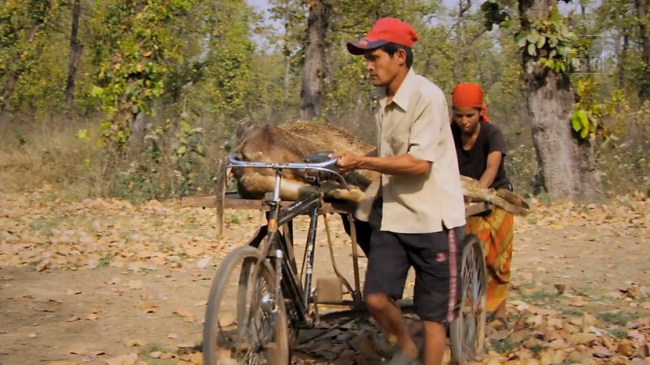
The vulture restaurant was formally established in 2007 by the local communities in collaboration with BCN and other NGOs. It became the worlds’ first community managed vulture feeding center. Old cattle, donated by the local people, are kept in the vulture feeding center until they die. Often the cattle are purchased at a minimal price. They are also checked to ensure the cattle have not been treated with diclofenac. Once the cattle die, teams of volunteers serve the carcasses to the vulture in an open area in the jungle. Bones and hides of the cattle are then sold at the local market. Revenue generated from the sale is instrumental for the maintenance of the restaurant.

Image

Vulture feeding center and a cow dead cow
Source: http://dawncompk.files.wordpress.com/2012/02/vulture-resturant-r5431.jpg

Image

Vultures battle for carcass as they feed at restaurant.
Source: Reuters/Navesh Chitrakar, 2012 (http://www.reuters.com/article/2012/02/07/us-nepal-vultures-environment-idUSTRE8160UQ20120207)

Results are seen…..

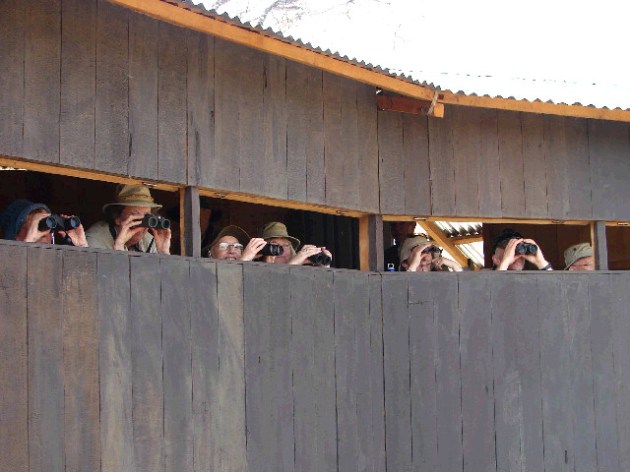
The community effort, with support of NGOs, has produced results. In 2006, prior to the establishment of the restaurant, there were less than 20 nests around Nawalparasi. Now, in 2012, five years later, there are more than 70 nests. The synergistic community development goals and community action with the biodiversity conservation efforts of NGOs have led to the vulture restaurant becoming a success story for vulture conservation and a popular destination for both domestic and international tourists. More importantly, this model has been replicated in other part of the country. In 2013 there have been six more vulture restaurants established to feed the vulture safe carcasses.

Image

Visitors watching vultures at restaurant
Source: http://94.126.173.140/intranet/img/projects/11399/img_pic+5.jpg

Wow, what an innovative idea! This project shows how effective community participation can be. Why not to replicate it in the other parts of the world? I would like to dedicate this blog to those who have been tirelessly working to save an important bird in the ecosystem, THE VULTURE!

Dipak Bishwokarma (u5245182@anu.edu.au) is from Nepal and doing Master of Forestry (Research) at The Australian National University. He has keen interest on the participatory biodiversity conservation.

For more detail:

http://afp.google.com/article/ALeqM5hXfBY76myTDIuT9ACEa0mIBcoRVw

http://www.birdlifenepal.org/

http://www.birdlife.org/datazone/sowb/casestudy/156

http://www.conservationleadershipprogramme.org/UserDataWEB/ProjectData%5C0239510/Strengthening%20Vulture%20Safe%20Zone%20in%20Nawalparasi%20final%20report.pdf

http://orientalbirdclub.org/wp-content/uploads/2012/11/Jatayu1.pdf

http://www.reuters.com/article/2012/02/07/us-nepal-vultures-environment-idUSTRE8160UQ20120207

http://arbroath.blogspot.com.au/2012/02/nepals-vulture-restaurants-for.html

Posted in Uncategorized | Tagged | 4 Comments

A Growing Country

Technology plays a big role in conservation nowadays. While I was in a field trip for Biodiversity Conservation, I found that camera traps were superior in detecting mammals than live trapping methods. This use of technology has been heavily contributing to wildlife surveys for conservation purposes (Garden et al. 2007). From the data collected on the field trip, camera traps are efficient in detecting individual mammals, a variety of species and at the same time gives you the ability to deploy for period of days without then need to be present.

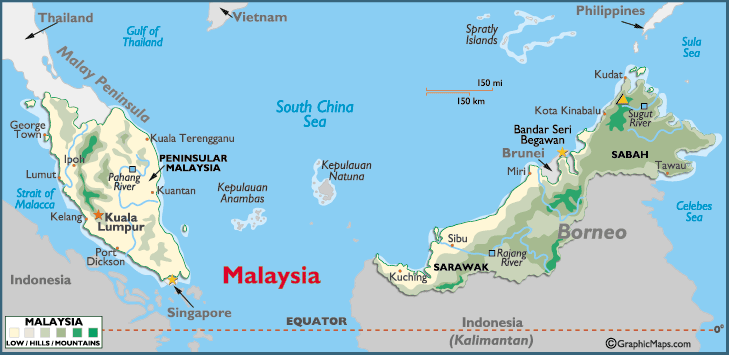
I did a bit of research on my own and found that camera traps are essential in identifying presence of threatened species back in my country (Malaysia). Malaysia is located just above the equator and is one of the biodiversity hotspots in the world. No doubt it is home to many unique native species, including the largest flower on earth, Rafflesia arnoldii, the Bornean orangutan, clouded leopard and Bornean elephant. Yet conservation is still greatly undervalued in our society.

Malaysia is divided into West Malaysia( Peninsular Malaysia) and East Malaysia (Sabah and Sarawak) which  is also part of the island of Borneo (Source: World Atlas)

Malaysia is divided into West Malaysia( Peninsular Malaysia) and East Malaysia (Sabah and Sarawak) which is also part of the island of Borneo (Source: World Atlas)

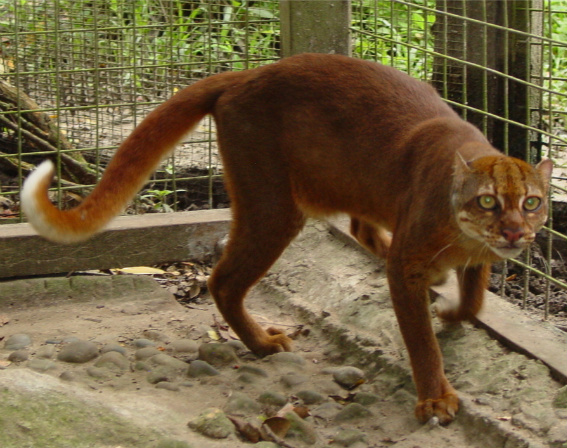
Using camera traps, Mohd Azlan & Sanderson (2007) identified the distribution of the Endangered Bornean bay cat (World’s only video of the elusive cat) and any threats to its persistence . These rare cats are threatened by hunting and land use changes.

Captive bay cat. Photo by: Jim Sanderson.

Captive bay cat. Photo by: Jim Sanderson.

Camera traps recently revealed the importance of wildlife corridors.The Sabah Wildlife Department (SWD) and the Danau Girang Field Centre (DGFC) photographed wildlife using a corridor connecting two fragmented forests in the lower Kinabatangan Wildlife Sanctuary. The images reveal the importance of such linkages for Borneo’s mammals and birds to move between surviving forests.

“Interestingly, we captured a lot of pictures of arboreal primates such as orangutans, proboscis monkeys and langurs (including the very rare Hose’s langur) on the ground. It probably demonstrates that there is a lack of tree connection,” explains Benoit Goossens, Director of DGFC.

A cheeky long tailed macaque (Macaca fascicularis) Photo by: Sabah Wildlife Department (SWD) and the Danau Girang Field Centre (DGFC)

A cheeky long tailed macaque (Macaca fascicularis) Photo by: Sabah Wildlife Department (SWD) and the Danau Girang Field Centre (DGFC)

 Malaysia is still a developing country. Thus most attention is given to the economy and development of the nation, instead of conservation. Oil palm plantations and deforestation are being prioritized over conservation, diminishing habitats for threatened species. In Sarawak, forests are heavily fragmented by oil palm plantations along the Kinabatangan River, making it difficult for animals to move between surviving forests.

Even so, the state governments of Sabah and Sarawak have been negligence in managing National Parks. After pledged to build wildlife corridors especially in the Kinabatangan Sanctuary, the palm oil industry and Sabah government has made little progress in mitigating deforestation. Forestry officers are often paid when no work was given to do. Our lush green forests had not been properly maintained and there had been lacking in law enforcement. Furthermore, an investigation has vindicated a timber corruption case in Sarawak where the Chief Minister personally profited immensely from destruction of Borneo rainforest through logging and oil palm plantations (Find out more). This shows how lowly the government thinks of biodiversity.

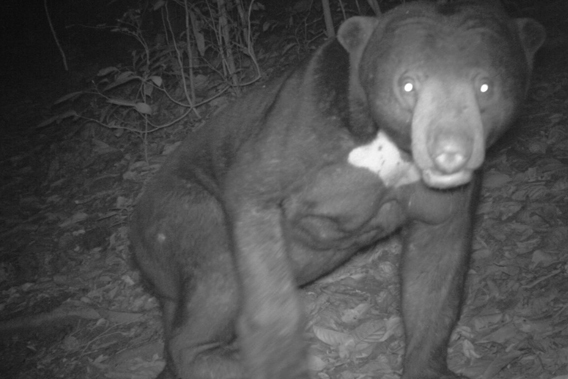
The sun bear (Ursus malayanus) is listed as Vulnerable by the IUCN Red List. Photo by: Sabah Wildlife Department (SWD) and the Danau Girang Field Centre (DGFC)

The sun bear (Ursus malayanus) is listed as Vulnerable by the IUCN Red List. Photo by: Sabah Wildlife Department (SWD) and the Danau Girang Field Centre (DGFC)

   Still the question remains, why should people care about biodiversity when money, technology advancement and politics are the main concerns? In Malaysia, most people are still financially unstable, let alone putting an effort into conservation. This however is not where the main problem lies, but the public awareness itself, of the importance of biodiversity. Ultimately, biodiversity provides important ecosystem services and other benefits to the society.  The solution I strongly encouraged is to instill biodiversity conservation into primary education and the local consciousness. These spectacular images can hopefully capture not just the eye of the public, but also the heart of government and the locals in protecting our national treasures.

The Sunda clouded leopard (Neofelis diardi), Vulnerable . Photo by: Sabah Wildlife Department (SWD) and the Danau Girang Field Centre (DGFC).

The Sunda clouded leopard (Neofelis diardi), Vulnerable . Photo by: Sabah Wildlife Department (SWD) and the Danau Girang Field Centre (DGFC).

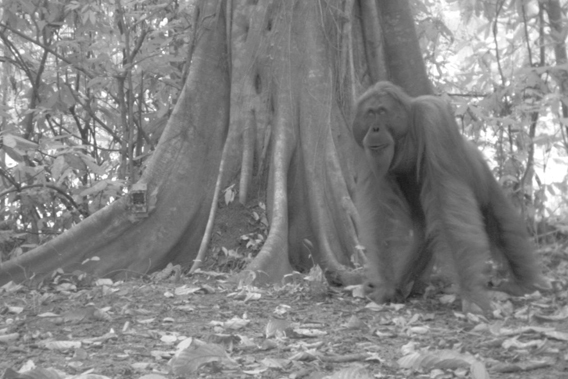
The Borneon OrangUtan (Pongo pygmaeus), Endangered. Photo by: Sabah Wildlife Department (SWD) and the Danau Girang Field Centre (DGFC).

The Borneon OrangUtan (Pongo pygmaeus), Endangered. Photo by: Sabah Wildlife Department (SWD) and the Danau Girang Field Centre (DGFC).

By Wei Cheng Tan ( Bachelor of Sciencce )

Posted in Uncategorized | 1 Comment

Challenges on “long flights”: Development threatens Hong Kong bird migration haven

While I am writing this blog, I’ve just realized that Sophie has posted a blog about Hong Kong. My blog focuses on the Mai Po wetland reserve (which Sophie has also mentioned). It may be the first reserve that I went to (when I was 5 or 6), and probably my first understanding of a natural reserve.

The Mai Po wetland reserve locates at the northwestern corner of Hong Kong, and has been known as a haven for migratory birds to stop over for many decades. The reserve is one of the important stop-over points on the “East Asian-Australian Flyway”, which is an important “flight routes” that spans over 13,000 kilometres. According to WWF Hong Kong, who is responsible for managing the area defined by the Ramsar wetland convention, there are around 30,000 migratory waterbirds using this tiny reserve (1880 acres) to rest and refuel each year. Some of them would spend the winter in Hong Kong, in which more than 30 species of them are under global conservation concern, including endangered species such as Saunders’ Gull and a quarter of the world’s population of the Black-faced Spoonbill.

Saunders' Gull Black-faced spoonbill

Figure 1 – Saunders’ Gull                                    Figure 2- Black-faced Spoonbill

Traditional management practice – Gai Wai

One of the special feature of the reserve is its 24 traditionally operated shrimp ponds (locally called gei wai), which are now the only such ponds in Hong Kong and in southern China. Before the implementation of the reserve in 1995, the Gei Wai shrimp pond operators completely drained down their Gei Wai to harvest the fish inside the pond when the shrimp-harvesting season ended from early winter. When the gei wai is drained, the areas of shallow water or exposed mud on the pond floor would provide foods for thousands of migratory birds that pass through. The drain down provides a wonderful opportunity for us to observe and photograph these birds.

nsw3

Figure 3- Mai Po Gei Wai

The WWF has kept this traditional management practice of gei wai as it can contribute to the ecological value of the site. They practices the winter drain down of the gei wai on a rotation basis, one gei wai is drained every two weeks from November to March (WWF, 2012). This unique system of shrimp production itself is also an example of the sustainable use of a wetland because shrimp production relies on the natural productivity of Deep Bay. Therefore, the WWF uses Gei Wai to educate the public about the significant ecological value of this traditional management practices.

1

Figure 4- Birds feeding on the Mai Po wetland

Although the WWF and the HK government has been doing a good job on managing and protecting the Mai Po wetland reserve, it has been under considerable threat by its shrinking size and development pressure in the nearby area (Murphy, 2013). The pressure not only comes from within Hong Kong, but also from its neighbouring city, Shenzhen. The reserve sits next to the border of these two cities. Shenzhen’s mangrove forests, which are the upstream of the Mai Po marshes, have been under threat from property projects. The WWF HK (He, 2012) said, “Although the size of the mangrove forest on the Hong Kong side has expanded in recent years, various infrastructure projects and water pollutions across the Pearl River Delta are continuing to affect the Hong Kong side.” If that continues, it would create threat to the migratory birds and also the species that have been living there for centuries.

development

Figure 5- development pressure on Mai Po reserve (sourced from: Murphy, M., 2013. Development pressure on Mai Po reserve shows need for action. South China Morning Post. 18th April, 2013)

The issue shows the difficulty on managing a reserve that is so close to the urban area of its neighbouring city, in which they have different development focuses in the area. There has to be better collaboration between the two cities to minimize the negative impact brought from across the border in order to protect this migration haven and also the species that live within or passes through.

Roni Ng , BISS (Environmental Policy & International Business)

Works citied

He, H., 2012. Shrinking Shenzhen mangrove forests poses threat to migratory birds. South China Morning Post. 28th Novermber, 2012. Available at: <http://www.scmp.com/news/china/article/1092477/shrinking-shenzhen-mangrove-forests-poses-threat-migratory-birds>

Hong Kong Wetland Park, 2008. World Wetlands Day 2007. Available at: <http://www.wetlandpark.com/wwd/en/fisheries/geiwai.asp&gt;

Murphy, M., 2013. Development pressure on Mai Po reserve shows need for action. South China Morning Post. 18th April, 2013. Available at:<http://www.scmp.com/comment/insight-opinion/article/1216823/development-pressure-mai-po-reserve-shows-need-action>

WWF, 2012. Gei Wai Winter Drain Down 2011/12. Available at: <http://www.wwf.org.hk/en/news/_m.cfm?5660/Gei-wai-Winter-Drain-down-201112&gt;

Posted in Uncategorized | 1 Comment