Ecotourism: The Good, The Bad & The Possibilities

Sitting on my hotel balcony at Kandalama Heritance Hotel, Sri Lanka, I could think only one thing, why were there not more hotels like this?

Ecotourism is defined as “responsible travel to natural areas that conserves the environment and improves the well-being of local people” (IETS, 2012). It works based on the principle that biodiversity conservation needs to pay for itself. Money generated from eco tourism is placed back in to the conservation of the environment it impacts upon.

The Good

Kandalama Heritance Hotel is a shining example of the possibilities that ecotourism can offer. Kandalama is a 5 star hotel set amongst 5 UNESCO World Heritage listed sites. The hotel engages in a number of biodiversity management strategies.

• Recycling and Re-using all waste water and by products
• Use of rain, recycled and ground water
• Invested in creating 200ha of conservation forest around the hotel sight
• Accommodate four primate species, including two that are endemic to the area
• Invasive plant removal
• Run this within the concept of an Adaptive Management style framework
Source: Heritance Hotel

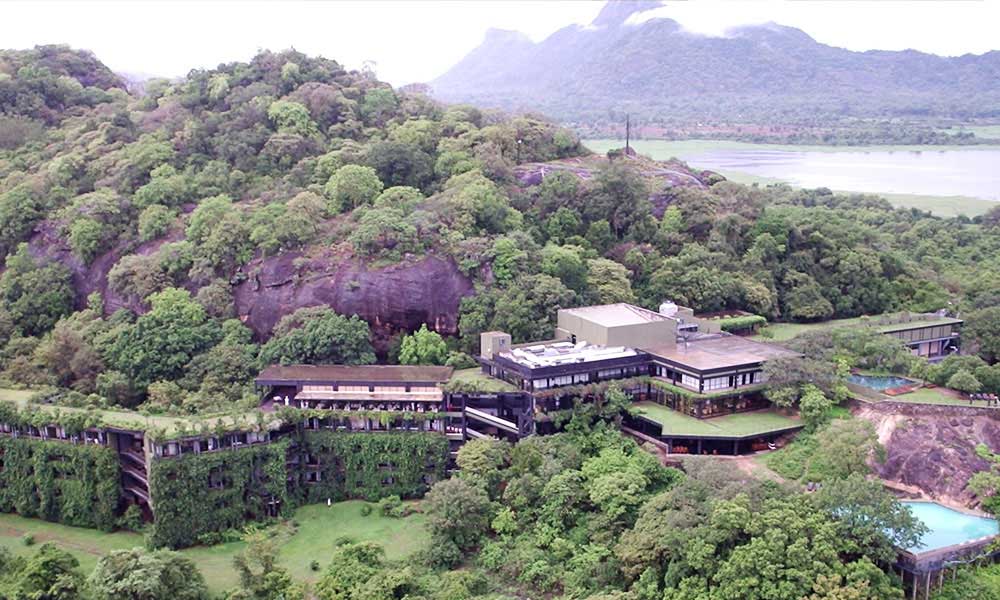
The cohesiveness between the hotel and its environment are evident upon first arrival. Large rocks protrude through foyers and walkways, tropical vines cascade down the building and primates sit side by side with humans for dinner.
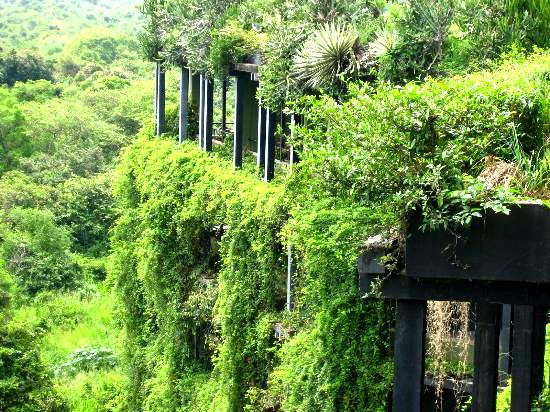
Hotel Rooms at Kandalama Heritance Hotel, Sri Lanka. Source:http://www.greenroofs.com/projects/pview.php?id=555

Hotel Rooms at Kandalama Heritance Hotel, Sri Lanka. Source:http://www.greenroofs.com/projects/pview.php?id=555

The Bad

At Kandalama ecotourism has been a great success and has achieved an array of biodiversity goals. The question is whether ecotourism has a role to play in large-scale biodiversity conservation.

The first draw back of ecotourism is the limited range of ecosystems that can be represented. Some high value ecosystems, including closed rainforests and high mountains, are not areas feasible for ecotourism. Difficulty of access, susceptibility to damage and the elusive nature of wildlife make some areas inappropriate for ecotourism (Kiss, 2004, pp. 233).

There is often a presumption that by engaging in ecotourism we are not damaging the environment. However, by creating the infrastructure necessary for ecotourism we are altering the natural state of the ecosystem (Kiss, 2004, pp. 233). Many ecotourism programs alter the natural state of the ecosystem to benefit high value species; this is to attract more tourists.

The last issue is the mean size of biodiversity conservation areas, set aside by ecotourism projects (Kiss, 2004, pp. 233). The high cost associated with creating reserve areas, coupled with the fact most are privately funded, equates to generally small conservation areas.

The Possibilities

Back on the balcony in Kandalama, sipping gin and tonics, surrounded by an array of foreign wildlife, I couldn’t help but feel I was a part something amazing. This is what ecotourism provides: a sense of well-being, education on biodiversity and an opportunity to engage ecosystems on a different level. Despite its inherently good aspects the role it has to play in biodiversity conservation is small. The high cost involved creates small biodiversity conservation areas. This fact, coupled with the fact that it is a niche market of tourists that are both interested and willing to engage in it, means we shouldn’t be pinning our conservation hopes on it.

References & Further Reading

International Eco Tourism Society (2012). What is Ecotourism? The International Ecotourism Society, Accessed at .

Naidoo, R., & Adamowicz, W., (2005). Biodiversity and nature-based tourism at forest reserves in Uganda. Environment and Development Economics, Vol. 10 (2), pp. 159 – 178.

Kiss, A., (2004). Is community-based ecotourism a good use of biodiversity conservation funds? Trends In Ecology and Evolution, Vol. 19 (5),, pp. 232- 237.

Heritance Hotel (2013). Environment Conservation. Accessed at <http://www.heritancehotels.com/kandalama/green-philosophy/environment-conservation.html&gt;

Lucas McCracken

Posted in Uncategorized | 2 Comments

Should we eat wildlife?

As in Australia, wildlife in Vietnam faces the risk of extinction and population decline caused by habitat loss and fragmentation, introduced species, disease and climate change. However, Australia faces over population problems with some big native mammal species and introduced species, while all big mammal species in Vietnam are declining. One reason for difference comes from different habits and attitudes to consuming from wildlife.

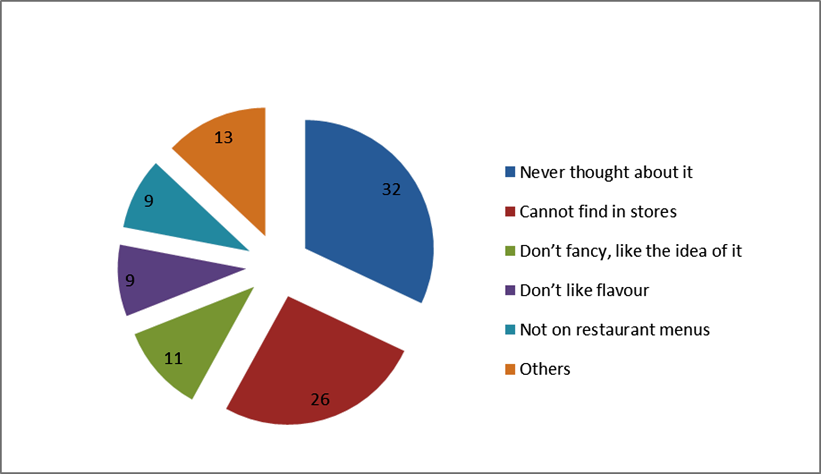
Australia’s biodiversity is under threat due to the population growth of some big mammal species such as kangaroos, rabbits and dear. They destroy native plants, which leads to their extinction and also affect other wildlife populations. Therefore, Australians are encouraged to eat kangaroo and rabbit meat to reduce their population growth. Professor Ross Garnaut from the Australian National University, climate change adviser to Australian former Prime Minister Kevin Rudd, suggested that “Australian families should give up beef and eat more kangaroo to eliminate global warming”, and biologists say that Australian should eat more marsupial meat, as monitoring their decline could help save them from extinction. Even studies from Southern Cross University have found kangaroos to be better suited to human stomachs, but there not many Australians keen to eat that meat. There are several reasons why: First, they are used with eating beef, pork, chicken and lamb as they have done since European settlement. Secondly, they have concerns about disease and animal welfare. Thirdly, they do not like flavour and finally, this type of meat is not always available in stock or restaurants. One more reason that Australian should consider eating wildlife is that it is very costly to exclude the kangaroos, rabbits and wild dogs and cats to protect the other native wildlife. For example, 11.5 km fence in Mulloogans Flat which was designed to exclude foxes, cats, rabbits and kangaroos costs over 1 million Australian dollars.
why not eat kangaroo

Figure 1 shows, by percentage, of the main reasons for Australians not eating kangaroo meat (a survey and report for the Rural Industries Research and Development Corporation).

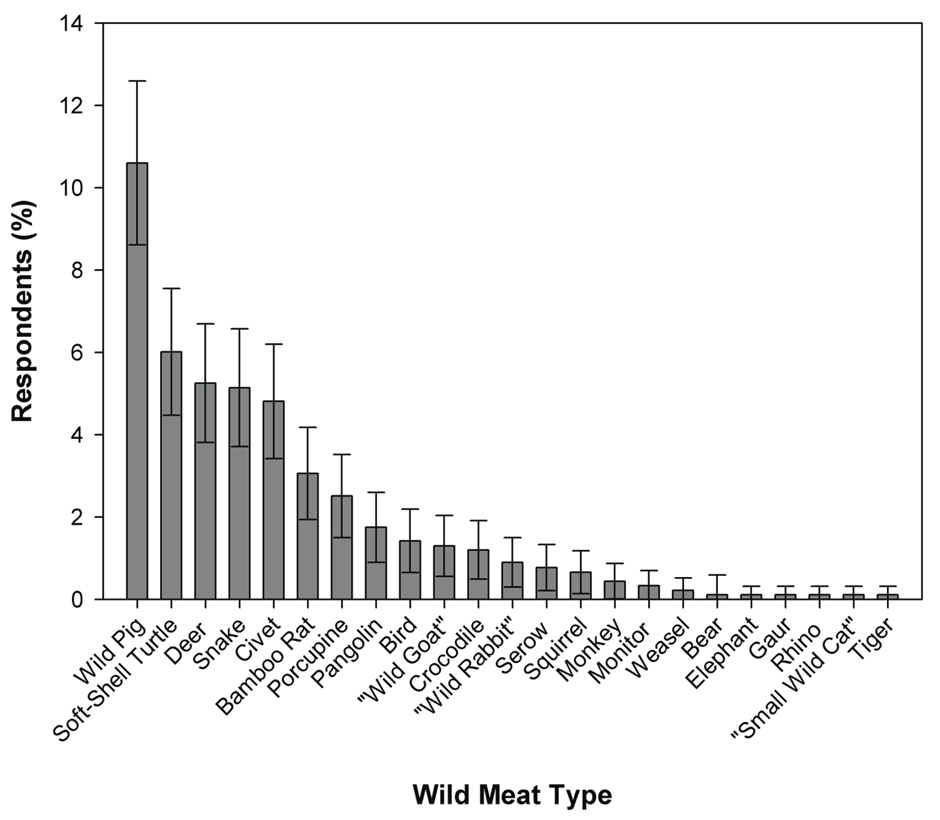
In contrast, all big mammal species in Vietnam are extinct or indecline, mainly because of illegal hunting and trading caused by human demand. For example, Javan rhinoceros became extinct in Vietnam in 2010, and less than 30 Indochinese tigers, 94 Asian elephants and 53 Cat Ba langur remain in the wild in Vietnam. They all have been hunted for meat consumption and traditional medicine. The Vietnamese habit of consuming wildlife has been influenced by Chinese habits and attitudes. Meat from wildlife has also been historical food source, especially during the war when people depended on wild meats from the forest. One study of Drury (2009) in Hanoi (the population is about 7 million) showed that 50% Hanoi residents consume wildlife products. The reasons they stated for eating wild animals is that they think the meat tastes good (52% of responses), the meat is good for their health (22%) or they were invited to a new taste. People with a high income and education consume wild meat more frequently, while the main reason they stop use it is because it is too expensive. Figure 2 shows the types of wild animals most commonly eaten.
Wild Meat Type
Figure 2: Percentage of Vietnamese respondents (n=951) who reported eating type of wild meat on at least one occasion in last 12 months with 95% confidence intervals (Drury, 2009).

Whether you choose to use or not to use wildlife products depends on where you are from and your personal opinion, however, you should consider the law relating to killing wildlife when making your decision.

animal's skulls
The photo shows after eating the meat from many wild animals, a Vietnamese hunter displays the wild animal’s skulls as he is proud of his hunting successes (photo: Thai Nguyen).

(Thai Van Nguyen – Master of Forestry)

Posted in Uncategorized | 1 Comment

Urban Biodiversity – Is it worth it

 Image

Urban centre of Melbourne, Australia. (source: Mike Krebs)

Biodiversity Blog – Does urban biodiversity have a role in conserving biodiversity, is it worth the trouble?  

Sam Nicholson u4854749

When you think of modern cities, what is the first image that comes to mind? Many people would answer skyscrapers or cars, but few would reply trees or wetlands. This is a bigger problem than people realise. Current research from academics strongly suggests that there is a critical need to conserve what is left of the naturally existing biodiversity around us. However, there is also much criticism from academics that we, as humans are just not doing enough.


So, why then are we, as humans not doing enough?

A lack of scientific research, no, a lack of capacity maybe, no, it is societies lack of value and broader understanding of conservation and its importance. Telling people to conserve biodiversity, no longer works, society wants to understand why, “rather than tell us what to do, you should have a hands on person come around,” comments about the environmental stewardship scheme (Burns, E 2013, pers. comm).

How do we then increase society’s value and understanding?

Take a car for example, to value the car you have to understand and appreciate i.e. learn how it works. To understand and appreciate you have to experience i.e. drive, the same goes for conservation, experience is critical. Urban biodiversity plays a key role in providing an avenue for society to experience biodiversity and increase their understanding and value as more than 50% of the world’s population are now living within urban areas (World Health Organisation 2013).

So, how can we develop urban biodiversity?

Well there are many ways including;

  • local reserves (Canberra – Black Mountain)

Preservation of existing natural reserves contributes significantly to urban biodiversity, reserves provide opportunities to experience biodiversity in a recreational sphere but also, as remnant vegetation, provide habitat for species not commonly seen in the urban sphere.

 Image

Figure 1 Black Mountain reserve within Canberra including the Telstra Tower. One of the ways biodiversity is expressed within urban spheres. (source: Yahoo!7 2013)

  • Back yards for wildlife

This is an initiative on the rise in Adelaide which provides biodiversity in a household sphere where the local council provide information and resources for people who rehabilitate their backyard. This also provides important connectivity further enhancing biodiversity.  

  • Roof top gardens

This initiative provides green spaces within the central business district in a work sphere. While not specifically addressing native species, it is one of the few ways to integrate green spaces and additional habitats in congested cities (City of Melbourne, cited in Williams et al 2010).

  • Wetlands – Canberra Suburbs (figure 2)

Wetlands provide experience for biodiversity within recreational and residential sphere and habitat for native species. They also facilitate community involvement though planting days during development. 

Image

Figure 2 Urban biodiversity wetland within Kingston Foreshore, Canberra. (source: ACT Government, Environment and Sustainable Development Directorate)

These avenues are strait forward concepts which should be present in all cities. These examples show urban biodiversity across a range of spheres; the home, recreation and CBD. Multiple spheres provide maximum exposure to people within urban societies. Awareness and experience are fundamental in conservation and urban biodiversity provides that while also having embedded benefits for connectivity and habitat loss.  

References and further reading

Web site

Global Health Observatory 2013, World Health Organisation, Geneva, Switzerland, viewed 26 May 2013, <http://www.who.int/gho/urban_health/situation_trends/urban_population_growth_text/en/>

South Australian Government Department of Environment and Natural Resources 2012, South Australian Government, Adelaide, South Australia, viewed 26 May 2013, <http://www.backyards4wildlife.com.au/index.php?page=backyards-4-wildlife>

Journal

Williams, S.G., N, Rayner, JP, & Raynor, JK 2010, ‘Greening roofs for a wide brown land: Oppertunities and barriers for rooftop greening in Australia’, Urban Forestry and Urban Greening, vol. 9, no. 3, viewed 27 May 2013, <http://www.sciencedirect.com/science/article/pii/S1618866710000099>

Posted in Uncategorized | Tagged | 1 Comment

“Save Our Trees!” Restoration in the face of avid nature lovers

In the field of biodiversity conservation (as with most land management) we constantly face the challenge of balancing stakeholder interests with the needs of the environment.  A sometimes difficult question is determining the point at which a threat should be deemed unacceptable regardless of community values.  But how do we respond when faced with outright public defiance?  And how do we help the public to understand the value of conservation work beyond the immediate visual aesthetic?

My home town of Bellingen (“Bello” to the locals), nestled in the picturesque Bellinger Valley on the Mid-North Coast of NSW, provides a haven for artists, nature lovers, alternative lifestyle seekers and tree changers. Unfortunately, the favourable climate and relatively fertile soils also make the surrounding landscape a haven for an impressive array of weeds.

A particular weed of note is camphor laurel (Cinnamomum camphora), a large shade tree originating from Japan and China, and classified as a noxious weed under the Noxious Weeds Act 1993.  The trees suppress and out-compete native vegetation, and the seed is easily distributed by birds.  The shallow root system can cause undercutting of river banks (especially in flood-prone areas such as the Bellinger Valley) and the fallen leaves are believed to have a negative impact on stream chemistry.  One tree can produce thousands of seedlings, each of which might last for hundreds of years.

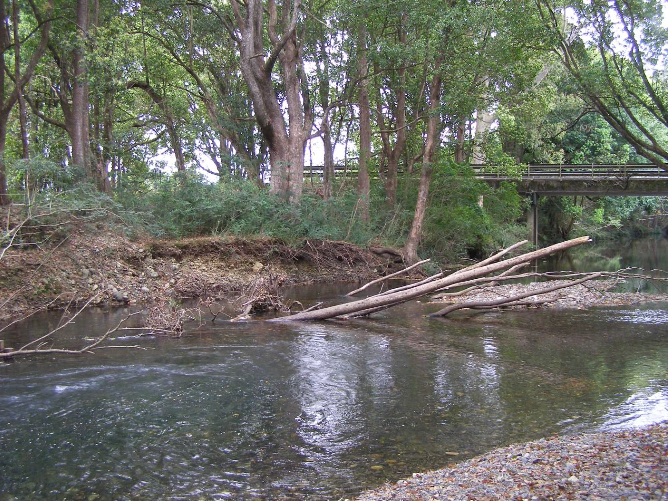
A short drive out of town brings us to the Gleniffer/Promised Land area, where the beautiful Never Never River provides a favourite picnicking and swimming spot for locals and visitors alike.  Like many riparian areas in the valley, this stretch of river is also infested with large camphor laurel trees, where their location on the riverbank makes these trees a considerable threat to biodiversity.

arthur keough camphors2

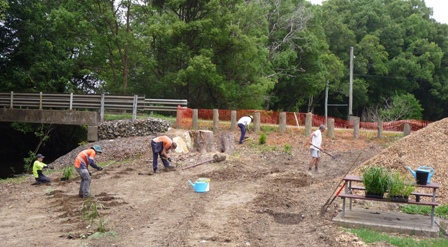
Last year, local Landcare workers and bush regenerators began working in public recreation reserves along the river, poisoning the mature camphors and planting native seedlings, and delineating car parking areas.  Public outcry was quite vicious, with letters in the local newspaper describing the work as ‘vandalism’, a ‘waste of money’ and ‘spoiling a beautiful picnic area’ (Bellingen Courier Sun, Jan 15 2013).  In some cases, bollards were burned out and boundary chains cut to allow visitors to drive their vehicles onto the fragile banks, crushing native seedlings and causing erosion damage in the process.

Bellingen Bush Regenerators undertaking landscaping and planting native trees

Bellingen Bush Regenerators undertaking landscaping and planting native trees

While it is true that the short-term aesthetic impact is less pleasing, as an ecologist and forester I know that the long-term result of the work will be vastly preferable, both in terms of ecological and visual amenity.

So how do we adequately communicate this to the public? In a town like Bellingen, where there is a prevailing public attitude of ‘power to the people’, intervention from perceived authorities is at risk of being written off before it is even considered.  This story is not unique – around Australia we often hear public outcry about the removal of weed species (willows and poplars, to give a local example).  Especially when there is potential for vandalism, public education and communication are arguably just as important as logistical planning in restoration work.

References and further reading:

Firth, D and Ensbey, R. (2009) . Camphor Laurel, Primefact 733, NSW Department of Primary Industries.  Available from http://www.dpi.nsw.gov.au/agriculture/pests-weeds/weeds/profiles/camphor-laurel

ABC Radio National (presented by Kirsti Melville). The war of the camphor laurels. 360 documentaries.  Aired 04/03/2012.  Available from http://www.abc.net.au/radionational/programs/360/the-bellingen-camphor-laurel-wars/3842194

Bellingen Shire Courier Sun, Letters, 16 January 2013

GeoLink 2012, Arthur Keough Reserve Plan of Management, prepared for Bellingen Shire Council

Ellie Cheney is a 4th year Forestry student with an interest in bush regeneration and small-scale native plantation and agroforestry

Posted in Uncategorized | 1 Comment

Managing fertiliser use to preserve biodiversity

The overuse of fertilisers can have detrimental effects on native flora.  The most common elements included in agricultural fertilisers that can be harmful to the Australian landscape are nitrogen and phosphorus.  Australia’s plants are evolved to a landscape that is low in phosphorus, so too much of it can be toxic for many plants.  In other parts of the world such as the Netherlands, there are strict regulations on fertiliser use in order to mitigate these pressures.

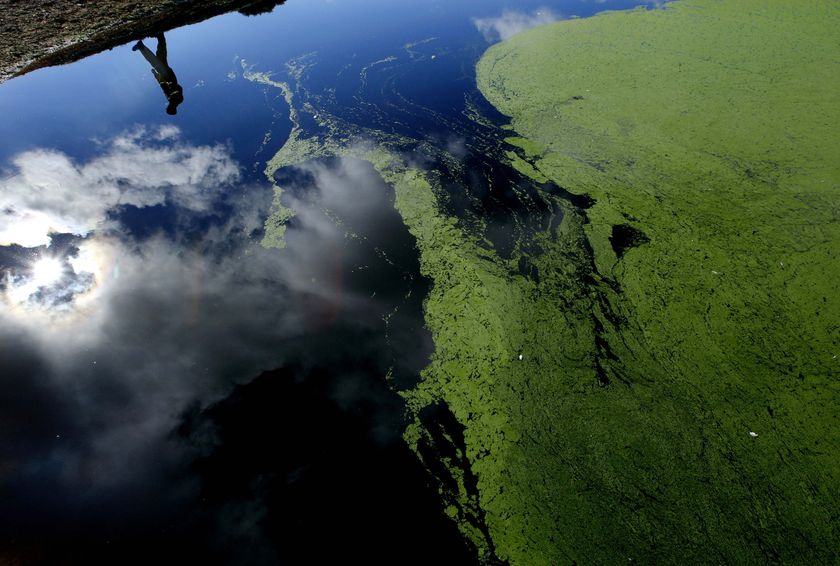
In high rainfall areas, especially those with sandy soils, there is a high risk of the fertilisers being leached into the ground water.  The build-up of phosphorus in these systems can contribute to algal bloom development.  This is damaging for aquatic species, mainly because the presence of the algae inhibits sunlight reaching the other photosynthetic species below.  This can decrease biodiversity in rivers and lakes for photosynthetic life forms as well as those that depend on those plants for food.

algae

Figure 1: Algal bloom in the Murray Darling Basin. Photo sourced http://www.abc.net.au/reslib/200807/r267006_1117730.jpg

The build-up of ammonium nitrates in the soil can contribute to soil acidification.  This can lead to the die back of any species that is not evolved to cope with acidic soils.  This is mainly a problem for agricultural lands and can be a major factor in paddock tree die back and lack of regeneration.

paddocktree

Figure 2: Dying paddock trees. Photo sourced http://brg.cma.nsw.gov.au/uploads/images/lm_West%20of%20Uralla.jpg

The Netherlands, which has a large agricultural sector being the second largest exporter of agricultural products in the world, has a system of accounting for all nitrogen that goes in and out of the system. If too much nitrogen is lost, taxes apply.  The Dutch Government has also developed an online computer game called NitroGenius to educate people on the problems of nitrogen pollution.

Dutch

Figure 3: Intensive agriculture in the Netherlands. Photo sourced http://farm1.static.flickr.com/216/471352499_c669ce8b90_o_d.jpg

Phosphorus is a scarce resource throughout the world so it does not make sense to waste it in polluting our ecosystems.  Solutions for this problem include the consumption of less meat and more plant-based foods that are more efficient users of phosphorus, and the use of animal excreta as fertilisers.

Another solution to this problem may the uptake of organic farming.  Organic farming involves only using natural fertilisers like animal manures and worm castings in place of synthetic fertilisers.  It has been shown that there is usually less nutrient run-off and leaching through organic farming practices.

Lessening the pressure on biodiversity through the proper management of fertilisers is important in Australia due to the fragmentation of our natural systems.  This is essential for the preservation of paddock trees – an integral aspect of Australia’s declining biodiversity.

Ellie Stanley – Bachelor of Science, Australian National University

Posted in Uncategorized | 1 Comment

Logging in Tasmania with considerations for biodiversity


This blog is inspired by a field trip to the Warra long-term ecological research site in South-East Tasmania during a summer course at the University of Tasmania. We observed alternative forestry logging methods in wet native forests. Personal notes and readings were used to write the blog.

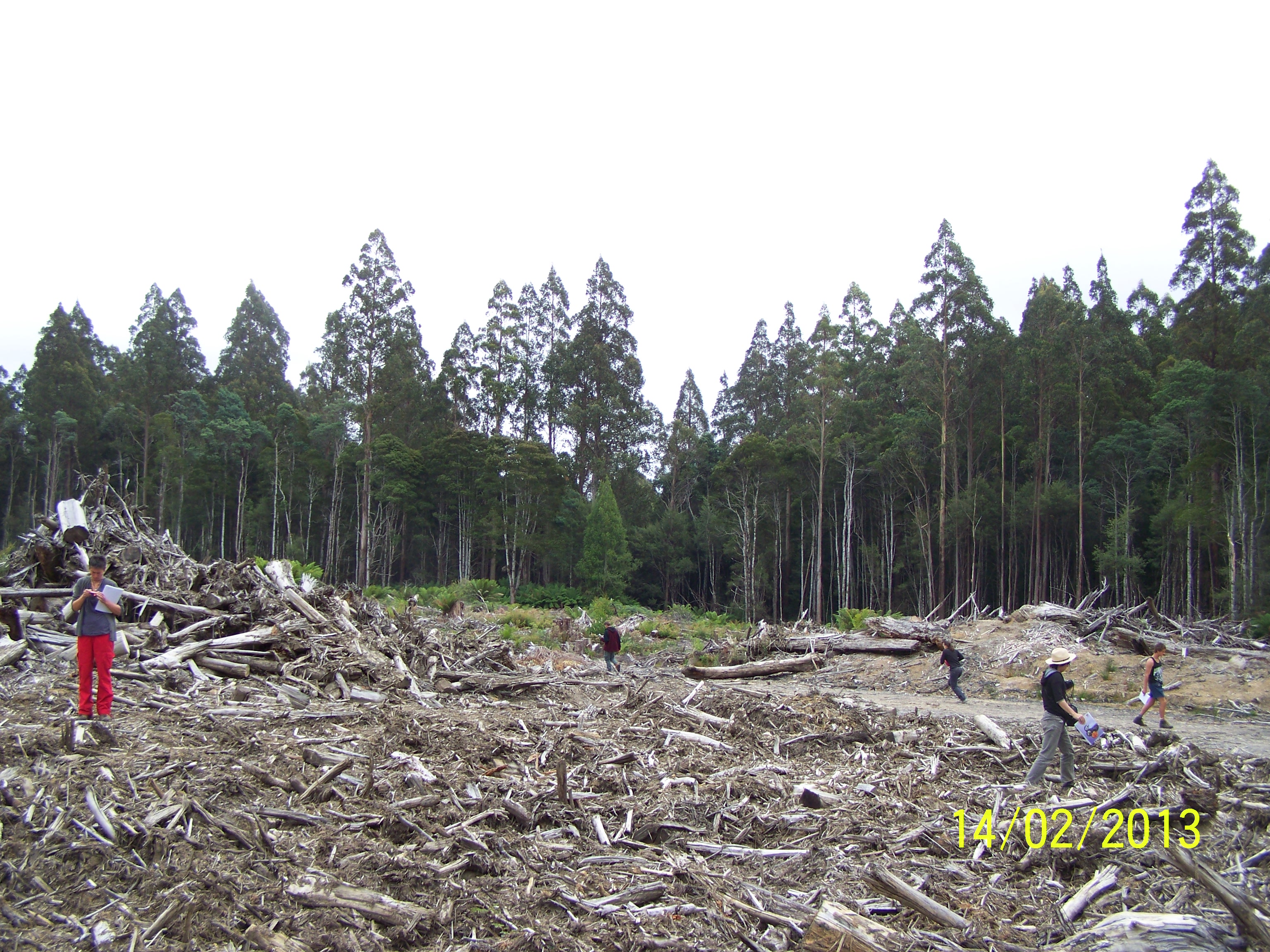
Clear felling forests should stop on environmental and ethical grounds. During a field trip we saw alternative logging systems and regenerating forests after clear felling, including a recently logged coupe. As the lecturer said “it looks like a bomb’s gone off”. Humans seem to be more interested in obtaining resources cheaply than caring for the world and sustaining beautiful ecosystems. It is sad that this destroys habitat for a mammal, bird or even invertebrate, but to obtain wood or paper, trees have to be felled. Is there an ecologically sustainable way of logging native forests?

Recently logged but not yet burnt forestry coupe in South-East Tasmania. (Photo B. Huttner-Koros).

Recently logged but not yet burnt forestry coupe in South-East Tasmania. (Photo B. Huttner-Koros).

Forestry Tasmania previously used the clear fell, burn and sow method (CBS) in Tasmania’s wet forests. This involves felling all the trees and taking away the desired timber. The coupe is burnt in a high intensity fire to clear the ground cover. Seed from local eucalypts is then aerially sowed. The fire aims to replicate natural conditions of forest regeneration where a huge, very rare fire (every ~300 years) kills the mature trees. The resulting open conditions allow for these high light requiring eucalyptus seedlings to grow (E. regnans and E. obliqua).

Due to concerns on the impacts of CBS on biodiversity and social unacceptance of it, alternatives were tested. The Tasmanian community forest agreement stated that by 2010 a minimum of 80% of old growth forest being logged was to be by non-clearfell methods.

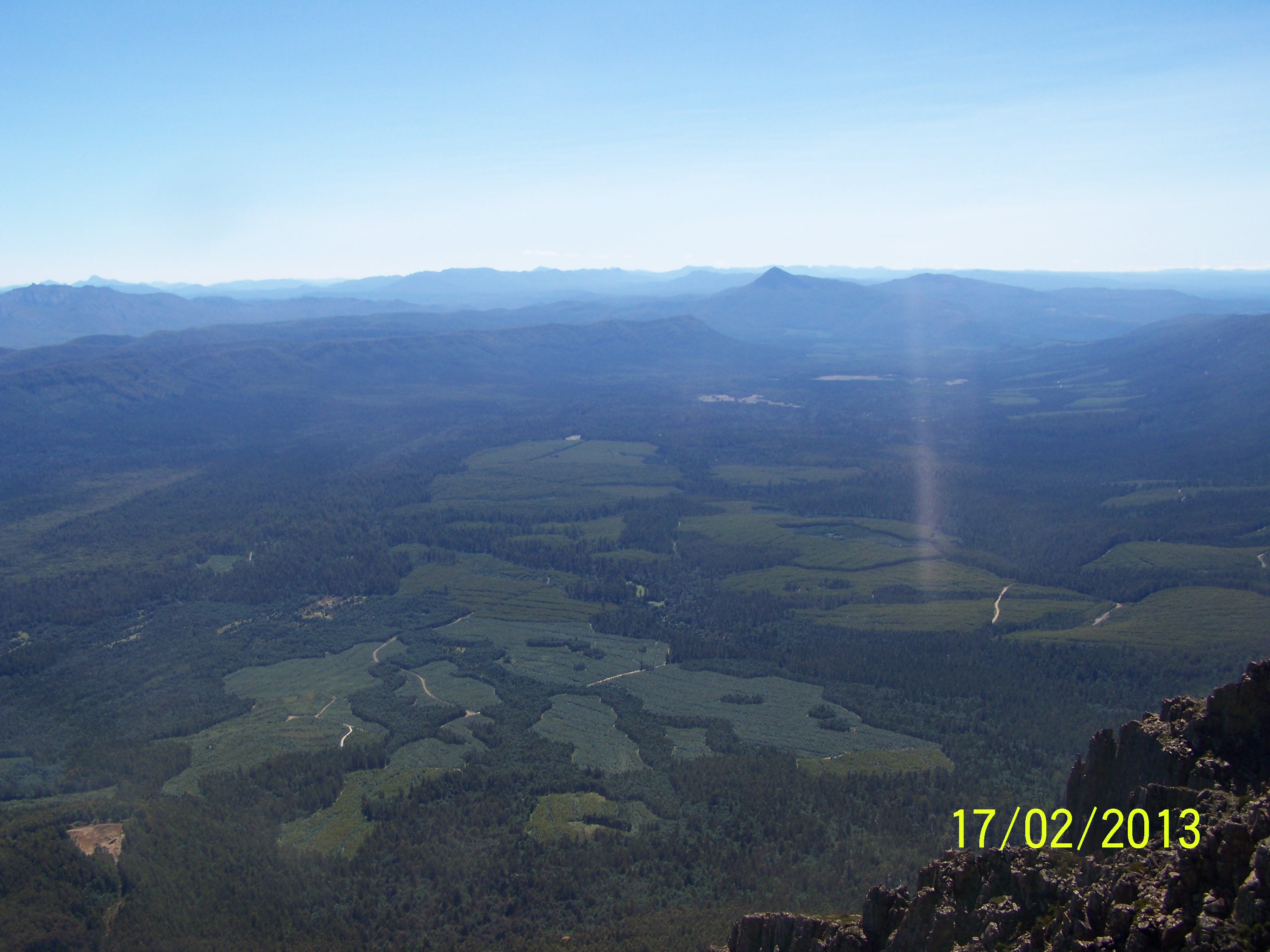
Forestry in the Florentine Valley, South-East Tasmania. (Photo B. Huttner-Koros)

Forestry in the Florentine Valley, South-East Tasmania and a pretty spectacular view! (Photo B. Huttner-Koros)

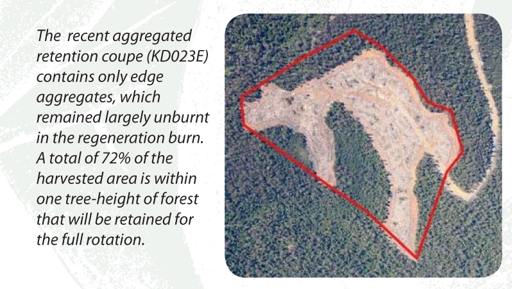
The method currently used is aggregated retention (ARN). ARN retains the forest in at least 1 ha aggregates inside (as islands) or on the edge of a coupe during logging. The aim is to maintain ‘biological legacies’ (live or dead trees, logs, coarse woody debris) that occur in natural forest regeneration where naturally heterogeneous fires leave logs and unburnt or low intensity burnt patches. Another aim is to maintain ‘forest influence’ over the logged area. This is the influence of the remnant forest on biophysical conditions in the logged coupe such as seedfall, litter accumulation, light, temperature, humidity and wind speed. This then affects the recolonisation of flora and fauna into the logged area from the remnants functioning as refuges. Forestry Tasmania considers it to extend one tree height from the edge of the retained forest, however it is unknown if this is ecologically meaningful. In ARN, the remnants maintain forest influence more than 70% of the logged area. This is the main difference with CBS.

Photo and caption from Forestry Tasmania. 'Achieving good ecological outcomes fro aggregated retention'.

Photo and caption from Forestry Tasmania. ‘Achieving good ecological outcomes fro aggregated retention’.

I can’t make a judgment on the long-term ecological sustainability of the practice. It seems like a huge improvement on CBS! Dr Nicki Munro has explained that no restored landscapes have equal functionality as undisturbed remnants. Regenerating ARN coupes will not be as functional as remnants and habitat will be lost. Humans will always have some impact on the environment. The challenge is to make our impacts small enough so that our kids inherit a world in the same condition as we found it. If the impact of ARN is small (what is small enough?) such that it is sustainable then it may be it is an acceptable practice.

Here’s hoping that forestry continues to be guided by conservation aims and research and that beautiful ecosystems are conserved!

Benjamin Huttner-Koros (Bachelor of Science)

References:

Posted in Uncategorized | 1 Comment

The spineless backbone of biodiversity

Something has been bugging me since commencing my studies of biodiversity conservation, it has bugged me in almost every lecture and it continues to bug me as I scroll through the fantastic blogs from my fellow classmates. In fact I feel the only times it hasn’t bugged me have been when hanging out in my spider-infested college greenhouse.
Where are all the bugs? And not just the bugs, but the beetles, butterflies, black-widows and bottom-feeding barnacles.

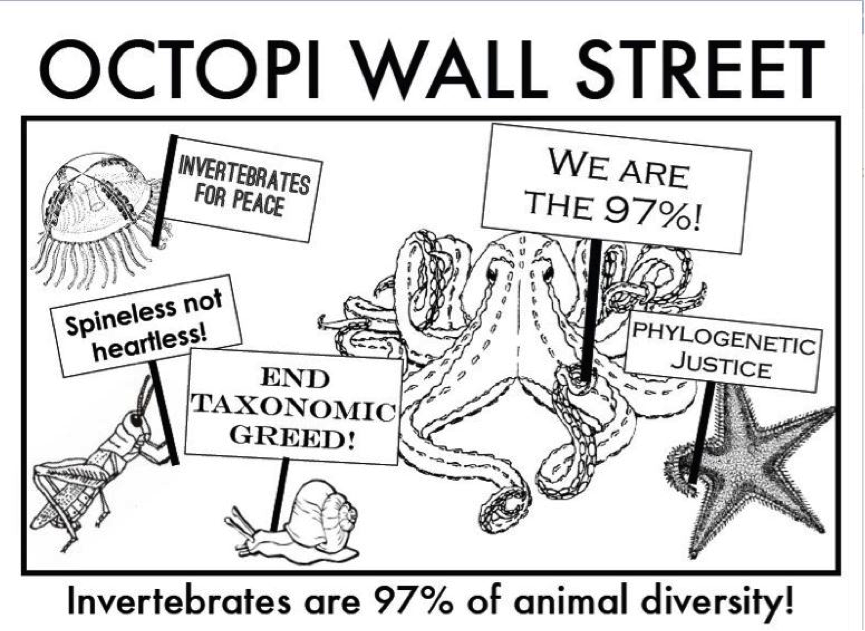
inverts The spineless among us are not only incredibly important members of every ecosystem, they make up the vast majority of all living creatures on earth. They are the movers, shakers and ecosystem makers of our planet, and I’m not the only one who knows it. Without them our ecosystems would not function in anyway shape or form.

In lectures vertebrates would be broken into birds, reptiles, mammals, we know them well. But then tacked onto the end would be invertebrates. Just invertebrates. And when this was followed by, “invertebrates are just to variable to draw conclusions about” I would think to myself, but what about worms? beetles? molluscs? We could just as easily say “vertebrates are just too variable to draw any conclusions about.” but we don’t.
I investigated this outside the realm of university lectures to see how far this bias against the boneless extended into the real world. I turned to my Macbook (that’s the real world right?). After typing ‘insect’ into a Microsoft Word document and using the trusty ”right click- synonyms” function, it came up with ‘pest’. Type in ‘mammal’ and we are given lovely terms, ‘animal’, ‘being’- the bias continues. Now as much as most university students would like to build a shrine to the synonyms function of Word documents and hail it as Mecca, it’s not. So I took my research one step further. To Scopus, a database of scholarly scientific articles. Surly the academics have a little more heart! I used the search “insects and biodiversity and conservation”- 839 hits. Replace the word “insect” with “mammal”- 1062 hits.

So why is it that, despite honey, figs, detritus, clean water, not to mention the things that feed all the other things that we use and eat, and all the other glorious benefits invertebrates give us, we still have such little regard for them? When speaking of conservation and its importance, we rarely take examples from the invertebrates.
It’s not because they are immune to threats to biodiversity, the International Union for the Conservation of Nature’s 2010 Red List puts about 30% of the 1.3 million invertebrate species listed at risk of extinction.
Is it because they aren’t huggable? Or a lot of the time aren’t seeable? Maybe they are just too hard to figure out. Or maybe it’s because it’s difficult to relate to them, us having a spine and all… and sometimes they crawl under the bed, or give us a sting. Poor excuses I say because what we do know is this:

They are beautiful,

OLYMPUS DIGITAL CAMERA

Photograph by Doug.Deep

useful,

useful

Photograph by Fir0002/Flagstaffotos

delicious,

delicious
Photograph by Brett Stevens & Ian Wallace

they can do some really unbelievably amazing things like go into suspended animation! and they are incredibly diverse.
Invertebrates are utterly irreplaceable and deserve proper recognition.

Limiting our interest and conservation actions to vertebrates means we neglect some of the most fascinating and important animals on earth.
So here I plead and beg that you take the time to think about horseshoe crabs, nematodes, lacewings and amblypygids (if you don’t know what those are, look them up). Fight for the plight of the creepy-crawly and be thankful that they roam our earth.

Millie Stevens, biodiversity conservation student and invertebrate enthusiast.

Posted in Uncategorized | Tagged , , | 1 Comment

The Seringal Cachoeira

Viagem Brasil Norte Sul 519

Alexandre Arthur Schelbauer – u5319773

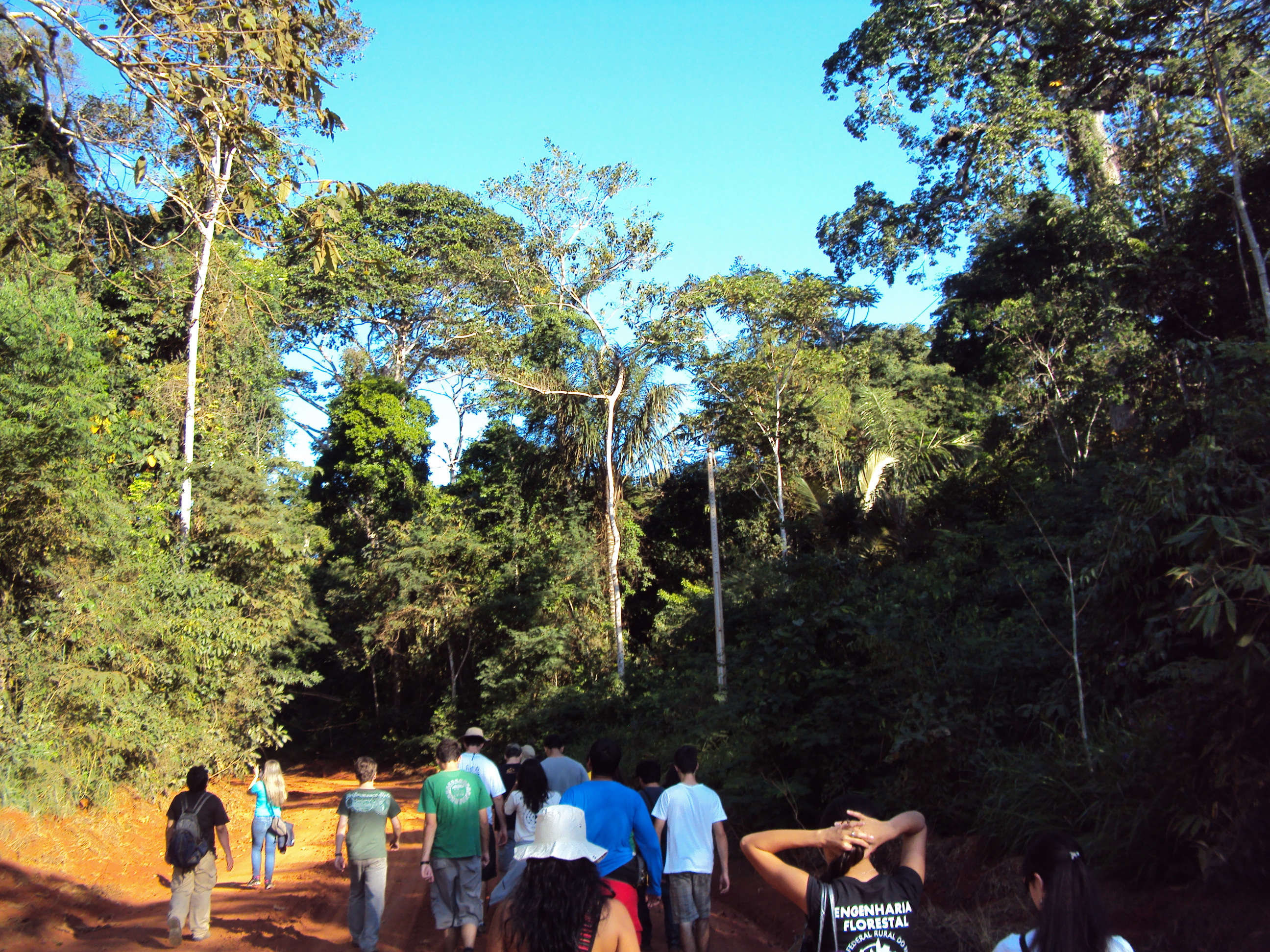
I would like to talk a little about a place I knew last year in Brazil, in a cross country fieldtrip with my home university. But first some about the history of the place: The Serigal is a latex extraction area (latex been a product of Hevea brasiliensis, a Brazilian native tree), done in a very low impact way, as the trees are already on the forest, with just the need of small trails connecting one site to the other. The place was the focus of one of the major conflicts over the preservation of the forest and its biodiversity versus the agriculture and logging of the Amazon forest. The area was marked to be completely cut down for pastures and plantations, but the local communities (indigenous and local people, called peoples of the forest), under the leadership of Chico Mendes (one of the most important Brazilian icons for the protection of Amazon forest) rose and with pacifist blockades and public protest, brought the debate to the public and started in the mind of the Brazilian population the idea of nature conservation. Sadly, Chico was killed, but the people he inspired and his ideas lived on, and now the Seringal (the common name for latex extraction areas) is protected and declared a reserve, with absolutely no exploitation of the wood resource and land conversion.

Viagem Brasil Norte Sul 522
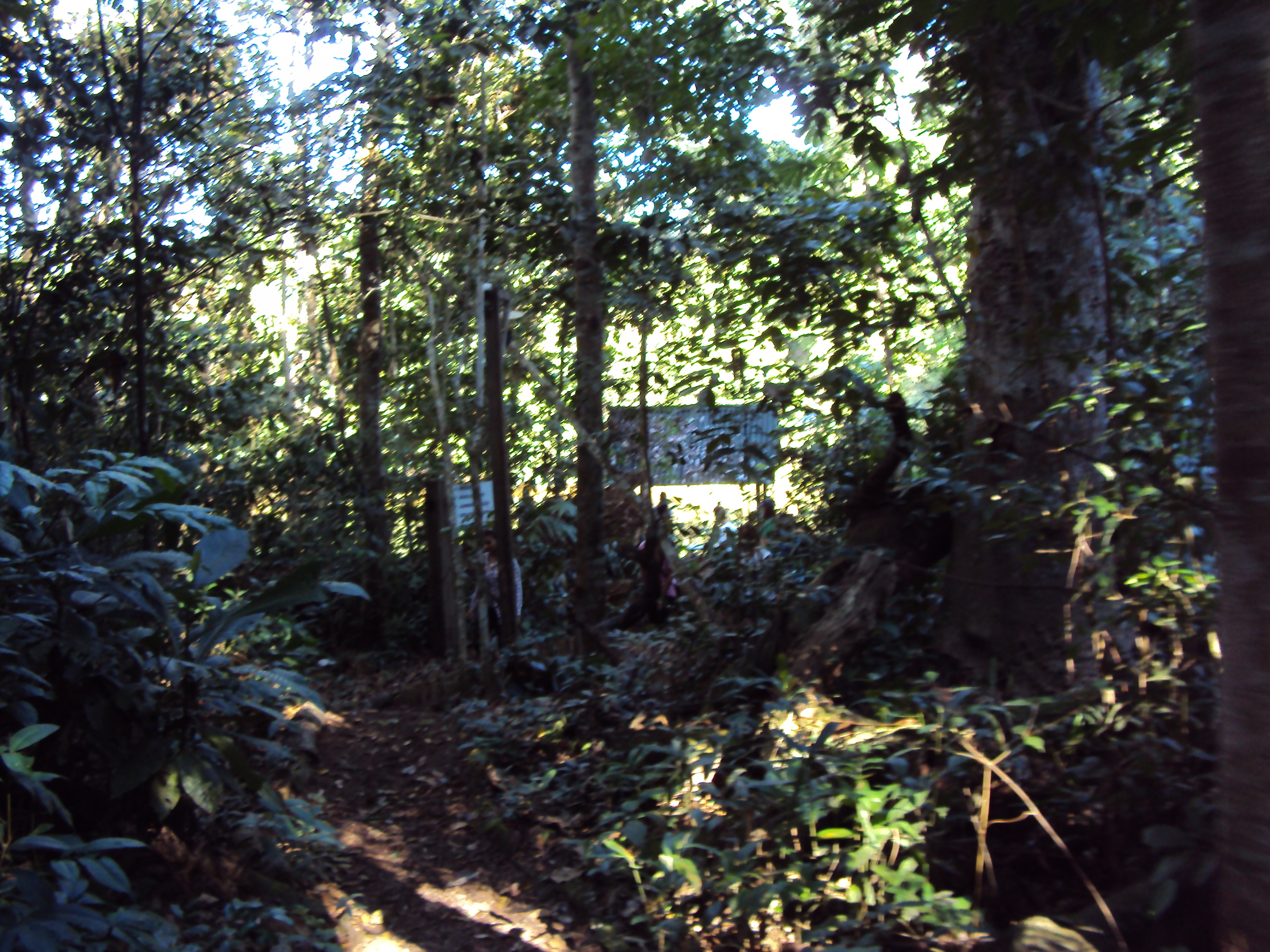
My visit was in June of last year, and we get the chance for the first time to get in contact with the real Amazon forest, with lectures about how the area is managed to keep the human interference to a minimum, thus becoming an example to other areas such as this. As source of income to keep the area in its natural state, there is a small hotel with guided tours to the forest, so people can get close to one of the most diverse tropical forest in world. There are also tree top trails, and obviously, the extraction of latex. There is also a small extraction of seeds, for handcrafted items, and the Brazilian nut (Bertholletia excelsa).Viagem Brasil Norte Sul 513
The area has one of the most abundant fauna and flora I have ever seen, with a variety of monkeys, parrots, macaws, snakes, insects (fun fact: there is an ant with a bite that is said to be as painful as a gunshot), caimans, and an incredible plant life. I would strongly advise if you ever go to Brazil, to visit the place!

Viagem Brasil Norte Sul 517

References:
http://www.acreturismo.com/index.php/o-acre/destinos/107-seringal-cachoeira#1004-pousada_f._rita_ramos__1_
http://blog.bemvindocicloturista.com.br/tag/seringal-cachoeira/

Native and exotic trees along Canberra street. Photo: F. Howarth.
Posted in Uncategorized | 1 Comment

Street trees and suburban biodiversity

Native and exotic trees along Canberra street. Photo: F. Howarth.

Native and exotic trees along Canberra street. Photo: F. Howarth.

Suburbs are home to an increasing proportion of the world’s human population. In Australia, some of the strongest population growth is occurring in the outer suburbs of major cities.[1] Suburbanisation is a divisive issue in ecological debates, with strong advocates for and against urban sprawl. In Triumph of the City, Edward Glaeser criticises suburbs for their negative environmental impacts, while Patrick Troy comes to the defence of suburbs in the essay: ‘Saving our cities with suburbs.’[2] Both the negative and the positive effects of suburbs are present in Canberra, Australia’s “Bush Capital.” As suburbanisation is a global trend, it is necessary to consider how we can conserve biodiversity within suburban environments.

Expanding suburbs encroach on the surrounding landscape, paving over native vegetation, fragmenting habitat with roads, and introducing new threats to local wildlife, such as cats and dogs. However, just as humans colonise this newly claimed habitat, a variety of animal species carry out a colonisation of the suburban environment. As suburbs expand, they become home to an increasing number of animal species, especially birds. Suburbs present a key advantage over denser urban development, as there is space for suburban trees, which provide an important habitat for many bird species.

Public enemy number one. Photo: F. Howarth.

Public enemy number one. Photo: F. Howarth.

Suburban trees include street trees and trees in public parks. Canberra’s street trees include a mix of native and introduced species. Native trees provide habitat for many bird species within suburbs. Indeed, a recent study conducted by researchers at the Australian National University (ANU) demonstrated that native suburban trees are important for bird species richness.[3] The age and structure of stands of trees is also important. Mature trees (100-150 years or more) develop hollows, which provide homes for birds, some mammals and insects.[4]

This means that managing suburban trees is important for conserving urban biodiversity. Indeed, these findings mean that we should look to maintain a high proportion of native trees within Canberra’s suburbs, and that we should retain older trees, and allow more young trees to grow to maturity.

However, implementing these management strategies is complex. In fact, suburban tree management must contend with competing values. Many Canberrans prefer exotic, deciduous trees near their homes, because they provide shade in summer, while letting in sunlight in winter. Exotic trees are often seen as safer, as eucalypts are prone to dropping branches. Additionally, residents value the aesthetics of introduced species. So how can we reconcile these values with urban biodiversity conservation?

Fortunately, there are some management options that satisfy most requirements. Indeed, according to the ANU study, assuring that at least 30 % of suburban trees are native would significantly increase bird species richness within Canberra.[5] This means that we can continue to plant deciduous trees near houses and infrastructure, and plant native species in areas where they are less likely to produce negative consequences. In addition to this, mature trees should be maintained where possible, though this may require safety measures to minimise the risk of injury and damage caused by falling branches. Clever management can ensure that we continue to enjoy the sight and sound of native birds in our suburbs.


References

[1] Australian Bureau of Statistics 2013, Regional Population Growth, Australia, 2011-12, Australian Bureau of Statistics, viewed 30 May 2013, .

[2] Glaeser, E 2011, Triumph of the City: How urban spaces make us human, Macmillan, London; Troy, P 2005, ‘Saving our cities with suburbs’, Griffith REVIEW, ed. 2.

[3] Ikin, K, Knight, E, Lindenmayer, DB, Fischer, J & Manning, AD 2013, ‘The influence of native versus exotic streetscape vegetation on the spatial distribution of birds in suburbs and reserves’, Diversity and Distributions, vol. 19, no. 3, pp. 294-306.

[4] Gibbons, P & Lindenmayer, D 2002, Tree hollows and wildlife conservation in Australia, CSIRO, Colligwood.

[5] Ikin et al. 2013, p. 299.

Posted in Uncategorized | 1 Comment

Wetland park right next to my house!

Wetland park right next to my house!

By Lok Sze, Law
U4603888

Hong Kong wetland park is one of the conservation promotion projects, aimed at promoting and education the importance of biodiversity conservation as well as a tourism booster. The wetland park was opened in 2006, located at the northern part of Tin Shui Wai, it has 61 hectares land coverage in total and it consists of a visitor centre containing galleries, stores and education sections (AFCD, 2013). This wetland park is actually very close to my high school and where I live, it’s like 20 minutes walk from my school. So to speak, this park is in the middle of a residential community. Undoubtedly, the concept of setting up this park is a wonderful idea giving the fact that it actually conserves the key habitat for a wide range of plants and animals. Also, it provides chance to the public to understand the wildlife, not just knowledge we could learn from textbooks, but actually ‘walk’ inside the environment which is closely connected with us in every breath we make, yet so far away from our daily life. (I know this sort of wildlife is everywhere in Australia but it is so rare in a big city like Hong Kong.) However, the residential development keeps growing and the value of land is a big block of gold in developers’ eyes. Sooner or later the wetland park will be surrounded by all the residential buildings and community facilities, this park is going to suffocate due to pollutions (noise and air pollution are the major ones) and loss of connectivity. The government should stop developing the areas close to the park as we are not only developing buildings but high-rise buildings and the  whole community. People appreciate the wetland park only when we look down from our windows from 35th floor, but not so much when we walk pass it on the way to work. The government should take more serious action on land development and biodiversity conservation. setting up a wetland park doesn’t solve all the problem, the maintenance and increase of connectivity is essential.

Reference

AFCD, 2013. Wetland Park. [Online]
Available at: http://www.afcd.gov.hk/english/conservation/con_wetpark/con_wetpark.html
[Accessed 20 5 2013].


By Lok Sze, Law
U4603888

Posted in Uncategorized | 1 Comment