Thoughts on Volunteering at the Scottsdale Reserve with Greening Australia

In the early weeks of the semester, when we learned of the work experience component of this course, I was sure that I wanted to work in the field as opposed to in an office. I had heard a lot about Greening Australia from a few sources in the Fenner School, and I wanted to volunteer there as soon as they would have me.  I was informed that the ACT chapter of Greening has been working with Bush Heritage Australia on rehabilitating the Scottsdale Reserve, to restore cleared woodlands. The Reserve was located 75km south of Canberra, which is about a 45 minute drive, and as such was a convenient conservation opportunity.

My experience at Scottsdale Reserve was at a one-day planting event, on the 28th of April. It was an early start, leaving the ANU at 8am and beginning work just after 9am at the site. I remember being nervous at the site, having little experience in fieldwork. I soon realised that there is nothing daunting about the work, beyond some level of physical exercise. The Project Officer with us, Ben, was very knowledgeable and provided us a quick tutorial on the planting method we were going to use.

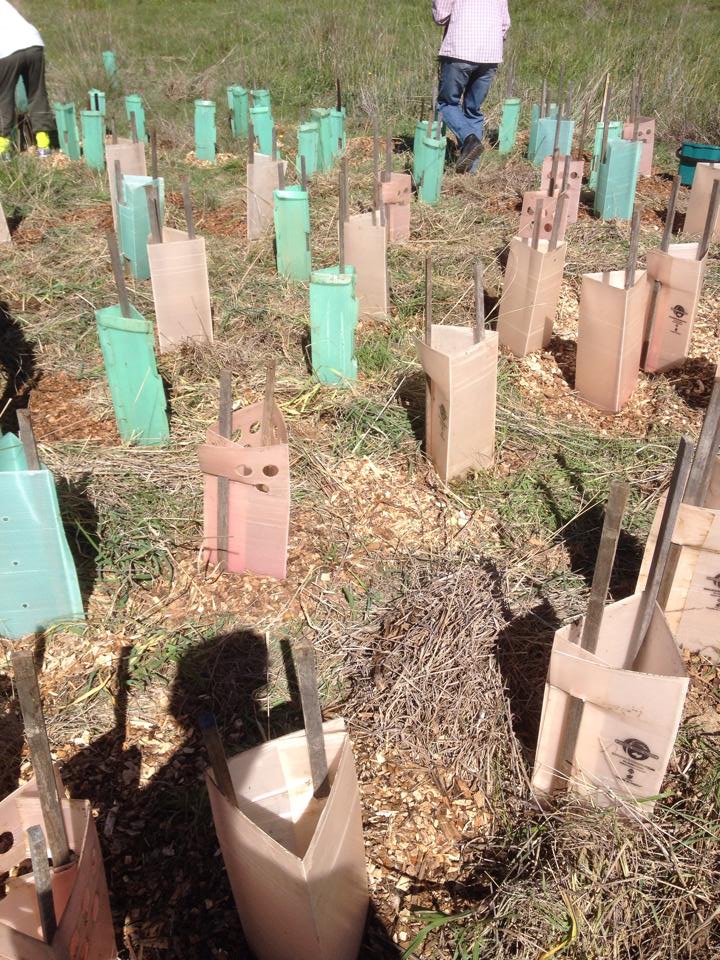
We spent the day planting tube stock amongst some prepared direct seeding lines that had been scalped to reduce nutrient loads. This involved the process listed below:

1. Dig a hole at least twice the size of the tube stock roots at the allocated intervals at the site

2. Turn the tube on its side, place a hand on the tube and tap the top of the tube vigorously to remove the plant from the container

3. Plant with care, ensuring the plant is upstanding, and backfill the hole with soft soil rather than rocks

4. Set up a guard to protect the plant, by using two stakes in the ground (one medium length, one long length) to hold the guard in place

5. Water heavily, in order to moisten the topsoil and subsoil

An illustration at the conclusion of the method:

10308582_10154196073910061_182074083205069489_n


I observed that there were already several areas in the Scottsdale that had a heavy coverage of planted and guarded trees. This is a result of relatively recent work from Greening Australia alongside Bush Heritage, and is clear evidence of the benefits of community-based conservation.

In the past, I have engaged in few community or volunteer-based conservation projects. However, my experience at Scottsdale was relaxed and friendly, despite some requisite manual labour. There are frequent volunteering opportunities, including a regular Green Team that works at the site. It was rewarding to be working towards restoring the Reserve and to anyone passionate about habitat rehabilitation and conservation, I would really recommend volunteering with Greening at the Scottsdale Reserve.

1508584_10154196073885061_7061691727338188709_n


Vishnu Ramakrishnan

Posted in Uncategorized | 1 Comment

Doing my part for the environment – cleaning Sullivan creek and taking care of Mount Painter

It is one thing to talk about the importance of biodiversity conservation, and it is another to walk the walk. Instead of chatting to your friends about how global warming is affecting polar bears, why not try getting active and actually do something! There are countless opportunities for you to get your hands dirty, and some of which may be more achievable than you expect. Just last month I got involved in the cleaning Sullivans creek event organised by ANU green and a planting event organised by Friends of Mount Painter. Honestly I did not expect these experiences to be so rewarding and fun.

Firstly I went to the cleaning Sullivans creek event. Sullivans creek runs through series of urban development towards the Australian National University before flowing into Lake Burley Griffin.

Image

A survey of ANU showed that the creek supports a great diversity of birds, mammals and frogs. The aim was to pick up any rubbish and debris along the creek that can potentially damage the biodiversity in the area. Knowing how much human disturbance the creek experiences especially with students and staffs crossing over it daily, it was no surprise that some cleaning up was needed.

Image

What was surprising was the items that we picked up: Handbags, skateboards, unopened beer bottles…not to mention shopping trolleys.

Not only does the creek and the surrounding environment support a great biodiversity, it also undeniably formed part of the identity of this beautiful campus. To maintain its ecological and social value, it requires us humans to take care of it. Don’t litter!

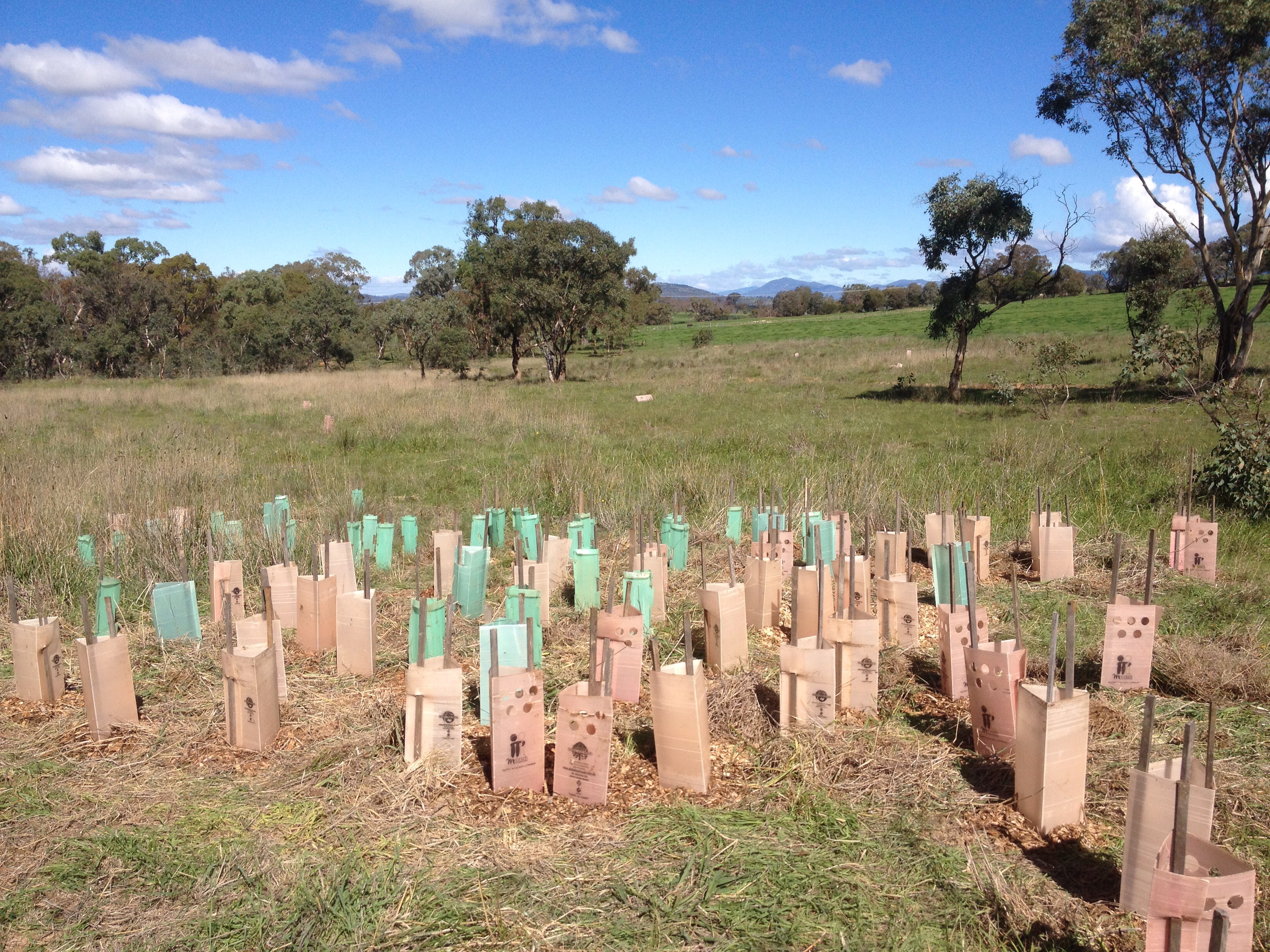
In a separate occasion I went to be a part of a great land care group called Friends of Mount Painter. Volunteers meet once a month to do conservation work on the Mount Painter nature reserve. The area have experienced extensive grazing and introduction of weeds and exotic grass, which has increased degradation of soil and decrease in biodiversity. On that particular day, we helped weeding and replanting of a native grass, Themeda triandra, or Kangaroo grass. The key, as I heard, was to fully dig out the weed plant, including its roots, to prevent it from regenerating. Then seedlings of Kangaroo grass were planted.

Image

The triangular guard prevents grazing from kangaroos. Mulching wood chips were laid to conserve moisture. Lastly finishing off with some watering. This was the procedure to replant one kangaroo plant, and there were hundreds more to go!
ImageLuckily there were many selfless volunteers eager to work, which makes the whole process more enjoyable!

Image

This was the result of a day’s effort. There are plenty more to be done!

These actions may seem insignificant, but if we all put in that little time and effort, the benefit towards the environment and biodiversity conservation will go a long way in creating a better future for not only our communities, but for our planet Earth.

Edwin Au

Posted in Uncategorized | 1 Comment

Saving the Corroboree Frog

In the middle of April I spent three days in Kosciuszko National Park, assisting Dave Hunter and Ben Scheele in their Southern Corroboree Frog conservation work.
I was initially skeptical about the value of working with frogs, and unsure what the work would involve. But seeing the stunning black and yellow Corroboree Frog and working with Dave and Ben, has changed my perceptions on the value of working with individual species and the nature of field work in conservation.
The Corroboree Frog is threatened by Chytrid Fungus, a disease affecting amphibian populations worldwide. Frogs are an essential part of our waterways, feeding on algae which keeps them clean and providing food for higher order species. So Chytrid Fungus threatens not only frog populations throughout the world, but the quality of the ecosystems they live in.
Making the work of people like Dave and Ben vital not only to the continuation of individual frog species, but to the health of waterways.
Not all frogs have the same susceptibility to Chytrid Fungus, meaning some species can act as reservoir hosts. The Common Eastern Froglet is a reservoir host for the Corroboree Frog. When infected with Chytrid Fungus it can survive long enough to breed, giving it opportunity to pass the fungus onto the Corroboree Frog, which is more susceptible to the disease and more threatened by extinction.
Dave and Ben’s work aims to isolate healthy Corroboree Frog populations from the Common Eastern Froglet and unhealthy Corroboree populations.
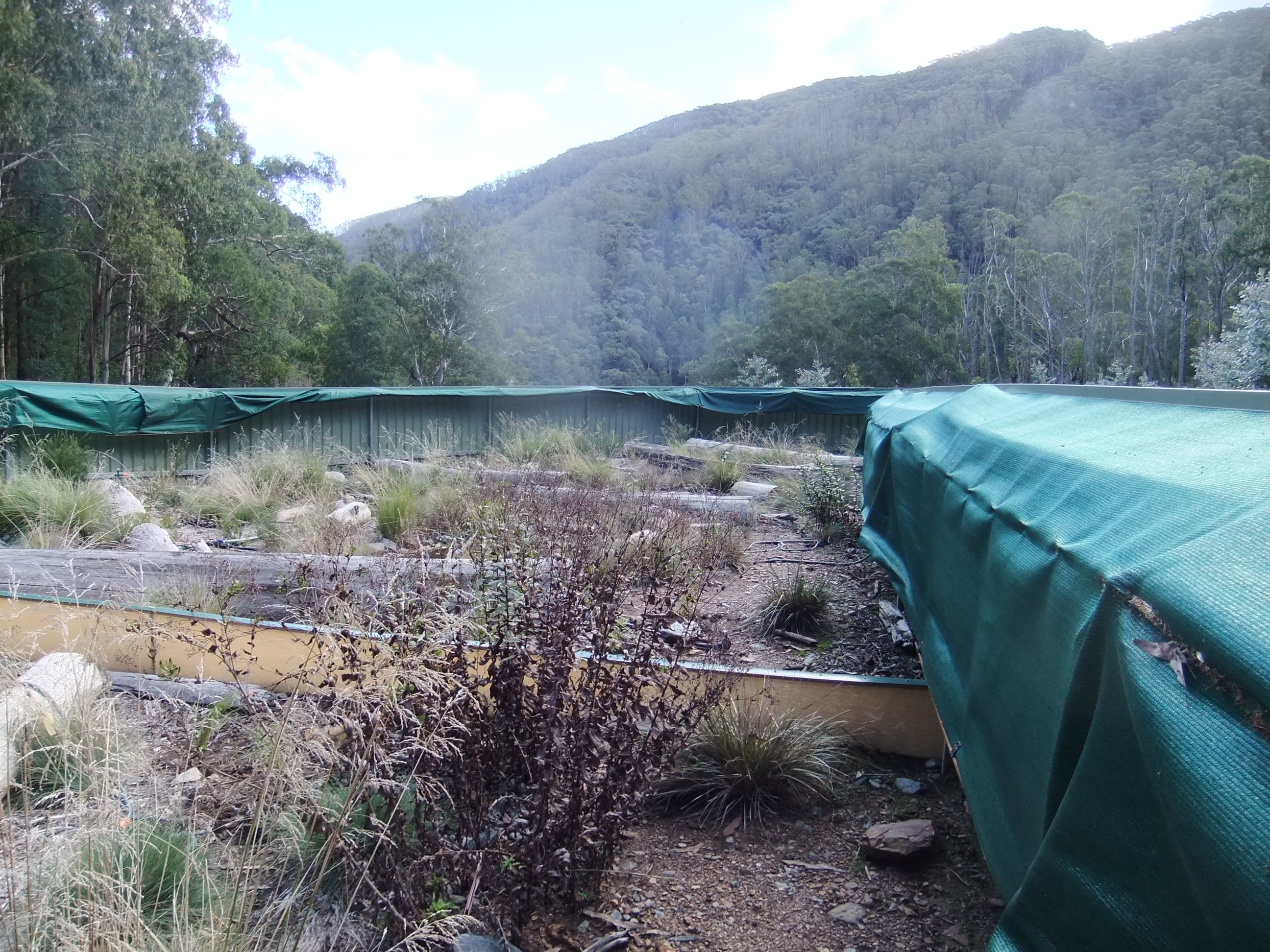
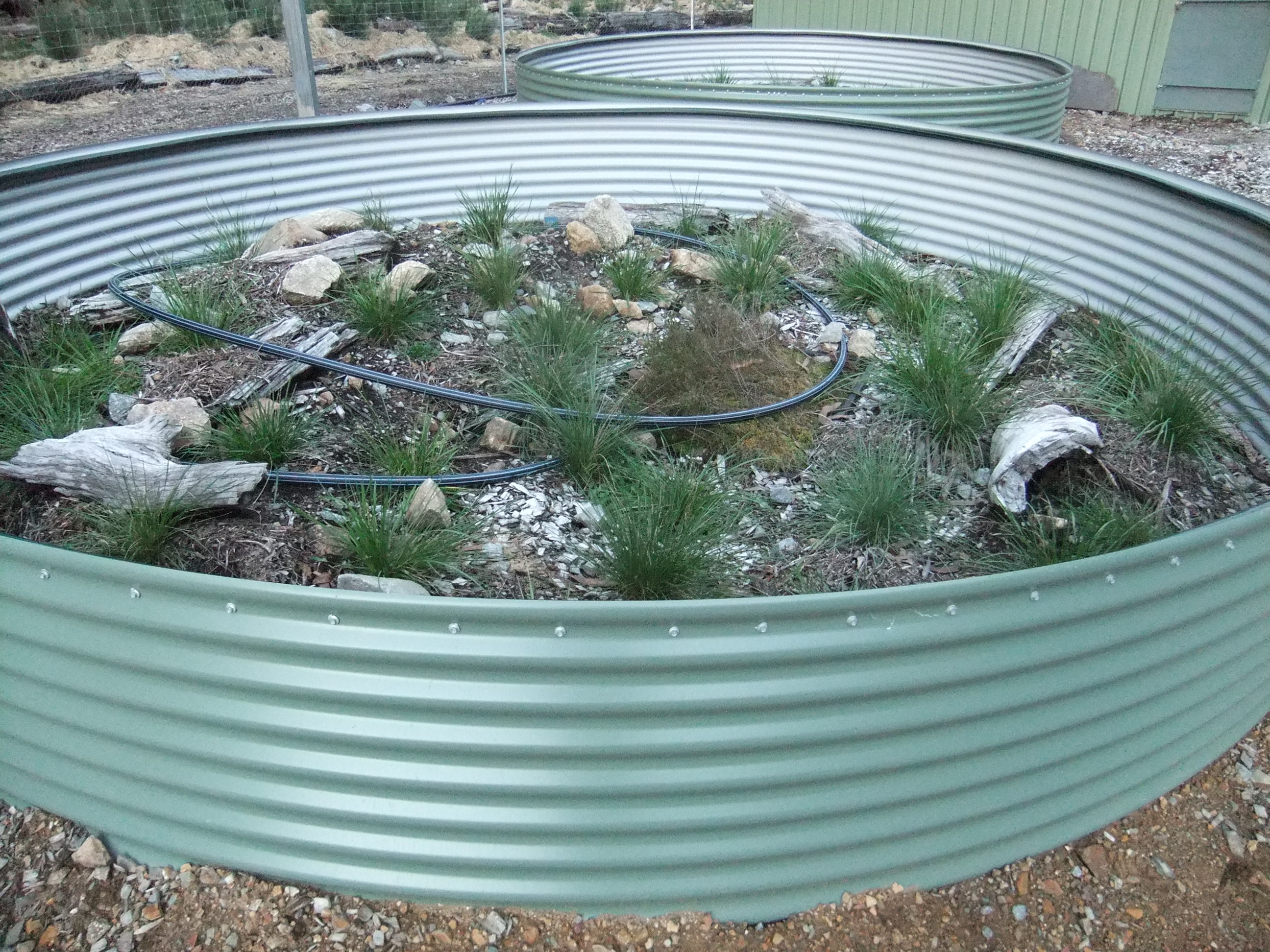
This is achieved by the construction of two large and five small enclosures and by setting up ponds in areas the Common Eastern Froglet isn’t found. Only one of the large enclosures currently has residents, but soon the small enclosures will as well.

The first large enclosure built, the only one that has frogs in it

The first large enclosure built, the only one that has frogs in it

One of the small enclosures

One of the small enclosures

The work itself was far more labour intensive than I had anticipated. I assumed that conservation field work would mostly involve surveying frogs in the wild. However, we spent our time weeding the large enclosure and planting grasses to attract ants, the frogs main food source in the enclosures. As well as constructing ponds.

Two of the ponds set up to introduce the Corroboree Frog into an area with no reservoir hosts

Two of the ponds set up to introduce the Corroboree Frog into an area with no reservoir hosts

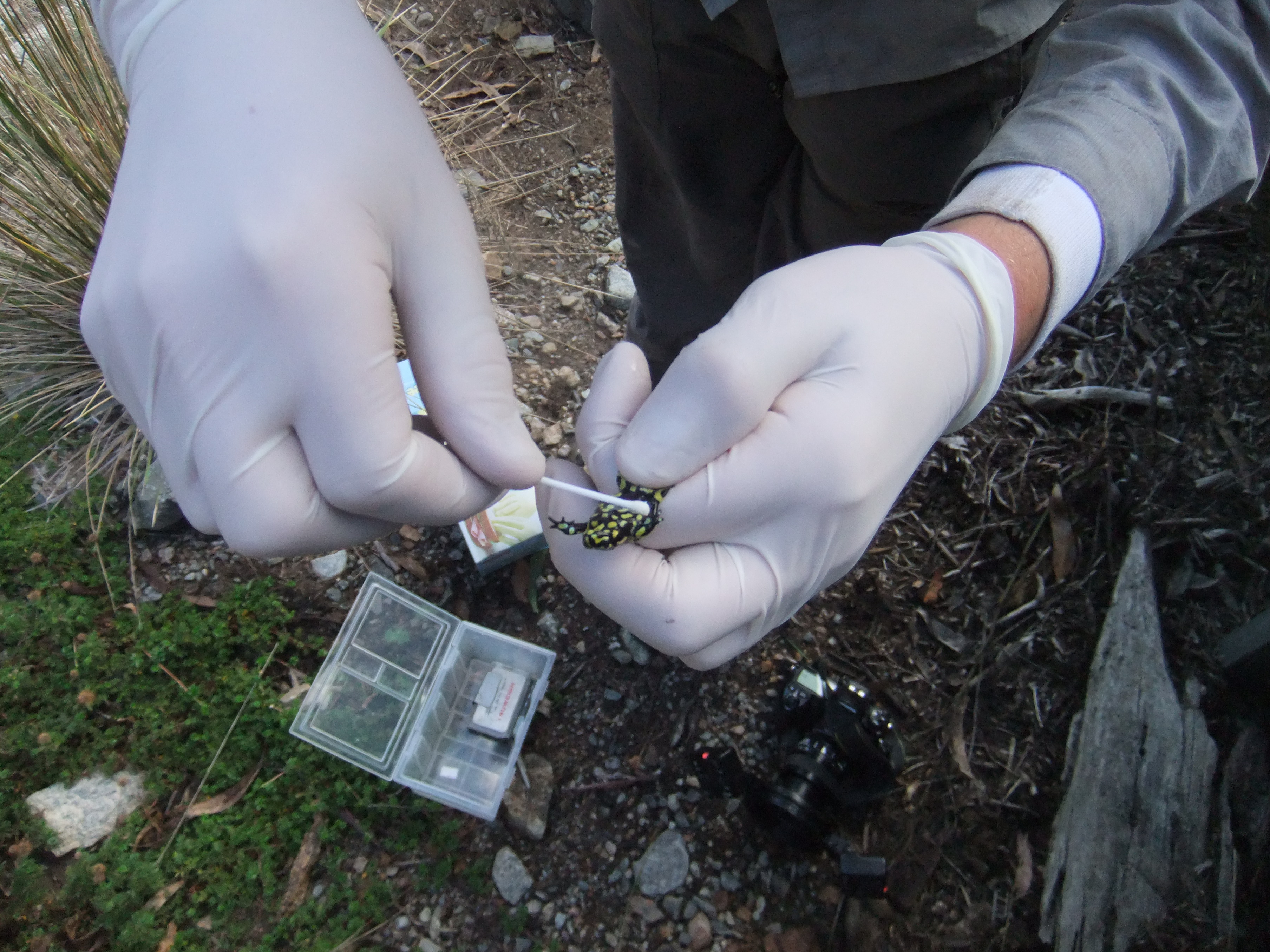
I wasn’t completely incorrect in my expectations, there was some surveying. To assess frog health and the success of the enclosure, we took size and weight measurements and swabbed for the presence of Chytrid Fungus. Data can be matched to each individual frog as the pattern on their bellies is unique. This ability to identify individuals is important for recapture data, enabling enclosure population estimates.

Ben testing for Chytrid Fungus

Ben swabbing for Chytrid Fungus

So far the large enclosure has been successful, but it will be a number of years before the true success of the enclosures and ponds will be revealed.
It is hoped that the small enclosures will prove to be as effective as the large enclosure. Easier to set up and more cost efficient, they have the potential to be extremely beneficial to the conservation of the Corroboree Frog.
The work of Dave and Ben is invaluable. Important not only for the conservation of this species, but for the survival of healthy amphibian populations throughout the world. As they are establishing techniques which can be used to protect the Corroboree Frog and other frog species threatened by Chytrid Fungus. This experience has taught me that conservation needs more focused work, driven by passionate people like Dave and Ben, to ensure the future of biodiversity.

-Meg Stonnill

Posted in Uncategorized | 1 Comment

The birds of Bowra Station, Queensland

Last month I spent five days at ‘Bowra’ an Australian Wildlife Conservancy property located near Cunnamulla in south west Queensland. This property was recently purchased from a family who had been on the property for five generations. I assisted with a bird banding project led by Dr Jon Coleman with the help of many banders and researchers from Brisbane and a few from Canberra.  The objective of the project is to determine the survival rate, longevity, site fidelity and movements of a range of birds at Bowra. My role was to help choose suitable net sites, open and close mist nets, extract birds from the nets and band the captured birds.

Due to good rain in the previous months the surface water and grass on the property was quite abundant. This provided favourable conditions for seed eating birds such as Zebra Finch (Taeniopygia guttata), Plum-headed Finch (Neochmia modesta) and Diamond Dove (Geopelia cuneata).  The Zebra Finch is a “boom and bust” species. Their population dynamics are primarily driven by rainfall and associated seed supply which is highly temporally variable in this region.

From left to right: A male Zebra Finch, a Double-barred Finch and a male and female Plum-headed Finch. Over the four days banding we captured 171, 72 and 40 individuals of these species respectively.

From left to right: A male Zebra Finch, a Double-barred Finch and a male and female Plum-headed Finch. Over the four days banding we captured 171, 72 and 40 individuals of these species respectively.


At Bowra there are a few ‘mulga specialist’ species which are typically only found in areas where Mulga (Acacia aneura) is present. One of these is the Hall’s Babbler (Pomatostomus halli), a species that inhabits the mulga of SW QLD and NW NSW. It is a cooperative breeder which means that individual offspring are raised by a group of up to 15 babblers collectively.

Hall’s Babbler

Hall’s Babbler


Another species that is often found in Mulga but not restricted to it is the Crested Bellbird (Oreoica gutturalis). This species is a formidable looking bird up-close and possesses a rich call – hence its name. It is not an easy bird to catch in a mist net as they are pretty wary but on one morning I found this individual and 6 other species caught in a single net.

A male Crested Bellbird. This individual was caught in an area of Mulga.

A male Crested Bellbird. This individual was caught in an area of Mulga.

We banded a total of three fairy-wren species one of which is the Splendid Fairy-wren (Malurus splendens). We caught a number of males which were at various stages of their breeding plumage.

A male Splendid Fairy-wren in full breeding plumage.

A male Splendid Fairy-wren in full breeding plumage.

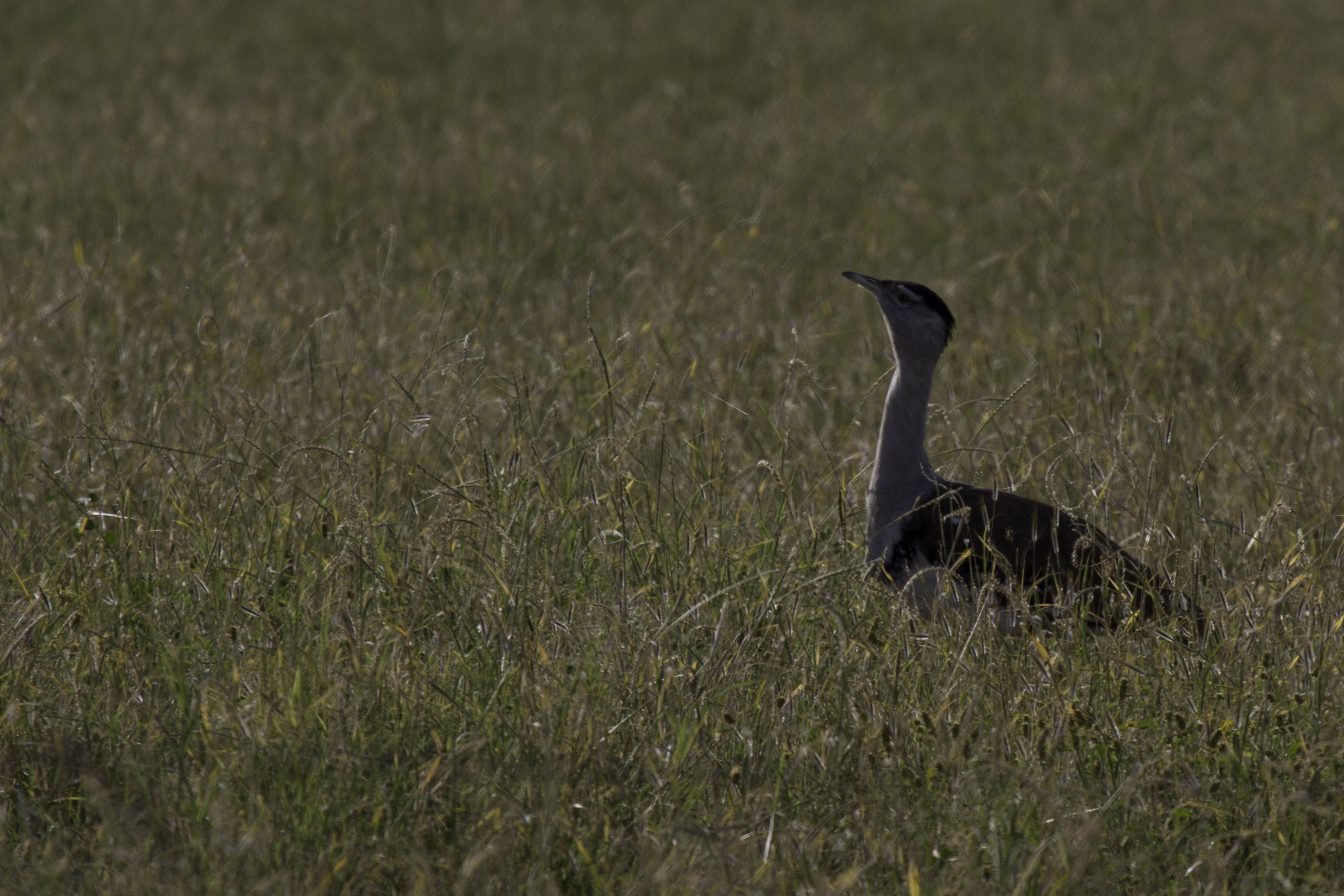
It was nice to see both Brolga (Grus rubicunda) and Australian Bustard (Ardeotis australia) on the trip -the latter being a species I’ve never seen before. The bustard was once relatively common in SE Australia (including the Canberra region) but its range has now retracted to northern and western Australia due to hunting and habitat modification.

This Brolga did a dance as we pulled up on the side of the road.

This Brolga did a dance as we pulled up on the side of the road.


This Australian Bustard was one of three seen in the extensive grasslands south of Cunnamulla.

This Australian Bustard was one of three seen in the extensive grasslands south of Cunnamulla.

The trip was a fantastic opportunity to see the biodiversity of the mulga, open woodlands and grasslands of south west Queensland. In total we banded 452 individual birds consisting of 42 species.

Sunrise over the lagoon

Sunrise over the lagoon

 Mark Allen

Photography: Brett Allen

Posted in Uncategorized | 3 Comments

An Innovative Method for Planting Native Grasses: Grass Seeding with Greening Australia

Those of you savvy to the current state of things might be aware that the world’s vegetation is in a bit of trouble. Deforestation, climate change, invasive species and the increasing need for urban, industrial and agricultural lands are global threats to native vegetation. This problem can be seen closer to home, most recently in Tony Abbott’s shocking request to delist 74,000ha of Tasmanian forest from World Heritage Listing.

So what can we do?

Well, at Scottsdale Reserve, Greening Australia and Bush Heritage are playing their part by revegetating degraded land.

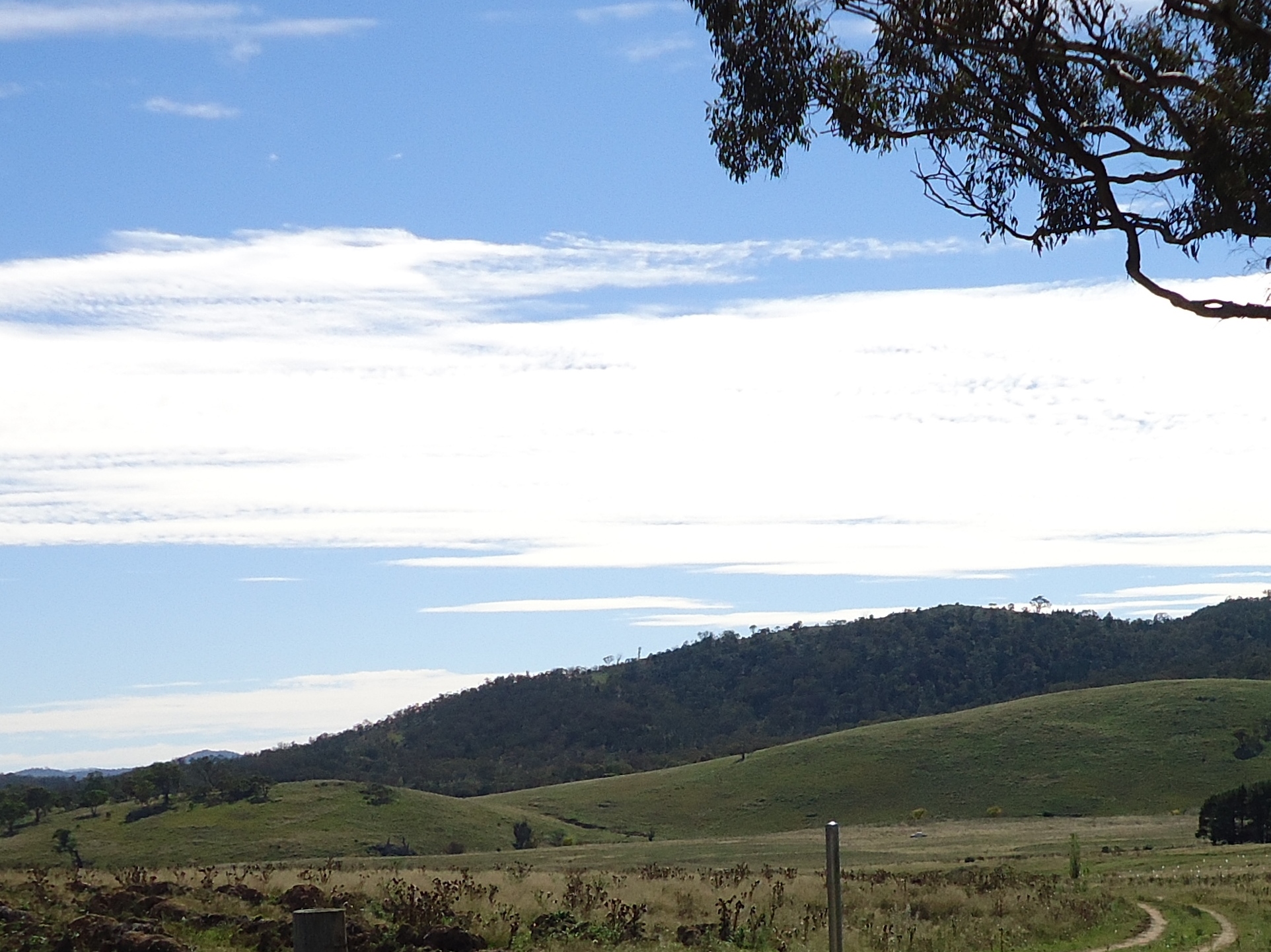
(foreground) A still-to-be-revegetated section of Scottsdale Reserve.

(foreground) A still-to-be-revegetated section of Scottsdale Reserve.

On April 15th and 28th, I volunteered at Scottsdale. While the 28th was spent planting ‘tube stock’ (native seedlings), the work done on the 15th was something quite different and exciting: planting native grass seeds, using an innovative process developed by Greening Australia.

This seed planting process went like this:

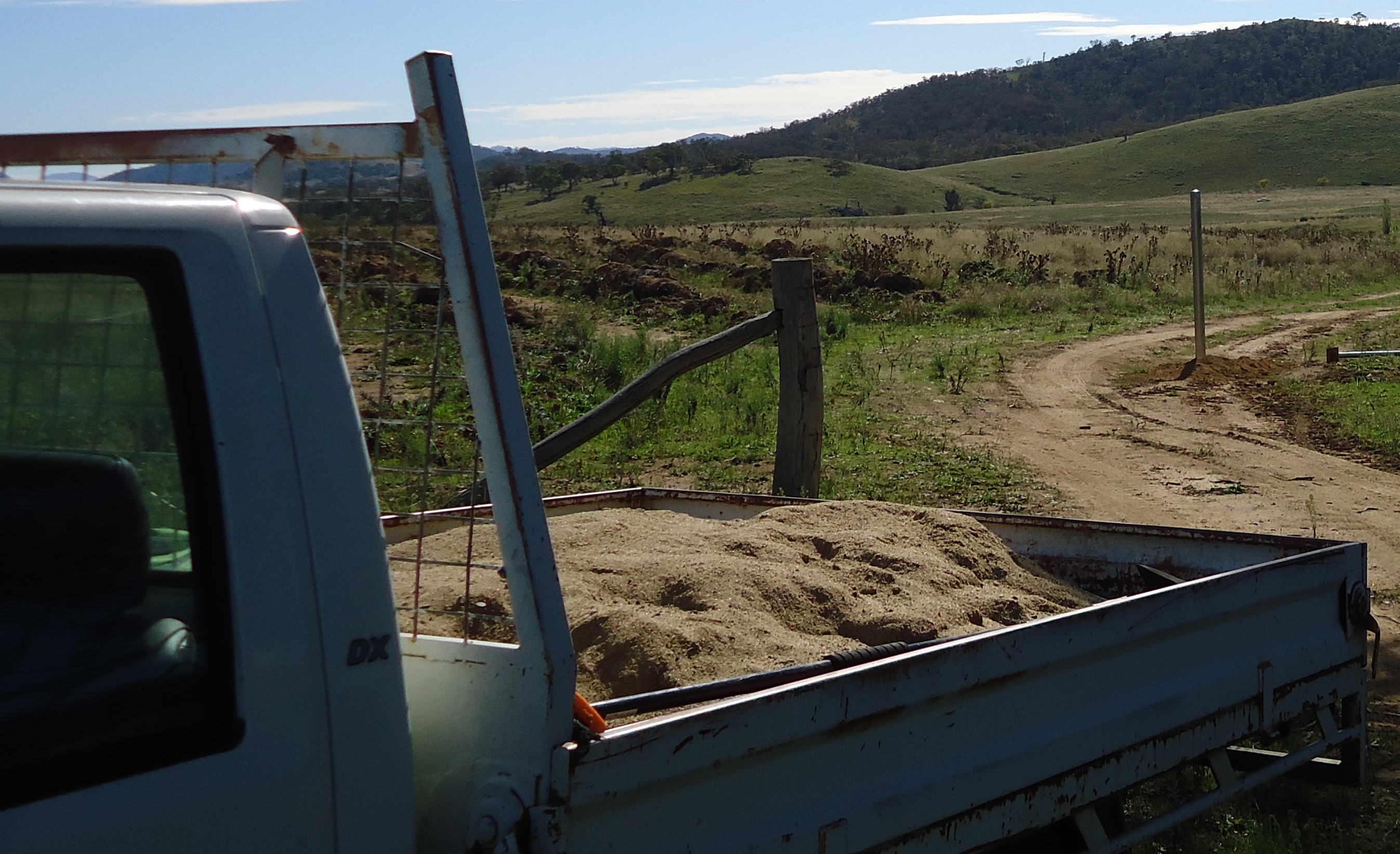
1. Take two utes, and fill one with sand and the other with native grass seeds. In our case, mainly C4 grass seeds were used, so that the grasses can grow this winter.

A ute filled with the sand used during reseeding.

A ute filled with sand, to be used during reseeding.

2. Also acquire a tractor, and equip it with a seeding attachment.

This tractor was delivered to Scottsdale on the morning that I started volunteering. The seeding attachment on the back belongs to the Victorian division of Greening Australia, and was adapted specifically for this reseeding process.

This tractor arrived at Scottsdale on the morning of April 15th. The seeding attachment on the back belongs to the Victorian division of Greening Australia, and was adapted specifically for this reseeding process.

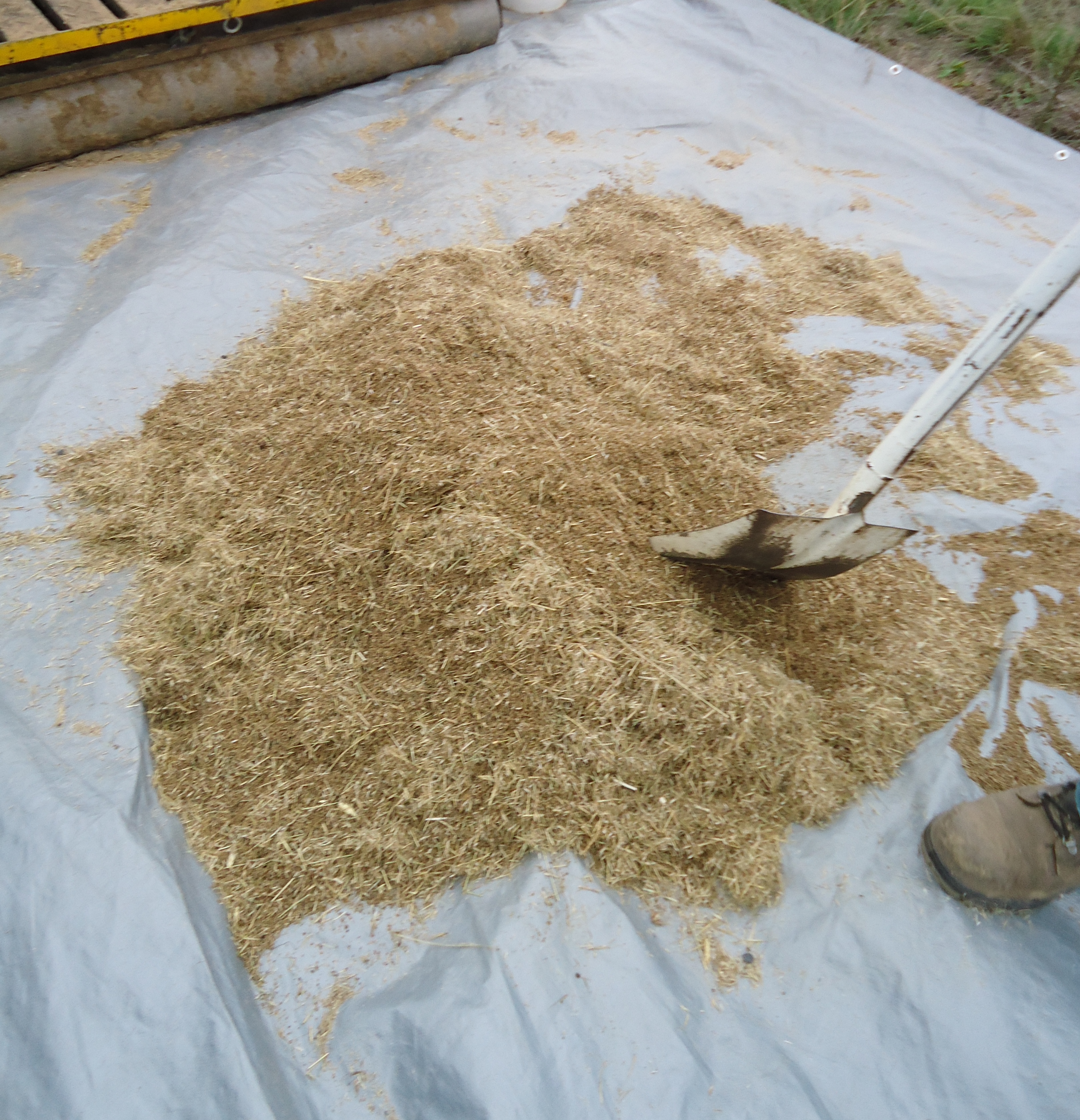
3. Mix together the sand and grass seed, either in a 2:3 or a 5:6 volume ratio. We used the latter ratio in areas where we had to slow the speed of the tractor, to make sure we’d have enough seeds to reseed all the allocated land.

A combination of 4 ten-litre buckets of sand and 6 ten-litre buckets of seed, mixed using shovels.

A combination of 4 ten-litre buckets of sand and 6 ten-litre buckets of seed, mixed using shovels.

4. Load up the seeding attachment with the sand and seed mixture, and trundle over to a scalped* section of land.

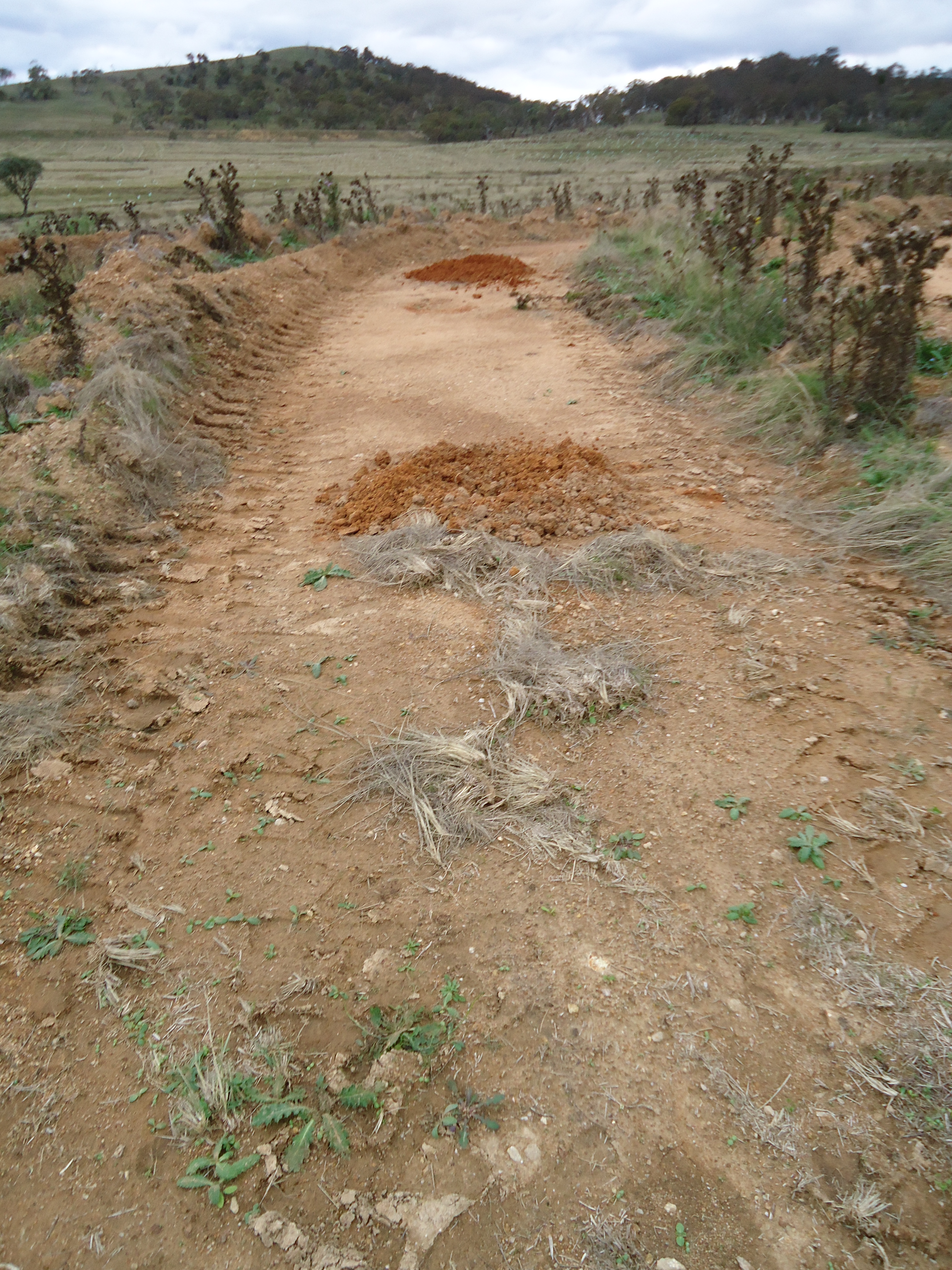
'Lanes' of scalped land. The piles of soil (two are visible in the left 'lane') are actually holes for the planting of tube stock after the grass seeding has been conducted. I returned to this same place on April 28th to plant seedlings.

Three lanes of scalped land. The piles of soil (two are visible in the leftmost lane) are actually holes for planting tube stock in after grass seeding has been conducted. I returned to this same place on April 28th to plant seedlings.

*Scalping is a process by which land is deprived of a top layer, removing all vegetation. Scalping land before planting on it reduces competition from invasive weeds, especially African Lovegrass, which is a huge problem in Scottsdale and surrounding areas, giving native grasses an advantage in early stages of growth.

5. Drive the tractor along the scalped land while dropping seed. It is vital to get the speed of the tractor and the rate at which seeds are dropped correct, as moving too fast can mean the seeds aren’t properly pressed into the soil, and moving too slow or dropping seeds too quickly causes wastage.

Land Before Seeding

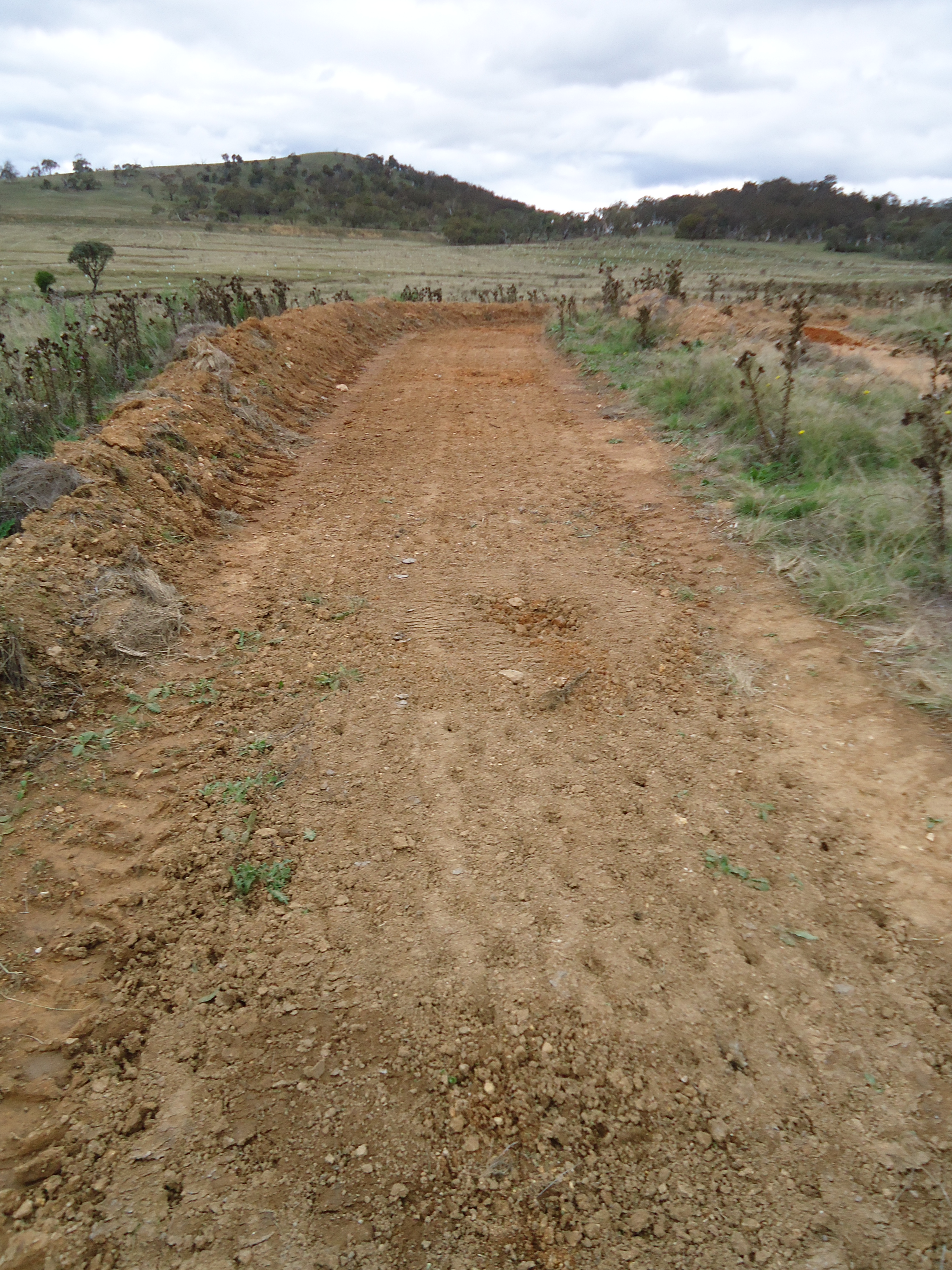
The scalped land before seeding.

The scalped land after seeding.

The scalped land after seeding.


The pockmarked pattern on the right is due to the ‘prongs’ on the seeding attachment, which press seeds into the soil after they are dropped.

6. Repeat, until you run out of seeds, sand, land, or energy. I was exhausted by the end of the day!


All photos © Josie Ginty, 15 April 2014.

Posted in Uncategorized | 1 Comment

The argument for egg-harvesting: A case of sustainable conservation of turtles in Costa Rica.

Costa Rica is an important country for turtle conservation and famous for the spectacular mass-nesting (arribada) behaviour witnessed on many of its beaches. Ostional, a small town on the Pacific coast, is a particularly important location for this behaviour. It is a nesting beach for Leatherback sea turtles, Green sea turtles and the mass-nesting Olive Ridley sea turtles.

Arribada

An arribada in action.


I spent some time in Ostional in 2013 working mainly on Leatherback monitoring and conservation. While there, I witnessed firsthand the debate about the highly contentious but legal egg-harvesting program (EHP). This program is only applicable during arribada events and has been hotly debated in conservationist circles. Outside of the EHP it is illegal to harvest and sell turtle eggs in Costa Rica. Poaching is a common and dangerous practice. In fact, a conservationist was murdered last year by poachers on one of the protected beaches in Ostional (Aldhous, 2013). Turtle eggs are seen as delicacies and many cultures view them as aphrodisiacs. Harvesting is one of the major threats to Olive Ridley sea turtles globally and the trade is particularly virulent in Latin America.

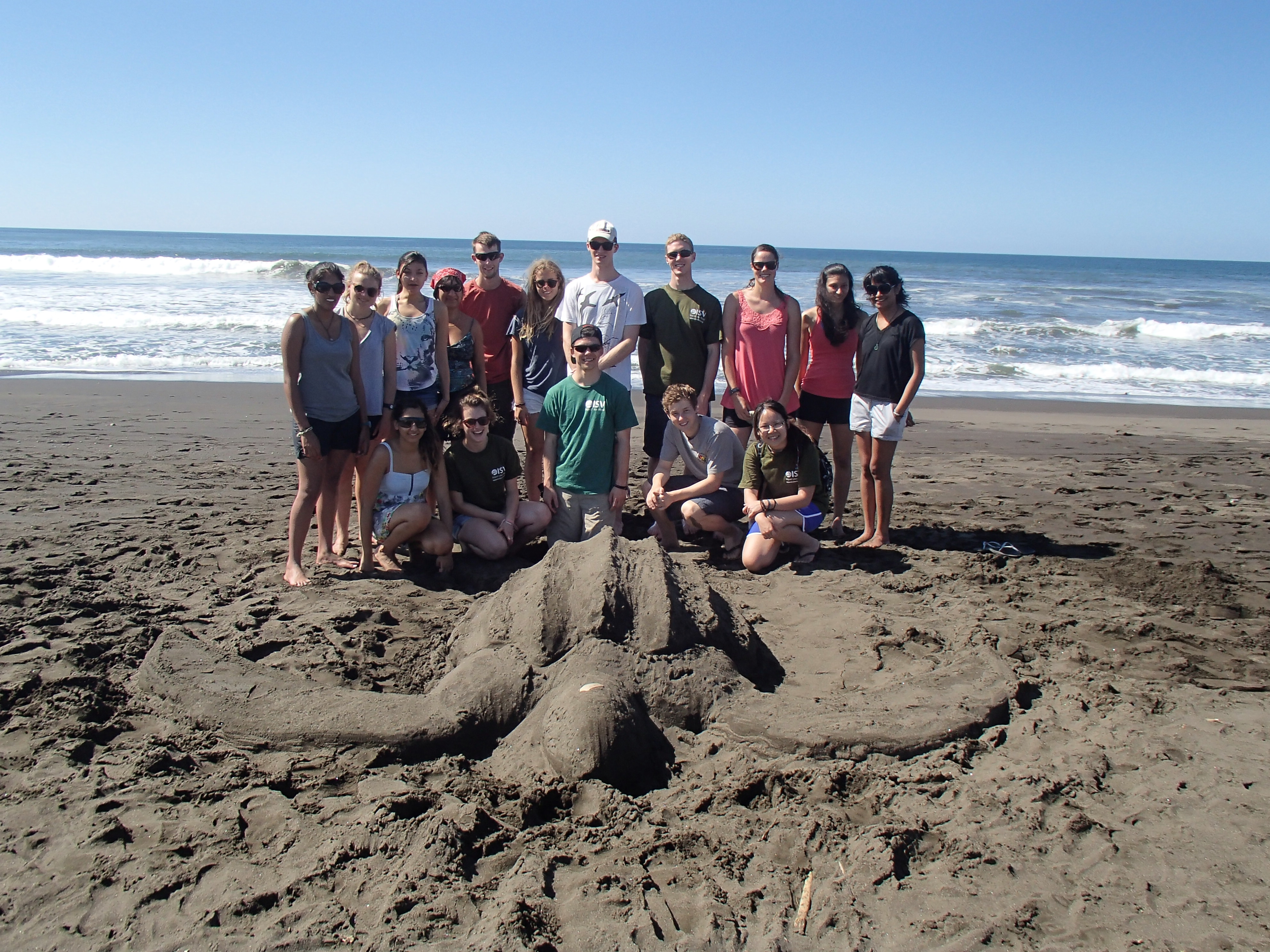
My volunteer group at Ostional.

My volunteer group at Ostional.


The EHP is heavily regulated and follows strict international and domestic laws (Campbell et. al. 2007). For the first two days of every arribada the local community is allowed to harvest as many eggs as they want from the turtles nesting in daylight on the beach. This behaviour serves two very important purposes. Firstly, it provides a financial boost to an otherwise impoverished community with economic benefits that flow into the region through increased schooling, health facilities and trade. The managed harvest also allows the remaining eggs to be protected and that means an increase in turtle numbers and an increase in ecotourism, a billion dollar industry (Gonzalez, 2013) in Costa Rica. The community actively engages in the protection of endangered species and actively aids authorities in conservation efforts (Campbell, 1998). When I was living in the town, I found that every family in the community participated in the local nightly patrol of the beach to ensure that illegal poaching was minimised.

OLYMPUS DIGITAL CAMERA

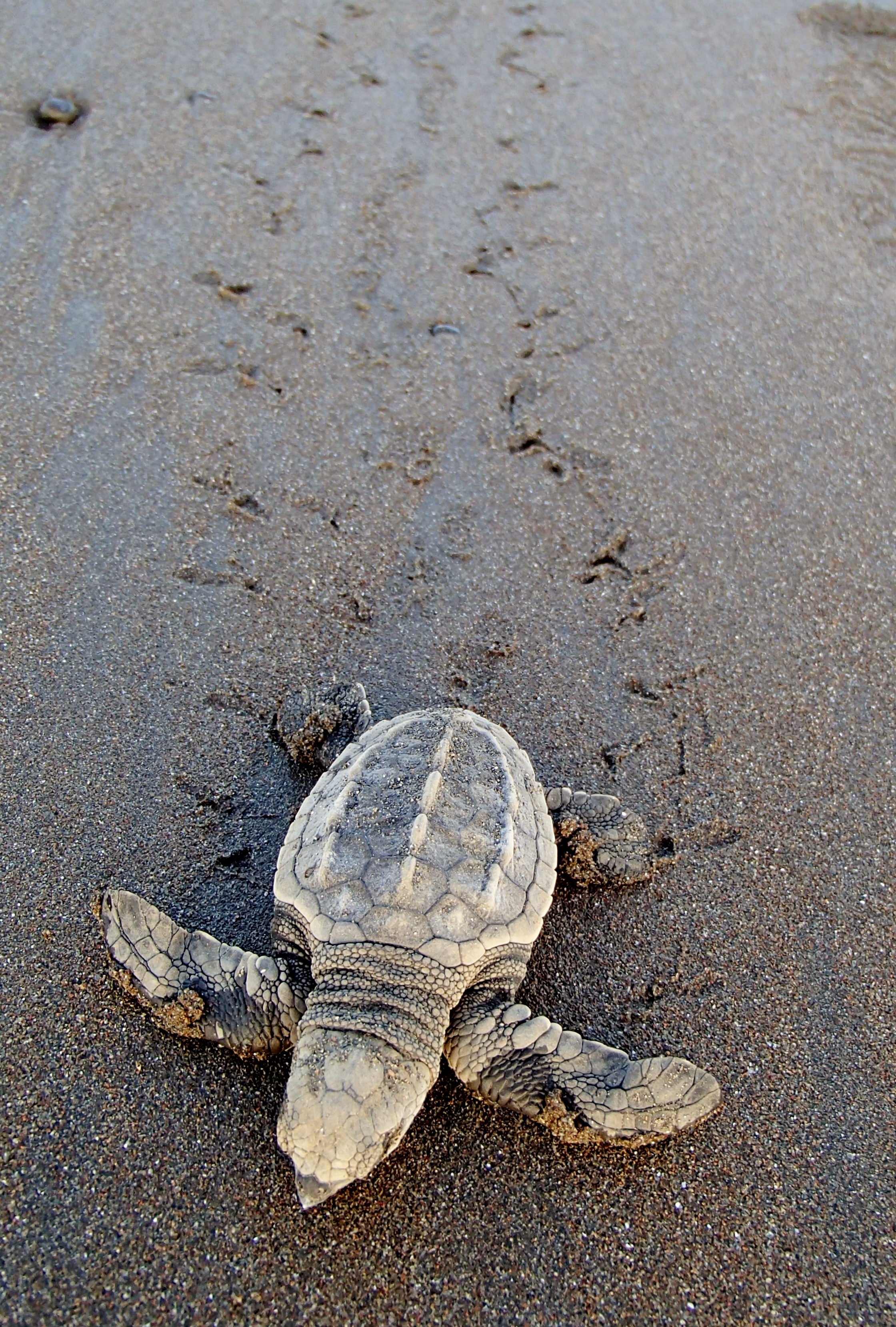
A newly hatched Olive Ridley on its way to the waves.

From an ecological perspective, the harvesting also helps the turtle community. During arribadas Olive Ridley females have been observed digging up nests from other females and destroying these eggs in the process. These later laying females can destroy most of the earlier nests within hours, and therefore the eggs harvested by the Ostional people were unlikely to make it to full term. Broken eggs also provide the perfect starting point for bacteria which can penetrate other untouched eggs in the area, infecting a nest and ensuring that none of the eggs hatch (Honarvar et. al., 2011). Harvesting the earlier nests lowers the prevalence of nest-destroying bacteria. Similarly, whole nests attract fewer predators than broken nests and there is a lower likelihood of predators finding intact nests when there are no broken ones in the area. The harvesting done by the local people not only improves their lives but also lowers the impact of later nesting females on the beach population.

OLYMPUS DIGITAL CAMERA

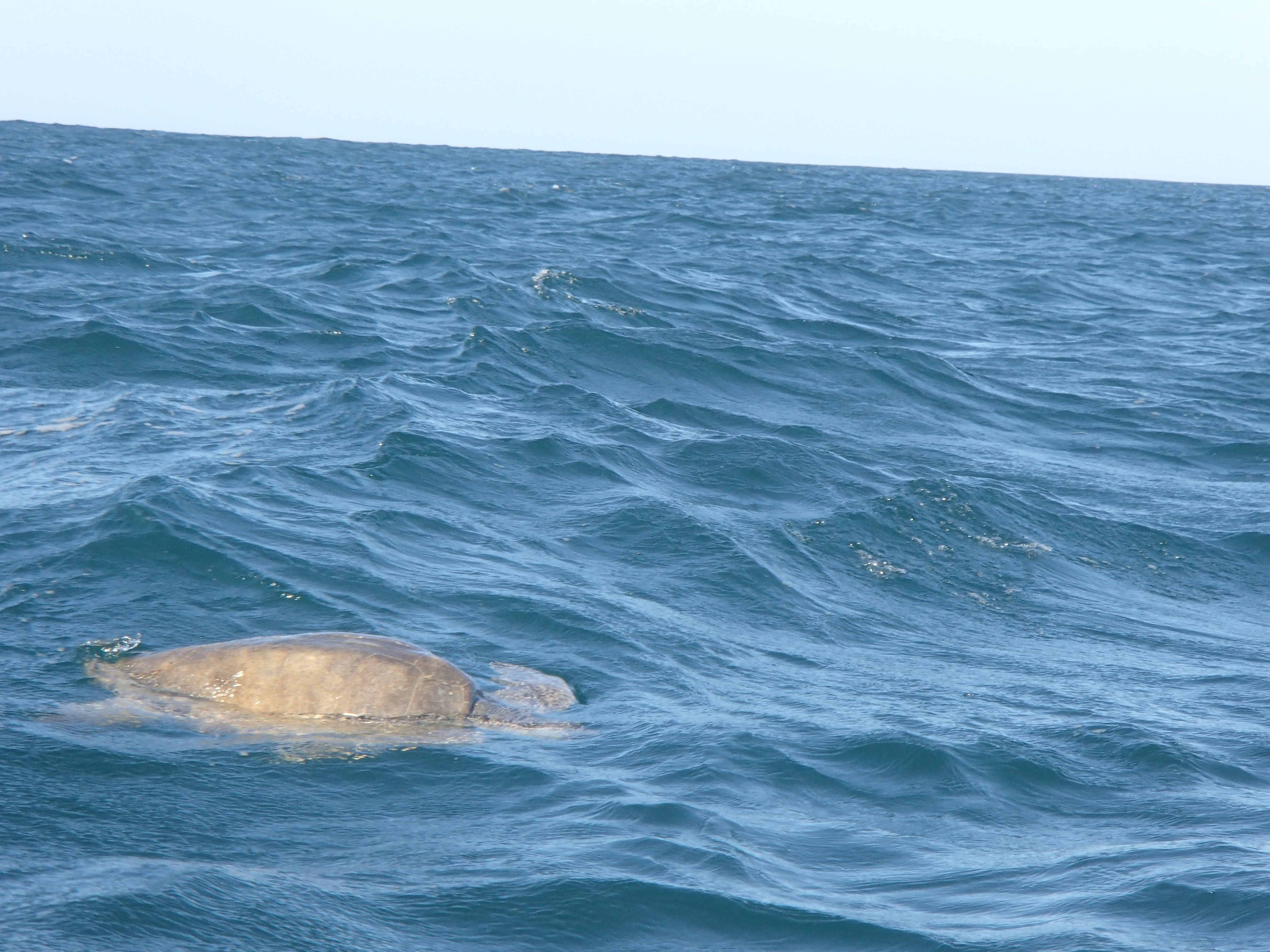
An Olive Ridley approaching the shore at Ostional.

Georgia de Salis – u5013230

References
Aldhous P (2013) Turtle conservationist murdered in Costa Rica, New Scientist, accessed http://www.newscientist.com/article/dn23639-turtle-conservationist-murdered-in-costa-rica.html#.U14v5FWSyQ0 .
Campbell LM (1998) Use them or lose them? Conservation and the consumptive use of marive turtle eggs at Ostional, Costa Rica, Environmental Conservation 25(4), 305-319.
Campbell LM, Haalboom BJ, Trow J (2007) Sustainability of community-based conservation: sea turtle egg harvesting in Ostional (Costa Rica) ten years later, Environmental Conservation 34(2), 122-131.
Gonzalez A (2013) Visitas turisticas en el 2012 fueron las mas altas de los ultimos cinco anos, La Nacion, accessed http://www.nacion.com/archivo/Visitas-turisticas-altas-ultimos-anos_0_1328067181.html (translated online).
Honarvar S, Spotila JR, O’Connor MP (2011) Microbial community structure in sand on two olive ridley arribada nesting beaches, Playa La Flor, Nicaragua and Playa Nancite, Costa Rica, Journal of Experimental Marine Biology and Ecology 409(1-2), 339-344.

Posted in Uncategorized | 1 Comment

Gold Rush – Guyana’s claim to Economic Sustainability

by Ruslin Richards

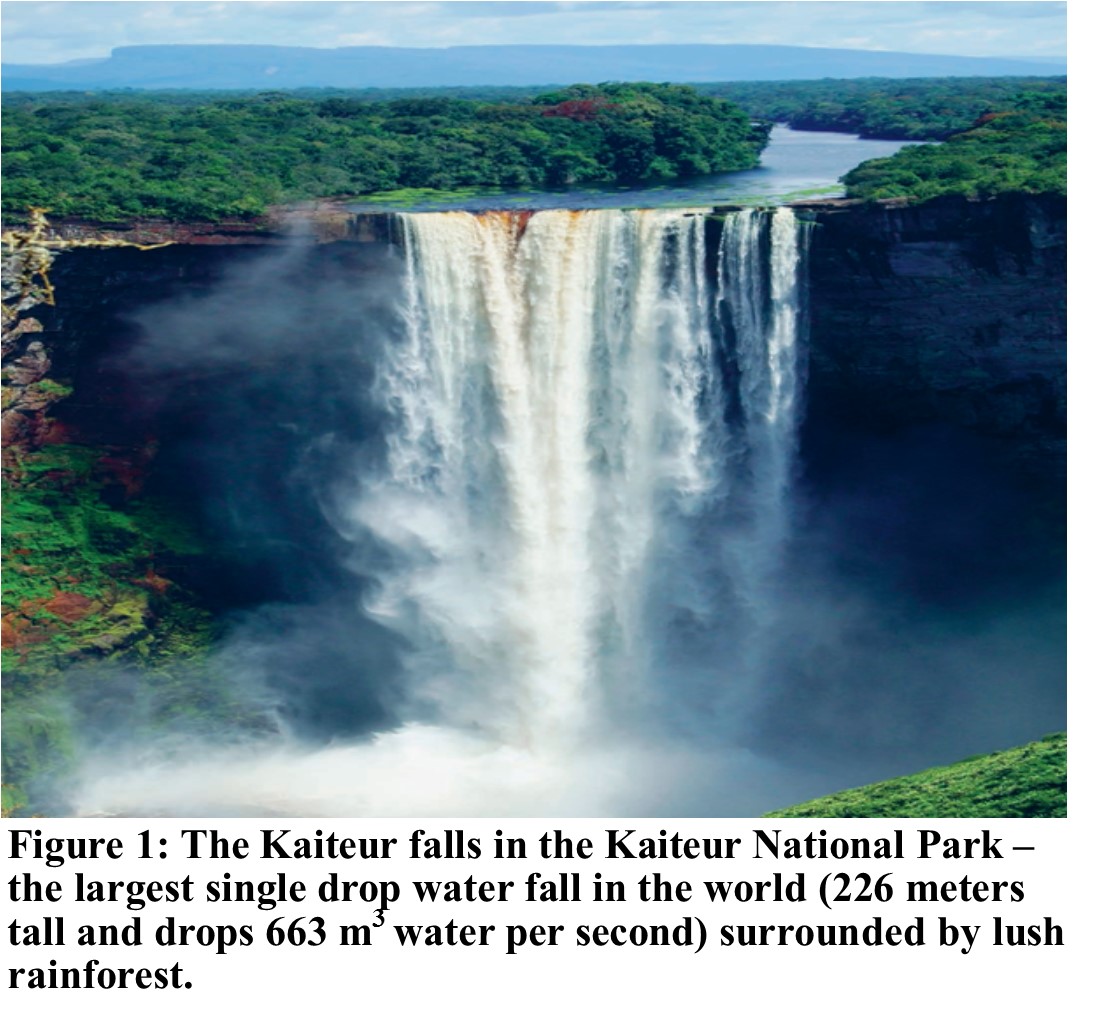
Guyana lies in the heart of the Guiana shield; with approximately 85% of the country still covered with forest. It has one of the highest levels of biodiversity of any country, with over 8,000 species of flora and over 2,000 species of fauna. It is known as one of the world’s last four intact rain-forest in the world (World Wildlife Fund 2012).


Picture1

Mineral Richness

Guyana is also well known for its rich source of natural minerals including gold, diamond and bauxite. In a quest for sustainable development the government has sought to attract oversee investors in the mining sector, with specific interest in gold mining. Gold mining has been on the rise contributing significantly (compared to other minerals) to Guyana’s export market (Guyana Geology & Mines 2010).

Picture2

Table 1: Increase in Gold production over a three-year period


Backward Technology

The gold rush over the past years has not been a glittering one for the environment, with many new miners unaware of proper mining practices and others continuing to operate as they have done in the past.

The majorities of mining operations are done at a small scale (approximately14, 333 claims were made in 2010) (Guyana Geology & Mines 2010), which is considered to be the most destructive form of mining, it incorporates the use of mercury causing pollution to the waters, poisoning fish and endangering the lives of indigenous people, who inhabit these mining areas and rely on the water for domestic and transport purposes (Dillard 2012).

There has also been an increase in forest damage. Each year the deforestation rate continues to rise, causing significant erosion in the landscapes of mining areas, leading to changes in soil structure, water quality; and soil nutrient level, which affect natural forest regeneration. In 2002, 5,335.1 hectares of forest was lost due to mining activities and this increased to 14, 781.9 hectares in 2008, an increase of 0.04% over a short six-year period (Stabroek News 2011).

Picture3


Forward Approach

According to market analysis, current indications show that the very high price of gold on the world market will continue to fuel mining activities (Stabroek news 2011), which will have perpetual impacts on deforestation and water quality. Thus the issue will only get bigger if government fails to address it with urgency.

Immediate action is needed to minimize deforestation and degradation caused by mining activities. A reform of policy, incorporating a holistic approach at all instructional scales will be a crucial step in an effort to achieve sustainable development.


References

Dillard, k., 2012. Artisanal gold mining threatens riverine communities in Guyana. New Security Beat-the blog of the environmental change and security programme. <http://www.newsecuritybeat.org/2012/08/artisanal-gold-mining-threatens-riverine-communities-in-guyana/#.UzzIfseA1sU >

Stabroek News, 2011. Increase environmental damage caused by mining boom. <http://www.stabroeknews.com/2011/archives/06/26/increased-environmental-damage-caused-by-mining-boom/&gt;

World Wildlife Fund, 2012. Living Guianas Report: State of the Guianas, Drivers and Pressures towards Green Economies. <http://wwf.panda.org/what_we_do/where_we_work/amazon/publications/?207255/Living-Guianas-Report-2012&gt;


Posted in Uncategorized | 1 Comment

Can “Pachamama rights” be translated into a harmonic relationship between sea lions and human communities in the Galapagos Islands?

by Jose Guerrero Vela
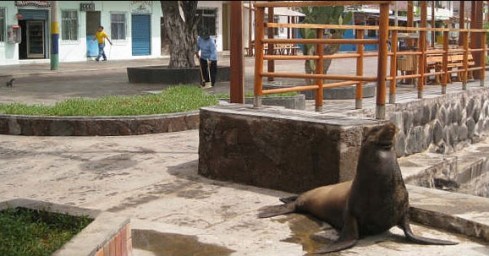
People and sea lions, a daily scene at San Cristobal Island Pier – Source: Galapagos National Park  Service 2014

People and sea lions, a daily scene at San Cristobal Island Pier – Source: Galapagos National Park Service 2014

San Cristobal, the capital of the Galapagos Islands, is the place that I am lucky to call home. San Cristobal is the main fisheries port in the Galapagos, and home of the Galapagos sea lions (Zalophus californianus, subspecies: wollebacki). This situation entails particular interactions and in some cases ‘wildlife conflicts’ (Distefano 2008, Denkinger 2013), like this testimony illustrates:

‘Sea lions are always sick with flu and conjunctivitis. That’s contagious for people, it can become into an epidemics for the people who are here in the Galapagos. That would be because of the sea lions that live here. So, couldn’t the sea lion be eradicated? …if we move the sea lions far to the other side of the island [where there is no human settlement], there will be more job opportunities for the local people as tourist will contract us to take them there to see the sea lions, there would be more job for the local transport sector’.
Galapagos fisherman, personal communication, 2012
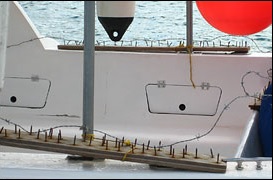
Some local boat owners used to have barbed wire and nails to prevent sea lions to rest on their boats. Source: Galapagos National Park  Service 2014

Some local boat owners used to have barbed wire and nails to prevent sea lions to rest on their boats. Source: Galapagos National Park Service 2014

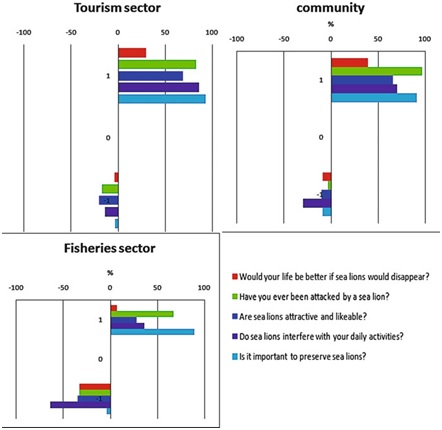
Wildlife conflicts are not a new phenomenon, and many cases such as orangutans, elephants or tigers , illustrates situations that emerge when human and wildlife requirements overlap (Distefano 2008). Judith Denkinger (2013) studied human perceptions about sea lions in the Galapagos and suggests that fishermen tend to express a relatively negative perception of sea lions in comparison to local people which works in the tourism sector and the remaining community. Reasons for this negative view are not only based to the perception that they ‘compete’ for the same resources, but also because sea lions might represent a symbol of a repressive and exclusionary social, political, and economic system (Denkinger 2013).

Human perception of different social sectors on Galápagos sea lions using positive (right) and  negative (left) classification  Source: Denkinger 2013

Human perception of different social sectors on Galápagos sea lions using positive (right) and negative (left) classification Source: Denkinger 2013

Good living futures?

Since the new development model of good living incorporated in the 2008 Ecuadorian constitution provides constitutional legal rights to Pachamama Mother Earth-, animals and plants have its own rights, at least in theory. However, a question remains whether “good living” is only a discursive tool functional to the State’s interests or if is it really contributing for a deeper ‘intercultural, inter-epistemic and pluri-national transformation’?(Walsh 2010, p.20). In the Galapagos, such transformation is more likely to occur if biodiversity conservation management reorients and compensate a history of exclusionary approaches to more participatory and effectively inclusive models.

Many initiatives are currently occurring which demonstrates that such participatory model is possible. For instance, marine recreational fishery can provide alternative economic income source and ensure fishermen well-being (Schubauer 2013, Usseglio 2013). Another good instance is citizen science where fishermen are involved in biodiversity research, by formulating questions, registering sea lions populations, analyzing such data and disseminating information. A participatory approach is also when children and young kids are involved in research, educational and scientific endeavors related with biodiversity (Usseglio 2013).

The Galapagos National Park service built two floating platforms in order to create resting spaces for sea lions. Source: Galapagos National Park  Service 2014

The Galapagos National Park service built two floating platforms in order to create resting spaces for sea lions. Source: Galapagos National Park Service 2014

The good living framework seeks ‘to achieve the attainment of the quality of life…in peace and harmony with nature’ (Walsh 2010). In that sense, Ecuador has a unique constitutional framework that creates a bridge between biodiversity conservation and social justice. Challenges are enormous if we want to bring this legal tool from theory to practice. The potential of interdisciplinary, inter-institutional and intercultural efforts to join social and economic justice, research and biodiversity conservation is one good option to bring healthier human-wildlife relationships. Therefore, I strongly believe that citizen empowerment of the good living framework can contribute in this process.

References

Denkinger, J., Quiroga, D., & Murillo, J. C. 2014, ‘Assessing Human–Wildlife Conflicts and Benefits of Galápagos Sea Lions on San Cristobal Island, Galápagos’, in Denkinger, Judith &Vinueza, Luis (eds.), The Galapagos Marine Reserve, pp. 285-30.

Galapagos National Park Service 2014, Alternativas de manejo de lobos marinos en Bahía Naufragio, San Cristobal (Sea Lions Management alternatives in http://www.galapagospark.org/nophprg.php?page=desarrollo_sustentable_lobos_marinos&set_lang=EN

Schuhbauer A, Koch V 2013, ‘Assessment of recreational fishery in the Galapagos Marine Reserve: failures and opportunities’, Fisheries Research, vol. 144, pp.103–110

Usseglio P, Schuhbauer A, Friedlander, A, ‘Collaborative Approach to Fisheries Management as a Way to Increase the Effectiveness of Future Regulations in the Galapagos Archipelago, in Denkinger, Judith & Vinueza, Luis (eds.), The Galapagos Marine Reserve, pp.187-202.

Walsh, C. 2010, ‘Development as Buen Vivir: Institutional arrangements and (de) colonial entanglements’, Development, vol.53, no.1, pp.15-21.

Posted in Uncategorized | 3 Comments

Offshore drilling in Belize – profits or ecocide?

by Dian Vasquez
 

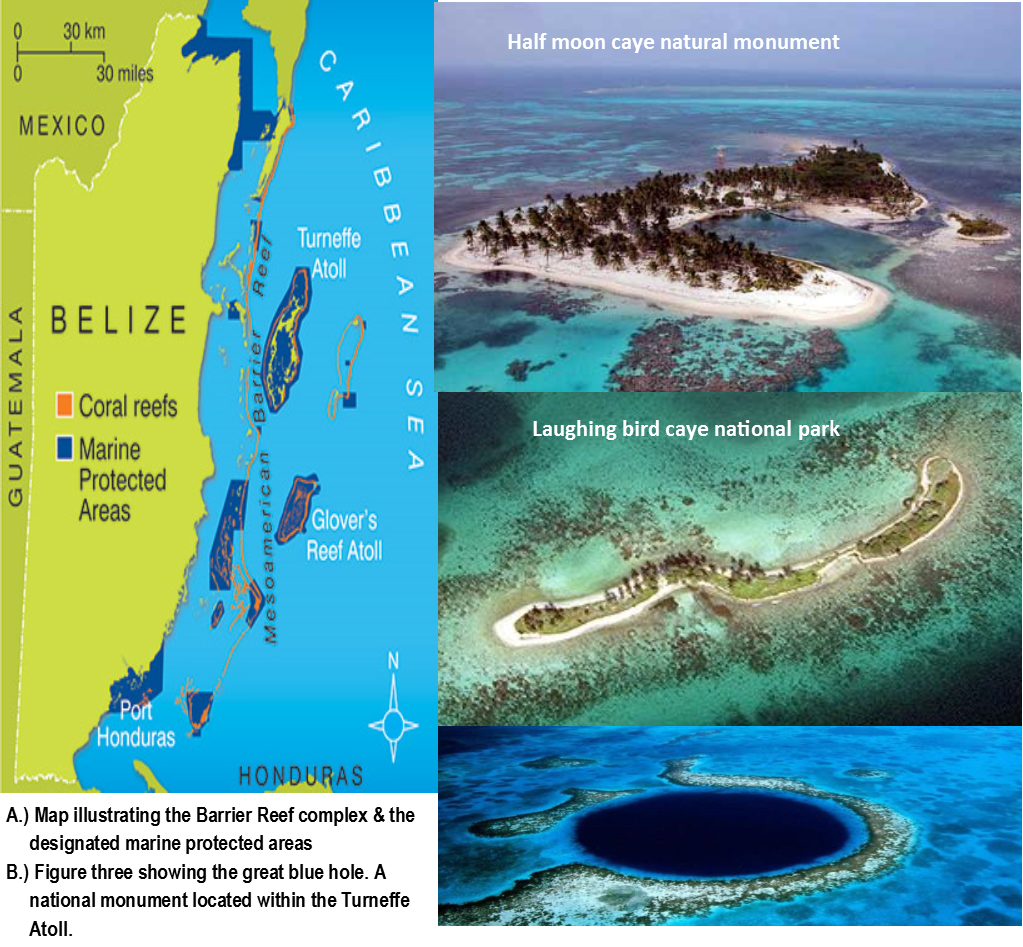
The Mesoamerican reef system represents the largest reef complex situated in the northern hemisphere spanning an approximate length of one thousand kilometers. Of this complex, about three hundred kilometres straddles the coast of Belize, making it the second largest coral reef system in the world after the Great Barrier Reef in Australia.

In Belize, the barrier reef is renowned for several iconic natural heritage sites, and recognized for its superlative natural beauty, attractive ecology and its unique biological diversity. In addition, this reef complex serves as an important economic earner sustaining tourism, fisheries and the livelihood of many local Belizeans who directly depend on the resource.

reef_collage

Conservation impingement

Oil exploration dates back to the early 1960s in Belize. Since then various concessions have been issued across the changing political platforms, which have now extended to include the marine environment (Kirkwood & Matura-Shepherd 2011). Though such considerations present a lucrative incentive, various insurmountable implications may arise if proper caution is not exercised. These include:

  • Incalculable damage assessment with threats of ecocide 

There is limited scientific knowledge explaining the full effect of oil spills in a marine environment. To compound this issue, there is no proper technique available to price biodiversity; thus, for a complex environment like Belize’s reef, the losses could be colossal resulting in the disruption of ecosystem services, reconfiguration (if not total destruction) of a fragile complex, which is of high value to the country.

  • Loss of a social landmark 

The barrier reef is a source of national pride and identity. In conjunction with its diverse fauna and flora that shape the marine ecosystem, it also holds a few of the world’s renowned natural heritage sites (i.e. the Great Blue Hole – a diver’s paradise as it was acclaimed). As a result, oil exploration in this environment threatens the existence of an important social land mark.

  • Degradation of a revenue earner

Apart from the social component, the reef generates a significant amount of revenues in the tourism and fishing sector. Estimates, according to Kirkwood & Matura-Shepherd (2011), illustrate that for projections between 2009 and 2011 about 282 million USD was brought into the country under the tourism sector by tourist entering the country visiting the cayes, scuba diving the reef and participating in other marine activities. As well, data projection from fisheries within that same time frame indicated that approximately 24 million USD was generated from the exported wild-caught sea food which comprised principally of conchs, lobster and marine fish (Kirkwood & Matura-Shepherd 2011; Gibson et al 1998).

Picture6

Conserve the reserve

Finding a balance between development and conservation is a challenge, particularly in a growing nation like Belize. However, in this context ignorance is definitely not bliss. Whatever venture is undertaken within our marine environment must be of vital concern to the Belizean nation, particularly because of the tremendous implications tied to such schemes. Under this circumstance, OFF-SHORE DRILLING in Belize’s barrier reef reserve system must be critically reviewed, debated, defended and always be an issue of national concern.


References

Gibson, J, McField, M & Wells, S 1998, ‘Coral reel management in Belize: an approach through integrated coastal zone management’, Ocean & Coastal Management, vol. 39, no. 3, pp. 229-244.

Kirkwood, FG & Matura-Shepherd, A 2011, ‘Offshore oil vs. 3E‘s (Environment, Economy & Employment), in Palomares, MLD, Pauly D (eds.), Too Precious to Drill: the Marine Biodiversity of Belize, pp. 3-7. Fisheries Centre Research Reports 19(6). Fisheries Centre, University of British Columbia [ISSN 1198-6727].


Posted in Uncategorized | 1 Comment

Earlier this year, I happened to come across a very interesting TED talk given by Allan Savory, the man behind modern holistic management and planned grazing. Image In it he outlines his experience and research into the drivers of worldwide grassland desertification and the climate change associated with this, stating that the problem is not only caused by over-grazing, but also by removing grazing animals from those environments. He explains that perennial grasses require a large, moving herd to flatten and fertilise them in order to quickly regenerate, otherwise they mostly decay slowly and die. This eventually results in too much soil exposure and water evaporation, as well as the release of carbon stores from the dead plant material and soil. Not an easy process to recover from…or is it? Image

Through his holistic management techniques, Savory has shown many examples of reversing desertification by using livestock and wildlife for planned grazing that mimics natural herds and their important role in the grassland cycle. This approach is based on managing the ecological, social and economic factors of an environment together.

Image

The idea that there is a way to sustain the growing demand for food as well as reduce atmospheric carbon dioxide levels AND improve biodiversity has definitely stayed with me through this semester, particularly during our fieldwork into restoration of modified ecosystems, adaptive management and agri-environmental schemes.

In terms of conservation planning, there are a few things to consider with this method:

1.  The effects of grazing on different grass species
Even though many grassland species have evolved with grazers, some are ‘increasers’ that respond well to more grazing, while other ‘decreasers’ can be grazing-sensitive and will have lower densities. For example, Australian grasses respond more favourably to lighter grazing, typical of our marsupials, than to intensive livestock grazing (McIntyre et al., 2003).

2.   Other species within the ecosystems

The level of grazing intensity also has an impact on the composition of other species, such as pollinators. A study by Sjodin et al. (2008) suggests that bees (Apoidea), butterflies (Lepidoptera), hoverflies (Syrphidae) and beetles (Coleoptera) have unique responses to variables at local and landscape scales, including vegetation height, the amount of grassland cover and water levels, which has implications for management regimes.

Image

3.  The context of the landscape

‘Man-made deserts’ occur in a variety of complex socio-economic contexts, so they will be managed differently depending on the particular goals of the stakeholders, such as a national park reserve plan vs that of agricultural land. Since many species are now endangered due to increased desertification and ecological disturbance (Ayyad, 2003), conserving biodiversity should be an important focus within the challenge of restoring any desertified landscape.

Crystal McGrath  u4401232

References

Ayyad, M. A. 2003. Case studies in the conservation of biodiversity: degradation and threats. Journal of Arid Environments 54:165-182.

McIntyre, S., K. M. Heard, and T. G. Martin. 2003. The relative importance of cattle grazing in subtropical grasslands: does it reduce or enhance plant biodiversity? Journal of Applied Ecology 40:445-457.

Sjodin, N. E., J. Bengtsson, and B. Ekbom. 2008. The influence of grazing intensity and landscape composition on the diversity and abundance of flower-visiting insects. Journal of Applied Ecology 45:763-772.

Posted on by Biodiversity Conservation Blog | 1 Comment