All things great and small

By Sofie Semmler

Having a great appreciation for all things great and small, I decided to participate in more than one volunteer program, when instructed that voluntary work experience was part of the Biodiversity Conservation Course.

Wildlife Caring

Ok well to be honest, I kind of cheated on this one since I am fortunate enough to belong to a family who lives in tropical Far North Queensland and are Wildlife Carers. So during the mid-semester break, I went home for about 10 days and of course caring duties set in. So to set the scene, my parents live on 180 acres of pristine untouched rainforest, an hour and a half inland from Cairns and 20km from the nearest town. Orphaned, injured or displaced animals are rescued from people who find them and the nearest wildlife carer is contacted. Once an animal is in the hands of my family, they are assessed and cared for accordingly.
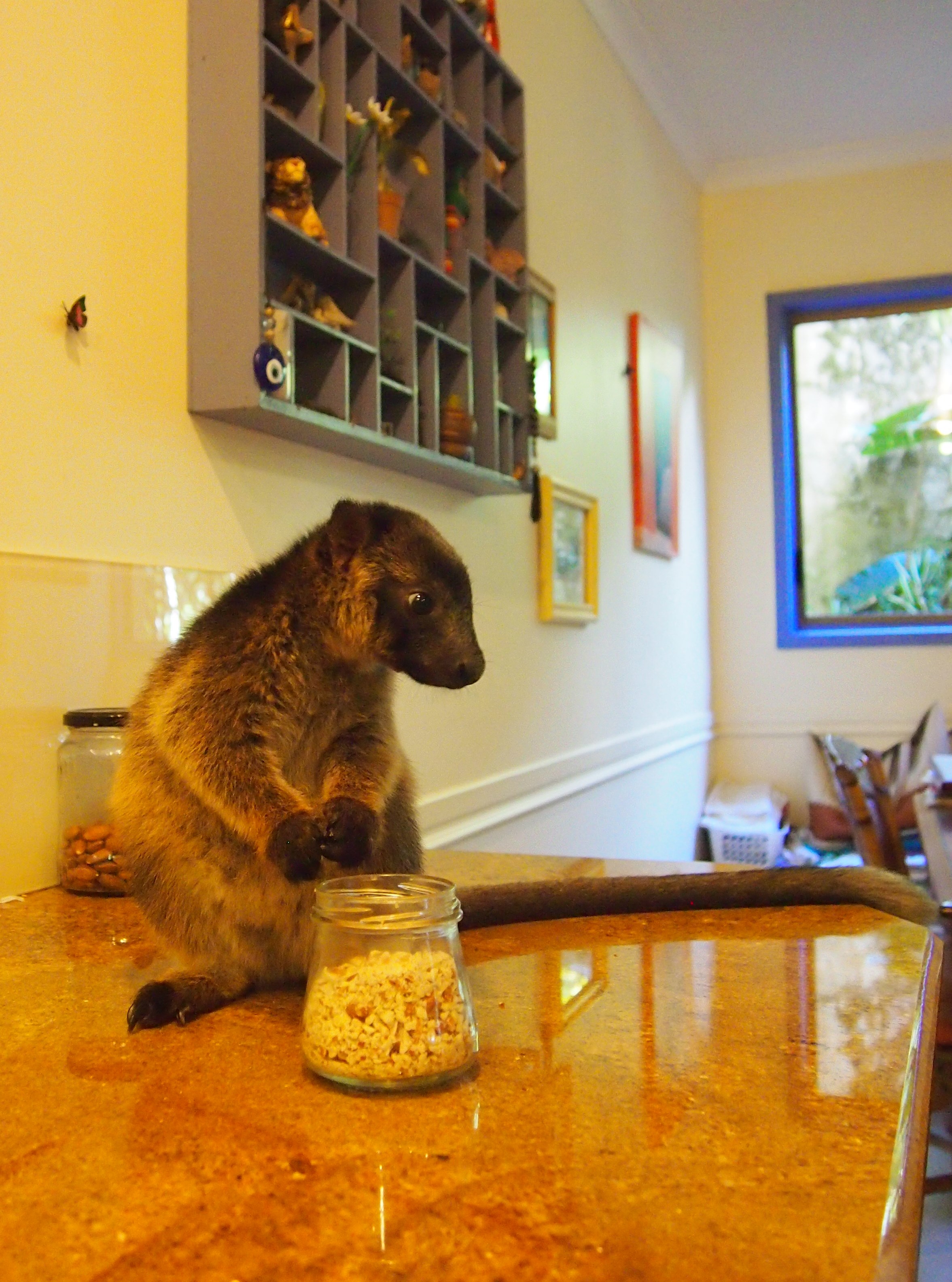
Lumholtz Tree Kangaroo (Kimberly)

Lumholtz Tree Kangaroo (Kimberly)

While I was home, we received a baby (approximately 5 months old) Lumholtz tree kangaroo (Dendrolagus lumholtzi), who fell out off the mother high in the canopy, into the lake below. Luckily, there were a few young boys swimming there at the time and witnessed the ordeal, so they fished her out and tried to give it back to the mother, however she kept rejecting the baby and ended up leaving. Physically the little girl was not harmed or dehydrated but in need of 24hour care with scheduled bottle feeds, every 3 hours around the clock, of specialized formula. Because she (given the name Kimberly) is at that ‘adventurous’ age, we have to show her what her mother would have taught her. This means slowly introducing her to edible leaves and fruits which occur in the forest, along with daily exercises to build her upper muscles and teach her balance for tree climbing. This might sound simple enough, but can be quite challenging and is a loooooooong process. Eventually, every morning she will be taken out into the forest, wearing a radio collar, and left to climb freely. However using a radio tracker, she will be found in the evening and taken home until she feels comfortable spending the night ‘out’ where she will no longer need the collar.

Paddy with baby

Paddy with baby

Because Lumholtz tree kangaroos only occur in Australia in very restricted areas, the species in classified under the IUCN list as rare, but not yet of a concern. However, because of their very territorial behaviour and surrounding fragmented habitats, due to dairy farming and land clearing for urbanization, there is a concern of numbers declining. Once Kimberly reaches sexual maturity, we hope she will reproduce with our other resident male Geoffrey (also hand raised).
Cat trap

Cat trap


There is never a dull moment at our house with pademelons and wallabies, birds, possums and gliders, echidnas and platypus coming and going, reptile relocations from urbanised areas and bat rescues from barbed wire fences. Because the area has such a vast array of native fauna and flora, we have a program set up, together with neighbouring farms, which involves monitoring and eradicating feral cats, dogs and pigs. This is done by using live traps, baiting and sometimes shooting. Keeping these unwelcome pests at bay, is beneficial to both the cute and cuddly and the green and spiky. Not only do the natives look to be a tasty treat but can also degradate soil quality and structure. Though controlling them can be costly and time consuming, it is well worth the efforts when a healthy ecosystem results.


Woody Weeding Control for Mt Majura Reserve
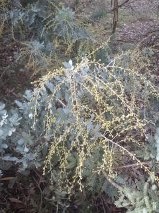
Green Wattle (Acacia decurrens)

Green Wattle (Acacia decurrens)

So to finish the volunteering experience off, I decided to spend a day putting some time back into the Mount Majura Reserve. This 481 ha piece of nature, is literally in my back yard and I have spent many  hours absorbing it’s beauty, so it only felt appropriate to pay a little back by  doing a day of woody weed eradication. It was interesting for me to learn that the Silver Wattle (Acacia dealbata) is a native species to Australia, however the Green Wattle (Acacia decurrens) was introduced and now prevents natural regeneration of native species and changes the natural balance of resources for native animals.
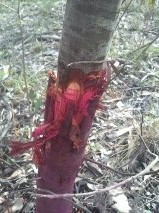
axe cuts in tree sprayed with roundup

axe cuts in tree sprayed with roundup

There were 5 other volunteers and we went around ‘The Fair’ with Mt Majura’s weed control officer, Noel, who showed and explained to us all the different vegetation types in the area. Once we came across a weed, we either cut it at the base and immediately sprayed the wound with the herbicide called roundup (glyphosate) or if the plant was in tree form, than made slanted axe cuts into the base of the trunk (around the entire circumference- also known as frilling) and again immediately sprayed. It is important that the wound is sprayed as quickly as possible before the plant produces a protective barrier.
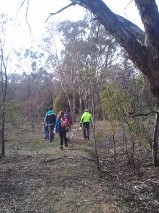
Woody weeds volunteers

Woody weeds volunteers


Pink colouring was added to the herbicide just to make it easier to see where it has been sprayed. Overall I found it very interesting to learn about the plants that exist in the area and couldn’t help but feel a sense of satisfaction, knowing you helped eradicated invasive species, so native ones can thrive. This won’t be the last time I spend my Sunday volunteering in the Reserve.
 

Posted in Uncategorized | 1 Comment

Disaster of Water Hyacinth

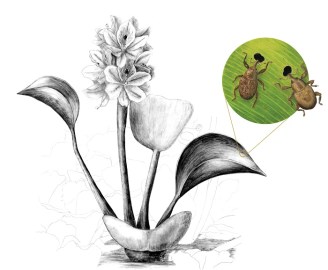
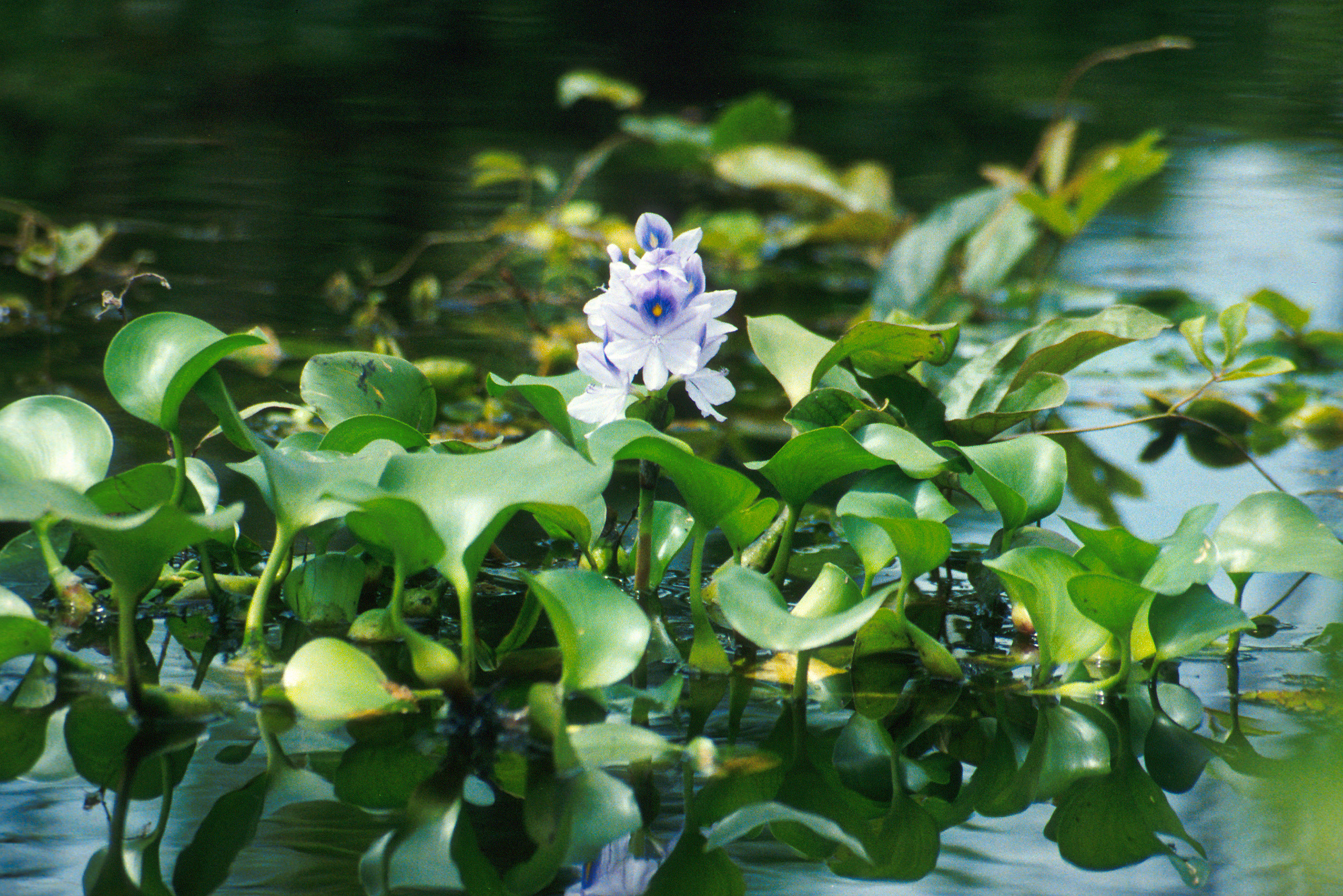
Let’s talk about Water Hyacinth today, which is a big problem for China’s ecosystem. Water Hyacinth (Eichhornia crassipes), which originated in South America, was introduced into China in 1930s due to extremely limited food supply during war times. Then it was used to supplement the feed for stock raising in 1960-70s. So far, so good.

Water_hyacinth

Water Hyacinth

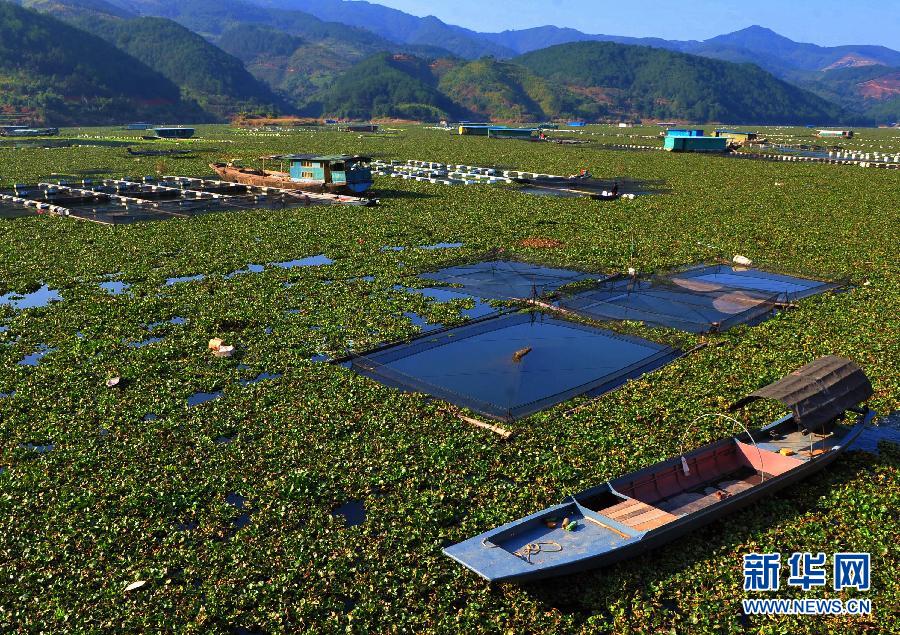
Then the evil side turned up. We abandoned using it because of limited nutritive value and it becomes wild. The rampant overgrowth occupies the reservoirs and lakes, and blocks the river ways and the irrigation channels, causing irreversible destroys to the ecosystem, reducing biodiversity, and obstructing agricultural development and water transport. We suffered a lot from the uncontrollable propagation, including enormous death of aquatic organism, and increased frequency of eco-disasters. The loss is up to billions of dollar each year due to the invasion of foreign species.

news

A river in Fujian Province blocked by water hyacinth

So how does it kill others? The mass propagation of water hyacinth could cover the whole surface of rivers or lakes. It reduces the air exchange between atmosphere and the water, and blocks the penetration of sunshine, suppressing the growth of plankton and depriving lives of other aquatic creatures. Moreover it could change pH value of water, decrease the dissolved oxygen, and destroy the underwater food supply chain. In some severely afflicted areas, the biodiversity declines rapidly, and some local species (including aquatic animals and plants) are almost extinct. For instance, the Dianchi Lake, in Yunnan, China, used to have 16 species of aquatic plants and 68 animals before 1960s. Then the lake was occupied by water hyacinth by up to 1000 hectares. As a result, most aquatic plants died out and only 30+ species of animals survived in 1980s.

It is not totally useless, however. Some may think water hyacinth causes the eutrophication plankton. In fact, it can suppress plankton propagating and cleanse the water with eutrophication. As competing species, the water hyacinth would absorb the sunshine and minerals also as needed by plankton. Besides, some chemical compounds secreted by the root of water hyacinth can kill the cells of plankton by damaging the intracellular ion balance.

The water hyacinth is also good at absorbing pollutant and therefore purifies the wastewater. But attention should be paid as the water hyacinth itself can become concentrative in heavy metal irons and other poisonous chemicals, so we should keep it away from other wildlife and dispose carefully by landfill as explosive gas could result from the process. Due to concentration of pollutant, we have to avoid eating the fish and other underwater animals in polluted areas because they feed on water hyacinth.


NE

Water Hyacinth is the only food for Neochetina eichhorniae

To help mitigate the problem of overgrowth of water hyacinth, China Science Academy introduced two kinds of insects (Neochetina eichhorniae and N. bruchi hustache) from US and Argentina, which eat water hyacinth only. The insects have already suppressed the propagation of water hyacinth in designated areas and will provide long term and robust balance compared with manual and chemical control. Story continues.


Reference

Jiang, H. and Zhang, H 2003, Research review of control of water hyacinth (Eichhornia crassipes). China agricultural technological herald.

Ding, J. and Fu, W 1996, Biological control: using biodiversity to protect biodiversity. 4, (4), pp 222-227.

Jianqing, D., Ren, W., Weidong, F., & Guoliang, Z 2001, Water hyacinth in China: Its distribution, problems and control status. Biological and integrated control of water hyacinth, Eichhornia crassipes, 102.

By Lin (u4616660)

Posted in Uncategorized | 3 Comments

Creatures of south west Queensland

On a recent trip to Bowra Station, Queensland some fantastic mammals, amphibians and reptiles were found in addition to the birds discussed in an earlier post. On the approach to the Queensland border from Bourke the grass beside the Mitchell Highway was bright green after good rain during February-April 2014.  In this area a Stripe-faced Dunnart (Sminthopsis macroura) which is a small marsupial listed as vulnerable in NSW was found hiding under an old beer ad sign (an extinct QLD beer in fact)!

Don’t be fooled by this face…

Don’t be fooled by this face…


Dunnarts are carnivorous: Considering its tiny size (25g) this Stripe-faced Dunnart gave me a good bite - the sharpness of his incisors was impressive.

Dunnarts are carnivorous: Considering its tiny size (25g) this Stripe-faced Dunnart gave me a good bite – the sharpness of his incisors was impressive.


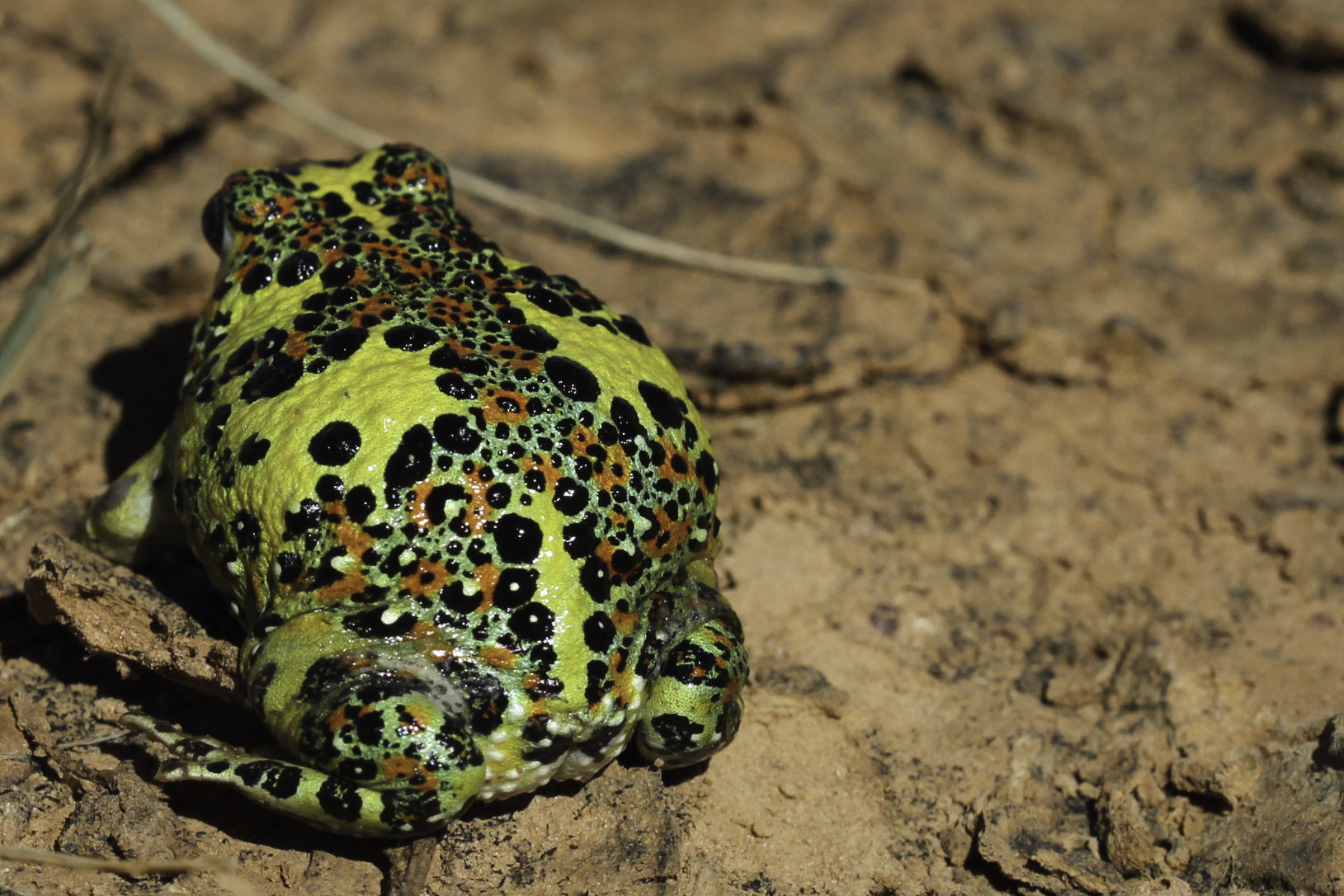
At a site in Bowra where there was considerable surface water a Crucifix Frog (Notaden bennettii) was found right where we were bird banding. This truly stunning creature is found in the grasslands of the Murray-Darling Basin and further north and is most often encountered after rain.

The Crucifix Frog was named after the distinctive pattern on its back.

The Crucifix Frog was named after the distinctive pattern on its back.


The Crucifix Frog has glands on its body through which it can secrete a strong glue-like substance. This attribute could potentially be used to seal the mouths of predators.

The Crucifix Frog has glands on its body through which it can secrete a strong glue-like substance. This attribute could potentially be used to seal the mouths of predators.


Also visiting Bowra were some students and researchers from the University of Queensland who were keen to look for frogs and reptiles. One evening by the lagoon at Bowra homestead the inland subspecies (Morelia spilota metcalfei) of the widespread Carpet Python was found.

Carpet Python: Note the ticks on the snake’s neck.

Carpet Python: Note the ticks on the snake’s neck.


Another creature seen by the lagoon was the Short-footed Frog (Cyclorana brevipes). It is a burrowing frog found in the grasslands and woodlands of eastern and central QLD.

Short-footed Frog

Short-footed Frog


After dinner one night I found a Marbled Velvet Gecko (Oedura marmorata) right next to my swag. It was hiding in a fissure of a Gidgee (Acacia cambagei) which is by far the smelliest tree I have ever encountered. The Marbled Velvet Gecko is a relatively widespread species in northern Australia and has tiny scales which give its skin a velvet like texture.

Marbled Velvet Gecko

Marbled Velvet Gecko


Prior to this trip I had never paid any attention to moths but this one that my younger brother found on the bark of a Gidgee was particularly striking.


Thalaina macfarlandi: A species of the Ennominae subfamily. This superb species inhabits the arid and semi-arid zones and was first described in 1972.

Thalaina macfarlandi: A species of the Ennominae subfamily. This superb species inhabits the arid and semi-arid zones and was first described in 1972.


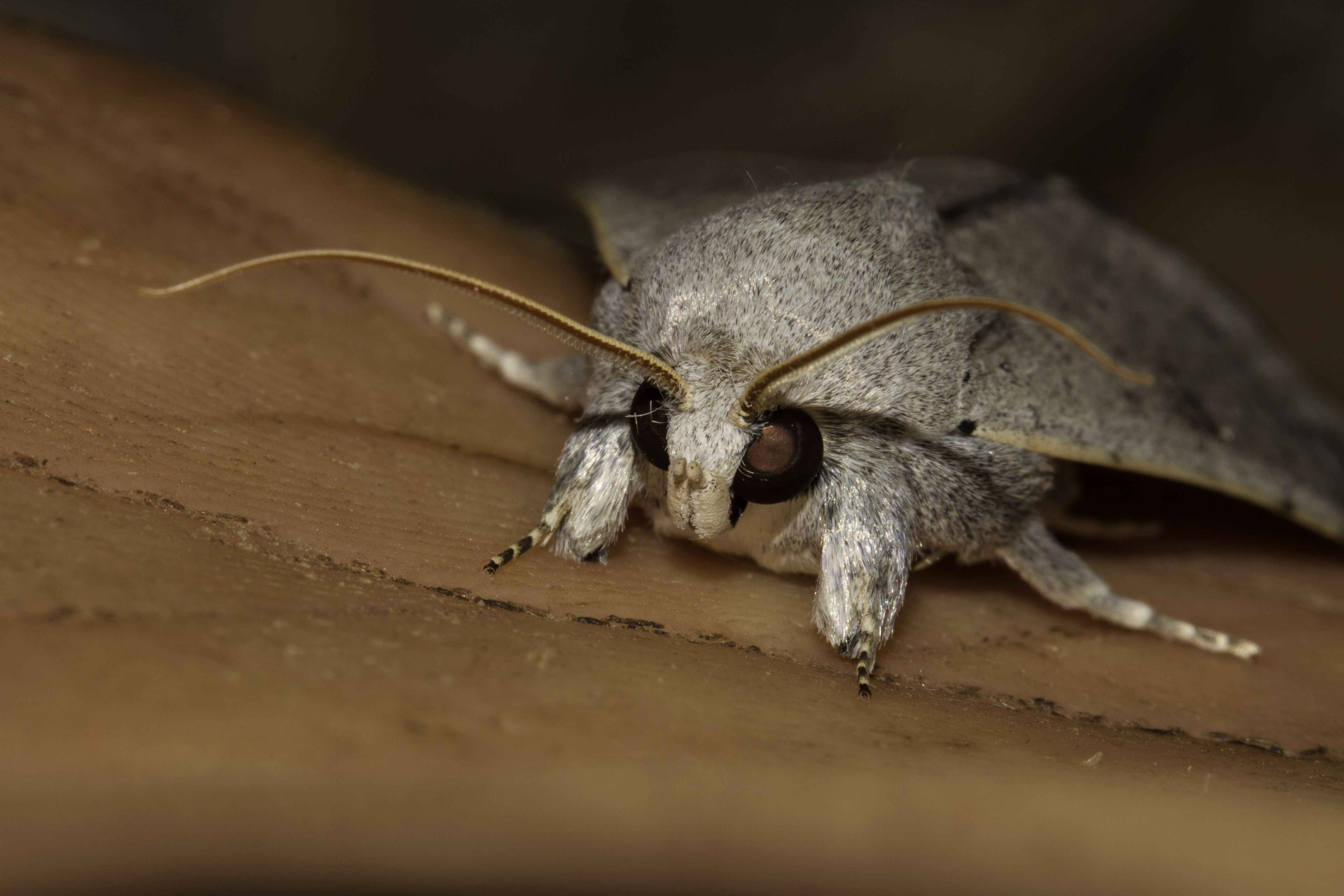
At first glance this moth of the Noctuidae family looked drab in comparison with the Thalaina macfarlandi. However, a close-up view of its eyes and antennae reveals quite a regal looking critter.

This moth is a pasture pest of the Noctuidae family.

This moth is a pasture pest of the Noctuidae family.


The Desert Tree Frog (Litoria rubella) was one of the most common frogs at Bowra whilst we were visiting in April. This species has a large geographic range and can be found in a wide range of habitats in northern Australia from grassland to gallery forest.

A Desert Tree Frog chowing down an unfortunate invertebrate.

A Desert Tree Frog chowing down an unfortunate invertebrate.


I hope I’ve presented to you, my fellow classmates (especially the Ecuadorians and Brazilians), an indication of the diversity of creatures that can be found in the typically dry and bleak-looking landscapes of the Australian semi-arid zone. I would like to thank Stephen Zozaya, Len Willan and Ted Edwards for their identification assistance.


By Mark Allen

Photography: Brett Allen


Posted in Uncategorized | 2 Comments

Germany: Prepared for the Return of Brown Bears?

Sandra Krueger

Recently, I was very impressed by the film “How Wolves Change Rivers” about the reintroduction of wolves to the Yellowstone National Park and how their return changed the environment. In this context I was reminded of brown bears, large carnivores that originally occurred in my home country, Germany.

Once, brown bears occurred in forests all over Europe. At the top of the food chain, together with wolves and lynx, they influenced the structure and functioning of animal communities and ecosystems; for instance, they regulated populations of herbivores. However, because bears were considered to compete with humans for food and to be dangerous, they were exterminated in Germany in the 19th century.

Large carnivores were once native to Europe (Photo: Alessandro Montemaggiori).

Large carnivores were once native to Europe (Photo: Alessandro Montemaggiori).

In May 2006, a young male brown bear from a reintroduced population in North Italy was sighted in Bavaria, a state in South Germany. Initially, excitement was great as he was the first wild-living brown bear in Germany for over 170 years. The media celebrated the brown bear and he was even given a name: Bruno. However, within only four weeks the attitude towards Bruno had changed as he began to hunt livestock and pets. Apparently surprised by the bear´s behaviour, Bruno was then referred to as the “problem-bear”, by the former Bavarian minister-president Edmund Stoiber. The Bavarian government was not sure how to act. Bruno was thought to be dangerous for the densely populated Germany because he was seen roaming and foraging near settlements. Should he be transferred to a nature reserve or should he be killed? At that time no management plan for these large carnivores existed. Nevertheless, Bruno still conquered the hearts of the public.

However, the story had a sad ending and still leaves me angry and ashamed!

In June 2006 the Bavarian government ordered that the bear, which was strictly protected by the German Federal Nature Conservation Act at that time, had to be captured or shot. Unable to catch him and work out the “problem”, Bruno was killed on 26 June 2006 by an unknown hunter.

Obituary notice of Bruno the bear showed the sympathy of the public. Translation: On 26 June 2006 Bruno the Bear was killed. We mourn the loss of a fellow creature and also we mourn the loss of our relationship with nature and environment. How poor we have become!  (Photo: baer.de).

Obituary notice of Bruno the bear showed the sympathy of the public. Translation: On 26 June 2006 Bruno the Bear was killed. We mourn the loss of a fellow creature and also we mourn the loss of our relationship with nature and environment. How poor we have become! (Photo: baer.de).

Unfortunately, this animal was unable to recognize country borders. It crossed into a country that was completely unprepared for the arrival of a large carnivore and failed miserably in implementing management strategies. Justifiably, Germany was heavily criticized worldwide. A quote from US-diplomats summed up public sentiment by saying: “Perhaps the greatest insight from the whole Bruno affair might be that despite the veneer of “greenness” extolled by German society, modern Germany in fact coexists uneasily with untamed nature”.

After all, my question still remains: Has Germany learned from this event and is it now prepared for the return of brown bears? I hope so, but unfortunately I do not believe it. At least the Bavarian government worked out a management plan in 2007 to handle these animals prospectively.

However, if another bear ever again migrates to our forests I will say: “Welcome!”

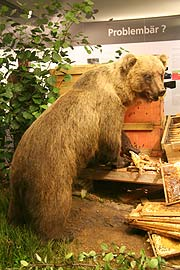
Bruno was stuffed and now adorns an exhibit of the Museum “Mensch und Natur Bayerns” in Munich, Germany.

Bruno was stuffed and now adorns an exhibit of the Museum “Mensch und Natur Bayerns” in Munich, Germany (Photo: ganz-muenchen.de).

Posted in Uncategorized | 1 Comment

Reintroducing Burning to the Lachlan: (bio)Diverse Benefits

             Fire In Australia

Traditional burning, or ‘fire-stick farming’, has played a central role in the construction and maintenance of Australian landscapes for thousands of years. In fact, paleogeological records indicate a shift in burning regimes coincided with the arrival of modern humans in Australia 45 thousand years ago. Aboriginal Australians used fire to achieve short-term outcomes such as increasing the abundance of edible plants and altering habitats to make them more suitable for herbivores. This burning may have extended the range and occurrence of fire-adapted species, as well as altering the life-history traits of plant communities. Due to this it is fair to say the Australian landscape evolved with anthropogenic burning, and only in the past 200 years since the removal of these practices have large threatening killer fires occurred.

            Paddocks Alight

In April I helped out with one of the final burns of the Paddocks Alight program run by the Lachlan CMA (now Central Tablelands Local Land Services) and the NSW RFS (see video below). This program reintroduces burning to the Lachlan Catchment and aims to:

  • Improve agricultural productivity,
  • Enhance biodiversity,
  • Foster community participation, and
  • Share traditional knowledge.

The Emu Creek RFS Team with Drip-torch in Hand

The Emu Creek RFS Team with Drip-Torch in Hand


Smokin’

The burn I attended was on ‘Rosemont’, Mikla Lewis (cofounder of WIRES) and Wayne Lavers’ property to the west of Grenfell in NSW. The remnant Box-Gum Woodlands and Grasslands on the property were targeted for the burn. Before the burning began, a biodiversity survey was undertaken to determine a baseline to compare the response of fauna, flora and soil condition post-burn. Over 170 species of native plants, 90 bird species, 9 mammals and 14 reptiles have been recorded on the property. Hopefully the relationship between the influence of fire and its role in improving grazing management practices can be better understood through the program.

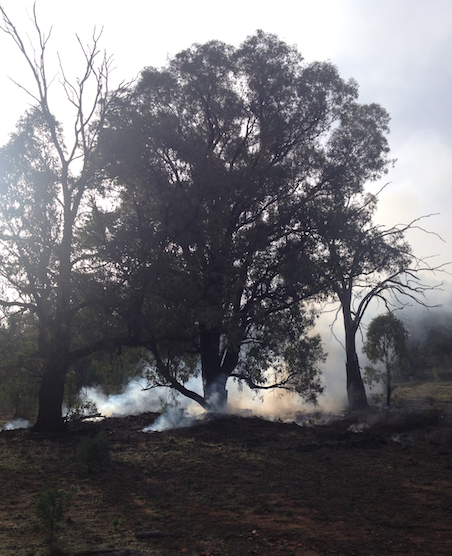
The burning process basically involved watching the Emu Creek RFS team set fire to debris using kerosene drip torches (a modern take on traditional burning) and ensuring no trees caught fire. The aim was to achieve a cool-patchy mosaic burn (think smoking grass as opposed to raging wildfire). This type of burning was used traditionally to improve fauna, flora and biodiversity. The smoke is actually key to the burn: contrary to popular belief it is the smoke not heat that many Eucalypts need to drop their seed and germinate. Dr Milton Lewis informed me in the Aboriginal view the canopy is sacred and not ours to touch, but we can burn underneath as long as it is not hot enough to scorch the branches. This is just one piece of traditional knowledge aiming to be shared through the program; if the branches were to be scorched they would fall and create a new fire hazard, negating the positive impacts of burn in the first place!

Smoking the canopy

Smoking the Canopy


The 'patchiness' of cool-patchy mosaic burning

The ‘Patchiness’ of Cool-Patchy Mosaic Burning


The impacts of the burn won’t be known until the response of biodiversity can be monitored, but hopefully by exploring the use of fire and reintroducing mosaic burning to the landscape fire can be viewed as a positive management tool lessening fear of fire in the environment.


Many thanks must be given to Gus Arnott, Dr Milton Lewis, Mikla Lewis and Wayne Lavers, and the Emu Creek RFS.

Annarose O’Ryan (u5025895)

Bird, R, Bird, D, Parker, C and Jones, J. (2008). The “Fire Stick Karming” Hypothesis: Australian Aboriginal Foraging Strategies, Biodiversity and Anthropogenic Fire Mosaics. PNAS. 105 (39).
 

Posted in Uncategorized | 1 Comment

Boxed In: Working on Grassy Box-Gum Woodland Remnants

Grassy Box-Gum Woodlands once occurred over much of south eastern Australia including the ACT and surrounding areas. But clearing and degradation through practices such as intense grazing has greatly reduced their range to the point where they are now considered critically endangered ecological communities. The remaining patches are fragmented and in great need of assistance as I have recently learnt.

The Locations
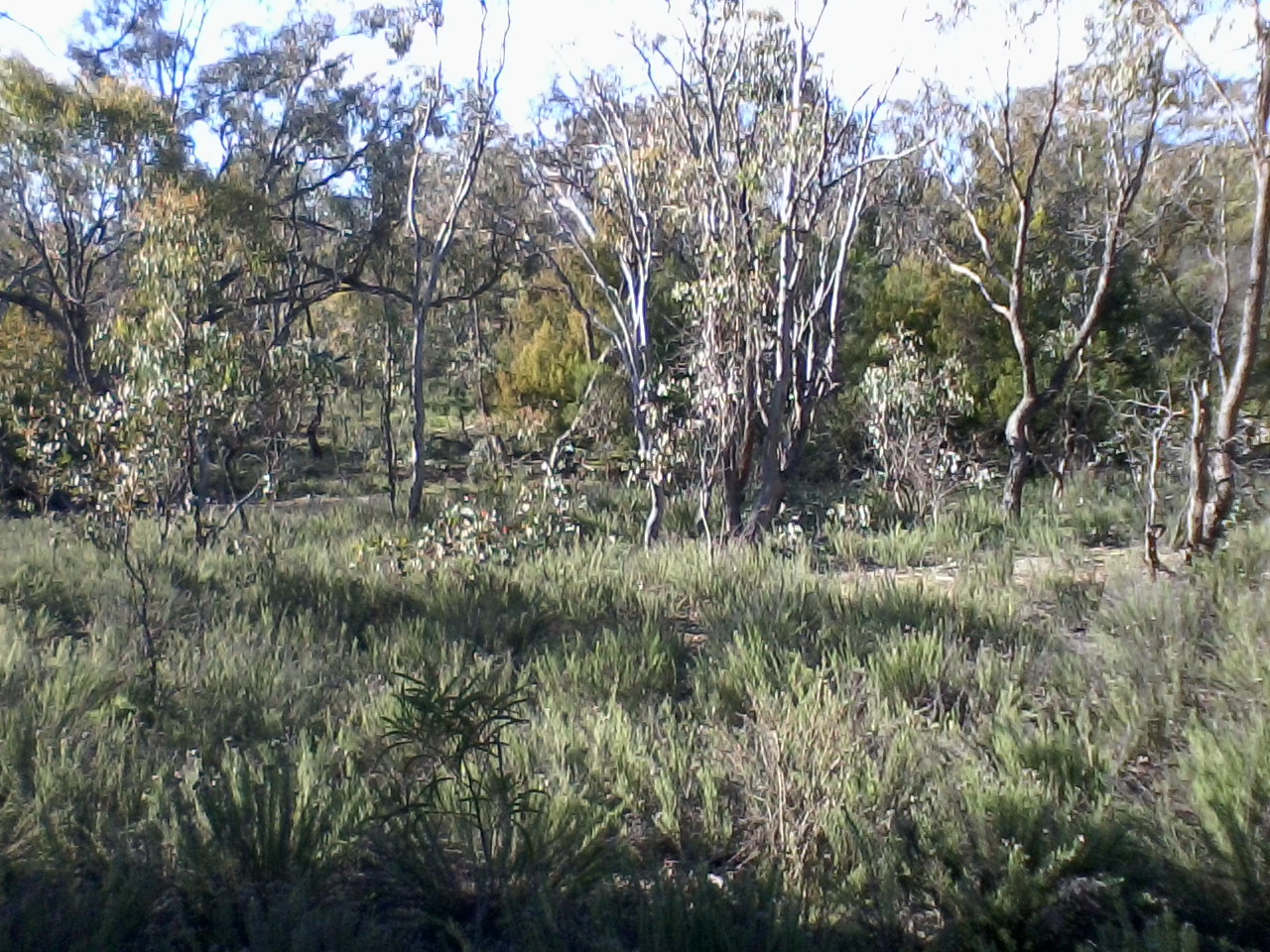
Over the last few weeks I have performed volunteer work on two areas of Grassy Box-Gum Woodland. The first area was at the Mount Majura Nature Reserve which is managed by the Friends of Mount Majura (FoMM). Much of this area was once used for grazing livestock, but now the livestock has been removed and the vegetation is being rehabilitated by the volunteers of FoMM.

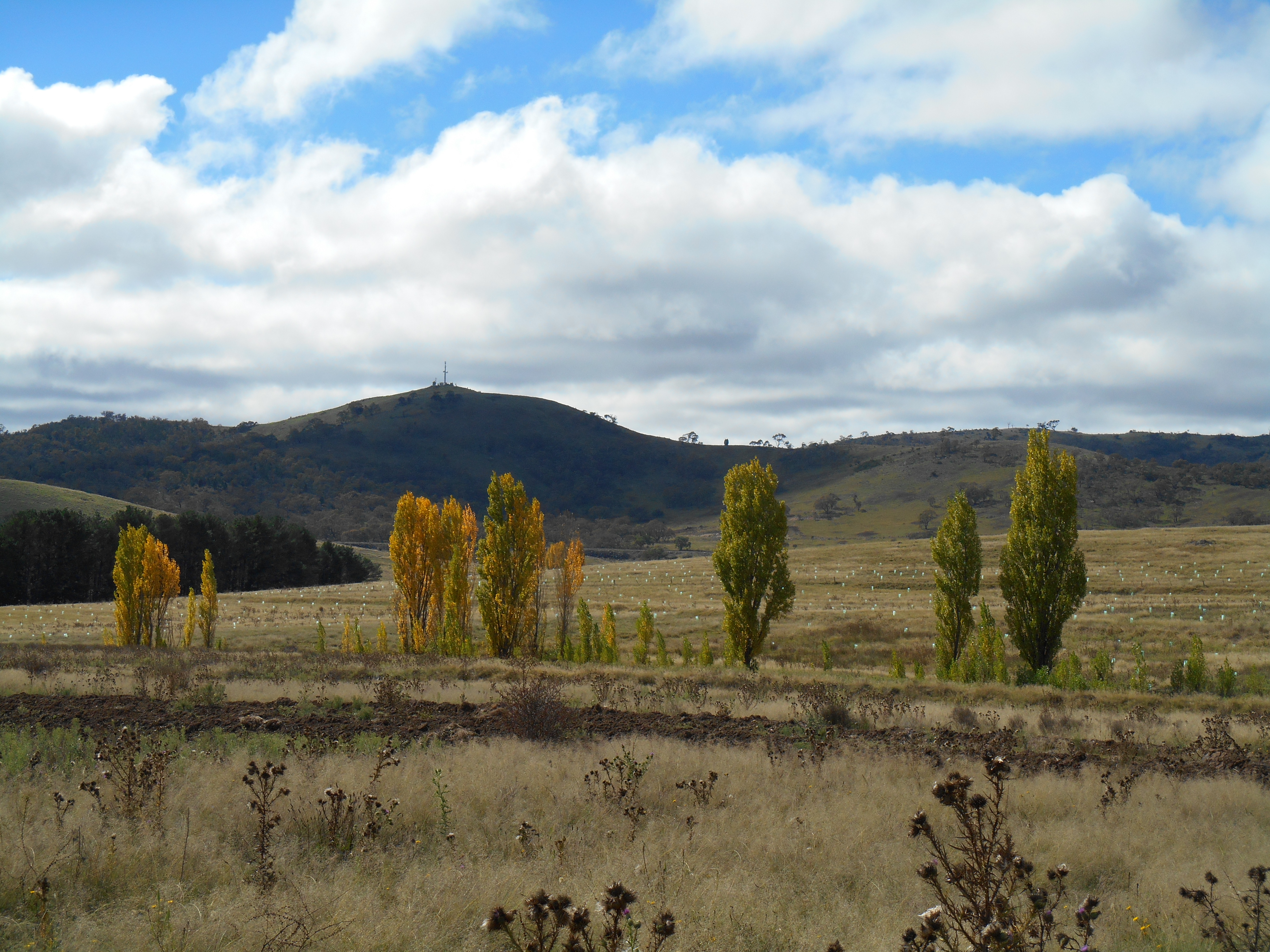
The second area was at the Poplars Grasslands just outside Jerrabomberra as organised by the Friends of Grasslands (FOG) and Queanbeyan Landcare. This area contained a patch of Grassy Box-Gum Woodland next to a patch of Native Temperate Grassland (another endangered community). This area however was not part of a reserve and was instead in private hands.

Mount Majura

Mount Majura

The Poplars

The Poplars

The Work
The first job which needed work was adding larger tree guards to the growing saplings of native plant species at Mount Majura; this provided protection against grazing rabbits and kangaroos. But the main work which would be undertaken at all working sessions afterwards was removing woody weeds.

Woody weeds are a serious problem in Box-Gum Woodlands as they compete with native species and change the vegetation structure. The three most common species encountered were Hawthorn, Briar Rose and Cootamundra Wattle (an Australian species but not from the ACT region). Other species encountered included African Olive, the highly invasive Blackberry and even an escaped pine from a nearby plantation.

The main offenders: Briar Rose (top left), Hawthorn (top right) and Cootamundra Wattle (bottom)

The main offenders: Briar Rose (top left), Hawthorn (top right) and Cootamundra Wattle (bottom)

The typical method for removing a woody weed sapling was to cut it off close to the ground and then quickly add herbicide so hopefully as the plant retreats its sap back into the roots it will take the herbicide with it. This was a bit harder to apply to the larger trees, in these cases a process called frilling was undertaken. This involved making cuts along the tree’s trunk and adding herbicide into the cuts. Another option was to just cut the bugger down with a small chainsaw before adding the herbicide to the stump; as was performed at the Poplars.

A Frilling Experience: An example of frilling on a Cootamundra Wattle

A Frilling Experience: An example of frilling on a Cootamundra Wattle

Thoughts
Working in these remnants made it obvious to me how impacted this community is and in particular what a serious problem woody weeds are. This was particularly evident at the Poplars where over 3 hours were spent working on a single patch of weeds without managing to finish it. Even at Mount Majura many weeds could still be found spread throughout the reserve despite all the effort to remove them.  This showed just how difficult it is to control woody weeds.
Based on these experiences I would greatly recommend volunteering for these organisations as there is still much work to be done.

Joseph Stapleton (u5184965)

Posted in Uncategorized | 1 Comment

Working with Greening Australia

In April of this year I completed 2 days of work experience with Greening Australia. Greening Australia is an organization that looks to improving, protecting and restoring biodiversity across Australian landscapes. I worked with the Greening Australia Capital Region sector out at Scottsdale Reserve, near Bredbo.

Image

Part of the Scottsdale Reserve near Bredbo

Scottsdale Reserve was originally a working farm and most of the native vegetation had been cleared. Greening Australia is working on Scottsdale Reserve with Bush Heritage and Kosciuszko2Coast to restore native woodland and grassland to the area. Their goal is to plant 300 hectares of eucalypts, acacias, shrubs, grasses and forbs within 3 years. My work experience took place at the beginning of their second year and they have already planted more than 100 hectares. But there are still 200 to go!

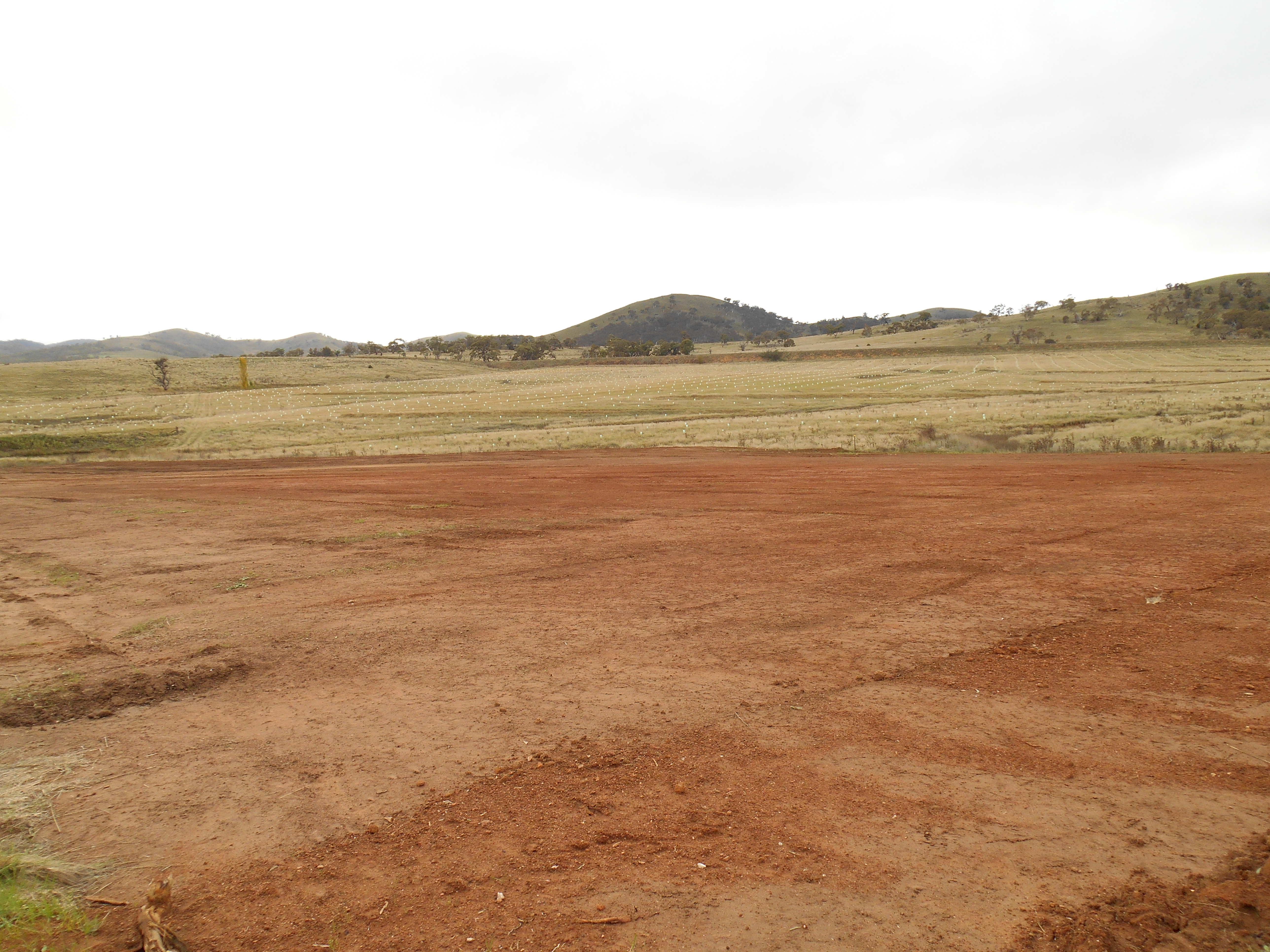
During the first day of my work experience I worked with Nicki doing some grass seeding. This was the first time Greening Australia had tried grass seeding on Scottsdale, so my work experience was a trial run. Unfortunately due to the wet weather the region experienced leading up to this day, the grass-seeding machine could not be used. As a result we had to resort to the old-fashioned methods and seed by hand. This meant plowing the field, throwing out the seed, rolling it in and watering it all by hand! I now have a newfound respect for the farmers of old. Fortunately this means that Greening Australia can compare patches that have been seeded by grass to patches that have been seeded by machine/tractor and see which yields the best results. Go the hand-seeded patch!

Image

A patch of land that has been prepared for grass seeding (not all of this patch was seeded by hand)

I spent the second day of my work experience working at Scottsdale with Ben and the Green Team (a weekly volunteer group) planting trees. Bright and early in the morning we headed out to Scottsdale, collected our pick, shovel, bucket and a lot of trees. The trees were a mixture of eucalypts and acacias that were seeded from local, native trees. In fact, one of the local residents provided many of the seedlings and looks after the nursery that has been established on the reserve.

Image

Some of the seedlings growing in the nursery at Scottsdale

That morning we planted 450 trees! We also had to build 450 guards to protect the trees and hammer them in whilst trying to avoid getting splinters. After lunch a few people, myself included, went out to water everything we had planted that day. Due to the remote location we could not use hoses to water the trees. Instead we had to use buckets filled with water from a container sitting on the back of the ute. What a workout! The work, though hard, was very satisfying and I can’t wait to go back out to Scottsdale in 10 years time to see what it looks like.

Image

A small sample of the trees we planted that morning

I thoroughly enjoyed my work experience with Greening Australia. It was great to get outside, get my hands dirty and help the environment. Greening Australia is reliant on volunteers and community involvement and I would encourage everyone to get involved.

By Sarah Jackson


Posted in Uncategorized | 1 Comment

Community-based ecotourism: Is biodiversity benefitting?

Victoria Clark


Wrapping up a recent research stint in Cambodia, we travelled to Trapeang Roung, a village on the Koh Kong Wildlife Corridor and home to a community-based ecotourism (CBET) project in the Southern Cardamom Mountains. Though not without criticism, CBET potentially offers a “win-win solution”: diversifying livelihoods and alleviating poverty, in part, by creating incentives to protect biodiversity and the natural environment – in a nutshell.

After spending a night homestay-ing with a local family we set off on a 3-day 50km trek with our two poacher-turned-guides (think lots of smiling, nodding and gesticulating due to serious language barrier).

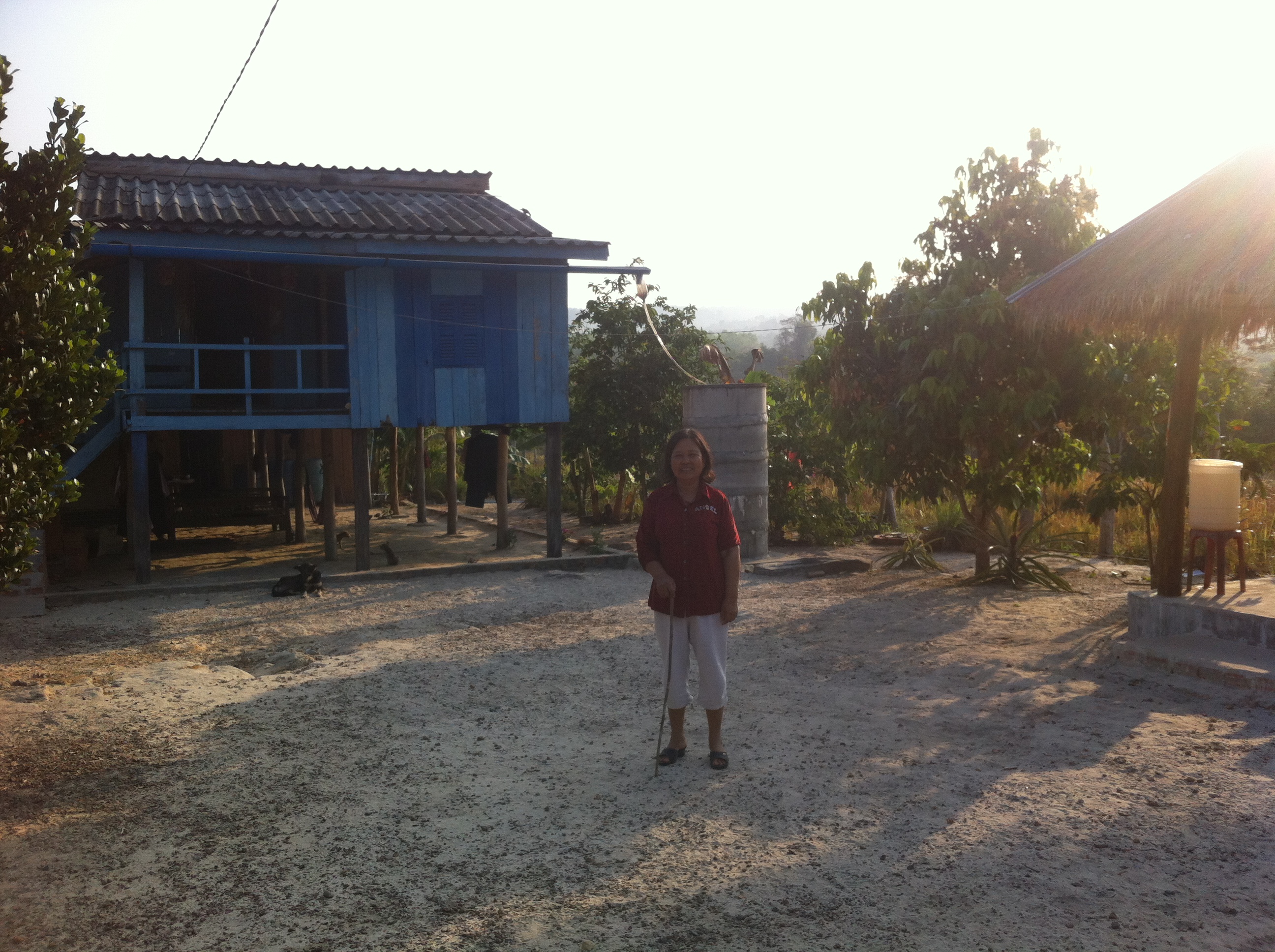
Trapeang Roung community

Trapeang Roung village

Homestay and welcoming host

Homestay and welcoming host

The forest was stunning – dense, humid and sandy, but not an animal in sight. Not that we really expected to see any. Many of Cambodia’s rich, and largely endemic, species have been hunted, trafficked or eaten close to extinction. Combined with intense deforestation, those that remain are wise to be shy.

Forest track

Forest track

We spent two nights swinging in mosquito-proof hammocks under the blackest sky I have ever experienced, listening to the eerie and enchanting sounds of the jungle – before returning to the village.

River campsite

River campsite

River swimming

River swimming

It was fantastic! But what were we really supporting? And where were the answers to our growing number of questions and concerns regarding the CBET initiative?

What species should be there? What has happened to them? Is the CBET project empowering the community and conserving biodiversity? What were those noises we heard last night?

There was no shortage of cigarette packets and plastic bags on the track; the campsites were swarming with flies circling the mounting bags of rubbish. What happens to it? We tried to ask, but received only sheepish smiles.

The dense forest witnessed from the riverbanks disguised the brutal and rampant logging, the slash-and-burn clearing, the logging-truck tracks.

Charred and logged patches of native forest

Charred and logged patches of forest

And, what about our guides? How do they continue to make a living on the majority of days when there aren’t any tourists? Presumably, they continue to poach because it is their only alternative income.

And what about the community members not involved in the scheme? Why should they change their practices if they do not receive any of the benefits? The revenue generated by CBET can be reasonably substantial, but is spread thinly – too thinly for many to rely solely on ecotourism and abandon overharvesting natural resources.

Where is the basic infrastructure necessary to make this project, full of potential, a success?

One key aspect of CBET is environmental education and awareness, not only for tourists, but also the local community. But this information was absent. Trapeang Roung is a desperately poor community, with rich, but dwindling natural resources, with little future prospects unless initiatives like this one get off the ground.

We went with an open mind – and yes, we had a great time – and encourage others to support this and similar CBET initiatives. They deserve support. By putting our money into the community we hoped to contribute to conservation efforts vital to safeguarding Cambodia’s biodiversity. But is that what we really did? And how can we know?

Posted in Uncategorized | 1 Comment

Improving Hydropower for Biodiversity

What’s Hydropower?

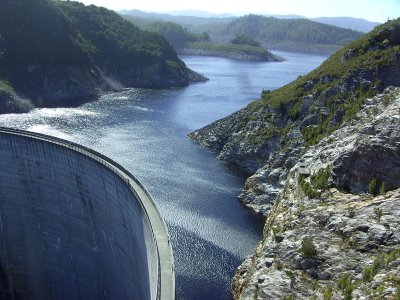
Hydropower has supplied Australians with electricity since the 1900s. Hydropower schemes use water from a storage unit, such as a dam, which operate by dropping water from these dams down a pipe. The water then passes through a turbine, generating electricity, eventually flowing back into a river. Hydropower is a renewable energy source as it reduces our use of fossil fuels. Although reducing emissions is good for the environment, Hydropower is not all positive!

Why is it bad for the environment?

Hydro schemes can be bad for the environment, especially if a dam is being built to store water. In this case, land has to be cleared and natural habitats are destroyed by flooding the area.

Lake Peddler before it was floodedLake Peddler before it was flooded

Lake Peddler after it was floodedLake Peddler after it was flooded
Hydropower schemes can also change the way a river flows, which can have negative effects on underwater ecosystems and riverside vegetation. So what can be done to reduce these effects?

Where did I work?

In 2014, I spent time at the West Kiewa Hydropower scheme in Victoria. Power stations in this scheme were altered to enable the Pretty Valley Creek to return to its original environmental condition. By connecting the McKay Creek power station to the new Bogong power station, water was no longer directed to the creek, which has helped to preserve its natural ecosystem.

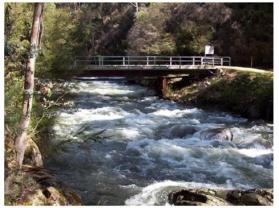
Natural water flow in the creekNatural water flow in the creek

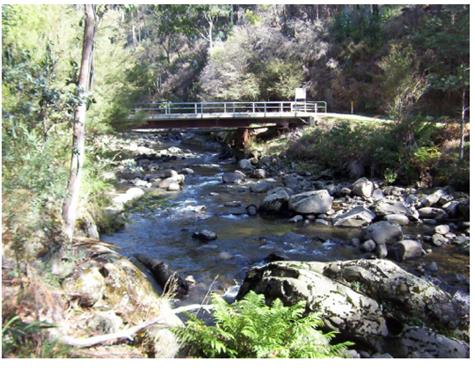
Unnatural water flow after the release of water from the McKay Creek power station

Unnatural water flow after the release of water from the McKay Creek power station

What were the improvements to Biodiversity?

By reducing the water flow in the Pretty Valley Creek, both plant and animal species benefited.

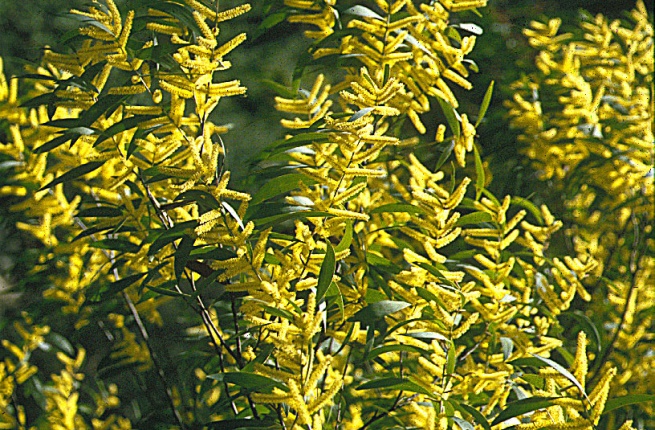
The creek has plant species that are rare or vulnerable under the Victorian Threatened Species Advisory List, such as Catkin Wattle and Spinning Gum. Found on the creek bank, these threatened plants and their habitat had been flooded by the water from the McKay Creek power station. Changing the environmental flows has allowed these plants to re-establish themselves.

Catkin WattleCatkin Wattle

Spinning GumSpinning Gum

Reflection on my work experience

Increased water flow in the creek led to invertebrate, fish and organic matter being washed away. These animals and matter are necessary for the health of the river and its biodiversity.  By periodically releasing water, plant and animal species were being subjected to undue stress.  Redirecting the water away from the creek has allowed the river to re-establish to its natural environmental condition.

I thoroughly enjoyed my work experience at the West Kiewa Hydropower scheme, as I learnt a great deal about the impacts Hydropower can have on our environment.

Me at the McKay Creek power station turbineMe at the McKay Creek power station turbine The connection between McKay Creek and Bogong power stationsThe connection between McKay Creek and Bogong power stations

By altering the flow of water in this scheme the impacts on our environment were minimised. I believe this is something that could be investigated at Hydropower schemes throughout Australia to increase the benefits of this renewable technology.

By Joanna Robinson (u4673277)


Posted in Uncategorized | 1 Comment

Kangaroo burgers and exotic loving lizards

Image

Myself and Brett turning tiles. Thankfully there were no snakes under this one!


The strange title of this piece has been inspired by my work experience at Scottsdale Reserve south of Canberra with Brett Howland. Over the two days we carried out reptile surveys using pre-existing tile traps as well as setting up a kangaroo survey by creating transects. The Kangaroo surveys were 100m transects with markers every 6m where you would (in the future) come back and count the kangaroo pellets thus we had to remove all the pellets already there. The purpose was to get a rough estimate on the number of kangaroos in the park for culling purposes. Too many kangaroos threaten the ecosystem, as they are voracious herbivores as was made evident from the small patches of grass that was fenced off from them.

DSCN1131

Setting up the Kangaroo transects. So many pellets…

My first thought on the prospect of culling all of these native animals was inherently negative; these are wonderful animals, a symbol of Australia. But after witnessing firsthand the destruction they can have on the ecosystem, I have come to realize it is simply not feasible to have an over-abundance of kangaroos roaming unchecked. My second thought was, what a waste of perfectly yummy meat. The beef industry is one of the most harmful to the environment, and if we were all vegetarians the wilderness would be better for it but why can’t we capitalize on the necessity of these culls and turn waste into plenty. I happen to love Kangaroo meat; it is cheap, lean and native!

The second part of the work experience, and certainly the most exciting, was the reptile survey. We went to transect throughout the park already set up and helped Brett collect his data. The transect consisted of tiles placed along the transect, with three parallel lines in total. We needed to flip the tiles very fast to see what we found underneath; the reptiles like to use them to heat up in the morning.

An adorable delicate skink

An adorable delicate skink

The first few tiles were met with amazement as we saw new species; mostly Delicate skinks and an overabundance of ants. After a while these became common place with “just another Delicate” being the catchphrase for the day. The most interesting part of the reptile survey were the areas in which the most species were found. The areas containing the most biodiversity and abundance were the exotic grasslands of the park, rather than the native areas. It appears that the rarer and more cryptic species preferred the exotic and invasive species of flora; should this be taken into account for the preservation of such species? One native species surviving better due to the presence of an exotic species is not exactly what conservationists want to hear, as it makes things considerably more convoluted but it is certainly an interesting point.

All in all, the work experience at Scottsdale opened my eyes to the type of work you can expect in the field, and all of the extra questions and problems such work can bring!

Jon Hyland

Posted in Uncategorized | 1 Comment