Peniup Restoration Project

The aim of Gondwana Link is to conserve and reconnect the natural vegetation of south Western Australia. Part of the Gondwana Link initiative is the Peniup project. The Peniup project was started in 2007 when a 2406ha property was purchased by Greening Australia and Bush Heritage Australia. This property had previously been used for agricultural purposes and the land was significantly degraded. As well as the poor quality of the land, significant habitat fragmentation has occurred.

Scope of Gondwana Land Imitative

Scope of Gondwana Land Imitative

Aims:
The Peniup Project aims to:
– Re-establish a self-replicating biologically diverse plant system
– Assist with carbon sequestration
– Combat habitat fragmentation

How did they do it?
Using past attempts of re-seeding land, the Peniup Project used the following techniques to ensure a successful project:
– Soil testing was undertaken and a soil map produced in order to determine which plant types flourish in which soil types
– Seeds were collected from around the Peniup area for planting with a specially designed tool for a natural structure of plants
– Planting of seedlings was also undertaken
– Seeds were collected from the area so they would have similar genetic structure to plants would naturally be found there

Specially designed machinery planting five seeds at once and minimising soil disruption

Specially designed machinery planting five seeds at once and minimising soil disruption

What did I do?
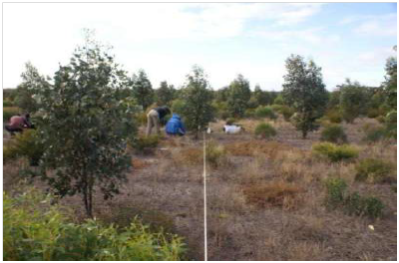
Due to an injury I was unable to complete any field work. As such, I assisted Dr David Freudenberger with data compilation for the Peniup project. It was my role to look through photographs of each site from 2014, determine which site they were from and place them in a format so they can be easily compared with photos taken in previous years.

Results so far
Over 100 species have been planted over 250ha. The plants are flourishing and growing, some have begun to die out due to the lifecycle of the plants. You can see how different the landscape looked in 2008 compared to 2012.
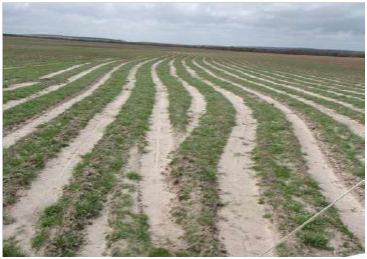
2008
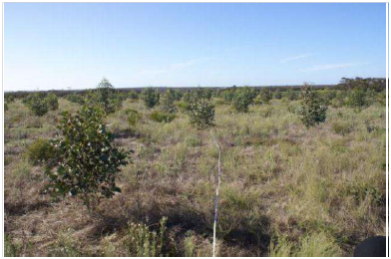
2008

2010
2010

2011
2011

2012
2012

Reflection
Being part of a project on such a large scale is quite phenomenal. The coordination and collaboration required for this project are immense and I am just beginning to fully understand it. Speaking with Dr. Freudenberger, I have come to the realisation that while several re-planting projects have taken place world-wide, very few of them are on such a scale or have the same amount of documentation as the Peniup Project as part of the Gondwana Link initiative. The level of detail undertaken in the Peniup restoration project ensures the successful future of the project and on a larger scale the Gondwana Link initiative.

While I was disappointed not to be able to conduct any field work, it was a great experience to get a feel of such an immense and important project.

By Madeline Brewer
u4673202

Posted in Uncategorized | 1 Comment

Flooding as a natural triumph, rather than a natural disaster!

The CSIRO is one of the largest science agencies in the world, working on improvements to everything from oceans to energy, metals to medicine, and sustainability to food. I was lucky enough to participate in a sub-project contributing to the restoration of the Paika Lake and its surrounding wetlands, in the Murrumbidgee catchment. Until 2011, this lake had been isolated and from flooding for over 100 years, and disconnected from the rest of the floodplain system by levees and roads. The project here aims to rehabilitate these historic wetlands by restoring flooding, fencing, and selective grazing management to maximise biodiversity and vegetation recovery, and monitoring the responses of biodiversity to these changes. Needless to say, a project as big as this requires a great deal of dedication to the cause. CSIRO’s role is to use photographs taken by motion-sensing and time-lapse remote cameras to examine the presence and abundance of feral mammals in these wetlands.

Emus cross to Paika Island at Paika lake (source: CSIRO)

Emus cross to Paika Island at Paika lake (source: CSIRO)

This brings me to the part I had to play in this huge restoration initiative. I had the seemingly mundane task of scrolling through the photos taken by the cameras from various sites around the lakes and wetlands, and recording the types and abundance of wildlife caught going about their everyday activities. This activity proved much more interesting than I had first anticipated. The cameras caught some fascinating images of the wildlife that occupy these wetlands, primarily feral predators such as cats, foxes, and pigs that are responsible for the plight of Australian native fauna. I recorded data including the site location, species, time of day, date, temperature, and water level. This data that I documented directly from the photos will be analysed and used to explore feral animal associations with vegetation type and structure, lake watering regime, and other such variables.

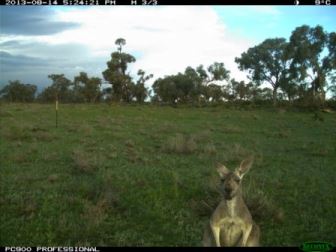
Kangaroo captured by the motion-triggered cameras (Source: CSIRO)

Kangaroo captured by the motion-triggered cameras (Source: CSIRO)

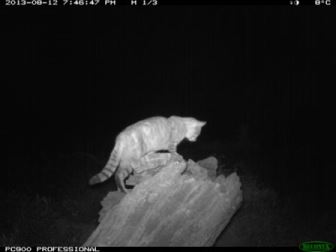
Feral cat captured by the motion-triggered cameras (Source: CSIRO)

Feral cat captured by the motion-triggered cameras (Source: CSIRO)

Feral pigs captured by the motion-triggered cameras (Source: CSIRO)

Feral pigs captured by the motion-triggered cameras (Source: CSIRO)

Feral fox captured by the motion-triggered cameras (Source: CSIRO)

Feral fox captured by the motion-triggered cameras (Source: CSIRO)

Since the project’s commencement, opening up the previously-used water paths has resulted in an amazing wildlife response. Waterbirds have arrived in tens-of-thousands, which encouragingly includes three threatened species – the blue billed duck, freckled duck, and Australian painted snipe. Vegetation condition adjacent to the wetlands has already improved, and seedling regeneration is abundant. Obviously, the invasive mammals that are roaming these wetlands need to be controlled, as their introduction to the area has resulted in significant declines in native fauna. Domestic stock such as cattle, sheep, and goats are also extensively grazed on one of the sites monitored by this project, producing great environmental costs to native flora and fauna. Continued monitoring of the recovery progress made by native fauna is integral if the project is to successfully restore flooding to the Paika Lake and thus maximise vegetation and biodiversity recovery in the area. So far, so good!

Ellen Gearing; U5175120

Posted in Uncategorized | 1 Comment

Counting Sheep (and Then Some).

20 km north of Balranald, NSW, in the Murrumbridge catchment, is a low-lying floodplain called Paika Lake. Due to levee banks and roads, this wetland has been isolated from surrounding floodplains and thus has been deprived of water. It had been like this for 100 years, until, in 2011 CSIRO, NSW OEH, Peter and Sue Morton, and Dianne Williams began their joint endeavour to reintroduce flooding to the region. The project ventures to restore flooding, connection and protection through management of Paika Lake and other surrounding floodplains (Hobbler’s Lake, Cherax Swamp and Dundomallee Lake). It will do this through infrastructure works (for example installation of water delivery pipes) to maximise biodiversity recuperation, managing what species utilise the area through fencing, and monitoring the response of target species of vegetation and other biodiversity. CSIRO involvement mainly consisted of monitoring ecological responses within the flood plains.
location

Along side Ellen Gearing, I took part in a two day work experience with CSIRO Ecosystem Services, through Dr Heather McGuinness. We began work at 9 am and worked into the afternoon (with a very nice tea break, I might add). We were asked to examine photographs taken using time lapse and motion sensing remote cameras, taken between April and September 2013. We were able to work our way through Cherax Swamp, Hobbler’s Lake and Dundomallee Lake. The time lapse photographs were taken every day at 8 am and 4 pm. Motion sensing photographs were taken when something moved in front of the camera. Three photos were taken in three seconds. We were asked to identify photographs where mammals were present and record the site, location, type of camera, date, time, temperature, relative water level, fauna class and family, species, maximum number seen in each set of photographs (ie in each set of three for motion sensing and each individual image for time lapse) and comment on anything particularly interesting. An example of “something interesting” was when a Kangaroo had a joey or appeared pregnant.
camera

The purpose for this sub set of research was to monitor the abundance of feral mammals in these areas. Once this data set in analysed, it will be used to investigate their relationship to vegetation type, water levels and other variables listed above.

There were an exceptional number of photographs, most of which contained countless birds, all moving around and looking identical to each other (we were very thankful we didn’t have to count those and feel sorry for whoever has to do it…). Animals we encountered in our photography growing were inter alia feral cats, pigs, goats, sheep, cattle, Eastern and Western grey kangaroos, foxes. It was a fabulous experience and a great chance to understand a bit about a key part of biodiversity conservation research (we at least got a taste!). We saw some pretty cool things, including some humongous hawks. We even got the chance to see a goat residing in a tree…

Hilary Tier

Posted in Uncategorized | 1 Comment

Bettongs Bounce Back From Extinction in Mulligans Flat

In early May this year I helped with Mulligans Flat annual survey of Eastern Bettongs. We worked in teams of three, checking traps for bettongs from 2am until dawn.

Eastern Bettongs are nocturnal, rabbit-sized, marsupials, they kind of look like tiny wallabies. They are incredibly cute, but unfortunately, because we were surveying at night, it was too dark to take photos, but here is a photo that I found on the internet.

An Eastern Bettong and its joey at Mulligans Flat

The Eastern Bettongs in Mulligans Flat are part of a reintroduction program. Eastern Bettongs have been extinct in Canberra since about 1900, they used to be found in South-Eastern Australia, but now are limited to Tasmania. It is thought that the decline of bettongs on the mainland was due to predation from foxes, hunting, competition with rabbits and livestock, and habitat modification.

Distribution of Eastern Bettongs

In 2012, 17 Eastern Bettongs were reintroduced to Mulligans Flat from Tasmanian populations. Mulligans Flat in North Canberra is a fenced reserve containing critically endangered box-gum grassy woodland habitat, the area had been degraded mainly by over grazing by livestock and kangaroos. Mulligans Flat is set up as a long-term ecological study, it aims to recreate the habitat from pre-European settlement, and improve habitat quality by restoring ecosystem processes. This is where the bettongs come in; bettongs are ‘ecosystem engineers’ they dig the soil to find their favourite food; truffles! The way that bettongs disturb the soil is different to how introduced animals such as rabbits do; bettong digs have many positive effects on the ecosystem. They improve soil condition, encourage water infiltration and disperse fungal spores, all of which are beneficial.

Mulligans Flat

It is often difficult for reintroductions of this type to work, which is why monitoring of the population is so important. The traps we used were baited using oats, peanut butter, and oil (apparently a decent fungi substitute). The bettongs were transferred from the traps into cloth bags to minimise the stress of the assessment process. We then checked for microchips, and microchipped any new individuals, we also took measurements to assess age and overall health such as head length, tail diameter, and weight.

Things are looking positive for the bettong populations; from the 19 traps that my team checked we trapped seven bettongs (and two possums), and they were all in good health! We had to microchip two new individuals, and we also saw two pouch young, one was a tiny pink thing, and the other was covered in hair and almost old enough to leave the pouch! The presence of these new individuals suggested that the population was reproducing well.
From the bettong survey it is estimated that there are now 90 individuals in Mulligans Flat, which is a huge increase from the 17 founders! This gives me hope that the Mulligans Flat project can effectively restore this habitat, and that despite all the damage that humans have done to this land over the past 200 years, with sufficient investment other similar projects could be successful to restore the healthy environment we once had.

Emma Bliss U5014257

Posted in Uncategorized | 1 Comment

Grassroots Conservation; Getting to the Root of the Problem?

I would not consider myself a radical greenie, although maybe one day I might like to be. I have not chained myself to a tree, and I still have a car. However, I try not to consume palm oil, and I am worried about the Great Barrier Reef disappearing and polar ice caps melting among other things. So when considering that humans are currently causing the sixth mass extinction of biodiversity, I thought about how my efforts pale in comparison. This reminded me of a quote by Tom McMillian which I find to be true; “For 200 years we’ve been conquering Nature. Now we’re beating it to death”.

This is the last year of my Resource Environmental Science degree at ANU, and to be honest sometimes the impact of climate change can be a daunting problem. I often wondered how can I help or even make an impact? But I have since realized that it is not just the big policies and government decisions that make a difference; bottom up approaches are vital as well.   In February, I signed up for a class that required me to engage in work experience within the biodiversity sector. So I decided that I wanted to get involved in a grassroots conservation project.

So you may ask what are Grassroots? And, No I’m not taking about the roots of grass; instead I am referring to “The grassroots: the ordinary people in a society or an organization, especially a political party” (Cambridge Dictionaries, 2014). Therefore, grassroots conservation is community-based conservation.  It involves sustainable development, building capacity, is cost efficient, is inclusive and allows multiple projects to be conducted at any one time. Grassroots conservation is vital; “today, it is nearly impossible to protect natural resources without community participation” (Horwich et al 2011).

Grassroots conservation often needs support of private, local government and international government. It may not go far enough in challenging lifestyles of consumption, the way in which we treat the environment as an infinite resource or addresses multiple key aspects of overarching problems within society. But hey, it minimizes environmental impacts and restores degraded ecosystems.

A young sampling being planted to aid in the restoration of the Yellow-box Grassy Woodland

A young sampling being planted to aid in the restoration of the Yellow-box Grassy Woodland

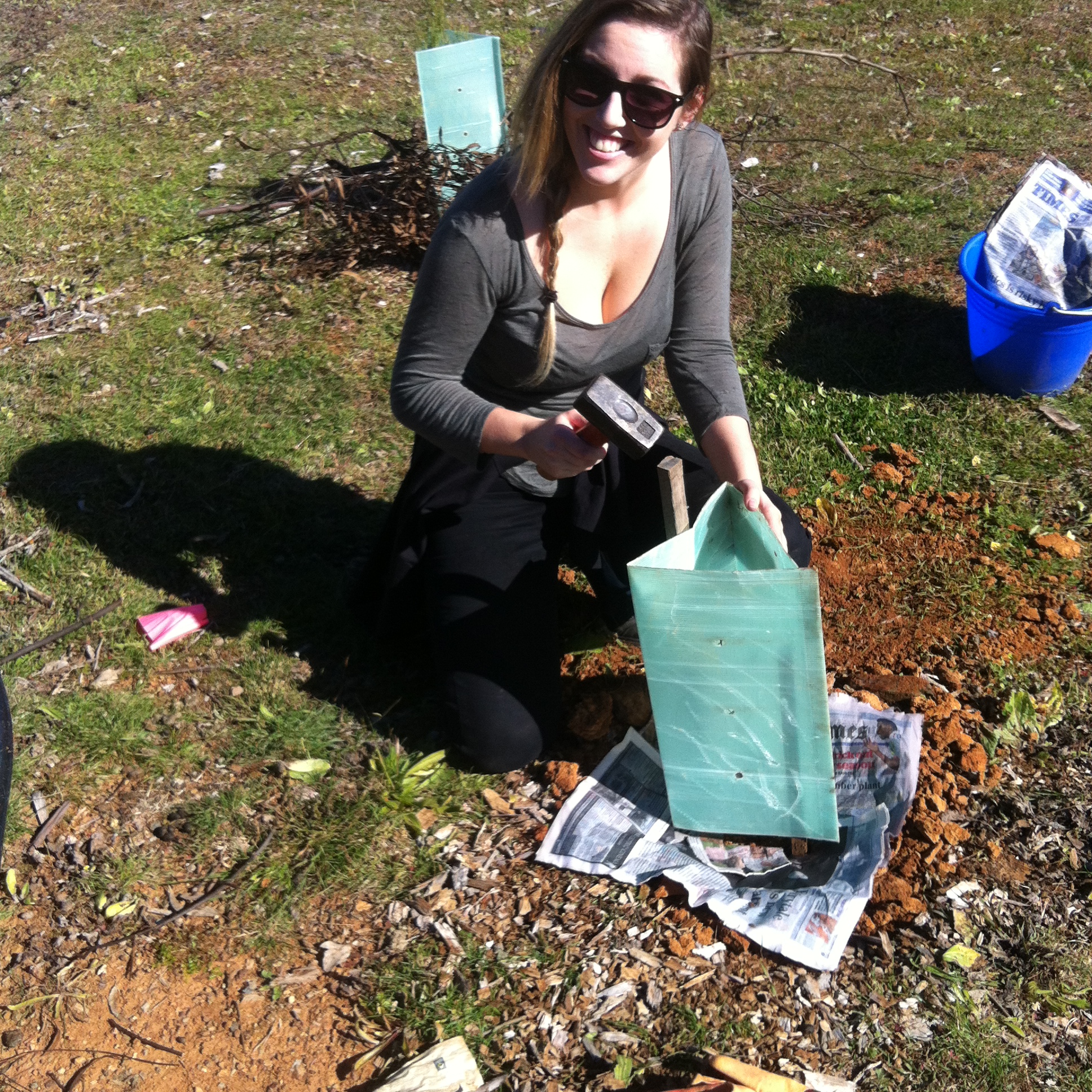
Friends of Mount Majura is a grassroots conservation project that is made up of a small group of people who meet every Friday at the Mount Majura nature reserve east of The Fair, North Watson Canberra . After meeting the leader of Friends of Mount Majura; Waltraud; a bright, lovely chatty lady; my concerns about lacking experience melted away. All the volunteers I have met from this group have been warm, polite, and in no way judgemental or smug. Various activities I have been involved in include; woody weed spraying, planting of trees, and spreading woody debris to prevent kangaroos from eating young samplings. These and other various activities aid in the restoration of the endangered Yellow Box-Red Gum Grassy Woodland present in the area.  

Hammering in a stake to stop the guard from swaying, while smiling for the camera.

Hammering in a stake to stop the guard from swaying, while smiling for the camera.

Volunteering with Friends of Mount Majura has compounded in my mind that grassroots projects are just as essential as high-level policy development. So I hope I have shed some light on how to make a positive contribution to your earth, and maybe even get yourself some good karma.

By Olivia Morley u5179965

Bibliography
Cambridge Dictionaries (2014). “Grassroots”. Cambridge Online Dictionaries. Last accessed 8/05/2014  

Horwich, R., Lyon, J., & Bose, A. (2011). What Belize can teach us about grassroots conservation. Solutions. May–June, 51-58

Posted in Uncategorized | 1 Comment

Do not ignore the role of fungi in biodiversity conservation

What is the largest living organism in the world?

An elephant?

Image

A blue whale?

Image

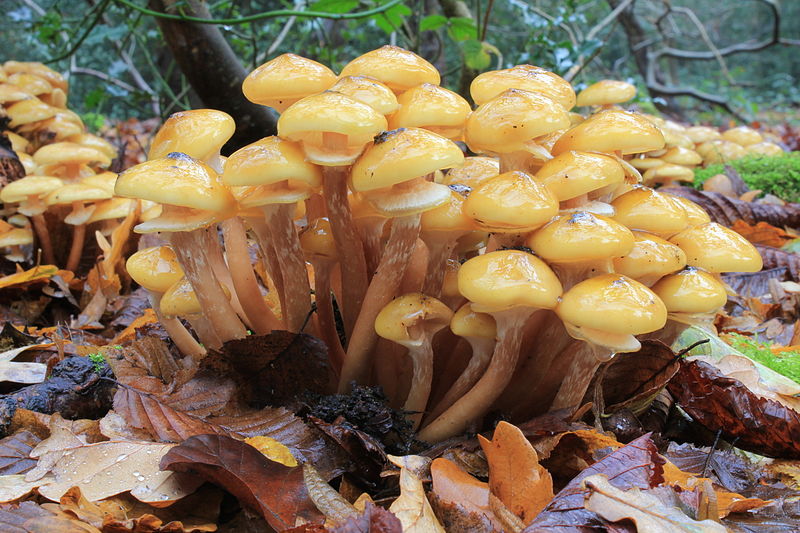
No, it is not an elephant, or a blue whale. It is, Armillaria mellea, a species of Honey Fungus.

Image

Could it be true that this small fungus could be the largest living creature in the world?

Yes, it is true.

Researchers in the US found the fantastic fungal colony shown above in the Malheur National Forest in the Blue Mountains of eastern Oregon. It is growing through the earth and roots of trees, covering 890 hectares (2,200 acres) of land – an area equivalent to about 1,220 football pitches (2003). From 2003 to 2007, the fungus has spread across an area equal to 1,600 football fields. But experts predicted the massive fungus could lose a significant portion of its mass if it falls victim to a major nature fire.

Honey fungus is a very destructive forest pathogen. It is known as a ‘white root’ fungus, and will attack the roots of a wide range of trees, shrubs, and woody climbers. Are they worth to be considered in conservation?

Definitely yes. As a part of biodiversity, they have a right to live in their own way.

Honey fungi are lucky because they grow big enough to catch people’s attention. Compared to honey fungus, most other fungi are not so lucky. Fungi are perhaps the most unappreciated, undervalued and unexplained organisms on earth.

It is estimated that about 1.5 million fungal species exist, which is 5 times the number of plants species. Scientist believe that only 5% of all fungi have so far been discovered. For most of species, little is known about their biology. In contrast to the honey fungus, the majority of fungi are microscopic,and they do not usually produce structures that are visible to the naked eye.

The inconspicuous nature of most fungi means that they have not attracted much attention, and as a result, little is known about their biology. Similarly, their role in nature conservation has also been overlooked.

To date, fungi are not included in any international biodiversity agreements. The IUCU global Red-list comprises about 45,000 species; however, there are only three fungalspecies listed. Does this mean that fungi are not important and donot need any protection?

No. Fungi are fundamental to healthy ecosystems, and essential to the sustainability of biodiversity. They are needed to support the functioning of major ecosystems. For example, they are useful in litter decomposition, nutrient cycling and energy flows in ecosystems. Moreover, the transition of nutrients from soil into plants also relies on the help of fungi, mainly mycorrhizal fungi. Nearly 97% of plants have symbiosis with mycorrhizal fungi. Can you image the situation without them?

While most of our attention has been directed toward the role of animals and plants in biodiversity conservation, we may have missed some other important agents influencing ecosystem biodiversity.

We should not ignore fungus just because most times we cannot see them. When considering ecosystem biodiversity, we should take into account the roles of all organisms so that any action we take to conserve biodiversity will be effective.

Chenglei Wang

Further reading

Dahlberg, A., Genney, D.R. & Heilmann-Clausen, J. 2010, “Developing a comprehensive strategy for fungal conservation in Europe: current status and future needs”, Fungal Ecology, vol. 3, no. 2, pp. 50-64.

Dreisbach, T.A., Schmitt, C.L., Ferguson, B.A., Filip, G.M. & Parks, C.G. 2003, “Coarse-scale population structure of pathogenic Armillaria species in a mixed-conifer forest in the Blue Mountains of northeast Oregon”, Canadian Journal of Forest Research, vol. 33, no. 4, pp. 612-623.

Mueller, G.M. & Schmit, J.P. 2007, “Fungal biodiversity: what do we know? What can we predict?”, Biodiversity and Conservation, vol. 16, no. 1, pp. 1-5.


Posted in Uncategorized | 1 Comment

Tackling woody weeds at Mount Maura Nature Reserve

The last few Fridays, myself and a few other biodiversity conservation students have been participating in the Fridays @ the fair activities at Mount Majura Nature Reserve. Each week a small group of volunteers gather to undertake activities aiming at restoring the landscape. The activities that we undertook were removing weeds, planting trees and placing small branches around the newly planted trees.

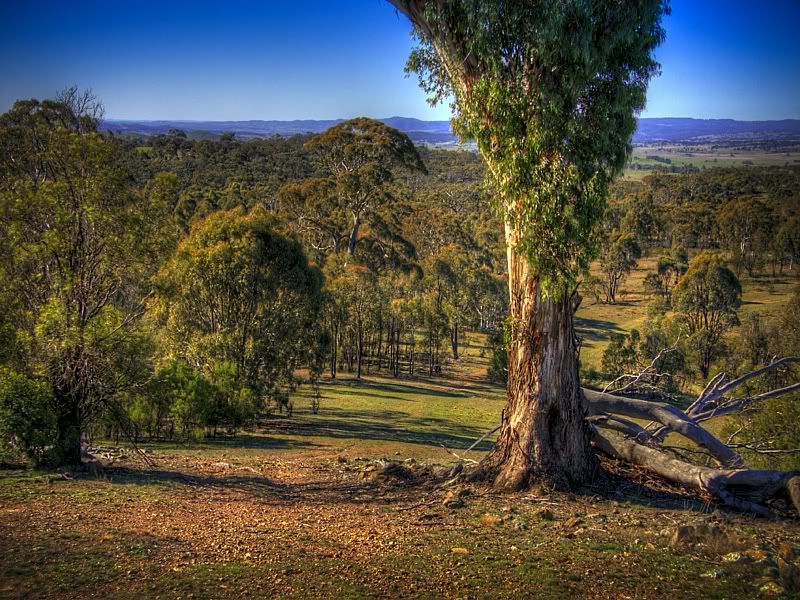
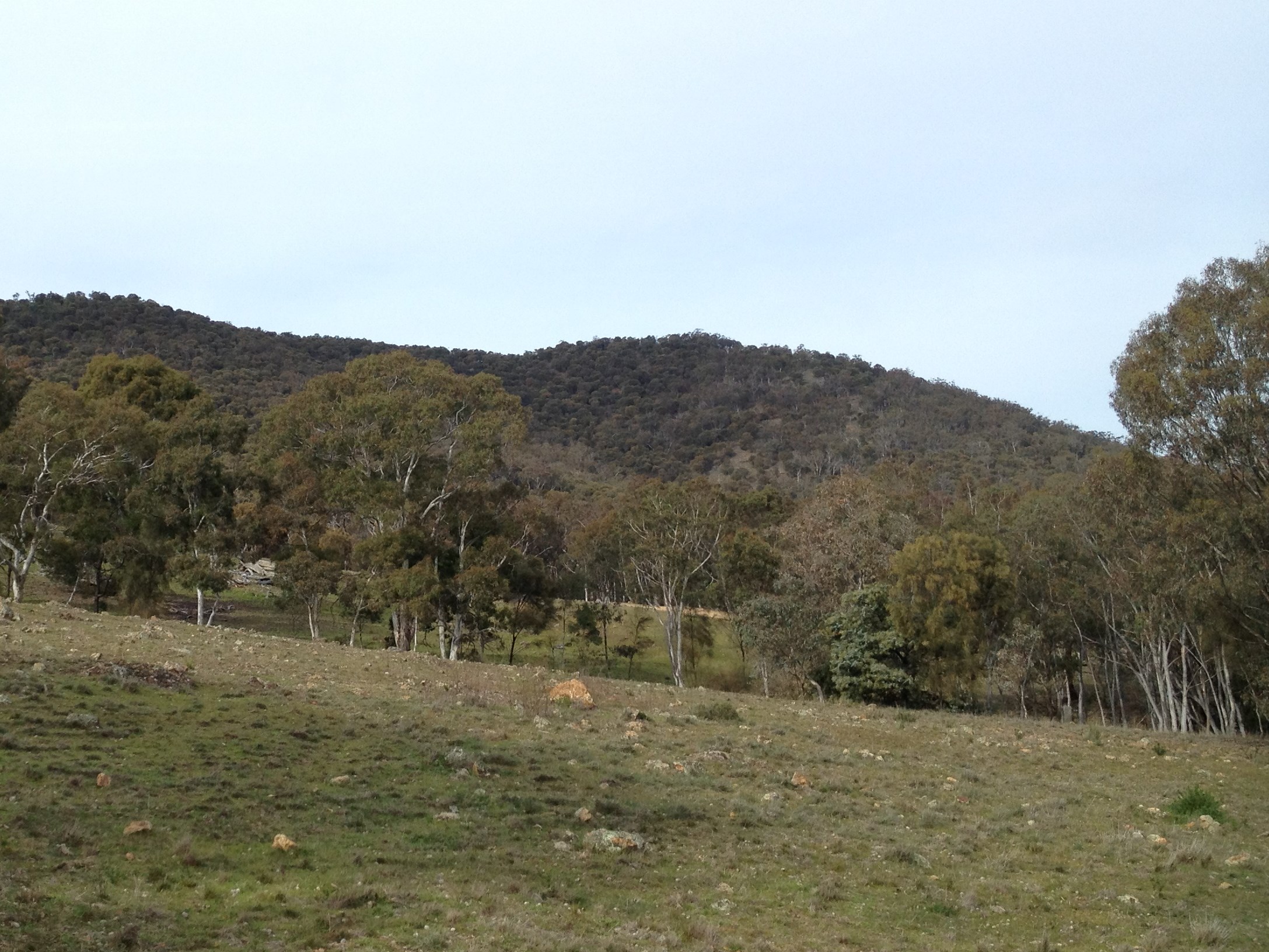
Mount Majura Nature Reserve - view from the car park

Mount Majura Nature Reserve – view from the car park

The major activity that I undertook, was removing weeds, which is a key problem particularly in the bushland parts of the reserves. Birds often carry the seeds of weeds from suburban garden to the bushland of the reserve. In addition, weeds were introduced by the food which horses consumed at the pasture paddock, which is adjacent to the reserve.

The weeds, that are found at Mount Majura are often referred to as woody weeds and include Cootamundra Wattle (Acacia baileyana), African Olive(Olea europaea subsp. africana) and Briar Rose (Rosa rubiginosa). These weeds germinate and overpower the native plants hence preventing natural regeneration. This then changes the natural balance of the ecosystem and has an effect on the resources available for birds. The weeds were removed by first cutting the stem and then the exposed stem was immediately sprayed using a prepared poison mix. Depending on the size of the vegetation either secateurs, shears, axe or chain saw were used.

Tackling a large african olive

Tackling a large african olive

Another activity that was undertaken whilst volunteering was placing small branches around the newly planted trees. This was done to ensure that kangaroos do not eat the small planted trees hence ensuring they are able to grow. One week whilst we were volunteering large heavy logs were being moved into the bushland part of the reserve. Both these measures aim to recreate the natural environment and are examples of coarse woody debris. Coarse woody debris has numerous benefits such as providing food and habitat for organisms, nutrient cycling and storage and soil formation and retention (Shorthouse et al, 2012, 117-118).

Large logs to be moved around the reserve

Large logs to be moved around the reserve

Despite these positives, the reserve is across the road from a housing development. The reserve is very easy to access and it is possible that some of the logs or any of the wood in the reserve could be taken for firewood. This occurred frequently before the area was declared a reserve. At Mulligans Flat, the large logs have numbers engraved on a small silver plate on the logs. At Mount Majura, this could be utilised to deter the logs from being taken and being able to determine the number of logs taken, should removal occur. In addition, if any research was undertaken in the area in the future, the identification numbers could come in handy.

After this experience, I have a greater appreciation for the work and passion that small scale community groups have for the long term conservation of the environment. In particular their commitment and dedication, to encouraging awareness and understanding by passing on their vast knowledge to us students. In the future, I aim to continue attending because of my positive experiences.

Emma Gillies u5180563

Shorthouse, D., Iglesias, D., Jeffress, S., Lane, S., Mills, P., Woodbridge, G., McIntyre, S. and Manning, A. (2012). The ‘making of’ the Mulligans Flat – Goorooyaroo experimental restoration project. Ecological Management and Restoration, 13(2), pp.112-125.

Posted in Uncategorized | 1 Comment

Friends of Mount Majura

Heading out to Mount Majura for the first time, I was quite nervous.  I had been there before, when I was little (apparently, I cannot remember), but nothing in the landscape looked familiar. Suddenly I had a feeling of déjà vu and realised we had been quite close  on one of the biodiversity conservation field trips, so at least I had some idea where I was.

Arriving early as I nearly always do, I waited at the entrance, apprehension again rising.  However, as the time ticked by, the nervousness began to settle, other biodiversity students began to arrive. The day was cold and cloudy; rain threatening in the distance, a few of us checked our phones, to make sure the activity was still going ahead….

Landscape around Mount Majura

Landscape around Mount Majura

Mount Majura is a reserve is located on the outskirts of Canberra. It is an area of grassy woodlands and includes some areas of the critically endangered Yellow Box-Red Gum Grassy Woodland.

The Friends of Mount Majura aim to improve the site, but complete restoration is impossible, as it not known what species were on the site originally. I helped with two of their main projects, tree planting and removal of woody weeds.

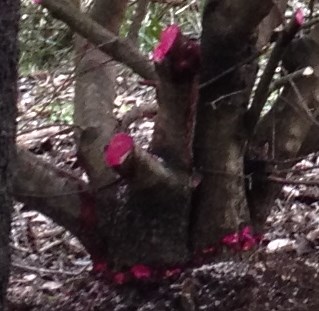
One of the main problems in the reserve is the presence of introduced weeds. Woody weeds are often removed using a cut and spray approach. Weeds are cut as near to the base as possible and then quickly sprayed with herbicide (Roundup), before the plant has time to activate its defence. A pink dye is added to the spray to make it easier to see where you have sprayed. In larger trees, a process known as frilling is undertaken. Frilling is similar to ring barking, with small cuts being made right around the base of the tree; herbicide is then sprayed into these cuts.

Frilling on a woody weed

Frilling on a woody weed

Some of the weeds are Australian species, which are not native to the area, such as Cootamundra wattle (Acacia baileyana), which out competes native wattles, such as sliver wattle (Acacia dealbata).

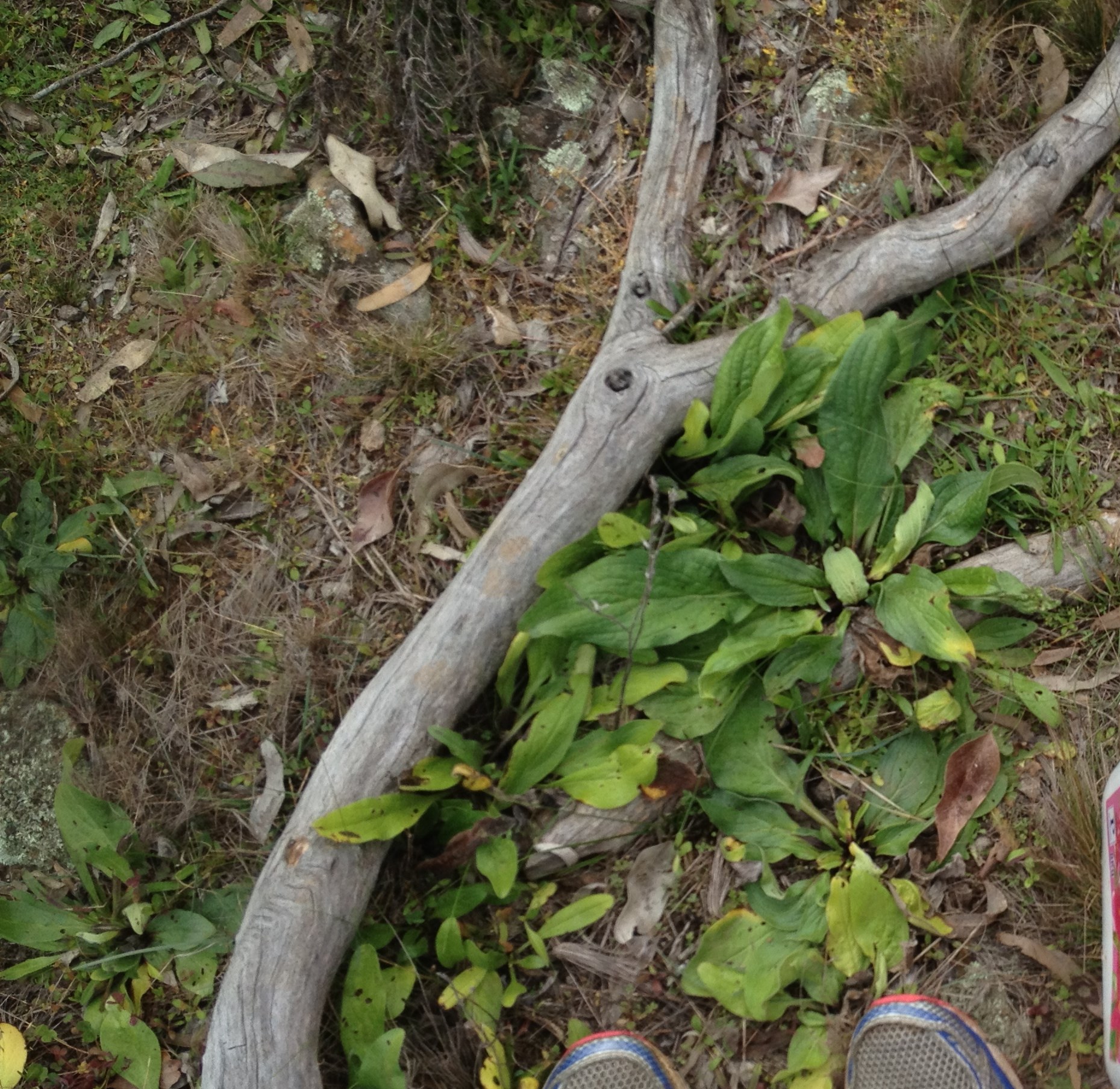
The removal  of woody weeds  usually leads to a succession of leafy weeds, such as Patterson’s Curse (Echium plantagineum).

Patterson’s Curse (Echium plantagineum)

Patterson’s Curse (Echium plantagineum)

Once the weeds are removed, the area is revegetated with by planting of species that are thought to be native to the area including sliver wattle and Apple Box (Eucalyptus bridgesiana).

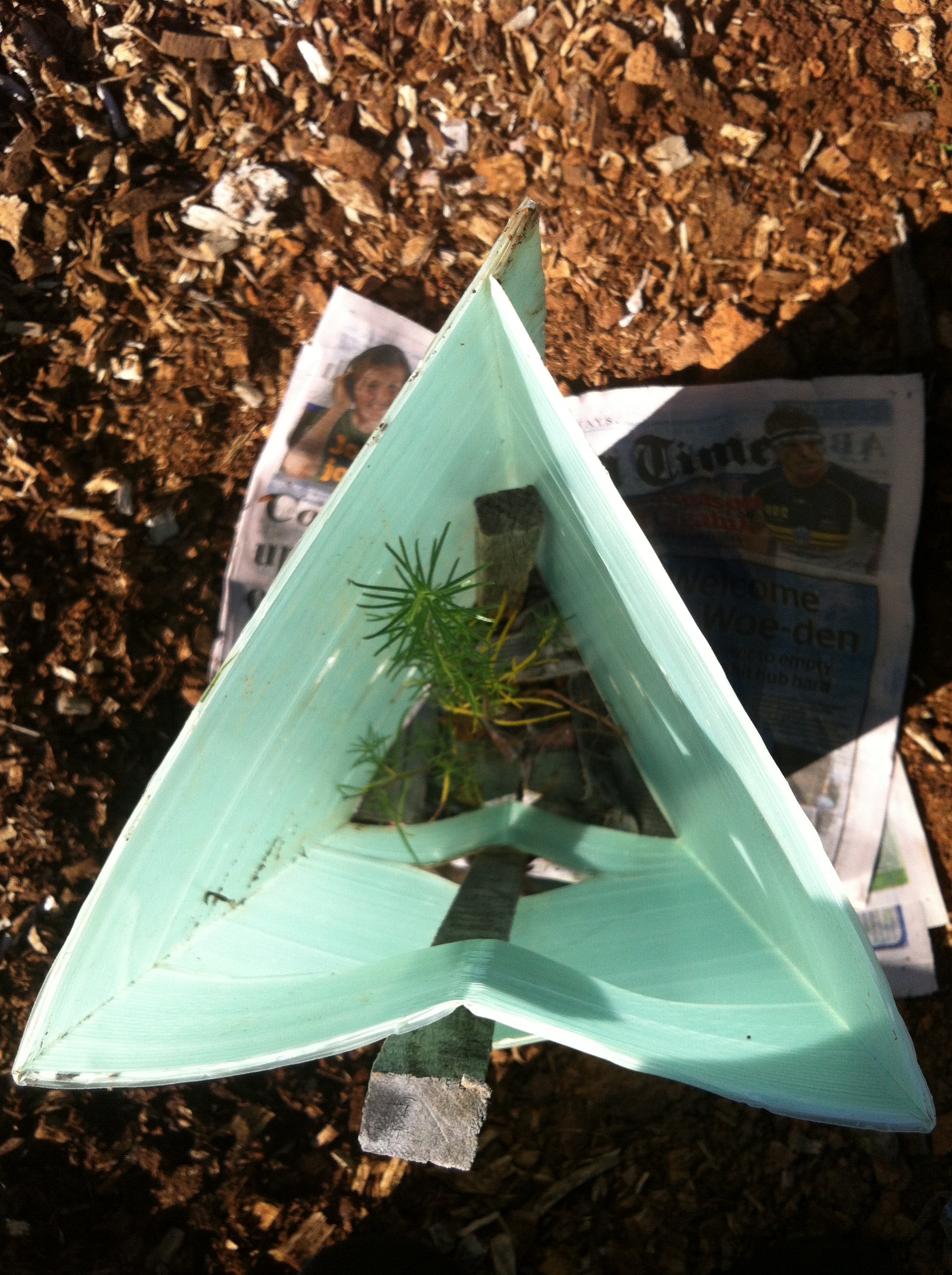
Care is taken to try to maximum the chance that each seedling survives. We placed water crystals in the hole to help maintain water supply to the growing seedling. The seedlings were then surrounded by newspaper and woodchips to prevent weeds coming up. Each seedling was then protected with a tree guard which is held in place by wooden stakes.

Seedling, with guard and newspaper before planting

Seedling, with guard and newspaper before planting

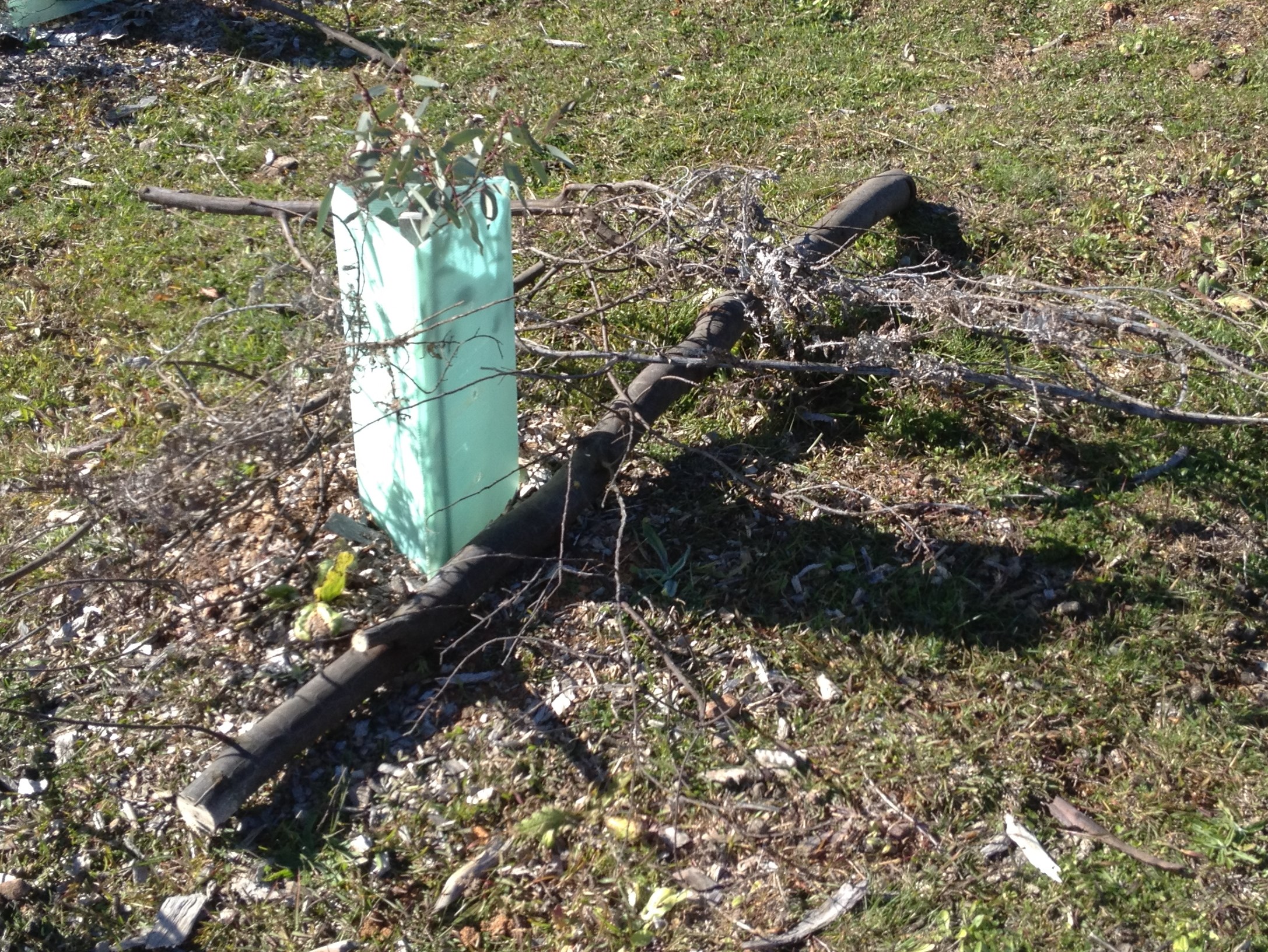
The tree guard is not enough, to prevent grazing by kangaroos. So we placed woody debris from dead Cootamundra Wattle around the tree guard to try to prevent kangaroo access.

Woody debris protecting seedling

Woody debris protecting seedling

My apprehension about volunteering was unjustified; volunteering was a really enjoyable experience. It was a nice atmosphere, you do it at your own pace and people were always happy to share their knowledge.

Tegolin Spink


Posted in Uncategorized | 1 Comment

Re-planting trees: La Sabana Metropolitan Park

What might be the objectives of creating a park in the capital of a country? Find a space for families to enjoy a lunch surrounded by nature, athletes escaping from the rivers of concrete and provide a lung full of biodiversity.

In the 70’s when the realization of La Sabana Metropolitan Park was raised in the capital of Costa Rica, many people were happy that they would finally manage to have a green island among many buildings and transit. Then, the government allocated a budget for the transformation of an airport in an area full of trees, a beautiful lake and sports facilities.

Vacaciones escolares,parque La Sabana.Foto.Manuel Vega 26-01-11.Photo by aldia.cr

However, due to bad planning decisions, the developers planted about 50% with non-native trees. Some species were pine, cypress and eucalyptus. The latter comes from Australia and have demonstrated that easily lose their branches in a tropical climate; causing large amounts of debris on sidewalks and a latent danger to people; also many of these trees become sick and die. Another problem is that around the non-native trees, it is difficult to see birds, and bees are scarce.

 7782623562_3489bc1bc1_b 7782624974_7223d9e742_b

Photos by Unanuevasabana

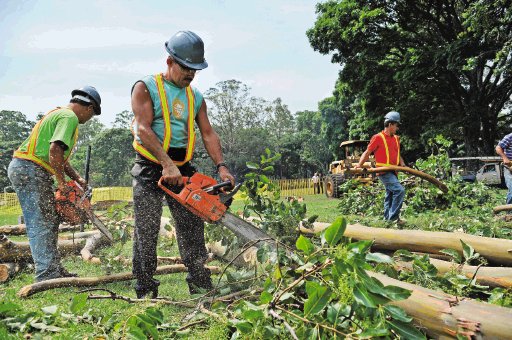
Therefore, the government and other institutions such as Inbio started a plan for re-planting La Sabana with native trees. On 2009, all the old and non-native trees were identified and marked to be removed. Also, with the collaboration of local sawmills, the timber in good condition were used to build chairs and tables for the park facilities.

3218475_0Photo by aldia.cr

During the logging process, many complaints emerged from citizens who claimed that the government was damaging the biodiversity of the park. Then, a big information campaign started explaining to the citizens the benefits of the project; as a result, local organisations provide their help to support the project.

9563987143_34707dc643_bPhoto by Unanuevasabana

Five years later, it is amazing to see the campaigns with volunteers planting trees, which by the way, are more than 2,000 and it is expected to reach 5,000 trees. Moreover, it is exciting to watch the native trees beginning to fill with fruit and flowers; and some people have already seen species of birds and insects that was not common to see in the park.

Then……. the project is on track.

8465114629_a0bf31bca5_b 8465115213_998e197cfb_b

Photos by Unanuevasabana

La Sabana Metropolitan Park is the example that creating a park is not simply to plant trees and cross fingers that everything works in favour of biodiversity. It is necessary to have initiative and set a well design plan to succeed.

Posted by Linette Alfaro Cordero


Posted in Uncategorized | 1 Comment

When you cross the whole world…

 Lucas Ribeiro
Sydney Opera House. Source: wikipedia.org

Sydney Opera House. Source: wikipedia.org

Uluru - Ayers Rock. Source: wikipedia.org

Uluru – Ayers Rock. Source: wikipedia.org

I am an Environmental Engineering student from Brazil. When I decided to come to Australia, I cannot deny, I had some preconceptions in mind. As in most people’s heads, the images that come up when they hear “Australia” is something like this.

Then, during my exchange course at ANU, this is what I’ve found.

ANU field trips.

ANU field trips.

ANU field trips.

ANU field trips.

I saw the richness that Australia has, from rangelands to woodlands, open forests to rainforests. That’s amazing, I must say! However, not everything is perfect. Just as in Brazil, here we have some amazing landscapes under the “threatened” classification. This is the case of the Box-Gum grassy woodlands, in the tablelands region of NSW. These ecological communities have been heavily cleared and degraded along the years.


Greening Australia and Bush Heritage Australia, with the support of the Australian Government, are working to change this scenario. The Scottsdale Reserve (PDF) located 75km south of Canberra, is where they plan to deliver 300 hectares of Box Gum grassy woodlands. In 2013, a group of ANU students did a “planting session” for the Australia’s Forests course, with Dr. David Freudenberger. They planted about 400 seedlings!

My field work this year, 2014, with the same Dr. David, was to assess the survival rate of these seedlings. The last monitoring was carried on October 2013 and the assessment variables were stem height and “health score”. This health score was just a fuzzy way – when you put numbers for “how good/how bad” – to check if the seedlings’ health was getting better or worse. These numbers were: 0 for dead, 1 for poor health and 2 for good health.

Seedlings health, March 2014.

Seedlings health, March 2014.

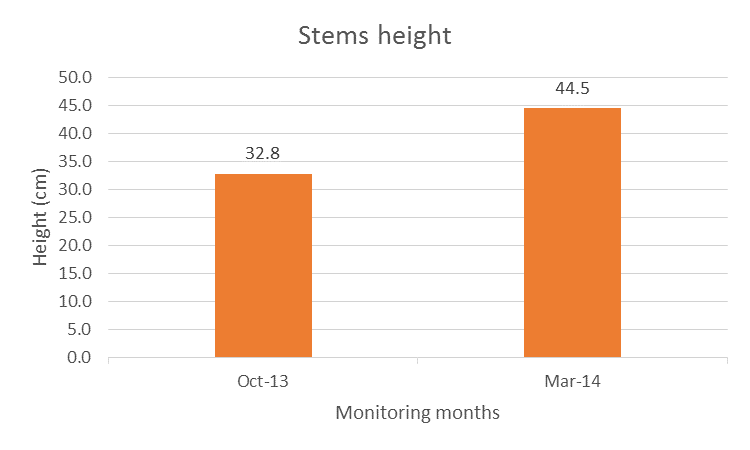
Stems height, March 2014.

Stems height, March 2014.

After one day of hard work, wandering around the scenic reserve, measuring stems, checking how the plant was doing, and which species it was, we got to some nice numbers.

First, in terms of health, among the 430 plants assessed, in October 2013 we had 146 dead or in poor health seedlings. However, in 2014, only 39 plants were in that situation, and just 21 were dead. This is a 95% survival rate, this is not a “just a few”! We did not only have a smaller number for worse cases, but from all the 430 seedlings, more than 380 showed improvement.

In terms of stem height, they also are doing very well, thank you! The mean stem height in 2013 was 32.8 cm and amazing 44.5 cm in 2014. “Oh, they grow up so fast…

These survival rates are encouraging numbers for this amazing project, which aims to deliver a big area with native species such as Silver wattle (Acacia dealbata), Snow gum (Eucalyptus pauciflora), Yellow box (E. melliodora), and many others.

As a foreigner amazed with this country, I have to say, projects like this deserve respect! I crossed the whole world, trust me!

PS: I even got my photo in the Australia’s Forests course advertisement!

ANU - AUstralia's Forests

ANU – Australia’s Forests

Posted in Uncategorized | 1 Comment