Bats of Bungonia

So who knows anything about bats? What does it make you think of? Wings of the night, vampires and scary dark caves, well this is far from the truth.
It was around 4 in the afternoon when I was picked up to head off for a night of bat watching.

P1030197b (3)

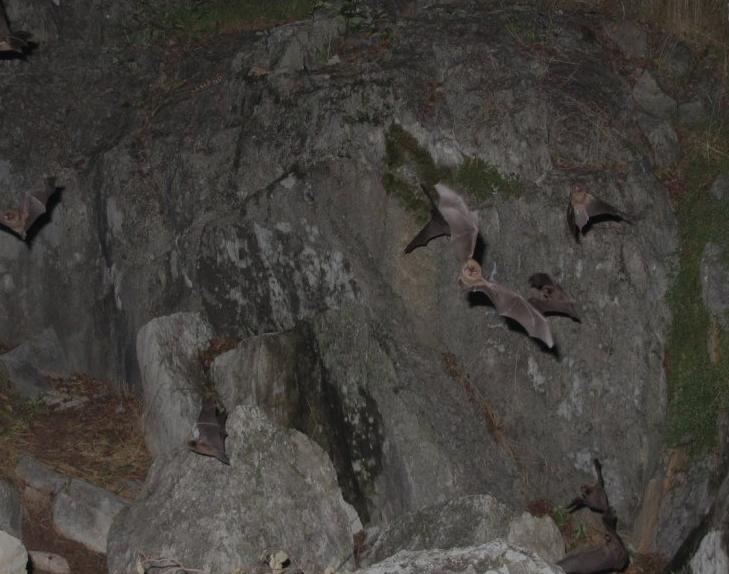
Doug Mills was the man in charge collecting data on bat numbers at a number of locations in the area, that night we were off to Bungonia National Park to look at a population of Eastern Bentwing Bats in a cave there.

Already in the car was a friend Simone and on the way we picked up a mate of Doug’s along for the ride. Stopping for pizza on the way and eating it at a picnic table in the national park I could definitely see myself being cut out for this line of work. After the pizza we headed off down to the cave just before sunset to set up camera equipment to get a few happy snaps of the bats as they headed off for a breakfast of scrumptious moths and other flying insects.
20120112_205755c (2)

The cave itself was in a gully surrounded by the Australian bush deep and dark with a steep drop just inside the cave mouth down to where the bats slept. Settling down in the quiet of the bush with the sun setting it was a peaceful scene.
The bats came out a few at first in the dim light of dusk, the brave few daring the slight light, or maybe just the hungriest. Before long though there was a steady stream of them pouring out of the cave in there thousands. A population of around 25,000 was estimated in this cave and they sure were in a rush for dinner flooding out at around 30-40 bats per second at the peak. It was an amazing scene there in the dark hearing the flutter of hundred of wings at once and feeling the wind against your face as a bat would dart by and of course the occasional drop of what i could only hope was rain……. These bats due to their longer fore-wing were incredible fast and agile, the speed and mobility was incredible. As they started to slow down we headed back to the rangers hut for a brief nap before a 3am start to record numbers.

P1030195d (4)

After barely having time to lay my head down on the pillow we were back up again and out by the cave setting up equipment and settling down to enjoy the show. Using an infra red camera and a piece of software originally designed to track missiles Mr Mills recorded what we could barely see and displayed it clear as day.
Then back to the car and back to Canberra, an incredible night over already, I couldn’t wait to go bat watching again.

Tim Andrewartha
Photos Courtesy of “Doug Mills. NSW Parks & Wildlife, Office of Environment and Heritage.”
Posted in Uncategorized | 1 Comment

Forbidden Weeds and Flying Rabbits: Conservation at Mount Majura

Over the last month I have had the pleasure of working with a small and dedicated team known as the “Friends of Mount Majura” (FOMM). This team meets every Friday at 9:30am (also known to most university students as the crack of dawn) and undertakes conservation activities in the nature reserve located on Mount Majura.

Conservation efforts on Mount Majura are focused on enhancing the severely altered and critically endangered Box-Gum Grassy Woodland landscape through increasing diversity, reducing erosion, controlling weeks and monitoring ecosystem health. This is achieved through a wide range of activities carried out by volunteers, including:

–          Seed Collection

–          Planting

–          Monitoring and care of young plants

–          Grass seeding

–          Threat monitoring

–          Weed control

Volunteer organiser, Waltraud Pix, highlighted two major threats to conservation activities on Mount Majura; the presence of “forbidden weeds” in the surrounding landscape, and plant predation by the eastern grey kangaroo.

Forbidden weeds are found in the neighbouring horse paddock which lies under different legislation and governance than the Mount Majura nature reserve and therefore cannot be managed by the FOMM. This creates a situation where the conservation efforts on Mount Majura are being undone by the constant threat of the impeding weeds from neighbouring properties.

I found this situation particularly interesting as it highlights the need for a “systems approach” to conservation. A systems approach suggests that landscape conservation cannot be carried out in isolation; contributing factors that are often out of the control of management actions, can contribute negatively to conservation efforts.

Conservation efforts were also threatened by the predation of young plants by the eastern grey kangaroo. Plants protected to a height of around 50cm were observed to be predated in their upper leaves. Volunteer leader Waltraud Pix instructed that this was unlikely to be the work of flying rabbits, but rather the little documented dietary habits of the eastern grey kangaroo.

To date, the diet of the eastern grey kangaroo has been assumed to consist largely of open grassland grazing, however these observations by the FOMM suggest differently. Many young trees planted by volunteers have been grazed up to a height exceeding a metre, with evidence of the eastern grey kangaroo’s characteristic method of stripping branches seen.

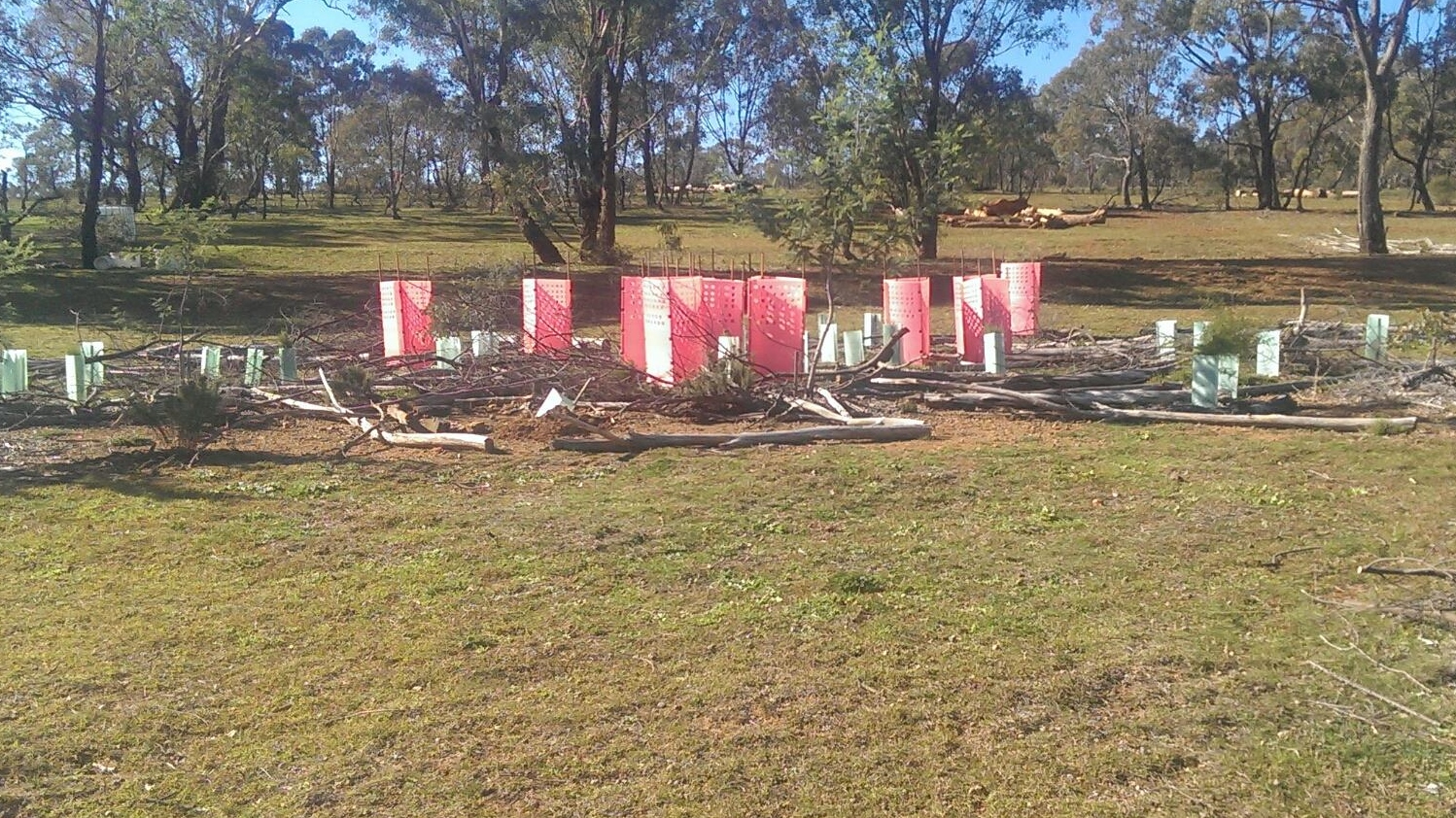
I participated in conservation activities to prevent this predation, which included the construction of taller plant guards that completely covered the young plants, preventing predators from grazing them, and the use of dead woody debris to create a physical buffer zone around the plants.

Plant guards surrounded by a barrier of woody debris to prevent predation

Plant guards surrounded by a barrier of woody debris to prevent predation

Although the predation had a negative effect on the environment in terms of conservation work, the occurrence provided interesting insight into the dietary habits of the eastern grey kangaroo. Assuming the continued non-existence of aerodynamically gifted rabbits in the area, the likelihood of eastern greys having a much more diverse diet than first thought is highly likely.

This experience opened my eyes to the diverse range of conservation actions that can be taken to enhance a degraded landscape, as well as the unexpected threats to both landscapes and conservation efforts.

Sarah Noad

U5182581

Posted in Uncategorized | 1 Comment

A note on leaf blowing and biodiversity conservation.

Autumn has rolled in once again, coating the streets with golden, deciduous leaves. With this beautiful phenomenon comes the mildly confusing sounds of suburbia’s most loved invention; the leaf blower (perhaps second to the 10-in-1 Garden Tool).

The Leaf Blower Culture is recognised by many as a seemingly pointless exercise in domestic vegetation control. Application of this unreasonably expensive tool seems to do a poor job of keeping paths/driveways clean in perpetuity, creating useful piles of leaves or satisfying the indiscriminate goal of the blower wielding battler.

However, we can all appreciate the peace of mind that can come from a clean living environment. Its just, if you have to pick a dull activity to pass your weekend, why not make it useful?

Scottsdale Reserve is a property owned by Bush Heritage Australia, a non-profit organisation that aims to protect pockets of biodiversity around the country. The reserve was acquired from private ownership in 2006, covering 1,328 hectares along side the Murrumbidgee River just south of the ACT. Significant Box-Gum Grassy Woodland vegetation communities persist on the over grazed hills, with not a deciduous leaf in sight.

The monitoring of efforts to conserve biodiversity are recognised as lacking in most cases. Basically this means that many programs with good intentions, do not deliver outcomes because no one bothers to go check the result against the original goals. This is where I come in, along with my colleagues Riva and Lucas:

OLYMPUS DIGITAL CAMERA

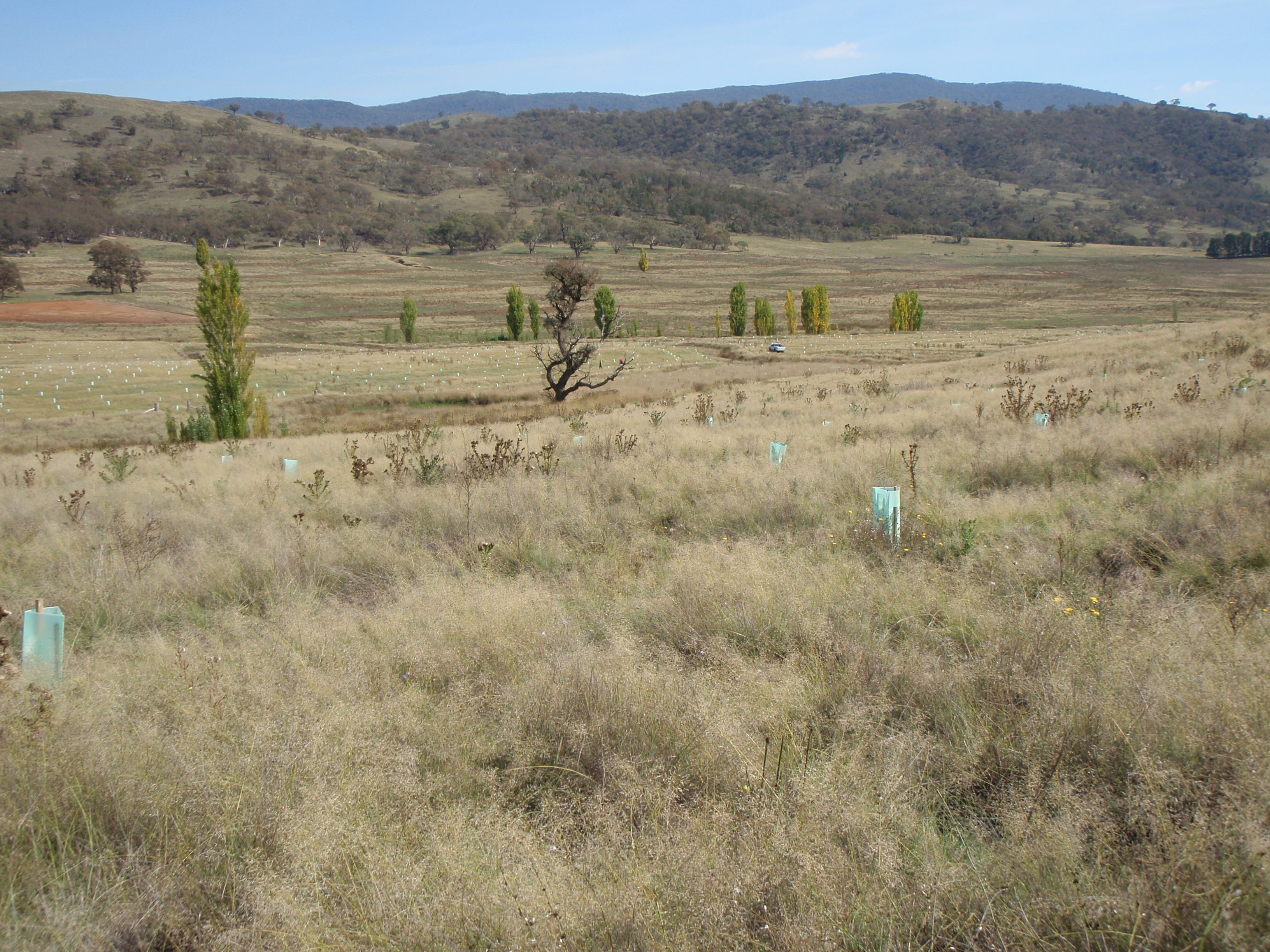
The restoration project at Scottsdale, run by Peter Saunders and Sandy Gilmour, is an attempt to recover a degraded farm and return it to a biodiverse community. One of the main challenges is removing African Lovegrass. Don’t be fooled by the name, there is little love for this weed among the locals. Like many weeds, originally introduced with good intentions; to control erosion, it now chokes out all native grass species:

OLYMPUS DIGITAL CAMERA

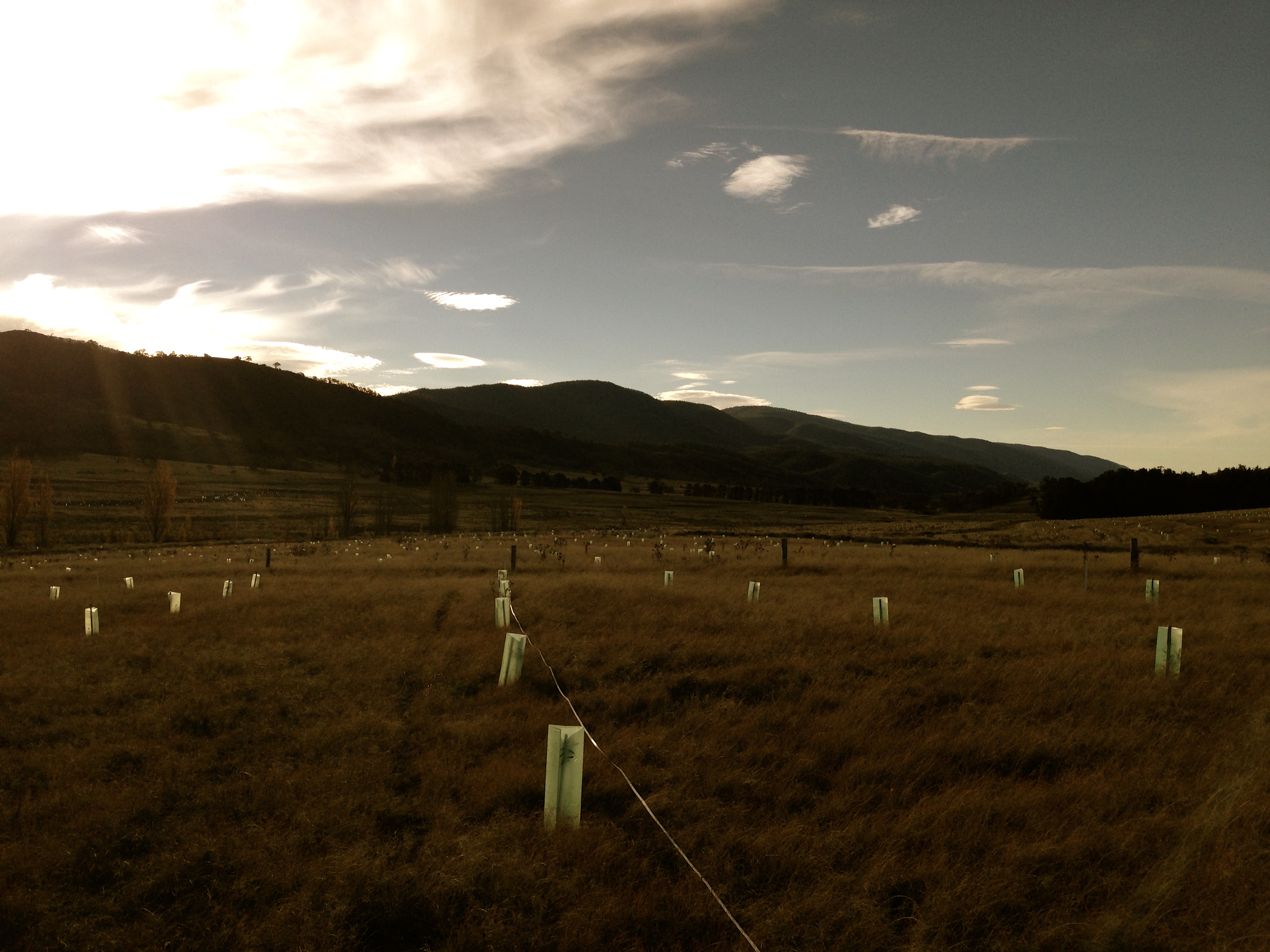
The plan at the reserve is to try and grow a selection of native eucalypt and acacia species in order to shade the grass and eventually outcompete it. The plantings, on lower to mid slopes, have been progressing over the last two years thanks to Bush Heritage staff, volunteers and ANU students.

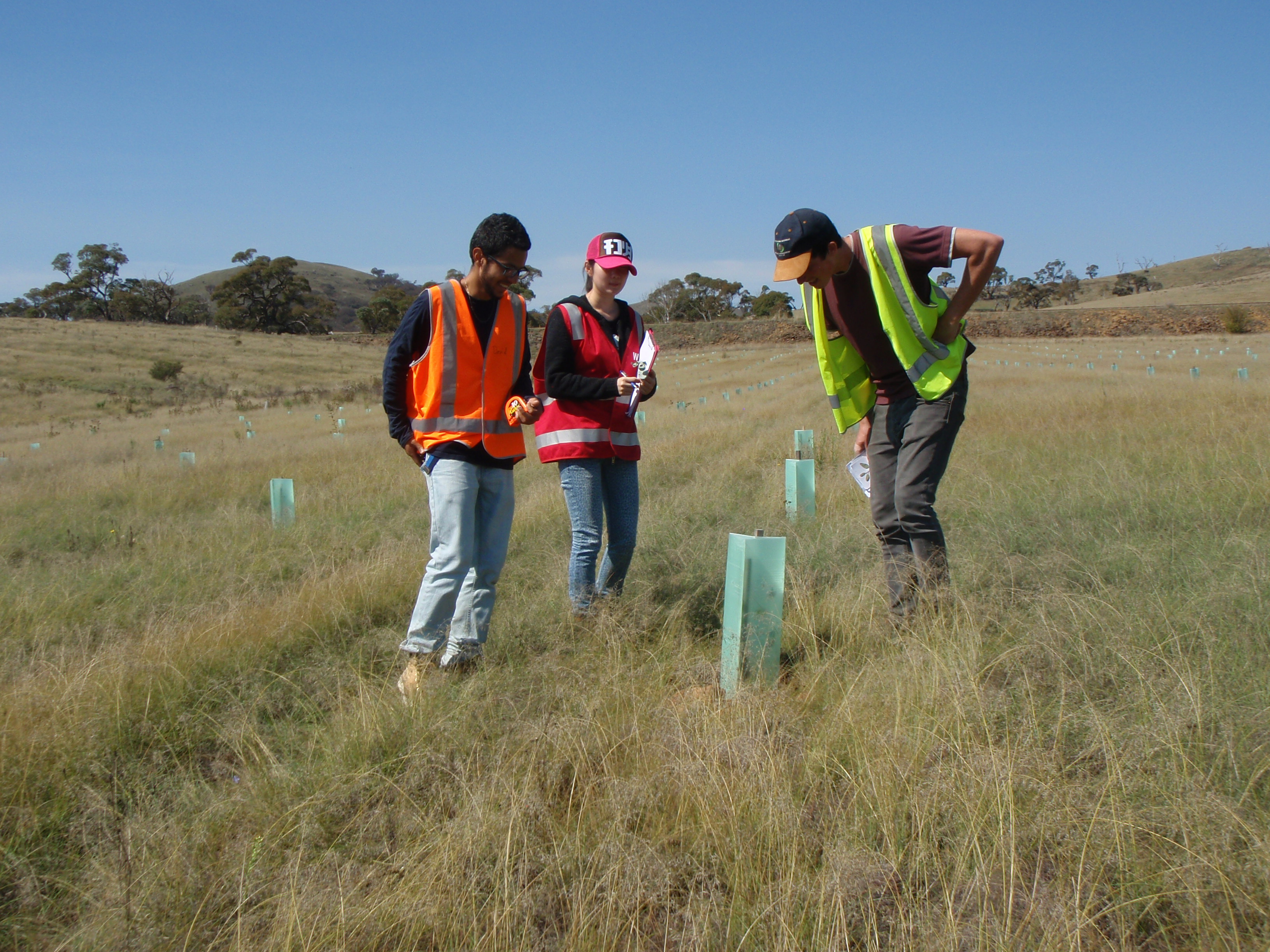
Good monitoring always establishes a base rate or control sample in order see if management changes are changing the community of interest, in the way that was intended. Lucas, Riva and myself, as good monitors, spent a day identifying species and growth habits of the plantings. The importance of this job was obvious as indicated by the staff of ANU and Bush Heritage.

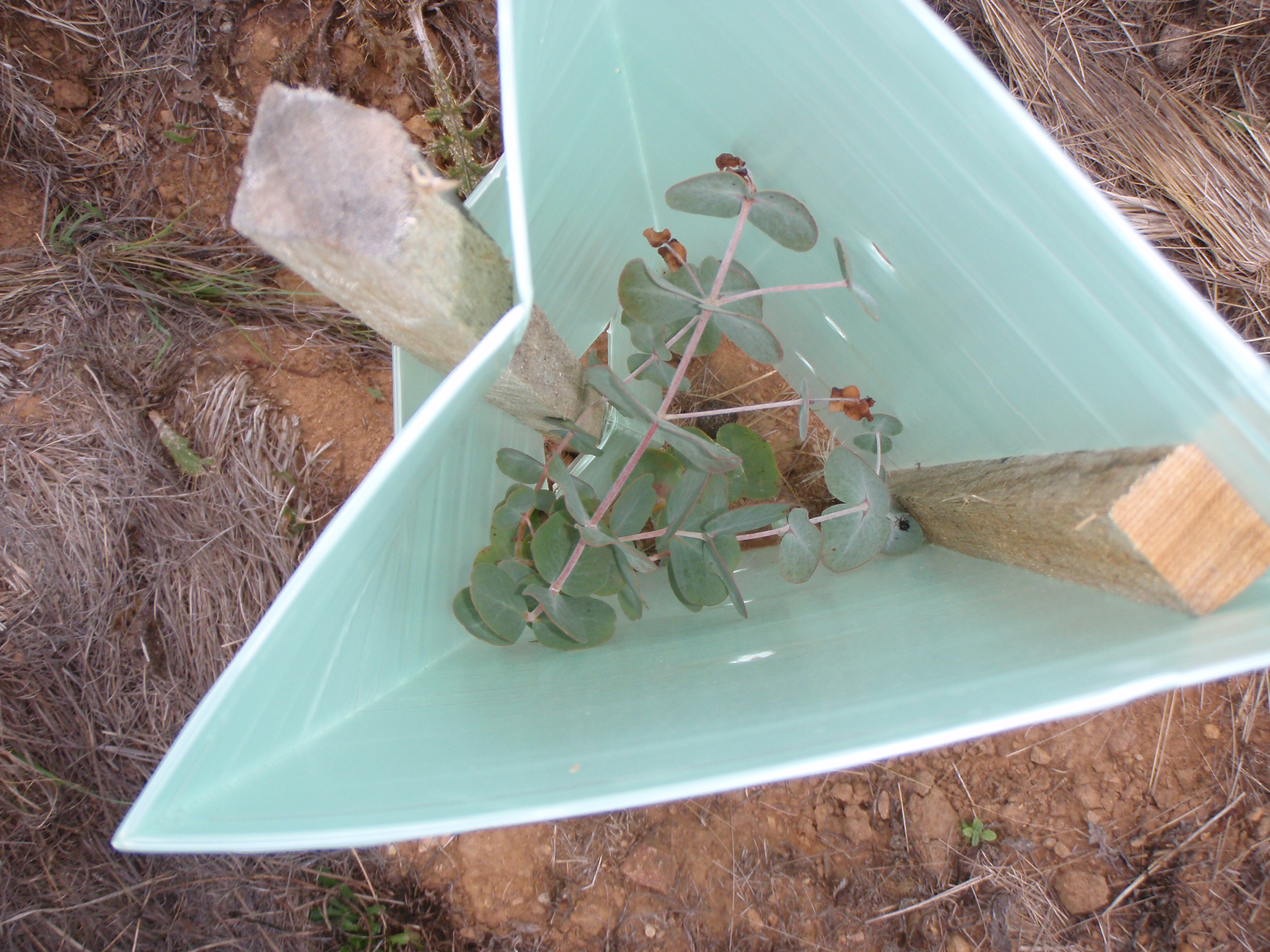
We spent a considerable amount of time peering down tubes such as this:

OLYMPUS DIGITAL CAMERA

Some research suggests that the presence of biodiversity is not necessarily attractive to most people (exclude the obvious Red Panda and Slow Loris). This became apparent throughout the day.

So next time you feel inclined to dust off the old leaf blower, just consider, perhaps there is some biodiversity I could be monitoring.


Ivan Kotzur


Special thanks to Dr. David Freudenberger, and my colleagues in the field.

Posted in Uncategorized | 1 Comment


  • Victoria’s Secret

Central Victoria’s spectacular Yarra Valley is a popular tourism destination for Melbournites and those further afield. Amoungst its main attractions are many of Australia’s premier wineries, numerous high quality restaurants and the mighty Mountain Ash forests that dominate the landscape. The Yarra Valley was also one of the worst hit regions in Victoria’s 2009 Black Saturday fires.


  • My work experience

Having never visited this area before I was excited to begin my four day work experience with Laurence Berry, a Phd student at the ANU’s Fenner School of Environment and Society. In particular I was keen to experience the famous Mountain Ash- the tallest flowering plant in the world- close up. My task was to assist Laurence as we undertook fieldwork on the post-fire ecology of the Mountain Brushtail Possum as part of a broader study on the role of fire in land management. I was warned that this work experience would involve some serious hard yakka and it didn’t disappoint! The four days began with 6 a.m. starts and late afternoon finishes. Most of our time was spent tracking and laying traps for radio-collared possums that Laurence had caught previously. Unfortunately this entailed a lot of bush bashing through some thick fire regrowth on steep terrain, often with multiple possums and traps in tow. Other tasks were to measure and microchip the captured possums and survey the vegetation at trap sites.

Image

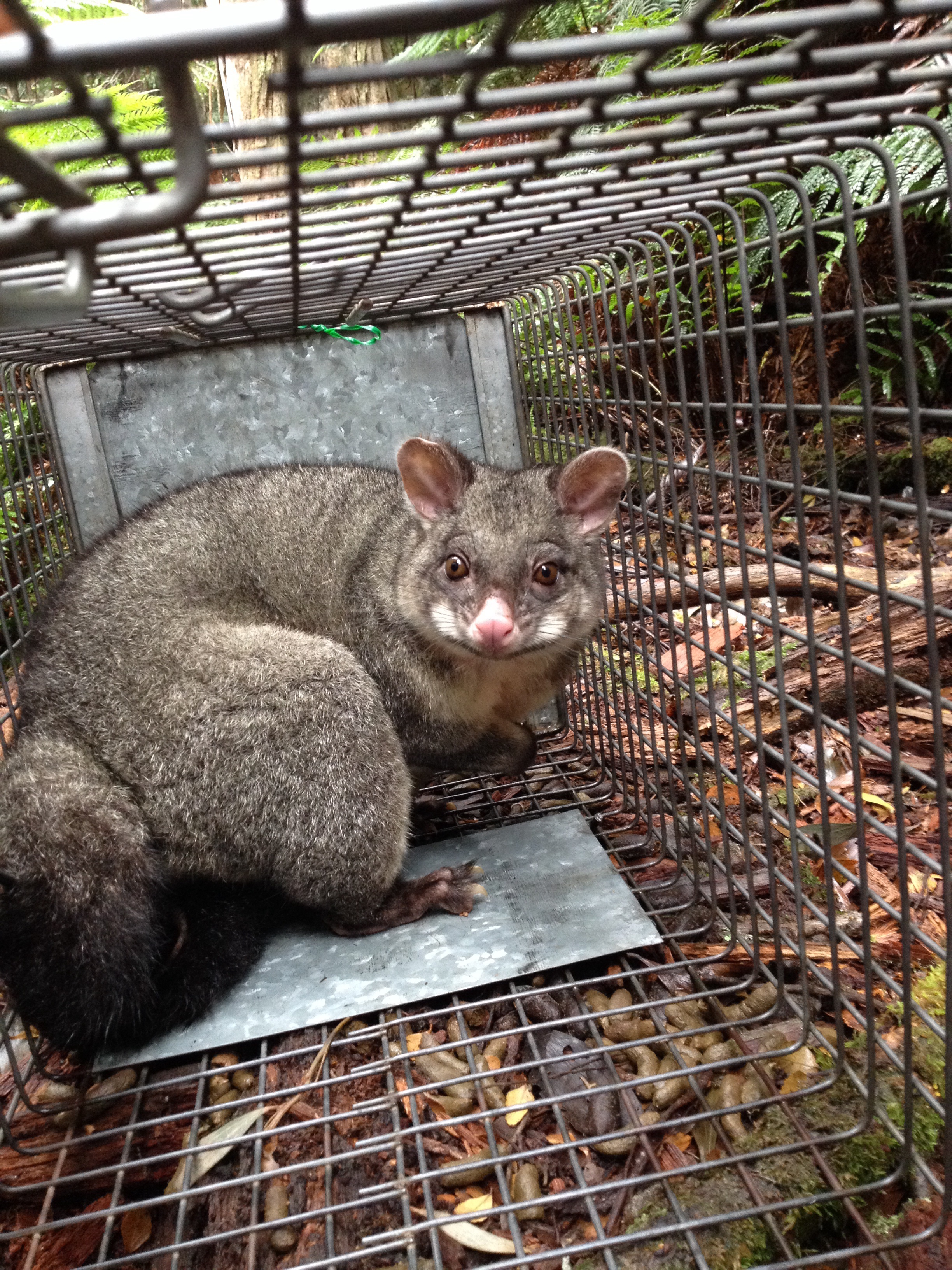
Got one! A Mountain Brushtail Possum in a cage trap.


  • Biodiversity issues

Over my four days in the Yarra Valley I gained a brief insight into some of the biodiversity issues in the region. Logging these forests has traditionally been the economic backbone of the region and to this day employs a large number of locals in forestry and related industries. Nowadays tourism is increasingly important as the timber industry regularly incurs substantial losses and is largely sustained by taxpayer subsidies. Leading experts on this forest such as the ANU’s David Lindenmayer have noted that past and current forest management in this region is ecologically unsustainable. For instance, critical habitat elements such as hollow-bearing trees are being depleted much faster than they can be naturally produced by the forest. This puts species such as Victoria’s faunal emblem- the Leadbeaters Possum– under grave threat of extinction.

Image

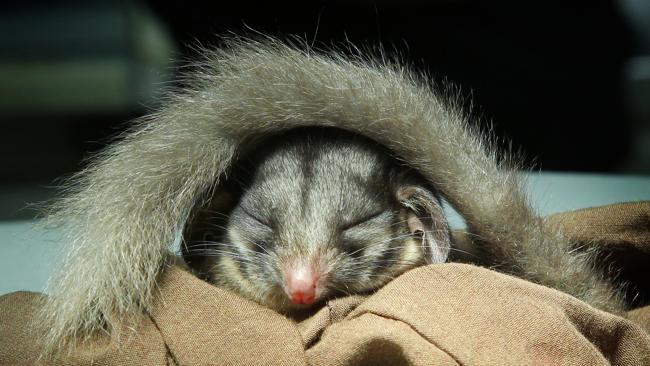
The Leadbeaters Possum- the Mountain Brushtail’s critically endangered (and critically cute) cousin. Picture: David Caird. Source: News Limited.


  • Friends with benefits

As a trainee forester I am interested in the many timber and non-timber benefits that forests provide for society. Mountain Ash timber is light brown in colour, with a consistent straight grain, it is durable and easy to work with. It has a wide variety of uses including construction, wood chips, plywood and high-grade furniture. But wait there’s more! Not only do these forests produce wonderful timber but they also store more carbon per square metre than any other forest in the world! They also purify Melbourne’s water supply, support amazing biodiversity and provide fun recreational pursuits like mountain biking and bush walking. On a deeper level the forests are places of relaxation and spiritual fulfillment, big Mountain Ash trees inspire awe and wonderment and attract visitors from afar.

Image

Working hard or hardly working? Taking time out to pose with a couple of big Mountain Ash.


By Patrick de Jong

References  

Edwards, D. (2010). Planetary Spirituality. Compass. 44, 16.

Keith, H., Mackey, B.G. & Lindenmayer, D.B. (2009). Re-evaluation of forest biomass carbon stocks and lessons from the world’s most carbon-dense forests. Proceedings of the National Academy of Sciences of the United States of America. 106, 11635-11640.

Lindenmayer, D.B. & Possingham, H.P. (1996). Ranking Conservation and Timber Management Options for Leadbeater’s Possum in Southeastern Australia Using Population Viability Analysis. Conservation Biology, 10, 235-251.

Posted on by Biodiversity Conservation Blog | 3 Comments

Increase connectivity between protected areas: A key solution to conserve biodiversity in Vietnam

With a variety of plants and animals, Vietnam is one of the world’s 10 most biologically diverse countries. Although there has been a significant increase in coverage and in the number of protected areas, biodiversity has continued to decline in Viet Nam.

The key issue is the lack of connectivity between protected areas. Most protected areas in Vietnam tend to be small and isolated from other areas of natural habitat. Meanwhile, small habitats often lose species faster than the large habitats because some species, especially large animals such as bears and cats, require a large natural habitat to find mates and feed. To deal with this, corridors can be developed between protected areas to allow species to move from one protected habitat to another. Also, corridors can help species to adapt to unpredicted climate change in the future because species can move along climatic gradients through corridors.

ban do

Map of Viet Nam’s Protected Areas

                                              Source: ICEM

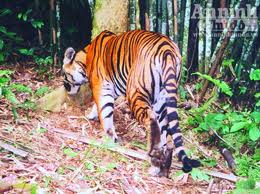
The connectivity of protected areas to establish networks is very important for the survival of many species; however, such linkages remain rare in Vietnam. Vietnam has developed green corridors to connect some protected areas only in the central region. Some of endangered species such as Indochinese tigers, bears, White-cheeked Crested Gibbons, and Saola(Pseudoryx nghetinhensis) which is one of the most recently discovered large mammals and also one of the rarest in the world are found in the green corridors between the two national parks in the central of Vietnam.

 sao laSaola – A critically endangered species hoIndochinese tiger – Fewer than 50 left in Vietnam

According to International Union for Conservation of Nature (IUCN), a significant constraint to establish corridors in order to conserve biodiversity in Vietnam is the lack of a centralized protected area management authority. Vietnam has not had a national protected area network a national protected areas network, but 163 separately managed protected areas, six of which are under the provincial authorities, who prioritize economic growth rather than biodiversity conservation. In some cases, the effort of an individual protected area cannot ensure the survival of endangered species. For example, in Cat Tien National Park, the last Javan Rhino, which requires large habitat is died in April 2010 due to their habitat loss and illegal trading.

How to improve the protected area management in Vietnam to conserve the biodiversity of a country with 10% of the world’s vertebrate fauna on 1% of its land area? I highly recommend the development of a new protected areas network with high connectivity within and between protected areas. Developing corridors cross the whole country could be a key solution. To implement this solution, a centralized protected area management authority needs to be established because redesigning of national protected areas network requires the change in land use planning nationally that a protected area cannot do.

Thu Nguyen (U5074087)

Posted in Uncategorized | 10 Comments

What the Textbooks Can’t Tell You

Posted by Emily Lai u5500513

It has been almost three years since I have started pursuing an undergraduate degree in Geography and International Development Studies. For me, one of the primary reasons of choosing to go to university is to better equip myself in becoming a long-term, contributing member of society at large. Conflictingly, on more than one occasion, I’ve come to the end of particular courses and wondered to myself, “How do I make a difference out there, if I’m sitting in here?” Let’s face it, university life is chock full of decisions. Between choosing the institution, figure out your living situation, deciding on a program and creating post-graduate plans, it seems like the decisions never end. This year, one major decision brought me to the Australian National University all the way from McGill University in Canada for a semester on exchange. The work experience part of our assessment in one of my classes, Biodiversity Conservation, has allowed me to bridge that gap between the classroom and the world ‘out there’.

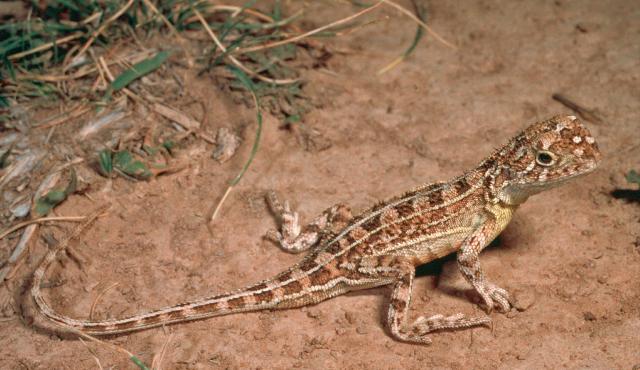
In April, I worked with the Snowy Mountains Engineering Corporation (SMEC) in a grassland earless dragon survey in the Majura region. The abundance of this endangered species directly impacts potential land development plans.

Apart from a few slugs and black widow spiders, we unfortunately didn’t catch any grassland earless dragons that day. Photo from http://bwvp.ecolinc.vic.edu.au/fieldguide/fauna/grassland-earless-dragon#details

Apart from a few slugs and black widow spiders, we unfortunately didn’t catch any grassland earless dragons that day. Photo from http://bwvp.ecolinc.vic.edu.au/fieldguide/fauna/grassland-earless-dragon#details

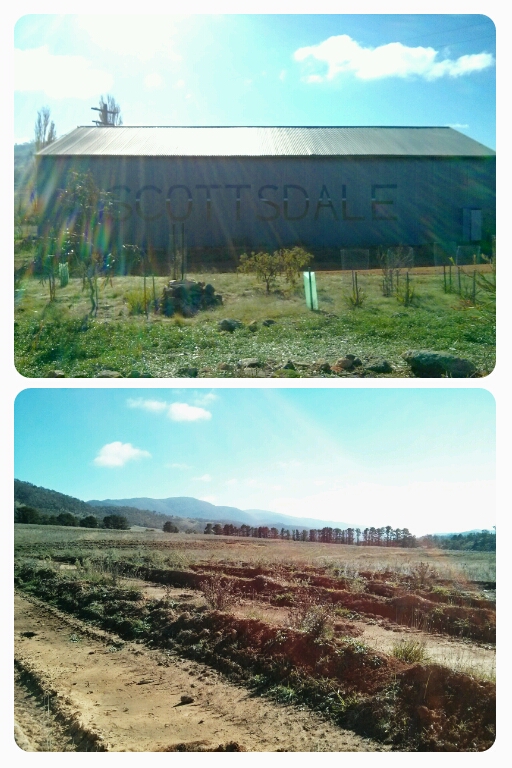
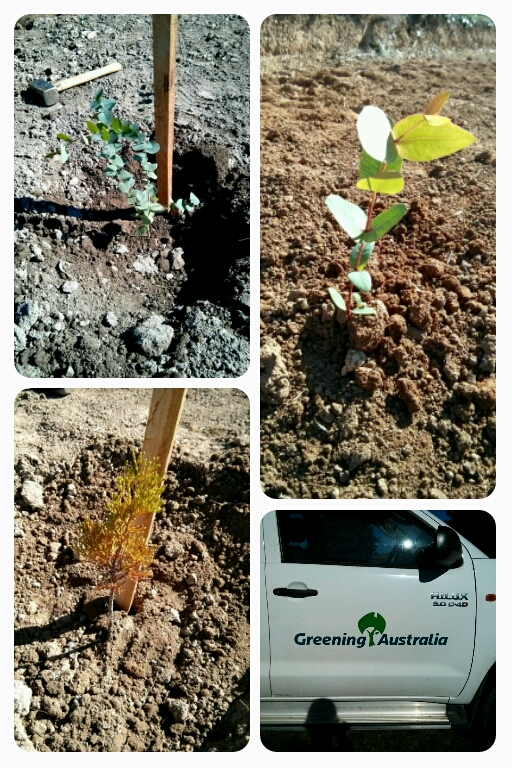
In May, I went out to the Scottsdale Reserve with Greening Australia for a day of native tree planting. This ongoing re-vegetation effort aims to crowd out the highly invasive weed, the African lovegrass.

Managed by Bush Heritage Australia, properties like this rely on donor dollars and volunteer groups such as Greening Australia and school groups to re-vegetate and care for the land.

Managed by Bush Heritage Australia, properties like this rely on donor dollars and volunteers such as Greening Australia and school groups to re-vegetate and care for the land.

That day, a group of 14 volunteers planted over 34 0 trees in Scottsdale

That day, a group of 14 volunteers planted over 340 trees in Scottsdale!

I returned to the Greening Australia nursery a few times in Aranda to help out with weeding and preparing the plants that eventually end up in the field.

Every week, enthusiastic volunteers make sure hundreds of plants are healthy and ready to be planted at various locations in the ACT and NSW.

Every week, enthusiastic volunteers make sure hundreds of plants are healthy and ready to be planted at various locations in the ACT and NSW.

In the nursery, plants are sorted depending on their species and 'batch number,' or the date they were potted

In the nursery, plants are sorted on benches depending on their species and ‘batch number,’ or the date they were potted.

Mural-sized birds in graffiti covered one of the  buildings at the nursery.

Beautiful mural-sized graffiti birds covered one of the buildings at the nursery.

In my opinion, the work experience had less to do with the specifics of the task itself but rather the simple idea of going out there to get our hands dirty. As the saying goes, “There’s more than one way to skin a cat.” Whether it is a course on biodiversity conservation, hydrology management or urban planning, I believe there should be a heavier emphasis for undergraduates to experience learning from a myriad of approaches – Lectures, conferences, academic research, fieldwork, community engagement and studying abroad. In fact, I have come to realize that the research-intensive teaching style at my home university has allowed me to compare and highly value the emphasis on fieldwork at the ANU. So get out there and plant some trees, spot a few possums in the dark or catch a few dragons… No amount of university lectures or textbook readings can give you that same experience.

Posted in Uncategorized | 1 Comment

Brush Tales: Studying the Mountain Brushtail Possum in the Central Highlands of Victoria

THWACK! A mountain ash sapling sprung back and hit my side, showering me in water droplets. I’d woken up at 5:30am to drive out and check cage traps in dense regrowth on a steep mountain slope. I was tired, I was drenched, and I was loving every minute of it.

photo 4 (3)

I was getting experience working in the field, assisting Laurence Berry with his research in the Central Highlands of Victoria. Laurence is a PhD student from ANU, interested in investigating the ecology of extensive ecosystem disturbances across landscapes. He was in Victoria studying the Mountain Brushtail Possum (Trichosurus cunninghami) in areas affected by the Black Saturday bushfires of 2009. Laurence was comparing the movement of the possum (a close relative of the Common Brushtail Possum most of us are familiar with) through unburnt, partially burnt and severely burnt forest. The study was replicated across multiple sites in the region, to control for any confounding local geographic variables. Practically, this meant a lot of driving, and a lot of trapping.

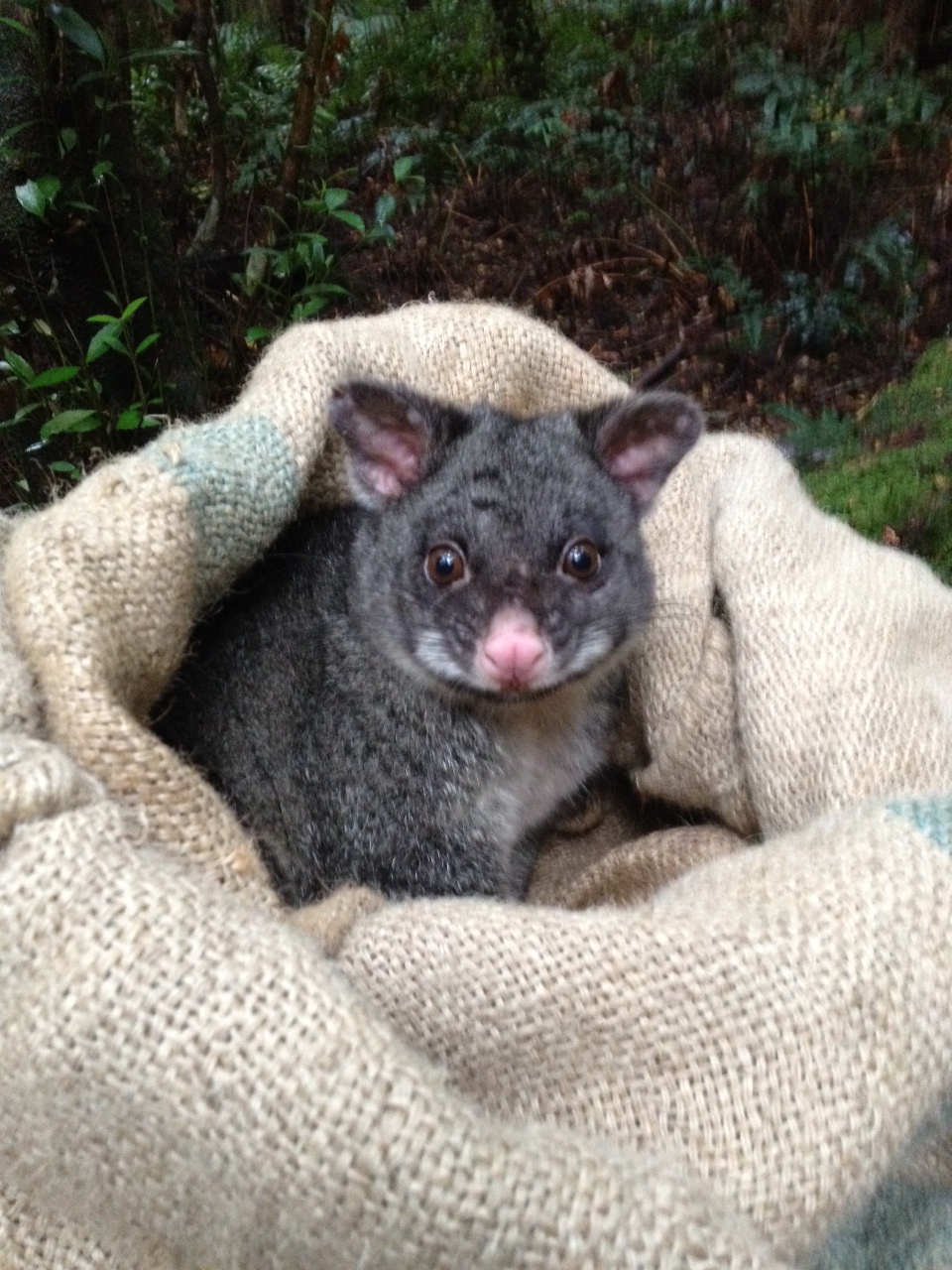
A Mountain Brushtail Possum posing for a portrait on its release

A Mountain Brushtail Possum posing for a portrait on its release

The trapping involved setting large cage traps along transects 100m or more in length, at times on rather challenging terrain – through dense vegetation, steep slopes, or a charming combination of both. I discovered rather quickly that I do not possess a strong natural aptitude for dragging cage traps through thick scrub.

If an animal was trapped, it was encouraged into a hessian sack and processed. The possums were sedated, and I was able to get some very “hands on” experience handling them.

Taking some measurements

Taking some measurements

Along with handling the possums, I had experience with radio tracking and learnt about the ecosystems we were working in, especially how they responded to fire and logging events. The Mountain Ash forests were spectacular. Mountain Ash is the world’s tallest flowering plant, and it forms the most carbon dense forests in the world with approximately 2000 tonnes of above ground carbon biomass per hectare. These forests are very biodiverse, home to many native species including Leadbeater’s Possum, the endangered faunal emblem of Victoria. Almost all of Melbourne’s water comes from ash forested catchments, which are praised for the exceptionally clean water they produce.

A “stag” - a large dead tree - providing key habitat on a ridge burnt in the Black Saturday fires

A “stag” – a large dead tree – providing key habitat on a ridge burnt in the Black Saturday fires

I was surprised to learn that despite these values, the ash forests of Victoria were under threat from what is argued to be unsustainable logging practices – mainly for wood pulp production. With all of the media attention surrounding the old growth forests of Tasmania, this issue completely flew under my radar. One of Laurence’s supervisors is Professor David Lindenmayer, a highly accomplished ANU ecologist who is arguing for an end to logging in these forests. If you would like to learn more about his arguments against logging, you can listen to the extended interview he gave on the ABC’s AM program.

I learnt a great deal over the course of three days in the Central Highlands. It is a beautiful, valuable part of our country that deserves protection. I feel very privileged to have been allowed to enter pristine forests with restricted public access – though perhaps not quite as privileged as the forest’s leeches who had breakfast courtesy of yours truly!

Jared Priestly u5208943

Posted in Uncategorized | 2 Comments

Planting trees for Bob Brown

I recently had a very fulfilling (and tiring) experience these uni holidays regenerating degraded farmland with the Green Team and Greening Australia.

Scottsdale farm out towards Cooma has been degraded through grazing and agriculture and needed our help to regenerate the critically endangered Box-Gum Woodlands.

The land was purchased by Bob Brown’s charity Bush Heritage Australia. His charity, started in 1991, purchases land of high conservation value and works tirelessly to restore and manage it. So far 960,000 hectares has been regenerated.

A team came through and seeded the scraped sections of earth with native grass seeds in the preceding days, and then it was our turn to get the trees in the ground.

On my first planting day we were with some fabulous individuals, The Green Team! They are an enthusiastic bunch of mainly retirees who go planting once a week and boy were they efficient at what they do. We had a truck full of trees to plant, Yellow Box, Apple Box and Snow Gum, amongst some others. Time to get busy.

Trees are ready

Trees are ready

The process is really quite simple once you get the knack of it. Thankfully the green team and Ben, the coordinator of the planting, showed me the ropes. Also thanks to Bush Heritage Australia there were holes already dug for us, I was very grateful for this.

Once you clear out the hole of any remaining dirt:

-Pull the little tree out of the tube (they are called tube stock)

-Put it in the ground.

-Fill in the hole.

-Get some wooden stakes.

-Get a plastic guard.

-Hammer these into the ground.

-Move on to the next one, there are always more to do!

OLYMPUS DIGITAL CAMERA

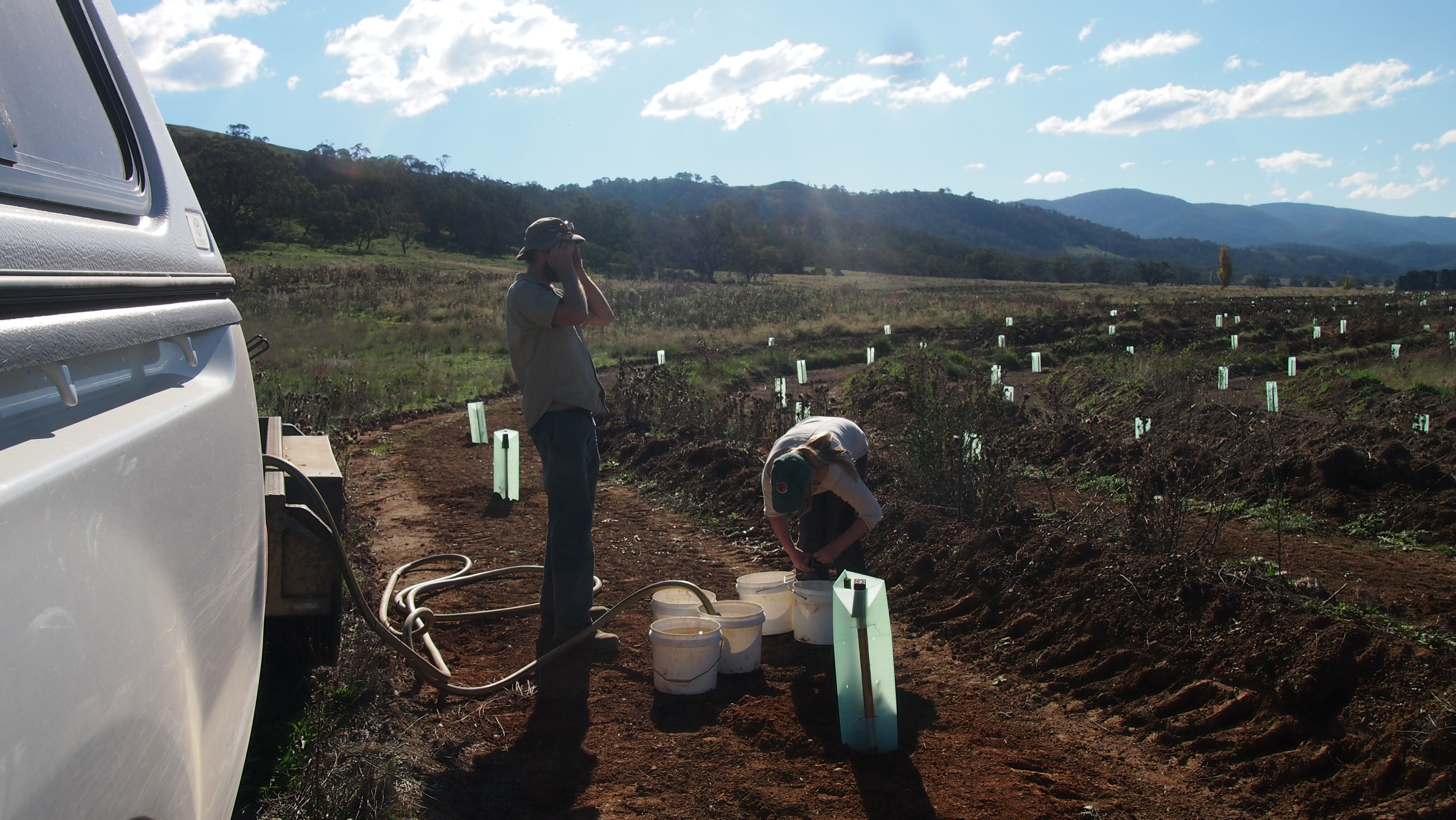
One down, 449 to go

If that sounded simple, you’re right, but wait till you do 450 trees in one day! By the end of the first day and most especially the second day I was planting trees at an impressive rate. It is so satisfying to look behind you and see a whole row of baby trees planted by your own hands.

Time for lunch, I’ve earned it today.

After lunch comes the hard part, watering. Unfortunately these little babies need a bit of help getting started. There were only three of us left on the first day, to water 450 plants; I slept well that night.

Each tree needs about 3L of water to hydrate it and eliminate any air bubbles around the roots that can kill the plant.

Lots of buckets to fill

Lots of buckets to fill

Once the lugging of water was done, it was time to drive out and reflect at the work you’ve done.

Now to wait a few years and return to a grassy woodland that was once a degraded farm, how rewarding.

What a beautiful scene

What a beautiful scene


Greening Australia does a great job and the community involvement makes it work so well.

Isobel Graham

Posted in Uncategorized | 1 Comment

Linking Biological Collections with Revegetation Projects in New South Wales

Posted by Eric Kataoka

From January to February 2014 I was part of the annual Student’s Volunteer Botanical Internship Program at the Australian National Herbarium (ANH). The initiative is held by the ANH and the Centre for Australian National Biodiversity Research (CANBR), located at CSIRO, Canberra – next door to the Australian National Botanic Gardens. This year we were the 22nd group of interns accepted to undertake herbarium technique trainings, field work, plant identification etc.

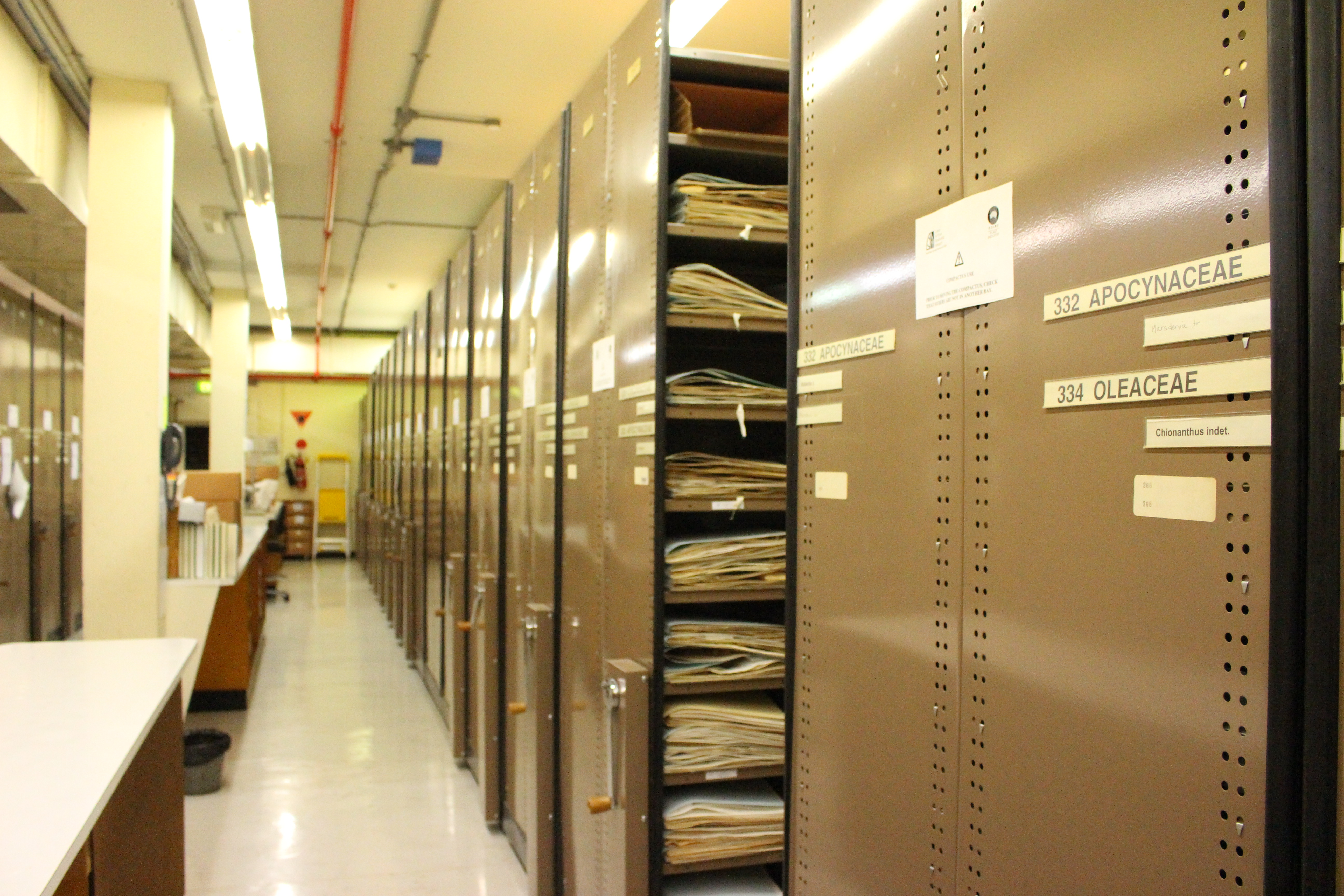
Now, you might be asking yourselves ‘what is a herbarium ?‘, ‘What do we use it for?’. Well, a herbarium can be defined as a museum of dried and pressed plant specimens kept in special conditions to serve as long-term physical evidences for researchers to work on. Herbarium specimens are often historical materials. During the internship I handled a specimen collected during Captain Cook’s voyage to Australia in the 1770s – isn’t that impressive? Additionally, there is a vast array of utilities of herbarium specimens including taxonomy, systematics and biological conservation!

Inside the Australian National Herbarium. Compactus systematically organised by plant families and genera. We can also see the pigeon holes with plant specimens mounted onto paper and systematically stacked, they are kept for current and future studies on various fields of plant biology.

Inside the Australian National Herbarium. Compactus systematically organised by plant families and genera. We can also see the pigeon holes with plant specimens mounted onto paper and systematically stacked, they are kept for current and future studies on various fields of plant biology.

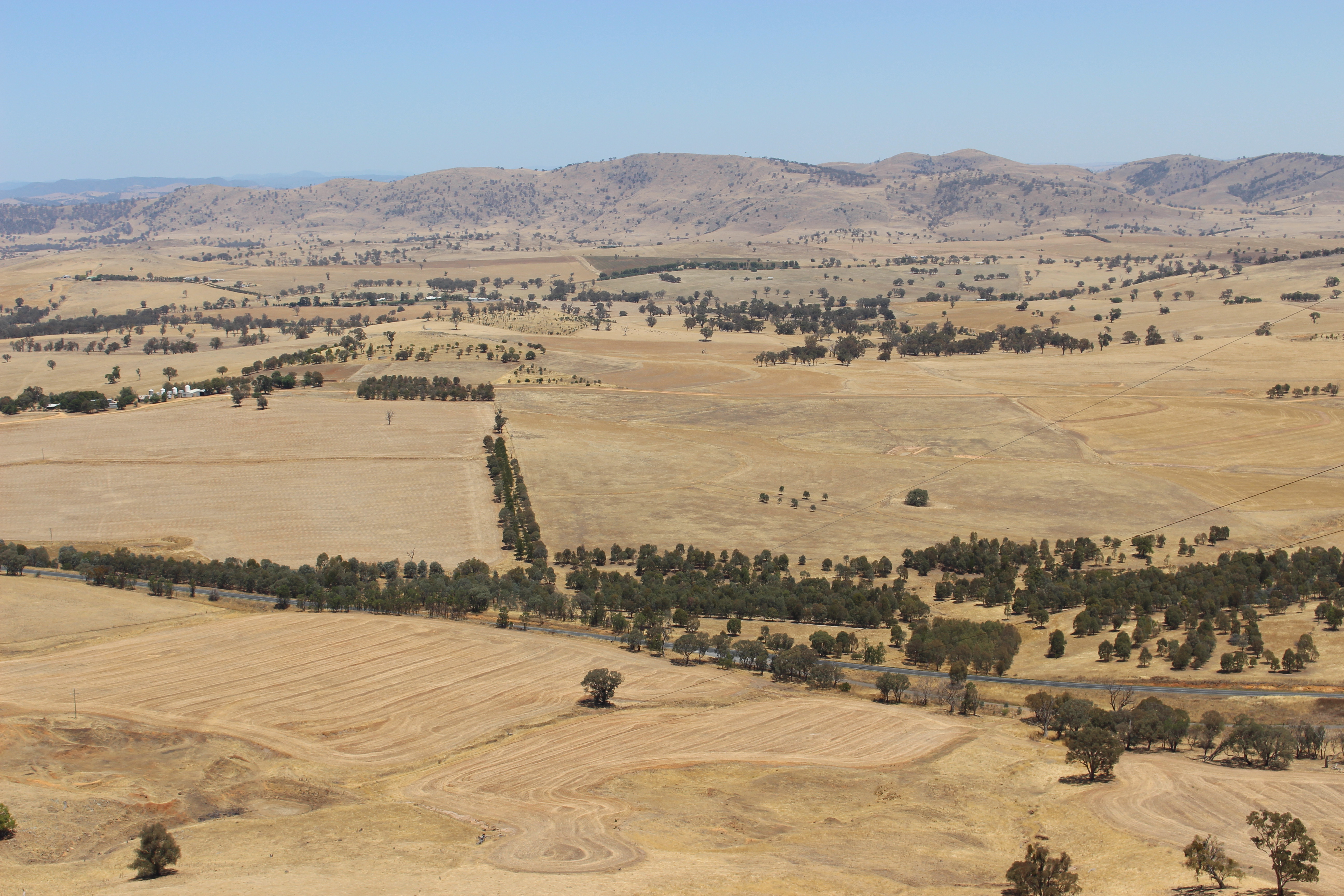
During the internship, one of our field works involved visiting a project that applied herbarium data to guide revegetation. The Harden Murrumburrah Landcare Group Revegetation Project (Natural Heritage Trust – Bushcare) is located in the Harden Shire region of New South Wales . The region has historically been used as a mixed farming enterprise, with crops and livestock production. As a result, they estimated that only 2.8% of the original vegetation cover was present.

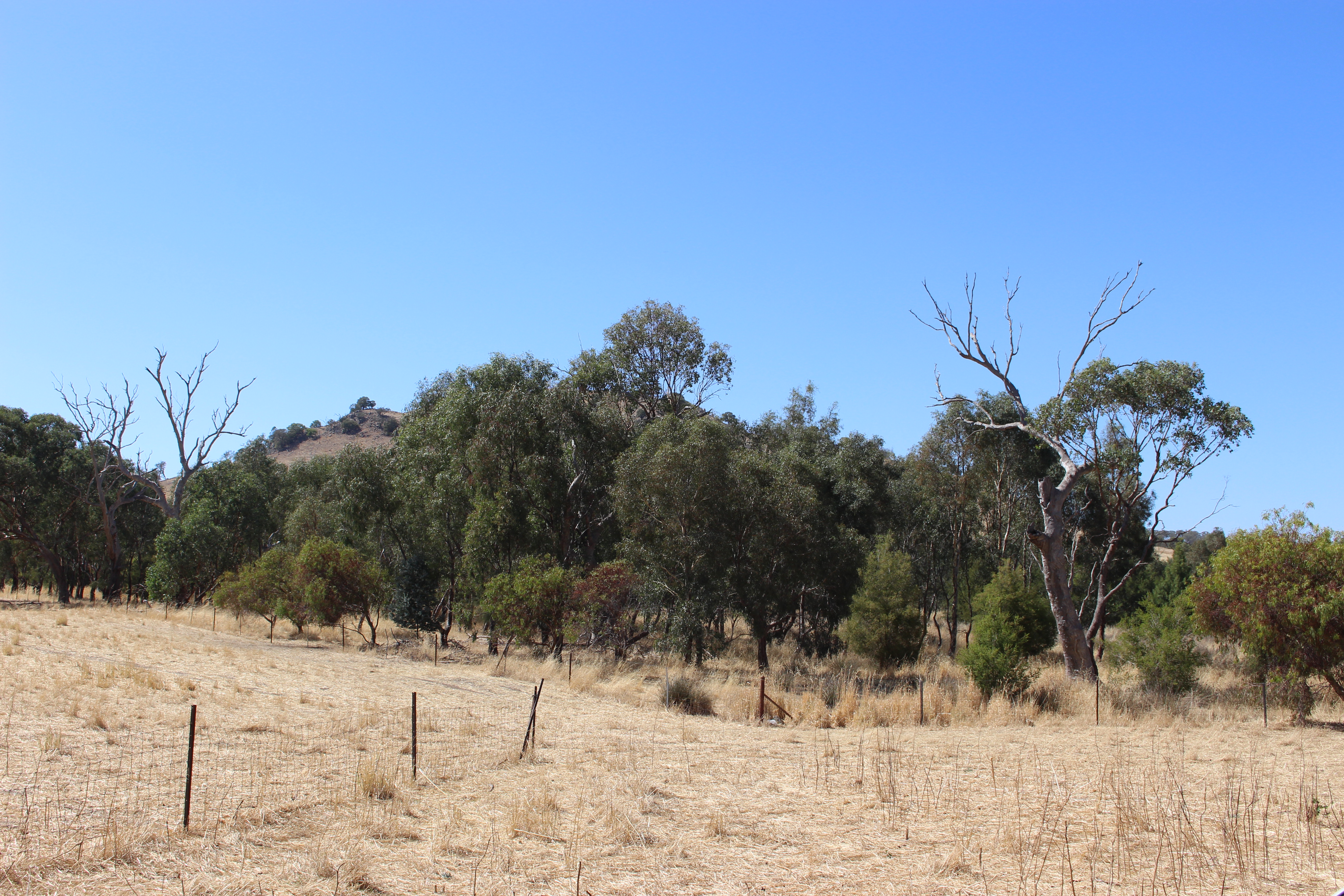
Farmland in Galong, NSW. This is the general picture of the area. As we can see, it is a very modified landscape, predominantly farmed for food crops. This photo was taken in late January, 30+ degrees and very dry!

Farmland in Galong, NSW. This is the general picture of the area. As we can see, it is a very modified landscape, predominantly farmed for food crops. This photo was taken in late January, 30+ degrees and very dry!

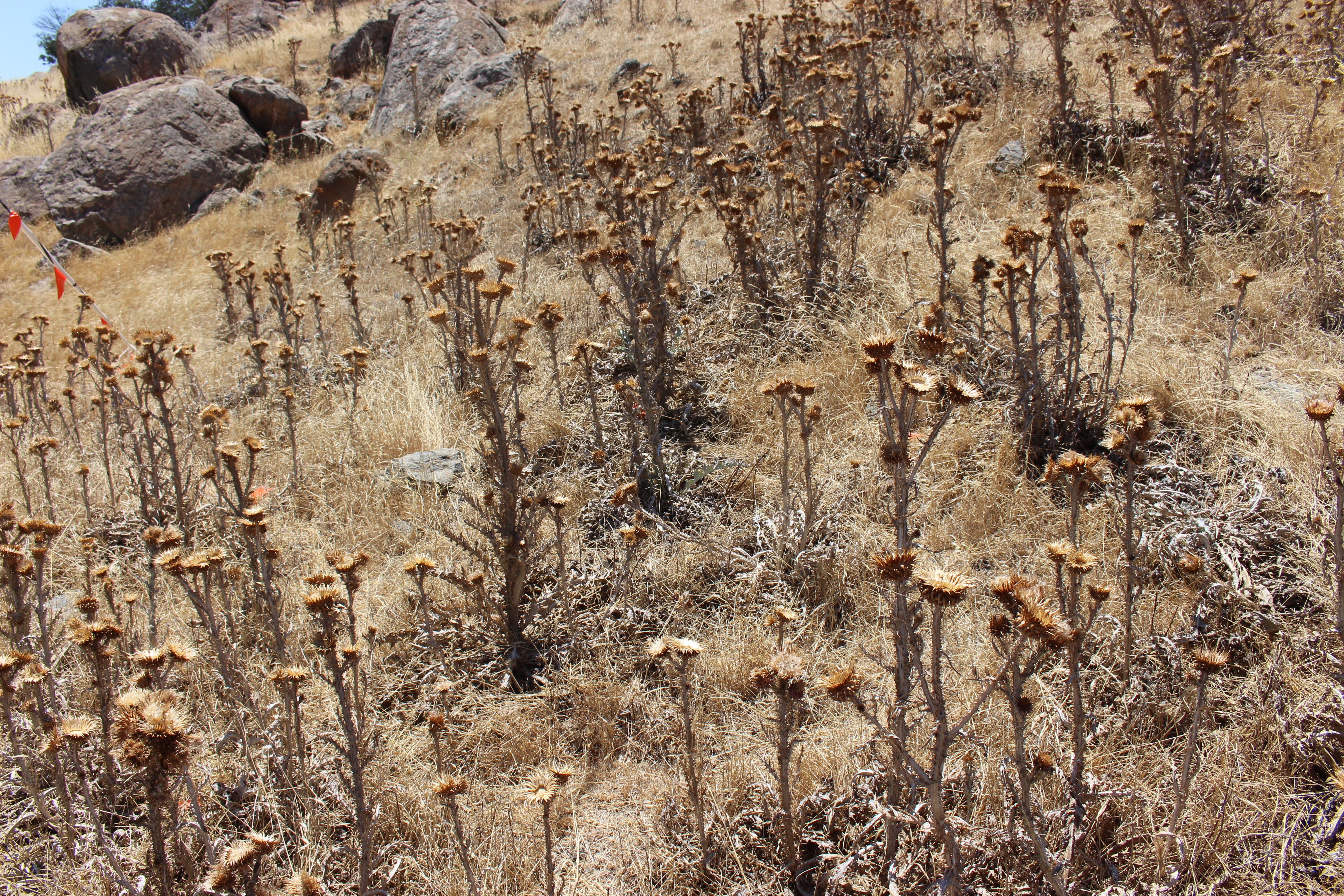
One of the biological threats: Scotch Thistle, an invasive plant species in the Harden Shire region, but also present in other parts of Australia. In this particular case, this species has been controlled by the introduction of a biological agent that parasitises its tissues, which compromises growth and reproduction.

One of the biological threats: Scotch Thistle, an invasive plant species in the Harden Shire region, but also present in other parts of Australia. In this particular case, this species has been controlled by the introduction of a biological agent that parasitises its tissues, which compromises growth and reproduction.

Therefore, the original species composition within that area was fairly uncertain, and revegetation attempts would not have the essential starting point: species to plant. That is when herbarium data helped them to work out what species were likely to have existed there.

Basically, they searched the herbarium database for past collections of plant specimens within that area. Based on that, a recommended list consisting of approximately 400 species could be generated. Without herbarium specimens, it would be virtually impossible to retrieve that information. The list also provides cultivation notes and ecological requirements such as salinity tolerance.

In our one-day field trip, we visited a 20-year-old riparian revegetation area with River Red Gum (Eucalyptus camaldulensis) and associated species. We also worked on a database that is intended to improve the previous list of species for that region.

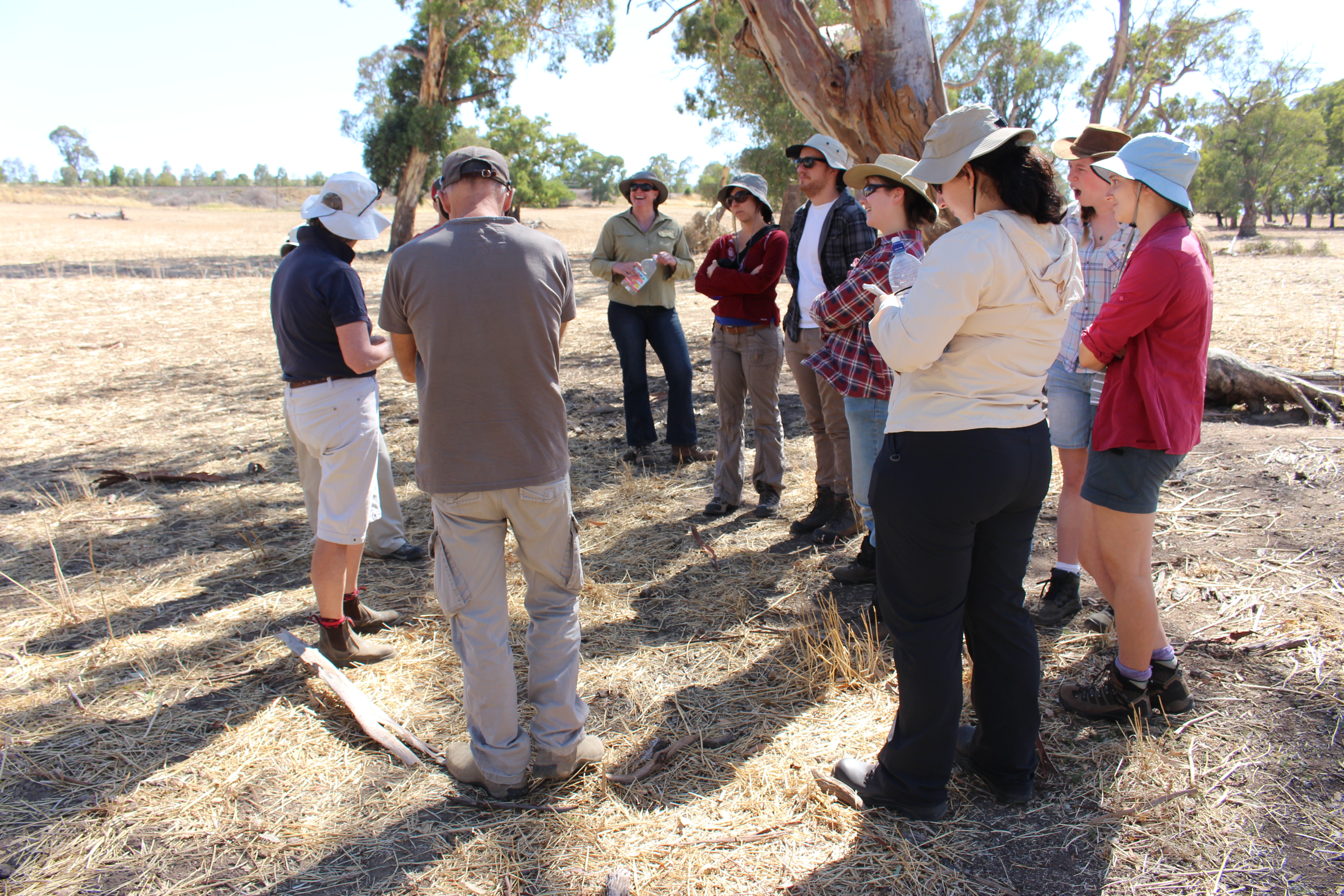
The group of interns listening carefully to the landowners and managers.

The group of interns listening carefully to the landowners and managers.

Revegetated patch with River Red Gum, where we did a census of extant individuals.

Revegetated patch with River Red Gum, where we did a census of extant individuals.

Overall, it was a very enriching experience where I could see the applied linkage between biological collection and on-the-ground conservation efforts. In my opinion, the current status of the Harden shire region is quite optimistic, but there is still room for improvement – and they are committed to it! In addition to that, landowners are becoming more aware of the benefits of revegetation and restoration of ecological aspects such as water quality.

Photo credits: Eric Kataoka

Posted in Uncategorized | 1 Comment

Unintended Consequences of Past Soil Stabilisation Methods: The Not So Lovely African Lovegrass

Unintended Consequences of Soil Stabilisation Methods: The Not So Lovely African Lovegrass

During, my volunteering experience at Scottsdale, a Bush Heritage reserve, I was able to see the detrimental effects of weed invasion and the hard work being undertaken to tackle this issue, to enable the ongoing restoration the Grassy Box-Gum Woodland.

Image

Scottsdale Reserve

The endangered Grassy Box-Gum Woodlands have been drastically reduced in area and highly fragmented due to a number of disturbances. In particular, the introduction of weeds due to inappropriate agricultural practices is noted as a major driver affecting this ecosystem. However, in this instance its seems that the detrimental effects of weed invasion was somewhat intentional. In an effort to control soil erosion the African Lovegrass (an introduced weed species) was introduced, however it seems as though the extent of which the weed would spread was under-estimated. Consequently, the African Lovegrass has now completely invaded the past cropping lands present at the Scottsdale reserve. As a result the endangered ecosystem of the Grassy Box-Gum Woodland has been detrimentally affected, especially the native grasslands which once existed on the site.

Image

Dense mounds of African Lovegrass dominating the ground cover of past cropping lands at Scottsdale, NSW

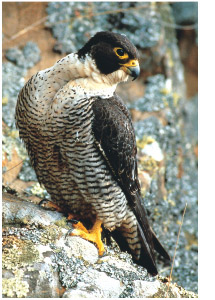
Despite the difficult task of restoring the ecosystem, with the help of numerous volunteers, the Scottsdale property continues to protect the endangered grassy box gum woodlands and temperate grasslands, but also protects many rare species and a range of interesting wildlife.

Image

Peregrine falcon (Bush Heritage, 2014)

Image

Scarlet robin (Bush Heritage, 2014)

Arguably one of the most interesting yet demanding management plans being undertaken is the mass scale replanting of native species such as Acacia, Casuarina and Eucalyptus. Interestingly the plantings were all seeded from local native trees and grown in their own nursery.

Image

Seedlings in the Scottsdale nursery (Bush Heritage, 2014)


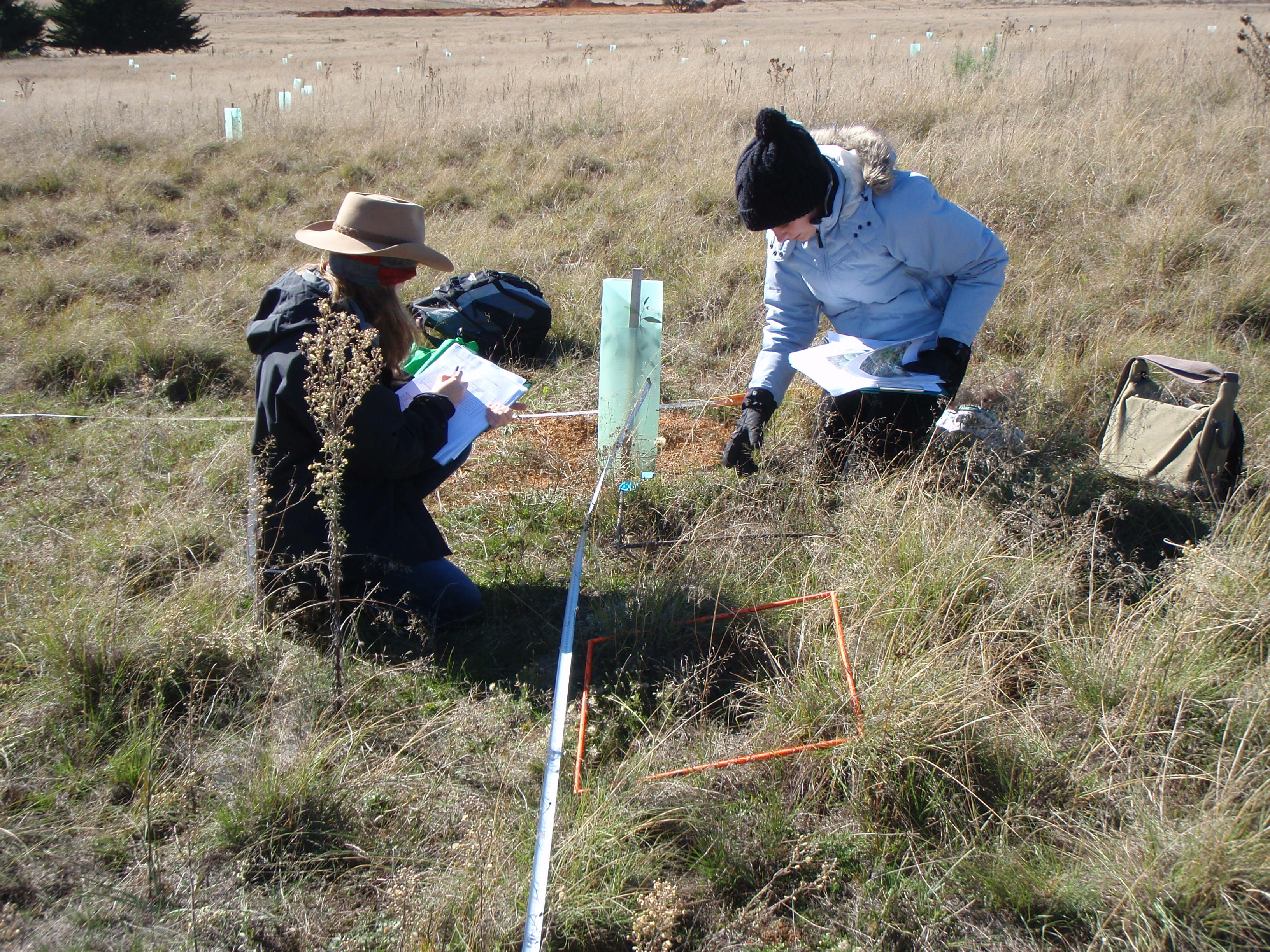
In particular I was involved with a long-term study, which aims to allow natural regeneration by replanting native species with the intention of promoting a competitive advantage for native grass species. Whereby, it is hypothesised that the growth of native vegetation will drive back the invasion of African Lovegrass, therefore allowing niches for native pasture.

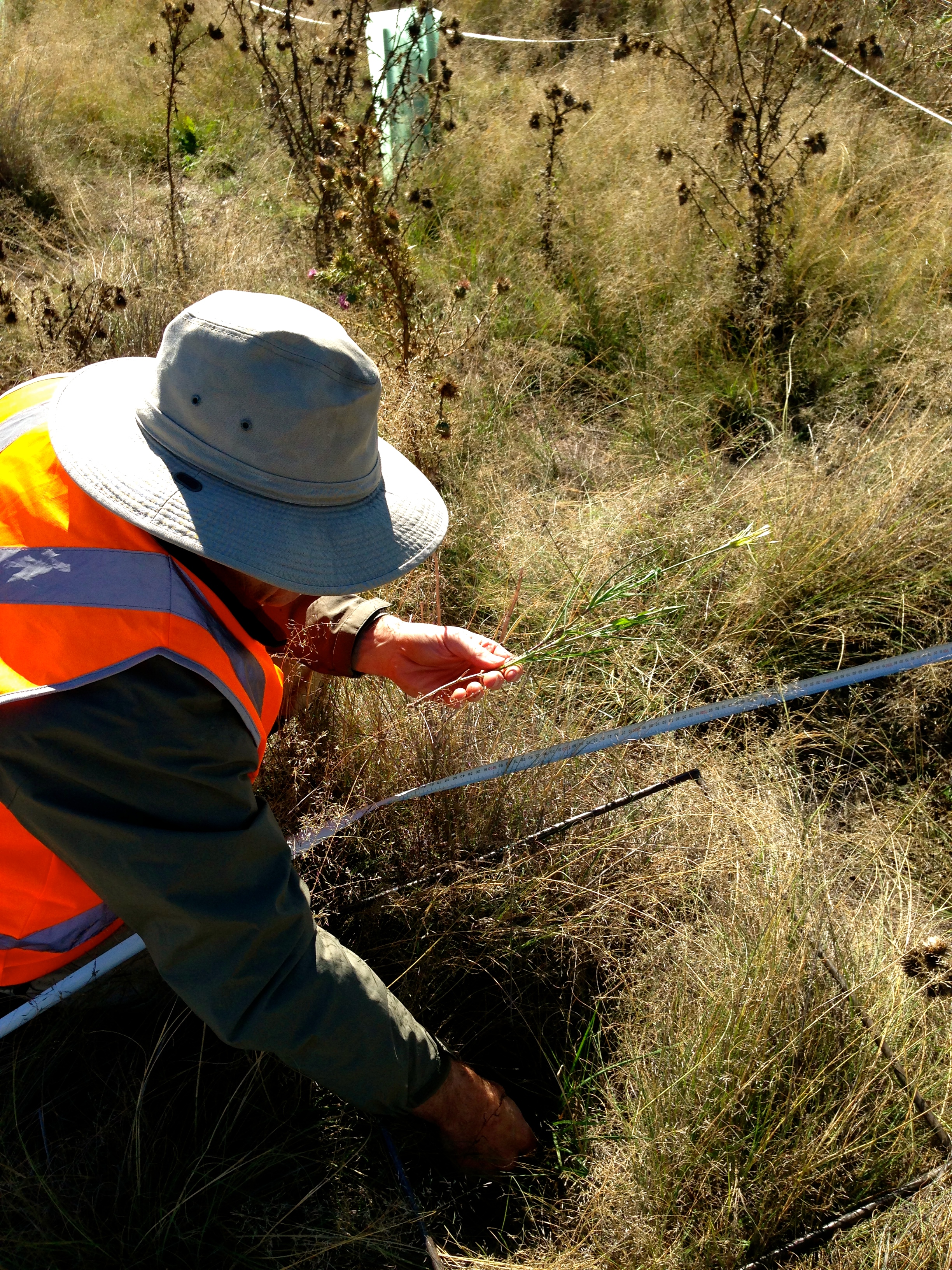
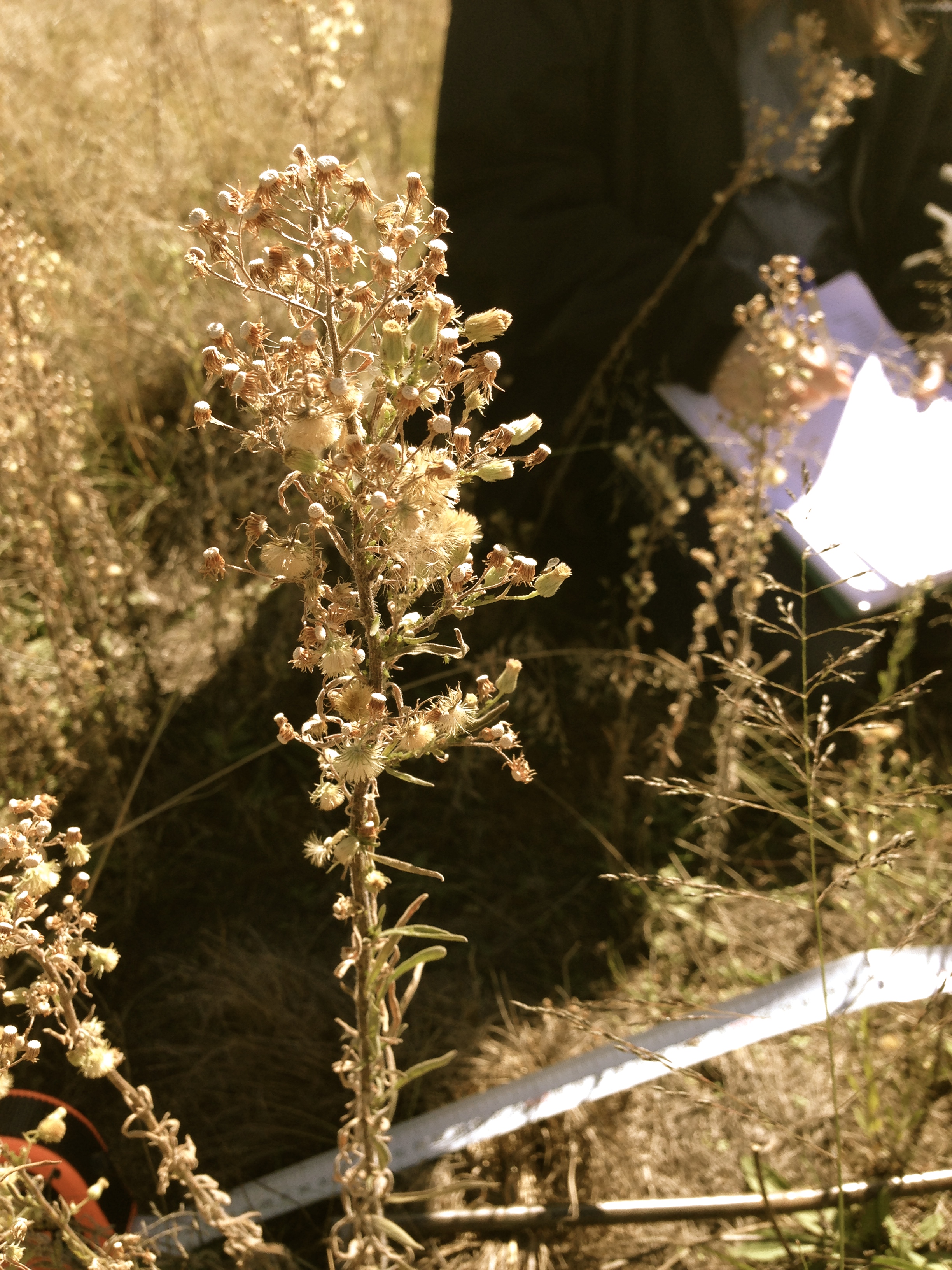
We surveyed groundcover both native and introduced species associated with planted trees. While the majority of the groundcover was over-run by African Love grass it was interesting to see that under the right site specific condition native grasses still had a stronghold in some areas.

Image

Estimating ground cover of Tragopogon dubious (Goat’s-Beard)

Image

Estimating ground cover of African Lovegrass (Eragrostis curvula)

I was enlightened by the work that volunteers, whatever it may be. As while calculating the ground cover of weeds may not be the most exciting thing to come to mind, when you consider that impact that this work has on the restoration of an endangered ecosystem, it becomes an inspiring experience to be apart of.

Zara Davis u5192582


References 

Bush Heritage Australia (2014), Scottsdale Reserve. Available from http://www.bushheritage.org.au/places-we-protect/state_new_south_wales/scottsdale (Accessed 23 May 2014).

Department of Agriculture, Fisheries and Forestry (2013),  African Lovegrass. Available from http://www.daff.qld.gov.au/__data/assets/pdf_file/0011/69284/IPA-African-Lovegrass-PP63.pdf (Accessed 23 May 2014).


Posted in Uncategorized | Tagged | 1 Comment