Bent views of the Eastern-Bentwing Bat

Secretly terrified, thinking the likelihood of being eaten alive by a bunch of bats was definitely in the ball park of 11/10, I had arranged to go bat monitoring with Doug Mills at Bungonia National Park, NSW.

Doug works for the National Parks and Wildlife Services monitoring the population of Eastern-Bentwing Bats from the entrance to a popular recreational cave in Bungonia National Park and another at Wee Jasper Caves. The Eastern-Bentwing Bat is found in caves along the east and north-west coasts of Australia; the caves monitored by Doug are both essential maternity and roosting caves to the species, however may be under threat due to access to the public for the use of recreational caving. The cave was closed to the public however at the time I went monitoring and continues to be for the breeding season.

It was a Wednesday afternoon, I packed my sleeping mat (prepared for the piles of supposed bat poop), my head torch, extra rations of food (in case the situation arose where we were chased by the bats until a refuge amongst the wilderness arose and it was too far to walk back to the car until morning when the bats would go back to the caves) and a drink bottle (for similar reasons). My friend (Tim) and I were picked up by Doug around 2pm and we asked questions of Doug’s fabulous life working in National Parks until we picked up Doug’s mate (who also works with National Parks and regularly goes with Doug to monitor the bat populations). We stopped for some pizza for dinner and I began questioning my reasoning to bring extra rations of food (until we started the walk down to the cave and the slight sense of paranoia kicked in, confirming my reasoning for the rations I had had in the beginning).

The first bat flew out and I panicked (however internally, as my aim was to act professional and keep my cool in front of Doug- a bat expert, and my friend who seemed to be in a whole other state of mind). After following this bat for a good couple of minutes realising that the likelihood of being eaten alive was actually more like 1/infinity I began to relax in the realisation that I was about to experience something spectacular. Which I did.
As Doug captured photos of the species using infrared technology and a pre-military missile tracking device, I sat in or awe as thousands of bats flew over our heads (the curious ones just missing our faces; feeling a stream of air brush past your cheek).

I learnt more this night than the process of capturing the population density of a species of bat; in that one moment where after looking up as the light of the flash illuminated the thousands of bats flying over-head, came the consciousness that sometimes it’s the things that seem scariest in life that end up turning out to be some of the most magnificent; in terms of approaching the complexities of biodiversity conservation and environmental sustainability, the small details or individual actors which/who seem insignificant, when placed together can combine to make a significant whole.

And that a sleeping mat in preparation of piles of bat poop isn’t as necessary as I originally assumed.

Simone Brown

– A special thanks to Doug Mills for allowing me to join him on this trip

Related website: http://www.environment.nsw.gov.au/threatenedspeciesapp/profile.aspx?id=10534

Posted in Uncategorized | 1 Comment

WORLD WAR M – The Invasion of the Indian Myna Bird


‘You can have native birds or Indian Mynas – but not both.’                                                                                                 – Ian Fraser


In early 2014 I had the pleasure of working with the Canberra Indian Myna Action Group (CIMAG) and its well accomplished committee members. This non-profit community group was established in April 2006, and aims to educate the public on the destructive impact of the Indian Myna bird (Acridotheres tristis) and actively reduce their numbers in Canberra.

Learn more about CIMAG and the Indian Myna here. See videos from Indian Myna conferences and Indian Myna researchers here.

Indian Myna (Acridotheres tristis) (Photo by Geoffrey Dabb; from http://indianmynaaction.org.au/)

Indian Myna (Acridotheres tristis)
(Photo by Geoffrey Dabb; from http://indianmynaaction.org.au/)


Why did I choose to volunteer with CIMAG?

As a born and bred Canberran, you’d assume that I’d be afraid of swooping Magpies in spring, but, no. There is nothing more frightening for me than being stared down by an Indian Myna. And rightly so! They are everywhere; and are very territorial! Feeling partially responsibility as a human for their introduction, I enlisted for the war against these home invaders and baby killers.


Trapping Indian Mynas – a direct way to tackle population numbers

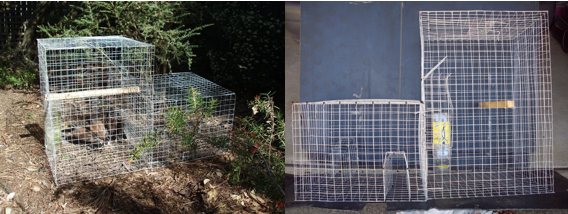
My first day with CIMAG was spent with Bill Handke (CIMAG President). We travelled to the Canberra gaol to collect Indian Myna traps which inmates had made. Their unique design lures birds into the contraption, and there is no escape. These birds are then gassed (humanely of course) which puts them to sleep in approximately 7 seconds. Trapping has a direct effect in reducing numbers and relies on willing members of the community to trap and kill Indian Mynas in their yards. Thanks to CIMAG’s efforts, Indian Mynas have gone from being #3 feral bird pest in Canberra, to roughly #26 in only 8 years!

Indian Myna Traps – birds are enticed into the traps with food and cannot escape back through the chute.  Image from http://indianmynaaction.org.au/

Indian Myna Traps – birds are enticed into the traps with food and cannot escape back through the chute.
Image from http://indianmynaaction.org.au/


But are traps enough?

You’d be surprised to hear, as I was, that Indian Mynas outcompeted the cane toad in receiving the 2005 Pest of Australia award. Indian Mynas aggressively take over and defend several tree hollows, despite only using one nest. If nests are already occupied, Indian Mynas will evict the occupants (including native birds such as parrots and kookaburras, and sugar gliders), and often kill their young.

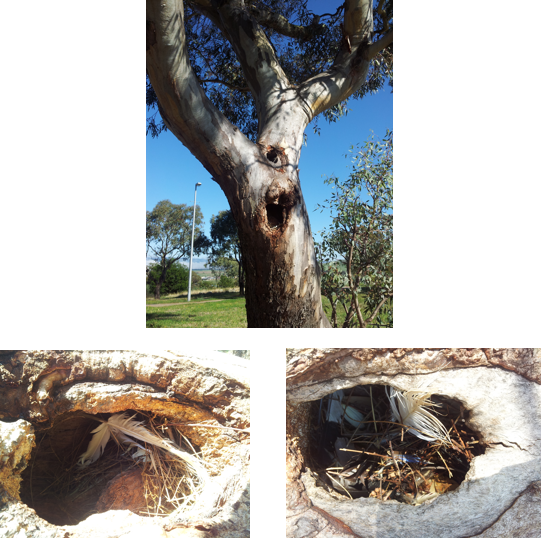
I photographed these three Indian Myna refugial nests (below). Indian Mynas use cockatoo feathers to deter other birds from invading their nests. It is presumed that Indian Mynas have learned this nest-defending technique, which portrays that one of Australia’s most aggressive bird species occupies the nest.

I photographed these three Indian Myna refugial nests (below). Indian Mynas use cockatoo feathers to deter other birds from invading their nests. It is presumed that Indian Mynas have learned this nest-defending technique, which portrays that one of Australia’s most aggressive bird species occupies the nest.


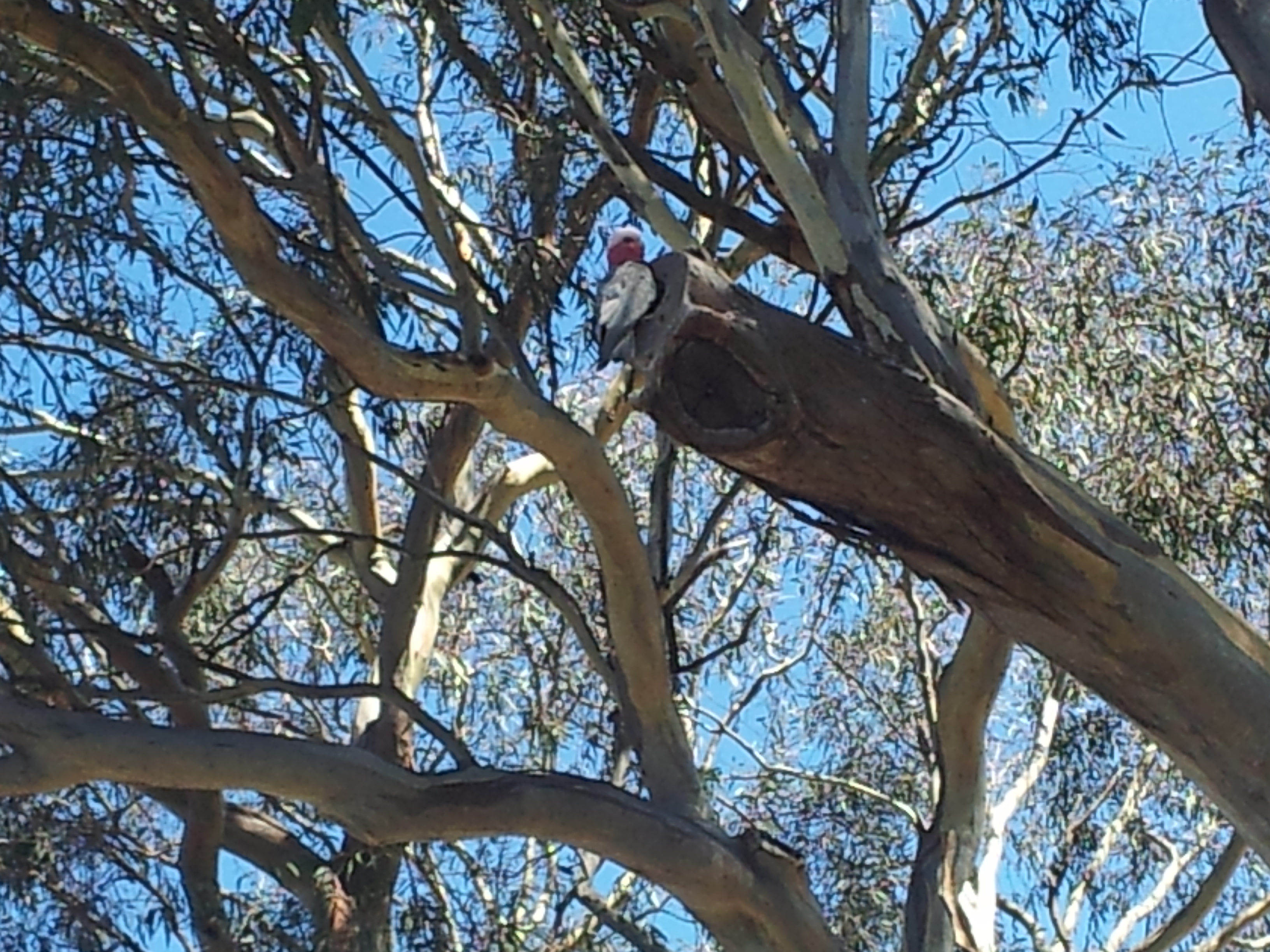
Original photo – this galah had a lucky escape. It is only a matter of time before an Indian Myna takes over this hollow.

Original photo – this galah had a lucky escape. It is only a matter of time before an Indian Myna takes over this hollow.


So, no, trapping isn’t enough! We must inhibit their breeding!

I was fortunate enough to also work alongside Daryl King, Bruce Lindenmayer and Bill Handke once again who took me around Belconnen, Weston and Tuggeranong, and Kambah (respectively). They taught me how to spot Myna refugial nests. As opposed to typical roost or nesting areas, refugial nests are usually a breeding pair’s founding nest, located near human colonisation, which are used for several years.

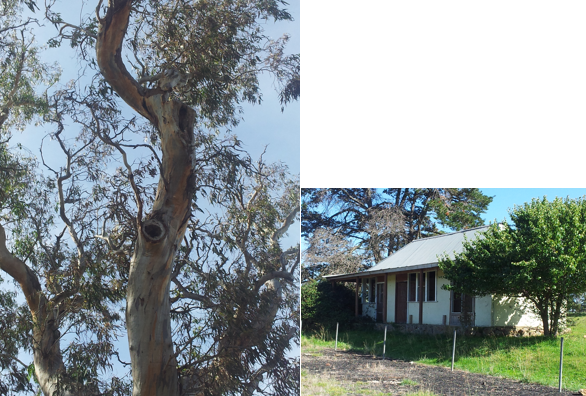
Original photos of natural (tree hollows) and artificial (structure – e.g. in roofs) Indian Myna refugial nest sites in Belconnen.

Original photos of natural (tree hollows) and artificial (structure – e.g. in roofs) Indian Myna refugial nest sites in Belconnen.

I established the geographic coordinates of each refugial nest.

I used geo-coders to determine the exact coordinates of trees which had Indian Myna refugial nests.  This reference is of this old Red-Box Gum (pictured with nest visible) in Ordell Street, Chapman.

I used geo-coders to determine the exact coordinates of trees which had Indian Myna refugial nests.
This reference is of this old Red-Box Gum (pictured with nest visible) in Ordell Street, Chapman.

I then geo-coded the Indian Myna refugial nests I had located, and then went home to work on inputting the coordinates into a GPS mapping system. The result (see screen shot below) demonstrates the geographic data points that I had configured, depicting the exact locations and dispersal of refugial nests against a satellite of Belconnen. Belconnen is fortunate enough to have very old trees with important hollows, however Mynas have taken over a significant number of these. Daryl and I were lucky enough to spot a breeding pair of Mynas who had overtaken a Kookaburra nest and had thrown their chicks ‘overboard’ – so to speak! These geo-coded maps of refugial nest locations will assist CIMAG in their efforts to locate and trap these birds, and disrupt their nesting and breeding patterns.

I used http://www.gpsvisualizer.com/ to create this map.

I used http://www.gpsvisualizer.com/ to create this map.


I hope that my work experience has enlightened you, as it did me, about one of Australia’s most active serial killers.

The Myna is not a minor problem.


References

Canberra Indian Action Myna Group Inc. n.d. Who are we?; An Obnoxious Invader that’s a Threat to our Wildlife; Indian (Common) Myna-Acridotheres tristis; Strategy; and Trapping Matters, viewed 14 April 2014. http://indianmynaaction.org.au/

Schneider, A. 2013, GPS Visualizer, viewed 22 March 2013. http://www.gpsvisualizer.com/map_input

Special thanks to Daryl King, Bruce Lindenmayer, Bill Handke, the CIMAG committee members, and all those who provided me with their personally recorded information on Indian Myna nesting, refugial, and roosting sites. Thank you for sharing your valuable knowledge with me. The countless hours and efforts you have all put into assisting me with my work experience is greatly appreciated.


Further Information

Canberra Indian Action Myna Group Inc. webpage – http://indianmynaaction.org.au/

Canberra Indian Action Myna Group YouTube site – https://www.youtube.com/channel/UCtM453NJsyhHhbY5DrCt7qQ

GPS Visualiser used to place geo-coded refugial sites on a satellite image – http://www.gpsvisualizer.com/map_input

Information on Myna intelligence and learning by Andrea Griffin – http://andreasgriffin.weebly.com/


Melissa D’Amico – U4849283

Posted in Uncategorized | 1 Comment

Disappearing Ice Giants: Glaciers

Since my first exposure to ice landscapes, I have been completely captivated. Their sheer enormity seems to extend beyond horizons and through time itself. The source of this fascination eludes me and sometimes I wonder why I have come to feel this way when I was born in Africa, not a place known for its ice.

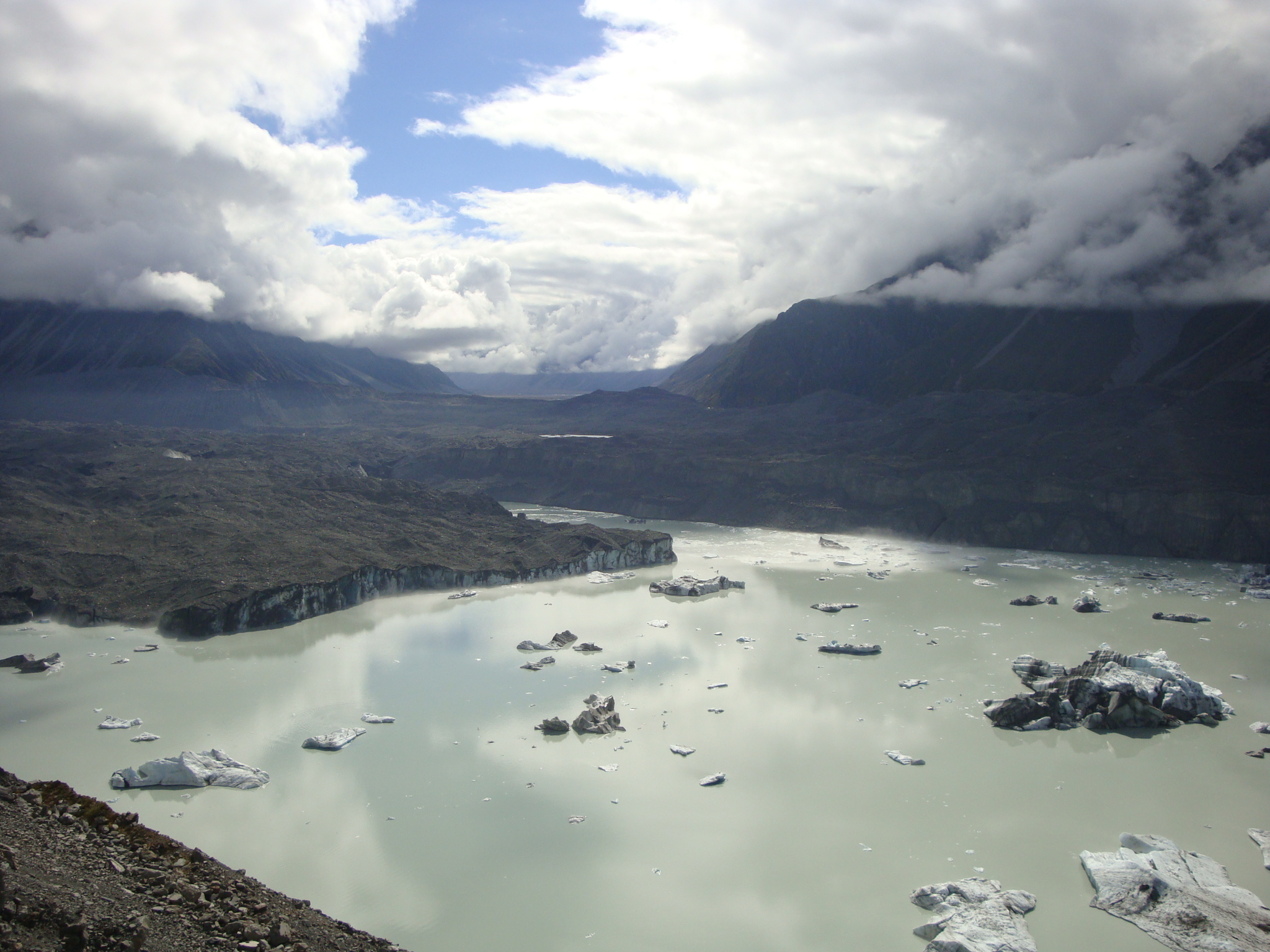
ImageThe Tasman glacier, New Zealand

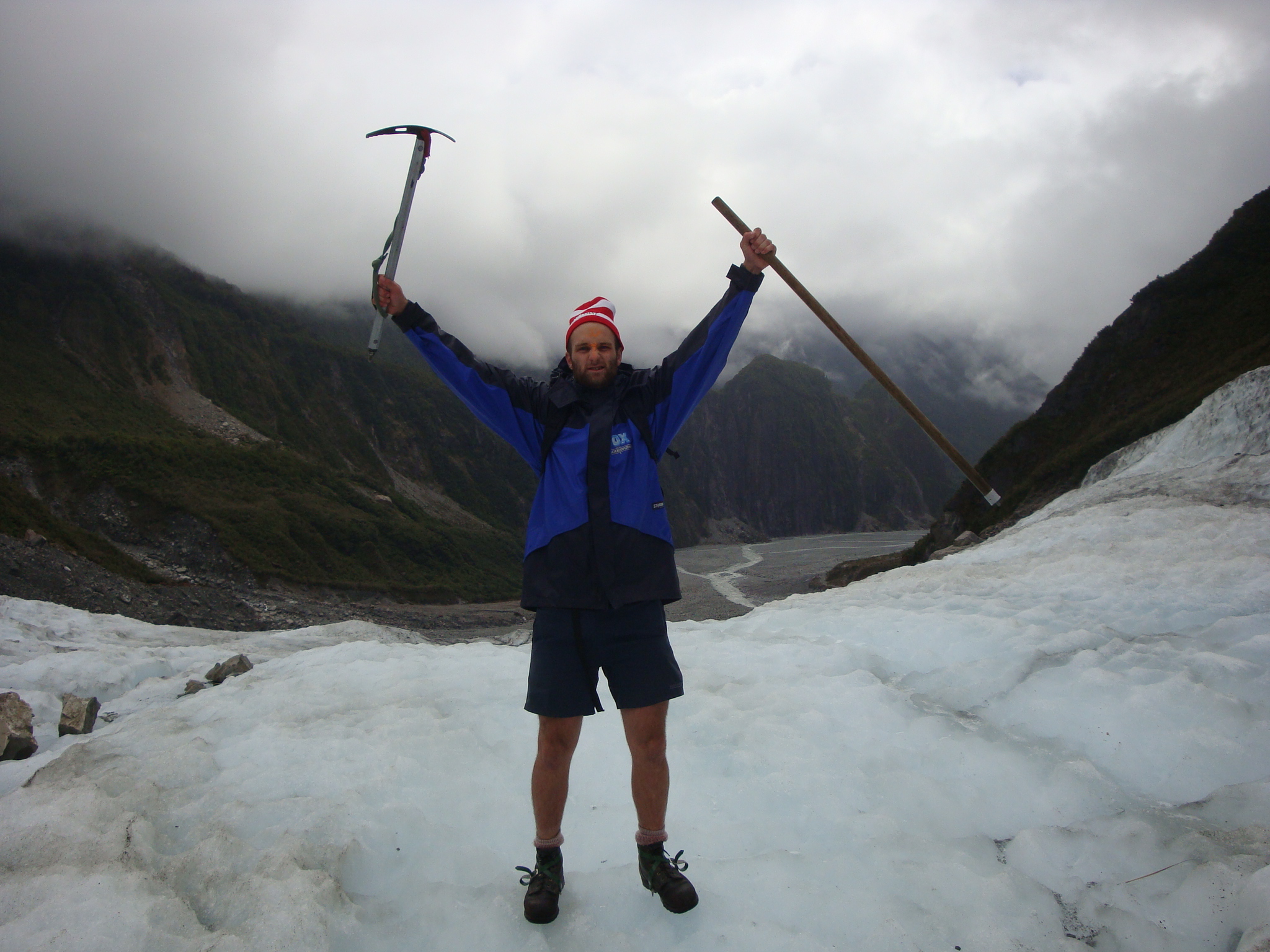
ImageGetting acquainted with Fox glacier, New Zealand

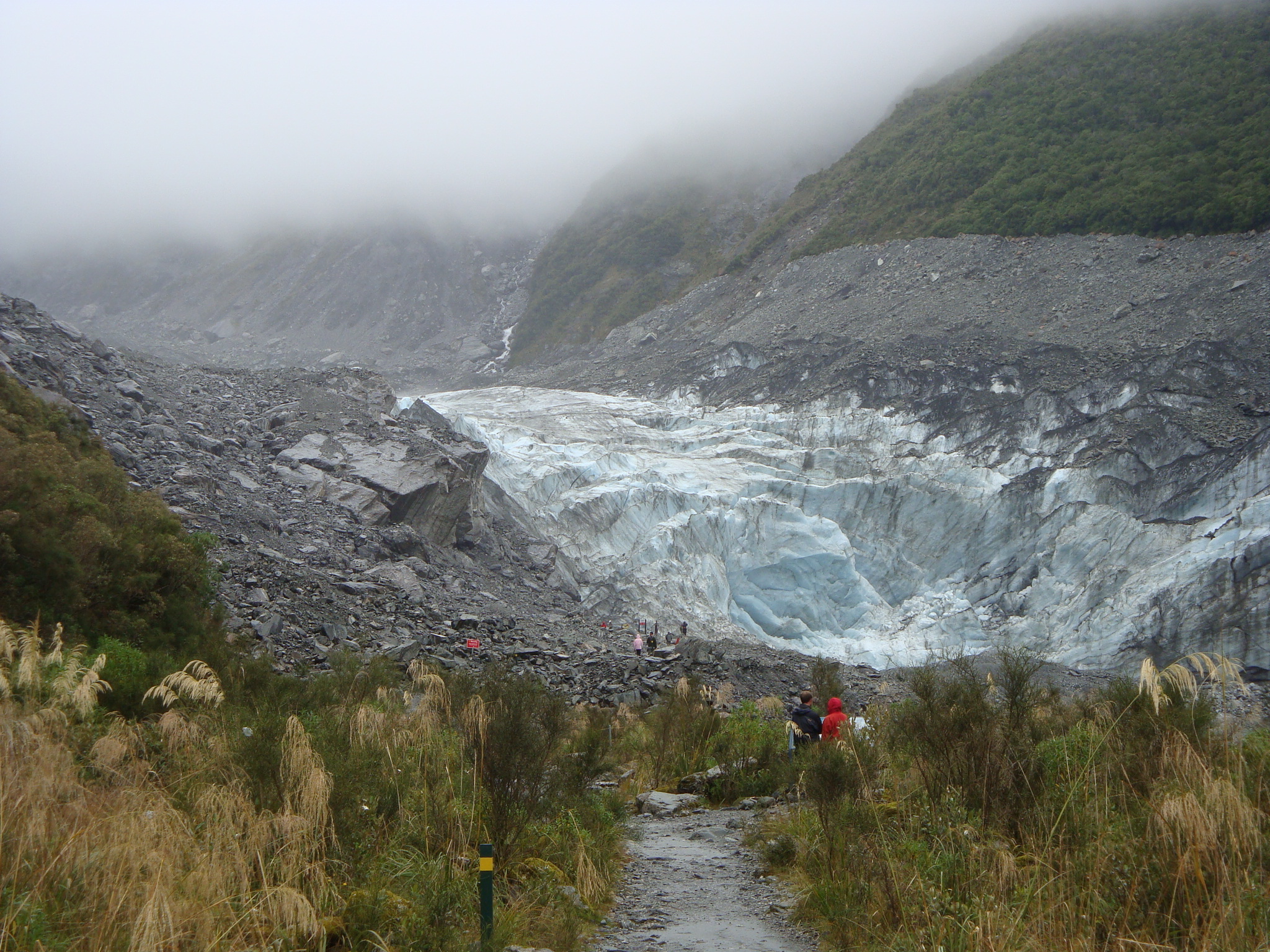
ImageFox glacier’s terminal face, New Zealand

Nevertheless, as I found out, the expanse of global ice may even surprise many of you who haven’t had a chance or taken the time to research it. The extent of glaciers ranges across different latitudes and are all around us. They are more common in some places than others for example Antarctica and Greenland have more than Africa, would you believe it?

ImageHelheim, Greenland 2012 – Klaus Thymann

It is terrible and surprising to learn that these majestic naturally occurring phenomena are diminishing. There are projects that attempt to promote awareness and coverage but in Australia, these are overshadowed by the liberal governments failures. To me this is unacceptable, how is my love story to continue if the glaciers are shrinking? There are some groups such as Project Pressure which attempt to “document the world’s vanishing glaciers in order to highlight the impact of climate change, inspiring action and participation”. Klaus Thymann, the project’s artistic director speaks of it being a venture that seeks to accrue a visual archive of the globe’s glaciers, not just from an artistic perspective but from a scientific one as well. Unlike a lot of other organisations everyone can contribute to this project, through uploading their own photographs or simply discussing its importance.

This topic is of particular relevance due to the recent reports of many environmental publications about the ‘unstoppable nature’ of some glaciers. The ones I refer to are of course located in the well-known western Antarctica ice sheet/shelf. This is a direct impact of the effects of climate change and should not be news to any environment enthusiast, I hope. This will be a direct correlation to future sea level rises. However the glaciers in this area will not be the only ones affected, for example Greenland is also experiencing unprecedented melting and the majority of the African continental glaciers are diminishing at a drastic rate. The iconic Ruwenzori Mountain glaciers have diminished by 50% within the last century. This is alarming not only for my love affair, but for the global community.

These ice giants must receive greater recognition, not just because of this tragedy but also for their general importance. James Balog, a former climate change sceptic and acclaimed environmental photographer made this more of a reality when he went on a journey to the Arctic to capture these disappearing pulsing ice structures. His scepticism soon changed as he witnessed the declining phenomena and went on to film ‘Chasing Ice’ (above). “This is the story of one man’s mission to change the tide of history by gathering undeniable evidence of our changing planet.” This film illustrates the growing significance of glaciers in the face of irreversible damage that is deeper than just its beauty and vastness.

I encourage you to share the stories of these ice giants and maybe, together, we can keep my love affair alive.

Richert Ahlers (U5537966)

Posted in Uncategorized | 2 Comments

Net Avoided Emission: An alternative mechanism to Biodiversity Conservation

yasuni itt6The UN program Reducing Emissions from Deforestation and forest Degradation known as REDD and its complementary program REDD+. Aim to reduce greenhouse gas (GHG) emissions by protecting forest. This is avoiding lost habitat, which is a direct effect on biodiversity loss.

Nevertheless the applicability of the REDD and REDD+ mechanism is a difficult task to apply by developing countries due to their situation of vulnerability, which can be understood as the lack of governance, political stability and civil empowerment over the natural resources. It is argued that the assumptions that underpin the REDD and REDD+ mechanism, misinterpret the real situation of developing countries. Some of the criticism to REDD can be found (Here or here).

As an alternative to the REDD mechanism, the Government of Ecuador in 2007 proposed the ‘Yasuni ITT’ initiative (Here) (which proposed to leave indefinitely underground reserves of 846 million barrels of oil, under the condition of necessary compensation by the international community). Through this initiative Ecuador posed the concept of Net Avoided Emissions (NAE).

The ‘Yasuni ITT’ was abandoned in 2013 and the oil drill operation is now taking place in the rainforest of Ecuador. However in this blog I would like to rescue the concept that underpinned the Yasuni ITT; that is, NAE as a valuable mechanism, which can become a technical-environmental tool that could allow developing countries to contribute in the mitigation of GHG emissions, biodiversity loss and climate change. By adopting this system these countries would perceive a compensation for its environmental services avoiding the emission of CO2.


What it is the NAE?

NAE are those GHG emissions which occur within each country’s economy but are avoided.

How it works?

The host country commits to the non exploitation of certain natural resources of its territory. As a compensation for its environmental contribution, the host country must perceive a monetary retribution equivalent to the market price of total tons of CO2eq avoided, plus an additional component for biodiversity conservation. The monetary retribution must be funded by the international community, mainly throughout financial contributions to the Yasuni Trust Fund and/or recognition of Yasuni Guaranteed Certificates (CGYs) in proposed North American carbon markets. Its application allows biodiversity protection in areas where GHG emissions are avoided, e.g. by leaving fossil fuels underground.

The United Nation Framework of Climate Change (UNFCC) will play a major role as regulatory organisation. The mechanism could operates either by the agreement of a conglomerate of countries or by bilateral agreements between the parts.

Conclusion

It is important to clarify that NAE is a project/mechanism that must be developed, but its concept based on the recognition of the contribution through environmental service that the host countries will offer to the humankind and the change of the paradigm of ‘philanthropic acts’ by ‘Compensation’ are concepts that must be taken into account as a new way to focus the issue in developing countries.

Posted in Uncategorized | 1 Comment

stories of protecting Tibetan antelope

Hoh xil nature reserve is one of the original ecological environment preservations in the world, also is one of the last place of primitive states of nature.

Human being can’t live for a long time here, but it is a paradise for wild animals with wild yak, Tibetan antelope, wild donkey, bear… On the Ginghai-tibet plateau, wild animals make it enchanting and fascinating. Some experts indicate that Hoh xil nature reserve is one of most abundant animal resources areas in China with 230 sorts of wild animals.

The Tibetan antelope is a unique species in China, and they’ve lived in this land for tens of millions of years just because they belong to there.

Image

However, people started large-scale of crazy massacre for Tibetan antelope’s leathers in 1980’s. Unfortunately, the Tibetan antelope has a deadly habit that they never run out of the range of light irradiation, then the poachers easy to catch them and shoot. An American expert, Dr Schaller said, “if large-scale poaching continues, then the population of Tibetan antelope will only remaining increasingly less, within a few years, the number of them will be sharply reduced and they will live in a miserable situation.”

Image

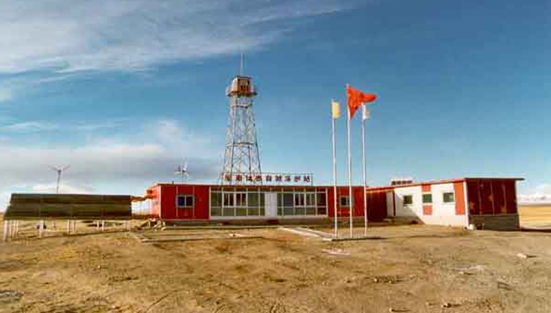
Tibetan antelope was listed as a vulnerable species in 1996 by the international union for conservation of nature and was listed as endangered species in 2000. In recent years, China intensify protection of the wild animals and take several measures including establishing multiple protection stations and permission prohibited hunting and trade; thus, the Tibetan antelope and other wild animals living environment constantly improved and the population and number increase year by year. Currently, there are about 80000 to 100000 Tibetan antelope around the region. The staff of protection stations can see the figure of their running, playing, and freely drinking everywhere.

However, there are many of difficulties for the staff of protection stations such as oxygen deficiency, backward equipment and lack of financial support. One of my friends used to be a voluntary worker in the region, he told me that it spends 20000 Chinese Yuan to have an inspection tour because of massive gas consumption; moreover, cross-country jeeps are vulnerable to be declared useless. Also, there are only 35 official staff with 240000 Chinese Yuan national financial support to hang in there by 6 mouths. Put simply, they do such a meaningful job in a tough circumstance.

Image

He also told me a very sad story happened several years before. One of his mates, who was also a volunteer there, had daily inspection and collect garbage as usual; however, during his tour, the car was broken down. Finally, he was freeze to death till his mates found him next morning. He was only 21 years old at that time, his name is Yong Feng. Rest in peace, hero!

       Image

Here I want to pay tribute to all those working in the exceptionally difficult situation. Also, I want to appeal to government to provide more supporting.

Posted in Uncategorized | 1 Comment

Conservation without borders

During the first two days of April this year, I was involved in a volunteer work at Scottsdale Reserve, at 75km south of Canberra. Historically, the area suffered a lot with invasive species, over-grazing and altered fire regimes. One might think that it was a lost case, that conservation efforts would not be able to recover what’s been lost, that the damage was done.

But not for Bush Heritage Australia!

In 2006 this non-profit organization acquired the 1328 hectares and, with the help of supporters and an intensive volunteer work, was able to make progress in restoring native grassland and grassy woodlands, and also protecting native fauna.

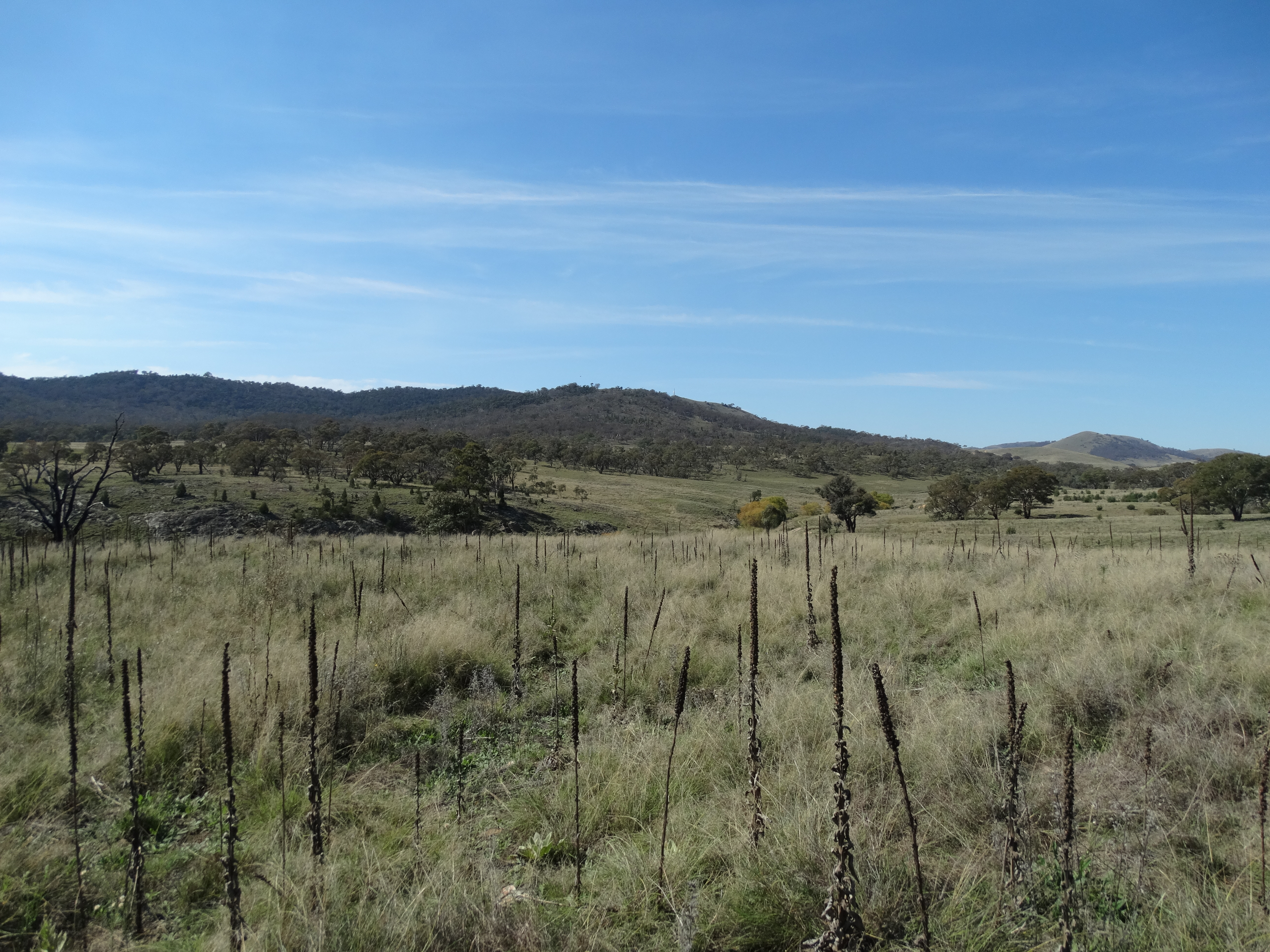
  ImageScottsdale Reserve

My little contribution to this project consisted in help monitoring of reptiles, kangaroo grazing and invasive animals.

Scottsdale reserve contains 16 reptile species with some listed as vulnerable nationally, like the striped legless lizard. In order to monitor their occurrence in the reserve we went to pre-determined sites which had several transects. Each transects had a certain amount of numbered tiles and our job was basically lift all of them looking for any reptile. Then, we got the animals, identified them and recorded their occurrence in our data sheet. Let’s just say that it is a lot harder than it seems, they were incredibly fast and small, almost too fast for me!

We were able to record mainly delicate skinks, three-toe skinks and grass skinks:

Image

Image

 Grass skink (Lampropholis guitchenoti)


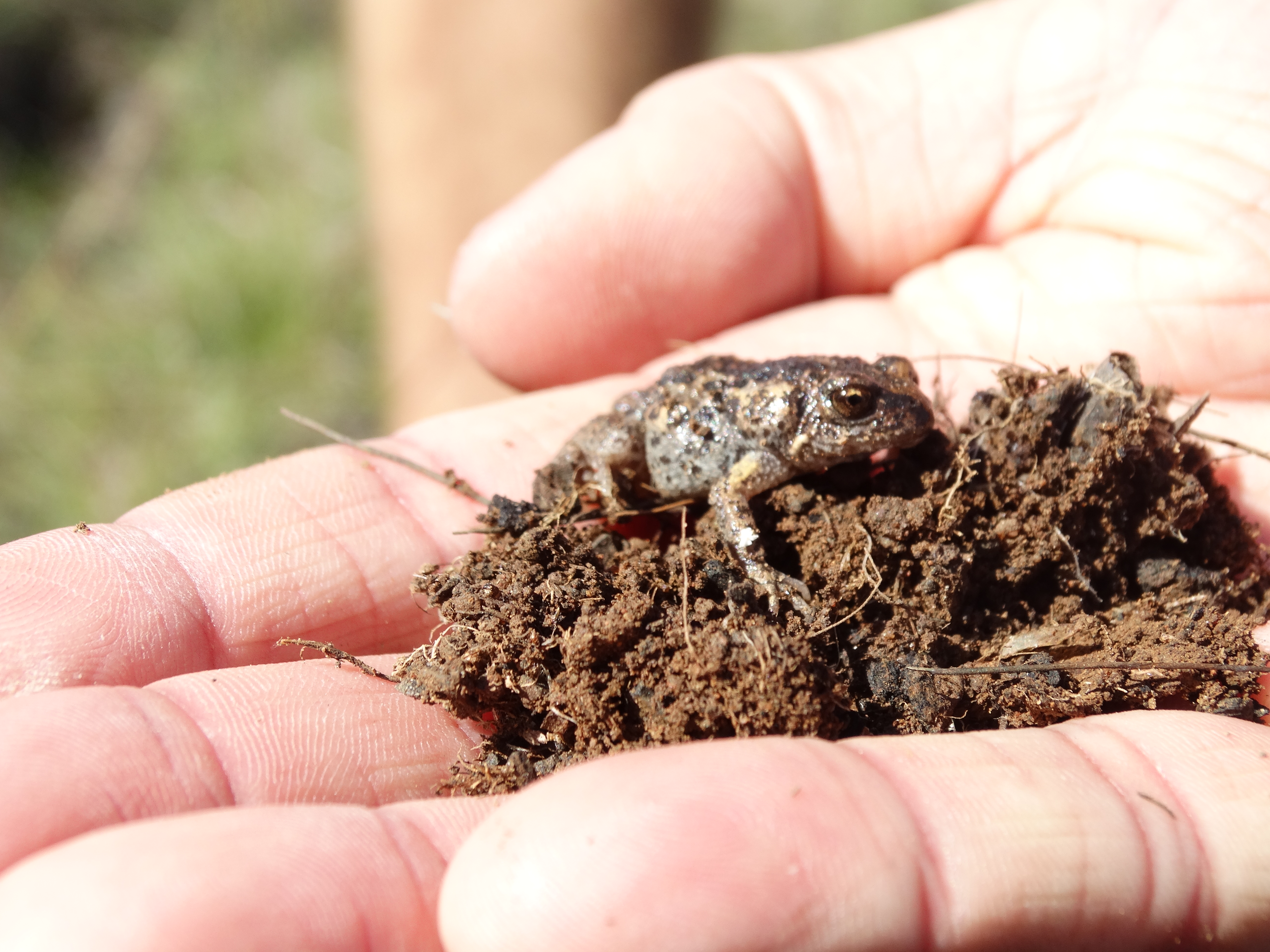
We also found a species of frog!!! =D

Image


 Besides spending hours lifting tiles, we also participated in kangaroo surveying. You might be thinking that we would spend the whole afternoon looking for those cute and furry animals, but the truth is that our method is much less glamorous than that…instead, we had to count kangaroo pellets.

Counting their pellets is one of the most popular (if you can say so) methods in surveying population size. We delimitated 100m transects and put markers each 6m. In these spots we delimitated a circular area of 1m diameter and then we cleared all the pellets. Some weeks from that day someone would come back and count how many pellets the animals left in those areas.

Estimating number of Kangaroos in the property is vital to know how much of the area is being grazed regularly by them, as the overpopulation of these animals can be a threat to the native vegetation.

 At last, but not least, we also helped to check the fences in one area of the reserve, looking for holes that could be used by rabbits and foxes. We then installed camera traps in some of the points to check whether those paths were being used by those invasive species.

Several animals in the reserve are threatened by these species, so it is essential to control their entrance.

Image

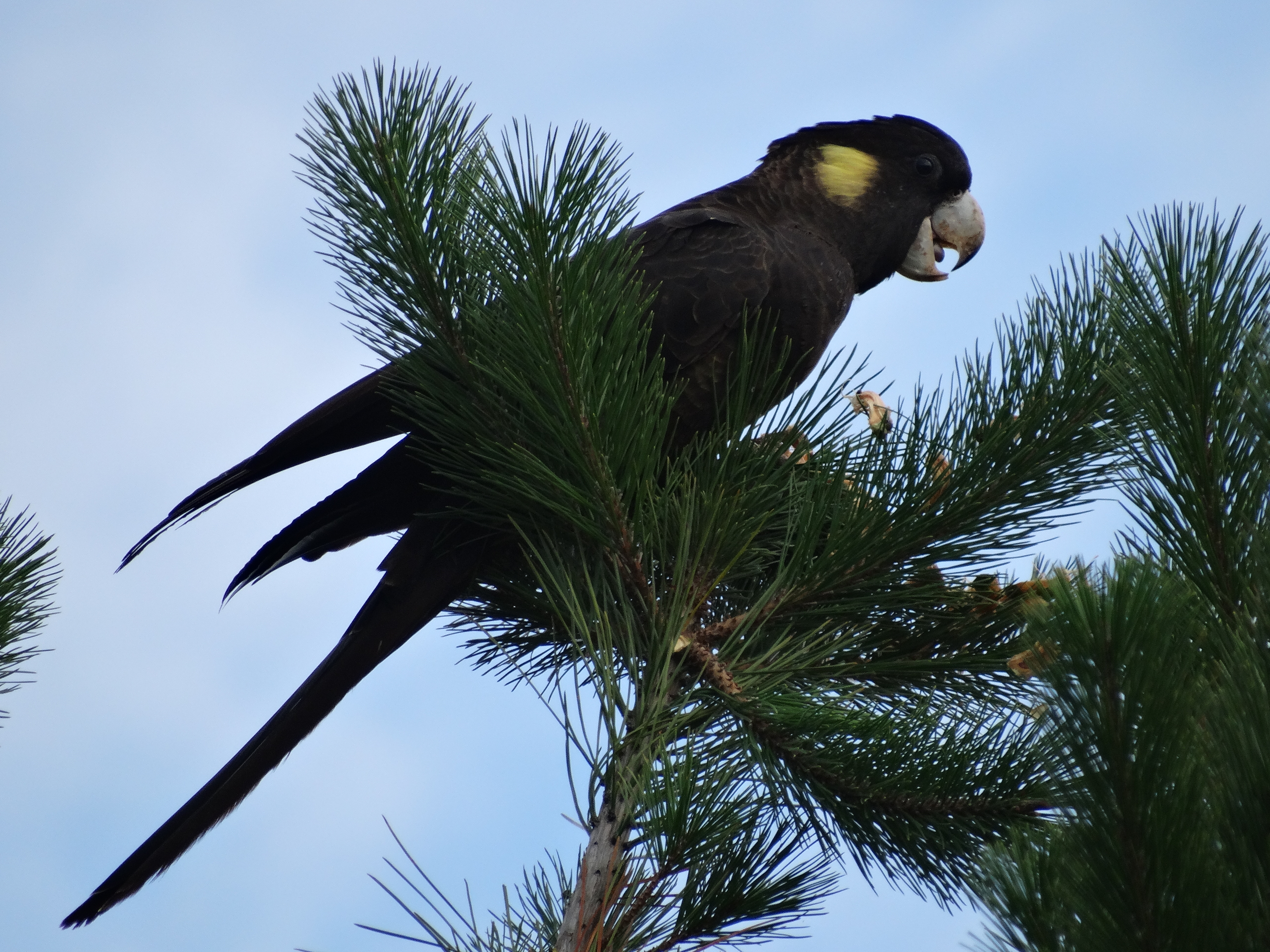
Yellow tailed black cockatoo spotted in Scottsdale Reserve.

Overall it was a great opportunity to have hands on experience in some conservation methods used in Australia and I hope I can bring back all this knowledge to home sweet home, Brazil.  


by Renata Magalhaes (u5409483)


Further reading: http://www.bushheritage.org.au/places-we-protect/state_new_south_wales/places-we-protect/state_new_south_wales/scottsdale

Posted in Uncategorized | 1 Comment

Biodiversity Conservation & Co-management in Sanjiangyuan, Qinghai-Tibet Plateau

http://www.china.org.cn/travel/2013-03/06/content_28135757_3.htm

Sanjiangyuan, Qinghai-Tibet Plateau, China [Photo/Longshang Shanliren]

Location of the Sanjiangyuan region in China    [Source: Shen & Tan 2012]

Location of the Sanjiangyuan region in China [Source: Shen & Tan 2012]


Why is Sanjiangyuan region so important?


The Sanjiangyuan (literally three rivers’ headwaters) region is located on the Qinghai-Tibet Plateau. As the name itself suggests, it is where the three headwaters of Mekong, Yangtze and Yellow Rivers emerge. In 2000, the Sanjianguan National Nature Reserve was established, and it is the second largest nature reserve in the world (152,300 km2). Around 0.3 million Tibetans, who are traditionally pastoralists, live in this region. There are also about 600 million people live alone the downstream of the three rivers. Therefore the conservation of biodiversity and ecosystem functions in Sanjiangyuan is vital for livelihoods of all those people.


(to explore more: Plateau Perspectives;
Wikipedia page of Sanjiangyuan National Nature Reserve)


Tibetan antelope   [Photo/Baidu]

Tibetan antelope [Photo/Baidu]

Snow leopard    [Photo/Juan Li/Peking University and Shanshui Conservation Center]

Snow leopard [Photo/Juan Li/Peking University and Shanshui Conservation Center]


Apart from the ecosystem services it provides, the Sanjiangyuan region also has one of the highest concentration of biodiversity among the high altitude regions in the world. Also, many types of alpine flora and fauna are unique to this region (See Shen & Tan 2012; Shi et al. 2012), such as Tibetan antelope (Pantholops hodgsonii), Glover’s pika (Ochotona gloveri), Likiang pitviper (Gloydius monticola) and so on. Hence the irreplaceability of local ecosystems, species and genetic diversity in Sanjiangyuan makes the conservation of biodiversity in this region even more important.


Glover's pika  [Photo/Dong Lei]

Glover’s pika [Photo/Dong Lei]

Prickly Blue poppy [Photo/Dong Lei]

Prickly Blue poppy [Photo/Dong Lei]


Threats to local environment


However, in the past several decades, there was a rapid environmental degradation in Sanjiangyuan region, and it could be a result of a combination of anthropogenic activities (such as fencing the pastures according to national natural resources governance policies, over-grazing, expanding population, waste disposal, poaching, illegal mining and so on) and impacts of climate change. Also, shortage in funding from local government impeded the official conservation work of the Sanjianguan National Nature Reserve.


Likiang pitviper [Photo/Peng Jiansheng]

Likiang pitviper [Photo/Peng Jiansheng]

Tibetan sand fox [Photo/Peng Jiansheng]

Tibetan sand fox [Photo/Peng Jiansheng]


Moving towards co-management


As a result, there have been more voices asking for co-management of the reserve in recent years. Because of the uniqueness and fragility of the ecosystems in Sanjianguan region, and also due to the ineffectiveness of management conducted by governmental organisations, more and more researchers and local Tibetans believe that the communities should participate more in the biodiversity conservation work in Sanjiangyuan, and more traditional knowledge about environmental protection should be recognised and incorporated into conservation practice.


Thermokarst [Photo/Xu Jian]

Thermokarst [Photo/Xu Jian]

Kiang [Photo/ Chen Youjun]

Kiang [Photo/ Chen Youjun]


In 2007, Shanshui Conservation Centre, a local environmental NGO, started a project with the help of Conservation International, in order to promote traditional environmental knowledge and practices. The projects aims to link local Tibetan communities with scientific community from outside Sanjiangyuan, and with mainstream Chinese society by organising conferences, meetings, tours, movie exhibitions, to bring together ecologists, anthropologists, monks, local herders, university students and so on, and build channels for communication. The Shanshui Conservation Centre also connected with higher-level policy makers through personal relationships. In the end, the Sanjianguan National Nature Reserve turned over the management and conservation works of some areas of the reserve to local Tibetan communities, under an agreement, in which conservation plans and monitoring indicators were clearly specified.


Community members display their conservation commitments and the benefits they receive through the Conservation Concession program [Photo/Shanshui Conservation Center]

Community members display their conservation commitments and the benefits they receive through the Conservation Concession program [Photo/Shanshui Conservation Center]


Although, from experiences of co-management schemes around the world, there is still a long way to go for the local communities to achieve fully successful conservation actions, this is already a good start. Let’s wish them good luck on the journey of conserving their homeland!


Monk giving offering [Photo/Peng Jiansheng]

Monk giving offering [Photo/Peng Jiansheng]


(check this report for information of other community-based conservation works)


posted by u4780526


References


Foggin, M 2012, ‘Pastoralists and wildlife conservation in western China: collaborative management within protected areas on the Tibetan Plateau’, Pastoralism: Research, Policy and Practice, vol. 2, no. 17, viewed 21 May 2014.

Snowland Great Rivers Environmental Protection Association 2005, Green community network – public participation of ecological environmental protection action plan, Snowland Great Rivers Environmental Protection Association, viewed 03 June 2013, (in Chinese).

Shen, X & Tan, J 2012 ‘Ecological conservation, cultural preservation, and a bridge between: the journey of Shanshui Conservation Center in the Sanjiangyuan region, Qinghai-Tibetan Plateau, China’, Ecology and Society, viewed 21 May 2014.

Shi, Y, Baumann, F, Ma, Y, Song, C, Kuhn, P, Scholten, T & He, JS 2012, ‘Organic and inorganic carbon in the topsoil of the Mongolian and Tibetan grasslands: pattern, control and implications’, Biogeosciences, vol. 9, pp. 2287-2299.


Sources:

http://slide.news.sina.com.cn/green/slide_1_28436_27117.html#p=1

http://www.qhnews.com/newscenter/system/2009/11/23/010012492.shtml

Four Cats in One Day

http://chinatibet.people.com.cn/96060/7293511.html

http://www.china.org.cn/travel/2013-03/06/content_28135757_3.htm

Sanjiangyuan

http://www.discoverwildlife.com/gallery/bbc-wildlife-camera-trap-photo-year-2013-winners

Posted in Uncategorized | 3 Comments

Let the Corals Bloom

Palm trees, blue lagoons, the sunset, a gentle breeze with a sense of ocean and girls in bikini… There are countless elements about the attraction of tropical islands we can talk about, but the most beautiful feature I encountered in my volunteering work in Fiji Islands is the blooming corals in a coral plantation.
Coral reefs are one of the most diverse ecosystem on this planet. From a conservation perspective, coral reefs provide shelters and food sources for about 4,000 fish species and hundreds of other species, including the threatened Natator depressus (flatback sea turtle) (NOAA 2008). Coral reef conservation can be a smart and effective way to protect habitats for many marine species. From a socio-economic perspective, the potential medical value in corals are unlimited. Coral reef plants and animals have been considered as a key to discover new medicines, some of them even have the possibility to cure cancer. (NOAA 2008)


The coral plantation in the North-East Naviti Island is a pilot program under local sea turtle conservation projects, by bringing their habitats back, matured baby turtles in the sea turtle nursery will have somewhere nice and safe to live and prosper. The idea of planting corals was inspired by coral reef management back to the end of last century. Marine scientists found that corals have a strong intention to stay together (no matter the place is already like a Japanese train in rush hour!), and this habit is killing themselves. Therefore, people up-root some of corals and put them elsewhere, and most of them lived after this human interference.

turtles conservation in Bounty Island

Sea turtles nursery in Bounty Island (1)

turtles conservation 2

Sea turtles nursery in Bounty Island (2)


Many coral reef restoration program starts with planting asexual materials (normally cut-offs from the top of different matured corals) that collected from natural coral reefs in a water tank, but the limited funding drives

The process of coral growing

The process of growing corals in 6 months – 12 months – 18 months – 24 months (Picture synthesised from BBC sources)

people in Naviti to use more local resources — constructing the coral nursery in shallow lagoons! The coral nursery is a platform comprised of iron nets, all the little “buds” that collected from natural coral reefs will be placed on man-made bases, which provide nutrients to coral buds, especially calcium. In previous experiments, people electrified the iron net in order to stimulate the concentration of calcium. After 6 months, coral buds on the iron net become bigger and more adaptive, they will be moved to a bigger space to grow. After another 18 months, they are as mature as coral reefs in the natural habitat. Most of them will be move back to the coral colonisation, others can provide seeds for the next planting session.

matured corals

Matured coral reefs in Naviti Island


It was a four-day stay in Naviti Island, most of staff went to celebrate Easter holiday, so I did not have a chance to witness the entire process of coral planting, not to mention the whole process of growing. The biggest relief during this trip is that after seeing many coral reefs destroyed in intense tourism development (such as Bounty Island), we finally start to restore the habitats for coastal fish and sea turtles. In the other side of Naviti Island, local villagers and tourists were dancing with indigenous songs in the sunset.

sunset

The beautiful sunset in the West shore of Naviti Island

Thanks for reading!


Reference:
NOAA 2008, Importance of Coral Reefs, National Oceanic and Atmospheric Administration, US Department of Commerce. Accessed 01 May 2014. Available at <http://oceanservice.noaa.gov/education/kits/corals/coral07_importance.html>.

Posted in Uncategorized | 3 Comments

The Art of Farming Ecologically – Maddara


Liam Bergin – u5177163

From Productivity to Sustainability The Green Revolution incorporated a wave of funding to increase the use of technology available to stimulate productivity. Productivity became the central focus due to a high demand for produce – famine was crippling nations. Investment produced widespread use and acceptance of pesticides, treatment methods,damming and irrigation, hybrid and genetically modified seeds including synthetic nitrogen fertiliser. This movement was correctly implemented for the challenges we were facing in the 1940’s – 60’s, however, this had an impact on the quality of land. The time has now come to refocus technology and techniques to work with earth’s natural processes rather than controlling it. This incorporates the argument that humans should be stewards not owners of the land. Land holders have a unique opportunity to decide what type of management approach they would like to take on board.

Reed Beds

The Maddara farm has established a reed bed within the septic system. This is an alternate method to paying for septic removal where the contents are then processed through sewage plants using filtration and treatment using chemicals. The reed bed septic system balances water flow so that the microbiology within the root system can convert ammonium into nitrates. The nitrates are absorbed by the plants and used for growth. This is a mutualistic relationship where both species (microbes and reeds) are benefiting from the process. To manage this system work I completed included weed removal, structural maintenance to the top soil and some replanting. Benefits to establishing reed growth include buffering for agricultural runoff to begin closing system processes where waste can be reused for ecosystem development. Acknowledging and maintaining hidden variables such as waste runoff prevent the system from reaching undesired thresholds. farm 01

Top Soil Upon original purchase of the property the top soil had low quality and depth. Weed slashing, grass cutting and cell grazing has been used to increase the organic matter in the soil. This begins to strengthen natural processes of organic breakdown, therefore, increasing the health and fertility of the soil. Such a management process begins to redefine what waste is. With balance and proper maintenance natural earth cycles can be used to strengthen the productivity of the farm system rather than controlling and manipulating them with fertilisers and pesticides. To manage this system work I completed included weed slashing and dispersawaste products which will promote further grassland growth. Benefits to this approach include restocking of soil nutrients so promote longevity of the system.

farm 02

Conclusion This work experience has given me first-hand knowledge and skills of how to manage a farm from the viewpoint of a land steward who increases the productivity of ecosystem processes ecologically. Technology and techniques have been used to strengthen and work within ecosystem processes that already exist. Waste and undesired plant growth has been used as an input to provide life to the system. A land use example such as this provides a perfect starting point towards sustainable food production on farms.

Posted in Uncategorized | 1 Comment

The extinction under my shoes

As a student of the Biodiversity Conservation course, I have realised about the large number of animals and plants that are, unfortunately, endangered in Australia. In many of the classes I have noticed that these species are near from cities and they are increasingly threatened by clearing vegetation for building urban areas and agriculture projects.

Therefore, I thought that the extinction was very close to me, but I would have never guessed that was under my shoes. Yes, as you hear, under my shoes! Or more accurately, behind the Crawford School building, where each week I go to feed my brain with knowledge, but at the same time, without the knowledge of the richness around.

Crawford BuildingPhoto by Crawford School

Near this area, it is still possible to find a beautiful flower called Nodding Chocolate Lily, which as its name suggests, has a characteristic smell like chocolate that it is revealed at the blooming time; which occurs between the months of August and January. In addition, it adds to their common name, nodding, probably by the characteristic movement of the flowers in the wind.

chocolate-lilyPhoto by NaturallySouthAustralia

Thanks to the efforts of the ANU Green program, this beautiful plant has been shown in the media to create awareness about the delicate condition within Australia threatened species. Also, ANU Green has created programs for cleaning and removing weeds in the area to ensure this Nodding Chocolate Lily community to have the chance to prevail for many years.

20061120094002_chocolate-lilyPhoto by David Kleinert Photography

As a result, this experience made me think about the time when the management plans were designed and the vegetation was removed to construct the school. Do you think that any of the workers or engineers stopped to think about the source of such exquisite smell that invited to do a break to enjoy a cup of chocolate?

Well, I invite you to visit the place to meet this beautiful plant; and then, probably to crave with a delicious cup of hot chocolate.

Posted by Linette Alfaro Cordero


Posted in Uncategorized | 1 Comment