Weed Warfare: The ongoing battle to fight against invasive plants in Australia

The assault on the invaders

Scenic, picturesque beaches are a common sight in Western Australia, and I was lucky enough to be involved in some conservation work along the beautiful coast of Sorrento during the mid-semester break when I returned home. Over two days, under the enthusiastic guidance from Karis, the project co-ordinator, myself and a small group of keen volunteers were armed with gloves, bags, a trusty shovel and, one of the best tools for the job, our hands; and we were ready to hand weed the coastal dunes of Sorrento. Our main targets were dune onion weed (Trachyandra divaricata), a native of South Africa,  sea spurge (Euphorbia paralias), a native of Europe, Northern Africa and Western Asia, and rose pelargonium (Pelargonium capitatum), endemic to South Africa. These three species are all alien to Australia, and, more importantly, unwanted and threatening to Australia’s coastal habitats.
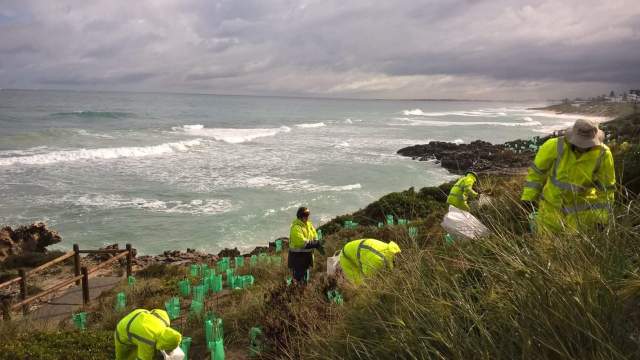
Hard at work: hand weeding along the Sorrento coast

Hard at work: hand weeding along the Sorrento coast

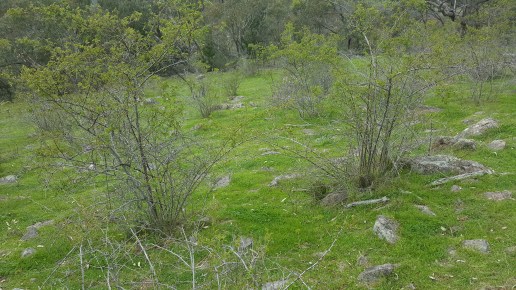
My conservation work continued back in Canberra, where I volunteered with the passionate project co-ordinator Tim for a day to continue the battle against invasive plant species on the other side of Australia. This time, I was high up in Isaacs Ridge Nature Reserve in South Canberra, where I had a beautiful view of the green hills in the distance. It would have been a perfect view, except for one thing… there were countless sweet briar (Rosa rubiginosa), lining the horizon and were alarmingly widespread throughout the area we were in.
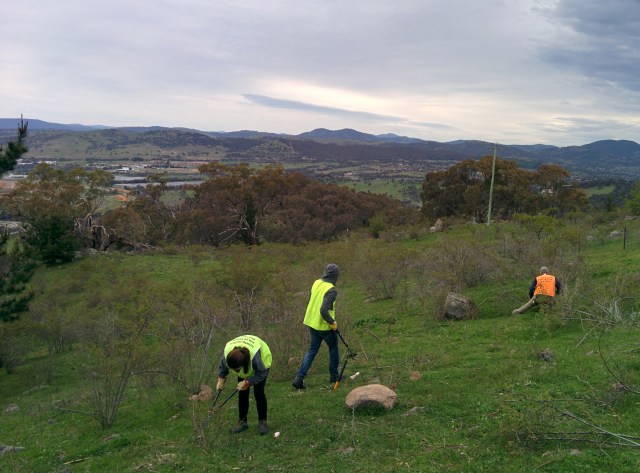
Isaac Ridge Nature Reserve, a nice view were it not for the sweet briar!

Isaac Ridge Nature Reserve: Had it not been for sweet briar, it would have been a lovely view.

A freshly applied solution of glyphosate to the cut stems keeps the weed away!

A freshly applied solution of glyphosate to the cut stems keeps the weed away!

Sweet briar is not easy to take down, and proved to be trickier to remove than the coastal species in WA, as the plant is painfully covered with needle-like thorns (equipping very thick gloves and clothing is advised!), and after cutting through the stem, glyphosate chemical must be applied to the exposed stem almost immediately, as after 15 seconds, sweet briar will begin to heal the cut, foiling the chance to kill it. This method of stem injection relies on the active uptake and growth of the plant to move the chemical through its tissue to ultimately bring it down for good.

Casualties of war

Along Sorrento coast in Western Australia, the native plant species that were threatened by dune onion weed, sea spurge and rose pelargonium were mainly Spinifex spp. and goat’s foot convolvulus (Ipomoea pes-caprae). The invasive coastal weeds compete aggressively for resources, and can rapidly replace the native coastal flora, and establish dense infestations, with sea spurge believed to be able to alter the natural shape and structure of beach and dunes, and has adverse effects on the nesting habitat of a range of threatened shorebirds.

From left to right:

(L-R) Dune onion weed, sea spurge & rose pelargonium: the beach invaders
Source: Urban Bushland Council WA & Warweeds
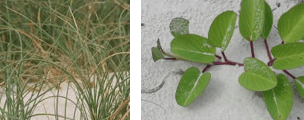
(L-R):

(L-R) Spinifex spp. & goat’s foot convolvulus: the beach natives
Source: Urban Bushland Council WA

Back in Canberra, while sweet briar looks quite pretty when it flowers, it absolutely does not belong in Australia’s native grasslands. Native to Europe and Western Asia, sweet briar can rapidly take over areas as it aggressively competes with native species in the area, such as bulbine lily (Bulbine bulbosa), sheep’s burr (Acaena echinata) and Australian trefoil (Lotus australis). Isaacs Ridge Nature Reserve is also home to patches of the critically endangered White Box-Yellow Box-Blakely’s Red Gum Grassy Woodland in both woodland and open grassland forms. Sweet briar also impedes the movement of native grazing animals, and also shelters rabbits and other pest animals. 

Sweet briar

One of many invasive sweet briar in the nature reserve.

(L-R)

(L-R) Bulbine lily, sheep’s burr & Australian trefoil, just three of many native plants threatened by sweet briar in Isaacs Ridge Nature Reserve.
Source: Canberra Nature Map

Two very different locations, one very common problem: native species under threat from weeds. It is clear that biodiversity all across Australia is threatened by invasive plant species, as these foreign invaders often compete with native flora species for resources such as nutrients, water and light (Grice 2006). Invasive plants can also have bottom-up impacts in the structure of ecosystems and fauna communities (Vila et al. 2011), as there might be negative changes in the breeding or foraging habits of various endemic fauna that rely on the native species for habitat or as a food source (Vila et al. 2011). Some invasive plant species, such as buffel grass (Cenchrus ciliaris), can even change fuel properties of native ecosystems (Brooks et al. 2004), which in turn can affect fire behaviour and, ultimately, alter fire regime characteristics such as intensity, seasonality, frequency, extent and type of fire (Brooks et al. 2004).

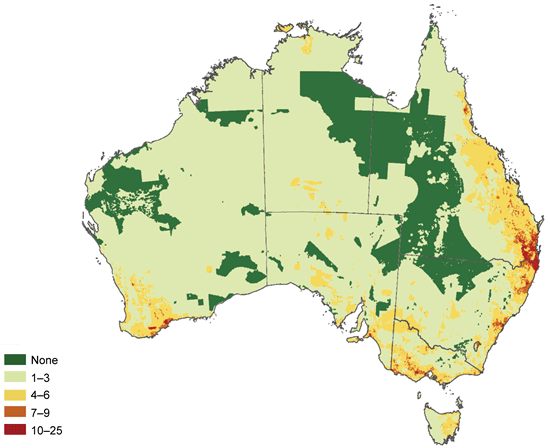
These alien invaders definitely pose severe and formidable threats to the whole of Australia, with weeds representing the second greatest threat to biodiversity in New South Wales, and there has been a correlation between invasive species and threatened species across Australia (Figure 1).
bio-fig8-15

Figure 1. Number of national listed threatened species considered to be at risk from invasive species.
Source: Australian Government (2011).

Therefore, it is evident that there are many significant benefits in working with the volunteer groups to remove the offending alien plants, as it would help the endemic flora, especially species with vulnerable or endangered statuses, to take back their native ecosystem so that they may flourish and thrive and protect biodiversity in Australia.

Invasion of the habitat snatchers

So we’ve all seen them. Invasive species are fairly ubiquitous in Australia’s grasslands and bushlands but most people don’t always know that they’re invasive and alien to this country. Sometimes all that we see is green, and we think that must be a good thing! But greenery doesn’t always mean healthy. So, how do invasive plants, like the ones I helped to remove, arrive in Australia, and why do they thrive in a place that is not their home?

Figure 1. Diagram showing propagule pressure (P), abiotic characteristics (A) and biotic characteristics (B) interact with each other to ultimately drive invasion (I), and how the additional influence of humans (H) may modify P, A and B. Source: Catford, JA, Jansson, R & Nilsson, C (2009).

Figure 2. Diagram showing propagule pressure (P), abiotic characteristics (A) and biotic characteristics
(B) interact with each other to ultimately drive invasion (I), and how the additional influence of humans
(H) may modify P, A and B.
Source: Catford, Jansson & Nilsson (2009).

Many invasive plants have been introduced to Australia since European settlement, where they were brought over for ornamental purposes. In modern times, international travel and trade have seen a large increase, that has subsequently intensified the frequency and extent of species transfer around the world, and shows no sign of slowing down (Catford, Jansson & Nilsson 2009). There are three main factors that contribute to invasion success – Propagule pressure (P), abiotic characteristics (A) of the recipient environment, and biotic characteristics (B) (Catford, Jansson & Nilsson 2009) of the invading plant species and the potential environment to be invaded (Figure 2). The PAB must be accommodating for the invader plants for the actual invasion to be successful, and favourable, if the invasive plants are to thrive in their new environment (Catford, Jansson & Nilsson 2009).

Alien invasion defense strategies

Under the Australian Constitution, the Biosecurity Act 2015 enables the Australian Government to physically prevent the introduction of weeds through the inspection of incoming luggage, cargo, mail, animals and plants and their products. Each state and territory has legislation covering the control of noxious weeds, and there are currently 32 Weeds of National Significance (WoNS) identified by the Australian Government to help focus national efforts to control the impact of the WoNS at the state level.

My personal experiences with weed removal involved hand weeding and also chemical control using glyphosate, however the type of weed removal strategy is wholly dependent on the invasive plant species, and also the ecosystem it resides in, as the strategy should not also negatively impact on the native flora and fauna.

Overall, being able to take part in different weed removal projects has been admittedly not easy, and quite demanding, but it is definitely extremely fulfilling and I encourage anyone who is interested in any conservation project to volunteer with Conservation Volunteers Australia for a rewarding experience!

Li-Ann Koh (u5673835)

References

Australian Government 2011, State of the Environment 2011. Available from: http://olr.npi.gov.au/soe/2011/report/biodiversity/3-9-invasive-species-and-pathogens.html. [10 October 2016].

Brooks, ML, D’Antonio, CM, Richardson, DM, Grace, JB, Keeley, JE, DiTomaso, JM, Hobbs, RJ, Pellant, M & Pyke, D 2004, ‘Effects of invasive alien plants on fire regimes’, BioScience, vol. 54, no. 7, pp. 677-688.

Catford, JA, Jansson, R & Nilsson, C 2009, ‘Reducing redundancy in invasion ecology by integrating hypotheses into a single theoretical framework’, Diversity and Distributions, vol. 15, no. 1, pp. 22-40.

Commonwealth of Australia 2016, Weeds in Australia – Legislation. Available from: http://www.environment.gov.au/biodiversity/invasive/weeds/government/legislation.html. [10 October 2016].

Grice, AC 2006, ‘The impacts of invasive plant species on the biodiversity of Australian rangelands’, The Rangeland Journal, vol. 28, no. 1, pp. 27-35.

Vila, M, Espinar, JL, Hejda, M, Hulme, PE, Jarosik, V, Maron, JL, Pergl, J, Schaffner, U, Sun, Y & Pysek, P 2011, ‘Ecological impacts of invasive alien plants: a meta-analysis of their effects on species, communities and ecosystems’, Ecology Letters, vol. 14, no. 7, pp. 702-708.

Posted in Uncategorized | 1 Comment

Unintentional Victims of the Predator Proof Fence

Mulligans Flat and the Turtle Patrol

The Mulligans Flat Nature Reserve (Fig. 1), integrated into the greater Mulligans Flat – Goorooyarroo area can be found on the northern outskirts of Canberra. This area represents a critically endangered ecosystem of grassy box-gum woodland that was seriously degraded after 150 years of grazing practices. The Mulligans Flat Nature Reserve covers an area of 765ha with around 60% enclosed by a predator-proof fence (Shorthouse, et al., 2012).

mfr_map

Fig. 1: Mulligans Flat Nature Reserve, located near Canberra’s northern most suburbs

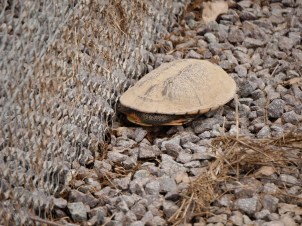
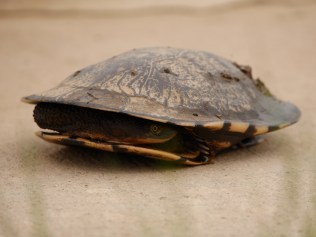
It is clear that many significant benefits have been achieved from the installation of the fence, but does present some drawbacks. I am referring to the native residents that are restricted by this boundary line, potentially putting some vulnerable creatures at risk. The known impacts mostly including disrupting movements of reptiles and mammals of which, the eastern long-necked turtle (Chelodina longicollis) is of main concern. Impacts upon the turtles include disruptions to migratory patterns as well as increased mortality rates from exposure, entanglement and predation (Ferronato, et al,. 2014).

One of the many Eastern Long-necked Turtles found on my patrol - Photograph: Gareth Quirke

One of the many Eastern Long-necked Turtles found on my patrol – Photograph:  Gareth Quirke

The issue that arises from a park managers perspective is that the fence itself is quite costly to maintain, hence continuously managing these turtle populations becomes quite time consuming. It is for this reason that Mulligans Flat relies heavily upon the enthusiastic involvement of community volunteers to help and protect the local turtle populations.

Eastern Long-necked turtle trapped on predator proof fence. Photograph: Gareth Quirke

Eastern Long-necked turtle trapped on predator proof fence – Photograph: Gareth Quirke

Recent studies in the area have shown the scale of this issue for the reserve. More than half of all reptiles caught on the fence tend to be the eastern long-necked turtle.What was worse is that an astonishing 9 out of 10 turtle deaths in and around the park were fence related (Ferronato, et al,. 2014).The most common causes for statistics was due to over-heating, followed by fox predation, vehicular collisions and entanglement. Being able to help prevent these turtle deaths is the reason that I, and so many other volunteers chose to join the Mulligans Flat Turtle Patrol.


The Work Itself  (13/9 – 12/10)

This volunteer work included a combination of turtle relocations and data logging. The majority of the time consisted of numerous walks up and down the southern perimeter of Mulligans Flat.The track itself can be seen in Fig. 2 which corresponds to the sightings that were recorded along the way (Fig. 3).

mfr_south

Fig. 2: The Southern Track of Mulligans Flat Nature Reserve

During the patrol, if a turtle was encountered, the first stage was to document its location through GPS coordinates to the Canberra Nature Map project. The details of individual turtle locations are used to help rangers and managers at Mulligans Flat to not only understand dynamics and populations of turtle movements, but also find hotspots to be targeted in future years. After photographed and tagged, each individual was carefully relocated 10m beyond the other side of the fence. Transportation of each turtle was carried out by placing it into a hessian bag and then carrying it by hand or in a bucket to the opposing side of the fence. This sometimes entailed large walking distances as entry gates could be anywhere up to 400m away.

Another Trapped Turtle. Photograph: Gareth Quirke

Another Trapped Turtle – Photograph: Gareth Quirke

This form of volunteer work is very popular and due to the large numbers of volunteers conducting this work, it was crucial to not move any turtle twice by accident. To ensure that a turtle wasn’t placed on the side that it was originally found, only turtles located directly on the fence were moved. Turtles away from the fence may have already been moved by previous patrols and therefore were not disturbed. While there were so many successful relocations, the nature of this work meant that unfortunately some fatalities did occur. It was the responsibility of volunteers to record each of these deaths, including its location. Each dead turtle was marked with a fluorescent paint to ensure that it was not recorded multiple times. Sightings of both dead and living turtles aims to assist managers at Mulligans Flat to identify trends of movements as well as associated potential causes of death.

As this was such a successful year for turtle rescues analysis of last years volunteer data was conducted as a comparison. It suggested that the southern section of the fence had the highest abundance of turtles relocated in 2015. So far, during the 2016-2017 period, 84 successful relocations have been made with many more still being logged every day. However, for reasons unknown, this year produced a far greater number of turtle relocations on the northern side. This knowledge has allowed for detailed ‘high traffic’ points to be located and shows how trends change between years.

The product of all this work was many successfully saved turtles and a map of wildlife sightings. As can be seen in Fig. 3, the southern fence track is shown with a variety of different symbols each representing a sighting. Alongside the turtle sightings many other animals were witnessed, each adding to the Canberra Nature Maps database. These included Shingleback lizards (Tiliqua rugosa), Bearded Dragons (Pogona barbata), Short-beaked Echidnas (Tachyglossus aculeatus) and even a Yellow Admiral Butterfly (Vanessa itea). All of my current and future sightings can all be found on my Canberra Nature Map profile as listed below.

Map of my recorded sightings recorded for the duration of volunteer work

Fig.3: Map of my recorded sightings recorded for the duration of volunteer work

The volunteering work at Mulligans Flat has a strong community base network aimed towards public involvement in the monitoring and development of the sanctuary. Without the enthusiastic support of the public for projects such as the Turtle Patrol, many aspect of the reserve would simply not be able to work as efficiently. This work has been an eye-opener, showing how easily rewarding it is knowing that a few turtle fatalities have been prevented due to the turtle watch. I will certainly be continuing on with my support at the reserve and strongly recommend others to be a part of this great experience.

Gareth Quirke – u5563390
Canberra Nature Map Profile: http://canberranaturemap.org/Community/Author/18241

Bibliography

Ferronato, B. O., Roe, J. H., & Georges, A. (2014). Reptile bycatch in a pest-exclusion fence established for wildlife reintroductions. In Nature Conservation vol.22 (pp. 577-585).

Shorthouse, D. J., Iglesias, D., Jeffress, S., Lane, S., Mills, P., Woodbridge, G., et al. (2012). The ‘making of’ the Mulligans Flat – Goorooyarroo experimental restoration project. In Ecological Management & Restoration (pp. 112-125).

Figures 1 & 2 – Adapted from Google Maps data

Figure 3 – Map found on my personal Canberra Nature Map profile

Photographs – Gareth Quirke, October 2016

Posted in Uncategorized | 1 Comment

Are Nature Reserves effective to Conserve Biodiversity in China?

Since the first nature reserves was established in 1956, there have been 2588 different of protected areas in the end of 2010 (Liu, et al., 2011). It is an unquestionable “number” that China has put lots of efforts on conserving natural environment and biodiversity. only 1657 nature reserves have set clear boundaries according to the 2014 statistics (Xu, et al., 2015). There are different levels of nature reserves in China, including national, provincial, municipal and county-level. The most effective protected areas are at the national level due to more formal, or normative way of management (Xu, et al., 2015). In fact, nature reserves have been making improvement of biodiversity in recent 60 years.

However, it is questionable that the effectiveness of those nature reserves on biodiversity conservation and sustainability. Numbers of protected areas was established urgently from 1980s to 2000s in order to reduce the pressure of economic growth on natural environment (Liu, et al., 2011). The rapid establishments of nature reserves have result in lack of management, and even “ghost” nature reserves. Only 1657 nature reserves have set clear boundaries according to the 2014 statistics (Xu, et al., 2015). There were also less effective scientific arguments about whether what to protect or what areas should be protected. Protection of biodiversity was clearly improved by protected areas for a short period, however, there is concern about the long-term effectiveness on conserving biodiversity.

There are several problems associated with current management of nature reserves in China.

Problem 1: Boundaries

Many reserves have unclear boundaries that defines scope of the protected areas, also the process of boundary survey is slow. Blindly pursuing the increases of number of nature reserves causes the establishments too urgent to have good qualities on management of conservation. It is less likely to make effective protection to natural ecosystems and biodiversity since there could be less chance to have regular management and monitoring processes. Currently the protected areas are around 13% of the total land of China, which is still 4% to achieve the objective listed in the China Biodiversity Conservation Strategy and Action Plan (Xu, et al., 2015). Reserves with clear boundaries only 61% of total reserves (Xu, et al., 2015). The main causes are informal and uncompleted procedures of establishing nature reserves.

screen-shot-2016-10-13-at-11-11-21-pm

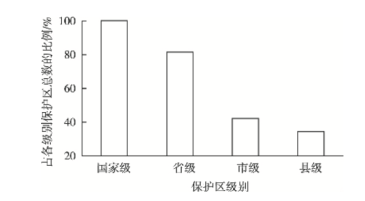
Proportions of identified boundaries

It is interesting that only national nature reserves reach the 100% reserves with delineated boundaries, however, the lower levels demonstrate a lower level of proportion of reserves with clear boundaries (Xu, et al., 2015). Without exact boundaries of nature reserves, any of those successful numbers of establishing nature reserves could only indicate a success on “paper” rather than in the aspect of any practices.


Problem 2: Strength of Conservation

Serious environmental degradation has been causing loss of habitat therefore influencing biodiversity and increasing number of species are threatened by degrading ecosystems. Nature reserves have protected ecological environment from further degradation, however, not all the species are covered by the protection. According to assessment of most nature reserves, 9.8% of native vegetation is not included in any nature reserves and many important species only distribute in very less number of nature reserves (Xu, et al., 2015). As the result, the unprotected and less protected species are almost half of total number of assessed species.

Nature reserves in China have to be divided into three main sections including the core, buffer and experimental plots. Core plot will not allow any scientific researches and public access and only experimental plot could have scientific experiments on the environment. I believe that limited researches will affect the effectiveness of conserving biodiversity in nature reserves. It is important to understand biodiversity through scientific researches before conserving biodiversity.

Problem 3: Monitoring Processes

This is related to lack of scientific researches mentioned in problem 2. The background studies of nature reserves are limited and outdated in many areas. It was indicated that some reserves had only one comprehensive scientific research at the beginning of building nature reserves. Relatively lack of scientific researches has resulted in lack of understanding on protected and unprotected species, lack of monitoring process, and insufficient management. In the aspect of adapting climate change, scientific researches are essential to monitor then help many sensitive species survive climate change.w020130110370595857340

Policies around nature reserves also need to be improved as an additional benefit of monitoring. Monitoring could provide valuable information and data to inform policy-makers about what should be done urgently or what should be changed for better outcomes.

Problem 4: Limited Information

Access to the information around management and outcome of nature reserves is limited via internet or other medias. In Australia, we could freedom-of-information-stampalways find plans or strategies of management of particular nature reserves, however, it is impossible in China. There are only general regulations or national legislations about conserving biodiversity or managing nature reserves. If works of nature reserves could be published for public access, there will be not only a proof of efforts but also more chances to improve.

U5168238 Charlie

Reference

Liu, W. et al., 2011. Current Status of Management Capability of Nature Reserves in China. Journal of Beijing Forestry University, Volume 33, pp. 49-53.

Xu, W. et al., 2015. Status Quo of Delineation of Ranges of Nature Reserves and Area of Nature Reserves Under Effective Protection in China. Journal of Ecology and Rural Environment, 31(6), pp. 791-795.

Posted in Uncategorized | 1 Comment

Set Lives Free Blindly—the Unbearable Heaviness of Biodiversity

An introspection of animal releasement based on the Piranha case study in Liujiang River, China

Setting lives free is a reflection of compassion which can make countless dying animals regain the vitality. In China, many people think the activity of setting animals free equals to saving the lives of animals, so there is a great number of people in China buy various animals from the market and release them into wild. However, there are many industrial chains derived from the increasing scale of the releasement activity in the Chinese public. More importantly, with the variety of “set animals free” activities, there were sorts of exotic animals released into the local forests and river systems. The troubles of the imbalanced ecosystem and the endangered biodiversity started to appear gradually, which not only threaten to the environment, but also cause enormous losses to the lives of people in China.

The piranha in Liujiang River, China—from “pets” to “pest”

On July 7th 2012, when Mr. Liu bathed his dog near the Liujiang River, he got attack by three Piranhas. His left hand was almost biting off a piece of meat by one of the piranhas. After that, Mr. Zhang brought one of the fishes back home, and his friend Mr. Wu also had been bitten through his thumbs by the fish when he was touching it with curiosity. On the second day, the experts found that the fish was Red-bellied piranha (Pygocentrus nattereri) which is native to South America and mainly found in Amazon River. The existence of piranha in Liujiang River comes as a shock, but how are they get into Liujiang River system is the focus of attention. According to the Department of the Fishery of China, the species was first introduced into domestic as the ornamental tropical fish, and not only Liujiang River, other river systems, especially in the southern part of China, had found the species before (Bai, 2012). Due to the serious invasion by the fish, many people, including Li Xinhui, a researcher at the Pearl River Fisheries Research Institute of the Chinese Academy of Fishery Sciences, believe that the piranhas in Liujiang River came from the activity of releasement of the fishes. At the same time, due to the similar environment conditions and the fast breeding characteristics of the fishes, the rapid increase in the number of Piranhas appeared in Liujiang River system. Mr. Li also claimed that the other fish species would be largely killed hence harm to the local ecosystem when the piranha fishes reach a certain amount in the Liujiang River (Remling, 2012).  

Piranha fish bit Mr. Liu’s left hand

Piranha fish bit Mr. Liu’s left hand

 Red-bellied piranha (Pygocentrus nattereri)

Red-bellied piranha (Pygocentrus nattereri)


The consequence of “set lives free activity”

Nevertheless, there are more than 120 invasive species in China at present, and about 50% of them are spread in a boarder range and cause hazards to the native ecosystem after the intended introduction, proliferation and releasement. China has become one of the countries which suffering the most from foreign invasive species, and the releasement of animals is one of the ways for the expansion of the exotic species.

Fierce and strong animals and fish can eliminate the other creatures in the local ecosystem, and the animal which cannot adapt the new habitat, would die and cause the problem of water and environmental pollution (Henn, 2015).

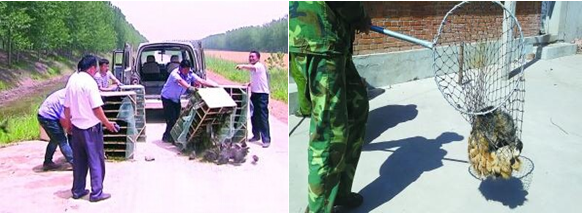
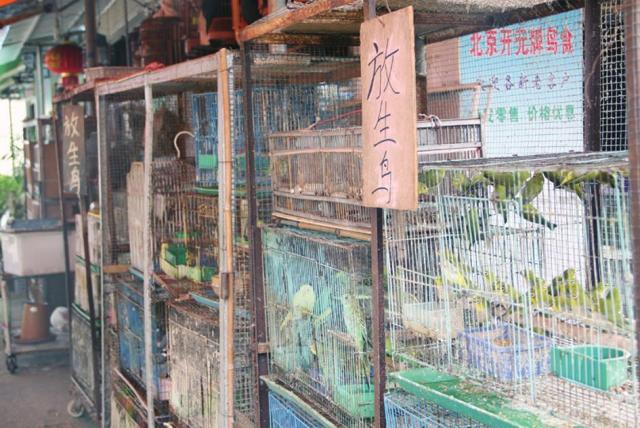
The behavior of animal releasement also stimulates the industry of capture animals. In China, there are some small retailers catch the animal from wild and sale in the market. The people are easily tempted to buy the animals and set them free. A gray industrial chains “capture—sales—release” was formed under the certain circumstance. The species like wild sparrows, crested mynas and wood thrush become a unique new category as the “released bird” with the special functions in many markets in China. Also, during the process of releasing animals, it is a common occurrence phenomenon that the people set animal free in the upstream, and the vendors catch the animal in the downstream (Xinhua, 2016).

"Released Birds" in the Chinese market

“Released Birds” in the Chinese market

The traders re-capture the released animals

The traders re-capture the released animals

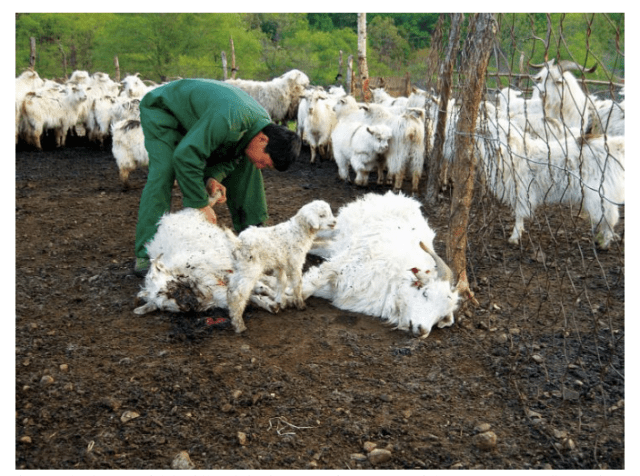
The industrial chain would harm to the wild animal, and animal releasement is worse especially to the wild animals which have already become endangered because of human activities. For the wild animals which had no trade value, they also suffer from the “value of releasement”. Those animals would have very low survival rate if they were released in the place where the habitat has the huge difference with the origin. Moreover, there are many animals in the markets are fed artificially, which have already lost the survival ability in the wild. For example, cage birds would easily die after the releasement because the lack of ability to fly and foraging. For the fish species, the mortality rate is high as well because they cannot adapt to the change of water temperature and quality (Waples and Stagoll, 1997). In this term, the behavior of “safe lives” becomes “kill lives”, and at the same time would npollute the local environment as well.

The overabundant invasive species threaten the local environment

The overabundant invasive species threaten the local environment

The released snakes in Qingzhou Forest, China

The released snakes in Qingzhou Forest, China

 The fishes died after releasement and caused water pollution

The fishes died after releasement and caused water pollution

The lack of government control

The activity of releasing animal blindly should be criticized, and the vacancy of legislation is the essential of the problem. The current Chinese legislation is mainly formulated from the aspects of listed domestic endangered species, there are few laws related to the invasive species. In the case of Piranha in Liujiang River, there is no any law and regulation which clearly pointed out such the species must be banned in the market, and the managements of the business of ornamental fish are also not clear. Due to the blind spot of the current legislation, and the lack of enforcement of the governments, the piranha fishes swam into Liujiang River and caused the hazards to the local ecosystem.  

The introspection of animal releasement

Animal releasement should be regulated strictly and scientifically. The public of China should know that the blind releasement of lives will not only bring disaster to the animals, but also cause the hazards to the local ecosystem at the same time trouble the life of human beings. Also, the Chinese governments should consummate relevant law by learning from other countries, to control the problem of pest animals and maintain the biodiversity.

References

Bai, Y. (2012). Number of piranhas in the Liujiang River under investigation. CCTV English. [online] Available at: http://english.cntv.cn/program/china24/20120713/117969.shtml [Accessed 12 Oct. 2016].

Henn, C. (2015). What Happens When People Release Exotic Animals Into the Wild. [online] One green Planet. Available at: http://www.onegreenplanet.org/animalsandnature/what-happens-when-people-release-exotic-animals-into-the-wild/ [Accessed 13 Oct. 2016].

Remling, A. (2012). Piranha Attack In China: Three Red-Bellied Piranha?s Bite Two Men In River, Alien Species To The Area. International Business Times. [online] Available at: http://www.ibtimes.com/piranha-attack-china-three-red-bellied-piranhas-bite-two-men-river-alien-species-area-721845 [Accessed 12 Oct. 2016].

Waples, K. and Stagoll, C. (1997). Ethical Issues in the Release of Animals from Captivity. BioScience, 47(2), pp.115-121.

Xinhua, K. (2016). Release of animals into the wild threatens ecosystem. China Daily. [online] Available at: http://www.chinadaily.com.cn/china/2016-05/10/content_25179474.htm [Accessed 13 Oct. 2016].

U5066156

Jiahui Luo (Livia)


Posted in Uncategorized | 2 Comments

Park care in Isaacs Ridge Nature Reserve: controlling Sweet baiar for biodiversity conservation

Isaacs Ridge Nature Reserve (-35°22’0.84″, 149°7’4.8″) is one of the Canberra Nature Park around Isaacs, South Canberra. This reserve contains the various vegetation types like box gum grassy woodland and pine tree plantation. It’s also significant for threatened fauna like Speckled warbler (Chthonicola sagittata) and Varied sittella (Daphoenositta chrysoptera), the threatened flora includes Australian trefoil (Lotus australis), Black mountain leopard orchid (Diuris nigromontana), Black tongue caladenia (Caladenia congesta) and Emu-foot (Cullen tenax). Isaaca Ridge Nature Reserve sustains the local biodiversity level and maintains the environmental biomass.

Nevertheless, some environmental issues were emerged when park managers regulate this reserve. The invasive weed species has become the annoying environmental problem in Isaac Ridge Nature Reserve even all Parks in Australia. Briar rose or Sweet briar (Rosa rubiginosa) is one of the weed species in Isaacs Ridge Nature Reserve. Sweet briar is a species of rose native to Europe and western Asia. In a commercial aspect, its scent and hips would be valued, however in ecological aspect, its regards as extreme invasive species in Australia.

sweet_briar_flower

Sweet briar (Rosa rubiginosa)

Sweet briar is a common sight in both the ACT area and surrounding tableland and spread into pasture, native grassland and bushland. Sweet briar is a perennial shrubs with multiply stems and can be growing 1.5m to 2m. It mainly spreads the dispersal of seed by bird eats or dropping the seed. This species prefers the well-drained area in unimproved grasslands and disturbed bushland, it’s verified that there were a bunch of sweet briar around the upper hill in Isaacs Reserve.

724268992988395786

Sweet briar (Rosa rubiginosa) in Isaacs Nature Reserve

Sweet briar could be the environmental problems because it has the aggressive competition with other native species and provides the excellent harbour for pest animals like feral fox and rabbit. Additionally, quick growth rate and distribution of this species would reduce the presence and productivity of native pasture species as well as reduction of biodiversity.

Conservation Volunteers Australia provides many opportunities to people those love environment and biodiversity conservation. Projects take place in urban, regional and remote areas includes activities like tree plantation, seed collection, weed control etc. Fortunately, I joined in a project about sweet briar removal activity in Isaacs Reserve to enjoy contribute to biodiversity conservation, but unfortunately I also suffered in this project as well. The main task, of course, is removing the weed sweet briar by using stump treatment which is cut the stem and spray the chemical immediately to suppress it growth.  The majority of the sweet briar in reserve was distributed around the upper hill due to the preferred habitat and most of them developed maturely. The native understory vegetation cannot develop very well due to less resource and space. Some of the large and hard stems weren’t easy to cut down and spray well, and always hurt by thorn! Although we knocked down the 2/3 large weed in planned area, some small or new generation remained in this site and might develop mature in couple years.

338180401912665333

Weed removal activity

This was a rewarding and interesting working experience to me that learned how to identify the weeds and how to control them. This also helps park managers to suppress the growth of the weed and recover the environment and contributes to the biodiversity conservation to some extent. I courage people to join this project and try something different in Conservation Volunteer Australia for our environment.

U5572969


Posted in Uncategorized | 1 Comment

Białowieża Forest: Europe’s Last Ancient Woodland

Look how green it is!

Białowieża Forest represents one of Europe’s only remaining ‘primeval forests’ that remains undisturbed by human activity.

Perhaps few have heard of the ancient Białowieża Forest, though its value as a conservational hotspot is worth hearing about. In 1979 UNESCO listed Białowieża Forest on their World Heritage Site List, owing to its immense natural capital and cultural significance. Białowieża Forest represents one of the few remaining examples of what’s considered to be the ‘primeval forest’ of pre-human Europe. Situated between Poland and Belarus in Central Europe, the forest is 141,885 ha and has large swaths of extensive lowland forest, undisturbed by human activity. Without the regular extraction of wood, the forest is dead, well far deader than a managed forest at least. Local ecologist Janusz Korbel estimates that half the wood in the forest is dead, up to 10 times more than in similarly managed forests. This isn’t as bad as you might initially think however, for a huge number of species native to the area rely on this dead wood. Fungi, saproxylic beetles like the near-threatened Cucujus cinnaberinus and birds like the white-backed woodpecker utilise these vital resources. In fact, it’s thought that at least half the species in the forest rely in some form on the decaying wood in the forest. That’s not all though, the living trees are also massive biodiversity hubs and the forest has large populations of wolves, lynx, otters, elk, fire-bellied frogs, beavers, and, of particular importance, European bison. In 1921 one of the last remaining wild European bison was shot in this same forest, but after reintroduction from captivity efforts, the woodland now supports a population of 900 of these majestic animals, 25% of the World’s population; the IUCN even upgraded their classification from endangered in 1996 to vulnerable in the current Białowieża Forest. Some of Europe’s oldest and largest oaks live in the forest, many of which have endearing names and long histories that are of particular cultural value to the area. Białowieża Forest isn’t just forest though, for within the park lie other important habitats for biodiversity: wet meadows, river valleys and wetlands to name a few.

Look how furry they are!

The European Bison were extinct in the wild until recently when they were reintroduced from captivity. Białowieża Forest now supports a population of 900 individuals, that’s nearly 25% of the World’s Population!

If you’ve been following the Polish environmental news recently you’ll know that the forest is under significant threat. Whilst a large part of the forest is protected inside the national park, the majority of the forest lies outside the park’s jurisdiction and as such faces the very real possibility of human management, notably logging practices. This year the Polish Minister for Environment, Jan Szyszko, revealed plans to approve a vast increase in logging within the Białowieża Forest. The justification for such plans are, according to Mr Szyszko, to combat the infestation of the infamous Spruce Bark Beetle within the forest. The European Spruce Bark Beetle is a notorious pest that infests itself in diseased or damaged spruces and can also transfer other pathogens that greatly reduce the health of the trees and will often quickly kill their hosts; in high enough populations it is suspected that the beetle will attack healthy trees as well. Local ecologists, however, argue that the presence of the beetle is nothing novel and that it has co-existed within the area’s natural ecology. While cutting infected trees might be an effective containment method for more managed forests, the unique nature of the Białowieża Forest requires a more bespoke approach, they argue. The complications do not halt there however. Local employment relies heavily on timber extraction, as well as the use of firewood for fuel, leading to conflicts between ecologists and residents.

Look how... dead it is...

Dead and decaying wood, known as coarse woody debris, represents essential habitat and food resources for a significant number of species in old-growth forests.

Ultimately, the argument boils down to perspective and the objectives of the park. It may well be the case that the spruce bark beetle is a dangerous invasive pest that threatens the existence of the forest, but is immediate extraction of the crucial resources, the dead wood, that provide habitat and food for the threatened species that make the park special, the correct response? Invasive pests, especially saproxylic beetles, can be devastatingly quick to destroy and do require efficient and targeted strategies, but selective logging of a site famous for its undisturbed history could well be considered shortsighted and irresponsible in the long-run, for it’s especially difficult to regrow a millennia-old forest if you turn out to be wrong.

By John Cannon u5738570

For more information:

UNESCO World Heritage Site

http://whc.unesco.org/en/decisions/6097

The Guardian

https://www.theguardian.com/world/2011/apr/06/poland-environmentalists-foresters-primeval-forest

https://www.theguardian.com/world/2016/may/25/poland-starts-logging-primeval-bialowieza-forest-despite-protests

Posted in Uncategorized | 2 Comments

Biodiversity Conservation and Humanitarian Engineering: Closer Than You Think

U5012556 | Joel Davy

Systems, systems, systems.

This is what I’ve heard the entire time studying engineering/arts. After 3 years of laying the groundwork for understanding things from a “systems” perspective, earlier this year I was able to dig deep into this knowledge and engage both sides of my degree in a new field (in the field).

I could talk about systems literally forever, and I’ll talk more about them later. First, some background: in July 2016 I attended a 14-day humanitarian design summit in Cambodia, with a group of university students from all around Australia. Engineers Without Borders Australia organises these trips several times a year. The program is an intense few days of workshops in Phnom Penh, followed by 8 days in Kratie province, staying with a remote community who depend on battery power, Mekong river water, ox-drawn carts, and corn fueled stoves for their basic needs. Then, groups of students return to the grid connected world and produce designs that might help the communities address development opportunities that were identified during the homestay.

Issues covered included access to water, sanitation, and hygiene (WASH), caring for livestock and poultry, and most importantly, working every day to guarantee the stability of corn crops. Villagers’ livelihoods on the islands of Kaoh Chraeng and Kaoh Trong depend solely on corn.

Kaoh Chraeng Island: corn crops cover over half the land surface.

The relationship between the islands’ inhabitants, their animals, and crops, is a complex system. Biodiversity plays a large role in the continued persistence of the resources on which the local population depends heavily.

dsc01746

Walking through the corn fields on Kaoh Chraeng.

We asked about the corn plantation and it was one of their most outspoken difficulties. The village chief said that the seed they have now (with some effort in translating, determined to be a modified variety from Korea) is more resilient than previous batches, though they struggle with flooding, which removes a vast amount of topsoil, leaving a muddy, low nutrient plateau behind at the end of each flood season. The villages depend on humanitarian aid from Korea and China, so their choice of seed is limited.

dsc01743

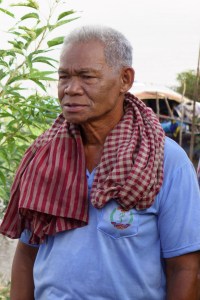
The commune chief of the south village on Kaoh Chraeng, surveying corn crops.

The health of the Mekong river, which runs either side of the island, has deteriorated in the last couple of decades, with a low point during the Pol Pot regime, which destroyed knowledge, communities, and infrastructure, as well as causing a long resource shortage, driving overfishing of the local population of the vulnerable Mekong river dolphin (Orcaella brevirostris).

Upriver dams and hydropower plants are threats requiring urgent attention in the Mekong river basin. Biodiversity in the small communities of Kaoh Chraeng and Kaoh Trong is very low, on land and in the water, in mammals, aquatic species, and plants. Instead of healthy diversity, monocultures of corn and other crops, grasses, and rainforest vegetation dominate the landscape.

Forests in Kratie Province are threatened by illegal logging, and government programs to remove forests near towns that are a breeding ground for Anopheles malaria mosquitoes.

What is being done?

The projects proposed by students on design summits are not usually put in to practise – they are provided to local groups such as the Cambodian Rural Development Team (CRDT), who use local knowledge and resources as well as external educators to aim to reduce poverty and environmental degradation in Kratie.

Biodiversity is an important issue in Cambodia, but as with many developing countries, other issues are more urgent for the wellbeing of its people. The pattern of development in the third world often follows a period of fast growth and resource use, without enough consideration for biodiversity and the environment. Groups like CRDT and the WWF exist to assist communities in considering ecological issues, but the need for embedded, local knowledge is still high.


DSC01715.jpg

EWB volunteers and CRDT workers talking to pupils at the Kaoh Chraeng primary school.

Children are being educated in ecological issues, though access to up-to-date books is rare in many villages, and computers, let alone a calculator, are not found in Kaoh Chraeng or adjacent islands. Those who are fortunate enough to be able to afford a mobile phone have the most basic model without internet access. Communicating a single message about biodiversity or ecological matters is very difficult. People living in poorer communities are also unlikely to believe what they are being told, or will ignore advice in order to do what they think will improve their quality of life. Traditional use of resources, such as burning corn husks for cooking, and throwing refuse in to the river, seems easier to them in the short term, but is detrimental to the long term outlook for ecological communities.

DSC01824.jpg

Mekong river dolphin tours significantly raise tourism revenue to Kratie province, but sightings are becoming rarer.

The broader context

Cambodia has a history of political disaster, genocide, and persecution of its people, leaving them decades behind other nations surrounding them. The condition of the forests, river, and other habitats in Kratie province ranges from acceptable to very poor. Work to improve health and sanitation has been a priority for many years, while awareness of the relationship between human behaviour and ecological health is still rare. The economic, social, and environmental systems in Cambodia are fragile and ever evolving, and building an understanding of them in local populations is a challenge. However, providing households and individuals with education of good practices for ensuring the sustainability and improvement of their environment is an appropriate starting point, which aid organisations and teachers are currently working on. Summits like the one I attended are a small part in a much larger movement to sustain biodiversity and environmental health everywhere in the world, especially in areas that need extra support to do so.

DSC01862.jpg

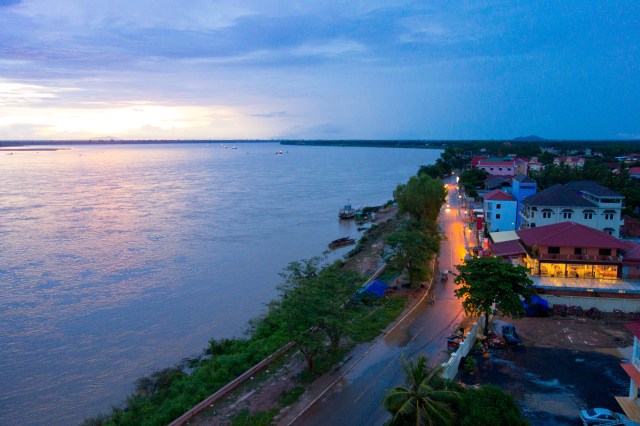
Sunset in Kratie Town.

All photos are my own work.

Posted in biodiversity conservation, Climate change, Volunteer work | 1 Comment

A peek inside Australia’s National Seed Bank

It came a surprise to me that all it took was an email to fling myself into the mysterious world of seed banking, even if just as a volunteer. Tucked away in the National Botanic Gardens, a cluster of modest brick and tin buildings make up the National Seed Bank. Tom North is the Seed Bank Manager whom led me through unfamiliar rooms dedicated to the various processes involved in seed preservation and research. Wide-eyed and a little overwhelmed I tried to familiarise myself with the different procedures involved.

'En route' to the Seed Bank

‘En route’ to the Seed Bank

Seeds go in, seeds come out?

The seed bank provides personalised homes for a variety of seeds, coming from different plants and places, and caters to their different purposes.

It’s helpful to understand that there are different reasons for preserving seeds. For instance, the ‘short term collection’ is comprised of seeds that will be distributed to the botanic gardens and supplied to particular organisations for research. ‘Long term collections’ are preserved for the conservation of native plants, as a valuable resource that may be used to revegetate an area or re-establish a threatened species in the future[1].

After the desired seeds have been collected, they are identified and cleaned. Seed quality and quantity is assessed in order to determine seed viability and their weight. Drying is the process that ‘ensures long-term seed viability’, and so the drying room is 15°C and 15% relative humidity. Following drying, the seed is sealed and numbered to correlate with the database. Cold storage involves deciding whether the seed collection is to be in short term or long-term storage. For short term, the seeds are stored back in the drying room. Long term storage collections require special attention in the Seed Bank freezers, where they need to have 3-7% moisture content, and the freezers are set to -21°C. There are still some uncertainties surrounding how long some species are able to remain ‘alive’ in these preserved environments. Thus, seed viability in storage is monitored by germination trials, and longevity is also tested to support apt replacement schemes (read more at https://www.anbg.gov.au/gardens/living/seedbank/seedprocedures.html).

The biology and ecology of Australia’s natives’ seeds are a focus in the research side of things. My role at the seed bank involved a repetitive but important step in preparing native seed for ecological research…

Counting Pomaderris

I was assigned the task of counting and weighing a collection of Pomaderris species, the main one of interest being Pomaderris cotoneaster. Pomaderris is a genus consisting of 70 species of shrub to small tree. A large number (65) of these species are native to Australia. P. cotoneaster is considered endangered by both NSW and the Commonwealth[2] (for further information on this species’ distribution, habitat, threats and recovery strategies see http://www.environment.nsw.gov.au/threatenedSpeciesApp/profile.aspx?id=10648). Research being undertaken by the University of Wollongong (UoW) on Pomaderris involves the ecology of the species and germination capabilities. Not much is known about the ecology of P. cotoneaster, or the reasoning behind its current distribution. And so, the UoW requested the Seed Bank for a certain amount of seeds from each species within their collection. These seeds had been collected from areas of the species current and natural extent.

Part of the Seed Bank's collection of Pomaderris + surroundings in the lab

Part of the Seed Bank’s collection of Pomaderris + surroundings in the lab

The Pomaderris seeds were retrieved from the Seed Banks’ drying room, where most of them have been kept since December last year (2016) to ensure seed viability. They had already been cleaned, counted and packed. Pomaderris seeds are quite tiny; it would be an absolute nightmare attempting to count and separate 100 seeds from a pack of thousands. This is where the trusty ‘seed counter’ comes in to minimise the tedious nature of counting seeds (see below).

The seed counter hard at work

The seed counter hard at work

‘The Friends of the Australian Botanic Gardens’ kindly funded the purchase of this machine. The user simply selects the desired seed count to retrieve, places the seeds into the top of the counter and waits as the machine uses vibration to channel seeds one by one down a channel. As the seeds drop a light sensor counts them, once the count gets close to the desired amount the counter stops vibrating, whilst allowing time for the remainder seeds to fall. The outcome is usually spot on, although sometimes a few more seeds are counted and dropped into the collection draw. If this happens the additional seeds are simply removed.

1000 seed weight counts are an important chore in the upkeep of the collection. This involves deriving an average weight for the seeds of each species throughout their time spent in the Seed Bank, to identify any changes that may suggest a loss of seed viability. I undertook 1000 seed weight counts for the Pomaderris species being distributed to UoW and within the Seed Banks collection.

Weighing the small and light Pomaderris seeds

Weighing Pomaderris seeds

Saving (and researching) for the future

Seed banks are delightfully described as ‘living libraries that help researchers fund solutions to the worlds disease, pest, and climate problems’[3]. The National Seed Bank supports a variety of projects that do just that. The Seed Bank is a member of the Australian Seed Bank Partnership (ASBP). The ASBP aims to collect, bank and research the seeds of Australia’s natives in a national effort to conserve its diversity. During my volunteer experience, I learnt of the Seed Banks’ important role in conserving biodiversity in the most literal sense. The facility itself is dynamic, providing vital resources to researchers and organisations across Australia. It assists with research that fortifies the preservation of native seeds in light of climate change adaption. The fundamental purposes of the Seed Bank are to:

  • Avoid the complete loss of threatened Australian species
  • Support biological understanding of species to enhance future adaptions (genetically assisting certain species or broadening knowledge of possible future habitats)
  • Provide seed for current regeneration projects
  • Conserve Australia’s unique biological identity

As we continue into a time where the threats to and loss of biodiversity seem to only increase, efforts to conserve and research persisting species couldn’t be more crucial. Understanding their phenology through germination trials and seed biology research is beginning to prove its importance in today’s efforts of biodiversity conservation.


Brooke Connors

u5352366

[1] Seed Bank. Australian National Botanic Gardens. Web. 22 Aug. 2016. http://www.anbg.gov.au/gardens/living/seedbank/

[2] Australia. NSW. Office of Environment and Heritage. Cotoneaster Pomaderris. http://www.environment.nsw.gov.au/threatenedSpeciesApp/profile.aspx?id=10648

[3] Locke, Sarina. ‘Seed Banks: The living libraries that hold answers to disease, pest and climate problems’ ABC Rural. 28th March 2016


Posted in national seed bank | 1 Comment

Re-planting and Restoring a Yellow-box Grassy Woodland: At Scottsdale Reserve


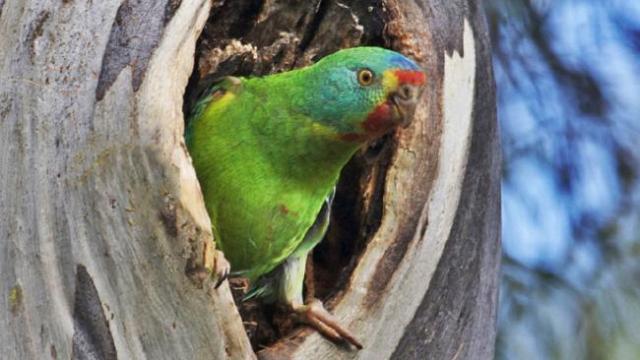
Yellow-box grassy woodlands are considered to be a critically endangered ecological community under the Environment Protection and Biodiversity Conservation Act 1999 (EPBC Act). The distribution of the remaining yellow-box grassy woodlands across south-eastern Australia is considered to be only 5.2% of what it was before the European settlement of the 1800s. Since European settlement, vast swathes of the yellow-box grassy woodland have been cleared for agricultural purposes. Many of the remaining patches of woodland consist of mature trees with no regeneration to replace them in the future. A range of species rely on the mature trees within the yellow-box grassy woodlands to provide habitat and food for survival. Without the presence of mature trees in the yellow-box grassy woodlands many species would face an increased risk of extinction, particularly birds such as the Swift parrot which are known to use the hollows of mature yellow-box trees.

You’re probably thinking “hang on a second! He’s forgotten the Red gum in yellow-box Red gum grassy woodland”. Well I haven’t it. Scottsdale Reserve the location I volunteered at is considered a yellow-box grassy woodland no red gum.

Scottsdale Reserve is located 45 minutes south of Canberra in the Monaro region. The reserve is 1328 hectares in size, 300 hectares of which had been used extensively for agricultural purposes since 1870. In 2006, Bush Heritage Australia purchased the former farm and created Scottsdale Reserve. One of the concepts behind the purchase was to restore parts of the degraded agricultural area back to a yellow-box grassy woodland. One strategy utilized in the Reserve to restore the land involved removal of the top 10cm of soil, which are nutrient rich and favour introduced weed species, then direct seed the area with native tree and shrub species. Scottsdale Reserve relies upon volunteers to help restore and maintain the Reserve.

This is where I come in.

I volunteered with Conservation Volunteers Australia (CVA) on the 6th and 10th of October respectively.

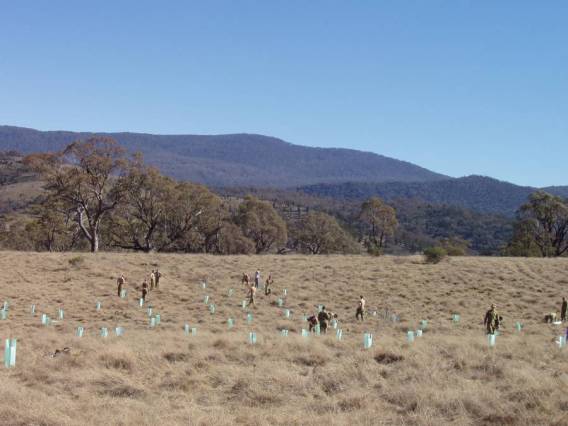
On October 6th 2016 I ventured to Scottsdale Reserve with (CVA). Upon arrival at Scottsdale Reserve we were informed today we would be one for planting seedlings. The area we were to plant had been direct seeded previously in a series of belts similar to the Whole of Paddock Restoration (WOPR) method. For unknown reasons past efforts of direct seeding had failed, it was our job to rectify this problem by planting seedlings in the failed belts. The main species we were planting was yellow-box, Eucalyptus melliodora. The planting method was very basic; dig a hole, plant the tree, erect a tree guard and water the tree. The work was not too hard or overtly interesting. The thought, however, that we were helping to conserve and protect a critically endangered ecological community was satisfying and quite rewarding.

I hope one day to return to Scottsdale Reserve in the future and see it as a thriving woodland, not the paddock landscape with a few small saplings that it is today. I will be quite proud on that day knowing that I played a role (no matter how small it was), in helping to restore Scottsdale Reserve to its former glory.


References:

DORROUGH, J. & MOXHAM, C. 2005. Eucalypt establishment in agricultural landscapes and implications for landscape-scale restoration. Biological Conservation, 123, 55-66.

LAMBIN, E. F., TURNER, B. L., GEIST, H. J., AGBOLA, S. B., ANGELSEN, A., BRUCE, J. W., COOMES, O. T., DIRZO, R., FISCHER, G. & FOLKE, C. 2001. The causes of land-use and land-cover change: moving beyond the myths. Global environmental change, 11, 261-269.

MANNING, A. D. & LINDENMAYER, D. B. 2009. Paddock trees, parrots and agricultural production: An urgent need for large-scale, long-term restoration in south-eastern Australia. Ecological Management & Restoration, 10, 126-135.

MARON, M. 2005. Agricultural change and paddock tree loss: Implications for an endangered subspecies of Red‐tailed Black‐Cockatoo. Ecological Management & Restoration, 6, 206-211.

STREATFIELD, S., FIFIELD, G. & PICKUP, M. 2010. Whole of paddock rehabilitation (WOPR): a practical approach to restoring grassy box woodlands. Temperate woodland conservation and management, 23.

THIELE, K., PROBER, S., HOBBS, R. & YATES, C. 2000. Reserve concepts and conceptual reserves: options for the protection of fragmented ecosystems. Temperate eucalypt woodlands in Australia: biology, conservation, management and restoration, 351-358.

VESK, P. A. & DORROUGH, J. W. 2006. Getting trees on farms the easy way? Lessons from a model of eucalypt regeneration on pastures. Australian Journal of Botany, 54, 509-519.

WATSON, J., FREUDENBERGER, D. & PAULL, D. 2001. An assessment of the focal‐species approach for conserving birds in variegated landscapes in southeastern Australia. Conservation Biology, 15, 1364-1373.

WOODLAND, B. B.-G. G. & AGREEMENT, C. C. National Recovery Plan White Box-Yellow Box-Blakely’s Red Gum Grassy Woodland and Derived Native Grassland.

YATES, C. J. & HOBBS, R. J. 1997. Temperate eucalypt woodlands: a review of their status, processes threatening their persistence and techniques for restoration. Australian Journal of Botany, 45, 949-973.


Gregory Hosking u5758988

Posted in Uncategorized | 1 Comment

Habitat destruction of Siberian tiger in China: The last 27 wild tiger group

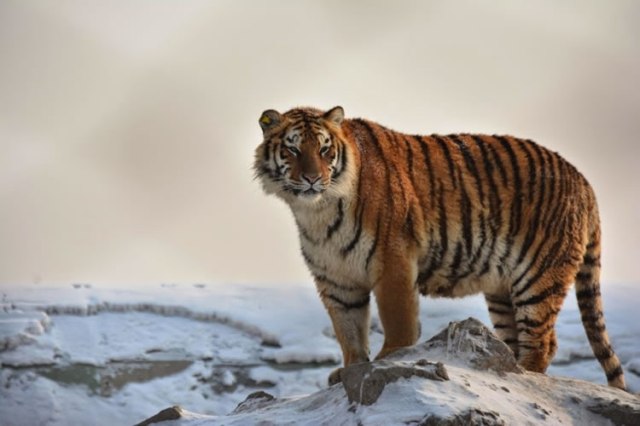
Siberian tiger also known as the Amur tiger is rusty-yellow or reddish-rusty in color with narrow black transverse stripes (Figure 1) which is the largest of tiger species and can grow up to 13 feet in length and weigh up to 397–675 lb for males and 220–368 lb for females (Mazák, 1981).

26-spectacular-pictures-of-siberian-tigers-in-their-natural-habitat-7
Figure 1. A Siberian tiger (The Stuff Makes Me Happy)

http://dailynewsdig.com/spectacular-pictures-siberian-tigers/


The Distribution of Siberian Tigers

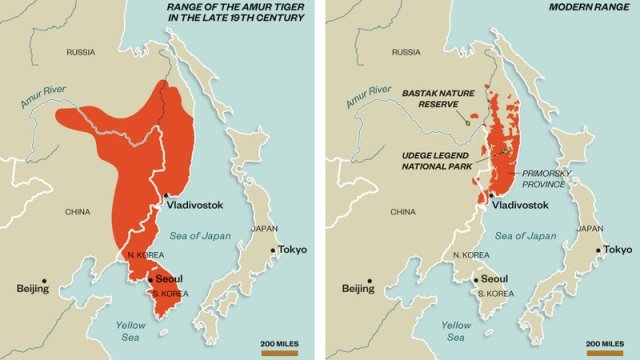
More than one hundred years ago, Siberian tigers were widely distributed in temperate mixed coniferous-broadleaved forests which located the Southeast corner of Russia in the Sikhote-Alin mountain range east of the Amur River and in northeastern China. They also ranged in Korean Peninsula (Figure 2). But Siberian tiger were considered to be the EN on the red list of IUCN now around 350-450 in Russia (Hance, 2015) , and with only 27 in China.

tiger
Figure 2. The comparison distribution of Siberian tigers in late 19th century and modern range (Matthew Shaer, 2015)

http://www.smithsonianmag.com/science-nature/can-siberian-tiger-make-comeback-180953973/


The Disasters Pushed Siberian Tiger to Wipe out in China

The number of Siberian tiger had decreased a lot in China in last decades. One of the Chinese research thought two disaster events led to the extinction of Siberian tiger. One was the forest harvesting for supporting the construction of mainland in 1950s-1960s and economic production since 1980s. The long term harvesting caused the habitats largely destroyed or insulated, the Siberian tiger’s range was shrunk, which was the major reason for disappearance of Siberian tiger by seriously limiting the distribution of them. The other was hunting activity of Siberian tiger in China. In 1960s, hunters and militia killed the Siberian tigers with guns for protecting people since Siberian tiger was regarded as vermin (Figure 3). Lately, China had already set laws to conserve the Siberian tiger, and emphasized it many times. But in many habitats, we can still find hunting equipment due to the important commercial values.

1 Figure 3. Local hunters killed wild Siberian tigers in 1960s (Jiahui Yuan)
http://www.dili360.com/cng/article/p5350c3d6c501e54.htm


The Efforts of Siberian Tiger Conservation in China

The project of native vegetation conservation has commenced since 1998. The function and structure of forest continued to recover, the species like deer, wild boar which are main food resources for Siberian tiger also recovered quickly. In 2001, Huichun Siberian Tiger Nature Reserve was established in region where Siberian tiger occurred most frequently and used to have highest population density with area of 1087 km2. Although 1087 km2 was a small area for wild Siberian tiger, it connected with the Russian National Park, the total area can reach to 4000 km2. Since the beginning of 2006, the biodiversity conservation team of BNU (Beijing Normal University) had set 1200 cameras within the habitats of 20,000 km2 to collect data including the abundance of Siberian tiger and their food resources abundance (Beijing News, 2016). In 2003, wild Siberian tiger was first shoot by camera in China, and in 2009, the wild Siberian tiger was fifth shoot within Huichun Siberian Tiger Nature Reserve (Hu, 2010). Figure 4 shows the distribution of occurrence of wild Siberian tiger from 1998 to 2008. The x-axis represents year while y-axis represents the frequency of occurrence (Hu, 2010). Since 2012, WWF (World Wildlife Fund) has cooperated with wild Siberian tiger nature reserves in China to increase the food resources for Siberian tigers which aims to increase the rate of reproduction (Luo, 2016). WCS (Wildlife Conservation Society) also has contributed a lot time in wild Siberian tiger conservation. In 2013, an exciting scene happened that the number 5 female wild Siberian tiger with 4 little baby following was seen by team BNU. It indicated that Siberian tiger can inhabit and reproduce in Huichun Siberian Tiger Nature Reserve.

%e5%b1%8f%e5%b9%95%e5%bf%ab%e7%85%a7-2016-10-12-%e4%b8%8a%e5%8d%883-37-45
Figure 4. The distribution of occurrence of wild Siberian tiger from 1998 to 2008 in China with incomplete monitoring records (WCS)

http://www.dili360.com/cng/article/p5350c3d6c501e54.htm

Limitation and Future Efforts of Siberian Tiger Conservation in China

According to the data distribution, the area where Siberian tiger occurred was marked red, and the whole marked area looked like isolated islands. This distribution demonstrated that fragmentation habitats limit the activity of Siberian tigers. Although, China has already set 5 major nature reserves where suitable for Siberian tiger living, all of these nature reserves are separated with each other. The fragmentation habitats cause difficulty for production of Siberian tigers during their limited lifetime. Probably, the connectivity of separated habitats is significant direction for future efforts to sustain and flourish the number of Siberian tiger in China. The other limitation is the scarce of prey for Siberian tigers, so them have to catch the sheep (Figure 5) or poultry feed by domestic people which cause conflict between Siberian tiger and local residents. Therefore, food sources supplement for Siberian tigers is also vital in future efforts.

%e5%b1%8f%e5%b9%95%e5%bf%ab%e7%85%a7-2016-10-12-%e4%b8%8b%e5%8d%881-14-00
Figure 5. Poultry was attacked by wild Siberian tigers because of lacking food(Laihui Wang)

http://www.dili360.com/cng/article/p5350c3d6c501e54.htm


References

Beijing News, 2016. The dilemmas of 27 wild Siberian tigers in China. 3.http://xw.qq.com/cmsid/NEW2016030604618403

Hance, J., 2015. “Happy tigers: Siberian population continues to grow”.Mongabay.com.  Retrieved 13 June, 2015.

Hu, M., 2010. The wild Siberian Tigers. Chinese National Geography, Issue 09.

Luo, K., 2016. The last wild Siberian tigers in China. Scientific American, 29 7.

Mazák, V., 1981. “Panthera tigris”. Mammalian Species., 152 (152), pp. 1-8. doi:10.2307/3504004. JSTOR


Hope you enjoy it !

Jing Zhu u6860820


Posted in biodiversity conservation | 1 Comment