Volunteering with Conservation Volunteers Australia in Molonglo Valley

The Molonglo Valley is located about 7.5-15km west of the Canberra Centre, and was originally identified for future urban development area to accommodate approximately 55,000 new residents over the next 30 years in 2004 Canberra Spatial Plan.

However, Molonglo Valley provides habitat for a variety of flora, fauna and vegetation communities, such as Yellow Box-Red Gum Grassy Woodland, Brown Treecreeper, Pink-tailed Worm-lizard, Stone Gecko, Marbled Gecko, Eastern Copper-tailed Striped Skink, Boulenger’s Skink, the Nobbi Dragon, Eastern Long Necked Turtle, Black Headed Snake, the Platypus and the Eastern Wallaroo.
pink-tailed-worm-lizard

Fig. 1: Pink-tailed Worm-lizard

Therefore, to avoid and mitigate impacts, the “Molonglo River Park” has been established and managed as an offset site along the East Molonglo River Corridor by the ACT Government. I have worked in this area for two times as a volunteer with Conservation Volunteers Australia.
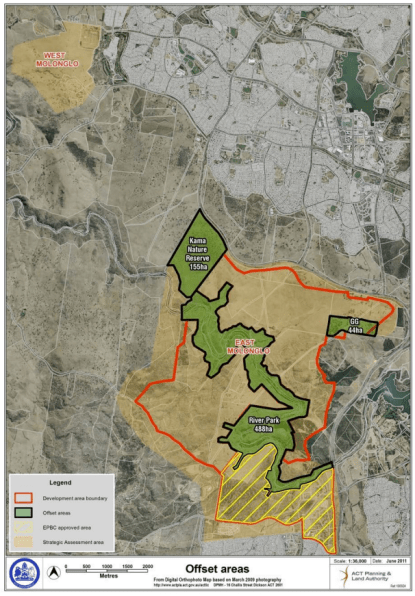
offset-area

Fig. 2: Offset Area (Reference: Molonglo Valley Plan for the Protection of Matters of National Environmental Significance)

Conservation Volunteers Australia (CVA) is an independent organization which aims to protect, maintain and restore the Australian environment, e.g. landscapes, habitats, species and heritage. CVA always cooperate with their project partners that include regional councils, national parks, museums, landcare groups, conservation departments and other national conservation agencies, and provide various projects to the volunteers from different countries.

Barrer Hill Restoration

For the first time (27th July), we went to the Barrer Hill Restoration Site in “Molonglo River Park” offset area. Our work was to remove approximately 10,000 small tree guards and stakes along grassland habitat and hill top areas. The corflute guards and stakes were transported to the park depot on site for recycling while the paper guards and bamboo stakes were disposed of. This project was requested by ACT Environment for helping the restoration treatments of the Barrer restoration area.

barrer-hill-restoration-site-location

Fig. 3: Barrer Hill Restoration Site location

overview-of-work-areas

Fig 4: Overview of work areas

seedlings-of-different-species

Fig. 5:Seedlings of different species

removing-the-tree-guards-at-the-barrer-hill-restoration-site-before

Fig. 6&7: Removing the tree guards at the Barrer Hill Restoration Site, before and after

Fig. 6&7: Removing the tree guards at the Barrer Hill Restoration Site, before and after

My volunteering in Barrer hill is just a small part of the long-term restoration project. After we completed the project, we will have lots of different types of grass, forbs and small shrubs, which will provide different structures, different habitats for various species such as lizards, ants, birds or small mammals, and long-term outcomes for Box-Gum Woodland and the Pink-tailed Worm Lizard in Molonglo Valley. Therefore, the restoration treatment on Barrer restoration area is very important, and our activities will make those species more strong there and everything works better.

Waste removal

For the second time (12th October), we focused on the water quality in Molonglo River. The lower Molonglo river corridor and its riparian zone once had high aquatic ecological values and provided habitat for a number of threatened fish species, including the EPBC listed Macquarie Perch and Murray Cod. However, the values have diminished over the years due to the increasing urbanisation, discharges from Lake Burley Griffin, residues from mining in the upper Molonglo Valley, and the other impacts from adjacent land uses. Therefore, improving water quality and removing the waste from the river are very important for regeneration of Molonglo River. Thus, we worked together with the staffs from ACT Park and Conservation Servers to remove the waste from the riparian zone in Molonglo Valley offset area.

work-area

Fig. 8: Work Area for wastes removal

we-detected-a-water-dragon-in-our-work-area

Fig. 9: We detected a water dragon in our work area

wastes-removal-2

Fig. 10&11: Waste removal

Conclusion:

Volunteering with Conservation Volunteers Australia in Molonglo Valley is simple and basic. However, it is really useful for protection and restoration in this area, which will help the ACT government to develop Molonglo Valley offset area and protect the unique flora, fauna and vegetation communities of Canberra.

Jiyu Liu u5249180

References:

ACT Planning and Land Authority, September 2011. The Molonglo Valley Plan for the Protection of Matters of National Environmental Significance (NES Plan)

ACT Planning and Land Authority, March 2010. Draft Strategic Assessment Report of the Molonglo Valley Plan for the Protection of Matters of National Environmental Significance

ACT Planning and Land Authority, 13 July 2011. MOLONGLO AND NORTH WESTON EPBC ACT STRATEGIC ASSESSMENT, the Supplementary Assessment Report.

Conservation Volunteers. What we do. Available at: http://conservationvolunteers.com.au/what-we-do/ (Accessed: 14 October 2016).
Posted in biodiversity conservation, Volunteer work | 1 Comment

Can private landholders engage in wildlife conservation too?

When it comes to wildlife conservation in Australia, most traditional approaches are initiated and managed by government departments. Needless to say, they are supported by allocated public funding, determined by national budgeting plans. Such projects are and have continually proven to be subjected to funding constraints, political restrictions and fixed responses across spatial scales, i.e state borders. Not to mention, the proportion of public land allocated as protected areas or reserves are very small, thereby limiting the extent of any positive wildlife conservation impacts.

Meanwhile, most of Australia’s land is privately owned but landholders have not been included as partners for wildlife management. Hence, George Wilson, principal of Australian Wildlife Services and adjunct professor at Fenner School of Australia National University, is advocating for trials to manage wildlife on private lands and promote biodiversity as potential assets rather than a liability to private landowners. Drawn by the novelty and potential benefits of this proposal, I asked to be a part of the team to help research and further develop its potential.

Specifically, I was researching on several threatened species in New South Wales (NSW) and looking for possible translocation from overabundant populations or breeding programs elsewhere in Australia into NSW. The rationale is that such translocations and reintroductions have been successful in predator free facilities such as Mulligans Flat, so it is possible for private landowners to undertake similar projects as well. If successful, private landowners can be a supplement or even significant contributor to wildlife management traditionally ventured only by government.

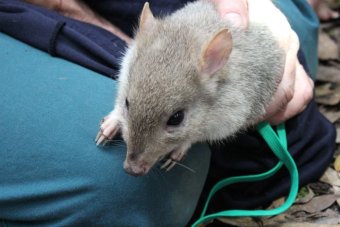
4050812-3x2-340x227

Figure 1. An Eastern Bettong in Mulligans Flat. (Source: Dr Adrian Manning in an ABC article)

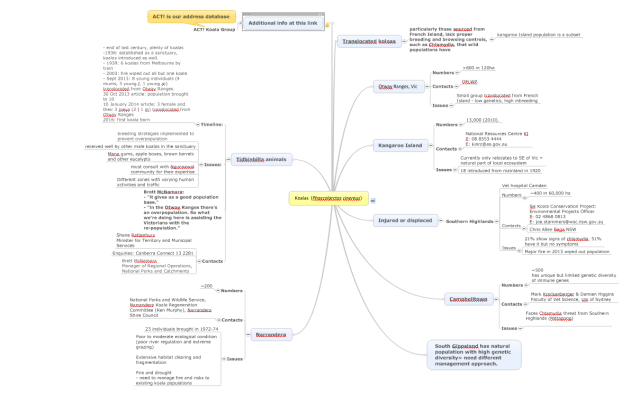
Examples of threatened species that I researched on included Phascolarctos cinereus (Koala Bear), Bettongia gaimardi (Eastern Bettong), Dasyurus viverrinus (Eastern Quoll), Myrmecobius fasciatus (Numbat), Sarcophilus harrisii (Tasmanian Devil) and Bettongia penicillata (Brush-tailed Bettong/Woylie). The information was then placed into mind maps.

Koala snap!.PNG

Figure 2. I entered relevant research into mind maps to create a log of all the species. This image shows a mind map I created for koala bears.

What became most evident to me was that every species had its own specific requirements and issues, hence any solution could not be applied uniformly across. For example, the koala bear is overly abundant in Victoria, resulting in extensive damage on foliage cover, and ultimately, tree death. Logically, we could translocate them into NSW, where koala bears are endangered. However, prior to the translocation process, we must address the loss of genetic diversity in these Victorian populations due to the founder effect, as well as the spreading Chlamydia outbreaks. The Tasmanian devil also suffers from a facial tumour disease, which scientists are actively trying to remove. However, on top of that, the Tasmanian government disapproves of programmes that aim to translocate healthy devils to anywhere but Tasmania. At the moment, regulation stipulates that Tasmanian devil translocation programmes require the approval of the Tasmanian government first. Lastly, how will the devils interact with feral foxes, and how will Australia’s other native herbivores fare? These questions must be addressed before wide-scale interventions are implemented.

This is where the advantages of private wildlife management come in. Borrowing from Dr Stuart Whitten’s talk on off-reserve conservation, an environmental economist at CSIRO Ecosystem Services, managing smaller numbers on smaller land areas allow for considerable flexibility in processes, responses and outcomes. Thus, conservation strategies can differ according to the individual goals, location, capacities and constraints. When customised and precise to the circumstances of these land owners, as opposed to stringent state-prescribed policies, conservations objectives are perhaps more likely achieved. Indeed, private investors are motivated in ensuring benefits/profits, which can form a strong sense of ownership for the ventures they decide to embark on.

Having said that, there are risks associated with the private sector’s profit-driven mentalities. What happens when private owners prioritise profits over wildlife conservation or welfare? Can the public or government authorities intervene? Should the public pay to support continued maintenance on wildlife on private lands, or abandoned wildlife?

Currently, there are government-regulated programmes such as Australia’s agriculture environmental schemes, which pay private owners to adopt environmentally-sound land management. Pannell’s public private benefits framework suggests that ideally, there should be maximum public benefit with very slightly negative net private benefits. The argument is that society should be paying for interventions that benefit the public, without paying extra for private incentives. The difference here between programmes such as AES and private-initiated projects, is that private owners are forking out the costs and absorbing risks. Hence, it is justifiable for them to work towards personal benefits. How then should Pannell’s graph differ? Or perhaps, a new model needs to be developed in order to figure out when, where and how interventions are needed to produce the most justifiable and effective outcome.

Indeed, more research and preliminary preparation must be achieved before any real action to take place.

Nevertheless, I am inspired by the idea that the private sector can be more involved in wildlife management, not only because it can address the shortfalls in public expenditure, or because it can contribute to the conservation of threatened species. I am most motivated by the vision of a culture of ground-up initiatives, whereby people take the ownership of biodiversity conservation, and the responsibility of looking after our planet Earth.

George has done such a magnificent job developing and researching on opportunities for the public sector to be involved in wildlife conservation, especially in the face of increasing biodiversity loss and extinction. Advocating landholders to breed their own populations of threatened species is only one approach, and there are potentially numerous more that we just have not thought of because we did not think it possible. But when government-led initiatives have proven time and time again to be less effective than desired, why not give the private sector a shot? It may not be the answer to all biodiversity loss problems, but it certainly has the potential to contribute significantly, especially for iconic, threatened species. Hence, I would like to take this opportunity to thank George for giving me this opportunity and introducing me to this existing new venture. I am excited for what is yet to come.

*My volunteering experience occurred from 21 September to 12 October.

Author: Judith Soh, u5498035 (2016)

Posted in Uncategorized | 2 Comments

Weeding in the Mount Painter Nature Reserve and Isaacs Ridge Nature Reserve

Introduction of the nature reserves

The Mount Painter Nature Reserve is located in the landscape of central Canberra and neighbour to Black Mountain. It includes Mount Painter, a segment of lowland bush and the Wildflower Triange. In total, there are 114 native species and 86 introduced plant species on Mount Painter (Ginniderra Catchment Group, n.d.). The Isaacs Ridge Nature Reserve is located in south Canberra. There is a pine plantation in this nature reserve. Both two sites are important habitats for native species such as Yellow box (Eucalyptus melliodora), Galash (Eolophus roseicapilla) and Speckled warbler (Chthonicola sagittata). Both reserves are managed by the ACT Government and assisted by local organisations and a small group of volunteers who carry out a variety of tasks aiming at increasing the biodiversity of the reserve and enjoyment for all the users of the reserve. Weeding is one of the activities.

I have been volunteering with the Conservation Volunteer Canberra in these two sites and helping with some general conservation works, especially weeding.

An overview of weeds in this two reserves

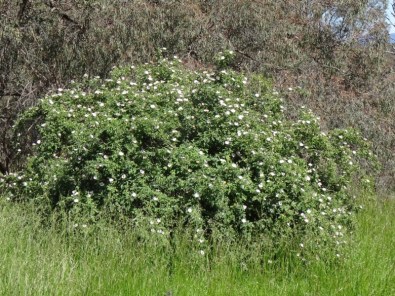
We focused on removing Horehound (Marrubium vulgare L.) and Sweet briar (Rosa rubiginosa) in the two sites respectively (as shown in figure 1 and figure 2). Both species are invasive weeds in Australia but their habitats are largely different.

Horehound is a noxious weed imported from Europe and achieving its maximum potential distribution in south Australia (Weiss, et al., 1999). Though seed of horehound prefers moisture and warm area, grown horehound is very drought-tolerant. In addition, leaves of this species contain marrubin, a bitter alkaloid, which makes it unpalatable for grazing animals (Weiss, et al., 1999). Hence, without predator, horehound spread quickly and in south Australia.

Different from horehound, sweet briar is mainly distributed in plantation which is well-drained and moderately fertilised in our volunteering sites (Anon., 2014). The grown sweet briar can be very large and hard to be hand-removed. In monoculture and high diversity plantings, there is little competition and light grazing. The invasive, woody weeds can invade the system quickly and will reduce the richness of planted species. Several studies have proved that without hand-weeding, the diversity planted species will decline in abundance and the efficiency of planting is largely reduced. (Dickson & Gross, 2015)

  horehound
Figure 1. Horehound (Marrubium vulgare L.)(Source:http://ourherbfarm.com/herbs/horehound.php).

rosa  Figure 2. Sweet briar (Rosa rubiginosa)(Source: http://canberranaturemap.org/Community/Sighting/31304         

In Australia, the number of kangaroos, sheep and rabbits has increased considerably in recently years. They all aid in the transport of the seeds of weeds to new areas. Also, over-grazing of these species can further remove native or planted species and aggravate the invasion of weeds.

Negative effects

Environmental effects

Table 1. Potential impacts of environmental weeds on indigenous ecosystems (Williams & West, 2000)
Competition with indigenous plants for light, nutrients, moisture, pollinators, and they smother or crowd the soil.
Replacement of indigenous plant communities.
Prevention of natural regeneration.
Change in the movement of water in both soil and watercourses.
Increase of soil erosion by shading out ground plants which would normally hold the surface soil together.
Change in the shape of the land (e.g. different grass types on coastal sand dune systems may introduce poisons into the soil which prevent other plants growing around them, or they poison animals).
Provision of food and/or shelter for pest animals (and some indigenous animals).
Change in water quality or characteristics (e.g. willow species, Salix), and habitat for fish and other aquatic animals.
Introduction of foreign genes into local plant populations by cross breeding (hybridization and gene swamping).
Change in fire behaviour by altering characteristics such as the quantity and distribution of fuel.
Alteration of disturbance regimes.

root

Figure 3. Developed root of Horehound

Weed has dominated the two conservation sites in the natural reserves. As it shows in figure 3, the root of Horehound can be very developed.

Fire risk

Some invasive species may consequently increase fire intensity as well which will negatively affect the grown species and regeneration. Weeds can greatly increase fuel load in an area and make it difficult to predict the frequency and effects of prescribed fire and wildfire.

The intensified fire can be up to 300 hotter than fires in nearby native-dominated areas, and seeds in the soil might be destroyed by the fire (Emery, et al., 2011).

Social & economic effects

The communities and individuals usually have little incentives to control weeds especially weeds in the wild areas. Because weeds could only bring very limited economic benefits while cost a lot to remove and control. The net benefit which is the difference between the income and cost is below 0 which means extra money is spent on controlling weeds.

In 2005, the Australian government spent at least $116.4m on control, monitor and manage weeds, and about 75% of the fund is used to inspection, research and extension. However, there is still little data on the distribution of weeds in natural environments, and the economic loss caused by weeds is hard to be estimated  (Sinden, et al., 2005).

Weeding

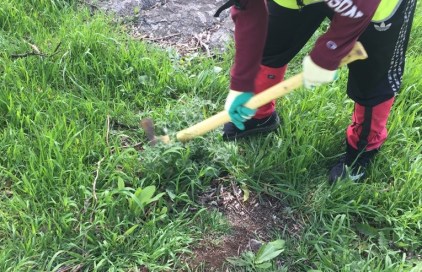
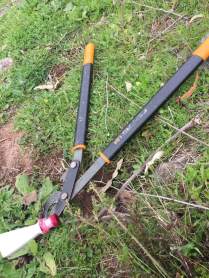
Hand-weeding using tools like mattock or garden scissor is the most common in general conservation, especially for weeds at their ages (see Figure 4). For woody weeds like Sweet briar that are difficult to be uprooted, hard chemical is sprayed to the root area immediately after cutting its stream in order to suppress its growth.

weeding

Figure 4. Weeds removal using mattock
918031951534756887Figure 5. Garden scissor and poison for killing weeds

Control, monitoring and collecting data of environmental weeds is of great social, economic and environmental importance. According to Weiss et al.(1999), communication has been proved to be able to promote weed management in the future. Communities and individuals play an important role in the further management. As it is discussed above, individuals have little awareness and knowledge about weeds. Many people cannot distinguish between weeds and native grass. Hence, education and promotion are also critical success factors.

Bibliography

Anon., 2014. NSW Department of Primary Industries. [Online]
Available at:
http://weeds.dpi.nsw.gov.au/Weeds/Details/137

Dickson, T. L. & Gross, K. L., 2015. Can the Results of Biodiversity-Ecosystem Productivity Studies Be Translated to Bioenergy Production. PLoS ONE, 10(9).

Emery, S. E., Uwimbabazi, J. & Flory, L., 2011. Fire intensity effects on seed germination of native and invasive Eastern deciduous forest understory plants. Forest Ecology and Management, p. 1401–1408.

Ginniderra Catchment Group, n.d. Mount Painter, Canberra: s.n.

Sinden, J. et al., 2005. The economic impact of weeds in Australia. Plant Protection Quarterly, 20(1), pp. 25-32.

Weiss, J., Sagliocco, J. & Wills, E., 1999. A Comparison Between European And Australian Populations of Horehound. Twelfth Australian Weeds Conference.

Williams, J. A. & West, C. J., 2000. Environmental weeds in Australia and New Zealand: issues and approaches to management. Austral Ecology, Volume 25, p. 425–444.

 Author: Wenjia Lai (u5491307)

Date of working: 18/09 & 07/10


Posted in Uncategorized | 1 Comment

Biodiversity conservation combine with science and education activities

A new kind of biodiversity management used by the Mulligans Flat Woodland Sanctuary


Today, I would like to introduce the Mulligans Flat Woodland Sanctuary to you (Picture 1).img_6071

Picture 1: a scenery picture of the Mulligans Flat Woodland Sanctuary (Mulligans Flat Woodland Sanctuary, 2016)

A “safe haven” for box-gum to thrive and ‘wildness’ dominate

Eucalyptus woodland was once wildness dominated in South Australia. But now, only about 5% of them remains, because since the European settlement, woodlands were cut down for wheat and sheep production, which significantly changed the local habitats.  And together with the disturbance of invasive species such as foxes, cats and rabbits, many species of small mammals and birds were locally extinct.

For conserving and restoring endangered woodlands the ACT Government has established several nature reserves to protect box-gum woodlands around Canberra. The Mulligans Flat Nature Reserve is one of them, which was established in north-eastern Gunghalin (Picture 2) in 1995.map

Picture 2: location of the Mulligans Flat Woodland Sanctuary (Whereis, 2016)

The aim of the Mulligans Flat Woodland Sanctuary is to sustain a representative diversity of woodland plants and animals. In addition, it tends to inspire respect for and understanding of the nature, species and biodiversity conservation of Australia’s woodlands.

What did they do to achieved this aim?

Then, how they made this aim come true? Through a long-term exploration, they found out a new kind of biodiversity conservation management method. That is to combine biodiversity conservation with education activities. In other words, the reserve park managers take science research, children education and community participation into consideration when they make a plan for this area.

Science Research

To support and explain research into the ecology of woodlands, they cooperate with the Australian National University (ANU), the ACT Government and CSIRO. For examples, in 2006, the ACT Government announced to build a rabbit, cat and fox proof fence in Sanctuary at Mulligans Flat Nature Reserve. After that, they began to remove feral animals and bring back the lost native species. In addition, they ran experiments with ANU and CSIRO aims to explore ways of improving box-gum grassy woodland for biodiversity. Since 2004 they have collaborated on a major research project (The Mulligans Flat-Goorooyarroo Woodland Experiment) designed to develop a full knowledge base for understanding and managing temperate woodlands for improved biodiversity conservation.

Children Education

The sanctuary also provides an opportunity to school children to get familiar with Australia’s native species by offer them educational and eco-visitor experiences during their school holidays. And through these education and tourism activities, they can change children’s attitudes and values towards natural environments, especially woodlands (Picture 3).educational-tour

Picture 3: educational and eco-visitor opportunities for school children (Mulligans Flat Woodland Sanctuary, 2016)

Community Participation

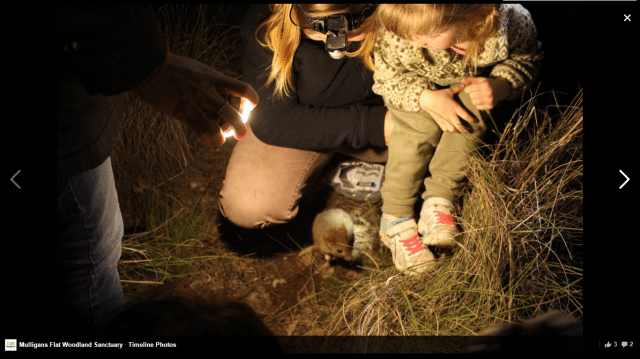
In order to make more people involved, the sanctuary arrange a series of activities for the community to participate in. There are some guided walking tours that start about a half hour before sunset and last 2-2.5 hours. People can rotate through four walking tour options of similar length (about 2.5 kilometers) and learn about some endangered woodlands and nocturnal animals, in the meanwhile enjoy peaceful nature at night (Picture 4).spotlight-tour

Picture 4: a spotlight tour in the Mulligans Flat Woodland Sanctuary (Mulligans Flat Woodland Sanctuary, 2016)

Learn and have fun in the Mulligans Flat Woodland Sanctuary

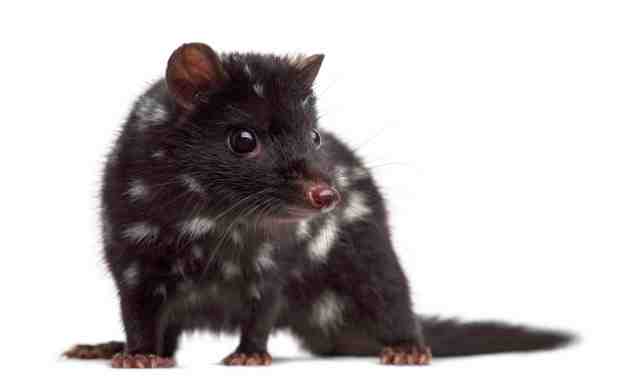
The Sanctuary is open to the public and is only closed during periods of extreme fire danger and when special management activities are required. Recently, the first wild Eastern Quolls were born in this area. And these quolls were caught on camera by the ANU team during their rigorous monitoring of the critters (Picture 5). So let us start a “Adventure” in the Mulligans Flat Woodland Sanctuary right now!

Quoll isolated on white

Picture 5: a picture of Eastern Quoll (Sanctuary, 2016)


Thank you for reading.


U5788815

References

Mulligans Flat Woodland Sanctuary, 2016. Facebook of Mulligans Flat Woodland Sanctuary. [Online]
Available at: https://www.facebook.com/MulligansFlat/photos/a.550760204961342.1073741828.544802062223823/1081528598551164/?type=1&theater
[Accessed 9 10 2016].

Mulligans Flat Woodland Sanctuary, 2016. gallery. [Online]
Available at: https://mulligansflat.org.au/gallery/
[Accessed 6 10 2016].

Mulligans Flat Woodland Sanctuary, 2016. Mulligans Flat Woodlands Sanctuary – restoring our nature, transforming our thinking and inspiring action for conservation.. [Online]
Available at: https://mulligansflat.org.au/
[Accessed 6 10 2016].

Sanctuary, M. F. W., 2016. Home page of Mulligans Flat Woodland Sanctuary. [Online]
Available at: https://mulligansflat.org.au/
[Accessed 9 10 2016].

Whereis, 2016. Mulligans Flat Woodland. [Online]
Available at: http://www.whereis.com/
[Accessed 6 10 2016].


Posted in Uncategorized | 1 Comment

Insight into the repercussions of past environmental irresponsibilities

Jake Bradley

Dates of Conservation Volunteering Australia

6/10/16 – Scottsdale tree planting

10/10/16 – Tidbinbilla Weed Removal

After prolonged agricultural in rural settings post-European settlement, reverting a landscape back to its ‘original’ function is problematic. The ‘best practise’ and ‘method’ ideally follows one of adaptive management or more simply trial and error. The folks at the green army and Conservation Volunteers Australia may understand this the best. Each habitat is different, and while one tactic may reform a particular habitat it may not for another. The current ‘on-trend’ restoration strategy employed by Greening Australia is called Whole of Paddock Restoration or WOPR. WOPR aims at restoring a ‘site’ to its native species composition through the direct seeding of shrubs in a number of widely space seeding lines 30-50m apart. Vegetation within a row is spaced around 7m apart so that competition between seeds is minimal. Seeds are maintained for a period of 5 years, at which time they are deemed to be sufficiently established that they no longer require care. Benefits for nature conservation that the WOPR process has for the environment are all to do with the artificial reintroduction of native tree species. These include;

  • Native bird abundance increase
  • Stepping stones for mobile species between remnant patches
  • Regeneration of remnant vegetation
  • Increased carbon sequestration
  • Restoration of natural biological cycles in the area.
  • The increased ability to provide habitat for potentially vulnerable Australian species (Greening Australia, 2008)
wopr

Figure 1 – WOPR lines that have just been reseeded by the Green Army (Green Army, 2008)

wopr2

Figure 2 – How WOPR looks 12 years after the seeding process (Green Army, 2008)

I recently visited a Green Army restoration site at Scottsdale reserve (operated by Bush Heritage Australia, you can find the Scottsdale page here). Scottsdale occupies 1,328 hectares of varying-in-quality Box-Gum Woodland. 300 ha of the area has had prolonged grazing, sowing, and clearing activity. The Yellow-Box Red-Gum Grassy Woodland (previously mentioned as Box-Gum) is a critically endangered ecological community under Australian legislation (EPBC Act 1999).  Scottsdale is employing the WOPR technique to restore that 300 ha of grassland.

Scottsdale and surrounds have to manage for wild deer, goats, rabbits and native herbivores that benefit from having freshly planted saplings in the vicinity. Managing for animal’s impacts and abundance is always a contentious issue for conservationists. For companies like Bush Heritage, donations and funding from non-government private sources can be the difference in effective rehabilitation efforts. Activities like Kangaroo culling can pull the support of a number of interested parties. Strategies that are allowed have to be conducted in a way that does not impact native species, who occupy similar niches in the habitat and surrounds.

One thing that troubled me whilst I was out working at Scottsdale was the presence of the dreaded African Lovegrass (Eragrostis curvula), which I was told covered 90% of the area we were working in. All this effort was going into establishing a native overstory but the exotic understory was being ignored.

The introduction of exotic grasses into Australia with agriculture has changed the chemical make-up of soil across much of Australia. Native grasses thrive in nutrient deprived soils, but because of a long history of fertilizer in the soils in Scottsdale, exotic grasses that love nitrogen rich soils took over.

In order to facilitate an environment where native ground cover can effectively compete with exotic, the soil has to be abiotic (reduced nitrogen and phosphorus). A new method that could achieve this is called ‘scalping’. Scalping involves removing the top 10-15 cm of soil from a landscape in the hope to remove the nutrient-rich layer that these weeds thrive off. Scalping works best with some measure of soil disturbance (Cole et al. 2004) applied prior to the excavation.

Linking these methods used for rehabilitation and native habitats is difficult. WOPR, as seen in figure 2 does not resemble a natural distribution on native structures. The spaces within planting lines could in the future alter how native ecosystems are structured. WOPR is usually aimed at balancing habitat restoration and livestock, and so its use in the Scottsdale reserve seems arbitrary. In places where livestock are not present to need spaces in-between plantations to forage, why not attempt to create a more natural spatial assortment of species?

With a national shift from these modified agricultural areas to a highbred native-agriculture layout or even to just a pure conservation focus, comes many unforeseen and interlinked problems. It is a learning process for all parties, and with time it will become cheaper and more effective. However, time brings perspective with matters of conservation. We look back 20 years ago and wonder why we converted these natural landscapes the way we did. I just hope we don’t look back tomorrow and wonder why we are doing what we did today.

References

Cole I. Lunt I, D. Koen T. 2004. Effects of soil disturbance, weed control and mulch treatments on the establishment of Themeda triandra (Poaceae) in a degraded white box (Eucalyptus albens) woodland in central western New South Wales. Aust. J. Bot.

Greening Australia Capital Region,. 2008. Whole of Paddock Rehabilitation.  Eds. Fifield G, Streatfield S, Vanzella B.

Posted in biodiversity conservation, Uncategorized | 1 Comment

The invasion of Cogon Grass (Imperata cylindrica) in deforestation areas within Indonesia

cogongrass-in-jackson-hay-field

The deforestation rate in Indonesia is the highest in the world, even “exceeded” Brazil. Deforestation in Indonesia provides suitable conditions for invasion of cogon grass, a fast growing weed species. Cogon grass is a perennial grass species that can adapt to poor soil condition. Because it has rhizomes (lateral, adventitious root). The species can live in wide range of habitat, from natural forest to disturbed forest, urban land, wetland, planted land, riparian. Cogon grass is a native species in Japan, Philippines and Thailand. This species has now spreads across the world, except Antarctica and thus classified as weed. The ability of the weed to grow faster is a threat for native plant species. In addition, the weed also has an allopathic effect other seedling.

Cogon grass (or alang-alang, in Indonesian) occupies 8.6 million ha of Indonesia’s grassland. The spread of the weed in Indonesia is across the country, particularly in Sumatera and Kalimantan Island where the deforestation rate is high. wri15_global_brazil_indonesia-01

Annual tree cover loss in Brazil and Indonesia from 2001 to 2014.

the-rate-of-deforestation-in-indonesia

The rate of deforestation in Indonesian from 2000-2010 distinguished by island.

The conversion of primary forest to grassland makes the land more prone to fire. Land management of grasslands should combine technical, chemical and biological practices to suppress the weed’s growth. Mowing the grass along with herbicide is effective to depress the grass growth and provide opportunities for other seedlings to regrow. However, the use of chemicals such as herbicides to suppress weed should consider the season. The application of chemicals in rainy season is not effective because will be washed by the rain water and can contaminate water catchment. An alternative way to suppress the weed’s growth is by using other fast-growing exotic plants. Brown salwood (Acacia mangium), gamhar (Gmelina arborea) and batai wood (Paraserinthes falcataria) can reduce the invasion of cogon grass in deforested area. Although those trees species are exotic, they can provide litter to the soil as fertilizer and shade for another seed to regrow. Cogon grass is a light intolerant species and provide shading to the weed can reduce their invasive characteristics.  

Conversion of grassland back to forested land is crucial for several reason. The first reason is to reduce fire event in deforested area. The grassland gives a patches for the fire to spread further. Reforestation of grassland will provide dense tropical storey that more robust to fire event. The second reason is to restore habitat for native species. Grassland that dominated by one plant species does not provide diverse food supply for the fauna. Hence, the biodiversity in cogon grass grassland is depleted than in forested area. The third reason is grassland has a higher albedo than forested area. It means grassland reflects back more solar radiation to the atmosphere that will increase atmosphere temperature. A shift of landscape from forested area to grassland means larger area of reflect the solar radiation to the atmosphere.

The expansion of cogon grass can be prevented through reform of regulations or policies regarding deforestation in Indonesia. The latest government regulation regarding minimize deforestation is extending the moratorium on new forest concession. In other words, there will be no permits issued to new land clearing in forested area. However, the regulation allows land clearing in primary forest and peatland for geothermal, oil mining, electricity network, paddy fields and sugarcane activities. On other hand, from environmentalist perspective, the moratorium is not effective to tackle deforestation in Indonesia. This is because some plantations still can burn or make paved road in forested areas. The fundamental problems in managing forest in Indonesia is the overlapping of forest boundary. A different perspective of the plantations and the governments about the boundary of concession area and forested land is caused by different maps about their authority. Fortunately, there is an effort to publish one integrative map that should be used by both the government and plantations in future.

Another cause of deforestation is come from business “tricks”. There are some plantations that already got concession for their activity do not planting all of the land because of financial problems or they just aim to cut the logs and left the site after that. The left land then become occupied by peasant or local people as small plantation or agriculture site. The lack of monitoring plantations activities in the field and a corruption is the biggest problem in Indonesia’s forestry. For example, slash and burn practice that commonly do by plantations resulted haze problems routinely every year in some part of the country. Even, the uncontrolled burn not only causes environmental degradation but also affect local people’s health and economy loss.

In conclusion, deforestation in Indonesia is one of “wicked” problem along with corruption. And the expansion of cogon grass in deforestation area is one proof of environmental degradation in Indonesia.

                                                                                                                        (Siti Wahyuningsih/ U5938459)


Posted in Uncategorized | 1 Comment

And Thanks For All the Fish

lakemac

Lake Macquarie has a rich history of development and industry which has enabled the growth of a vibrant community. As it developed the Lake Macquarie catchment became synonyms with thriving agricultural, fishery and mining industries which surrounded the beautifully pristine lake. As it continued to grow love of the lake became central to the communities identity and was understandably a key factor in continued development and investment to create what is currently known as Lake Macquarie City. Unfortunately the expansion of industry and the desire to live around the lake began to have severe impacts and it became apparent in the mid 90’s that Lake Macquarie was suffering catastrophic damage.

In 1998 a community meeting was held to discuss the health of the lake and it became apparent that it was suffering from severe biodiversity degradation. The vast majority of larger predators had become absent from the lake, especially sharks, dolphins, seals, turtles and penguins. Fish populations had also dropped lake wide and large algal blooms where killing extensive portions of seagrass and producing mass fish deaths. This change was noticed by both commercial and recreational fishers and became a very significant worry for the community. As a result the health and biodiversity of the lake where made the top priority for the region, issues where identified and moves to fix the numerous issues where implemented.lmac_lg

Sediment and Eutrophication from Runoff

The primary issue for the lake was increased sediment load and nutrients in runoff. With rapid development around the lake the introduction of roads and estates produced excessive runoff which effected the vast majority of waterways. With development 75% of the shoreline plants that act as a crucial bio filter where removed from the lake while upstream many riparian zones suffered severe degradation from farming and industry. This produced two major issues:

  1. Excessive sediment load was being deposited in Lake Macquarie being carried from the surrounding suburbs and primarily from upstream. As the lake only has one small channel that connects it to the Pacific Ocean this quickly became clogged with sediment. Given the influence this had on accessibility dredging has long been implemented to allow continued access, what has more recently been identified is the isolation the excessive sediment produced for lake fauna. By blocking the channel it created an isolated population for many species in the lake, especially for the larger predators.
  2. With the local increase in garden fertilisers, domestic animal waste and removal of native vegetation along with poorly regulated fertiliser and pesticide use upstream eutrophication became one of the biggest issues for biodiversity. With the excess nutrients massive algal blooms dominated large portions of the lake with particular effects to seagrass and fish populations. With algal mats so thick much of the endemic sea grass died off from lack of photosynthesise resulting in the rapid spread of several extremely invasive species of sea weed. To compound effects reduced oxygen often lead to large scale fish deaths in affected areas (NSW Department of Environment, 2006).

map_lrg2To address the issues the Lake Macquarie Works Program was formed in 1999 and introduced a two prong solution (Economos-Shaw, 1999). The first part was dealing with the runoff directly by constructing artificial wetlands at every point a watercourse flowed into the lake or upstream of the major rivers. The wetlands are designed in stages to first filter larger debris and garbage before slowing water flow to deposit all sediment into the wetland. From here the water settles in a larger pond where plants are able to remove the nutrient load and the extremely fine grain sediment can be deposited before it finally flows into the lake or major river. The second part of this solution is the continued monitoring and quality control of these sites witch is predominantly done by schools. The lakes health was implemented as part of the local curriculum for schools to promote awareness and demonstrate the importance of individual impact, it also provides a means for annual quality testing at every site (FordComm Consulting, 2002).
Commercial Fishing

The other aspect that has produced devastating impacts to the biodiversity of Lake Macquarie is overfishing as a result from unregulated commercial fishing practices which have been developing since 1906. In the early 1900’s fishing consisted of small sailing or rowing boats with small nets and made for incredibly difficult work but with small catch sizes almost exclusively of fish. As the technological revolution progressed from World War 2 into the 50’s the addition of powered boats, powered winches and deep nets which went from the lake floor to the surface produced much higher yields, with these higher yields also came sharks, dolphins, seals, turtles and even penguins (Marine Rescue Lake Macquarie, 2009).

It was agreed that the overfishing of the lake had resulted in the almost complete loss of the larger predators and extreme losses to all fish species to the point where commercial fishing was becoming unviable. To resolve this problem commercial fishing was officially outlawed in Lake Macquarie in 2002 in an attempt to boost fish populations and strict catch sizes and permits put in place for recreational fishers (Obeid, 2003).

Current Biodiversity

Given the severe degradation of Lake Macquarie and the lack of any other rehabilitation on this scale it was feared that the lake would never return to its former state. It has been 15 years since the start of the rehabilitation and quality control processes and although they are still ongoing the biodiversity has recovered and improved beyond what was thought possible. Endemic seagrass populations have returned outcompeting the introduced and fish species have increased in population and in quantity with over 280 species present in the lake. More recently over the last 10 years the larger predators have also returned with four species of large sharks being cited, at least two separate pods of dolphins and turtle and seal sightings increasing rapidly (Piper, 2009). Lake Macquarie has become one of the largest and most successful aquatic rehabilitations in Australia reviving a severally degraded ecosystem to one of exceptional health showing other communities exactly how much is possible.


References

Economos-Shaw, R. (1999) Final report on the Lake Macquarie Biodiversity Project. Available at: http://trove.nla.gov.au/work/33335258?selectedversion=NBD22223927 (Accessed: 14 October 2016).

FordComm Consulting (2002) Teachers Resource Kit. Available at: http://www.livinglakemacquarie.org/files/dwnlds/Resource_Kit.pdf (Accessed: 14 October 2016).

Marine Rescue Lake Macquarie (2009) FISHING ON LAKE MACQUARIE. Available at: http://www.marinerescuelakemacquarie.com.au/images/pdfs/1260738399-wynn_s_fishing_on_lake_macquarie_opt.pdf (Accessed: 14 October 2016).

NSW Department of Environment (2006) Lake Macquarie and Tuggerah lakes,NSW Water Quality and River Flow Objectives. Available at: http://www.environment.nsw.gov.au/ieo/LakeMacquarie/report-01.htm (Accessed: 14 October 2016).

NSW Department of Environment and Conservation (2005) LAKE MACQUARIE STATE CONSERVATION AREA, PULBAH ISLAND NATURE RESERVE AND MOON ISLAND NATURE RESERVE PLAN OF MANAGEMENT. Available at: http://www.environment.nsw.gov.au/resources/parks/PoMLakeMacquarieSCAPulbahIslandNRMoonIslandNR.pdf (Accessed: 14 October 2016).

Obeid, E. (2003) Fisheries Management (General) Amendment (Commercial Fishing and Miscellaneous Matters) Regulation 2003.

Piper, G. (2009) Annual Report: AND FINAL REPORT OF THE LAKE MACQUARIE IMPROVEMENT PROJECT. Available at: http://www.livinglakemacquarie.org/files/dwnlds/Annual09_FinalRpt.pdf (Accessed: 14 October 2016).

Posted in Uncategorized | 1 Comment

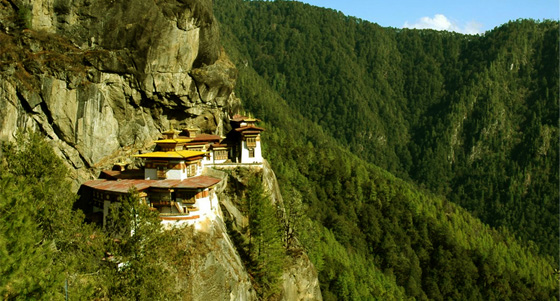
Biodiversity is a place; Bhutan.

paro

Paro Valley

Do you know there is a country which promises to maintain 60 percent of its land covered by forest for all times? Do you know this country is smaller than US by 210 times but the number of bird species are almost equal?
This country is none other than Bhutan. Today, 72% of my country is covered with forest. Despite being a very small country with 38394 km2 , there is a remarkable abundance of flora and fauna and is one of the top global biodiversity hotspots.

How do we do it?

Article 5:3, the Constitution of Kingdom of Bhutan says “The Government shall ensure that, in order to conserve the country’s natural resources and to prevent degradation of the ecosystem, a minimum of sixty percent of Bhutan’s total land shall be maintained under forest cover for all time.”
This year, we celebrated the birth of our baby prince in a very significant way. Thousands of people together planted 108,000 tree saplings to celebrate the joyous occasion. These trees are still being nurtured by the people just the way our prince is being nurtured.

planting

Thousands of people planting trees to celebrate the birth of the Crown Prince

Last year, Bhutanese people made a statement of their love for nature by setting the Guinness World Records title for Most Trees planted in one hour in the country’s capital Thimphu. I think this is amazing how a team of hundred volunteers got their hands in the ground to plant a total of 49,672 trees in just one hour. Almost everyone in the team was youth. So this record shows that Bhutan’s young generation wants a green environment to live in the future.

Bhutan is known for its long tradition of environmental preservation. Bhutan is one of the two carbon-neutral countries in the world. Do you want to know more? Bhutan is the only country in the world which is carbon-negative. It sucks up three times the carbon dioxide emissions that our 786,649 population produces.

Since 1985, the date June 2nd has been celebrated as the National Forestry Day in our country to offer our heartfelt gratitude to our visionary monarch as our fourth king Druk Gyalpo Jigme Singye Wangchuck was officially crowned on 2nd June, 1974.

Everyone Bhutanese who grew up in Bhutan will have beautiful memories of National Forestry Day celebrated in schools. As a school kid, I used to be very excited for this. We would gather in school and our teachers would give us around five saplings each to plant. For us it used to be a short trek trip to the forest. Few minutes from my school was a small mountain valley. We would all go there cheerfully to start the day. The Government of Bhutan sends drinks and food to all the schools for being a part of this day. Now when I think of it, it really is a beautiful way to celebrate the national event. Out of five saplings, I am sure atleast one must have survived. So throughout my school years, I have planted more than 50 saplings and more than five are now beautiful young trees.

forest-school

Forest official giving a demonstration on the proper way of planting the saplings.

Bhutan has made a further move to designate more than a quarter of its territory as national parks, reserves and protected areas. Now, the government has promised to identify a further 9% of land areas as biodiversity corridors linking the protected areas.

protected-areas

Protected areas and biodiversity corridors of Bhutan

Currently, the Flora and Fauna of Bhutan records 4523 species of plants and more than 5000 species are expected to occur. More than 94% of the plants are native species. Close to 200 species of mammals are known to occur in the country, including 27 globally threatened species. The recorded number of bird species is 680, out of which 21 are globally threatened.

phobjikha

Welcome to Phobjikha Valley

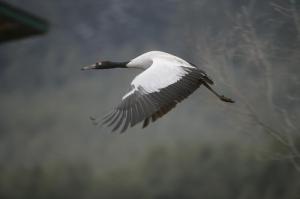
Talking of birds, a rare beautiful bird species comes to my mind. Black necked crane. According to WWF, this species is a symbol of peace and they are also known as Buddha birds. These cranes are winter visitors to the Phobjikha valley of Bhutan.


black_necked_crane

Black necked crane

The conservation measures for these cranes are very interesting. According to Royal Society for Protection of Nature (RSPN), approximately 400 cranes visit the valley every year from Tibetan Plateau, where they breed in summer. This valley uses solar energy instead of the normal power cable lines we have in Bhutan because the collisions of these cranes with the lines cause mortality to them. Sometimes the whole valley has power shutdown during winters. The farmers here use wooden and stone fencing instead of the barbed wire fencing to reduce the harms to the birds. During my visit to this valley, I came across few kids returning to their homes from school. They were whispering to each other. But they were actually talking. I was so amazed to see the little kids understand that they were going to scare away the black necked cranes if they shout and play.

Bhutan doesn’t have all the money to fund biodiversity conservation. Also we don’t claim to be a country without any problem. But you will see biodiversity conservation everywhere here. We love biodiversity and we respect it. We often hear the big steps taken for the conservation by the big nations. But in Bhutan, small steps practiced by every individual makes the biodiversity conservation a visible reality.

For more information:
http://www.oisca-international.org/news/bhutan/2014/04/16/the-introduction-of-childrens-forest-program-in-
http://www.bbc.com/news/world-asia-32971952
http://wwf.panda.org/wwf_news/?75440/Buddah-birds-Protecting-the-black-necked-cranes-of-Shangri-la

U6158378


Posted in Uncategorized | 2 Comments

Scottsdale Reserve: A world of pure conservation

75km south of Canberra off the Monaro Highway sits Scottsdale Reserve, a haven of biodiversity conservation and scientific experimentation. Scottsdale Reserve is home to a diverse range of species, with 142 animal species and 217 plant species present within two main threatened communities- yellow box grassy woodland and natural temperate grasslands, both of which are listed as critically endangered under the federal Environmental Protection & Biodiversity Conservation Act (1999). However, Scottsdale presents a highly fragmented and disrupted environment due to sheep grazing and light cropping since the 1860’s. At least 25% of the reserve has been cleared of native vegetation, and invasive species such as African lovegrass (Eragrostis curvula) are outcompeting native plant communities.

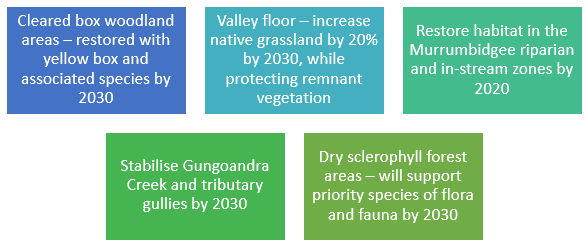
The reserve was purchased by Bush Heritage Australia in 2006 for restoration and rehabilitation, and plays an important role in the Kosciuszko to Coast (K2C) project which aims to connect and restore existing fragmented landscapes across south east NSW.  Bush Heritage Australia has five key objectives for Scottsdale Reserve (Figure 1), and rely on volunteers to undertake restorative activities needed to meet these goals, such as large-scaling planting and seed propagation at an in-house nursery.

Bush Heritage's five main objectives for Scottsdale Reserve

Figure 1- Bush Heritage’s five main objectives for Scottsdale Reserve

After several delays due to bad weather, I ventured out to Scottsdale last Friday (7th of October) with ANU researcher and lecturer Dr David Freudenberger to undertake field surveys of tree seedling mortality and growth rates of Box Gum Grassy Woodland restoration. The day involved walking transects of native plants, planted by volunteers in 2013. The species included Eucalyptus pauciflora (snow gum), Eucalyptus melliodora (yellow box), Eucalyptus bridgesiana (apple box), Acacia dealbata (silver wattle), Acacia rubida (red-stemmed wattle) and Bursaria spinosa (Native Blackthorn). Along each transect we measured diameter at 10cm (as few plants warranted a measurement at breast height), assessed plant health (from healthy to dead) and occasionally re-recorded the species type due to their observed characteristics. This data was later entered into Excel.

After arriving at Scottsdale, it sunk in just how important the site is, and numerous other blogs for this course explore the wide-range of activities being undertaken at Scottsdale. Mass volunteer efforts allows the community to both help restore a degraded site, as well as gain a better understanding of the vegetation of their own properties and perhaps pick up better management practices. Scottsdale also presented as a hub of conservation experimentation, with research sprawling as far as the eye can see. Some projects include relocating the striped legless lizard (Delma impar) from development sites in Canberra, testing the effectiveness of weed mats for new plant growth, looking at the impact of fire on the environment and carbon-storage potential in native plants.

While the work we did with David will ultimately contribute to a number of projects while helping restore the Box Gum Grassy Woodland, there was a focus on the potential for carbon-sequestration. Carbon forestry presents as a simple and cost-effective way to implement carbon sequestration policies, and the data we collected will help develop an understanding of the carbon-storage potential of native plants throughout their lifetime. Ultimately, it’s important to recognise that this is a long term project and requires ongoing monitoring and flexible approaches. As David outlined in an interview with the Sydney Morning Herald, “it takes 120 years to grow a tree hollow suitable for birds, bats and bees but in the short term, we’ll be monitoring what does and doesn’t work”. In turn, this also means there’s plenty of time left to volunteer!

I put my hand up to join this project as I realised while I have completed some conservation work before, I had never worked with plants or within Australia. This being my first year in Canberra, this experience also allowed me to learn more about local vegetation and the restorative efforts in place. Learning to identify the differences between the species was very challenging, but also rewarding- I almost felt like an expert by the end of the day!

However, in the end my experience went beyond simply gaining field experience in measuring trees. Heading out to Scottsdale Reserve highlighted the important of biodiversity conservation and restoration efforts, and in particular the need for these efforts to be scientifically informed. It also exposed me to the world on volunteering (something I had always told myself I was too busy to do). It is a mutually beneficial process- work gets completed on the reserve, and the volunteers gain a deeper understanding of the threats (and the solutions to them) facing south east NSW, and possibly their own properties.  This will play a critical role in projects such as K2C, as restorative efforts by many different land owners will help conserve, recover and connect ecosystems across the south east of Australia.

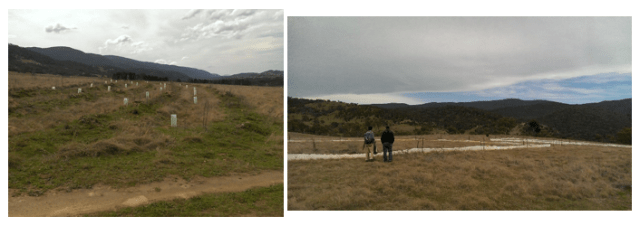
Figure 2- New transect plantings (left) and striped legless lizard relocation sites (right) within Scottsdale Reserve

Figure 2- New transect plantings (left) and striped legless lizard relocation sites (right) within Scottsdale Reserve

Molly, u6061749

Posted in biodiversity conservation, Reintroduction, Scottsdale Reserve, Volunteer work | 1 Comment

Planting New Life? A Critical Perspective on the Reforestation of Eucalypt Species in Australia

dsc_0734
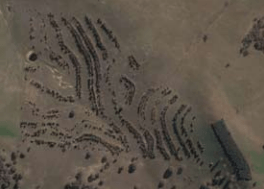
After a first failed volunteering attempt, I managed to hop onto Tim Harvey’s four wheel truck to join the volunteers of the Conservation Volunteers Australia. Scottsdale reserve, at about 45 km from Australia’s capital, spreads over more than 1500 hectares from which 300 hectares have been strongly disturbed by past grazing and clearing. Owned by Bush Heritage Australia (BHA) since 2006, the damaged parts of the reserve have become part of a regeneration project which includes the seeding and planting of various key Eucalypt species. As can be seen on the map below, the zigzagging lines indicate the different tree planting lines. In one day, with a group of around 20 people we managed to plant about 500 trees, out of the 20.000 trees that have already been planted over the last few years.

dsc_0746

While taking time to carefully plant the Eucalypt trees, a few questions crossed my mind. Firstly I wondered WHY I was planting trees, which seemed to be an all too easy question to answer in the first instance. I was planting trees, because that area, which used to be a Yellow Box Grassy Woodland, was now a patch of land which seemed pretty much treeless to me now. Secondly, I asked myself HOW useful this method was to effectively restore the area at hand. BHA has attempted to reintroduce Yellow Box Grassy Woodland by both seeding and planting. As the success rates of seeding turned out fairly low, especially on slight hill sides, planting now offers an alternative to this. While the trees we planted were only small and fragile, the success rate is supposedly 80%. After a period of 5 years, the trees are however no longer monitored which suddenly makes them vulnerable to drought, fires and other extreme events which are likely to damage and possibly kill the trees.

As my knowledge on planting trees in Australia is fairly elementary, I started doing some research as soon as I got home after my exhausting day out in the Australian sun. This is what I learned from the World Wide Web: Firstly, the most common way to reforest a distorted patch of land in the past has been to abandon it and rely on nature for regeneration (Weber et al.,2009). This has however been proven to spread out over a long period of time and it happens we as humans do not have that much time. Time is money. This is why, we started taking the matter in our own hands by seeding and planting trees in order to reforest degraded land. It is however important to notice that while forest regeneration by planting and seeding can enable biodiversity to flourish again, it will not result in a copy of the original forest structure and composition (Chazdon, 2008). Some academics have expressed their concerns about large-scale forest regeneration and have wondered whether this will possibly lead to low genetic diversity and increased homogeneity.

Generally speaking, forest regeneration is rather hard to evaluate as the process stretches over a long period of time and can take to over more than a century to fully develop (Chazdon, 2008). Short-term strategies are appealing but “if future forests are to support the wide range of species, species interactions, and ecosystem services present in current forests (Chezdon, 2008, p. 1460)”, long-term solutions need to prevail. By reading this I became a little critical of planting trees and monitoring them for a period of only 5 years. In the life of a tree, 5 years is rather short and does not ensure a high survival rate in the long term vision. Asking volunteers to put time and effort into planting literally millions of trees around the world does therefore only seem beneficial and meaningful for conservation purposes if the planting of trees is monitored over a long-term span.

capture-plein-ecran-12-10-16-125419-bmp

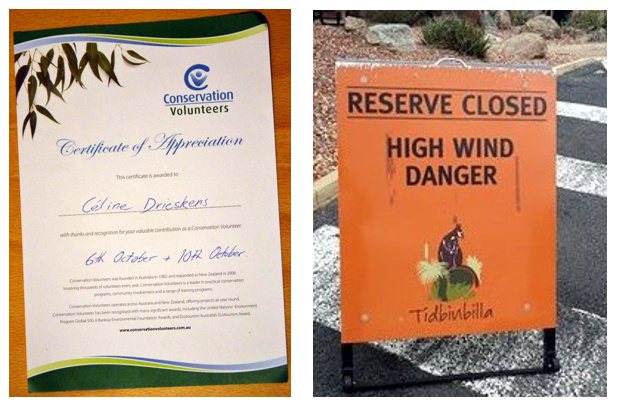
On an end note, here a picture of my acquired Volunteering Certificate. Although some extreme weather events and organizational issues came into my way and I was not able to do as much volunteering as I would have liked to, I had the wonderful opportunity to go out on adventure with an organization trying to act on the best behalf of nature. In the few weeks I have left on this continent, I am more than willing to continue volunteering and enriching myself with a deeper understanding of Australia’s mesmerizing nature and the willingness of its people to protect it.

(U6122384)

References

Bushheritage.org.au. (2016). Scottsdale Reserve – Bush Heritage Australia. [online] Available at: http://www.bushheritage.org.au/places-we-protect/new-south-wales/scottsdale [Accessed 10 Oct. 2016].

Chazdon, R. (2008). Beyond Deforestation: Restoring Forests and Ecosystem Services on Degraded Lands. Science, 320(5882), pp.1458-1460.

Günter, S., Gonzalez, P., Álvarez, G., Aguirre, N., Palomeque, X., Haubrich, F. and Weber, M. (2009). Determinants for successful reforestation of abandoned pastures in the Andes: Soil conditions and vegetation cover. Forest Ecology and Management, 258(2), pp.81-91.

Posted in Uncategorized | 1 Comment