Citizen science: an answer for bird conservation in urban China?

By Shiyao Zhong

On 15-17 Jan 2016, an International Black-faced Spoonbill Census was conducted in various locations in East and Southeast Asia. I participated to one of the counting sessions in Shenzhen Bay (Southern China), which is one of the hotspots to see these gorgeous birds. The good news is the global population of Black-faced Spoonbill has raised to 3,356, which is remarkable considering there were only 500 left in the wild 16 years ago [1]. Despite the important findings, one thing that I am particularly interested about this census is the role of the citizen in bird monitoring.

Black-faced spoonbill, source: WWF Hong Kong [2].

The Black-faced Spoonbill census is not the only bird monitoring project that benefits from citizen participation. China Coastal Waterbird Census, a monthly survey covering 13 coastal intertidal wetlands along the east coast, has been conducted for over 10 years involving more than 150 volunteers [3]. These projects are important as the east-southeast of China composes part of the East Asian-Australasian Flyway [4], which is one of the great migration paths for migratory birds. However, it happens that massive land reclamation and intensive urbanization has been continuous in the area for decades [5].

Landsat images: Bohai Bay, China, 1992 (L) and 2012 (R). Source: Daily mail Australia [6].

Landsat images: Shenzhen, China, 1998 (L) and 2008 (R). Source: Daily mail Australia [6].

So, how can citizen science projects benefit the bird conservation?

Think about the temporal and spatial scale of a bird conservation project like China Coastal Waterbird Census, an intensive human resource is needed. The knowledge of bird identification and ecological survey methods is not likely to be trained in short-term, therefore citizens that have the knowledge and experience, and more importantly, actively participate in the project is crucial. In many main cities, bird societies organized by citizens are closely connected to conservation NGOs and experts. They provide training to their members, organize bird watching events and even public education programmes. Citizen science is not only helping the bird monitoring, it is also promoting the science communication and public education on the environmental issues.

Not limiting to specific projects, the detecting scale of citizen science is even wider. For example, with limiting resources, bird monitoring projects generally only include sensitive or indicator species and restricted area. Moreover, thanks to the new technology, e-bird guides, and bird mapping apps (e.g. eBird) [7] have been developed. These applications are powerful tools for data collection, individuals can easily access to bird guides and GPS locators. The observation information (species, abundance, and location) is connected to a regional or even global database, which is valuable for bird conservation. The citizens can also help to keep an eye on illegal activities that are harmful to habitats and birds.

In long term, the rise of public awareness on bird protection may change the way that we construct the urban area. In recent years, the area of green space and artificial wetlands in the urban area is increasing [8]. Does this mean there is a bright future for birds conservation? Let’s not forget the major cause of the decline of bird population and biodiversity in China- habitats loss. Citizen science could be helpful, but stopping the habitat loss is the key.

Reference:

  1. Yat-tung Yu, 2016, Result of the International Black-faced Spoonbill Census 2016, EAAFP web:http://www.eaaflyway.net/result-of-the-international-black-faced-spoonbill-census-2016/.
  2. Black-faced Spoonbill, WWF, website: https://www.wwf.org.hk/en/reslib/species/blkfacespoonbill/.
  3. Ed Parnell, 2016, Decade-long Citizen Science project counts China’s waterbirds, Birdlife International, Asia web:http://www.birdlife.org/asia/news/decade-long-citizen-science-project-counts-china%E2%80%99s-waterbirds.
  4. Department of the Environment and Energy, Australia Government, 2008, Migratory Shorebirds of the East Asian – Australasian Flyway: Population estimates and internationally important sites, web: http://www.environment.gov.au/resource/migratory-shorebirds-east-asian-australasian-flyway-population-estimates-and.
  5. Schneider, A., Mertes, C.M., Tatem, A.J., Tan, B., Sulla-Menashe, D., Graves, S.J., Patel, N.N., Horton, J.A., Gaughan, A.E., Rollo, J.T. and Schelly, I.H., 2015. A new urban landscape in East-Southeast Asia, 2000–2010. Environmental Research Letters10(3), p.034002.
  6. Phil Vinter, 2012, the changing face of Earth: Dramatic high-resolution satellite images show how the world has been transformed over the last four decades, Daily mail web: http://www.dailymail.co.uk/sciencetech/article-2177202/The-changing-face-Earth-Dramatic-high-resolution-satellite-images-world-changed-decades.html
  7. eBird, China, website:http://ebird.org/ebird/country/CN?yr=cur.
  8. Zhou, X. and Parves Rana, M., 2012. Social benefits of urban green space: A conceptual framework of valuation and accessibility measurements. Management of Environmental Quality: An International Journal23(2), pp.173-189.


Posted in Uncategorized | 2 Comments

Early bird catches the worm

Introduction:

On a chilly October morning, a group of students and I accompanied Dr. Phillip Gibbons on a bird watch that’s a part of an ongoing 6-year longitudinal study that examines the value of mature trees for wildlife. Canberra was named Australia’s 2nd largest city undergoing development in 2016, and thus various new suburbs are being built all around Canberra. As the urbanization increases demands for space and aesthetically pleasing neighborhoods also increase. Hence, lands are cleared to make space and older more mature trees are usually taken down because they’re not very pleasing to the eye.

The problem?

Canberra has a high abundance and variety of bird species, that depend on tree’s for basic needs such as a source of food, foraging, nesting, and most importantly older tree’s with hollows as some bird species are hollow-nesting birds. Martin and McIntyre (2007) found that the most common response by birds to grazing is that there was a high level of species absence in the presence of grazing, and high species abundance under lower levels of grazing. The aim of this study was to determine the ways birds made use of different types of trees.

Setting the scene:

At 6:30am, the team and I set out to a private property in the Kinlyside suburb and surveyed 4 different trees on the property, two trees that were located between two residential properties in Nicholls, and lastly one tree that was situated opposite to a roundabout in Ngunnawal. The trees were a combination of large, old and small trees. The trees were observed at 20 minute intervals each, and the birds species, time at which it the bird moved to the tree, the type of tree the bird had moved from, the actions the bird performed (e.g.; foraged, ate, used hollows, what type and angle of branch it landed on), and the direction and tree type the bird left to.

The first tree surveyed in the morning, it was a relatively old tree with lots of hollows

This work experience opportunity directly relates to the concept of threats to biodiversity through habitat loss which we learnt in week four. The biodiversity of bird species in Canberra is at threat due to the constant land clearing for development. The species-area curve concept was evident through this concept, a higher number of birds were measured in the private properties for example compared to the tree adjacent to the roundabout and in developed suburbs, area’s where species had a higher habitat area (defined by number of trees in the area) the higher the number of species present.

The observed tree that was adjacent to a roundabout, this was a relatively medium sized tree with no hollows. It also had no interaction with any bird species, which reiterates the species-area curve concept

Future directions:

Through this work experience opportunity, I experienced first-hand not just the concepts covered throughout this course, but also the use of different methodology. As an aspiring environmental conservationist, being a part of a conservation research study has been eye-opening not just to how studies are conducted, but to issues that may arise during the process as well. During the surveying process, there was one tree in specific that we could not measure on that day, which had been a part of the longitudinal study for several of years. The tree was now a part of a developmental site for a new suburb, and that was an issue as it meant that reaching the tree to observe its species interaction was not possible, which in turn would affect the outcome of the study as yearly data is needed. My personal take on what should be done in order to minimize habitat loss due to urbanization in Canberra is through getting communities involved, as many of the decision making (e.g. taking down older trees because they’re not seen as aesthetically pleasing) are made in order to satisfy the communities that will be residing in those suburbs. Setting up meetings with community councils to explain the importance of maintaining these habitats is essential, and outlining the benefits of having more green spaces and trees in neighborhoods. In Melbourne for example, it was found that a 5% fall in urban tree cover can account for a 1-2C rise in temperatures (The Conversation, 2017), such facts and figures may be enough to sway some local communities into opposing the clearing out of trees at the extent that is currently being carried out. In conclusion, I personally feel very lucky to have had the opportunity to be a part of this long-term study, not everyone gets to go out on the field and carry out survey’s with world class researchers and get an insight into their formidable knowledge- so lastly, I would like to thank Dr. Phillip Gibbons for this wonderful and rewarding experience.

Author:

U5732197, Noora Albalooshi

References:

MARTIN, T. and McINTYRE, S. (2007). Impacts of Livestock Grazing and Tree Clearing on Birds of Woodland and Riparian Habitats. Conservation Biology, 21(2), pp.504-514.

The Conversation. (2017). Fewer trees leave the outer suburbs out in the heat. [online] Available at: https://theconversation.com/fewer-trees-leave-the-outer-suburbs-out-in-the-heat-33299 [Accessed 12 Oct. 2017].

Posted in Uncategorized | 1 Comment

This is How We Roll! Feat. Pink-tailed Worm-lizard (Aprasia parapulchella)

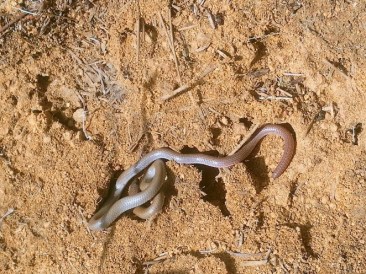
Image 1: Pink-tailed Worm-lizard (Aprasia parapulchella)

Introduction

It is crucial to have appropriate conservation practices in place to minimise biodiversity loss and ensure that species are protected for generations to come.  Ecological restoration is one of the ways to achieve this. In the ACT region, efforts are being made to conserve particularly threatened species through habitat restoration and I was fortunate enough to learn about one of them.

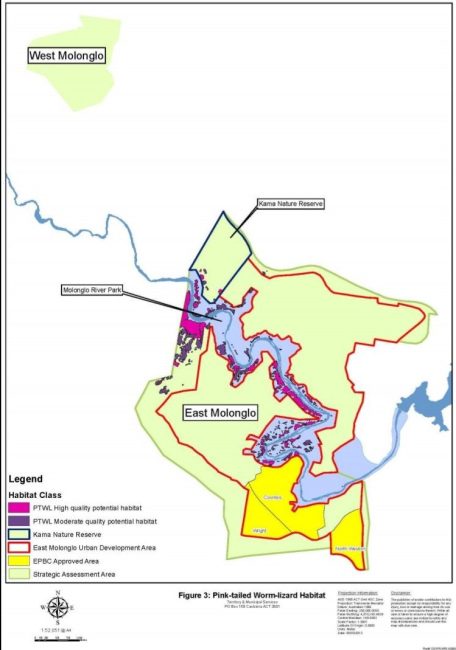
During Spring 2017, Hui and I ventured out with ecologist Richard Milner, of the ACT Parks and Conservation Service, into the Molonglo River Reserve west of Coppins Crossing Road (Map 1).  Braving the heat, we rolled over hundreds of football-sized rocks to try and get a glimpse of the elusive Pink-tailed Worm-lizard (Aprasia parapulchella), a species listed as vulnerable in the ACT and under the Environment Protection and Biodiversity Conservation Act 1999 (EPBC Act) (“Conservation Advice A. parapulchella,” 2015).

Map 1: Map of the protected areas of the Pink-tailed Worm-lizard habitat in the Molonglo River Reserve (ACT Govt., 2013)

Species Profile

The Pink-tailed Worm-lizard is a small legless lizard species that can grow to approximately 25cm in length (“Conservation Advice A. parapulchella,” 2015).  It is found in the native rocky grasslands across South-East Australia (Reinfrank, 2015) and has a fragmented distribution (“Conservation Advice A. parapulchella,” 2015).  The species is found in the ACT along the Murrumbidgee and Molonglo River corridors (Map 1) (Osborne and Wong, 2013).  Interestingly the species co-habits the burrows of ants (Image 2) and feeds on their eggs and larvae (Image 3) (Wong et al., 2011).  It is unknown what the ants gain from the co-habitation.  Richard predicts that the lizard produces a chemical signal that benefits the ants in some way.  The Pink-tailed Worm-lizard plays an important ecosystem role as an indicator of healthy sites. Sites which contain the species often support a variety of other reptiles such as lizards and snakes (Osborne and Wong, 2013).  It is therefore important to conserve their habitat in order to protect these biodiversity hotspots.

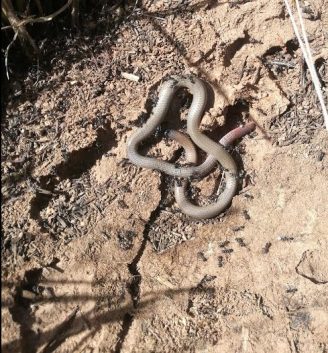
Image 2: Pink-tailed Worm-lizard found in co-habitation with ants

Image 3: Ants and their eggs and larvae found under a rock

Causes of Decline

Population growth and economic growth have been the overarching drivers of biodiversity loss for the Pink-tailed Worm-lizard.  These drivers have instigated problems such as habitat degradation and habitat fragmentation. These problems are a direct result of land clearing and rock removal which transformed the native grasslands into land suitable for livestock grazing and agricultural intensification processes (McDougall et al., 2016).  This landscape alteration process also exacerbated weed invasion. For it enabled exotic species such as African lovegrass (Eragrostis curvula) and Mullein (Verbascum thapsus) (Image 4)(McDougall et al., 2016) to outcompete the native species, such as Kangaroo grass (Themeda triandra) necessary for Pink-tailed Worm lizard habitat (“Conservation Advice A. parapulchella,” 2015).  

Image 4: Mullein (Verbascum thapsus) invading Pink-tailed Worm-lizard habitat

Altered fire regimes and habitat loss due to urban development are other factors which have contributed to the species decline.  As thousands of hectares of native grassland are being sacrificed for the development of suburbs such as Coombs (Image 5).  Climate change is also of imminent concern as the Pink-tailed Worm-lizard’s specific habitat and dietary requirements make it sensitive to environmental change (Wong et al., 2011).  The species prefers temperatures of around 18-25 degrees Celcius,  and with the rise of global temperatures, this could have dire consequences for the lizard.

Image 5: Urban development encroaching the reserve

Habitat Restoration Project

After the 2003 bushfires majority of the Pink-tailed Worm-lizard habitat was destroyed.  The habitat restoration project, which began in 2014, is being undertaken by the ACT Parks and Conservation Service. It has seen the planting of native grasses, the placement of hundreds of rocks (Image 6) and some brick transects (Image 7) in the Molonglo River Reserve to improve the habitat for the Pink-tailed Worm-lizard.  There are two projects being undertaken: the first to improve habitat connectivity and the second to reduce the fire load (ACT government, 2013).  The main objective of these two projects is to offset the impacts of the encroaching urban development by helping to protect and increase the lizard species’ numbers in the reserve (ACT Government, 2013).

Image 6: Restored Pink-tailed Worm-lizard rock habitat

Image 7: Red house brick transect

To improve habitat connectivity, eleven islands of rock had been set up across the landscape.  Richard explained that the Pink-tailed Worm-lizard had successfully recolonised nine out of the eleven islands since the project began.  It was our job to see whether the species had recolonised the remaining two. After rolling rocks for what seemed like an eternity, our search turned out to be fruitful: the species had indeed recolonised the final two islands! We not only detected their presence from finding their skins (Image 8) but to our delight, were also lucky enough to catch sight of the legless lizard themselves! It is hoped that in the next ten years the four genetically distinct populations will interbreed across the eleven islands to overcome their fragmented dispersal and increase their genetic diversity.

Image 8: Pink-tailed Worm-lizard skin found under a rock

Red house bricks are being used to test whether the Pink-tailed Worm-lizard can survive under different materials other than rocks.  As the rock-rolling process, which is required to monitor the species, is potentially intrusive and threatening to them.  The brick has been found to be the most uniform option with similar thermal properties to the rocks and thus seems to be the most suitable substitute for them.   Richard says that if the bricks are found to have less of an impact than the rocks, then they could become the national guidelines for conserving the species.  We observed the Pink-tailed Worm-lizard (Image 9) and it’s skin (Image 10) under the bricks proving that they are a successful substitute for rocks.

Image 9: Pink-tailed Worm lizard found under a brick

Image 10: Pink-tailed Worm-lizard skin found on a brick

For the fuel management project, rocks have been strategically placed at the edge of the reserve to create a barrier between the proposed urban development and the Pink-tailed Worm-lizard habitat (ACT Government, 2013).

Conclusion

Although sore from the rock rolling, I was very glad that we had the opportunity to see the threatened Pink-tailed Worm-lizard and play a small role in assisting with their monitoring.

There seems to be a bitter-sweet trade-off between conserving the Pink-tailed Worm-lizard and meeting economic demands: urban development.  For without the urban development, the lizard would not have received the amount of attention it has for it’s conservation and habitat restoration.  One hopes that the conservation efforts made will continue to ensure the survival of this vital species.

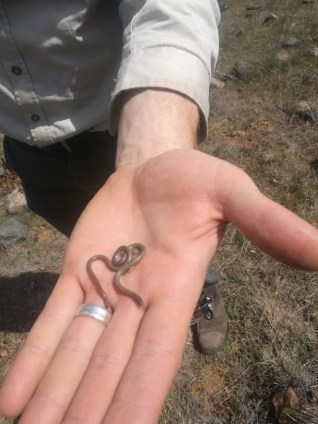
Image 11: Richard Milner holding a Pink-tail Worm-lizard

I would like to thank Richard Milner for his time and effort taken to give us an insight into this fascinating species.  A truly unforgettable experience!

9 hours field work was undertaken during Spring 2017 on 22nd September 10.30am – 3.30pm and 6th October 9.30am – 1.30pm

Karina Carter

References

ACT Government, 2013, ‘Molonglo Adaptive Management Strategy’. Available at: http://www.tccs.act.gov.au/__data/assets/pdf_file/0003/588045/Molonglo-Adaptive-Management-Strategy.pdf

McDougall, A, Milner, R, N, C, Driscoll, D, A, and Smith, A, L, 2016, ‘Restoration rocks: integrating abiotic and biotic habitat restoration to conserve threatened species and reduce fire fuel load’, Biodiversity and conservation, 25(8):1529-1542. Available at: http://smithecology.org/uploads/3/9/4/6/3946018/mcdougall_etal_2016_biodiversconserv_restoration_rocks.pdf

Osborne, W, and Wong, D, 2013, ‘The extent of habitat for the vulnerable Pink-tailed Worm Lizard (Aprasia parapulchella) in the West Belconnen – Ginninderra Creek investigation area – confirmatory distribution surveys and mapping’, Institute for Applied Ecology, University of Canberra. Available at: http://ginninderry.com/wp-content/uploads/2016/08/Osborne-W.-Wong-D.-2013-Pink-tailed-worm-lizard-study.pdf

Reinfrank, A, 2015, ‘Australia’s largest pink-tailed worm-lizard habitat restoration project underway to save threatened species’, ABC News. Available at: http://www.abc.net.au/news/2015-05-09/pink-tailed-worm-lizard-habitat-restoration/6457362

Threatened Species Scientific Committee (TSSC), 2015, ‘Approved Conservation Advice for Aprasia parapulchella (pink-tailed worm-lizard)’, Canberra: Department of the Environment. Available at: http://www.environment.gov.au/biodiversity/threatened/species/pubs/1665-conservation-advice-01102015.pdf.

Wong, D, Jones, S, Osborne, W, S, Brown, G, Robertson, P, Michael, D & Geoffrey, K, 2011, ‘The life history and ecology of the Pink-tailed Worm-lizard Aprasia parapulchella Kluge – a review’, Australian Zoologist, 35(4):927-940. Available at: http://publications.rzsnsw.org.au/doi/pdf/10.7882/AZ.2011.045

Posted in Uncategorized | 4 Comments

Helping the Australian Bush survive invasive honeysuckle

u5564582

An Environmental science degree is different at every university. Studying at the ANU I am very lucky to be exposed to all different kinds of teaching, from classroom theory to working in the field and everything in between. In saying this, the degree is so broad that there remain to be infinite opportunities and experiences which we as students are sent out on our own to find.

At ANU I am a part of a society called ANU Intrepid Landcare and this group provides opportunities for students from all academic backgrounds to participate in Landcare and conservation work. I took this opportunity to do some biodiversity conservation. A family in Araluen has a property which is ecologically significant as it is home to several native Australian species. On the property, there are various Eucalypts and lots of native understorey, as well as other native trees and plants. However, the property also plays host to an overwhelming amount of honeysuckle.

I learnt a lot about this species from our host family. They taught me, from their own experience, all about the weed itself and what they found to be the best methods for removal.

Japanese honeysuckle is a deciduous climbing weed and is capable of outcompeting a majority of native Australia vegetation. The plant is an invasive species, and having learnt about the significance of invasive species in Phil Gibbon’s course Biodiversity Conservation, the importance of its removal was clear. If the weed outcompetes native vegetation this will lead to further spreading of the weed, habitat loss for native species, as well as loss of food and risk to animals and humans as the weed can be slightly poisonous. This weed in particular poses a high risk as it can reshoot from any point along its stem and hence simply cutting it is not effective. In the woodland and forest landscape at the property our host family have done an amazing job of fighting the weed and keeping its impact low, however, it was still very present and that is why we were there – to help remove it! First thing was first though: what does honeysuckle look like? None of us actually knew, and in order to be able to remove it, learning was vital.

In order to learn, we were taken out into a patch of the landscape where the weed was prominent and each had a look at the plant at different stages of growth. We were primarily looking for sprouts as it is easiest to cut off at a young age, although there were patches of significant growth which I can most accurately describe as a giant birds nest.

This is an example of the dense honeysuckle.

Just about the whole ground cover in this area was honeysuckle!

Once we were able to identify the weed we were introduced to the Bradley Method of weeding. More information about the Bradley Method can be found here –

http://www.uppershoalhavenlandcare.com.au/biodiversity/bush-regeneration/ – but it basically involves starting from the outside, i.e. the areas of vegetation which are not too affected, and working your way in towards the areas of dense weeds. This method is useful when tackling an area that is already host to established weeds.

Once all the talking was out of the way, the best way to properly learn what we had to do was to start doing it. Splitting in to groups to work on different sides of the site we made a start attacking the weed. While the Bradley method defines the direction in which we would work, the actual nature of the work varied from cutting and poisoning to simply pulling, and pulling, and pulling on the weed until we eventually found the end and could pull it out of the ground. With these especially long pieces of the weed we would roll them up and hang them on surrounding trees. It was a matter of practicality but it gave the whole landscape a kind of spooky feel to it.

The weeds felt endless, especially in the most dense patches it felt like we were weeding for hours and making no progress. It was only when we looked back on photos of the site before we had started that we saw how much of an impact we had made.

Following our hard work, our wonderful hosts rewarded us with afternoon tea and a bonfire, which also provided a great opportunity for reflection. We were able to talk to our peers and our hosts and discuss what we had achieved over the day and what impact we had had.

During this time, a few key take home points came to mind. One of our hosts pointed out to us that without the help of Intrepid Landcare what we achieved would have taken months. This really highlights the importance of coming together and working hard for conservation. If the hours aren’t put in in the field, no matter how many policies are changed or management plans are released, change will not happen.

Another was how much I learnt in the field. I have never been incapable of learning in the classroom, although I have found that both on field trips and in this context I have learnt so much more from hands on work, and from putting the theory in to practice. This is a point that I would like to highlight. It makes such a difference having the experience of completing hands on work in the field and can really positively influence  decision making in the classroom and office, and so with this in mind I would recommend to everyone working in environmental science to every now and then put down the pen and paper (or more aptly for 2017, close your laptop) and go outside and get your hands dirty.


Posted in Uncategorized | 1 Comment

Tidbinbilla Wildlife TEam

Ex-Situ conservation Tidbinbilla

Depite its proximity, transport constraints meant that I had not visited Tidbinbilla since I began studying at ANU, however the prospect of work experience and exposure to the incredible native diversity so close to home was too good to pass up. Working alongside the Wildlife Team, was an informative behind the scenes look at ex-situ conservation in an Australian context. Having taken part in a decentralized breeding program for the Critically Endangered Lemur Leaf Frog back at home, I was especially excited to be involved with the breeding program for the Northern Corroboree Frog (Pseudophryne pengilleyi). As I was fortunate enough to experience however, the duties of Tidbinbilla’s Wildlife team are far from monofocused, ranging from felling trees to delicately sorting froglets all in the span of a few hours.

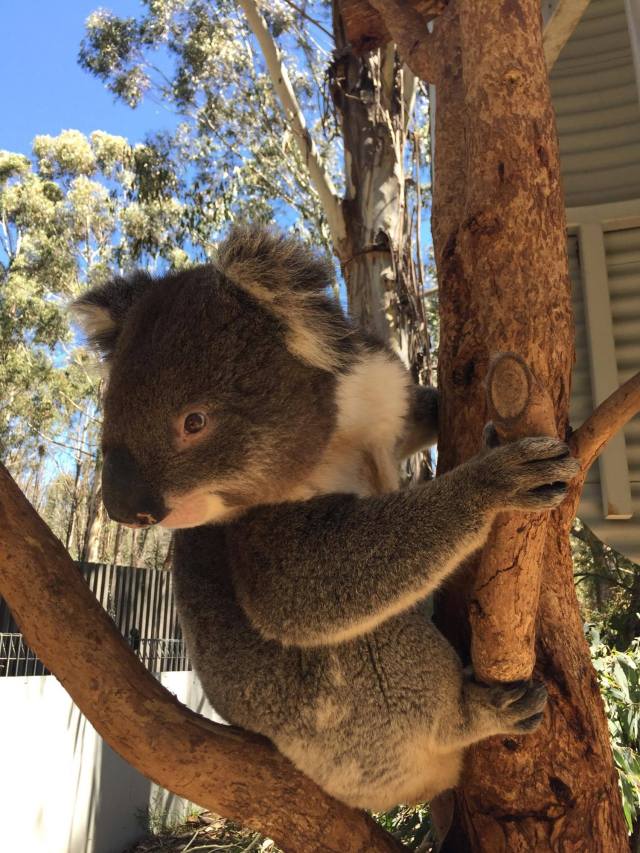
Figure 1: Koalas breed without much help within the park (author photo)

Tidbinbilla Nature Reserve

Tidbinbilla nature reserve is one of the naturally and historically richest conservation areas in the Canberra region, conserving an integral part of the ACT’s threatened subalpine landscapes (Act Government, 2017). In addition to the unique ecological communities protected within its boundaries, Tidbinbilla also protects important Aboriginal and European historical sites. Following extensive damage to the park during the 2003 wildfires, an additional focus was placed on ex-situ conservation and captive breeding of three critically endangered species or subspecies, the Northern Corroboree Frog (Pseudophryne pengilleyi), Southern Brush Tailed Rock Wallaby (Petrogale penicillata), and Eastern Bettong (Bettongia gaimardi). While fire exacted a toll on the landscape, it also created a management opportunity to redevelop infrastructure to suit its revised goals.To a greater extent than many of the regions conservation areas, public involvement, education and outreach is a key part of Tidbinbilla’s management. Not only does it boast guided activities, trails and an interesting information centre but it also actively engages with community volunteers.

Figure 2: Northern Corroboree Frogs (Pseudophryne pengilleyi), in growout tank (Author photo)

Wildlife Team- Why captive breeding?

At Tidbinbilla I worked alongside the Wildlife Team, who are in charge of managing the captive breeding programs in the park. While captive breeding has not always been a key focus in the park, its key flagship projects have been immensely successful. The ex-situ conservation program here serves both as an insurance population, but also to directly supply reintroduction efforts (Zippel et al. 2011).

All three species, but especially the Southern Brush Tailed Rock Wallaby and the Northern Corroboree Frog, are notable not only for their extremely limited geographical range but small population sizes (IUCN, 2017). This makes wild populations especially vulnerable to disturbances, either human induced or natural such as fire (Piggott et al. 2005) . If fire destroys their limited habitats, these species could quickly be lost forever. A poignant example threat is the Chytrid fungus, which has decimated P. pengilleyi populations throughout its range (Zippel et al. 2011). Maintaining a stable breeding population in captivity, can serve as an insurance policy for the eventuality of extinction in the wild, much the same way as the Tasmanian population of the Eastern Bettong served as an insurance for the now extinct mainland population (Short et al. 1992). With 70% of the global P. penicillata population, the largest population of P. pengilleyi and a diverse thriving group of B. gaimardi, Tidbinbilla is the cornerstone of their ex-situ conservation (ACT Government 2017.

Figure 3: Pseudophryne pengilleyi breeding setup (Author photo)

In captivity, high survival rates enable reintroduction where suitable. These reintroductions can bolster natural populations, further improving the odds of their continuing survival (Griffiths and Pavajeau, 2008). So far, reintroduction of all three species has been successful (ACT Government 2017). Reintroductions at Mulligans Flat have seen Bettongs roaming the natural landscape of the ACT for the first time in over 100 years (ibid). In a critical success, as of last season there is evidence that frogs born at Tidbinbilla and released into Namadgi have been able to successfully survive, and even breed in the wild.
AN important question in populations this small is genetic sustainability (Frankham, 1995), and careful work at Tidbinbilla has been able to maintain functional genetic diversity. By introducing these new species into the wild populations, the gene pool can expand and become more resilient, hopefully bettering their chances of their survival (Fraser, 2008). These species and projects are so important not only for how rare they are, but also for what good prospects these conservation efforts are showing.

The Experience

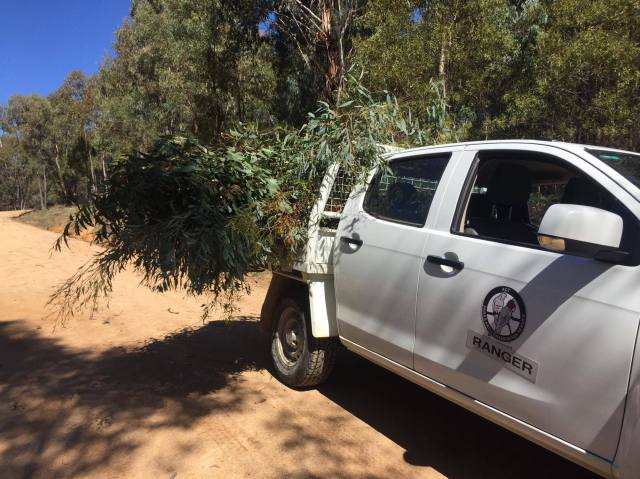
A day in the life of a Wildlife Team member is not just directed at a singular species, but rather adapts to the needs of the park as a whole. The day began with cleaning and maintenance of Wallaby habitats. In the breeding pens, the small enclosure size means that droppings need to be removed daily. Then, we had to gather new food for the Koala population. Due to their fussy feeding habits, and preference for the youngest leaf tips this didn’t involve picking leaves, but rather the sawing down of over a dozen young trees. The paradoxical experience of quasi-logging within a protected area really made me think about how animal conservation, and landscape conservation can come to be at odds. One of the most notable features of the Koala habitat was an overabundance of rather tame Potoroos. While all but absent from the park proper, their population exploded within predator proof areas. This showed the devastating effects of invasive species predation, even when programs are in place to cull invasives. We later gave individual attention to the onsite reptile population before moving on to the Corroboree breeding center.

Figure 4: Two days’ worth of Koala Food (author photo)

Huge attention is paid to the genetic viability of the frog population, with each brood being separated and classified. The seriousness of this project for the survival of the species was evidenced by the numerous alarms, sirens and locks all protecting the population form intrusion or environmental fluctuation. We transferred newly metamorphosed froglets into their new grow-out enclosures. One of the most amazing things was the level of detail involved to ensure their health. Everything from the slant of the gravel, position and shape of the natural shelters, to the effect of proximity to the air conditioner on ambient humidity was accounted for. This delicate work was followed by an informative talk with one of the indigenous rangers, Kai, who not only contextualized the history of the landscape, but showed the importance of public education for the survival of the park.

Working at Tidbinbilla was eye opening, and valuable giving me an insight into how dynamic wildlife work can be. It demonstrated the conflicts between species, landscape and historical conservation and showed how important public interface is for all three, something I had not previously given enough thought. Not only did I learn practical skills, but conversations with staff gave valuable insights into researching Biodiversity as I explore the next steps in my academic life. And as a perfect way to round off, I was able to finish the day with my first sighting of a wild platypus, making me think again how important biodiversity is to the value of a landscape.

Work Date: 12/10/17 from 7:30 to 16:00.

Word Count: 1056

U5701560

Frankham, R. (2013). Conservation Genetics. Annual Review of Genetics, 25(1), pp.301-307.
Fraser, D. (2008). How well can captive breeding programs conserve biodiversity? A review of salmonids. Evolutionary Applications, 7(2), pp.23-28.

Griffiths, R. and Pavajeau, L. (2008). Captive Breeding, Reintroduction, and the Conservation of Amphibians. Conservation Biology, 22(4), pp.852-861.

Murray, J., Low Choy, S., McAlpine, C., Possingham, H. and Goldizen, A. (2008). The importance of ecological scale for wildlife conservation in naturally fragmented environments: A case study of the brush-tailed rock-wallaby (Petrogale penicillata). Biological Conservation, 141(1), pp.7-22.

PIGGOTT, M., BANKS, S., STONE, N., BANFFY, C. and TAYLOR, A. (2005). Estimating population size of endangered brush-tailed rock-wallaby (Petrogale penicillata) colonies using faecal DNA. Molecular Ecology, 15(1), pp.81-91.

Short, J., Bradshaw, S., Giles, J., Prince, R. and Wilson, G. (1992). Reintroduction of macropods (Marsupialia: Macropodoidea) in Australia—A review. Biological Conservation, 62(3), pp.189-204.

Tidbinbilla Nature Reserve. (2017). Wildlife Conservation. [online] Available at: https://www.tidbinbilla.act.gov.au/ [Accessed 13 Oct. 2017].

Zippel, K., Johnson, K., Gagliardo, R. and Gibson, R. (2011). THE AMPHIBIAN ARK: A GLOBAL COMMUNITY FOR EX SITU CONSERVATION OF AMPHIBIANS. Herpetological Conservation and Biology, 6(3), pp.340-352.

Posted in Uncategorized | 1 Comment

Experiencing Sustainability in the ACT

In order to not only educate myself on actions to protect biodiversity, I also used this opportunity to gain work experience to immerse myself in the sustainable community where I’m residing. In this past semester, I worked with the Bruce Hall Sustainable Committee in efforts to educate the college on sustainable awareness as well as an activity to build a garden on our quad. I also tagged along with Dr Phil Gibbons to partake in an 6- year ongoing bird survey in the ACT.

Bringing Sustainability Into the Community 

On September 18th, the Bruce Hall Sustainability Subcommittee hosted a talk and an activity to encourage sustainable awareness in a college setting. Within the presentation, topics such as the effects of livestock on the environment, and ultimately biodiversity in places such as the Amazon Rainforest, the importance of a sustainable conscious during this day and age, and the value of green space. I found this discussion extremely successful, because a majority of those who attended were interested in preservation and sustainable topics, but were never exposed to issues such as these. In order to meet Australia’s proposed sustainable goals, it will depend on the generation we discussed these topics with to not only protect Australia’s environment, but the global environment as well.

Bruce Gets More Green!

In addition to a discussion with other residents in our college, we then initiated our project to build a garden within Bruce’s quad. upon learning the importance of green space, especially in urban setting such as on the ANU campus, we spent our day constructing our very own. Green spaces are vital for both the environment’s sake as well as the benefits it provides to people. Vegetation becomes habitat for a variation of insects, or even small animals and birds in some settings. Although our garden was small, it was the action and connection to the environment that we were trying to encourage onto other people, to make them more conscious towards the environment, biodiversity, and ecosystems in the future.

A few Bruce Hall Sustainability Committee members with the newly built garden.

Bird Surveying In The ACT 

On a cold and early morning of October 5th, I joined a group of students led by Dr Phil Gibbons to participate in an ongoing study of birds and their habitats. This study looks at trees in three different settings, rural, suburban, and city, and observes three stages of trees; young, medium, and mature. The purpose is to record the number of visits on the tree, and the number of species that visit it in order to develop urban development and planning base doff the importance of certain trees. During 20 minute intervals, we wanted and recorded the species of bird that land on or within a tree, what their actions are on the tree, i.e., are they using hollows or perching, and then to see where they head to once leaving the trees. We also took into account what they would use or interact with once entering the tree, for example what kind of branches were they perched on, how big were the hollows- were they feeding or nesting?

This study was so extremely fascinating to me because it’s something so niche, yet so vitally important to the entire ecosystem. When urban planning, it is extremely important to identify which trees, if removed, would result in a loss of a population, or even a species.   With mature trees as valuable as they are due to the amount of time it takes to develop hollows, they are not able to be replaces in a human lifetime. With the increase in encouragement to expand, the loss of the mature trees in increasing, threatening hollow-bearing species, and loss of a keystone providers to other species (Le Roux et. al, 2014). Within a single morning, here is a list of the species recorded among the sites we visited near Majura:

  • Eastern Rosella
  • Common (Indian) Mynah
  • Common (European) Starling
  • Noisy Miner
  • Crimson Rosella
  • Striated Pardalote
  • Australian Magpie
  • Galah
  • Noisy Friarbird

Locations of the trees recorded on October 5th.

What Did We Find?

Although it is often common sense that mature trees are extremely valuable and home to a variety of wildlife, these trees are still being torn down and replaced with younger, much less mature trees as offsets (Le Roux et. al, 2015). We found that mature trees in open paddocks tend to host the most birds and the largest variety in wildlife. Personally, I found how beneficial this study really is. It was hard for me to put into words how fascinated I was by both the study and the results we got! One of our last trees, locate just outside of the magpie war zone we previously encountered, rarely had any down time between the amount of birds that were constantly landing. Once you experience something like this firsthand, you then realize how truly important these structures are in means of biodiversity protection, and the threats that new suburbs pose.

References:

Le Roux, D, Ikin, K, Lindenmayer, D, Manning, A and Gibbons, P, 2014. The Future of Large Trees in Urban Landscapes, PloS ONE 9(6): e99403.

Le Roux, D, Ikin, K, Lindenmayer, D, Manning, A and Gibbons, P, 2015. Single Large of Several Small? Applying Biogeographic Principles to Tree-Level Conservation and Biodiversity Offsets, Biological Conservation 191: 558-5566.


Word count: 812

Total time spent: 7 Hours

Jackie Pulak

u6490445

Posted in Uncategorized | 1 Comment

Can promoting cooperative cast-net fishery save critically endangered Irrawaddy dolphins (Orcaella brevirostris)?

On the 17th of December 2012, I visited to a village known as Sein-ban-gone village, which is situated in the Upper Central Myanmar. I was an undergraduate student that time. I went there to visit my friend Aung’s home. The village is situated by the Ayeyarwaddy river, which has been regarded as the life-blood of Myanmar. Local people in the village were friendly, open-minded and helpful. I found out that a majority of population (about 75 percent) in the village was engaged in fishery for their livelihood. Another 20 percent were engaged in agriculture, and the rest engaged in other activities such as trade, shops, government staff etc. My friend’s father, Mr. Tun was a fisherman. They used a boat and a large fishing net for fishing. One day, I was brought to their fishing trip. Aung was sitting in the back and roaring the boat, I was sitting in the middle and Mr. Tun was sitting in the front. When we got to a place, which is about 200 meters from the bank, Mr. Tun started to do a strange activity. He was tapping the side of the boat with an oar and making a strange voice from his mouth. Although I was surprised, I didn’t say nothing and just waited. Actually, I was extremely curious to know about his activity and what will happen. A few moment later, I saw a few silver fins in the water about 20 or 25 meters from the boat. Mr. Tun looked happy and said, ‘here they come! hello boys, bring me more fish for us today!’ About 5 or 10 minutes later, he throwed a big net into the river water. We waited about 15 or 20 minutes and pulled the net onto the boat. There was a lot of fishes in the net and we were happy.

Map showing habitat range of Irrawaddy dolphin and location of Sein ban gone village I visited

When we got back to home, I asked Mr. Tun about the activity. He explained me that it is a traditional fishing method they have been used and the fins we saw were the Irrawaddy dolphins. He said a dolphin group of about 6 or 7 individuals lived near their village. They had been helping in fishing for the people. But they did not always appear and we were lucky to have their assistance that day. I learnt that fishermen get more fish when they got the dolphins help during their fishing and they get fewer fish if they didn’t get the help from dolphins.

Fishermen waiting the Dolphin to participate in Cooperative Fishery (photo source: WCS Myanmar program)

Mr. Tun said there were 2 or 3 groups of dolphin near their village when he was young but some groups have disappeared. He continued, there were about 10 or 12 dolphins in the group we saw and he was afraid that group also would disappear. After hearing this, I became really interested in this human-dolphin cooperative fishing. And I felt that we need to do something before these dolphins disappeared.

Internationally, this kind of human-dolphin fishery is known as ‘cooperative cast-net fishery’. Cooperative cast-net fishery in Myanmar is one of the very few examples of human-wildlife mutualism around the world. This practice has been reported to be existed in the Central Myanmar since 130 years ago (Smith et al., 2009).

Irrawaddy Dolphin jumping happily from the river water (Photo source: WCS Myanmar Program)

The sub-population of Irrawaddy dolphin in the Irrawaddy river of Myanmar is classified as ‘critically endanger’ on the IUCN redlist. The latest available abundance estimation data shows that only about 72 individuals were remaining in 2004 (Smith and Tun, 2007). According to a non-academic source, about 62 individuals are remaining (Myanmar Times, January 2017).

Electric fishing has been reported as a top threat to the species in Myanmar (Win and Bu, 2014). Accidental entanglement in fishing nets, water pollution from gold mining operations along the river, sedimentation from deforestation are also the known pressures that are threatening the species. A 74 km long dolphin protected area was established where electric fishing and other destructive fishing method are strictly restricted. Fishermen are educated to release if dolphins were accidentally caught in their fishing nets. Trainings have been provided on how to release dolphins without injuring the dolphins. Trading whole or part of the Irrawaddy is also banned.

For me, these conservation activities are not enough to save the extinction of the Irrawaddy dolphin from extinction. These activities only focus on addressing the pressures. People outside of the protected area might continue to use the electric fishing methods, or they might just kill and eat or trade the dolphin accidently caught in their nets. Why they are still doing that?  The answer is simple because they are in poverty. This is the pressure which need to address to protect the Irrawaddy dolphin from extinction.

This goes back to my story from the beginning. During the trip, I found out that most of the fishermen were poor. Although Mr. Tun never used electric fishing, he said a lot of people are using that method because it is quite easy and cheap to set up the equipment and can catch a lot of fish with a minimum effort. Thus, it would be difficult to tackle electric fishing without reducing the poverty of the fishing communities living along the dolphin habitat.

In the ENVS3039/6024 lecture, we have learnt that a lot of recovery plans focus on addressing the direct pressures to the species and often forgot to address the drivers. In the case of conserving Irrawaddy dolphin in Myanmar, we should also focus on addressing the poverty of the fishing community. One option to do this is by promoting the traditional cooperative cast-net fishery, allowing cast-net fishermen to carry a group of tourists (4 or 5 people) when they go on cooperative fishing. Cooperative fishing can increase fish catch and thus increasing their income and developing tourism business can diversify their income. When the poverty is addressed, it will be easier to educate fishermen not to use electric fishing and they can participate more actively in the dolphin conservation efforts.

From my personal opinion, promoting cooperative cast-net fishery by integrating tourism into it can reduce the poverty of fishing communities and, ultimately, we can achieve our desired outcome to save the Irrawaddy dolphin.

Written by: Myat Ko Ko Oo (u6295481)

References


MYANMAR TIMES. January 2017. Will Myanmar lose its Irrawaddy dolphins. Myanmar Times, 1 October 2017.

SMITH, B. D. & TUN, M. T. 2007. Review of the Status and Conservation of Irrawaddy Dolphins Orcaella brevirostris in the Ayeyarwady River. Status and conservation of freshwater populations of Irrawaddy dolphins, 21.

SMITH, B. D., TUN, M. T., CHIT, A. M., WIN, H. & MOE, T. 2009. Catch composition and conservation management of a human–dolphin cooperative cast-net fishery in the Ayeyarwady River, Myanmar. Biological conservation, 142, 1042-1049.

WIN, N. & BU, S. S. H. 2014. POPULATION STATUS OF IRRAWADDY DOLPHIN, Orcaella brevirostris (OWEN IN GRAY, 1866) ALONG THE AYEYAWADY RIVER.


Posted in Uncategorized | 2 Comments

“Please! Stop Killing Us!”

This title is said by whales. They cannot speak human language but they are not silent.


Figure 1: a humpback whale. (Source: San Diego Zoo Animals)

Whales have lived on this planet for millions of years. They are all giant and living in the ocean away from human society. One species—the Blue Whale (Balaenoptera musculus)—is the biggest mammal that ever appears on the planet, which is even bigger than dinosaurs—the distinct “domination of the Earth” (Ruud, 1956)

Figure 2: comparisons of various species from the blue whale to human. (Source: Twitter)

Don’t be scared by the big guy. Actually, most of them relay on small plankton. In the past thousands of years, they lived peacefully with human beings until the Industrial Revolution. From then, people were able to go whaling on a large scale by advanced technology. They went to every corner of the world chasing whales. That began the nightmare of whales.

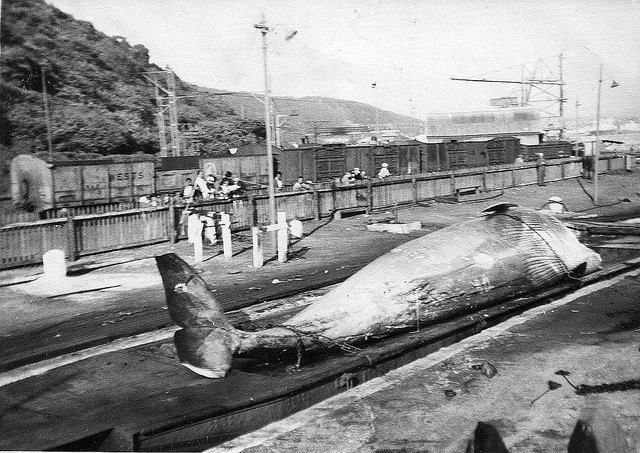
Figure 3: a “trophy” was transported by train. (Source: oneworld.org)

The industry of whaling developed rapidly since the 18th century. In late 1930’s, every year more than fifty thousand whales were killed (history of whaling, 2017). What behind the bloody killing was the great commercial profit. Megatons of meat, blubber and other parts of body were used to satisfy the demands of human beings. At the same time, the number of whales declined dramatically due to multiple artificial reasons. One of the direct reasons was overfishing; meanwhile, international trade promoted the global navigation development which damaged the habitats of whales. Therefore, in 1946, 15 nations signed the International Convention for the Regulation of Whaling in Washington, D.C. (International Whaling Commission, 1993). This agreement aimed to protect whales and stabilize the population of communities. However, they also wanted to continue the whale industry. Under that term, the International Whaling Commission (IWC) was established in the same year.

Figure 4: the logo of IWC. (Source:en.wikipedia.org)

Since then, the counterviews about commercial whaling were aroused. In 1982, a moratorium was issued by the IWC about commercial whaling. From 1986, the ban of commercial whaling officially went into effect. But some countries including Japan, Norway, Iceland, and Russia opposed this moratorium; some of them objected and kept whaling. Japan began to hunt whales under the cover of scientific research (Hirata, 2005). Often they departed from north to south hemisphere for whaling in the Southern Ocean. So, in 1994, the IWC founded the Southern Ocean Whale Sanctuary for protecting whale community in this area (Zacharias, Gerber, and Hyrenbach, 2006). But did the killing of whales stop there?

Unfortunately, the answer is “No”. Although most countries follow the rules, some counties still ignore the ban till now. According to a report on the official website of the International Fund for Animal Welfare (IFAW), Japan, Norway and Iceland are still “whale killers” 31 years later since the globally commercial whaling ban went into effect.

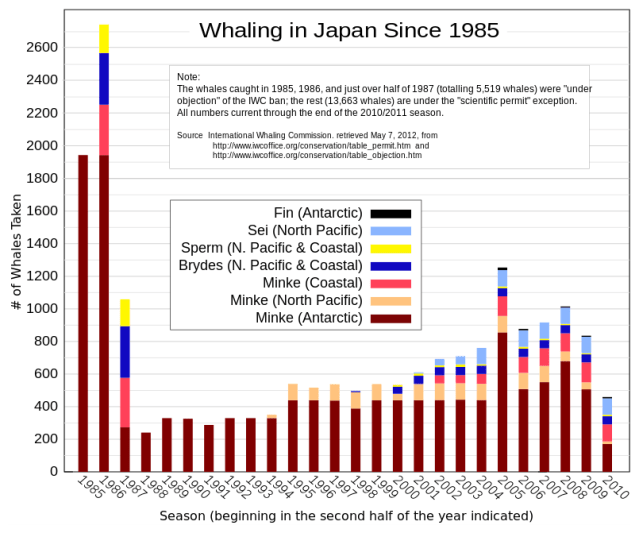
Chart 1: this chart indicated the species and number of whales killed by Japan since 1985. The number boosted in 1986 like the last frenzy. (Source: data from http://www.iwcoffice.org; modified by Grolltech)

Japan immediately implemented so called “scientific whaling projects” after knowing the moratorium by IWC. By using that excuse, 200 Minke whales, 50 Bryde’s whales, 100 Sei whales and 10 sperm whales were killed for “science” twice a year in the North Pacific. In the Southern Ocean Sanctuary, 935 Minke whales and 50 Fin whales were killed every year by Japan. After the illegal whaling, the meat of whales will be sold on markets and some even given to schools and hospitals for free (IFAW, 2017). Many countries including Australia publicly oppose this anti-nature behaviour. In 2014, the World Count judged that Japan must stop whaling in the case by Australia against Japan (IFAW, 2014). However, Japanese continue illegal “scientific” whaling till now.

Figure 5: the news reported by the Australian Broadcasting Corporation (ABC) showed that Japan were still killing Minke whales on March, 2017. (Source: ABC News, 2017)

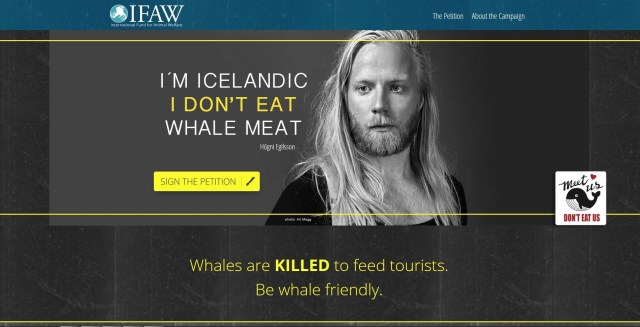
At the same time, just like Japan, Norway and Iceland are doing illegal hunting. The data shows that in 2010, 148 endangered Fin whales were killed by Icelandic whalers (IFAW, 2017). People there claimed that whales around their sea area threatened local fisheries and ecosystems. But this point did not receive supports from scientists. Meanwhile, local people began to object killing of whales.

Figure 6: an Icelandic publicly objected to eat whale meat. (Source: IFAW, 2017)

Tourism about whaling is one driver of whale hunting (see figure above). Therefore, many people appeal to develop whale watching instead of killing. Whale watching as a tool to attract tourists has existed for decades. Only in 2008, the global gross values produced by whale watching were up to 2.1 billion US dollars. Whale watching develops rapidly in recent years due to its enormous economic benefits. But, new problems accompany with that. On the 2014 International Marine Conservation Congress (IMCC), a report showed that whale watching influenced the behaviours of whales and increased the number of death caused by collision (Cressey, 2014). Some species of whales are highly sensitive about human disturbances. Researchers are worried about the consequences brought by “Ecotourism”. However, the whale watching is at least better than hunting.

Lack of conservation, over-fishing, and climate change, etc. all exacerbate the habitats of whales. Whales are facing a powerful enemy—whaling fleet. If they cannot get help, they may disappear from this planet forever in the close future. Don’t let these beautiful creatures die out in our generation. It is time to stop killing.

References:

Cressey, D., 2014. Ecotourism rise hits whales. Nature512(7515), p.358.

Hirata, K., 2005. Why Japan supports whaling. Journal of International Wildlife Law & Policy8(2-3), pp.129-149.

International Whaling Commission, 1993. International Convention for the regulation of whaling, 1946.

O’Connor, S., Campbell, R., Cortez, H. and Knowles, T., 2009. Whale Watching Worldwide: tourism numbers, expenditures and expanding economic benefits, a special report from the International Fund for Animal Welfare. Yarmouth MA, USA, prepared by Economists at Large228.

Ruud, J.T., 1956. The blue whale. Scientific American195(6), pp.46-51.

Zacharias, M.A., Gerber, L.R. and Hyrenbach, K.D., 2006. Review of the Southern Ocean Sanctuary: marine protected areas in the context of the International Whaling Commission Sanctuary Programme. Journal of Cetacean Research and Management8(1), p.1.

http://www.whalefacts.org/history-of-whaling/

http://www.ifaw.org/united-states/our-work/whales/which-countries-are-still-whaling


U6132486

Yuying Zhao

Posted in Uncategorized | 1 Comment

Is there a future for coral reef?

IS THERE A FUTURE FOR CORAL REEFS?
Saurabh Kataria

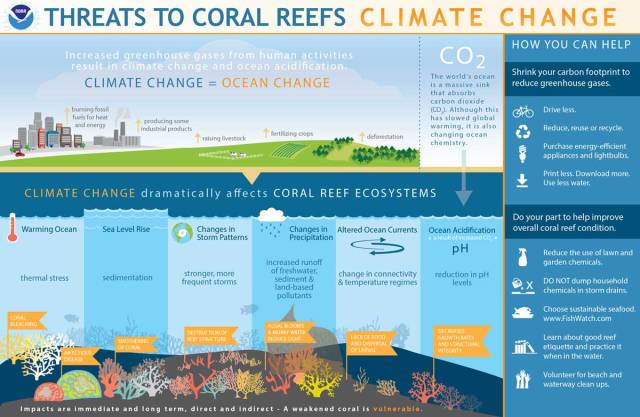
Coral reefs are in decline worldwide at a catastrophic rate due to effects of humans and will continue to do so in the future. Corals are affected by the same number of processes which have disrupted other human influenced ecosystem but there are some factors which are more prominent: (1) Increase in average sea level by even 1°C, can trigger the event of coral bleaching, alteration in coral communities and ultimately coral death. (2) Corals which are resilient to effects from habitat degradation are quite small and with a short life span. Effects from habitat degradation will lead to establishment of weak corals fragile to climate change. (3) Activities by people near reef sites increases both nutrient inputs and fishing pressure. Often these condition favors growth of competitors and might lead to eruption in predator population. (4) According to Fossil record, coral reefs as a group are more likely to face extinction than several other groups associated with them, whose habitat requirements are less rigorous (Knowlton, 2001).
Below I have listed various factors that affects corals and their evolutionary futures:

GROWING DISEASES
Corals and other reef dwellers are constantly being affected from the diseases. The effects on corals from pathogens are severe since high mortality rates persist [up to 2 cm of coral tissue daily (Richardson et al, 1998)] on the other hand coral growth rate are naturally low. The area of Caribbean, provide a great example for troubling situation surrounding corals. Earlier, reefs throughout the Caribbean region was dominated by a genus named Acropora. During 1990’s, Majority of Acropora were diminished to several small patches scattered across the region with a minimal recovery rate whereas the growth rates were relatively high (Richardson, 1998). The case with recent variation in coral diseases is still unknown, largely because the pathogens responsible for such diseases are still unidentified. Marine diseases are still on large as there are no records of previous diseases or any of the pathogens responsible for such consequences. Increase in the intensity of diseases in marine ecosystems could be generally a part of global climate change and terrestrial human activities have appeared to introduce at least one pathogenic agent via run-off to coral reefs (Harvell et al, 1999).

FLUCTUATING ECOLOGICAL BALANCES
Corals don’t just have to worry about pathogens as they aren’t the only enemy who challenge their survival but coral mortality are often associated with development of competitors and predators. The biggest competitor to corals today on majority of the reefs around the world are seaweeds, competition between micro-algae and corals is designed mainly due to nutrient availability and herbivory (Hughes et al, Lapointe & McCook. 1999). Anthropogenic factors like overfishing and eutrophication that affects coral competitors are also the factors that help in population explosion of some of the coral predators. The crown-of-thorns starfish, Acanthaster planci, is the most notorious of these (Bradbury et al, 1997) but explosions of predatory snails, specifically in the genus Drupella, have also been noted (Turner, 1994).

BIO-EROSION, SEA LEVEL AND STORMS

Sea level is one of the most common and prominent factor when it comes to global climate change. Sea level rise in past have been linked to coral development but in the recent scenario where sea level rise is happening at a catastrophic scale, it may result in drowning of corals (Wood, 1999). Drowning of reef would be a major and potential concern since future estimates indicates that the rise in sea level are beyond the levels to which corals would sustain. However, global climate change isn’t only limited to sea level rise but various kinds of storm activities are more than enough to wipe corals from the face of the earth. Both storm activities as well as bio-erosion are projected to rise as a response to global anthropogenic factors. The former because correlation between cyclonic storms and high temperatures while latter because of association between nutrition of bioeroders and eutrophication (Hallock, 1998). Increase in levels of storminess and bio-erosion will have evolutionary consequences on corals in addition to their common effects. These activities would support strong coral structure or skeleton which could withstand such activities. Moreover, rapid sea level rise will lead to selection for vertical growth (Knowlton, 2001) which will support selective species on expense of other species.
The above factors are major threats to the future of coral reefs and these factors are on rise with no sign of slowing down. These ecosystems are both slow in recovery and vulnerable to extinction which makes it even a bigger concern. The most appropriate guide to predicting future for corals are past mass extinction which correlates to the factors in recent scenario. Sadly, there are very little evidence in past extinction as those organisms which were vanished are different to those we wish to foresee. The combination of several factors including global warming, eutrophication and loss of top food chain members is unprecedented for more than past 65 million years. Thus, it is perhaps not surprising that many of the reef organisms that persisted and thrived during the most recent biological upheavals are those who are suffering the most now (Johnson et al, 1995). It is difficult toforesee who will be the winner in this battle but one thing is sure, we will not be happy with the outcome.

Reference

Bradbury R., Seymour R. (1997) Proc 8th International Coral Reef Symposium, 2:1357–1362.

Hallock, P (1988). Palaeogeography, Palaeoclimatology, Palaeoecology, 63:275–291.
Hughes T P, Szmant A M, Steneck R, Carpenter R, Miller S (1999). Limnol Oceanography, 44:1583–1586.

Harvell C D, Kim K, Burkholder J M, Colwell R R, Epstein P R, Grimes D J, Hofmann E E, Lipp E K, Osterhaus A D, Overstreet R M, et al. (1999). Science, 285:1505–1510.
Knowlton, N. (2001). Proceeding of National Academy of Sciences of United States of America, vol. 98, no.10.
Lapointe, B. E. (1999) Limnol Oceanography, 44:1586–1592.

McCook L J (1999) Coral Reefs, 18:357–367.

Turner S. T. (1994). Oceanography Marine Biology Annual Review, 32:461–530.
Johnson K. G., Budd A. F., Stemann T. A. (1995). Paleobiology, 21:52–73.

Posted in Uncategorized | Leave a comment

Biodiversity conservation issues involved in reputed trademarks in China

What is Trademark ?

Trademark value is the value of the use of a trademark at a particular time and economic value, with the use of trademarks and commodities in the process of achieving the value. Trademark is not only an intangible asset, but also an intellectual property, a trademark or a commodity. In the process of trademark design, registration and usage, there are a class of trademarks using biological images, biological names, such as the use of biological images or graphics as the logo of the trademark is defined as a biological trademark.

Figure 1: LACOSTE’s logo

Who have the responsibility to protect biodiversity in trademarks?

There is no doubt that the value of well-known trademarks in biological trademarks also contains added value from biological values. So, with the rise of the international trend of biodiversity conservation, as the use of biological trademarks, biological trademarks come and take benefits of enterprises, should bear the responsibility to protect biodiversity? Well-known trademarks on the national key protected wild plants accounted for 2. 03%. China’s first group of animal protection list of “national key protected wildlife” (1988 edition) in 110 families 441 kinds of well-known trademarks on the national key protected wild animals accounted for 4. 99%.
The idea of ​​protecting the creatures on the mark has not been widely recognized, even if it is widely used by the consumer or the business for the majority of the creatures on the trademark. Only a small number of enterprises for their own brand promotion and protection of biodiversity and through the means of financing or publicity to protect the trademark on the biological. In 2005, the Global Environment Facility (GEF), the World Bank and the World Conservation Union (IUCN) set up a “Save your logo” program designed to encourage private organizations or companies to participate in the protection of creatures in their respective logo, The conservation of biodiversity and the protection of endangered species are imminent and the establishment of the Biodiversity Conservation Fund. French brand LACOSTE because of its logo for the crocodile’s image, the first to participate in the program, and promised to protect the endangered by all kinds of crocodiles. Subsequently, France’s largest insurance company MAAF also joined the program, MAAF logo is a dolphin image, will be determined to protect the endangered dolphins and other creatures. The domestic furniture leader brand all the furniture because of the choice of the giant panda as its brand ambassador, in 2005 funded the life of Chengdu giant panda protection base and Wolong giant panda protection base of the giant panda 1, and designed for the giant panda furniture for their play.

Figure 2 : Lacoste, MAAF, Val d’Isère: three supporters of Save Your Logo

China’s current situation and biodiversity conservation actions

China is one of the most economically rich countries and China’s biodiversity ranks eighth in the world which is the northern hemisphere is the first. At the same time, China is also one of the countries with the most serious threat to biodiversity. High endangered species of higher plants up to 4000-5000 species, accounting for 15% of the total number of 20%. In the “International Trade in Endangered Species of Wild Animals”

About 156 of the 640 endangered species listed in China (CITES), which is about one-fourth of the total, and the situation is very serious. In addition, China is now the country with increasing biological invasions China is one of the countries with the largest number of biological resources for the world. Most of the necessities of human life and food are from plant resources. China has provided highland barley, soybeans, red beans, mustard, apricot, peach, turmeric, sesame, tea and other important food and other biological genetic resources. At the same time, China provides a rich medicinal biological resources for the world. China is one of the first countries to sign the Convention on biological Diversity and take measures to fulfill its obligations under the convention.

Protecting biodiversity is not just the responsibility of the state and a small number of environmental groups, but also requires companies to take up social responsibility. National level protected animals Oriental White which storks in Tianjin Beidagang Wetland Nature Reserve was hunted, there are still more than 200 no migration to wintering, which also shows that China’s conservation of biodiversity still many problems.

As mentioned above, China’s well-known trademarks on the national key protected wild plants accounted for 2. 03% and well-known trademarks on the national key protected wild animals accounted for 4. 99%.If the biological trademark enterprises not only establish a trademark protection on the biological awareness and social responsibility but also put into practical protection action, which will promote the whole society attention and protection of biodiversity, building an ecological civilization to make a positive contribution.

Reference

Ma,Y.F (2010). Talk about the return value of trademark law and trademark features from the alienation of well-known trademarks. China Economic & Trade Herald, 5( 18)-86

Wang,Y.H (2007). Assessment of the value of the trademark. Journal Of Guangdong University of technology, 34(6), 203

Picture

Figure 1: http://www.saveyourlogo.org/partenaires/lacoste/

Figure 2: http://idsgn.org/posts/save-your-logo/


u5927482

Xiaoyu Sun

Posted in Uncategorized | Leave a comment