Checking on the Trees at Scottsdale Reserve

With Dr. David Freudenberger and a fellow member of the class we drove out to Scottsdale reserve: a 1300-hectare property 75km south of Canberra owned by Greening Australia. I grew up on a 110-acre property just north of Scottsdale which made this work experience more valuable. Scottsdale reserve does wonderful work with a large volunteer community: easily accessible from Canberra and Cooma.

69535306_2474670929319562_3105819236900012032_n

Image 1: Scottsdale reserve, a room with a view

Box Gum Grassy woodland and weed management

A major task is restoring box gum grassy woodland, something that my family has been trying to achieve for over 10 years. Scottsdale was not only heavily grazed, but also cropped having long lasting effects on the land.

69906190_379723582698154_4281462742000336896_n

Image 2: African Love Grass as far as the eye can see

David used to regularly visit Scottsdale with students, in 2014 they planted hundreds of trees in paddocks where African Love Grass (Eragrostis curvula) has taken control. African love grass was introduced to feed live-stock and stabilise Australian top soil.
There is some evidence to suggests that weeds don’t like shade, and therefor by planting trees, you help to break the monoculture of love grass, as the trees get larger the weeds hopefully will die off, at the same time bringing back the box gum grassy woodland ecosystem. Greening Australia is also experiencing success with aerial spraying love grass, and then introducing plantings.

Planting success and carbon sequestration

We spent a day monitoring the success of these plantings, trees were planted along 100 metre transects. We’d walk along the transect and with David’s data sheet, checking the status of the tree: healthy (2), struggling (1) or dead (0), a dashed line if the tree was non-existent.

The trees were then measured (dead ones included) with callipers: diameter at breast height (DBH) if the trees were large enough, or a basal diameter if the trees were small, this includes all branches!


69605384_497140257716119_8005034383578759168_n

Image 4: measuring DBH of an Acacia rubida

David is researching carbon sequestration of trees, having yearly DBH data or basal diameter from the time of planting gives a more precise assessment of carbon storage. Forests are important for climate change mitigation with a gap in literature of long term data of individual trees, which David’s research is trying to close.
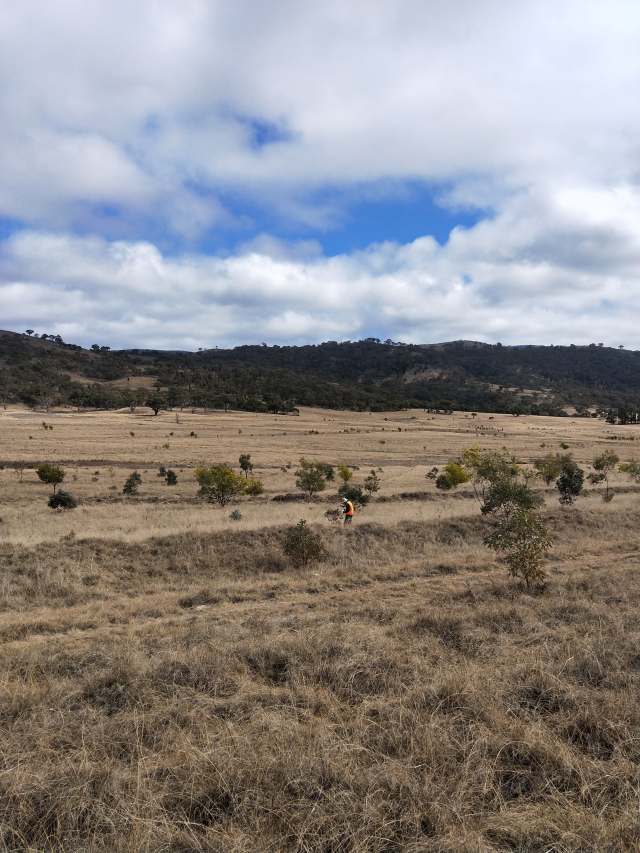
69562697_485381838677724_8247717288686387200_n

Enter a captionImage 5: Dr. David Freudenberger measuring along his transect: can’t lose anyone if you’re wearing high-vis

Not all species of plantings survive as well as others, the shrubs like Bursaria spinosa had a low success rate. However Eucalyptus melliodora, E. rubida,E. bridgesiana ,E. pauciflora were all doing well, as well as Acacia dealbata, A. rubida. There were differences in the success of trees just 100 metres from each other, this can give an indication below ground factors such as soil quality.

69453120_1132068040322516_4790479953567154176_n

Image 6: Blooming Acacia dealbata

Other Projects on the Reserve

This is just one of the projects that’s being undertaken at Scottsdale reserve: platypus surveys, frog watch, top soil scraping to remove the agricultural seed bed, and many more. They also shoot about 1000 kangaroos a year which increases survival of young plantings (great for the trees, less great when you stumble across the rotting carcass). They have also eliminated almost all the rabbit warrens from the property! If you’re looking to experience a property where many hands have done some tremendous conservation work, then this is a great place to visit.

69713253_741108232978083_4847766446404534272_n

Image 7: Upgraded greenhouse, growing the seedlings before being planted on the property

References 

National Environmental Science Programme, 2019. Restoring box gum grassy woodlands. [Online]
Available at: http://www.nespthreatenedspecies.edu.au/news/restoring-box-gum-grassy-woodlands
[Accessed 5 September 2019].

Bettinger, P., Boston, K., Grebne, D. & Siry, J., 2017. Valuing and Characterizing Forest Conditions. s.l.:Elsevier Inc.

Border Rivers Gwydir Catchment Management Authorit, n.d. African Love Grass. [Online]
Available at: https://www.pestsmart.org.au/wp-content/uploads/2010/11/9.Weeds_.pdf
[Accessed September 2019].

Bush Heritage Australia, 2019. Scottsdale. [Online]
Available at: https://www.bushheritage.org.au/places-we-protect/new-south-wales/scottsdale?gclid=Cj0KCQjwwb3rBRDrARIsALR3XebDBohaea3CmKwINpA8jOocBQexXsF5Z9lIvOYCrg4G44hosSCUErwaAmRJEALw_wcB
[Accessed 5 September 2019].

Kohl, M., Neupane, P. & Lotfiomram, N., 2017. The impact of tree age on biomass growth and carbon accumulation capacity: A retrospective analysis using tree ring data of three tropical tree species grown in natural forests of Suriname. PLOS ONE, 12(8).

Written by: U6080182


Posted in Uncategorized | Leave a comment

The Friends of Mount Majura experience

  • Introduction and working site
    I am very honor to attend the Friend of Mount Majura work experience, and thanks for the group of the Friend of Mount Majura (FoMM) people to work for this region. This post would be divided into four parties to display this working experience that working site, essential and challenges, working actives, and reflection. My work is Park Care in Mount Majura Nature Reserve(MMNR). The working site located at the East of the Fair, and northeast of Watson Woodland (Figure 1). I was working with the Friends of Mount Majura (FoMM), and we mainly work monitored and care for young plants.

    Figure 1:  The location of the Mount Majura Nature Reserve.

  • Important and Challenges
    The Mount Majura is a Box Gum Grassy Woodland, and it covers  Eucalyptus melliodora (Yellow Box) and  Eucalyptus Blakelyi (Red Gum) as the backbone species in the hill of this nature reserve. Notably, the Yellow Box has the historical and Indigenous value, and this species was declared as the endangered ecological community by  Nature Conservation ACT in 1997. Regarding its environmental importance, it is the home for many fauna communities, such as birds, bats, invertebrates, dwelling or other arboreal mammals. However, many of the woody weeds growing in the Mount Majura nature reserve have escaped from Hackett gardens. Most of these species introduce plants that birds spread the seeds in their droppings after eating the fruits of plants invade the bushland (such as Privet, Cotoneaster, Firethorn and African Olive). Besides, large numbers of new trees seedlings have emerged across the landscape, which poses a potential threat to the Yellow Box conservation because these seedlings are Red Gums rather than Yellow Boxes. As a result, the absence of recruitment, isolated patches, dieback often occurs in some area which contributes to the declining condition of those trees (Gibbons and Boak, 2002).
  • Working activities (23th Aug and 15th Sept)
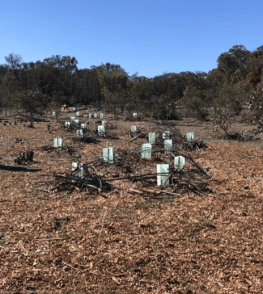
    The first work was adding tree guards to the growing saplings, and the purpose of this behavior is to prevent grazing kangaroos and rabbits. After that, we laid wood chips on the woodland. This work would improve ecological function such as soil structure, permeability, bioactivity, and nutrient availability (Figure 2). Besides, using woody debris to create a zone to protect young plants. In Mount Majura, gazing of the rabbit is a significant problem in biodiversity losing since over-grazing rabbits damage the surface of the ground, which would cause soil erosion in this area. Besides, the impacts of grazing rabbits on environment cause competition with their native animals. Therefore, we enhance the number of branches to protect the seeding plant form animals. According to Waltraud’s speaking, branches are not only being fences to protect animals’ tracking, but also be brush piles. This is an ecological method to provides an open soil texture for invertebrates to occupy. Also, brush piles provide an excellent way to increase organic soil surface and composition. Brush piles contain nutrients and water to both the surrounding the Eucalyptus melliodora (Yellow Box) and Eucalyptus Blakelyi (Red Gum). The second week’s working is counting to work following first week’s work, and this week we mainly work are spread wood chip mulch across the bare ground and place woody debris around new national tree day plantings (Figure 3).

    Figure 2: the activities of first work experiences.

Figure 3: the activities of second work experiences


  • Reflection
    Friends of Mt Majura aims to restore the natural and cultural heritage of Mt Majura. FoMM work to rehabilitate some native species, which are influenced by kangaroos crushing. Waltraud (who is the leader of FoMM) pointed out the eastern grey kangaroo threatened to the growth of young plants. Kangaroos are present at most sites and can provide some reduction in the native grass biomass since it relative with dietary habits of the eastern grey kangaroo. Therefore, heavy grazing by kangaroos can threaten the livelihoods of other animals. Controlling kangaroo numbers may be necessary to help keep the balance and support a healthy ecosystem. Besides, FoMM work to protect cultural heritage. Mt Majura covered in a hard rock called “chert”, which protrudes from the soil surface. According to speaking with Waltraud, chert formed sharp shards when broken and was often used by aboriginal people to make tools. Therefore, FoMM conserves cultural heritage in Mt Majura.
    This two week increased my knowledge to protect native Australian plants, and I know more resistance to conservation efforts such as kangaroos and rabbit grazing. During this work experience, I have some recommendations to manage Yellow Box because it is the endangered species. First, FoMM encourages more and more people to join monitoring plan, which would increase public awareness to protect the natural environment. Second, we research the genomic and phenotypic variation on seed sourcing. To ensure the success of the restoration project as it may predict the future climate, which helps the population of the Yellow Box may resilient to environmental change. Lastly, implement the process of strategic grazing management, exotic plants removing, and perennial grass biomass controlling.
  • Acknowledgement
    I gratefully acknowledge the help from FoMM volunteers, and thanks for their efforts to restore the environment of Mt Majura. Finally, thanks again for Waltraud give me this opportunity to attend this project.

Student ID:u5971623

  • Reference
    1. Gibbons, P. & Boak, M. (2002). The value of paddock trees for regional conservation in an agricultural landscape. Ecological Management & Restoration, 3, 205-210.
    2. Broadhurst, L.M. (2013). “A genetic analysis of scattered Yellow Box trees (Eucalyptus melliodora A.Cunn. ex Schauer, Myrtaceae) and their restored cohorts”, Biological Conservation, vol. 161, pp. 48-57.
    3. CLARKE, P. J. (2002). Experiments on tree and shrub establishment in temperate grassy woodlands: seedling survival. Austral Ecology, 27, 606-615.
    4. Supple, M. A., Bragg, J. G., Broadhurst, L. M., Nicotra, A. B., Byrne, M., Andrew, R. L.,Borevitz, J. O. (2018). Landscape genomic prediction for restoration of a Eucalyptus foundation species under climate change. eLife, 7, e31835
Posted in Uncategorized | Leave a comment

The Volunteer Work Groups Behind Canberra’s Nature Reserves

u7036597 – Brett Studden

On September 4th, I had the pleasure of spending two hours working with the Mount Ainslie Weeders. The Mount Ainslie Weeders are a group of approximately ten core volunteers who aim to preserve Mount Ainslie Nature Reserve. Upon arrival, I was given a short history lesson behind the location of work, Old Ainslie Tip. Before the group began planting, the location was used as a dumping site. The first Sunday of each month is held as a work event. Additionally, each Wednesday a small work party is held. 

IMG_3217 2

Photo of work area at Old Ainslie Tip. Recently laid mulch is seen on the bottom-center terrace. 

A group of four volunteers including myself took part in weeding, mulching, and preparing the soil for planting. The dry and hot conditions of Australia can often be stressful for plants (Anderegg et al. 2012). Preparing soil for planting can help reduce stresses on plant species. Our process involved volunteers removing introduced weeds. We proceeded to lay down wet newspaper and mulch. Mulching has proven to be effective in stopping the growth of weeds (Skroch et al. 1992). During future work parties, the Mount Ainslie Weeders group will plant a range of native species to help conserve natural spaces on Mount Ainslie Nature Reserve.  

More information about the Mount Ainslie Weeders group can be found here.

On September 7th, I spent five hours working with the Friends of Black Mountain. The Friends of Black Mountain is a non-profit organization that helps conserve biodiversity in the Black Mountain Nature Reserve. For the first three hours of my volunteer experience, I worked alongside eleven others helping with weeding. We removed Burgan (Kunzea ericoides) along the Lower Woodland Track of the nature reserve (Purdie 2018). Due to its ability to spread quickly and outcompete other species, Burgan has proven to be an issue (Doherty 2018). We used an experimental method in which plants were cut as near as possible to the ground and then rooted stems were poisoned using glyphosate (Baylis 2000). It is uncertain whether this method will prove to be effective in the control and management of Burgan. Control of Burgan is important in preserving the natural state of the lower slopes.

IMG_3238 2

Photo of the work area along the Lower Woodland Track. The shrubs are Burgan (Kunzea ericoides). The pair of loppers in the bottom left is an example of one of the methods used to chop down the Burgan.

For the last two hours, I participated in a self-guided hike using an instructional pamphlet. The pamphlet is used to guide viewers around the “Link Trail” while identifying many of the flora species along the trail. The purpose of my participation in the hike is to provide feedback on the draft copy of the pamphlet. Once complete, the pamphlet may help educate readers on native species identification and local plant diversity. 

More information about the Friends of Black Mountain group can be found here.


walks20of20black20mountain

Map of walks in the Black Mountain Nature Reserve (found here).


Posted in Uncategorized | Leave a comment

A Dam Fine Job!: ACT ParkCare along the Upper Murrumbidgee River Corridor


Figure 1: ParkCare team looking into the Upper Murrumbidgee River Valley, discussing future projects. I. Palm (12/9/2019).

This is Ranger Bernie’s ParkCare team who spend Thursday mornings undertaking conservation activities along the Upper Murrumbidgee River Corridor (UMRC), on the southern outskirts of Canberra, ACT.

The Murrumbidgee River is the third largest water source of the Murray-Darling Basin. Despite being the main waterway for Canberra, the Basin’s largest population centre, and home to several endangered species, including Murray cod (Maccullochella peelii), and Murrumbidgee Bossiaea (Bossiaea grayi), the UMRC remains largely overlooked in national water policy. This makes the ParkCare volunteer work highly significant.

Conservation on Private Land

There is increasing recognition of the contribution conservation on private land makes to improving biodiversity. By working with private landholders this ParkCare group contributes to holistic conservation of contiguous  landscapes.

ParkCare at Cuppacumbalong

Cuppacumbalong,  formerly part of a 4000-acre sheep and cattle station, is located along the Murrumbidgee River, nestled between Namadgi National Park and Tharwa Bridge. Early work centred around restoring the homestead’s heritage listed gardens, and has since expanded into surrounding land, including farm dam restoration. Farm dams are ubiquitous throughout agricultural landscapes, and play a significant role in maintaining biodiversity in highly modified environments.

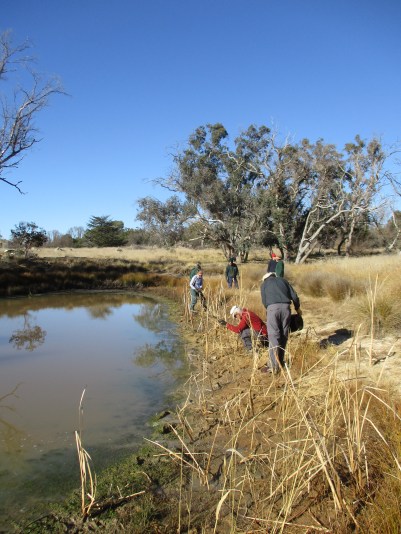
We helped restore Cuppacumbalong’s dam in late July by planting aquatic herbaceous perennials, mainly Cumbungi (Typha domingensis). This improves structural heterogeneity of dam vegetation, known to improve species richness.  Cumbungi also reduces water contamination from agricultural use, which is important given the sites history. This dam will act as a stepping stone within the surrounding fragmented agricultural landscape.

Figure 2: Restoring the farm dam at Cuppacumbalong. I. Palm 25/7/2019.

Conservation on Public Land: Tharwa Bridge Picnic Area

Adjacent to Cuppacumbalong sits Tharwa Bridge Picnic Area where the UMRC riparian zone has been heavily invaded by exotic species. Riparian vegetation serves crucial ecosystem functions including regulating water temperature, nutrient flow, and erosion control. Riparian zones also provide habitat for a disproportionate number of species given their narrow extent, therefore are key areas for biodiversity conservation.

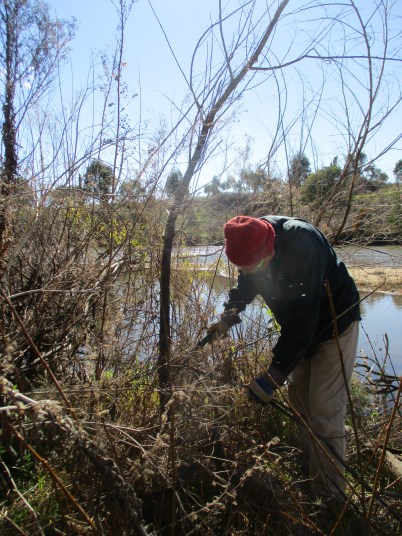
In mid-August Bernie’s team tackled the picnic area’s dense thickets of Poplar trees (Populus sp.). Deciduous invasive woody plants can change ecosystem function, for example disruption of natural nutrient cycles. However, they also fulfil similar roles to native species including erosion control and faunal habitat, for example the birds nest in a Poplar tree we were about to remove. This highlights the need for active restoration to fil gaps in riparian vegetation and subsequent disruption of ecosystem services that weed removal creates.

Figure 3: ParkCare volunteer removing Poplar trees at the Tharwa Bridge Picnic Area. I. Palm (22/8/2019).

Benefits of Environmental Volunteering

Volunteering on public and private land enables more holistic conservation. As Ranger Bernie (25/7/2019) states this ParkCare group helps ACT Parks and Conservation “do projects that we would otherwise never get around to”.

Restoration on small patches of private land, such as Cuppacumbalong, is a shift from Australia’s primary focus on large protected areas for managing biodiversity. ParkCare work at Cuppacumbalong shows how private land conservation complements public parks and protected areas by improving habitat connectivity and increasing the spatial extent of land under conservation.

Learning about the environment is one of the main reasons these volunteers get involved. As one volunteer expressed,

“I love it! It’s great to be out in the open and learn about the environment and history of the area”

This ParkCare group reminds us biodiversity conservation is a human process. Change requires widespread education and local environmental groups are a great place to start. Exchanges over homemade cake at morning tea, Ranger Bernie’s explanations, and  hands-on work all contribute to understanding the value of biodiversity and why it needs protection.

Find out how to get involved here!

Isabel Palm (u6048779)


Posted in Uncategorized, Volunteer work | Leave a comment

Conserving Canberra’s Box Gum Grassy Woodlands with Parks & Conservation Rangers

u6048591

If you’re looking for one of the most critically endangered habitats in Australia, you can’t go past Box Gum Grassy Woodlands. European land-management practices have taken such a large toll on them that there’s now only 5% left . Right here in Canberra, we’re lucky enough to have the largest, most intact patch of Box Gum Grassy Woodland habitat under public ownership in all of Australia. This area is known as Mulligans Flat and Goorooyarroo Nature Reserve. The biodiversity here is a leading national example, in no small part due to the hard work of North Parks and Conservation Service. Earlier this year, I had the privilege of doing some work experience with them and gleaned some of what they do to restore and conserve biodiversity in this precious woodland.

Day 1: In the office, determining fauna population trends

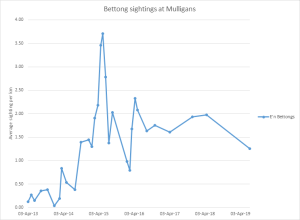
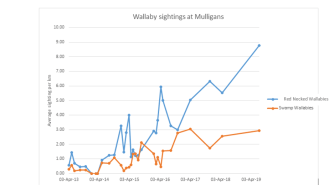
On the first day I was entering fauna survey data collected from Mulligans Flat. Monitoring populations of fauna species is important in conserving biodiversity. Rangers are on-grounds daily, so they have a good idea of population abundance anyway. But for a more standardised method, they do spotlight surveys every 6 months. This involves walking along 100m transects during dusk, and tallying up what animals they see. Of particular interest to them at the moment are wallabies, possums and bettongs. Reasons being; i) bettongs play a very important role in woodland ecosystems and much effort has been put into re-introducing them into Mulligans Flat, and ii) wallabies and possums, with no natural predators, tend to be over-abundant and may out-compete other species – so need to be monitored and managed. Shown in the images below, I graphed the survey data for these three animals. This gives rangers a clearer idea of population trends and helps them make more informed management decisions.

Bettongs settling down after exceedingly high numbers

Possums on the rise after a sudden decline

Wallabies on the up

Day 2: Out in the field, rabbit-monitoring

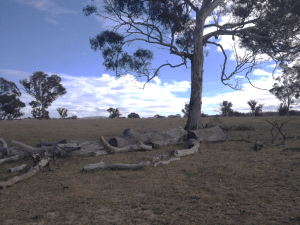
On the second day I swapped the computer screen for beautiful vistas of Goorooyarroo nature reserve. Here, rangers are in the process of removing invasive species like rabbits, which are highly destructive to woodland ecosystems, before they can reintroduce locally extinct species. Rangers are pretty certain they have gotten rid of all the rabbits, but just to be certain, they have a number of motion-censored cameras set up around the nature reserve. The cameras are strategically placed in hotspots for rabbits, like this area with lots of fallen logs that provide good cover:

Prime real estate for rabbits at Goorooyarroo. Korda, 2019.

I had the great fun of driving around in a buggy, collecting SD cards from cameras so that the pictures could be checked back in the office for any signs of rabbits.

Our mode of transport and, in the foreground, a camera for rabbit-monitoring. Korda, 2019.

As the sun sets…

A key take-home from this experience was that monitoring fauna populations and removing invasive species are central elements of restoring and conserving biodiversity. I’m eager to see how these iconic areas of our Canberran backyard continue to flourish with biodiversity conservation.

Posted in Uncategorized | Leave a comment

The Practicalities of Habitat Regeneration at Mt Majura

Thomas Paine – U7013853

Habitat loss is the largest threat to biodiversity and whilst fires in the Amazon capture headlines, degradation has occurred much closer to home. Recently I had the opportunity to understand the historical degradation of a box gum grassy woodland at Mt Majura and assist the remediation techniques being deployed by the local Park Care group.

The issue

But first, the issue. From the 1830s until 1985 Mt Majura was primarily used for grazing purposes. Dense paddocks of sheep, cattle and horses resulted in overgrazing and the loss of perennial grasses whilst the use of supplementary feed introduced invasive weeds, such as Paterson’s Curse (Echium plantagineum) and St John’s Wort (Hypericum perforatum) (both of which are inedible for local fauna). Hard hooves and the loss of grasses led to soil compaction that now prevents the infiltration of water and the growth of seedlings. Whilst no longer commercially grazed, the impacts of overgrazing continue due to the overabundance of rabbits and kangaroos, a chronic issue for Mt Majura and the ACT. The diverse grassy woodland had been reduced to a weed infested landscape with heavily degraded soils; a woeful, but not uncommon, chapter in the loss of this endangered habitat.

Patterson’s Curse (Right) and St John’s Wort (Left) have been a persistent issue for the growth of native grasses


The solution

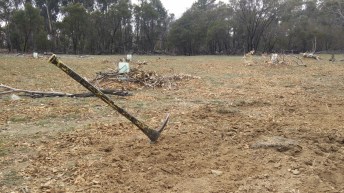
For the volunteers of Friends of Mt Majura (FoMM) the solution is hard work and toil. Whilst I was present, we broke the impermeable surface crust, caused by overgrazing and lack of groundcover, to improve infiltration and plant growth. Due to the local conservation officer’s concerns about erosion, large scale machinery was not permitted and therefore the trusty mattock was deployed to minimise risk.

The hard surface crust was broken using a mattock, increasing the likelihood of plant growth and water infiltration

Whilst mattock-ing, Patterson’s curse was also removed. This is the time of year just before the plant flowers and spreads its seeds, meaning removal now reduces future workload.

Mulch was also immediately scattered across the broken ground to minimise moisture evaporation. The mulch, sourced from Fire Service cuttings of native vegetation, provides many benefits, including: increased moisture retention; the provision of habitat for insects, birds and reptiles and surface cover to reduce erosion. The mulch also promotes soil chemical and ecological changes by significantly increasing microorganism activity, improving the soil and reducing the nutrients present. Native plants are adapted to poor soils whilst invasive weeds thrive in high nutrient environments. By removing the nutrients, the native plants can out compete the invasive weeds.

Mulching is a simple but effective tool used for habitat regeneration

The road to restoring Mt Majura remains long but the progress has been impressive. The work of volunteers has seen huge reductions in weeds and increases in native grasses, trees and shrubs. Although only a small corner of the globe and a footnote in the state of ecosystems globally, Mt Majura and the work of FoMM highlights the potential of habitat restoration.


Posted in biodiversity conservation, Friends of Mount Majura, Landcare, Restoration ecology, Volunteer work | Leave a comment

Environmental offsets – involving the community for a better Canberra

Author: u5641612

Biodiversity offsets have taken storm as a policy safeguard for development. They came into effect in Canberra in 2015 through the ACT Environmental Offsets Policy (EOP), a statutory policy under the Planning and Development Act 2007. The EOP mandates that an offset must deliver conservation outcomes that improve or maintain the viability of the environment under threat when mitigation and avoidance are no longer an option.

Working in the field

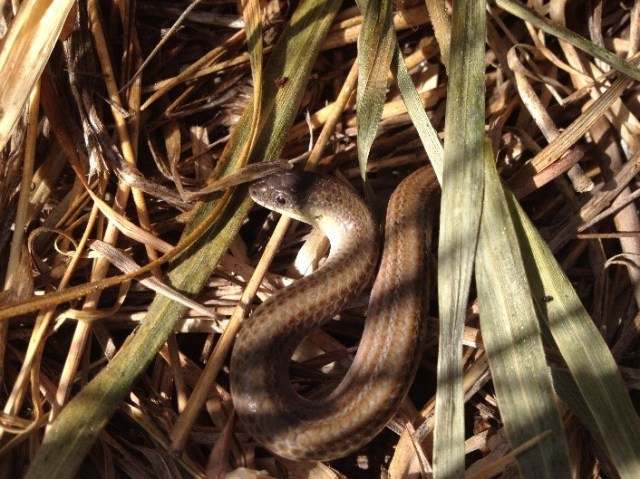
Over the last month I had the opportunity to work alongside park rangers in the Offsets team. Our role was monitoring grasslands for Delma impar (Striped legless lizards). This involved setting up habitat for them and returning to check and count the population.


Figure 1. Delma impar (Striped legless lizard). Source: ACT Government

Striped legless lizards are a vulnerable species, threatened largely by urban development. The grasslands where they live have been heavily cleared. The flat and grassy terrain appears empty– perfect for development. When we first arrived at the sites, I wondered how they hadn’t been developed already. This raises a topical issue. Could greater community awareness improve the success of offsets? Many of the sites we visited were overgrazed, weed-infested and/or disturbed by humans. The offsets team does their best to manage them, but maybe community awareness is the missing ingredient.

Getting the community involved

Figure 2. Jerrabomberra West nature reserve (grassland). Source: ACT Government

The main contributors to overgrazing in the grasslands is kangaroos. Scientific consensus has provided support for an annual cull in Canberra to limit pressures on biodiversity. However, controversy amongst the general public, particularly with animal activist groups, remains. A simple first step to community engagement could be installing more signage at offsets sites. If the community knew how crucial the cull is for species like the striped legless lizard there may be more support and empathy for their plight, rather than for kangaroos.


Figure 3. Kangaroos dominate Majura grasslands. Source: The Canberra Times.

Awareness could inspire a ParkCare group (perhaps the already established Friends of Grasslands) to help with monitoring, weeding and fundraising. Current practices discourage ParkCare groups from working on offset sites, but the extra hands could actually maximise results. During the time I spent with the offsets team, only two full time staff members were assigned to field work. Each day we had volunteers, but without them the process would have been arduous. Public awareness could help distribute this labour so more resources can support best management practices. The ACT Government recognises ParkCare groups are essential in Canberra. With proper training they could have a tremendous impact on offset sites too.

Figure 4. Rangers at work in Jerrabomberra West Nature Reserve. Source: ACT Government.

A broader community awareness could also encourage greater transparency in the management of offsets by creating a case for social responsibility. As we discussed in class, some practices, like claiming community contributions without consultation, are far from fair. Yet a weakness in policy allows the same agency to implement and review its own offset practices, limiting accountability. Greater awareness among our community could hold agencies responsible for their actions and ensure offsets deliver the best results.

Figure 5. Friends of Grasslands at work. Source: ABC News.


Final thoughts

Biodiversity offsets are a valuable tool for moderating development and ensuring we conserve biodiversity as Canberra grows. Community involvement could aid better management of offset sites by providing more resources, less public controversy, more transparent processes and greater community support.


Posted in biodiversity conservation, environmental offsets, Landcare, Volunteer work | Leave a comment

A trip out to Tidbinbilla to explore “trash” and “treasured” creatures

I have recently developed a keen interest in the natural beauty of Tidbinbilla Nature Reserve, particularly through my treks up Gibraltar Peak with friends.

To further immerse myself in Tidbinbilla, I went ‘behind the scenes’ by doing some work experience with Ranger Sam for a day, and taking a dip into biodiversity conservation, focusing on invasive species and native species.

From pest invasive species…

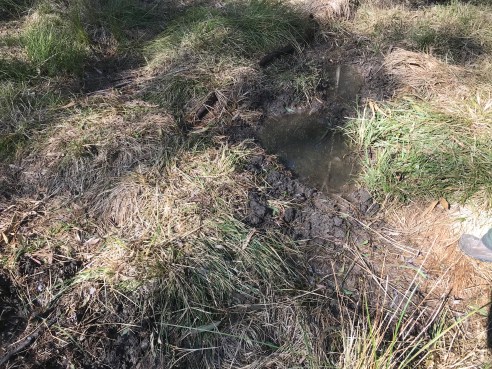
I was first exposed to the invasive species management problem, specifically wild pigs (Sus scrofa) and European rabbits (Oryctolagus cuniculus). It was easy to spot the damage they had done to the landscape, with pig “rippings” visible in riparian areas (Photo 1), and damage to vegetation from three rabbits at the Historic Rock Valley Homestead (Photo 2).

Photo 1: Pig rippings from wild pigs near a riverbank.


Photo 2: Rock Valley Homestead, where three European rabbits roam. Inset: a wildlife camera used to monitor the rabbits.


This experience further opened my eyes to how much damage invasive species can cause to nature reserves (especially being one of the largest drivers in native biodiversity decline), and the complexity of monitoring and removing them. Feral pigs have presented a widespread issue in Australia – in nearby Namadgi National Park, for example, pigs have damaged the native plant species richness there too. Studies quantifying the relationship between rabbit population density and vegetation damage show the complexity in controlling the rabbit populations.

…To treasured native species

To balance out the day, I was also exposed to our native captive animals by providing food for the koalas (Phascolarctos cinereus) and brush-tailed rock-wallabies (Petrogale penicillata) in their respective enclosures. I helped the wildlife officers cut off some gum branches for the koalas (Photo 3), and I learned they are quite fussy eaters, with preference for a select few eucalyptus species!

Photo 3: Up close and personal with two of the Tidbinbilla koalas in their enclosure.

Unfortunately, these two furry species are just some of our native fauna under threat. Nationally, koalas and brush-tailed rock-wallabies are listed as Vulnerable under the Environment Protection and Biodiversity Act 1999, meaning they face a high extinction risk in the wild, and need protection. Brush-tailed rock wallabies are threatened by invasive species and habitat degradation, and koalas are primarily threatened by habitat loss from development.

Protecting these native species can prove to be challenging, especially when faced with ongoing threats such as habitat loss and introduced predators. One challenge is understanding biological responses – one study showed that removal of eucalyptus trees and bushfires can increase physiological stress in koalas, which can contribute to population declines. Another challenge is determining the spatial scale required to determine species distributions for conservation purposes, such as demonstrated in a study on brush-tailed rock-wallabies. The breeding program at Tidbinbilla for the rock-wallaby is particularly important in helping protect this vulnerable species, with 70% of Australia’s captive population residing here.

Concluding remark

Overall, being able to observe in the field the invasive and threatened native species issues covered in my Biodiversity Conservation course at ANU has given me considerable insight into the ecological problems in Australia’s environment. The volunteering opportunities open to the public in our native reserves are great for educating the public about these issues too.

Further reading: https://www.tidbinbilla.act.gov.au/place/planning/plan-of-management

Kara Tedman (U5564341)

Posted in Uncategorized | Leave a comment

Banking on Biodiversity in Australia’s Capital

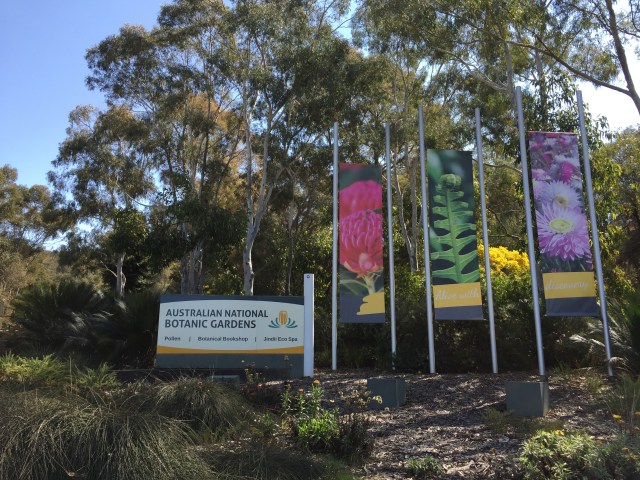
This past week I had the privilege of spending five early spring days at the National Seed Bank, based at the Australian National Botanic Gardens in Canberra. Incidentally (but most appropriately) coinciding with the start of National Biodiversity Month, the experience opened my eyes to the world behind the Gardens’ lawns and landscaping, and to the dedication and commitment of those working at the root of flora conservation.

The entrance to the Australian National Botanic Gardens, home of the National Seed Bank. Photo: Lucy Campbell

The National Seed Bank holds both short and long-term collections for a range of native Australian species, the former primarily for supporting the living collections of the Gardens and the latter for conservation – seed banking can serve as a particularly valuable insurance policy against the threats species face in situ (and can also be considerably cheaper than on-ground conservation). Seed bank activities range from collection, cleaning and viability testing to banking, propagating and planned reintroduction.

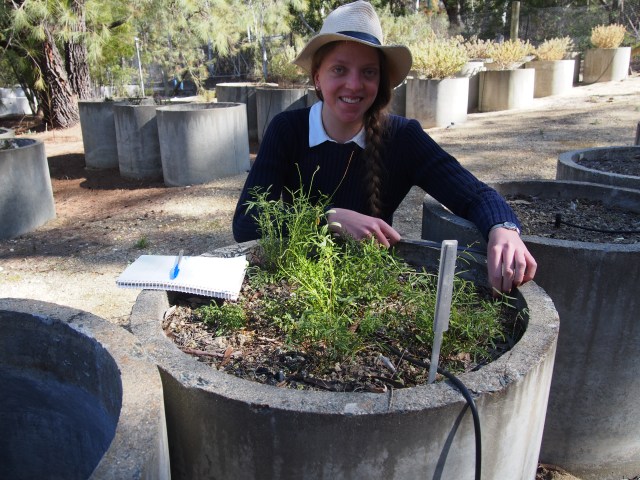
The primary focus of my work throughout the week was assisting with a vigour assessment of the small purple-pea (Swainsona recta). This began with hands-on data collection – that is, counting and measuring the pea plants growing in 36 large concrete pipes in the Gardens’ seed production area.

Measuring small purple-pea plants growing in the Gardens’ seed production area. Photo: Tom North

With the measurements collated and entered into a spreadsheet, together with seed origin data from the Gardens’ Living Collection database, the next step was to determine whether a pattern of strong growth (or lack thereof) could be tied to certain seed collection locations. Such information could ideally then guide decisions as to which wild populations might benefit most from on-ground conservation efforts, and even which origin populations might provide the most viable seeds for propagation purposes. Although a clear determination could not be made at this stage, the methodology and baseline data will serve as a foundation for future investigation.

The small purple-pea

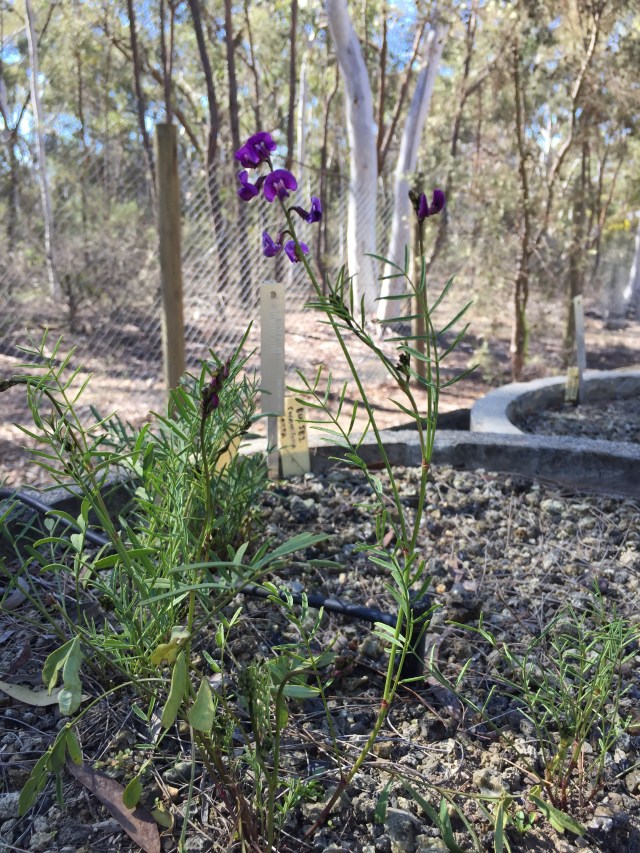
Once widespread across south-eastern Australia, the small purple-pea plant is now listed as endangered under the Commonwealth Environment Protection and Biodiversity Conservation Act, as well as across Victoria, NSW and the ACT. It is one of the 30 plants recognised in Australia’s Threatened Species Strategy and predominantly occurs in grassy woodlands, including the endangered White Box-Yellow Box-Blakely’s Red Gum Grassy Woodland ecological community.

Small purple-pea plant in flower in the seed production area. Photo: Lucy Campbell

The small purple-pea is threatened by habitat loss and degradation, and is particularly susceptible to grazing pressure. While maintenance of viable seed is a crucial component of this species’ conservation, consideration of remnant populations is also important. Indeed, for this very reason almost 300 Swainsona recta seedlings grown in the Botanic Gardens nursery are due to be translocated to the Wandiyali-Environa Wildlife Sanctuary, where only a few individual plants persist, just a week from the time of writing. But beyond such interventions, perhaps it is proactive protection of this species’ habitat that could have the greatest multi-scale conservation benefit, for individual pea plants and the ecological communities that grow naturally around them.

Lucy Campbell

Posted in national seed bank | 1 Comment

ACT Frogwatch: pathway for community involvement in biodiversity conservation

For my work experience I participated in the ACT Frogwatch citizen science program, which monitors local amphibian population rates. Over the course of a week I conducted night surveys at various locations on ANU campus. The surveys recorded the water level, surrounding vegetation, the temperature of the air and water and general weather conditions. Myself and my field partner, Shawn, had the chance to take some well-needed respite from study and sat silently along the banks of creeks, attempting to discern the population amongst the cacophony of calls. Owing to the difficulty in accurately determining the exact frog population, we utilised the braun-blanquet scale which approximates frog abundance via groups of 1-5, 5-25, 25-50, 50-75, and 75-100. The process of call monitoring, otherwise endearingly referred to as frog ‘eavesdropping’ takes place as annual program that occurs at the cusp of winter and spring, which is prime calling season.

Site 019 on ANU Campus


Site 020 on ANU Campus


The work of ACT Frogwatch is becoming more relevant than ever as a result of the rapid decline in the frog population since the 1980s (Campbell 2018). This finding is alarming owing to frogs’ status as an indicator species, whereby their presence, absence or abundance is an indicator of the ecological health of an ecosystem (Lindenmayer at al. 2000). This is attributable to their permeable skin, which makes frogs highly susceptible to even low concentrations of pollution in the water or soil (Beudel 2018). The collated data informs local government of the health of local wetlands as well as showcasing the effects of climate change.

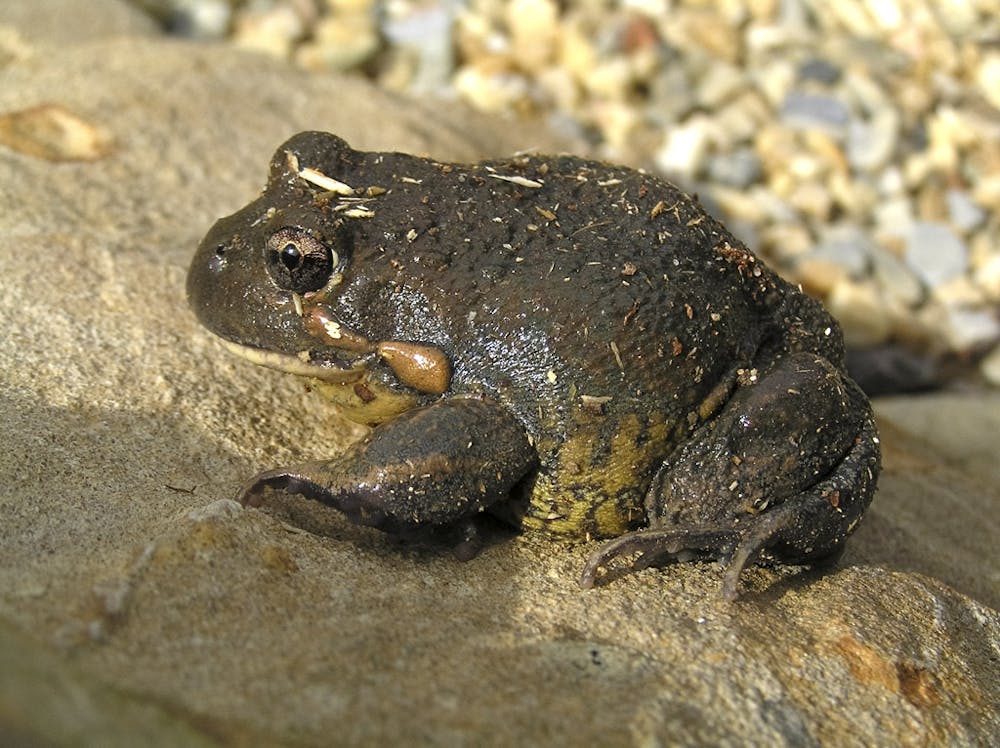
Local eastern banjo frog, Limnodynastes dumerilii. Photo credit: David Cook

Climate change and population decline

For most species, the exact drivers behind the rapid decline in frog population is still shrouded in uncertainty (Department of Environment and Energy). Climate change and population growth have been attributed as primary drivers, resulting in associated pressures of urbanization which has led to habitat destruction, pollution and the introduction of pathogens and invasive species (Department of Environment and Energy). The implications of climate change, with an unabating yet gradual increase in temperature will result in shorter winters and less water sources, which could wreak havoc for frog populations. These impacts are already being experienced, according to ACT Frogwatch Coordinator Anke Maria Hoefer, who has reported phenological changes in the calling with frogs calling up to six weeks earlier than usual seasons, resulting in the breeding season occurring earlier (Lowe et al. 2015).

Frogs are particularly vulnerable to the effects of climate change owing to their inability to regulate their own body temperatures. Frogs rely upon external sources meaning that increases in temperatures could result in deleterious consequences as they are unable to keep their body temperatures low. With the IPCC report (2013) predicting an increase in temperature by 4.8 degrees by 2100 if we are to continue our current rates of carbon emissions, this could spell catastrophic implications for frog populations.

Final thoughts

Despite the success of the program, reaching over 3500 people annually with frog monitoring training and public education, its future is tentative. The last budget saw the program lose $80 000 in core funding, which could result in a reduction of the sites monitored from 150 to 80 (O’Mallon 2018). I think the program is important not only in its provision of data but as an effective strategy to engage the broader community in biodiversity conservation.

With the scale of climate change making it appear insurmountable, people feel powerless and unsure as to where they can help tackle this gargantuan issue. My thoughts on the issue is best encapsulated by artist Natalie Jeremijenko who stated:

“What the climate crisis has revealed to us is a secondary, more insidious and pervasive crisis, which is the crisis of agency, which is what to do.” (Jeremijenko 2009)

I believe that citizen science programs provides a constructive avenue for people to channel this feeling of powerlessness and actively work towards protecting our local biodiversity. I think it also assist in contextualizing the issue of climate change. As the effects are so gradual it can make it seem a nebulous concept that occurs at distant locations. This program enables those who participate to witness the impacts on our local ecosystems and species, hopefully driving people to push for broader change.

u5714896

References

Beudel, S 2018, Friday essay: frogwatching- charting climate change’s impact in the here and now, The Conservation, Canberra, viewed 24 October, http://theconversation.com/friday-essay-frogwatching-charting-climate-changes-impact-in-the-here-and-now-98161

Campbell, A 1999, ‘Declines and Disappearances of Australian Frogs, Department of the Environment and Heritage, Canberra

Department of Environment and Energy, Australian Frogs- An Overview, The Commonwealth of Australia, Canberra

Intergovernmental Panel on Climate Change 2013, Climate Change 2013: The Physical Science Bias. Contribution of Working Group I to the Fifth Assessment Report of the Intergovernmental Panel on Climate Change [Stocker, T.F, D. Qin, G-K Plattner, M. Tignor, S.K Allen, J. Boschung, A. Nauels, Y. Xia, V.Bex and P.M Midgley (eds)], Cambridge University Press, Cambridge, United Kingdom and New York, 1535 pp.

Jeremijenko, N 2009, ‘The art of the eco-mindshift;’ https://www.ted.com/talks/natalie_jeremijenko_the_art_of_the_eco_mindshift, retrieved from http://www.ted.com/talks

Lindenmayer, D, Margules, C, Botkin, D 2000 ‘Indicators of Biodiversity for Ecologically Sustainable Forest Management’, Conservation Biology, vol. 14, no.4, pp.941-950

Lowe, K, Castley, G, Hero, J-M 2015 ‘Resilience to climate change: complex relationships among wetland hydroperiod, larval amphibians and aquatic predators in temporary wetlands’, Marine and Freshwater Research, vol. 66, no.10, pp.886-899

O’Mallon, F 2018, ‘Annual Canberra frog census at risk due to funding, Canberra Times, 2 August, viewed 26 October, https://www.canberratimes.com.au


Posted in Uncategorized | 2 Comments