Save the wildlife by preserving the old trees

by u6298107

Introduction

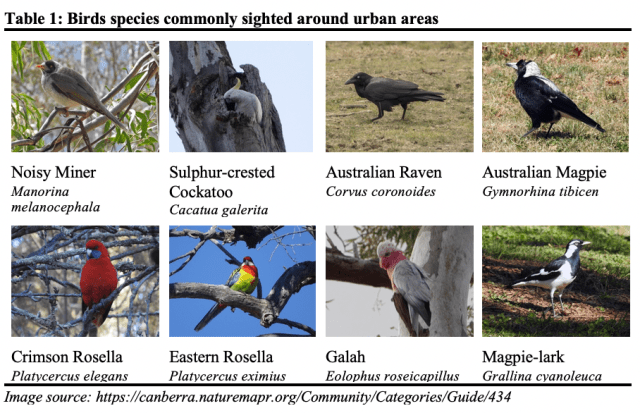
I’ve had the opportunity to join Phil and Julia (a postgrad student) on a bird survey around the urban areas of Canberra (Mount Majura Park, Hall, Bonner and Jacka). The objective of this survey is to look at the value of mature trees in urban area to wildlife, particularly to birds. There are several birds commonly sighted around these areas (table 1).
Why are mature trees under threat?

The Australian Capital Territory’s (ACT) populations are expected to reach half a million by 2022 (ACT Government, 2019a). In order to accomodate the growth in population, the critically endangered box gum grassy woodlands, including many large established trees,  are becoming more susceptible to land clearing for urban area development. Large established trees are described as “keystone structures” as they provide habitat resources to a variety of wildlife (Le Roux, 2014).

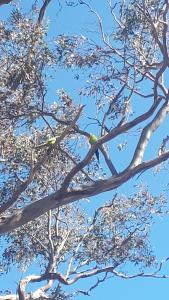
The Nature Conservation Act 2014 listed the large established trees as a “key threatening process” (ACT Government, 2019b). This is significant because many of these trees contain natural hollows which provides shelter, roosting and nesting sites to many wildlife, including to some species listed in table 1 (figure 1). The formation of a hollow takes approximately 100-200 years (Gibbons and Boak, 2002). The absence of hollow bearing trees put many local biodiversity at stake. Furthermore, we observed that the larger the size of a tree, the higher the bird diversity it can support.

Figure 1: A Sulphur-crested Cockatoo in a hollow, image source: author

How should we conserve them?

In urban landscapes, large established trees are removed for safety reasons, aesthetic purposes or to accomodate more developments (Gibbons. P, 2019, pers. comm. 20 Sept). However, trees pose a threat only if they have a “target” (i.e. falling branch). Instead of being under the assumption that large old trees pose threat, we should be looking at ways to eliminate the threat. For example, planting lower shrubs around the vicinity of the trees to discourage people going near towards it.

Instead of viewing large established trees in a utilitarian view, we should be moving towards an ecocentric approach towards urban planning and redevelopment. By integrating natural ecosystems within the community, it doesn’t only benefit the biodiversity, but also help to build social capital, contributing towards sustainable development of an urban development (Steward. J, 2019, pers. comm. 18 Sept). Such progressive approach can be observed in Ginninderry, one of the newest suburb development in Canberra. 78% of trees were retained during stage 1 development, much of them were large established trees with hollow/s. Instead of removing them, the housing developments were built around the trees.

Reflections

During the surveys, I couldn’t help but to wonder, the natural environment is highly modified to make way for selfish aesthetic reasons. Our surroundings are highly regimented for gardens and because of that, these gardens are barren and doesn’t support as many species as they used to be. The beauty of nature lies within the untidiness and unaesthetic combination litter, branches, fallen logs etc. As such, it creates an environment to allow more life to thrive in. If we can truly embrace what nature in its undisturbed state, we could really change the way we see things and make decisions in life.

References

ACT Government, 2019a. ACT Population Projections: 2018 to 2058 [Online]. Treasury and Economic Development Directorate [Accessed 23 September 2019].

ACT Government, 2019b. Nature Conservation Act 2014 [Online]. Environment, Planning and Sustainable Development Directorate [Accessed 23 September 2019].

Gibbons, P. and Boak, M., 2002. The value of paddock trees for regional conservation in an agricultural landscape. Ecological Management & Restoration3(3), pp.205-210.

Le Roux, D.S., Ikin, K., Lindenmayer, D.B., Manning, A.D. and Gibbons, P., 2015. Single large or several small? Applying biogeographic principles to tree-level conservation and biodiversity offsets. Biological Conservation191, pp.558-566.
Posted in Uncategorized | Leave a comment

Monitoring of the Striped Legless Lizard

Over two days in late September I was able to accompany Thea O’Loughlin and other members of ACT Parks and Conservation Service to multiple offset areas around the ACT region.

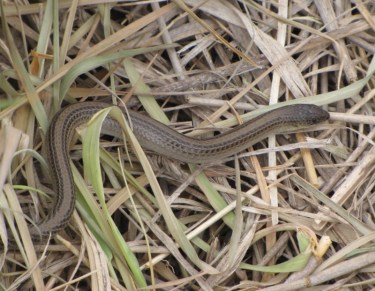
Thea O’Loughlin is a field ecologist currently working on a project on the Delma impar (striped legless lizard). The project hopes to help better understand the preferable living conditions of the Delma impar and further find the densities of the striped legless lizard in areas around Canberra.

Figure 1. Delma Impar (Credit to Robertson, 2013)

Delma Impar Status?

The striped legless lizard is currently listed as vulnerable in the ACT. This vulnerability can be directly related in the removal of grasslands for urban development around the ACT. As large open and flat grassland areas are often seen as perfect sites for development.

The Experience

Throughout my two days with Thea, we ventured to the different offset sites around Canberra in which roofing tiles had been placed as temporary artificial shelters for the striped legless lizards. These artificial shelters provided both cover from predators and a food source, due to the large amounts of crickets, spiders and other smaller insects living under the shelter, since the striped legless lizard feeds on these.

The offset sites that were visited had often been poorly managed and had issues with weeds and overgrazing by kangaroos. This often had led to them becoming poor sites for the striped legless lizard. The preferable habitat for the striped legless lizard according to Thea is knee height grass allowing for cover from predators. Due to the over grazing by the kangaroos the offset sites had grass eaten down to the roots making it a more difficult habitat for the striped legless lizard to evade predators, thus impacting the density in the areas. The artificial shelters were created as an alternative shelter for helping the legless lizards.

Each location had areas set up with small groups of 8 tiles spaced 5 metres apart in a large square. At each group of tiles, we recorded any reptiles found including any lizards, skinks, snakes or dragons. Each specific tile was observed and recorded into a database, describing whether there were any reptiles under the artificial shelter.

Figure 2. Eastern Bearded Dragon found under a tile in Jerrabomberra

Recordings for database

For reptiles found under the tiles, they were recorded using the following;
Which tile number?
Species name?
Adult, Subadult or Juvenile?
Tail lost? Yes or no.

The temperature and humidity were recorded throughout the day as well as the temperature of the tiles both on the top and underneath. This was also recorded into the database to assist in the understanding of the weather conditions most suitable for the reptiles to be found under the artificial shelters, and whether there was a time of day when the conditions became too hot for the shelters to be useful.
According to Emma, a colleague of Thea’s, they could see a trend of tile temperatures above 40-50 degrees Celsius having reduced number of reptiles found under the artificial shelters.

The data collected in the field was sent directly back to the office located in Farrer where it was to be analysed and assist in forming a better understanding into preferences in conditions and locations for the striped legless lizard.

Figure 3. Known locations of Striped Legless Lizards in Australia (Credit to Geoscience Australia)

Problems

The Parks team and many rangers have had a massive impact into improving the offset sites however often due to low manpower, areas which are left unmanaged can often become out of control. Habitat loss is the major threat to the survival of the striped legless lizard. It is vital for survival of the species that current locations with known populations are kept in better condition. Community awareness and participation in volunteering opportunities aids organisations such as Parks and allows for a greater reach in management of offsets and nature reserves and the increased quality of these sites.


Final Notes

The striped legless lizard is one of many species suffering from poor quality habitats and the ever-expanding urbanisation of Canberra. With habitat loss being the major threat to the species, an increase in community awareness and involvement will see an improvement in the management of these habitats and a species such as the Delma impar will be around for many years to come.


U6080600

Posted in Uncategorized | Leave a comment

Superb Parrot Hollow Study in Goorrooyarroo Nature Reserve, ACT

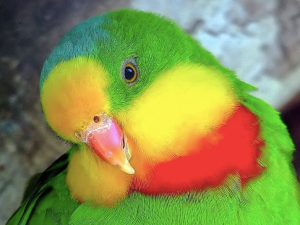
Goorrooyaroo Nature Reserve encompasses 1384 hectares of endangered Yellow Box-Red Gum Grassy Woodland, thus being the largest remaining area of this valuable ecosystem in the ACT. Goorrooyaroo is crucial to the natural environment of the ACT, as it is a regional stronghold for a series of endangered species, including the vulnerable Superb Parrot (Polytellis swainsonii). 


Image credit: Ian McHenry

The issue

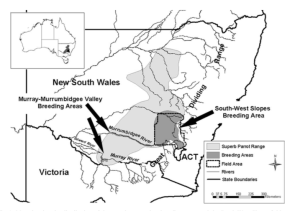
Superb Parrots are currently listed as a vulnerable species. They are found throughout eastern inland NSW and the ACT, which is known to be their core breeding area. One of the main factors threatening the stabilisation of the Superb Parrot population, is land clearing and the associated loss of hollow bearing trees, their prime breeding ground. 

Map showing distribution of superb parrot and key breeding areas (Credit to Manning et al, 2004)


However,  hollow bearing trees with the right conditions are often scattered around ‘used’ land, such as agricultural land, residential areas, etc. In most cases, these trees will thus not be protected. This is what makes the study into hollows and their characteristics so important for the protection and conservation of this species. Once we have a better understanding of which hollow-types are preferred by Superb Parrots, we can better advise on the management of these areas and ensure the protection of these trees.

Image credit: Giselle Owens

My experience

Earlier this month I had the opportunity to assist on a superb parrot hollow study, functioning as a ground work assistant and scriber for ANU researcher, Giselle Owens. This was a very fun and enriching experience for me for many reasons. As an international student, it allowed me to learn more about Australia’s native birds, and observe magnificent species such as the superb parrot from up close.


Pair of Superbs observed during study; Image credit: Giselle Owens

This experience allowed me to gain valuable fieldwork skills, such as navigating using a GPS, learning how to tie different knots and how to secure climbing equipment on a tree appropriately. 

Giselle Owens shooting a line over the tree in preparation for climbing


Groundwork. Image credit – Giselle Owens

As a scriber, I gained insight into the diversity of aspects which could be relevant to the potential of a hollow being as a breeding ground.  This opened my eyes to how specific the needs of each bird species are, and why it is so important to protect the trees that are appropriate for nesting, if we want to protect the species as a whole. 

About a year ago, I conducted similar work in the Atlantic forest biome in Brazil, where we were implanting nesting boxes on trees for the Red-tailed parrot (Amazona brasiliensis). Due to land clearing in one of their main breeding areas, Ilha Rasa, these parrots were also struggling to see their populations stabilised. It was very interesting to find the similarities of both experiences, but also the contrasts. Through conversations with Giselle Owens, I understood the reason behind researching hollow-bearing trees, against implanting nesting boxes. When it comes to conservation, it is important to tailor ones actions to the specific context. In Brazil, most nesting trees for the Red-tailed parrot where already cleared, and stabilisation of the population could not be reached without the nesting boxes. In the ACT however, we are lucky to have one of the most intact ecological communities of the Box-Gum Grassy Woodlands. Inserting nest-boxes instead of ensuring the protection of nesting trees could thus incite land clearing. The protection of superb parrots and valuable native ecosystems such as Yellow Box-Red Gum Grassy Woodlands thus go hand in hand.

By u7023409

Refereces:

https://www.environment.act.gov.au/parks-conservation/parks-and-reserves/find-a-park/canberra-nature-park/goorooyarroo-nature-reserve

https://www.environment.nsw.gov.au/threatenedSpeciesApp/profile.aspx?id=10645

The conservation implications of bird reproduction in the agricultural “matrix”: a case study of the vulnerable superb parrot of south-eastern Australia. Manning, Adrian D ; Lindenmayer, David B ; Barry, Simon Biological Conservation, 2004, Vol.120(3), pp.363-374

Posted in Uncategorized | Leave a comment

One man’s rodent, is another man’s treasure

I volunteered with Kiarrah Smith, a PhD student at ANU, over two mornings in early September. Kiarrah’s research is based on the fundamental questions of best practice for rebuilding mammal communities and the effects of these reintroductions on the recipient ecosystem, with a focus on the reintroduction of small native mammals into Mulligans Flat Woodland Sanctuary. On the mornings I worked with Kiarrah, we surveyed for the presence of the New Holland mouse (Pseudomys novaehollandiae) in an area that Kiarrah had identified as a known habitat of New Holland mouse from previous studies in 2016 that were based on the release of ~89 individuals in 2013.

Longworth Traps that we had to assemble before placing 20 intact sunflower seeds inside.

On the first morning, we lay 40 Longworth traps at approximately 20 metre intervals surrounding the GPS coordinates where the mouse had previously occurred. Kiarrah told me that we required 40 traps to ensure there were enough potential sites for presence to be recorded, as a previous surveying exercises suggested there had not been enough opportunities for detection.

Longworth Traps were placed next to potential habitats like grassy tussocks and deadwood to increase the chance of New Holland mice detection.

Each trap contained 20 intact sunflower seeds and New Holland mouse detection was to be based on the state of the seeds when we returned to collect the traps. Kiarrah explained that a common house mouse (Mus musculus) would leave a scrappy hull after seed consumption, while New Holland mice would split the seed hull neatly down the middle. However, when we collected the traps 5 days later, it appeared—upon first observations—that none of the seeds had been hulled this way, and the presence of the species in the area seemed unlikely.


The New Holland Mouse

New Holland mouse (Photo credit: Creative Commons)

The New Holland mouse is a native rodent of similar size and shape to the common house mouse, but is distinguished by the absence of a notch on its upper incisors (Environment NSW, 2017). Its ecological function is not entirely known, but researchers speculate that the species is important for seed and fungal spore dispersal (Department of the Environment and Energy, 2019). Originally, the species was distributed across all Eastern states of Australia and even Tasmania (Environment NSW, 2017).

However, the influence of European settlement has corresponded with severe contraction in New Holland mouse range and an estimated adult population of less than 10,000 individuals (Environment NSW, 2017). The most pressing threats to the species are habitat loss and predation from feral and exotic animals (Department of Environment and Agriculture, 2019); factors that are associated with urbanisation and land clearing. Given that the New Holland mouse does not adapt to urban areas (ACT Government , 2019), it is vital that known habitat is preserved and restored to protect the vulnerable species.

Current Distribution of the New Holland mouse (Image sourced: Atlas of Living Australia , 2019)

Mulligans Flat Woodland Sanctuary

The New Holland mouse is just one species being investigated for reintroduction to Mulligans Flat Woodland Sanctuary , a ~5km2 site dedicated to restoring the diversity of native grassy woodland and its pre-settlement fauna. Reintroduction projects are considered as pillars to the sanctuary, where the protection of key habitats and the removal of feral predators provides an experimental site for researchers to understand how locally extinct species may best recover and persist in a changing environment.

A three-person job: Kiarrah on navigation of coordinates, Kai on seeds and me, setting up traps.

Reflections

I took a great deal away from assisting Kiarrah in this small step of her research. It made me realise how many cogs are at work when considering a reintroduction project and just how many minute procedures must be undertaken to gain a fundamental understanding of whether a population may be viable in a given area. What’s more, the fact that we found no trace of New Holland mouse in the location we surveyed, highlighted how crucial continuous monitoring is in ensuring the conservation of a species.

By U5956901


Posted in biodiversity conservation, Reintroduction, Restoration ecology, Volunteer work | Leave a comment

Wildlife Conservation at Tidbinbilla Nature Reserve, ACT

On August 8th, I had the pleasure to spend a day in the life as a wildlife officer working alongside the Wildlife officers at Tidbinbilla Nature Reserve. Tidbinbilla Nature Reserve is a government organisation that has been supporting conservation efforts in the ACT since 1936. Tidbinbilla nature reserve was originally founded as a wildlife sanctuary, allowing the public to encounter native Australian wildlife in a natural setting. Although the sanctuary still exists and is open to the public, Tidbinbilla reserve now primarily focuses on the conservation of threatened and endangered species found in the ACT region. The reserve is currently undertaking efforts to conserve and protect three endangered species known to the ACT through the Endangered Species Breeding Program

Southern Brush-tailed Rock-wallaby found at Tidbinbilla Nature Reserve [1]

The nature reserve is run predominantly by a range of wildlife officers but welcomes volunteers to learn about the conservation programs that are run by the reserve as well as help out with daily activities that the officers at Tidbinbilla Nature Reserve are committed to. 

During the day that I spent working alongside the staff at the reserve I was introduced to the conservation programs that are being undertaken. There are currently three conservation programs being carried out at the reserve, these include conservation and reintroduction of the Eastern bettong, and the captive breeding programs of the Critically endangered Southern Brush-tailed Rock-wallaby and the Northern Corroboree Frog. 

Over the day I followed in the footsteps of the wildlife officers and their daily duties in caring for these species while gaining a greater understanding of how the work being done at Tidbinbilla Nature Reserve is critical for the survival of these threatened species. The breeding program set out for the conservation of the Northern Corroboree Frog was of particular interest to me as my greater interests are towards water management and species protection. 


Northern Corroboree Frog Breeding Program

The critically endangered Northern Corroboree Frog (Pseudophryne pengilleyi) breeding program run by the wildlife officers at Tidbinbilla nature reserve is one of the largest captive breeding programs in Australia. The Northern Corroboree Frog are naturally found throughout the Brindabella ranges ACT and adjacent Bogong ranges and Fiery ranges of New South Wales. However, there are less than 50 known remaining individuals in these regions and are on the verge of extinction in the wild, which is predominantly due to the impact of chytrid fungus (Batrachochytrium dendrobatidis), a fungus found in many water sources around the world impacting many amphibian species not only the Corroboree frog. However, agriculture and land clearing along with trampling by introduced species has also attributed to the decline of the species abundance in the region. 

Northern Corroboree Frog (Pseudophryne pengilleyi) [2]

In 2003, the Australian government established the breeding program at Tidbinbilla Nature Reserve as part of the National Recovery Plan and ACT action plan for the Northern Corroboree frog. The program was set up to ensure a surviving colony of the species in the case of extinction in the wild.

Captive breeding laboratories for the Northern Corroboree Frog at Tidbinbilla Reserve [3]

There are currently around 800-1600 individuals of the Northern Corroboree frog present at Tidbinbilla nature reserve due to the breeding program. Between 2011 and 2014 there have been four release programs with increasing release numbers each year. Monitoring of the released individuals continues to occur each breeding season to identify whether individuals in captivity are able to survive in the wild. 

Image 4. Captive breeding enclosure for The Northern Corroboree Frog at Tidbinbilla Nature Reserve

Since the species takes 4-5 years to reach sexual maturity, only the 2011 release has successfully been monitored due to the identification of the male calling. The results showed an increase in the number of male calls that have been recorded over the past decade, showing that captive bred Northern Corroboree frogs are able to survive in the wild. 

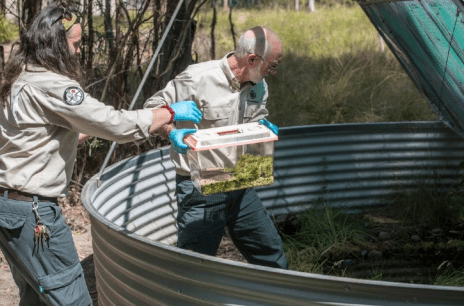
Wildlife officers Jennifer Pierson and Murray Evans delivering frogs into simulated habitat enclosure ponds before being released into their natural habitat [5]

With this breeding program and the conservation efforts by the Wildlife officers at Tidbinbilla Nature Reserve,  although this species may still be vulnerable to the effects of chytrid fungus in the wild, without the conservation program that is currently in place it is certain that this species would be entirely extinct. Global research into the effects of chytrid fungus on amphibians is still underway, however global efforts towards conservation of the critically endangered amphibian species like that of the Northern Corroboree Frog are continuing to have positive effects on these threatened species. 

By U6390013


Posted in Uncategorized | Leave a comment

Contributions to Biodiversity Conservation by Volunteers

By Adam McLachlan

On a rainy Saturday in September I join Marty, the ACT Parks and Conservation Service (PCS) ParkCare Ranger on what is fairly typical weekend day for him. His job is to facilitate and support the volunteer efforts of the ACT’s ParkCare groups in protecting and improving the reserves and parks of Canberra. There are around ~850 volunteers across at least 22 ParkCare groups in Canberra, many of which have a focus on a particular reserve.

Volunteers at work: ADFA Cadets head into Black Mountain Nature Reserve

ParkCare volunteers perform various tasks that protect and improve the biodiversity of the ACT’s reserved areas network including:

  • Weed management
  • Regeneration, tree planting and watering
  • Fauna and flora surveys, wildlife care, and
  • Assisting rangers with activities

In the morning Marty and I are out in Parks 17 – a PCS bushfire tanker usually used in suppression of grass and forest fires – but today delivering water to small tanks dotted around The Pinnacle Nature Reserve. The cubes are used by the ParkCarers to water newly planted trees and shrubs during their first years to improve survival and establishment. Without these deliveries, water would need to be brought from the suburbs by buckets or bottles for each plant – a laborious and time consuming task. I climb up and down from the cab to open and close gates for Marty, saving him a little time as he does the rounds.

In the afternoon we are linking up with 22 ADFA Cadets to cut Cootamundra Wattle (Acacia baileyana, a native shrubs that is considered a weed in the ACT due to its invasive and highly competitive habit) on the southern flank of Black Mountain. These future officers of the Australian Defence Forces are here as part of their studies undertaking community service. Armed with an assortment of loppers and hand saws, they march a kilometre along a walking track to reach their area of operation. It’s a steep slope running down to Parkes Way, in an area beneath powerlines cleared of trees there is a patch of Cootamundra Wattle.

Working conditions – steep, rainy and a weekend

After a quick target identifications session, they’re off working in small groups they tackle the wattles. I am on the chainsaw (the only one other than Marty with appropriate training in its operation), moving between groups helping with larger weeds. The cadets move quickly across the slope and reach a gully marking the end of the target area, before turning back uphill and sweeping back towards the starting point. It’s all over very quickly and takes Marty a bit by surprise – either military efficiency or youthful enthusiasm has us finishing up early.

Finished up and hiking back up to the walking track

Irreplaceable economic and environmental contributions

The number of ParkCare volunteers is far larger in number than the whole PCS workforce. The contribution these people make to conserving biodiversity in the ACT would be very difficult to replace. According to Australian Bureau of Statistics data, the average Australian gives around 2.2 hours per week. If this is multiplied by the number of ParkCare volunteers and number of weeks in a year, then divided by the usual weekly hours of a PCS employee it would equate to PCS needing to employ at least 52 Additional fulltime staff (or more if the time given exceeds the national average). The contribution of Volunteers to the health of Canberra’s reserves is not insubstantial and the work of ParkCare is irreplaceable.

Posted in biodiversity conservation, Landcare, Volunteer work | Leave a comment

Superb Parrot Hollow Study

Polytelis swainsonii (superb parrot) is a unique bird species in the Australian Capital Territory and is listed as vulnerable in the Environment Protection and Biodiversity Conservation Act. Their habitat consists of the critically endangered box-gum grassy woodlands whereof the ACT contains some of the largest and most intact ecological communities.


Volun-tree Work
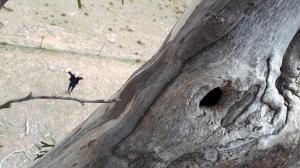
I had the privilege of joining Giselle Owens, an ANU researcher working with ACT Parks and Conservation woodland ecologist Dr. Laura Rayner on a superb parrot hollow study. I assisted Giselle over the course of two days as ground support and as her scriber. The aim of the study’s field work was to collect hollow measurements of randomly sampled trees in the Throsby offset site to improve understanding of the parrots’ breeding habitat requirements. The Throsby offset site, northern Canberra is one of the core breeding sites of the superb parrot.
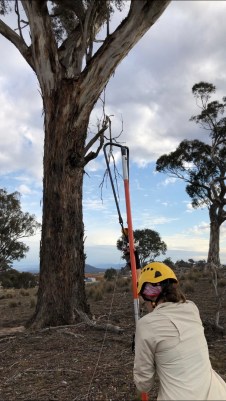
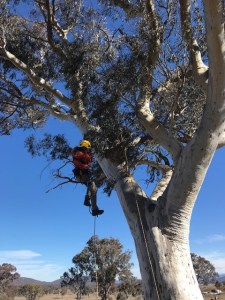
Our days consisted of transporting the climbing gear, searching for the indicated trees and Giselle climbing them. Once safely up in the trees Giselle examined the trunk/branches for any hollows. Once a hollow was found numerous measurements would follow and this data included the hollow type, its location on the tree, entrance diameter, depth and support/entrance aspect.

Image 1: Giselle Owens climbing a chosen tree taking measurements of hollows


The Root of the Problem
One of the largest threats on the superb parrots’ recovery is the clearing and modification of their endangered woodlands habitat. Due to urbanisation and the general loss of large, hollow-bearing trees the superb parrots are losing their key breeding habitats and are being forced to adapt to new species of trees for breeding. Alteration to their habitat and the lack of regeneration of their woodland habitats has also led to their winter-feeding grounds being unsuitable.
A further threat the parrots face is climate change and how it is forcing a change in their usual behaviour. The superb parrot usually spends its winter in the north of NSW and southern Queensland, however rising temperatures are forcing the birds south and further east for longer periods.
Finally, predation and competition for nesting hollows by crimson or eastern rosellas, the common myna and starlings poses a threat.

Image 2: 18 hollows were found and measured in this tree


Branching Out for Solutions
According to Dr. Rayner in an interview with The Canberra Times (Foden, B. 2019, January 13. Superb parrots bounce back from poor breeding years with strong result), we have around 50 years to conserve the superb parrots’ woodland habitat and old, hollow-bearing trees. It is of key importance that we especially conserve those hollows with the most optimal dimensions for the breeding success of the superb parrots.

“The habitat range of the superb parrot will contract about 90 percent, which  will lead to a more concentrated population around the ACT region “
– Dr. Laura Reyner

Therefore, it is important to gain more knowledge on the parrots’ breeding biology, habitat and behaviour in order to understand the long-term viability of their populations and to identify areas critical to their persistence. Due to the super parrots being listed as vulnerable and there being numerous wild individuals left, the chance of a recovery success is high and therefore the resources should be allocated into the superb parrot conservation.

Take a leaf out of Dr. Reyner and Giselle Owens’ book and go out on a limb for the superb parrots.

-u7013737

Posted in Uncategorized | Leave a comment

Getting to Work: Ranger Assist along the Murrumbidgee River

u6046650-

On Thursday mornings a small group of volunteers sets out to do a diverse range of jobs including building fences, plantings, weeding and whatever else Ranger Bernie needs a hand with. They work with Park Care ACT’s Ranger Assist project, and their aim is simple: to do as much as they can to support best environmental outcomes the Upper Murrumbidgee River Corridor. I had the pleasure of joining them on Thursday the 5th and 12th of September and this is my experience.

Image 1: ACT Parks conservation and Lands Ranger logo

Urambi Hills Nature reserve:

After the 2003 Fires that ripped through the ACT parts of the Murrumbidgee catchment area which had had plantations across it were left bare and exposed to risks such as erosion, soil accumulation and instability. This is particularly true on steep slopes. Urambi Hills was just one of the locations left in the ACT which was particularly exposed. Part of a management decision in the area was to replant with native plants and restore naturally occurring woodlands.  The area became recipient to part of the ACTs governments portion of the Australian Governments Million Trees Project. Sites for the million tree project was also appointed to improve connectivity of natural habitats.

Our job was to cut off tree guards that were placed to protect the million tree plantings. As a group we collected the tree guards which had been placed at Urambi Hills in 2008 when over 230,000 plants were planted in the Murrumbidgee River Corridor.

The new, and now well-established, trees effect on the landscape was visibly noticeable, particularly compared to grazing paddocks and unrestored paddocks in the area. Not only do these trees support more biodiversity like birds, but the success of the trees indicate that there root systems have become established and therefore successful as a method in stabilising the soil after the 2003 fire.

 Ingledene State Forest

Image 2: From the top of a mountain at Ingledene Forest, approximately around the area to be turned into offset plantation.

On the second Thursday we were located out at Ingledene State Forest. Bernie was involving the group in an initial planning phase of management projects that would need to be carried out in the area due to the upcoming transformation of the are into an offset site. This site will have a Carbon Radiata plantation pine planted on it as part of ACT governments Carbon neutral offsetting.

Key management decisions for discussion were:

  • Potential areas to protect wildflowers and other key ecological areas.
  • The need to protect corridors of vegetation and plant undergrowth in order to maintain suitable habitats and connectivity for birds and species such as Apraxia (pink tailed leg less lizard) which is listed as vulnerable under the EPBC act.
  • Weed control of Blackberries (Rubus fruticosus aggregate) and Serrated tussocks (Nassella trichotoma) on surrounding landowners properties which are listed as invasive species of national significance.
  • Creating comparison sites for research, which will exclude areas from disruptions and environmental pressures including grazing.

Image 3: Volunteers discussing future management projects in the Ingledene State Forest area.


Overall my experience with Bernie and the rest of the Ranger Assist team has taught me the impact of management decisions, decisions about offsetting and the role of volunteer groups such as this do in improving and shaping environmental outcomes.

“Without groups like this, these kinds of jobs would just never get done. It’s a real help.”
(Ranger Bernie, 12/09/2019)

Posted in Uncategorized | Leave a comment

Biodiversity offsets and the Superb Parrot

Things never go how you expect. That is a major lesson to be learnt when participating in any sort of conservation or animal studies. I spent a couple of days assisting researchers in the field conducting a study on the Superb parrot, with particular interest in the nesting hollow requirements and measurements. This involved assisting researchers climbing trees to measure each and every hollow throughout the tree. As you can imagine, this wasn’t a very easy task, with the difficulty furthered due to this being the first day in the field, so organisation wasn’t at it’s best. We spent most of the morning organizing the car to be washed down, and ensuring there was no remnant dirt or seeds on the base, as the area we were entering was in the process of eliminating weeds.

The second day in the field was more organised, and  we managed to get straight into the study site and measure some hollows. There was some difficulty within each tree, with dead branches making it impossible to measure some hollows due to their safety, or lack thereof, in which case we had to take an estimate instead. In terms of accuracy, estimates are not ideal, but we needed to note every hollow we came across.

This study intends to aid in the protection of the Superb Parrot, which you can read more about here, as well as assist in the development of recommendations for tree retention in urban areas. Studies like these need manpower and funding, which may be difficult to come across.

Its not as simple as just telling people not to cut down trees and not too build where nesting trees exist, with an ever-increasing population, humans have an increasing need for housing. With the concern of the natural environment very prominent, research in these areas in necessary for working with housing developers and developing methods and requirements for tree retention in an urban environment, and utilizing options such as offset sites.

In this particular case, the study site was an offset site for a new suburb development known as Throsby, and connects onto the Mulligan’s Flat Nature Reserve in the North of Canberra. This area has had introduced predators eliminated, with large fences and dedicated resources to removing pest species. This environment is useful for the continuation of the Superb Parrot, and as a result provided an excellent study site for improving the potential of this species.

Offset sites like the study site at Throsby and an idea in creating the ability for human development, while making an effort to maintain biodiversity and the unique species within Australia. In the end, studies like these aid in the intention of coexisting with our natural environment.

u6053021

Posted in Uncategorized | Leave a comment

Improve the endangered grassy, ditch weeds and create habitat

For my work experience, I participated in the Mount Majura Nature Reserve for twice volunteer activities. Each activity was 3 hours. There are had different location for this two projects. Firstly, we improve the endangered Yellow Box-Red Gum Grassy Woodland in the Fair. And second activity is ditch weeds and create habitat for frog close to Hackett. This is a long – term activity that work on every Friday. Community will try to protect to biology under Mount Majura.

How can we improve?

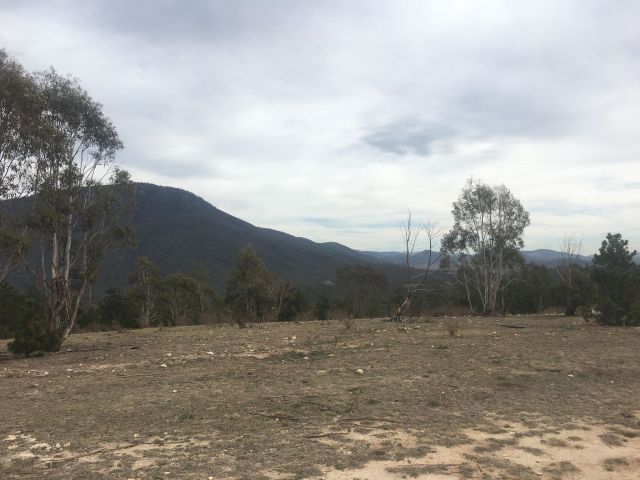
Figure 1 endangered grassy

The temperature of there suit for grassy grow. In the morning, we take some bucket to this protect area and fill in this timbers. The purpose of timbers that will prevent other weeds enter. So, we need to make a donut shape around the growing grassy. The important step was removed all of Paterson’s cures. This plant was a big issue for grassy, it will influence their growing when they occupied the soil. We also need to fill the timber around grassy after clear the weeds. Not only to prevent the invasion of plants, but also to prevent kangaroo damage. During the day, we couldn’t see the kangaroos, but in the evening, they went down the mountain and the leader told me that the kangaroos would also divide the site. If there were other kangaroos, they would fight and destroy the plants. Even more unexpected is that they will embrace or rub against the plants. So we put some twigs on the doughnuts shape to prevent them from getting close. Protecting them is a challenge that why they were endangered. (Figure 1)

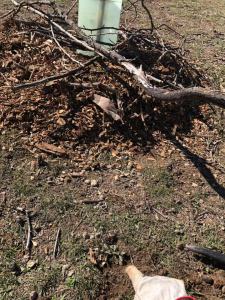
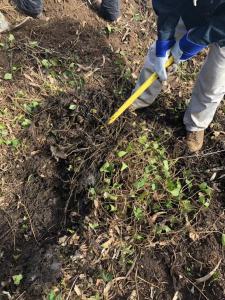
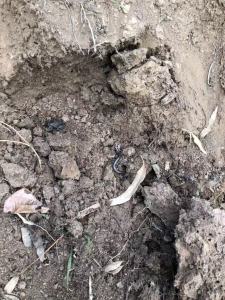
The second week, we have activities near the first place under the Mount Majura Nature Reserve. The project purpose was protected the frog’s habitat. This drainage ditch have two sections. Just one side had some frogs. Firstly, we remove English Ivy on the dry area. This picture shows that most area was occupied. (Figure 2) Seriously affected the habitat of the frog. The population of frogs was reduced and they are not happy in there. The roots of this plant are deep in the soil. It is hard to remove takes a lot of energy. As we cleared the roots, we found young frogs and lizards hiding in the mud and transferring them to the place where there was tall sedge. (Figure 3) And planted more tall sedge Carex appressa on both sides of the drain. There had about one meter for every plant.( Figure 4)

Figure 2 remove English Ivy

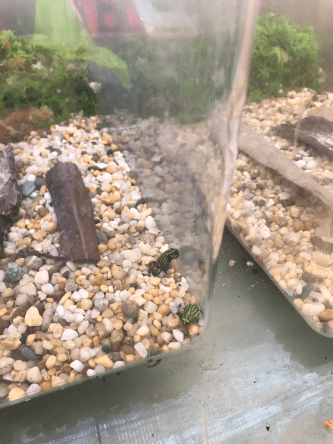
Figure 3 frog and lizard

Figure 4 Carex appressa

In this activity, let me know more about the protection of plants and animals. Activities such as the protection of grassy are not expensive, and they are all done by the efforts of volunteers. The people who worked together gave me a lot of help and made me know more about these plants. If I have time, I will come  to be a volunteer again.


u5794476

Posted in Uncategorized | Leave a comment