The Silent Invaders

Invasive species are present in just about every ecosystem in the world, and their impacts vary from system to system. While some introduced species can coexist harmoniously with their colonized environment, the vast majority have a detrimental impact on the environment and these invasive species are recognized globally as a leading cause of biodiversity loss(1). To get a better picture of the issues, and to understand how everyday Australians can help, I sat down with Dr. Richard Duncan, a centenary professor at the University of Canberra and expert on invasive species.

Photo of Richard Duncan
Dr. Richard Duncan

Dr. Duncan’s research focuses on invasive flora and fauna of Australia and New Zealand. Dr. Duncan describes his job as understanding the processes of invasive species well enough to manage them efficiently.

How do Invasive Species Threaten Biodiversity

Most Australians would not be surprised to see 1080 poison in our national parks and protected areas, and for good reason. In a country with the highest mammal extinction rates in the world, Australian scientists are well aware of the impact that invasive predators can have on its unique environment(2). While Australian readily think about the European Red fox (Vulpes vulpes) when thinking of an invasive species and a pest, they often don’t consider some of the other equally troubling offenders.  
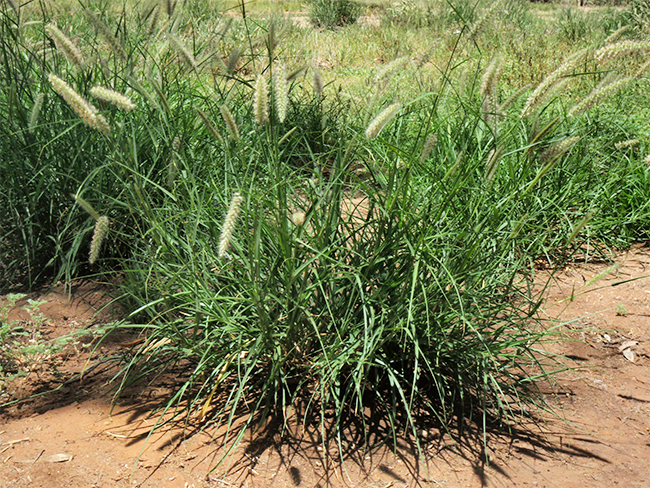
Buffel grass - NT.GOV.AU
Cenchrus ciliaris, an increasingly common threat to the Northern Territory.

Invasive species that pose the greatest risk to the environment are those that possess the ability to fundamentally change how ecosystems function(3). Dr. Duncan referred to these species as ‘transformative’, in that they could transform an environment and impacts its natural systems. Crucially, for a country recently ravaged by bushfires, it is invasive grasses and grasslands, such as the Buffel Grass (Cenchrus ciliaris) in Central and Northern Australia, that are playing a significant role in altering Australia’s traditional fire regime. Invasive grasses like these are highly flammable and produce greater biomass than native grasses, completely altering the wildfire regime to which our native ecosystems have evolved (6,7).
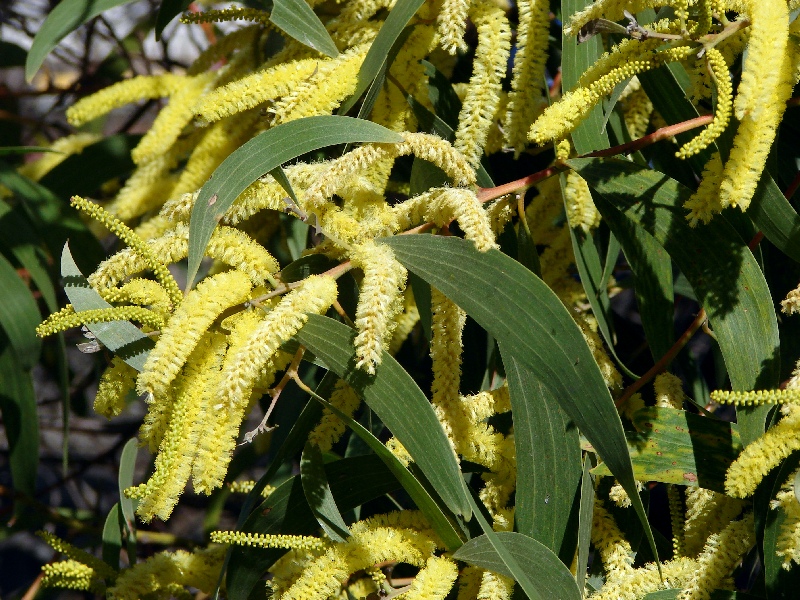
Acacia subg. Phyllodineae - Wikispecies
Acacia Phyllodineae, an example of a problematic invader

‘’a lot of species coexist harmoniously, however, the ones that don’t can fundamentally change ecosystems’’

We also have nitrogen-fixing species of Acacia that can reshape the ecological landscape when introduced to non-native environments. In the wrong environment, Acacias can disrupt the natural soil fertility of the landscape and completely alter plant-soil feedbacks(4,5) While improving soil fertility may seem advantageous agriculturally, for a natural system adapted to infertile soil, an invasive species like the Acacia can devastate native biodiversity(3)

What could be done better to conserve our Biodiversity?

While it is clear that managers and researchers are working together to manage these issues, what was not clear to me was how society can better play a role in this dilemma Hence I posed the question to Dr.Duncan ‘What can everyday Australians do to better conserve threatened biodiversity?’

His Answer:

Awareness and education will play a massive role in influencing the social and political backing of environmental care. In order to gain political support and funding for environmental issues, it is crucial that first ‘’people understand that we live in a unique area of the world with highly endemic ecosystems that are rapidly disappearing’’. By understanding what is unique about our landscape, and the importance of maintaining its uniqueness, only then can it be managed sustainably.

u6514309
Posted in Uncategorized | Leave a comment

Bush Regeneration with the Friends of Aranda Bushland

Oliver Andrews u6948917

The Friends of Aranda Bushland

The Friends of Aranda Bushland (FoAB) are a volunteer bushcare group operating as part of the ACT Parks and Conservation Service’s (PCS) Parkcare program.  They have been meeting for nearly 30 years now (their birthday party is in a few weeks!) and they maintain 104hectares of rare Snowgum Grassy Woodland and critically endangered Yellow Box – Red Gum Grassy Woodland (ACT Government, 2020). Activities are on the first Sunday of every month and include weeding, planting, and track maintenance. FoAB also organises educational walks through the area for the general community.

Biodiversity Value of Canberra’s Reserves

The Canberra Nature Reserve is made up of 37 separate nature parks across 11,000 hectares, all of which provide vital habitat, landscape connectivity, and biodiversity conservation value across the Canberra region (ACT Government, 2019). While urban and suburban environments and development are often causes of habitat fragmentation, the Canberra Nature Reserve ensures that large pockets of (mostly) good quality and somewhat connected habitat are available.

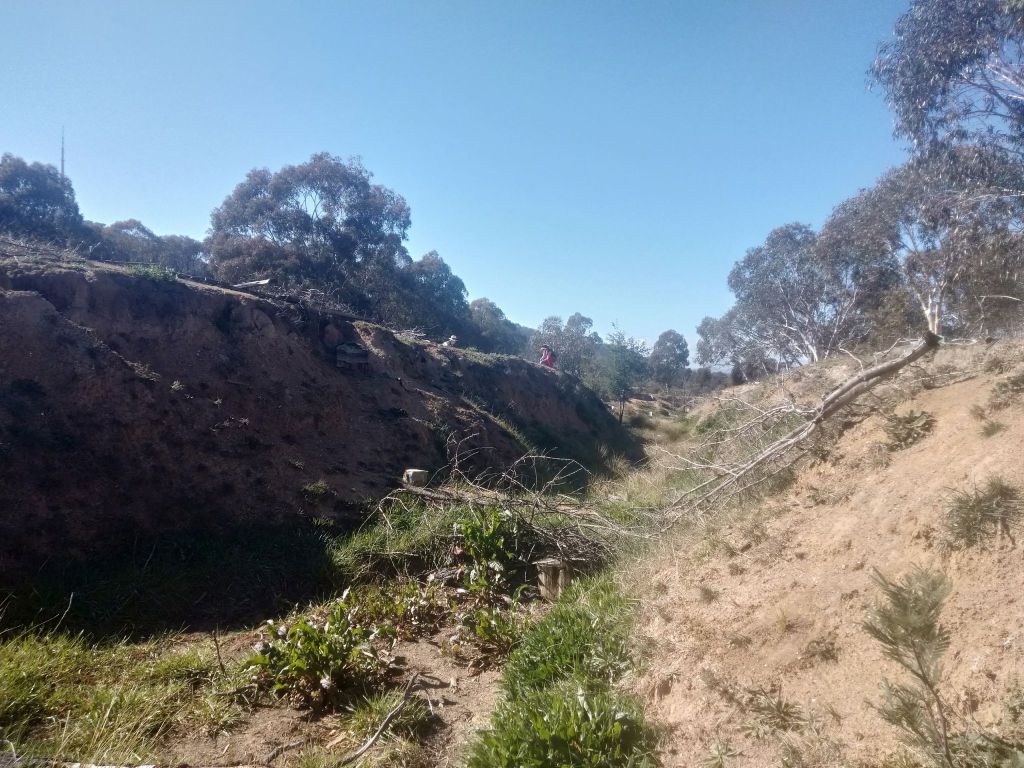
Proof of past mismanagement: the Canberra Nature Reserve contains many pieces of land previously cleared and used for intensive farming or grazing

The Value of Volunteer Bushcare

Volunteer work in conservation is invaluable. In our little sessions on Sunday mornings that run for 2-3 hours, depending on how many people attend, many tens of hours’ worth of work can be completed. The local knowledge of these volunteer bushcarers – many of which have lived in the area for an extended period of time – is significant and largely unrecorded. It also gives locals the opportunity to directly be involved in the management of the land in and around their homes and is an avenue for participatory and consultative land management (Gooch, 2010).

This resource is absolutely essential to land managers, who are currently insufficiently funded to be able to pay for professional labour required to match the current volunteer workforce, let alone for the intimate local knowledge that current volunteer workers provide. This is not to say that volunteers can manage land better on their own – to the contrary, volunteer work is often variable in results and requires facilitation, direction, training, and some funding from an outside professional agency (Curtis et al., 2000).

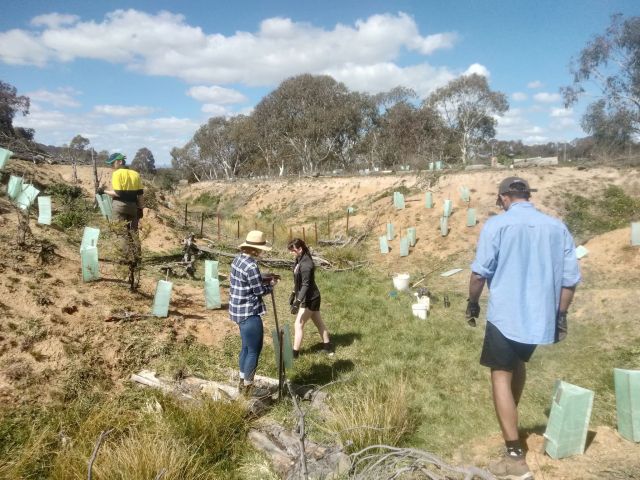
Many hands make light work: volunteers working on a gully restoration in the Aranda Snowgums

This process is made evident in the bushcare activities I took part in over the past few Sundays. We were able to get a huge amount of work done in a short space of time, but we required the assistance of the PCS to source quality tools, specialist technology and training, and plantings. The importance of the time and labour investments from volunteers in conservation is critical to maintaining and improving the ACT’s excellent Canberra Nature Reserve, and I would like to see greater funding and development opportunities available for both volunteers and those enabling them.

ACT Government, 2019. Canberra Nature Park Draft Reserve Management Plan, Available at: https://www.yoursay.act.gov.au/act-parks/canberra-nature-park (accessed 07/09/2020).

ACT Government, 2020. Aranda Bushland Nature Reserve, Available at: https://www.environment.act.gov.au/parks-conservation/parks-and-reserves/find-a-park/canberra-nature-park/aranda-bushland-nature-reserve (accessed 06/09/2020).

Curtis, A., Van Nouhuys, M., Robinson, W. and MacKay, J., 2000. Exploring Landcare Effectiveness Using Organisational Theory, Australian Geographer, 31(3): 349-366. Available at: https://search-proquest-com.virtual.anu.edu.au/docview/214575452?pq-origsite=summon (accessed 07/09/2020).

Gooch, M., 2010. Volunteering in catchment management groups: Empowering the volunteer, Australian Geographer, 35(2): 193-208. Available at: https://www-tandfonline-com.virtual.anu.edu.au/doi/abs/10.1080/0004918042000249502 (accessed 07/09/2020).


Posted in Uncategorized | Leave a comment

Vietnam forest biodiversity and conservation: Interview with a forestry scientist and biodiversity expert

By: Pham Minh Anh Dao (u6138768)

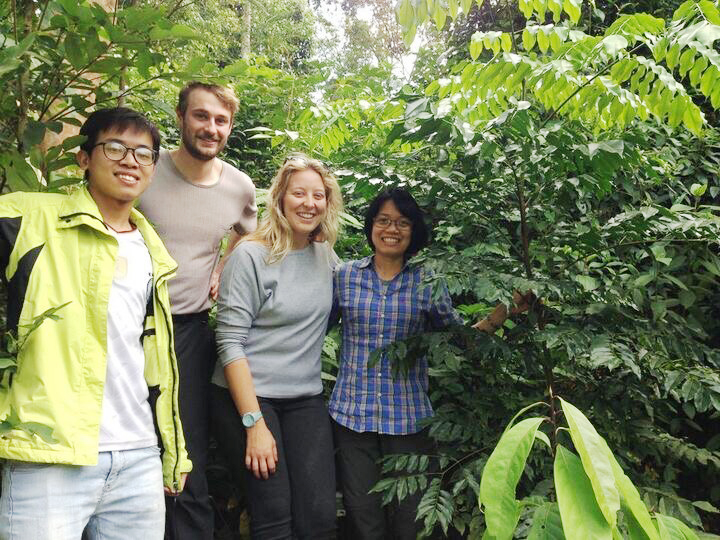
Vietnam’s topography, climate and soils combine to produce an extremely diverse and abundant forest vegetation. The country has a wide range of forest types typical of the monsoon tropics. I had an interview with Dr. Thuy Nguyen, a Vietnamese tropical forest ecology expert. We talked about conservation, biodiversity and how you can contribute to protecting the planet.

Dr. Thuy graduated with a PhD degree of forestry at the University of Melbourne and has spent more than 10 years doing research at Vietnamese Academy of Forest and Science, a leading forestry research institution in the country. The diverse environment in which she mainly does research on forest ecosystems and biodiversity in Vietnam, covers almost all forest ecosystems throughout our country’s territories.The dominant types of forest in Vietnam, which she often do research in, are tropical evergreen forest and dipterocarp forest. There are specific fieldworks depending on different research projects at various locations. 

Dr. Thuy Nguyen during her field trip in the evergreen forest, Dong Giang protection forest management department, Quang Nam Province, Vietnam. Photo by: Manh Tuan Le

Usually, Thuy and her colleagues use the ecological quadrant method to determine the gathering location of the system that they want to study. The flora and fauna of Vietnam is significantly diverse in species as we are neighbor to other ASEAN countries such as Thailand, Laos, and Cambodia, Malaysia and Indonesia to the South, China to the North. Therefore, the country is considered as the convergence of different vegetations.

Key threats to Vietnam forest biodiversity

The most common and most dangerous threat to biodiversity of forest ecosystems is the loss of habitats. Habitat loss is caused by various reasons such as deforestation, economic development, industrialization and urbanization. Habitat loss happens due to climate change and warming temperature resulting in higher rates of desertification. For example, the limestone forests in Vietnam are endangered due to mining and quarrying. Also due to the high demand of woods, farmers now tend to turn natural forests into planted forests for economic benefits. Illegal hunting directly affects the wild animals, remaining a headache as well. 

As scientists, my colleagues and I spend most of our time doing research and providing the policy makers data, information and evidence as recommendations associated with the environment, biodiversity, and climate change. Policy makers will base on these data to propose strict legal corridors as solutions to dealing with those biodiversity issues.” -Dr. Thuy’s sharing on what she and her institution have been doing to mitigate those issues.

As mentioned above, biodiversity conservation in Vietnam is facing many risks and challenges that require appropriate policies to strengthen and link resources in biodiversity conservation for sustainable development. These challenges are main contributions to some constraints that experts like Thuy have to face in conserving biodiversity. The main problem they often encounter is the safety issue while doing research in the forest. Sometimes it is difficult to reach the place to take data samples. Researching in bad weather conditions is also a big threat to them. Moreover, the biodiversity level in Vietnam is very high thus the old ways in research are also part of the constraint. In the past, species identification was based on morphology and was not enough to classify species, now it is mainly based on genetic analysis. They also lack funding for conservation activities, therefore, sometimes it is hard for them to conduct further research.

Talking on what she thought she could do better to confront these challenges, Dr. Thuy believes:

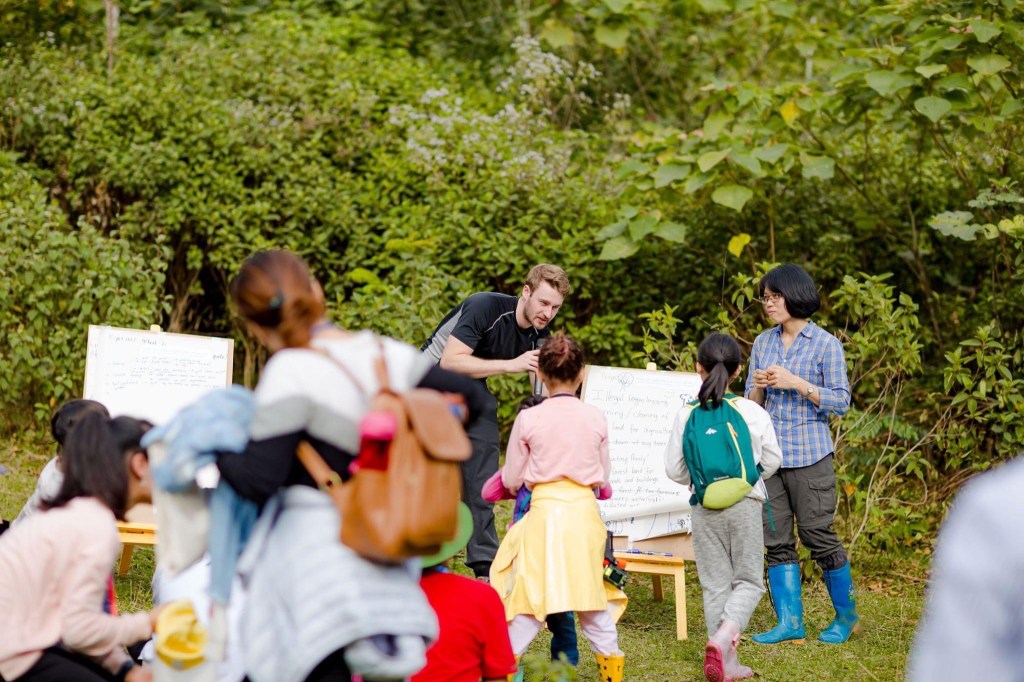
“What could be done better is to get more involved in community development in terms of education purpose. I want to bring science closer to everyone thus anyone can understand what we have been doing and understand the importance of biodiversity to the environment.”

With regard to this view, Thuy is currently working on some projects aiming to educate and support students to take actions for the environment. She organizes an environmental  conservation group called Actions for Climate Change and Biodiversity (ACCB) to connect people and organizations to take actions for the purpose of protecting the environment and counteracting climate change; protecting species, ecosystems and biodiversity; supporting sustainable development in agriculture and rural areas. 

ACCB Team at their kick-off meeting in Hanoi, Vietnam (June 2020). Photo by: Pham Minh Anh Dao

Last but not least, I asked for Dr. Thuy’s advice for students who were interested in biodiversity conservation, and wanted to have an impact on the cause.

“Be a good student first. What you have been studying at university is important for your career, especially in this field. Anyone who wants to obtain employment in this working area should have a concrete knowledge base related to biodiversity conservation and management. Find an organization to get involved with. It could be local or global organization. It could be anything! Connect yourself with like-minded people and be passionate about it. You will surely get more experiences and a bigger network when cooperating with them.

If you would like to know more about what Dr.Thuy has been working on and to get involved, here are her contact details and the link to her current projects.  

Dr. Thuy Nguyen

thuy.t.nguyen.um@gmail.com

ACCB Team

https://www.facebook.com/ACCB2030

Posted in Uncategorized | Leave a comment

Volunteering in an Online World

Caitlin Blair (U6376091)

In a world now dominated by social distancing and working from home the idea of getting outdoors and volunteering may sound like a relic of a by gone era. And this is true to some respect, the availability of opportunities for field work has diminished. But this is not the end of volunteering, like most other activities this year volunteering has moved online. There are plenty of online resources for volunteering and citizen science.

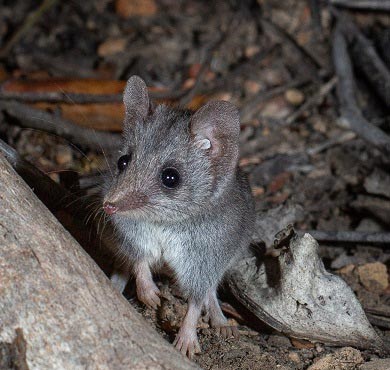
Digivol is a citizen science website developed by the Australian Museum and Atlas of Living Australia. It allows institutions to upload data sets, such as camera traps and field notes. There are a plethora of expeditions to participate in, however to keep with the theme of biodiversity I chose the Kangaroo Island Dunnart Survey run by the South Australia Department for Environment and Water. This project set up camera traps in areas unaffected by the 2019-20 summer bushfires to gather data on which species (native and feral) travel through these corridors, with a focus on the Kangaroo Island Dunnart (Sminthopsis aitkeni) the IUCN lists this mammal as critically endangered.

The Kangaroo Island Dunnart (Source: australianwildlife.org)

During the summer bushfires, 95% of the Island was burnt this has significantly impacted the availability of habitat for this species. With an estimated less than 500 individuals this species is particularly vulnerable to environmental stochasticity making projects such as this very important to properly understanding the impacts fire and habitat fragmentation have on critically endangered populations.

These studies help to develop a greater understanding of not only dunnart populations but also other species in the area, and how species are fairing after major environmental threats.

The project used motion sensed camera traps to photograph the species in the area. Camera traps have been assessed as the most efficient and cost effective way of detecting the dunnart. Although they do provide large amounts of data.

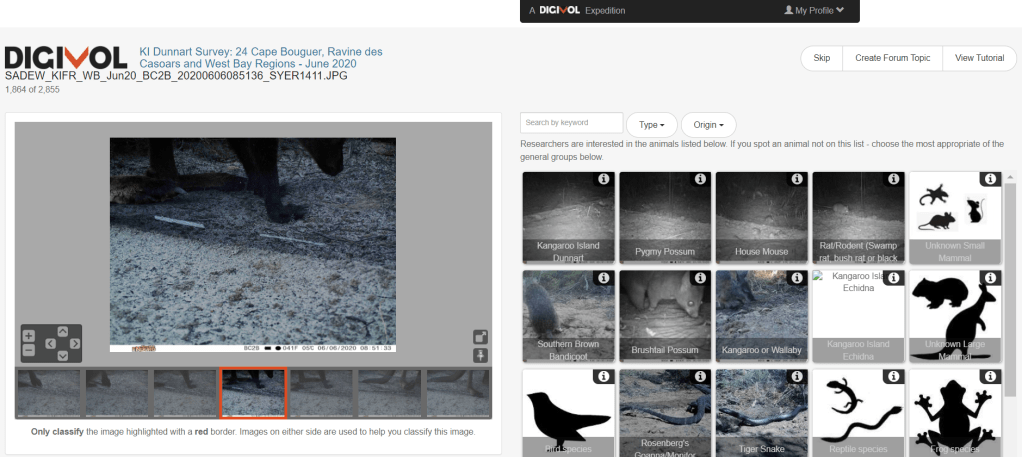
To ease the workload, this data can be uploaded to sites like Digivol to enlist the help of volunteers to transcribe images. For this project there was over three thousand images to transcribe. Below is an example of how this process looks on screen. You are given an image and need to identify the animal; in this case it is a kangaroo or wallaby. Options are also available to skip if you are unsure.

Screen capture of the options available for image transcription

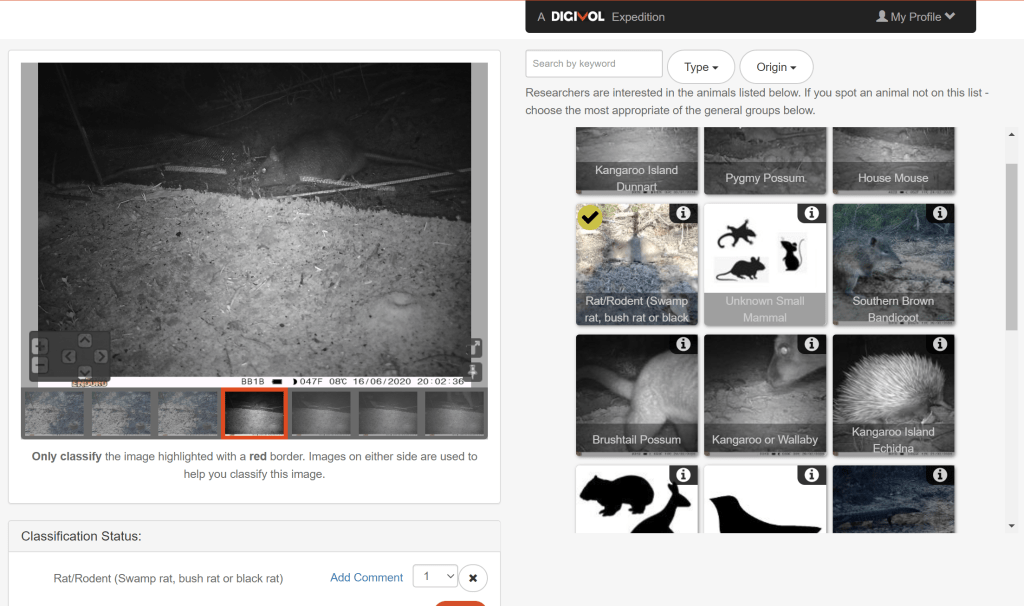
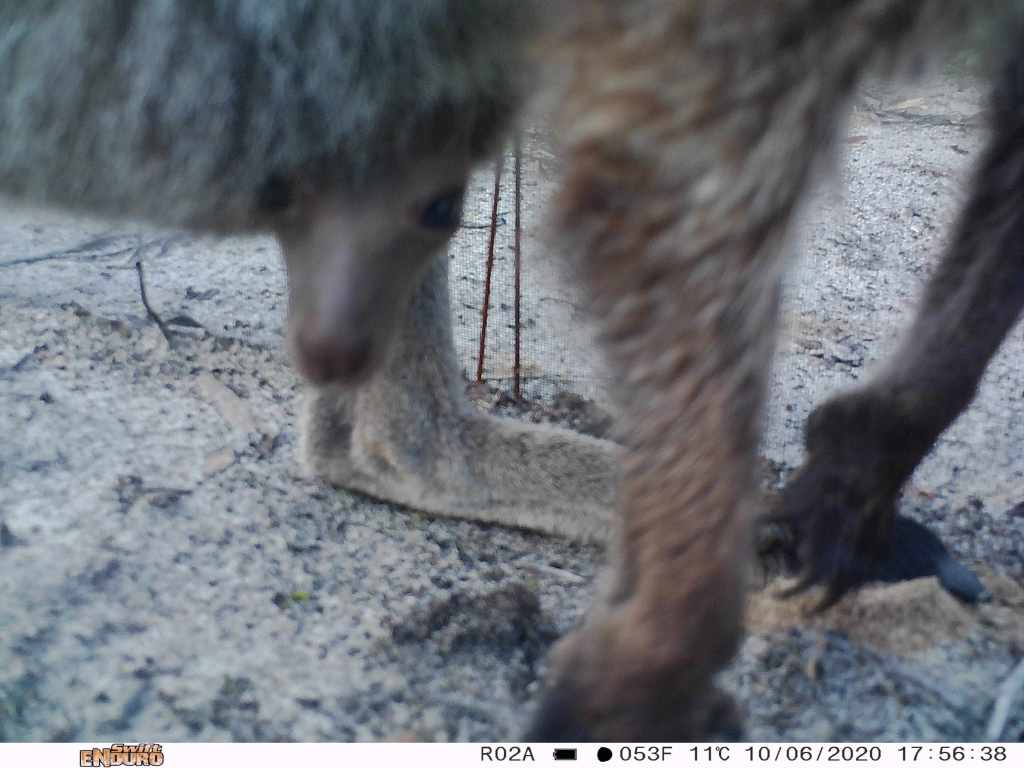
The trouble with camera traps is that quality is not always guaranteed, often images are partial or blurry which can make identification difficult. Although with time and practice these images become easier to decipher, figure 3 provides a good example of this. The project does provide a tutorial on animal identification with reference images to guide you. And Digivol provides the other images in the photo series to better aid in identification.

Out of focus rats

As far as volunteering goes, Digivol provides a meaningful yet obligation free experience to actively contribute to protection of threatened species. You can spend as much or as little time on the site which makes it more accessible to people with busy schedules who would often miss out on such opportunities.

Posted in Uncategorized | Leave a comment

State Significant Development and Biodiversity Conservation in South-Eastern NSW

An interview with Mallory Barnes, Senior Regional Conservation Officer at NSW Department of Planning, Industry and Environment (DPIE), Biodiversity Conservation Division.

By Jessica Noonan, u6280907

In NSW, State Significant Developments (SSDs) such as energy management facilities like wind turbines may impact on important areas of biological diversity. A development proposal is identified as an SSD if it is over a certain size, is in a sensitive environmental area or will exceed a specific capital investment.

In his role at DPIE, Mallory Barnes audits SSD development proposals to ensure the proposals have made every attempt to avoid critical areas of biodiversity and have correctly calculated biodiversity offset credits for residual impacts using the Biodiversity Assessment Method.

Mallory assessing a development site. Source: Mallory Barnes

SSD projects threaten Box-Gum Grassy Woodlands

Box-Gum Grassy Woodland is one the important ecological areas threatened by SSDs that Mallory seeks to protect. Box-Gum Grassy Woodland is listed as critically endangered in Australia and serves as an important habitat for Australian species.

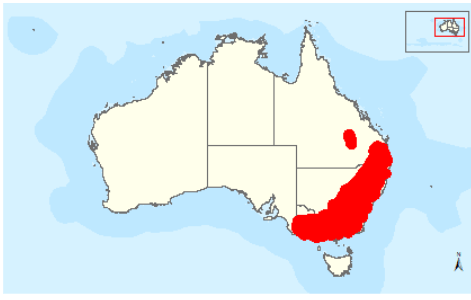
Box-Gum Grassy Woodland is shrinking. Less than 1% of its pre-European range remains.’

Distribution of Box-Gum Grassy Woodland. Source:  Department of Agriculture, Water and Environment.

‘When you get mature Box-Gum Grassy Woodland that has big hollows, those hollow bearing trees support a huge number of species. You can get Powerful owl, Gang Gang cockatoos and Squirrel gliders’

The clearing of Box-Gum Grassy Woodlands for SSD projects destroys the habitats for these species contributing to their endangerment.

Wind turbines as SSDs: hurting or hindering the environment?

Gunning Wind Farm. Source:  Acciona.

A common SSD proposal Mallory assesses is for the development of wind turbines in NSW. Wind turbines are intended to minimise environmental damage by serving as a form of renewable energy to move away from the extraction of fossil fuels. However, wind turbines can have a significant impact on biodiversity on proposals for development must be carefully assessed.

One wind farm has taken out four black falcons in less than 12 months.’

Direct impacts of wind turbines on biodiversity include bird strikes. Indirect impacts on biodiversity include habitat clearing for the establishment of wind turbine farms.

Strategies to prevent biodiversity loss due to SSDs

Under the NSW Biodiversity Conservation Act, the priority for SSD proposals is to avoid impacting on important biodiversity.  If this is impossible, developers must then seek to minimise the impact on biodiversity. Residual impacts on biodiversity that are unavoidable require offsetting.

‘We encourage developers to reduce impacts around important ecological communities like Box-Gum Grassy Woodland and then the last option is offsetting…offsetting incentivises avoidance.’

Box-Gum Grassy Woodland. Source: Local Land Services

Developers generate species credits for impacting on biodiversity and are required to offset residual impacts. This can be highly costly for developers, particularly when SSDs are affecting large areas. Although offsetting should remain a last resort in protecting important sites of ecological biodiversity, they can motivate developers of SSD to prioritise avoiding impacting biodiversity.

Posted in Uncategorized | Leave a comment

Invasive But Native: the paradox of managing native species as weeds.

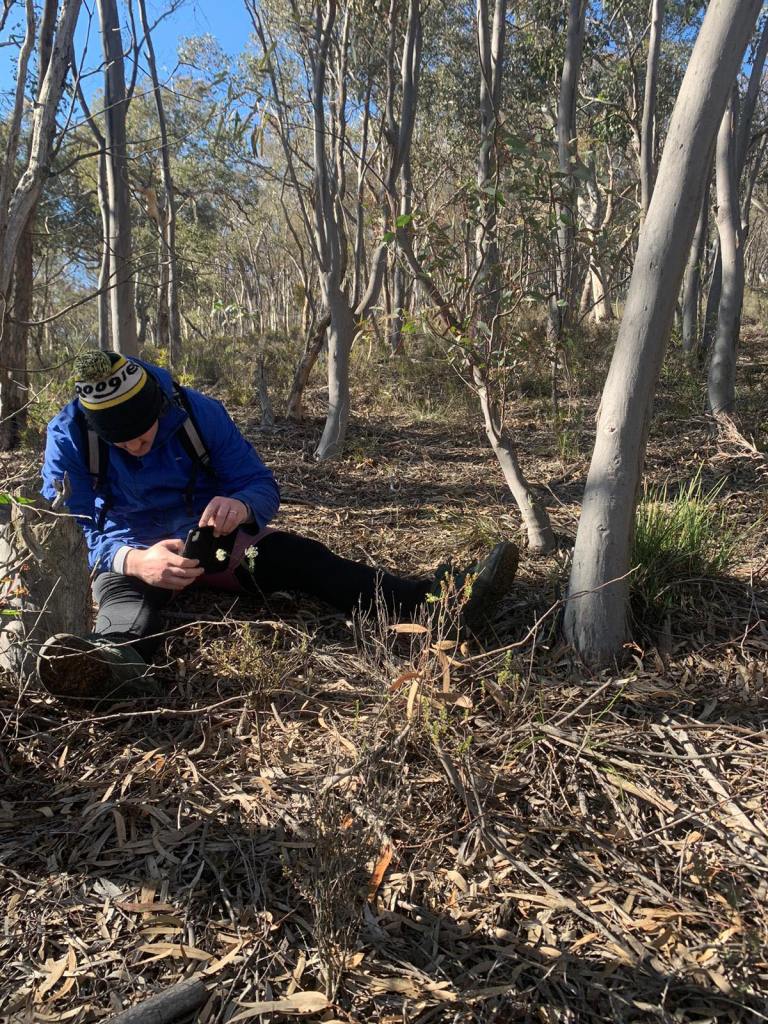
Over 30 years ago the wattle (specifically Acacia pycnantha) was declared the official Australian national floral emblem. With its striking golden flowers peeking through the brown Australian bush, the wattle cemented itself on the Australian coat-of-arms, and on the backs of our greatest athletes. However, there is more to Australian wattle than meets the eye, as I spent one warm August day weeding native Cootamundra and Black wattle from a property out in Murrumbateman, NSW.

The Cootamundra wattle (Acacia baileyana) curse

A. baileyana, or Cootamundra wattle, is an Australian native wattle species with a very limited natural distribution in the Western Slopes region of NSW. However, following its popularity and high cultivation rate, research has shown it has a strong disposition for invading, far beyond its native area, into drier regions with a range of soil types and around 400mm in annual rainfall. This makes the Southern Highlands, Canberra and surrounding areas highly susceptible to invasion by this species.

Image 1: Acacia mearnsii growing in the region surrounding the property. Copyright: V.Schweizer
Image 2: Acacia baileyana growing in the surrounding region. Copyright: V.Schweizer

Cootamundra wattle has a disastrous impact across a range of different landscapes, as the wattle competes with native shrubs and ground flora. This then impedes their regeneration, something becoming more important as changing fire regimes can result in more intense fires and more regeneration occurs. Habitats starts to change as a result.

Furthermore, the situation has become more complex, with research highlighting Cootamundra wattle’s ability to hybridise with at least six other wattle species. This not only has impacts for weed control efforts, but it is beginning to threaten the integrity of native wattle populations by genetic pollution.

In the field

I was lucky enough to be able to join Richard Bland from EnvrioAg, an expert in on-ground land management, for some wattle removal on a private property not far from Murrumbateman NSW. We had two tasks for the day. First, spotting any remaining Cootamundra wattle that had been missed in the weeding work undertaken about a month ago. Richard’s ability to spot them while driving is unmatched, and we would jump out the Hilux to see if they needed to be sprayed again.

Image 3: Acacia baileyana (Cootamundra Wattle) leaves, its main form of identification from the area’s native wattles. Copyright: V.Schweizer

Second, and the main reason for the visit, was removing a large cluster of predominantly dead Black Wattle (A. mearnsii) shrubs that had overgrown the only fire track out of the dense grassy woodland. Moving along the tack, Richard used a chainsaw to cut the shrubs at their base. Leaving the bottom half of the trunk in the landscape, I proceeded to then feed the remainder of the shrubs into the chipper. Clearing about 5 metres either side of the fire track was required to ensure the client has a safe exit out the property. While removing the dead shrubs affects habitats in the area, leaving some of the larger shrubs as logs, and the chipping mulch in the landscape, helps new habitats become established.

Image 4: A. mearnsii, or Black wattle, overgrowing a fire track in a similar area. Copyright: V.Schweizer

Far from over

Richard emphasised to me that their goal is to “work their client out of a job”. However, the reality is there will always be weeds, and with a changing climate, EnviroAg have seen an increase in demand for their services. While we did a solid day of work, this will not be the last native weeding done out on this property, and EnvrioAg will continue to tackle weedy native wattles around this region.

Thank you to Richard and Adrian from EnvrioAg.

u6405043

Posted in Uncategorized | Leave a comment

Kangeroo Island Dunnart Recovery – Citizens help save a species after devastating bushfire season

Rhiannon Smith – u6663951

Kangaroo Island is host to several threatened species, but perhaps none as cute as the Kangaroo Island (KI) Dunnart (Sminthopsis fuliginosus ssp. aitkeni). A citizen science initiative, led by the Kangaroo Island Dunnart Recovery team (henceforth referred to as the team), in partnership with the National Parks and Wildlife Service South Australia, the Atlas of Living Australia and the Australian Museum, is harnessing the power of thousands of curious, dedicated and probably bored minds to help with their recovery.

Endemic to the island, the KI Dunnart is a small, mouse-like marsupial. It is genetically distinct from other Australian species of dunnarts and is the only dunnart species on Kangaroo Island, meaning it has high conservation priority.

Due to extensive land clearing and predation by feral cats the population has been greatly reduced and restricted to the Western part of the island.

Unfortunately, the KI Dunnart is listed on the International Union for Conservation of Nature red list for threatened species as “critically endangered”.

“Critically endangered” indicates that the species has an “extremely high risk of extinction in the wild”.

IUCN

In mid-2019 there were less than 500 individuals surviving in the wild. During the tragic bushfire season of 2019/2020, about 90% of the KI Dunnart’s habitat was burnt.
The team are attempting to determine the post-fire distribution, population numbers of and threats to the KI Dunnart. This information will help to establish the species’ resilience to bushfire and the subsequent effects of fire -including increased predation- which are expected to occur with greater frequency and intensity due to climate change.

Remarkable Rocks Lookout in Kangaroo Island before and after this summer’s bushfires. Copyright: National Parks and Wildlife Service South Australia.

Wildlife cameras have been set up facing “drift fences” to encourage wildlife to walk parallel to the motion-detecting cameras. When they do so, the cameras take a quick series of photos. 56 sites have been surveyed this way, with the cameras left out for 50 days.

During that time, each camera takes thousands of photos. It’s a lot for one team to sift through… So they turned to the masses!

Some photos of the Kangaroo Island Dunnart (and a frog!) taken by the wildlife cameras. Copyright – National Parks and Wildlife Service South Australia.

Now the intrepid citizen scientist isn’t left to frantically google species and memory match on their own. The extremely well composed website provides categories for species, complete with descriptions of how they’ll likely look on camera and sample images for comparison.

A screenshot of the image classification process. Clicking on the “i” on the various categories will bring up examples and a description of the animal/s. Digivol is the program used by Atlas of Living Australia/ The Australian Museum. Copyright: Website- Atlas of Living Australia/ Digivol. Camera Images: National Parks and Wildlife Service South Australia.

But it also isn’t as easy as it might sound… I found it remarkably difficult to distinguish between species of small mammals, such as the KI Dunnart, Pygmy Possum and House Mouse. In my first hour of sifting through photos, I only successfully classified thirty. I was feeling pretty sorry for myself.

Pretty quickly though I settled into a rhythm and achieved a rate of about ninety per hour, whether this was through skill or luck with the randomly selected photos I was assigned is undetermined (but let’s assume it’s the former).

It’s a fun experience, with an addictive quality similar to that of computer games. Funny angles and silly faces periodically left me in hysterics (much to the disdain of my housemates) but the experience was also remarkably eye-opening. I classified far more feral cats than I did small mammals combined and rarely caught a glimpse of the elusive KI Dunnart.

Peekabo! A joey sticks its head out of the pouch, seemingly staring at the camera. Just one of the many photos that made me smile or laugh during the project! Copyright: National Parks and Wildlife Service South Australia.

Who would have thought that sitting on the couch and flicking through some photos could help save a species?

A brief video from mid 2019 about the KI Dunnart and various methods used to detect it. The fourth method mentioned (camera traps with drift fencing) is the method used in the current project. Copyright: Threatened Species Recovery Hub.

Posted in Uncategorized | Tagged , | Leave a comment

Discovering the footprints of the Striped Legless Lizard (SLL)

Zicheng Mai u6682722

Thea O’Loughlin, a field ecologist from ACT Parks and Conservation Service, offered me an opportunity to do the reptile surveys with her at two offset sites: Majura Grasslands and Amtech Grasslands, where they provide native temperate grasslands as rehabilitation habitats. 

Identification: “We” are not the snakes 

The Striped Legless Lizard (Delma impar) outwardly features as a small snake but is a member of the Reptilia family. It is usually grey to light brown above and cream on the ventral surface, with the darker head than the body and a series of light and dark brown longitudinal stripes along the length of the body and tail. The adult SLL can grow up to 300mm long and is slightly thicker than a pencil. It is fed by sedentary arthropod prey, especially cockroaches, spiders, moth and field crickets.

Figure 1. Example of Striped Legless Lizard (O’Loughlin, n.d.)

Threats: “We” flee from home

The species is listed as vulnerable under the EPBC Act. They are mainly threatened by habitat fragmentation which is due to habitat overgrazing, ploughing, weed invasion and urban development. Meanwhile, the overpopulation of kangaroos lowers the grass height and reduces the vegetation cover. They do not have a specific natural enemy but predation from feral foxes and feral cats are likely to be a minor threat. 

Figure 2. A large area of weeds (i.e. grass sprayed in pink)

Offset sites: where did you find “us”

In the ACT, SLL distributes in Gungahlin, Yarramundi Reach, Majura Valley and the Jerrabomberra Valley. The daily surveys for SLL will commence in September and run through till mid-November on non-rainy days above 15 degrees, as the species is surface active during the day from early spring to late autumn. The SLL is known to inhabit lowland native temperate grasslands and they mostly are found under rocks, soil cracks or in the base of tussocks. Thus, all offset sites are required to have a grassy ground cover. 

Monitoring methods: providing help for “refugees

In line with the size of the reserved grasslands, there are a different number of clusters of roof tiles settled at different locations of the grassland to investigate their preferable habitat, also provide them with shelters and food source. We spent a day lifting the tiles and recording the demographic information of any reptile found, including abundance, tile number, species name, presence (i.e. living, deceased or skin), age, tail lost (i.e. yes or no) and sex if possible. The weather and humidity were recorded as well at every location in order to maintain the consistency of the surveys. According to Thea, the population monitoring process will undertake 5-6 times in a month through the season.

Findings

Unfortunately, nothing had been discovered in the morning at Majura grasslands even though there were 15 clusters of tiles laid out. However, we got the luck at Amtech that one grey skink (Menetia greyii) and three delicate skinks (Lampropholis delicata) were found under tiles. 

Figure 3. Delicate skink found under tile

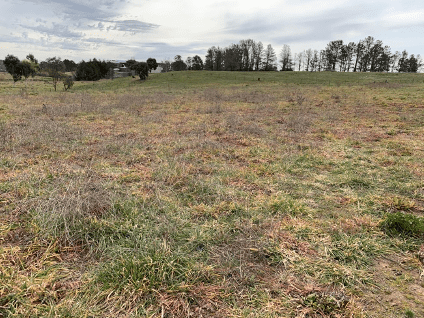
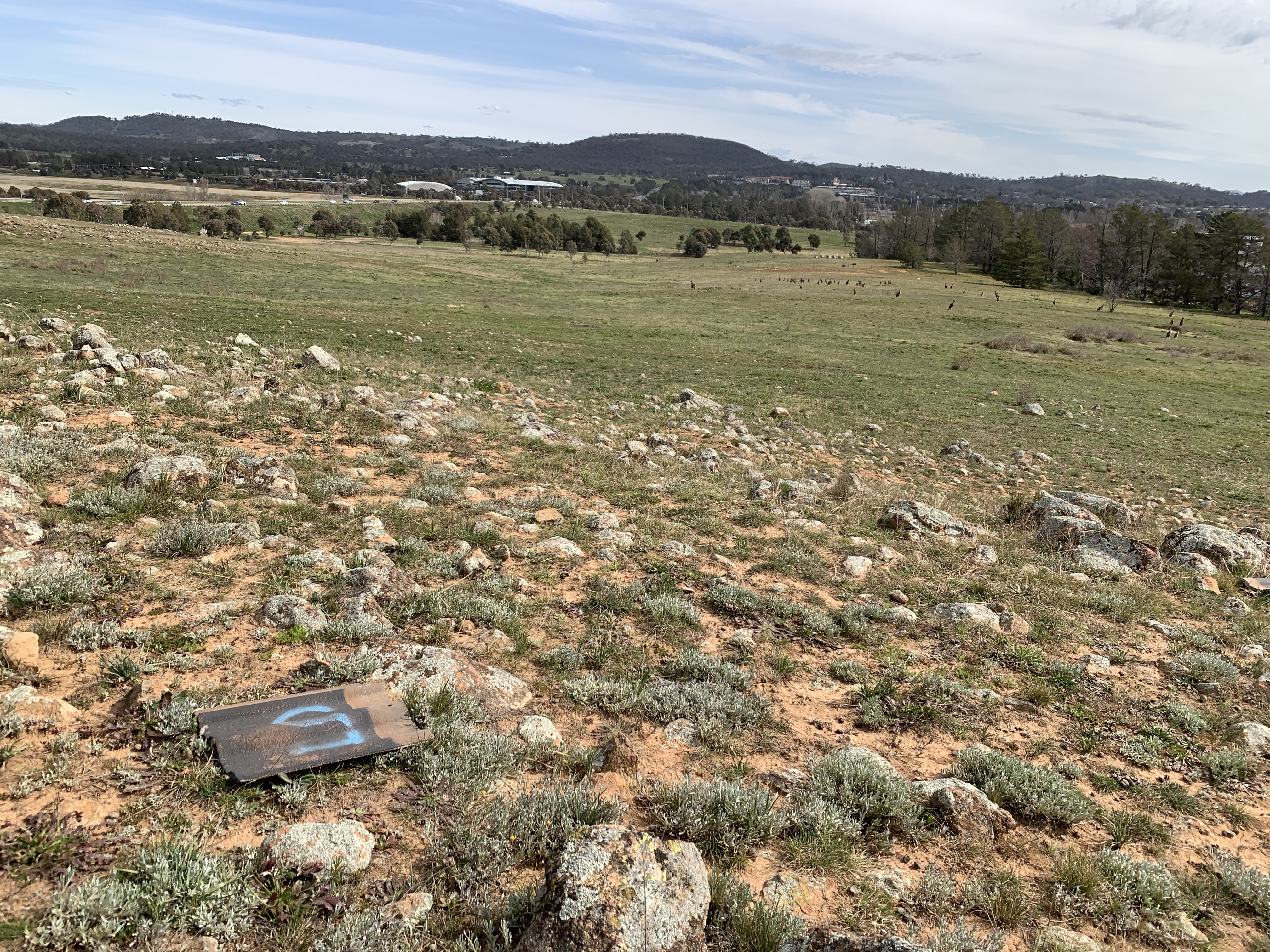
Compared to the quality between two offset sites, the latter one consists of higher grass height and higher density of rock cover considering as high-quality habitat for survival. Based on Thea and her colleagues’ study on SLL, the best grass height is 10-20 cm to provide protection and rock coverage fosters more chances for discovering their footprints. 

Figure 4. Majura Grasslands vs. Amtech Grasslands

Summary

The Delma impar is a cryptic creature rarely discovered in the ACT region. Giving opportunities for volunteering is to trigger people’s awareness and to get involved in the environmental management process. With the major threat of habitat loss, the conservation team planned and set up the offset sites in order to retain the current population while restoring appropriate habitats for them, and therefore lessens the risk of extinction.

P.S. If you see a roof tile in native grasslands please do not disturb and know it is part of the survey.

Posted in Uncategorized | Leave a comment

Keeping the Superb Parrot fed in the Riverina

Joe Skuse – U6376824

On the 6th of July I made the 5 hour drive from Greening Australia’s Aranda office out to the Riverina. We were headed for a sand mine 30 km north of Coleambally. When we got there, we stopped to appreciate the big Schooner.

We came all this way to establish food sources for the Superb Parrot (polytelis swainsonii) which is listed as a Vulnerable species in NSW and Federally. This is primarily driven by habitat loss.

The Superb Parrot nests in the hollows of large eucalypts along riverbanks, in our case, the mighty Murrumbidgee. These little champions don’t like to venture far from home when foraging for food, opting to forage within a 10 km radius of their nest.

Habitat Loss

The pressures of land clearing have dramatically reduced the food sources available to this little bird. Much of the native vegetation that was home to the native seeds, flowers and fruits that keep the Superb Parrot fed have been cleared away and replaced with irrigated pasture, rice and more recently, cotton crops. Furthermore, native cypress in the area has long been overharvested for its timber, accelerating habitat loss in the region.

Native vegetation is relictual and concentrated on the river banks.

The Site

Our office for the week was a newly operational sand mine. As part of the mine’s DA, a stand of trees had to be planted along the road to reduce the aesthetic impact of the development. To pay for this, mine site operators opted to apply for a grant offered under the Restoring Superb Parrot Flyways project run by the NSW Government through its Environmental Trust.

Our Job

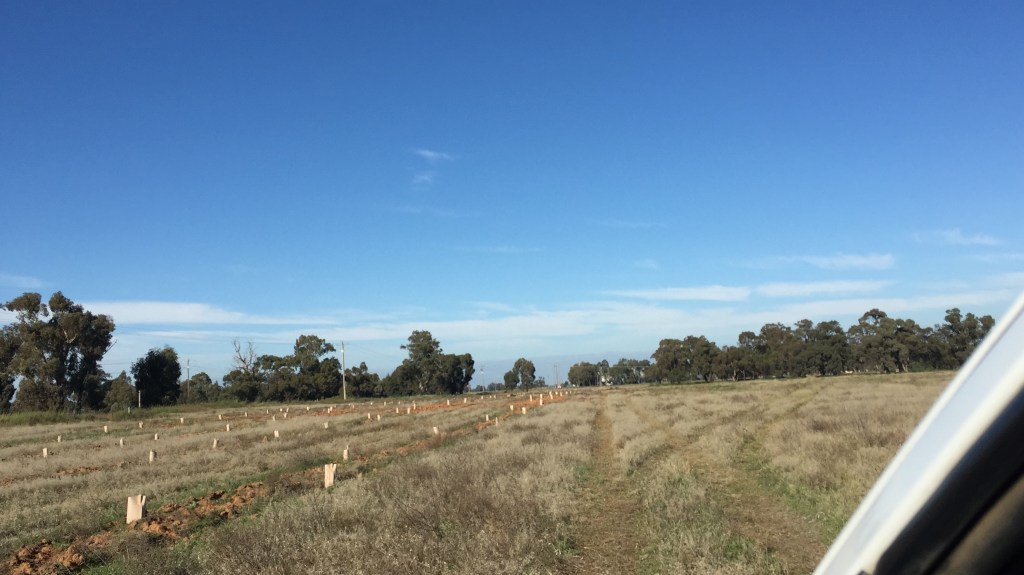
Our job was to plant and direct seed along the perimeter of the mine’s paddock.

We were to plant 3000 tubestock trees and shrubs. Species included Cypress Pine, Red River Gum, Apple Box, Silver Wattle, Gold-dust Wattle and Deane’s Wattle. This work was a repetitive process of digging, planting, guarding and watering which took the better part of 7 days. These days were long and physical days but a sunset view of the big schooner made it all worthwhile. I was a little disheartened when i heard that all of our work was simply a ‘back up’ in the event that the direct seeding did not work.

“The beauty of direct seeding is that it’s cheap. If it doesn’t work the first season, you can come back season after season after season and it’ll still be cheaper than paying you lot for the week”

Ben Hanrahan – Project Lead

I was fortunate enough to return in the coming weeks to help in the direct seeding of the paddock. Direct seeding is a pretty simple process of towing a small machine behind a 4×4. The machine (amazingly called a direct seeder) uses a plough disc to cut grass and vegetation away, exposing bare soil. Seeds (in this case a mix of acacias) are dropped into the cut and covered by a thin layer of soil. We were also spraying roundup over the cut lines to kill of other vegetation and maximise water availability for the seeds when they germinate in the spring.

What a great couple of weeks. I’m really looking forward to heading out there in years to come and seeing the transformation in the landscape.

References

https://www.lls.nsw.gov.au/regions/murray/grants-and-funding/restoring-superb-parrot-flyways

https://www.sciencedirect.com/science/article/pii/S0006320704001132

https://www.environment.nsw.gov.au/threatenedspeciesapp/profile.aspx?id=10645

https://www.colyirr.com.au/our-story

Posted in Uncategorized | Leave a comment

Agroecology- Biodiversity above and below the ground

An interview with Kirsty Yeates.

Paris Capell u6939944

Biodiversity conservation is often managed through national parks and protected areas. However, as 58% of Australia’s landscape is managed for agricultural purpose through private landholders, how can we conserve biodiversity in the face of monocultural and intensive farming systems?

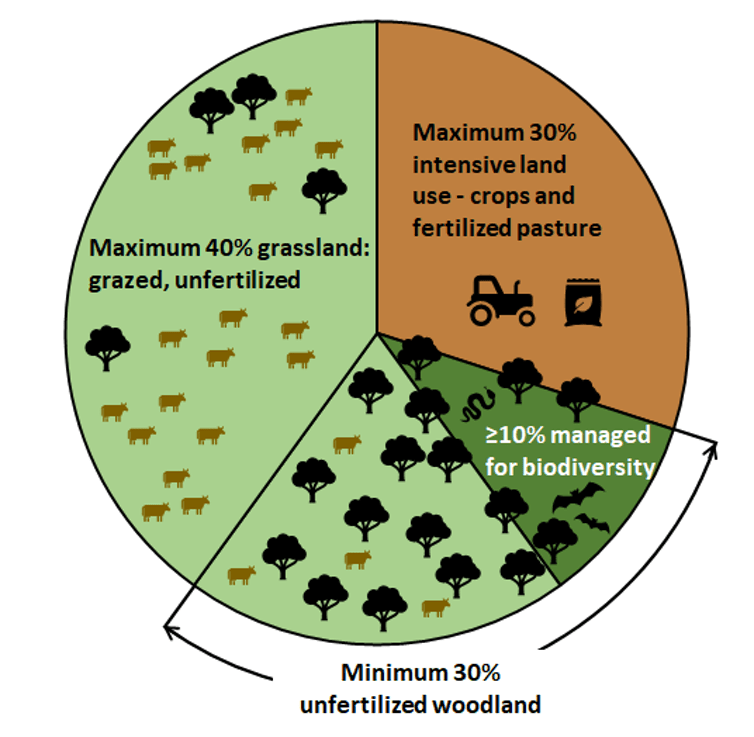
How to sustain production, natural resources and native flora and fauna on a landscape or farm. Source: Sue McIntyre

Regenerative agriculture: moving away from the farm system- natural system dichotomy

Regenerative agriculture (affectionately known as regen ag) is forecasted as the new paradigm shift for Australia’s conventionally farmed landscape. It aims to create a biodiverse and functioning ecosystem which also produces food and fiber. Kirsty Yeates is an agroecologist from ANU, working in a field of emerging importance when viewing biodiversity and agricultural land holders.

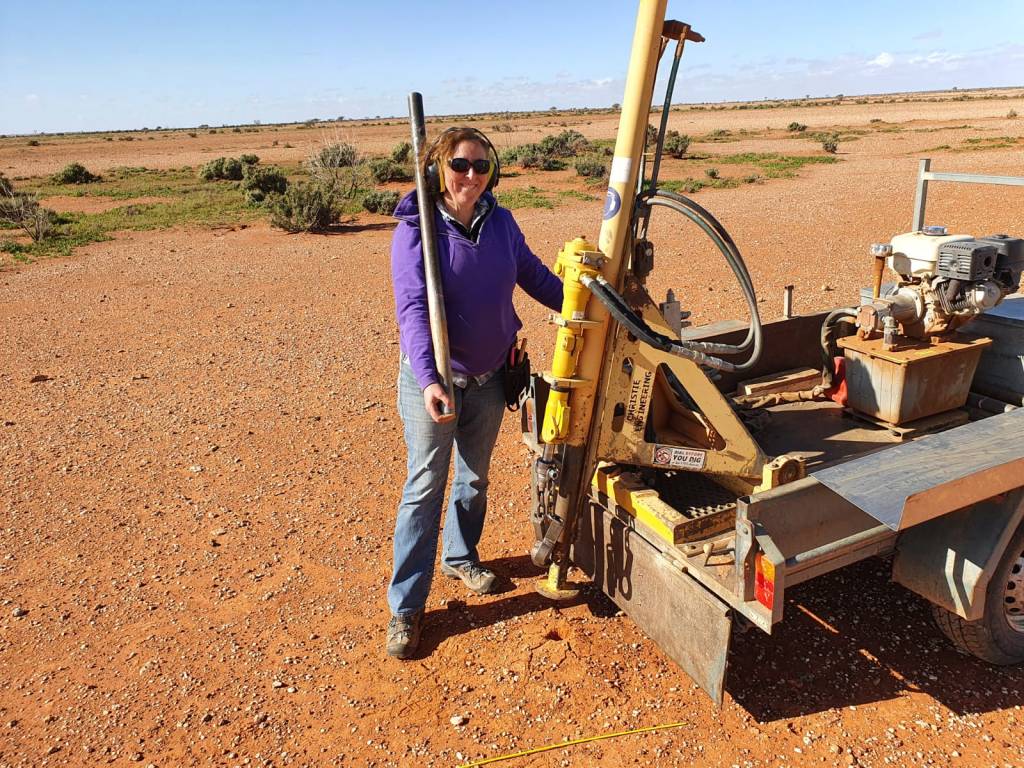
Kirsty Yeates taking soil cores at Katalpa Station. Source: Kirsty Yeates

“For me agroecology is about understanding how the natural ecosystems work and then thinking how do we incorporate those natural processes and functions into a farming production system.”

Agroecology moves away from viewing conservation and farming as two separate entities, but rather integrating them to create better outcomes for both.

“I think one of the ways we’ve often thought about biodiversity conservation is what is already there, instead of reversing loss. Traditionally its either you can have a farm system or you can have a natural ecosystem. We can integrate both.”

Increased regen ag practices on private land not only has positive biodiversity outcomes, but it also increases the resilience and profitability of their system due to low inputs and increased productivity. For private landholders Kirsty believes:

“There are two elements to biodiversity- how do I have a more diverse system but also how can I integrate conservation outcomes into my system and there is some fantastic work from CSIRO and Sustainable farms who are looking at that innovation side.”

Biodiversity above and below the ground

While biodiversity is usually associated with above ground organisms, viewing farming systems through an agroecological lens highlights a key finding:

“We have to create more complex farm systems that can cope with and support a broader range of organisms so whether that’s birds or soil critters. For me I think the biggest gain are around soil biota, I think its important to recognize how much diversity is there.”

Kirsty uses a systems approach when viewing agricultural landscapes, and highlights that the biodiversity of soil microbes, fungi, earthworms and other organisms is intrinsically tied to nutrient and water cycling and is therefore the foundation for supporting more organisms above ground and increasing biodiversity.

“As farm systems increase their capacity for primary productivity over time, I think there is opportunity to increase the range of biodiversity.”

A diagram highlighting the impact of landuse management on soil biodiversity. Source: Wall et. al., 2015

Katalpa Station: A Case Study

First hand, Kirsty is witnessing the change in mindset of private landholders . In the last few weeks she visted Katalpa Station in the Rangelands of NSW.

“I had the opportunity to go out with NSW DPI with a group of sol scientists and pasture ecologists out to these farms in the rangelands where they are doing a program called selecting for carbon. Its about understanding how their approaches to landscape management are changing the amount of carbon in the system and how that’s contributing other benefits like increased biodiversity.”

“Katalpa was really interesting to see the emphasis on rehabilitating the landscape and seeing these spots of incredible diversity was great.” Source: Kirsty Yeates

Kirsty summarises the relationship between regen ag and biodiversity:

“I think that regen ag potentially offers more opportunity to have a broader range of functions within a particular land unit which is being used for producing food and fiber, and I think we need to do more work in how we can make sure we get really positive biodiversity outcomes that align with conservation outcomes.”

Watch this video from Western Local Land Services to learn more about the change in practices on Katalpa Station.

Posted in Uncategorized | Leave a comment