Many hands make light works: A joint effort of citizens and researchers for the recovery of the Mountain Pygmy Possum after the bushfire in 2019-2020

By u6361378–Haoyue Liu

The Mountain Pygmy-possum (Burramys parvus) is a mouse-sized and nocturnal marsupial that only endemic in the alpine and subalpine regions of eastern Australia. However, this species has a tiny population around 2405 adult in the wild, it is facing some key threats such as habitat fragmentation,  predation from fox and feral cats as well as fire regimes. The species is listed as Critical Endangered on the 2008 IUCN Red List with a decreasing population trend. The conservation status of the species is also listed as Endangered under New South Wales Threatened Conservation Act 1995.
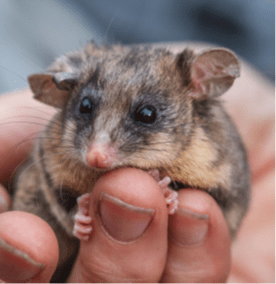
The Mountain Pygmy-possum (Burramys parvus). Photo by Alex Pike/ DPIE via Atlas of Living Australia:
https://volunteer.ala.org.au/project/index/138300908

Recovering the Mountain Pygmy-possums in NSW

As one of the smallest Australian possums, the Mountain Pygmy-possum mainly occurs in three geographical regions: Kosciuszko Nation Park in NSW, Mt Bogong-Mt Higginbotham, and Mt Buller in Victoria. In NSW, the local population is relatively small, each subpopulation of this species is geographically isolated since they are separated by the habitats in lower elevated valleys. This decreases the probability of small patches recolonization and increases the loss of genetic diversity given a small population dynamics.
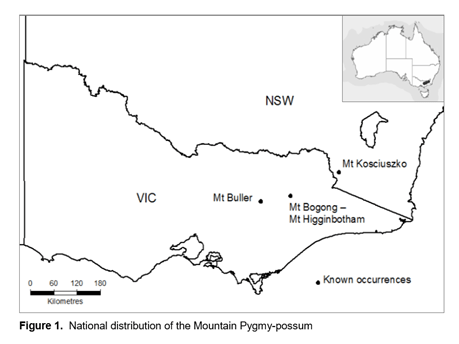
The national geographical distribution of the Mountain Pygmy-possum, coved in the National Recovery Plan for the Mountain Pygmy-possum. Copyright: Department of Environment, Land, Water and Planning.

NSW Government commenced a Mountain Pygmy-possum Management Strategy under the Saving our Species Program in 2016. With the collaboration of Kosciuszko National Park and Atlas of Living Australia (ALA), this program monitor species abundance and natural conditions of the sites regularly, aiming at managing critical threats in the Kosciuszko sites and maintaining local populations to conserve the species in long term.

The collaboration of citizen science after the fires

The bushfires in early January of 2020 severely impact the flora and fauna in the Kosciuszko region, this not only wiped out the shrub cover in the surrounding habitat of the possums but also diminished all the food source in the Park including mountain plum-pine and seeds.

After the fires, researchers of the program provide emergency or supplementary food resources by installing feeders, providing “Bogong biscuits” and water until the vegetation structure is restored.
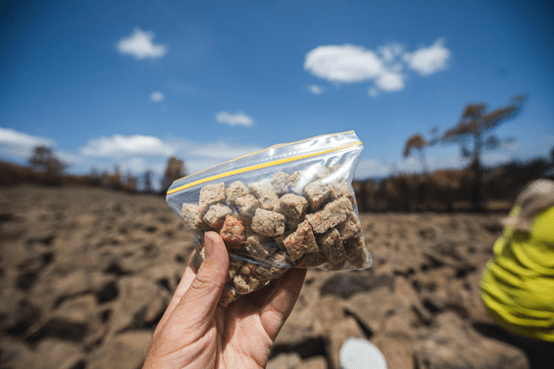
Bogong biscuits: a mixture of nuts and worms to imitate the nutritional value of Bogong moths, one of the main food sources of the Mountain Pygmy-possums. Copyright: The Sydney Morning Herald.
https://www.smh.com.au/environment/conservation/after-the-firestorm-hopes-rise-for-mountain-pygmy-possum-s-revival-20200212-p53zzi.html

The program collaborates with the citizen scientists from the ALA online volunteering program (Digvol) by transcribing species data from the camera trap to monitor species recovery stage, aiming to analyze critical threats this species faces after the devestating fires.

Online volunteer experiences

Being an online volunteer on the ALA is a unique experience to me since It provides me opportunities to participate in biodiversity conservation program under a flexible arrangement of time.
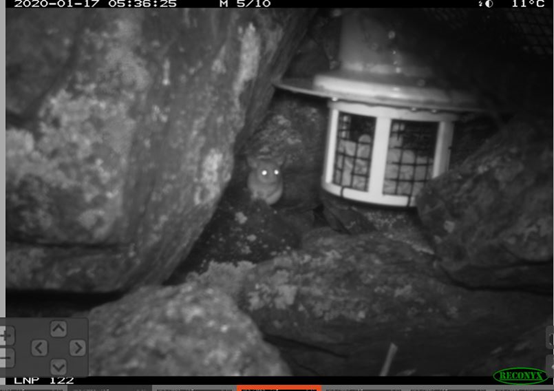
A photo of the Moutain Pygmy-possum collected from the species identification program. Copyright: Atlas of Living Australia. Image: Saving our Species Program, NSW Government.

After familiarizing the species identification procedures, I noticed some interesting observations based on the identification experience from the past weeks. For example, when animals find food, the Mountain Pygmy-possums are more likely to hang upside down on the feeder use using its tail while the Bushrat (Rattus fuscipes) usually sniff around the feeder. The Mountain Pygmy-possums were often captured with images of coming in and out of their nest while the Bushrat often moves around the nest.
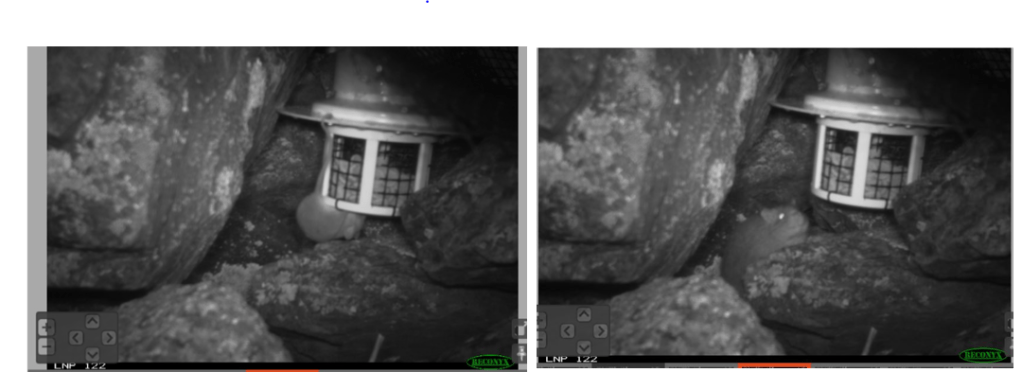
A group of photos captured from the voluteer program.  The left image is a Mountain-Pygmy possum that hanging upside down to get food from the feeder. The right image is a Bushrat moving around the nest. Copyright: Digvol- Altas of Living Australia. Image: Saving our Species Program, NSW Government.

A single personal contribution might be limited, but the collective cooperation of people from both scientific and non-scientific background create a joint force that contributes to the recovery of Mountain Pygmy-possum from the bushfire.

References:

https://dx.doi.org/10.2305/IUCN.UK.2008.RLTS.T3339A9775825.en.

https://volunteer.ala.org.au/forum/projectForum?projectId=138300908

https://www.environment.gov.au/biodiversity/threatened/recovery-plans/mountain-pygmy-possum

https://www.environment.nsw.gov.au/topics/animals-and-plants/threatened-species/saving-our-species-program

https://www.legislation.nsw.gov.au/view/html/inforce/current/act-1995-101

https://www.smh.com.au/environment/conservation/after-the-firestorm-hopes-rise-for-mountain-pygmy-possum-s-revival-20200212-p53zzi.html

Posted in Uncategorized | Leave a comment

Conserving the Seeds of Tomorrow: Working at the National Botanic Gardens Seed Bank

By Heidi Birkby, u6671871

For the past three weeks I have been fortunate to complete work experience with the National Botanic Gardens National Seed Bank. Nestled in amongst the beautiful gardens, the seed bank is a wealth of history, knowledge, and potential for future flora conservation efforts.

From Little Things, Big Things Grow.

Seed storage is an invaluable and crucial component of biodiversity conservation. Seeds are a convenient and efficient method of storing genetic diversity, that can be kept viable with low maintenance. Seed conservation can be an effective means to counter extinction, and assist with the restoration of habitats.  Furthermore, the National Seed Bank provides invaluable research on the ecology, and biology of seed production in Australian native species alongside conducting research on effective seed conservation mechanisms.

Figure 1: Pristine environment of the National Botanic Gardens.

Seed Conservation in the Heart of the Capital

The National Seed Bank at the Australian National Gardens is home to an extensive collection of native Australian Seeds. The National Seed Bank is working to expand knowledge on collecting, processing, storing and successfully germinating seeds to best contribute to biodiversity conservation. Furthermore, the National Seed Bank has prioritised the collection and storage of endemic flora to subalpine and alpine regions including Kosciuszko National Park. This is critical, as climate change is considered as a key threat to biodiversity conservation in alpine regions. Seeds are collected from various sources including locally from the National Botanic Gardens, from the wild, and through germination at the National Seed Bank. The National Seed Bank works on a variety of projects including Alpine research, Grassy Woodland research in the ACT (a significantly threatened ecosystem), endangered alpine bogs, rare and threatened species in the ACT, and restoration in Christmas Island and Norfolk Island.

Sowing a Seed of Hope

My time with the National Seed Bank has been extremely interesting and meaningful and has provided me with a more positive outlook on the role of volunteers in conservation. During my work experience, I undertook a range of tasks including the cleaning and sorting of seed collections, imaging of seeds using x-ray technology, and microscopic analysis. It has been inspiring to work with such small specimens that have a huge potential in conservation research. Furthermore, I have really learnt the value of volunteer work in biodiversity conservation. The National Seed Bank also has a bank of volunteers that work tirelessly on behind-the-scenes activities that are integral to the success of the National Seed Bank. It is true that channelling ‘eco-anxiety’ into meaningful actions- no matter how small- can help you feel less hopeless in the face of environmental uncertainty. That being said, my experience has also been eye-opening in the sense that organisations such as the National Seed Bank could achieve so much more with increased allocation of resources and funding.

Figure 2. Example of x-ray seed imaging used to determine the viability of seeds for germination.

In conclusion, completing work experience at the National Seed Bank has taught me far more than the conservation of seeds. It has shown me the limitless passion and commitment of those working in the field, alongside those volunteering. While seeds may be small, they are mighty and the potential of conservation avenues such as the National Seed Bank to address and combat biodiversity loss is invaluable.

References

Seed Ecology. 2020. Government of South Australia: Department for Environment and Water. Available from: https://www.environment.sa.gov.au/topics/Science/Science_research/ecological-processes/seed-ecology (Accessed 22.9.20)

South Australian Seed Conservation Centre. 2020. Botanic Gardens of South Australia. Available from: https://www.botanicgardens.sa.gov.au/science-conservation/seed-conservation-centre (Accessed 22.9.20)The National Seed Bank. 2020. Australian National Botanic Gardens. Available from

The National Seed Bank. 2020. Australian National Botanic Gardens. Available from http://www.anbg.gov.au/gardens/living/seedbank/index.html (Accessed 22.9.20)

Wyborn, C. 2012. Managing change or changing management: climate change and human use in Kosciuszko National park. Australasian Journal of Environmental Management 16(4): 208-217.

Posted in Uncategorized | Leave a comment

Working for Superb Parrot Research study

By u6093684

In the past few weeks, I joined an online volunteer program on DigiVol. DigiVol is a crowdsourcing platform developed by the Australian Museum in collaboration with the Atlas of Living Australia (ALA) and used as a way of transcribing and digitizing the data in various forms like field notebooks, registers and photographs.[1] It is quite simple to participate on DigiVol as a citizen scientist, you will have to register first and then join expeditions in the list and complete tasks as required. What I did is image classification as below. I did them in separate times over the past two weeks, which is an advantage of being an online volunteer as you do not necessarily need to finish the work intensively. I completed 254 tasks of images identifying in total until now but that’ll not be the end.

A screenshot of a task in Superb Parrot Research study
https://volunteer.ala.org.au/transcribe/task/136076281

Superb Parrot Research study

The project that I participated involves detailed monitoring of superb parrot (Polytelis swainsonii) nests located in ACT called the Superb Parrot Research study. The research aims to track the breeding success and nest hollow competition of superb parrots in the ACT.[2]

Background about Superb Parrots

The superb parrot is an Australian woodland endemic bird currently listed as Vulnerable in NSW and nationally. It is threatened by climate change and the ongoing loss of critical breeding habitat, specifically large hollow-bearing trees that they need for nesting.[3] As we discussed in the workshop, the superb parrot nests in very old hollow-bearing trees and the threats for them include clearing of old paddock trees due to agriculture and urban development and competition for hollows by introduced species like European starling. More than 90% of their habitat (e.g. Box Gum Woodland) is cleared and habitat loss associated with habitat fragmentation is considered as the biggest threat to biodiversity in Australia. Furthermore, there are many impacts of climate change on superb parrots. For example, the core geographic range of superb parrots will shift south-eastward concentrating the population over the ACT and areas to the immediate north in response to changing climate.[4]

A photo of a superb parrot.
https://images.app.goo.gl/a4wZJk8vq94NmbGG7

Results from the Superb Parrot Research

I have spoken to Michael Mulvaney who is working for the Superb Parrot Research about the details of tracking the breeding success and some results of nest hollow competition of superb parrots. According to Michael Mulvaney, the research is showing that the size of the hollow entrance is important and with too large hollows being more prone to predation. The superb parrot breeding population under study appears to be steady, showing the need to undertake management actions. For instance, designing covers with the ideal hollow entrance dimensions and future management of hollow competitors. 

A photo of two Superb parrots and one crimson rosella (Platycercus elegans) taken by the Superb Parrot Research study.
https://volunteer.ala.org.au///data/volunteer//tutorials/SUPERB%20PARROTS%20IN%20THE%20ACT.pdf

Being a Citizen Scientist

For my online working experience on DigiVol, I personally think it was a great experience because firstly I can identify lots of species especially birds now, and also I got a deeper understanding of the threats with possible recovery actions for superb parrots. DigiVol is a perfect online platform as citizen sciences for people who are looking for volunteering opportunities but unable to travel to participate in person because you can complete the volunteering anywhere and at any time with only a computer with available internet. Being a citizen scientist is wonderful as you can help researchers to sort through hundreds of thousands of camera images to obtain detailed information and better understand the conditions of threatened species and be part of an active community that supports and contributes to science and culture,[5] at the same time enrich your own knowledge about biodiversity conservation.

https://images.app.goo.gl/eY4Lun5Xh59mEg7o6


References

[1] https://digivol.ala.org.au/about/index

[2] https://volunteer.ala.org.au/project/index/136067367

[3] https://volunteer.ala.org.au/project/index/136067367

[4]https://www.environment.act.gov.au/cpr/conservation_and_ecological_communities/threatened_species_factsheets/factsheets2/superb-parrot-polytelis-swainsonii

[5] https://volunteer.ala.org.au


Posted in Uncategorized | Leave a comment

Why I spent my weekends planting grass: the importance of volunteer labour in conservation

Author: Niam Foxcroft, u6384642.

Over the past few weekends, I have had the pleasure of planting a range of grasses with the Friends of Aranda Bushlands (FoAB) and Friends of the Grasslands (FoG) at the Aranda Bushland and Stirling Park sites. These groups run monthly planting events to facilitate the restoration of the box-gum grassy woodlands in the ACT – a critically endangered, native ecosystem with just 5% of its original distribution remaining across Australia.

However, having now spent 3 years in an environmental science degree, I became cynical that my volunteering was impactful or mattered in the long-term. Individual species survival rates can vary depending on site, species and skill as well the level of browsing and weed control present on site. Perhaps as reader or first-time volunteer, you feel held back in the same way I am. So, let’s talk about volunteer labour in conservation.

Figure 1. Aranda Bushland, a site that relies on volunteer labour for ecological maintenance. Source: Friends of Aranda Bushland.

Just volunteering is not enough.

While it may provide a glimmer of hope, it is important to recognise that individual volunteering on its own is not enough to undo the decline of biodiversity that is being observed globally. National level policy responses have either fallen short or been slow to implement, meaning that we currently only protect 15% of terrestrial and freshwater environments and 7% of marine environments (IPBES, C1), falling short of the 2020 goal of 17% and 10% respectively. The areas that are protected are not believed to be ‘ecologically representative’, meaning that they do not properly represent the species, communities and ecosystems that are the most threatened.

Just doing nothing is not enough.

Given that it is humanity that is driving the decline of global biodiversity (IPBES, A4 & A5), it is essential that we take some form of action to prevent it. If volunteering your labour seemingly does nothing at the national or global level, then perhaps consider it at the local level instead. In recent years, volunteers have been essential in monitoring endangered species given the cutting of staff in federal environmental conservation positions. And now with the emergence of crowdfunding, more conservation projects are getting the financial support they need. But to truly reverse the damage humans have on biodiversity, more needs to be done.

“Nature is essential for human existence and good quality of life. Most of nature’s contributions to people are not fully replaceable, and some are irreplaceable.”

IPBES, The Global Assessment Report on Biodiversity and Ecosystem Services: Summary for Policymakers (A1).

Going further than volunteering: transformative change.

Transformative change is recognised as the main way in which biodiversity decline can be reversed (IPBES, D1-10). Taking note from the late Ruth Bader Ginsburg, impactful change is a step-by-step process.

“Real change, enduring change, happens one step at a time.”

Ruth Bader Ginsburg.

A good place to start would be with the Aichi Biodiversity Targets. Target 1 asks people to be “aware of the values of biodiversity” and Target 4 requires “stakeholders at all levels to have taken steps to achieve… sustainable production”. Start that step-by-step change by learning more about biodiversity value and ask your local member or an industry representative how they intend to achieve sustainable production.

Why was I planting grass on the weekend? It was not an attempt to single-handedly reverse climate change, but rather because I was taking the first steps towards transformative change for the planet.

Acknowledgements

Thankyou to FoAB and FoG for having me. Please see their websites below for ways to get involved:

Friends of Aranda Bushlands

Friends of the Grasslands

Word count: 499 excl. quote blocks & figure captions

Posted in Uncategorized | Leave a comment

Striped Legless Lizard Monitoring and Conservation Efforts With the ACT Government

 A Diary of the Experience

By Tan Jin Heng u6164329

My experience involved following Thea O Loughlin, a field ecologist in environmental offsets of the Parks and Conservation Service of the ACT Government. We examined the Striped Legless Lizard in our travels and it was an enjoyable and very enriching learning experience of Canberra’s environment and biodiversity.

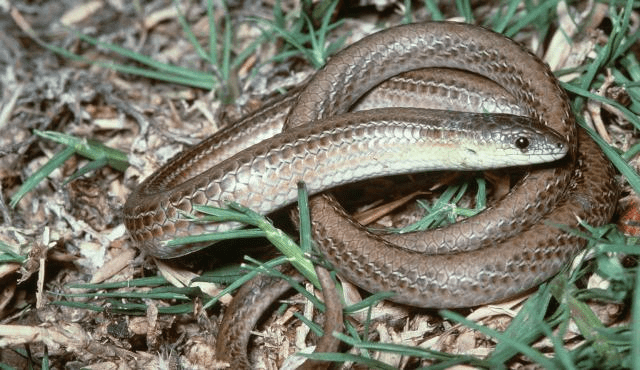
A picture of how the Striped Legless Lizard looks like. Source: Museums Victoria Collections https://collections.museumsvictoria.com.au/species/8389

Background of the Delma Impar

The Striped Legless Lizard, also known as Delma Impar, is designated as a vulnerable species in the ACT in 1996 and has special protection status. It is listed as vulnerable internationally and nationally and in New South Wales (NSW), and threatened in Victoria. In addition, the species was previously ubiquitous throughout south-eastern Australia wherever native grassland was present. The lizard is usually less than 300 millimeters long and weighs 3-4 grams. A pattern of alternate black and white stripes that run through the length of the body. It likes to live in naturally treeless grassland dominated by medium height tussock grasses and areas of taller grasses and in degraded grasslands dominated by exotic species.

Distribution map of the species Delma Impar. Source: Australian Government
http://www.environment.gov.au/cgi-bin/sprat/public/publicspecies.pl?taxon_id=1649

The species is threatened by loss and fragmentation of habitat due to human development, modification and degradation of grassland such as through weed invasion and overgrazing; predation by domestic, wild and native animals and environmental stochasticity such as drought and climate change.

Volunteering Experience

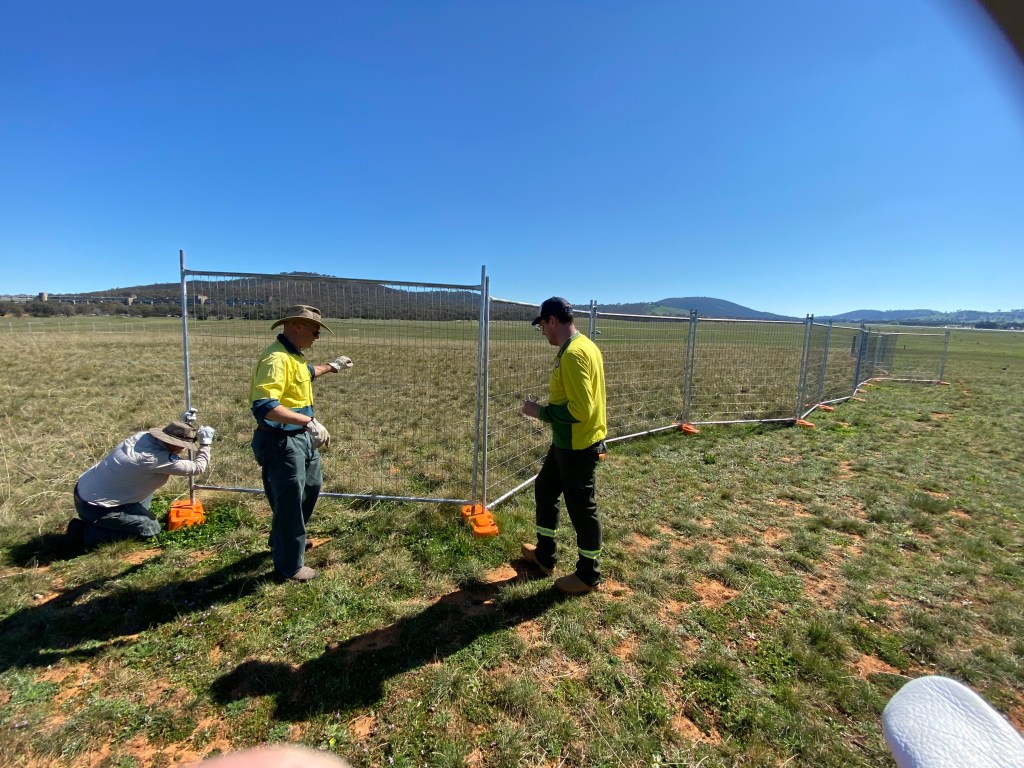
A picture taken from my mobile phone of the team setting up fences to demarcate the boundary between the low quality grassland and the taller grass.

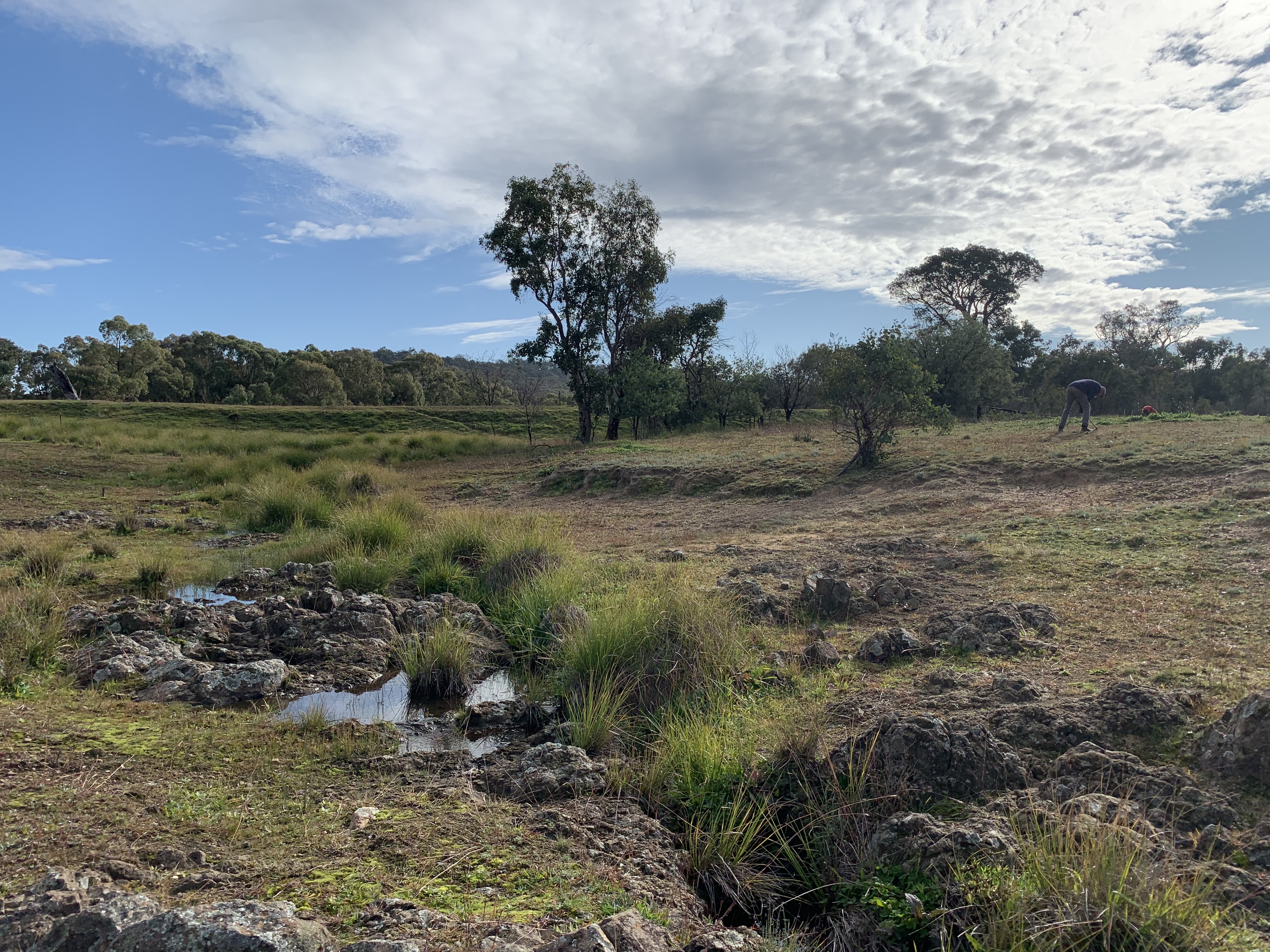
My journey started with heading to the grasslands with Thea in her car to Majura Valley. What hit me visually was the vast expanse of low quality grassland around me which was affected by overgrazing. We helped out with the erection of fences around the tall grasses which the Delma Impar likes to live in.

Following that, Thea and I travelled around Fyshwick to carry out lizard monitoring.

A picture taken from my mobile phone of our walk to various sites.

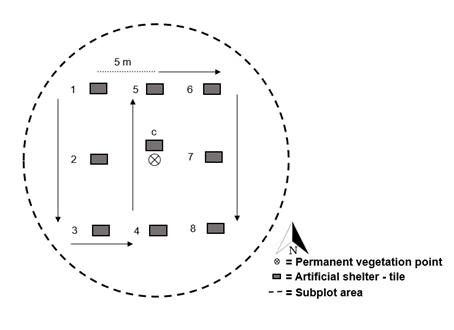
The monitoring sites are organised into sub-plots.

A depiction of how the subplot looks like. There are several subplots at each site. Each spot was covered by a tile which acts as an artificial habitat for the Delma Impar. Picture source: Thea O’ Loughlin
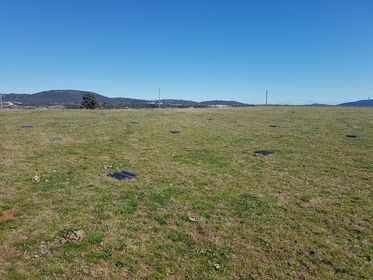
A photo of a typical subplot (photo taken of native pasture in the Jerrabomberra Valley).
Picture source: Thea O’ Loughlin

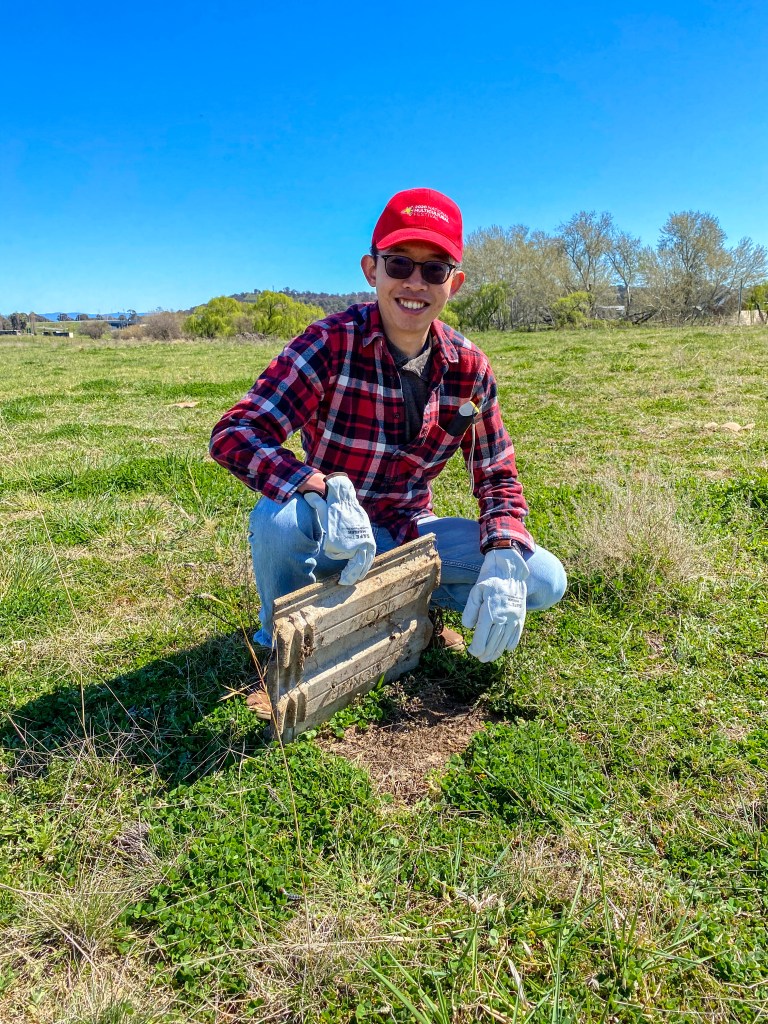
We took turns to either flip over the artificial habitat of the tiles, put in data into an iPad such as measurement of the temperature of the tiles and the patch beneath it. The flipping of the tiles is to check for the presence of the Delma Impar and other skinks. It is usually done with a crowbar and in a quick motion and then lowered back gently. In addition, we would also record if how many birds nearby.

The magpie which is sometimes seen near the sub-plots, is a predator of Delma Impar. Picture source: Australian Geographic https://www.australiangeographic.com.au/news/2018/02/magpies-with-more-friends-a-lot-smarter-scientists-find/

The chances of detecting lizards were very low but there were a few cases where we were fortunate to see a few of them within the genus Delma. Thea and I even managed to see the first sighting of the Delma Impar at a particular plot in three years.

A picture of the Delma Impar taken by my mobile phone. It was found when we lifted a tile at a subplot. It was the first sighting in three years at that place since the subplot was established.
Another look at the Delma Impar, taken with my mobile phone camera. It moves quite fast after the tile is lifted, I wished that I had the chance to see its head.

Conclusion

Through my field trip, I observed that biodiversity offsets did not manage to completely achieve their aim of reducing the impact on the species since I have came across low quality grassland in my site visits. It is paramount to maintain the quality of these offsets, since approximately 99.5 percent of natural temperate grassland has been lost and destroyed since European settlement. I hope that future conservation efforts of the Delma Impar would be improved through government policy and the efforts of ecologists.

A picture taken of myself from my mobile phone which shows an example of the act of lifting the tile and looking out for the little ones, during the Striped Legless Lizard Monitoring activity.

Acknowledgements

Thea O’ Loughlin, Field Ecologist, Environmental Offsets, Parks and Conservation Service

Howland, Brett W. A., Dejan Stojanovic, Iain J. Gordon, Don Fletcher, Melissa Snape, Ingrid A. Stirnemann, and David B. Lindenmayer. 2016. “Habitat Preference Of The Striped Legless Lizard: Implications Of Grazing By Native Herbivores And Livestock For Conservation Of Grassland Biota”. Austral Ecology 41 (4): 455-464. doi:10.1111/aec.12337.

Maldonado, Susana P., Jane Melville, Garry N. L. Peterson, and Joanna Sumner. 2012. “Human-Induced Versus Historical Habitat Shifts: Identifying The Processes That Shaped The Genetic Structure Of The Threatened Grassland Legless Lizard, Delma Impar”. Conservation Genetics 13 (5): 1329-1342. doi:10.1007/s10592-012-0377-3.

https://www.environment.gov.au/resource/national-recovery-plan-striped-legless-lizard-delma-impar-1999-2003

https://www.environment.act.gov.au/cpr/conservation_and_ecological_communities/threatened_species_factsheets/factsheets2/striped-legless-lizard2

Striped Legless Lizard Delma Impar Action Plan: : https://www.environment.act.gov.au/__data/assets/pdf_file/0019/1136062/Grassland-Strategy-Final-WebAccess-Part-B-8-Striped-Legless-Lizard.pdf

Posted in Uncategorized | Leave a comment

Is the population of the Giant Panda still maintainable in China?

-By u6126787

For answering the question, at the end of 2011, the total number of giant pandas in China was about 1,000, and there were 333 pandas in captivity worldwide. By the end of 2013, the number of wild giant pandas in China reached 1864, an increase of 16.8%. As of November 2019, the global population of captive giant pandas reached 600. It can be seen from the data that the increase in the number of pandas is largely due to human intervention.

This time I was fortunate to interview Dr. Zhang Zhihe, the research director of the Chengdu Research Base of Giant Panda Breeding. We can understand some specific breeding problems faced by giant pandas from him.

How do pandas live?

Giant pandas have lived on the earth for at least 8 million years and are known as “living fossils” and “Chinese national treasures.” It lives in dense bamboo forests at an altitude of 2600-3500 meters, where the air is thin all year round and the temperature are below 20°C. The habitat needs to have sufficient bamboo, and the topography and distribution of water sources are conducive to the species’ nesting and hiding and nurturing of young. Giant pandas cut half of their eating time every day, and most of the remaining half of the time is spent in their sleep. Its low fertility level is the point that people focus on protection. At the end of 2016, IUCN downgraded the threat level of giant pandas from “endangered” to “vulnerable”. However, panda is still a threaten species which means it is a species with a high probability of extinction.

Why giant pandas are endangered

There are various unfavourable factors that lead to the scarcity of giant pandas. The internal reason is the high degree of specialization of feeding habits, reproductive ability and juvenile behaviour. The external reason is that the habitat is destroyed, forming discrete islands, leading to population segmentation, inbreeding, and species degradation. Due to early human activities, the ecological environment was destroyed, resulting in the reduction of its habitat area. Pandas have a single food source and only eat bamboo. Once bamboo is destroyed, its survival will be affected. The reproductive capacity of pandas is very low. This is reflected in the fact that its reproductive system is susceptible to certain bacterial infections, which reduces the female’s egg laying rate and the male’s desire to mate. This is also a major cause of the imminent extinction of pandas. Baby pandas have a low survival rate, are highly dependent on their place of residence, and have poor adaptability to environmental changes.

In the future, what efforts do we need to do to sustain its growth?

The direction of the current research lies in the protection of the genetic diversity of giant pandas and the prevention and control of diseases. Although pandas are usually docile, once they become angry, they are very fierce and difficult to control. Even for a sick panda, scientists have to first put her asleep before completing her examination, diagnosis and treatment. Therefore, if you want to be a real giant panda doctor, you not only need to understand genetics, but you must also be proficient in giant panda anesthesia techniques.

Acknowledgements: 

Many thanks to Dr. Zhang zhihe for sharing with me the data and some results of their research in recent years.

Posted in Uncategorized | Leave a comment

Threatened species monitoring: the striped legless lizards of Canberra’s grasslands and the challenges of conservation

Not to be confused with their serpent cousins, the stripped legless lizard (Delman impar) is a small grey to light brown lizard that is distinguished by its’ visible ear openings [1]. This species occurs throughout the natural temperature grasslands of southeastern Australia and is listed as vulnerable at both international and national levels, including the ACT in 1996 [2]. My volunteering in early September assisted ACT Parks and Conservation Service field ecologists in their seasonal long-term monitoring of the species using artificial substrates (roof tiles) in the Mullanggari, Gungaderra and Crace grasslands.  

Striped legless lizard. Source: The State of Victoria, Department of Environment and Primary Industries [3] 

Why are striped legless lizard vulnerable? 

Roughly 99.5% of the natural temperature grasslands that provide habitat for striped legless lizards have been cleared or degraded since European settlement as a result of residential and pasture development [2]. Ongoing clearing for urban development, grassland degradation (e.g. invasive weeds), habitat fragmentation, overgrazing, drought, fire and hotter temperatures associated with climate change remain major threats the species [1],[2]. Overgrazing by kangaroos or cattle is a key issue, with too much or too little grazing degrading the quality of available habitat [5]

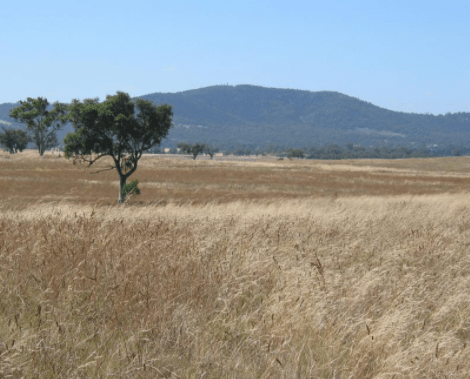
Mulanggari Nature Reserve, home to one of the largest striped legless lizard populations. Source: Michael Mulvaney [6] 

Ongoing management and conservation actions 

Today striped legless lizards in the ACT are largely confined to several grassland nature reserves, including various direct biodiversity offsets which were created to offset the impacts of urban development in the territory [1]. These offsets are particularly vital for the conservation of the species with some of the older sites like the Gunganderra grasslands hosting the largest populations (Thea O’Laughlin, personal communication 08/09/20; [4]. Ongoing monitoring forms a key part of management as well as ensuring there is no loss of habitat within grassland offsets, in accordance with legislative requirements [1][7][8]

One of the biggest challenges with threatened species monitoring is that they can be difficult to find and often monitoring can only be timed when they are most detectable. This is certainly the case with the striped legless lizard which is most easily detected during early spring to summer, yet detection rates are typically around 2% [4]. Striped legless lizards are monitored using artificial habitat (roof tiles) which are overturned to detect the species [4], an activity affectionately known as ‘flipping tiles’ which was the focus of my volunteering and detected only one individual out of >100 tiles. Threatened species with reduced populations may also be threatened by native species. This is true of striped legless lizard with accounts of predation by magpies during surveys (Thea O’Laughlin, personal communication 08/02/20).  

Magpies are one of several native predators which may threaten vulnerable species with small and fragment populations, like the striped legless lizard. Source: Corey Callaghan 

Management of stripped legless lizard populations is largely limited by knowledge, as relatively little is known about their preferred habitat use, susceptibility to fires or compatibility with different land management practices [1][4]. This is evident in current ground herbage management which is based primarily on ecological niche theory due to a lack of knowledge on habitat use specific to the species, and focuses on maintaining a diverse sward structure using low intensity burns, kangaroo and cattle grazing [1]. Monitoring of striped legless lizard is also quite resource intensive, with a typical survey period requiring the monitoring of several grasslands 2-3 times each over several weeks. Each grassland site will usually have upwards of 10 plots which each plot having several sub-plots with 5 – 8 tiles which must be checked manually: this was the basis of my volunteering. The figure below illustrates a typical subplot with tiles the must be placed manually and be regularly replaced when broken. 

A typical sub-plot used for monitoring striped legless lizards. Source: Thea O’Loughlin

Conclusion

There are many challenges and unknowns with the conservation of threatened species like the strip legless lizard now and in the future. It is paramount that conservation actions maintain momentum in research and policy to overcome both knowledge and legislative barriers in management.

Acknowledgements 

Thanks to Thea O’Laughlin of ACT Parks and Conservation Service for providing the volunteering opportunity and sharing her valuable experience as well as all other personnel involved in the surveys. 

References 

[1] https://www.environment.act.gov.au/__data/assets/pdf_file/0019/1136062/Grassland-Strategy-Final-WebAccess-Part-B-8-Striped-Legless-Lizard.pdf 

[2] https://www.environment.act.gov.au/cpr/conservation_and_ecological_communities/threatened_species_factsheets/factsheets2/striped-legless-lizard2  

[3] https://grasslands.ecolinc.vic.edu.au/fieldguide/fauna/striped-legless-lizard#details  

[4] https://www.environment.act.gov.au/__data/assets/pdf_file/0010/576793/SLL_Gungahlin_Survey.pdf  

[5] https://onlinelibrary.wiley.com/doi/abs/10.1111/aec.12337  

[6] https://grasslands.ecolinc.vic.edu.au/grassland/mulanggari-nature-reserve 

[7] https://www.environment.act.gov.au/cpr/environmental-offsets-policy/act-environmental-offsets-policy  

[8] https://www.environment.act.gov.au/__data/assets/pdf_file/0010/1156951/Grassland-Strategy-Final-WebAccess.pdf  

Posted in Uncategorized | 1 Comment

ANU’s Smallest, Most Destructive Lodgers: The Brushtail Possums Living Rent-Free in Campus Buildings

By Kayla Spithoven (Word Count: 499)

My work experience involved assisting ANU honors student Tay Yee Seng with his research on the impacts of brushtail possums (Trichosurus vulpecula) on the ANU Acton campus. Given that the brushtail possum is a generalist species with a broad diet and habitat requirements, it has a selective advantage when it comes to colonizing urban areas. This has created a conflict between possums and humans through incompatible building and landscape usage. Tay’s research addresses this issue by gathering data on the locations and preferred habitats of brushtail possums (fitted with tracking collars) throughout the campus. This collected data will then be used to evaluate suitable ways to minimize the impacts of possums to the campus, specifically through manipulating the habitats around buildings in urban environments to discourage brushtail possum occupancy. The issues of translocation and impact management are becoming more and more relevant, especially as human populations and influence continue to grow. 

Figure 1: Recorded occurrences of brushtail possum in Victoria (source: Victoria State Government Factsheet: Common Brushtail Possum)

The Possum Cost: 

Tay has stated that in 2018 alone, brushtail possums cost the ANU campus $1.4 million in damages (roughly $25,000 per possum). They are a significant drain on campus resources, and despite being a beloved Australian animal, the damage they cause cannot be ignored. Therefore, Tay’s research is extremely relevant to balancing the impacts of possums on human habitat, and vica versa, in order to promote a more cohesive ecological system. Previous research has found that “home-range characteristics differ depending on habitat and/or population density”, which does explain the tendency of ANU possums to nest in places like heating ducts and insulation as well as their typical wild habitats of forests/woodlands. Furthermore, studies have shown that many Australians have reported “negative experiences” relating to brushtail possum occupancy. 

Figure 2: ANU Campus brushtail possum fitted with a tracking collar to mark its movements around campus (photography credit: Divyang Rathod)

Electronic Tagging: Surveilling the Suspects

Throughout my time, I used radio tracking aerials linked to collars (ref. Figure 2) to identify and describe the locations of the possums involved in Tay’s study around campus. Over four nights, I explored the ANU campus using this technology, both finding the possums and documenting the damage they caused and any wild habitats they seemed to prefer. We found that most of the possums, although often found in trees, primarily existed in or around ANU buildings. One of the more memorable discoveries involved a possum who had dug its way into the insulation of a campus building. Overall, it’s clear that great change is needed to provide a mutually beneficial solution for both possums and people.

Figure 3: ANU Campus brushtail possum inhabiting a eucalyptus tree (photography credit: Divyang Rathod)

Reflections: 

Participating in Tay’s research not only allowed me to learn practical skills that I hope to later apply in my future workplace, it provided an unusual and interesting perspective into the ways in which some species must be managed for the betterment of all involved. Overall, the experience was both valuable and very enjoyable!

Acknowledgements: 

Many thanks to Tay Yee Seng for allowing me to participate in his research, and to Divyang Rathod for the use of his pictures.  

Bibliography: 

All photographs: Rathod, Divyang (2020)

Cooper C.E., Withers P.C., Munns S.L., Geiser F. & Buttemer W.A. (2018), “Geographical variation in the standard physiology of brushtail possums (Trichosurus): implications for conservation translocations”, Conservation Physiology 6(1)

Eymann J., Herbert C. A. & Cooper D. W. (2006) “Management issues of urban common brushtail possums Trichosurus vulpecula: a loved or hated neighbour”, Australian Mammalogy 28, pp. 153-171

Hill N.J., Carbery K.A. & Deane E.M. (2007) “Human–Possum Conflict in Urban Sydney, Australia: Public Perceptions and Implications for Species Management”, Human Dimensions of Wildlife 12(2), pp. 101-113 

Kerle J.A. (1984), “Variation in the ecology of Trichosurus: Its Adaptive Significance”, In: Smith A.P. & Hume I.D. Possums and Gliders, Australian Mammal Society, Sydney

Victoria State Government (2017), “Common Brushtail Possum: Our Wildlife Factsheet”, Department of Environment, Land, Water & Planning, Victoria, Australia

Whyte B.I., Ross J.G. & Blackie H.M. (2013) “Differences in brushtail possum home-range characteristics among sites of varying habitat and population density”, Wildlife Research 40, pp. 537-544.

Posted in Uncategorized | Leave a comment

LOCAL LAND CARE

By u6048209

Biodiversity Conservation efforts aim to protect and manage flora and fauna. Engagement by local stakeholders is a central feature of conservation projects globally. For my work experience I joined the Mount Majura and Mount Ainslie landcare groups to understand conservation activities at a local scale.

Mount Majura and Mechanical deep soil ripping

On the lower critically endangered grassland slopes of Mount Majura, I helped volunteers plant indigenous herbaceous flowers. We planted Bulbine bulbosa (Bulbine Lily) and the endangered Rutidosis Leptorrhynchoides (Button Wrinklewort) within a plot which had been deep-soil ripped. Coordinator Waltrud explained that deep soil ripping was something she had advocated for because without ripping the flowers had minimal chance of survival.

A soil ripper that has tines at different depths for different purposes. For ripping to be effective at Majura the 30cm tine was used. Picture courtesy of the Western Australian Department if Primary Industry and regional development.

Waltrud explained that native plant species have diminished on Mount Majura due to degradation of habitat through intensification of grazing regimes, car racing and invasion by weeds. In the lower slope area we were working on, the soil was too compact and void of necessary nutrients and moisture that reintroduced flowers would need to survive. Literature suggests that there is an inherent risk of loss of small populations despite conservation efforts so soil reworking was essential to increase chance of survival. At Majura soil ripping to maximise water infiltration to the subsoil involved inserting a tine 30cm deep to break up the soil. Once the soil ripping was complete, the plot was fenced off (to stop trampling from kangaroos or rabbits) and ready for us to plant. It was important to not plant the same batch of species right next to each other to maximise seed dispersal and increase native populations. The fenced area will therefore act as a seeding node to eventually repopulate the area through natural seed dispersal.

The Rutidosis Leptorrhynchoides (Button Wrinklewort) before planting.
The Rutidosis Leptorrhynchoides (Button Wrinklewort) after planting. The pink markings separate plots in the fenced area so that the same species is not planted next to each other.

Sticking it to the Weeds on Mount Ainslie

Mount Ainslie is right next to Mount Majura and has a similar compact land problem. Jeanette, the coordinator of Ainslie weeders explained that the lower slope site we were working on – the ‘middle tip’ was named as such because this area was once a rubbish tip. When the tip was abandoned in the 70s, soil was simply dumped on top and no regenerative work to re-establish native plants was done. As such, introduced species from neighbouring residential gardens and the wider mountain area has become a huge problem.

Every year, a different weed grows and flourishes. This year it was the Fumaria Officinalis (Fumitory) and the Galium aparine L (Sticky Weed). While the fumitory came out easily with a soft pull at the roots, the sticky weed was a nuisance because the root system was extremely thin but if even a small root was left, it could propogate. Here, it was evident that weed management is not a one and done activity but must be continued. Weed infestations have the capacity to destroy native habitats by completely transforming natural ecological systems so ongoing weed management alongside planting is necessary to give the plant a higher chance of survival.

Branches stuck in overgrown Galium aparine L (Sticky Weed).

Ripping out invasive Fumaria Officinalis (Fumitory).

Posted in Uncategorized | Leave a comment

Working Class Man—Working with the Ginninderra Catchment Group

by u6667644, Guy Gould

I didn’t do anything fancy for my volunteering; no counting frog calls for me! Instead I chose to do something I thought more practical: weeding, because I’m a working-class man keen for a hard day’s work. And wow was it more work than expected! I’ll be honest, I didn’t expect weeding to be hard, but it’s hard on the body, and most of my fellow volunteers were much older than me. I spent half my time at the Franklin Grasslands (the newest reserve in the ACT) and the other half at Mulligans Flat, primarily pulling out Paterson’s Curse (Echium plantagineum) with a mattock or a shovel.

https://www.kingborough.tas.gov.au/2018/10/removing-patersons-curse/

Paterson’s Curse (PC)

But it’s so pretty! Luckily it wasn’t yet flowering, so I had no such moral qualms. PC is on Victoria’s Priority Weeds list, and is a problem throughout South-East Australia and also Western Australia (1, 2). It is poisonous to grazing animals, primarily pigs and horses, but has been used as a last resort for ruminant animals in South Australia (earning it the name Salvation Jane). In Australia, it is classified as a weed because it is invasive (coming from the Mediterranean), and outcompetes many natives for nutrients and light (2).

Photo: Elizabeth Fenton

PC in TG

Temperate grasslands, that is. Paterson’s Curse is especially prevalent in temperate grasslands, one of the most disturbed Australian ecosystems. Up to 99% of the original extent of south eastern temperate grasslands have been destroyed or disrupted (3), with Franklin Grasslands being one of the few remnants. It is the belief of many of my fellow volunteers that TG are so disturbed because they do not fit people’s idea of natural conservation or environmentalism. In my coordinator’s rough words, everyone wants to plant a tree, but no one wants to look after grasslands. People see grasslands as just a useless field, even when they are important habitat for the (almost flightless!) critically endangered Golden Sun Moth. Luckily there are such groups as Friends of Grasslands there to take care of them.

https://museumsvictoria.com.au/melbournemuseum/resources/wild/grasslands/golden-sun-moth/

Friends of X, who are they?

Non-profit volunteers! They support native ecosystems, some working closely with rangers, such as Friends of Mulligans Flat. Friends of Mulligans Flat work with ParkCare, but Friends of Grasslands work with LandCare…wait what’s the difference? I’m still not sure! They work with Catchment Groups, who coordinate between them and the ACT Government. Catchment Groups are non-profit, except for Molonglo Catchment Group. They get some funding from the government, but not a lot. Talking with my convenor I got a large sense of confusion. How does it all fit together? Lots of border and responsibility clashes, according to my convenor. Then there are some rogue members like Bob, a renegade planter in the Hall region.

Ethics of Volunteers

Throughout it all, I’m struck by doubt on the ethics of volunteering. Is it really okay for the ACT Government to rely so much on the work of volunteers? Shouldn’t they be paid somehow? Especially when they meet so frequently and do such hard work. At the least, I’ve come away with more knowledge on weeds (damn you Paterson’s curse and Chilean needle grass!), and an appreciation for the people who spend their time helping and restoring our environment.

Acknowledgments

Thank you so much to Kathryn McGilp for organising my whole program, and for all the information! Thank you also to Friends of Grasslands and Friends of Mulligans Flat for the hard work they do tidying up our wonderful native vegetation.

References

  1. https://www.environment.act.gov.au/__data/assets/pdf_file/0014/902012/ACT_Weeds_Fact_Sheet-_Patersons_Curse.pdf
    • ACT Weeds Fact Sheet, produced by the Conservation Council in 2012
  2. https://agriculture.vic.gov.au/biosecurity/weeds/priority-weeds/patersons-curse
    • Paterson’s Curse, last updated 2020 by Agriculture Victoria
  3. https://www.greeningaustralia.org.au/wp-content/uploads/2017/11/GUIDE_A-revegetation-guide-for-temperate-grasslands.pdf#:~:text=The%20temperate%20grasslands%20of%20south,regions%20of%20New%20South%20Wales
    • A Revegetation Guide for Temperate Grasslands, produced by Greening Australia in 2017
Posted in Uncategorized | Leave a comment