Conservation of migratory birds in the East Asian-Australasian flyway in China

By Xinran Miao u6529022

An interview with Mrs. Ziyou Yang – the Project Director at Spoon-billed Sandpiper in China©

Migratory birds utilize different regions as habitat at different stages across the breeding, passage and staging, and wintering grounds [1,2]. However, a conspicuously low percentage of migratory birds receive adequate protection across their entire habitat ranges. In the past few decades, migratory bird populations are declining rapidly around the world, which emphasizes the urgency for acting migratory birds conservation [1].

Some threatened species of migratory birds. These species are Baer’s Pochard (Aythya baeri), Spoon-billed Sandpiper (Calidris pygmaea), Far Eastern curlew (Numenius madagascariensis) from left to right.

To understand better about this issue and learn to how can we contribute to migratory birds conservation, I had a conversation with Mrs. Ziyou Yang, the Project Director at a Chinese NGO (called Spoon-billed Sandpiper in China), who aims to protect migratory birds on the Yellow Sea mudflats along the East Asian-Australasian Flyway.

As one of four globally recognized flyways for migratory waterbirds, the East Asian-Australasian Flyway (EAAF) stretches from the Russian tundra to New Zealand’s coasts, which overlaps with 37 countries [2,3]. The EAAF is used by more migratory species on the IUCN Red List than any other flyway [4].

In this flyway, at least 33 globally threatened or Near Threatened waterbirds have occurred and 24 of them are heavily dependent on the intertidal zone, such as Spoon-billed Sandpiper (Calidris pygmaea), which was classified as Critically Endangered on the Red List of IUCN, and has been considered as one of the most threatened migratory birds in the world [4,5].

Key threats to migratory birds in the East Asian-Australasian flyway in China

“Threats faced by migratory species in the EAAF are complex, and habitat loss remains the most significant driver of decline for many waterbirds, such as the Spoon-billed Sandpiper.” —– Ziyou

The Yellow Sea intertidal flats that span the coasts of China and the Koreas contain critical staging areas used by most of the EAAF shorebird populations [2,5]. “However, almost two-thirds of the Yellow Sea tidal flat area has been lost over the last five decades,” said Ziyou, “These areas are threatened by industrial-scale reclamation in China, especially on the Jiangsu coast.” By the 2010s, over 65% of the tidal flats present in the 1950s had been lost [6], and many shorebird taxa reliant on the Yellow Sea are estimated to have declined an average of 5.2% annually [7].

Changes of natural intertidal habitats at Jiangsu coast.

“It only takes a few years’ time for a bare mudflat to become a ‘grassland’, Spartina has spread rapidly along the east coast of China over the past two decades.” —– Ziyou
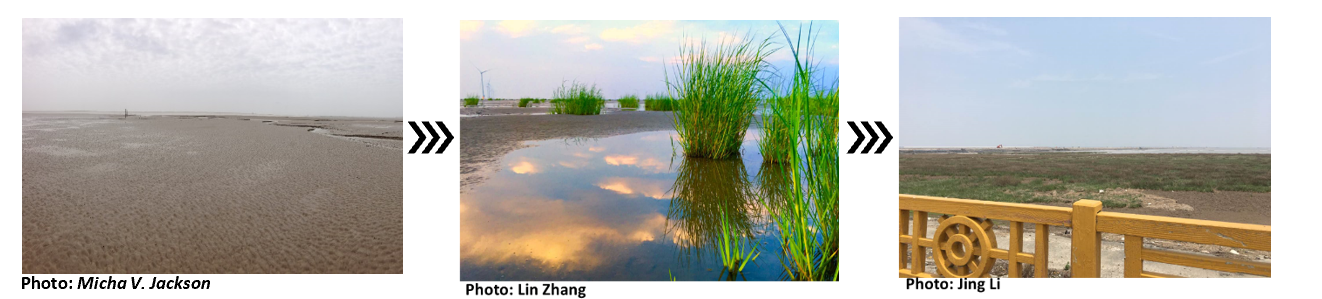
Landscape changing after the Spartina introduced.

Besides, invasive plant species (e.g., smooth cordgrass [Spartina spp.]) was intentionally introduced to China to accelerate the reclamation, which supports a low abundance of macroinvertebrates and insects and therefore represent poor habitat for migratory birds [2,8].

What to do for the conservation of migratory birds?

Currently, 1.39 million ha (~23.99%) of coastal wetlands in China receive protection, and policies are in place to further strengthen this protection [2]. Many scientific outreaches have been done to improve public awareness of migratory birds’ protection. A wide variety of activities such as lectures, interactive exercises, and birdwatching trips related to migratory birds conservation have been organized for people who lived nearby the south-west coast of the Yellow Sea, especially for students and local fishermen.

Outreach and educational activities held by the Spoon-billed Sandpiper in China.

However, within the EAAF, international level conservation is also important to protect migratory birds since the foremost challenge in conserving migratory birds is the fact that their annual migration route spatially link sites and habitats across their life circles, and each of these areas contributes to different components of their lives [1,2].

International cooperation and coordinated actions have been implemented as well. The Bonn Convention led a multilateral platform for coordination of conservation across countries, and regional initiatives that link government and civil society organizations can be conducted to strengthen transboundary cooperation [2].

Overall, biodiversity conservation can not be achieved with efforts from a single person, region, or country, it is a global challenge that needs more close transboundary cooperation in the future. Also, as the most severe direct drivers for biodiversity loss, more efforts are encouraged to be made on avoiding habitat loss, therefore to achieve ecologically sustainable development.

Acknowledgment

Appreciation to Mrs. Ziyou Yang for providing this interview opportunity and sharing her knowledge, work experience as well as pretty photos. Thank you to Prof. Philip Gibbons for giving suggestions to write this blog.

Posted in Uncategorized | Leave a comment

Making possum magic

Dorothy Mason (u6019552)

Word count: 506

Spotted! A possum and her baby near the Sir Roland Wilson Building, ANU (Photo: Divyang Rathod).

Dusk is falling over the ANU. The sky is streaked with soft evening light and paddle-pop coloured clouds. It’s a Friday afternoon, and campus is bustling with students spilling out of libraries, gearing up for a night off the books and perhaps a well-earned pint.

I’ve got weekend plans of a different kind. I’ve arranged to meet up with Tay, an Honours student at the ANU Fenner School conducting research on Canberra’s most ubiquitous marsupial: the common brushtail possum (Trichosurus vulpecula).

Tay has been observing the ANU’s possum population for the past year, tracking their movements across campus in order to learn more about their denning habits and habitat preferences.

He came to the project after he became aware of how much damage possums cause to campus infrastructure. Often, they den in small cavities in ceilings or walls, damaging the building and disturbing its occupants.

“In 2018 alone, the ANU spent 1.4 million [on possum damages],” Tay tells me. “I divided that by the total number of possum issues — that’s 25 grand per possum!”

I spent several evenings walking around campus with Tay, tracking possums he had fitted with GPS collars. Once we had located a possum using the GPS signal, we made a note of the type of habitat we’d found it in: native tree, exotic tree, bare ground, road, urban building or ground cover like grass and shrubs. Tay would later go into ANU Tree Management Systems to try to find out more details about the habitat in question.

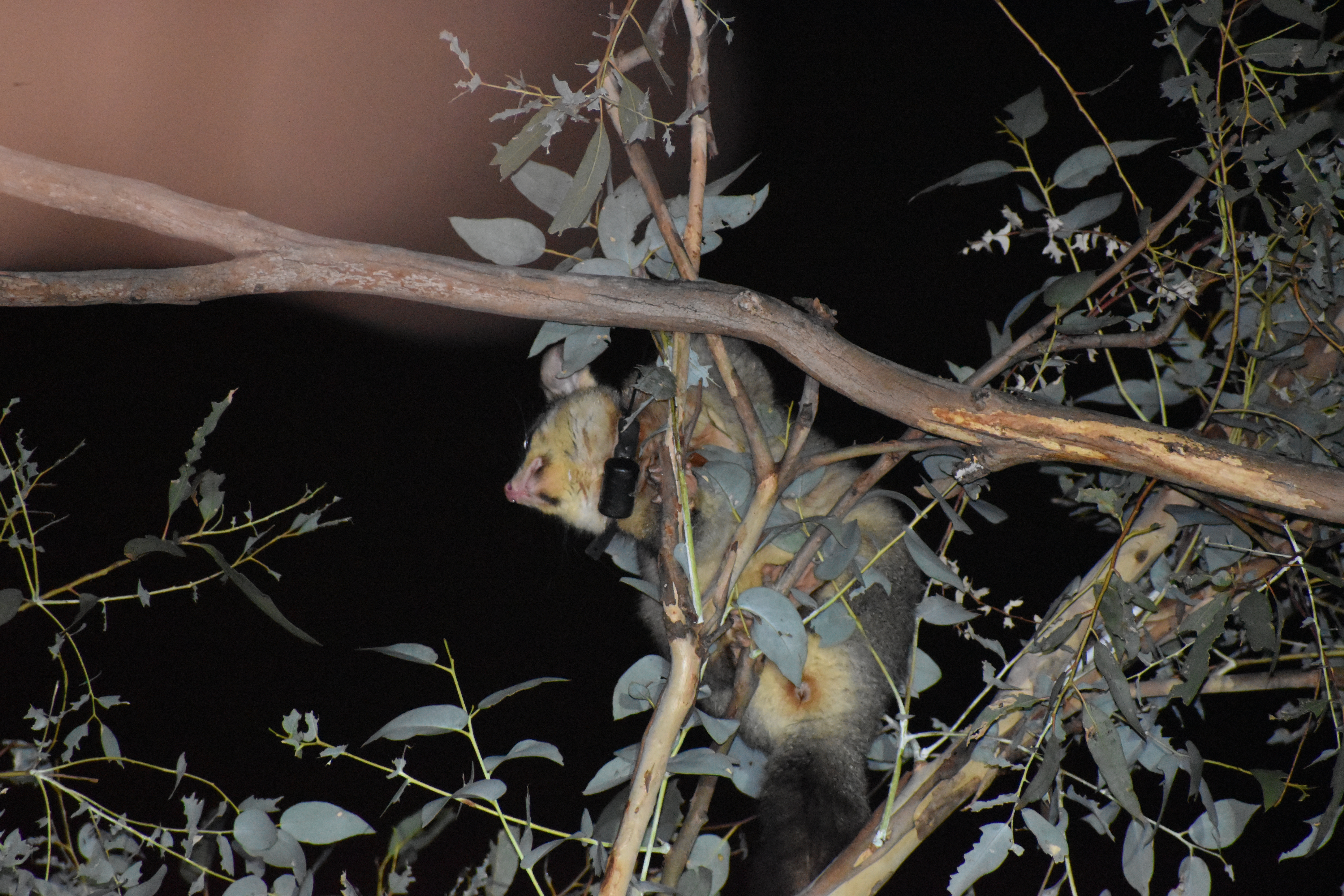
A possum sporting a GPS tracking collar reaches for a snack (Photo: Divyang Rathod).

The results have been surprising.
 “We thought that the possums would have certain selection preferences for exotic trees…but they’ll take whatever when it comes to home range selection,” Tay says.
“But it could be [that] within the home range itself, they selectively feed on exotic trees. That’s what the analysis suggests when we look at habitat preferences on a tree level.”

Tay’s results are important for several reasons. Conducting good fieldwork is essential to improving monitoring practices and exercising adaptive management. Solving the ANU’s possum problem simply isn’t possible without meaningful data on how possums select their habitat.

A possum peers out from a cavity underneath a building, ANU (Photo: Divyang Rathod).

The research also has broader implications. Understanding how native species adapt to urbanisation remains poorly studied in environmental science. And yet, more systematic research on urban ecology could dramatically improve conservation outside protected areas.

Urbanisation is progressing at a rapid rate, leading to increasingly isolated and fragmented habitat patches. This can have dire consequences for biodiversity. At the same time though, urban environments can play important roles in the protection of local biodiversity, by providing new ecological niches that native species can exploit.

Tay’s preliminary results suggests that brushtail possums in urban environments behave differently to those in the wild.

“In studies of possums in the bush, people reported possums being quite territorial, like fighting for resources and defending territory,” he says. “But within the ANU campus […] their home ranges are not exclusive. They can actually live together, mutually.”

One thing is for certain — there is still much to learn about this familiar creature.

Works cited

Carthew, Susan M., Susan M. Carthew, Beiha-Malen Yáñez, Beiha-Malen Yáñez, Laura Ruykys, and Laura Ruykys. 2015. “Straddling the Divide: Den Use by Brushtail Possums (Trichosurus Vulpecula) in Urban Parklands.” Urban Ecosystems 18 (2): 525-538.

Dixon, Kelly M., Geoffrey J. Cary, Graeme L. Worboys, Sam C. Banks, and Philip Gibbons. 2019. “Features Associated with Effective Biodiversity Monitoring and Evaluation.” Biological Conservation 238: 1-11.

Magle, Seth B., Victoria M. Hunt, Marian Vernon, and Kevin R. Crooks. 2012. “Urban Wildlife Research: Past, Present, and Future.” Biological Conservation 155: 23-32.

McKinney, Michael L. 2002. “Urbanization, Biodiversity, and Conservation: The Impacts of Urbanization on Native Species are Poorly Studied, but Educating a Highly Urbanized Human Population about these Impacts can Greatly Improve Species Conservation in all Ecosystems.” Bioscience 52 (10): 883-890.

Additional acknowledgments

All photos were kindly provided by Divyang Rathod, fellow student in ENVS3039.

All quotes are by Tay and recorded by myself on a field microphone.

Posted in Uncategorized | Leave a comment

Echidna census at Mulligans Flat

U6051167 – Lara Videnovic

My volunteering project took place in Mulligans Flat Woodland Sanctuary, where I participated in the annual “Echidna Sweep” over two weekends in November.

Importance of the sanctuary

Mulligans Flat spans more than 1200 hectares of protected land in the northern outskirts of Canberra, and has been a hotspot for conservation projects since its establishment. Together with Goorooyarroo Nature Reserve, it forms the largest, most intact area of critically endangered Yellow Box-Blakely’s Red Gum Grassy Woodland in the ACT region. This woodland retains significant ecological values, supporting threatened ecosystems and providing habitat for many native species.

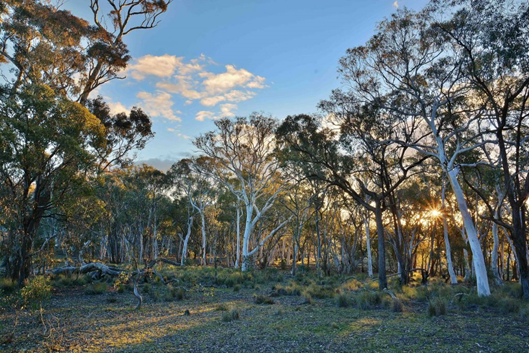
Sunset at Mulligans Flat (Photo: Woodlands and Wetlands Trust)

The sanctuary has been an important experiment in restoration and biodiversity conservation. It is enclosed by an extensive predator-proof fence, which removes the threats associated with introduced predators such as foxes and cats, and herbivores such as rabbits. The protection provided by this fence has enabled the successful reintroduction of locally extinct native species within the reserve. As a result, echidna populations in Mulligans Flat have also flourished.

Echidnas!

Foxes pose a major threat to echidnas, as they predate heavily on newborn “puggles”. The purpose of the echidna sweep at Mulligans Flat is to monitor the population size of the native short-beaked echidna (Tachyglossus aculeatus) each year, to assess the proliferation of this species in the absence of predators like foxes. Every spring, about 60 volunteers come together for two weekends to survey the entire sanctuary. They are split into zones, where they walk along transects at 10 metre intervals and scan the area, searching for the spiky creatures.

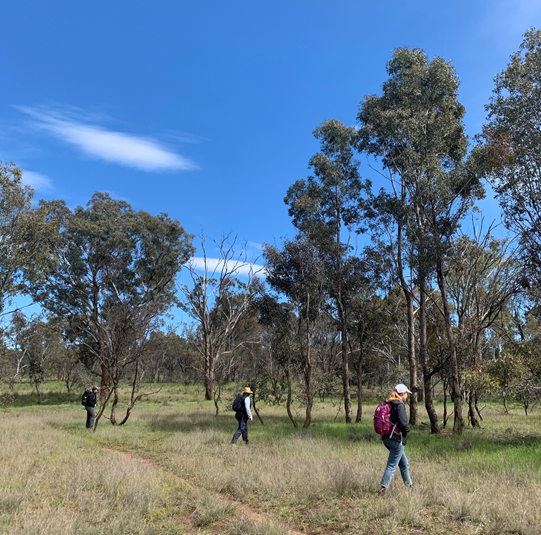
The team on the hunt for some spiky friends (Photo: Lara Videnovic)

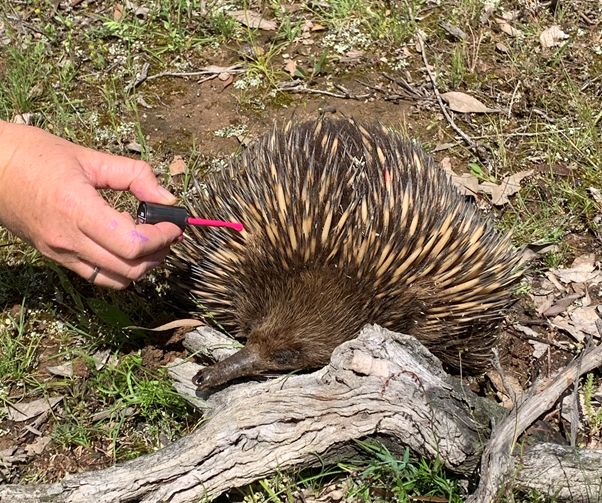
When an echidna is spotted, the Capture-Mark-Recapture method is applied to record the time and place of the sighting. The quills of each echidna are marked with a unique and colourful pattern in nail polish so that at the sweep the following week, marked echidnas can be distinguished from unmarked and the total population can be estimated.

Giving the local echidnas a manicure (Photo: Lara Videnovic)

This year, we spotted 40 echidnas – significantly less than was spotted during the sweep last year (70!). The rangers have attributed this to the exponential increase in rainfall that Canberra has experienced this spring. Much of the sanctuary has been flooded over the last few months, so echidnas are seeking shelter in burrows, bushes and thicker tussocks of grass. This makes them much harder for the average volunteer to spot, but further reiterates the importance of effective monitoring in species conservation efforts.

Reflecting on the importance of “citizen science”

Overall, my experience at Mulligans Flat was a lot of fun and emphasised just how much of a difference volunteers make towards progressing conservation initiatives. The limited funding available for conservation science means that projects like the echidna sweep simply would not go ahead if it weren’t for volunteers. Public participation in scientific research (“citizen science”) has thus become a great means for scientists to overcome data and resource limitations. Luckily, there is a great volunteer community in Canberra, with many people giving up some of their free time to get involved and decorate the local echidna populations.  

References

ACT Government, 2017. Mulligans Flat to Triple in Size, Our CBR. Available at: https://www.act.gov.au/our-canberra/latest-news/2017/august/mulligans-flat-to-triple-in-size (Accessed 5 November 2020).

Shorthouse, D.J., Iglesias, D., Jeffress, S., Lane, S., Mills, P., Woodbridge, G., McIntyre, S. and Manning, A.D., 2012. The ‘making of’ the Mulligans Flat – Goorooyarroo experimental restoration project, Ecological Management & Restoration, 13(2): 112-125.

Theobald, E.J., Ettinger, A.K., Burgess, H.K., DeBey, L.B., Schmidt, N.R., Froehlich, H.E., Wagner, C., Hille Ris Lambers, J., Tewksbury, J., Harsch, M.A. and Parrish, J.K., 2015. Global change and local solutions: Tapping the unrealised potential of citizen science for biodiversity research, Biological Conservation, 181: 236-244.

TRC Tourism, DSB, ACT Parks and Conservation Service and Woodlands and Wetlands Trust, 2016. Mulligans Flat Woodland Sanctuary Concept Plan, ACT Government. Available at: https://mulligansflat.org.au/wp-content/uploads/2016/12/D.-Draft-Mulligans-Flat-Concept-Plan-Sept-2016.pdf (Accessed 6 November 2020).

Wildlife Victoria, 2017. Short-beaked Echidna, State of Victoria Department of Environment, Land, Water and Planning. Available at: https://www.wildlife.vic.gov.au/__data/assets/pdf_file/0020/92441/Short-Beaked-Echidna.pdf (Accessed 5 November 2020).

Woodlands and Wetlands Trust, 2015. Kids on Country, ACT Government. Available at: https://mulligansflat.org.au/event/kc2/ (Accessed 5 November 2020).


Posted in Uncategorized | Leave a comment

Volunteer citizen scientists making effective ecological monitoring possible

Emma Woodcock (u6587190)

During the month of October 2020, I found myself among the ranks of volunteers, braving the dark, the evening weather of the ACTs’ spring and hiking out to the far north-west extent of the territory, to listen in to the mating calls of the frogs of the region. This is all to collect data for Frogwatch, a frog monitoring program ran by Ginninderra Catchment Group.

Through October, volunteers head out right after dark to survey for frogs, recording species observed and their abundance at several sites across Canberra. Frogs are ‘sighted’ using their call. Different frog species have their own distinctive mating calls which can be used to identify them. This audible survey method is effective and completely non-invasive for the creatures (Ginninderra Catchment Group, 2011).

The sounds of Plains Froglet (Crinia parinsignifera), Whistling Tree Frog (Litoria verreauxii) and Spotted Grass Frog (Limnodynastes tasmaniensis) can be heard. Audio and photo: Emma Woodcock.
The sounds of Plains Froglet (Crinia parinsignifera), and Banjo Frog, also known as a Pobblebonk, (Limnodynastes dumerili). Audio: Emma Woodcock, photo: Isabella Howard.

What is Frogwatch?

Ginninderra Catchment Group is a group of ‘friends of’ and Landcare groups that form a “community-based natural resource management organisation”. Frogwatch is one of their programs.

Each year, the data recorded is made into annual reports, these reports date back to 2003 and are publicly available. The data is used by Ginninderra catchment group, ACT governments and researchers. The methods were created by scientists from the ACT government and the University of Canberra to accompany their pre-existing frog monitoring (Ginninderra Catchment Group, 2011). The objectives of the monitoring are to

  • Inform about the distribution and abundance of frog species and the health of wetlands and waterways,
  • Create a long-term data source,
  • Be available to students and researchers, and
  • Supplement data recorded by the ACT government to aid their monitoring and research (Ginninderra Catchment Group, 2011).

Power of citizen scientists

Effective, long-term monitoring provide insights into ecosystem change and can be vital for species conservation (Likens & Lindenmayer, 2018). However, Dixson et al. argue that the data collected by institutions monitoring is often ineffective, especially in government organisations (2019). Legislation hurdles, time and money constraints and lack of staff all may cause this (Dixson et al., 2019).

This is where Frogwatch and other citizen science initiatives come in. 100s of volunteers get involved and together can collect a large amount of data. The barrier to conservation of lack of funding is unlikely to change any time soon in Australia. The work of volunteers enables Frogwatch to collect its data on a low budget and continue for nearing two decades.

Volunteers measuring water temperature (photo: Cassandra Murrell) and recording data (photo: Isabella Howard).

Frogwatchs’ data has contributed to research including the ongoing assessment of climate changes’ effect frog on breading season timing, the effect of urbanization on frog populations and to determine the optimal conditions for various frog species. In response, plantings have been done to improve and create frog habitat. The surveys have also recorded 3 new frog species in the ACT over its years.

This successful and popular citizen science program is giving government and research access to high quality and long term data and it is in no small part thanks to its volunteers.

Offline references:

Ginninderra Catchment Group, 2011. National Water Week Community Frogwatch Census Kit (volunteer’s booklet). (A pdf of the 2008 version is available here.)

Likens, G. and Lindenmayer, D., 2018. Effective Ecological Monitoring, CSIRO Publishing, Collingwood. (Available online to ANU students through the ANU library.)

Posted in Uncategorized | Tagged | Leave a comment

Called Up: Engaging in Citizen Science Through Frogwatch

William Jaggers (u6667998)

Word Count: 527

Imagine the scene: you drive up to an isolated, green field on the edge of Canberra. Frogs are calling in the distance, and as the sun sets, they get continually louder. As you walk towards the pond, a few sporadic calls become a chorus of Banjo frogs, plains froglets and spotted grass froglets. You pull out your clipboard and start recording the temperature, habitat structure and the species you can hear. After this, as the last licks of sunlight shine over the distant hillside, you sit quiet and make a three-minute recording, absorbing the chorus of calling as you do so.

The Beginning: A Sunset over site 1 (Source: William Jaggers)

I believe this description captures the essence of frog watching well; it’s relaxing and a great activity to do after a long day at uni or work. But frog watching isn’t just an opportunity to learn about frogs and their calls, it is an important citizen science project whereby you can contribute to a large bank of data about frog species richness and abundance.

Why Record Frog populations?

Inform Management

By recording habitat structure, weather, date, time and temperature, we are also allowing for any relationship between those variables and the abundance/richness in frog species to be taken into account. Finding these relationships can inform management. For example, we look at the width of unmown grasses that surround each pond. This can provide good data on the effects of mowing on frog populations, as the various sites have different level of impact from mowing. Say if the data displays a decrease in the frog population or a certain species due to mowing, that management can be altered to leave a wider area of unmown buffer around each pond.

Watch and find: A ‘Pobblebonk’ – Eastern Banjo Frog (Source: William Jaggers)

Examine long-term trends

During October, the frog census is completed to gauge frog populations in the ACT. Frogs are calling the most during October and especially after recent rain. However, the frog census has been changed to the whole month of October rather than one week – frogs are calling earlier, a phenomenon that is linked to climate change. Because frogwatch is a long-term survey, with data collection beginning in 2002, the long-term effects of climate change on frog populations can be assessed and the more years the survey runs for, the clearer the long-term trends will become.

Gauge Ecosystem Health

The species abundance and richness of frogs is a good indicator of ecosystem health. Simply put, if there are higher numbers and more types of frogs, the habitat for those frogs is far more complex and will therefore contain valuable habitat for other species. Certain frog species have been found to be correlated with mowing, water depth, emergent vegetation, pond type and canopy cover.

For me, any experience that enhances or fosters an appreciation of the natural environment is worthwhile; frogwatching has made me realise that there is a lot to learn about the environment surrounding Canberra, and volunteering through citizen science is a great opportunity to do it. If you would like to get involved go to https://ginninderralandcare.org.au/frogs/ and sign up.

 References:
HOEFER, A. M., and D. STARRS (2016) One pond fits all? Frogs as an indicator of urban wetland health. Final Report to Upper Murrumbidgee Waterwatch. Ginninderra Catchment Group, Canberra.

 BALDEN, L. 2020. How climate change has impacted frogs in Canberra. Canberra Times.

 HOEFER, A. M. 2015. Eavesdropping on frogs: Citizen science guiding wetland health management. Wetlands Australia. 
Posted in Uncategorized | Leave a comment

Scottsdale Reserve – a Bush Heritage site near Bredbo

Keri James 3080520  

This image has an empty alt attribute; its file name is image-7.jpeg
This image has an empty alt attribute; its file name is image-5.jpeg

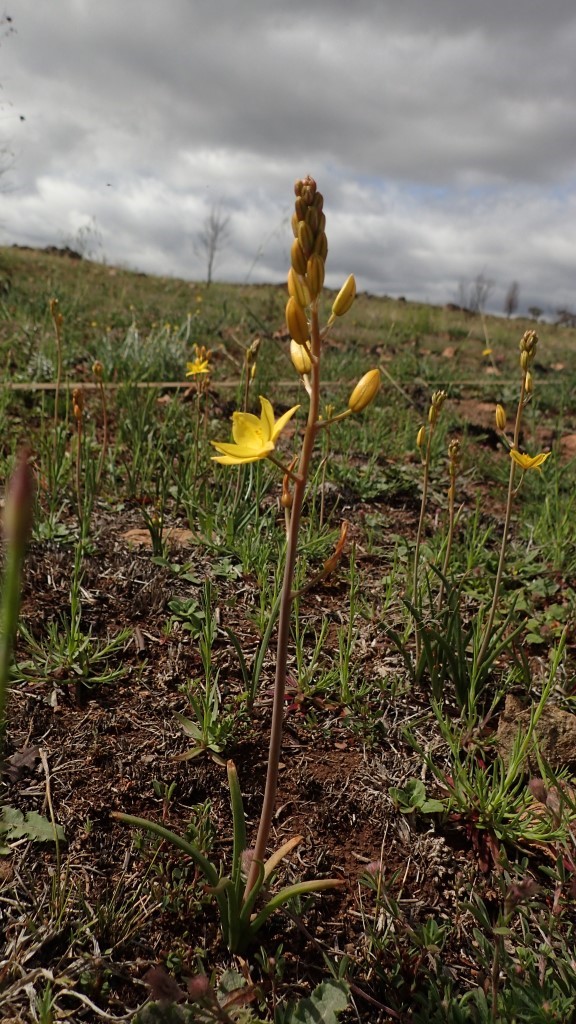
Native Forbs regenerating after fire at Scottsdale – Bulbine Lillies, Common Everlasting – October 2020 Photos David Freudenberger 

The importance of Off Reserve Conservation – What is the Bush Heritage Fund?    

Bush Heritage manages 36 reserves of 1.2 million hectares in Australia, as well as working in partnership with 14 different Aboriginal owners on another 10.1 million hectares of Country.   

Bush Heritage reserves in Australia 

As is the case for so many conservation initiatives in Australia, Bob Brown is part of this history too.  He founded the Bush Heritage fund in 1990 when he bought two blocks of Tasmanian forest adjacent to World Heritage listed forests in order to save them from woodchipping.   

Since then, he and others have bequeathed their own lands to the fund under ‘conservation covenants’, while also raising monies to purchase significant other places, such as endangered Cassowary rainforest habitat in the Wet Tropics World Heritage Area.   

What are Conservation Covenants?   

Given that so much biodiversity in the global capitalist world is now in private hands, conservation covenants are an effective way that individual land-owners can ensure that the biodiversity on their land is protected in perpetuity:   

Philanthropists all around the world have been buying up biodiverse lands to save them from development.  The billionaire founders of the clothing labels ‘north face’ and ‘esprit’ purchased 810,000 hectares of biodiverse South American land to become National Park.   

Where is Scottsdale and why is it important?   

Scottsdale lies south of Canberra near Bredbo in Ngunawal Country, and was established as a bush heritage site in 2006.  It comprises 1328 hectares of the endangered ecological communities of box gum grassy woodland and temperate grassland, and is home to many rare and threatened birds, mammals, fish and reptiles:   

AnimalsRosenberg’s Monitor (vulnerable in NSW), Speckled Warbler (vulnerable in NSW), Peregrine Falcon, Brown Treecreeper (vulnerable in NSW).  Scottsdale also works with the Upper Murrumbidgee Demonstration Reach supporting the recovery of native fish in the river.   

PlantsCurrawang (spearwood), Curved Rice Flower, Button Wrinklewort, Silky Swainson-pea, and the Silver-leafed Mountain Gum (only 10 populations remaining).   

Vegetation communitiesYellow-box grassy woodland (nationally critically endangered), Scribbly Gum-black Cypress-pine Forest, Tablelands Frost Hollow Grassy Woodlands, Southern Tablelands Natural Temperate Grassland (nationally endangered).   

Bush Heritage collects ‘the best and the last’ of endangered ecosystems.  Scottsdale was a controversial purchase as it had been cropped, grazed and cleared for decades.  But as grassy biomes and woodlands have been heavily cleared for agriculture globally and in this country, it is an important addition.  Less than 5% of Box Gum Grassy Woodlands survive in Australia, with some scientists like David Freudenberger predicting this percentage within Canberra to be at even less than 1%.  Globally, grasslands are the world’s least protected and most threatened ecosystems.  And they are actually as biodiverse as rainforests.   

What’s going on at Scottsdale?    

Hundreds of volunteers and organisations, including Greening Australia and Friends Of Grasslands, replant and restore yellow box woodlands.  Scottsdale has a 100 year history of cropping, clearing, erosion and drought but Bush heritage aims to restore all woodland areas as well as increase native grasses on the highly degraded valley floor by 2030.    

Some projects at Scottsdale include:  the reintroduction of the threatened striped legless lizard, the restoration of habitat in riparian and in-stream zones (carp control, willow reduction), rabbit warren mapping and closing, and an onsite nursery of local seedlings and grasses such as Bulbines, Trigger plants, Chocolate Nodding, Yam Daisies and Blue Devils – all grown from seed.   

The ANU at Scottsdale –  An Interview with David Freudenberger:   

The esteemed Dr. Freudenberger has been monitoring seedlings at Scottsdale for 10 years.  He uses Mulligans Flat as a reference condition for the ecological restoration of Scottsdale.  To recover diversity in the ground cover – which in local grasslands is usually 60 to 70 species with a handful of shrubs and only 2 or 3 Eucalypt species – Mulligans Flat has begun to restore functionality by reintroducing the small burrowing Bettong.   

This semester three Biodiversity Conservation students helped Dr. Freudenberger collect data on how the Eucalypt and Acacia seedlings that were planted by the Fenner School in 2014 fared post fire.   

The direct seeding technique successfully used at Barrer Hill, which removes the top 10cm of nutrient-enriched topsoil, had unfortunately proved less successful at Scottsdale.   

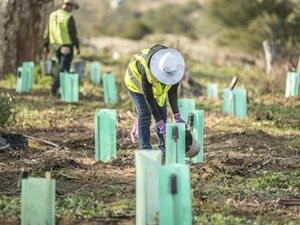
So, in 2014 the Fenner School created 100 metre transects on the valley floor and planted a variety of BGGW species into pre-cultivated (with the sides scratched up to provide purchase for the roots to take hold), and pre-watered holes, then placing corflute protection guards around each baby plant.  This requires a lot of labour and material investment.   

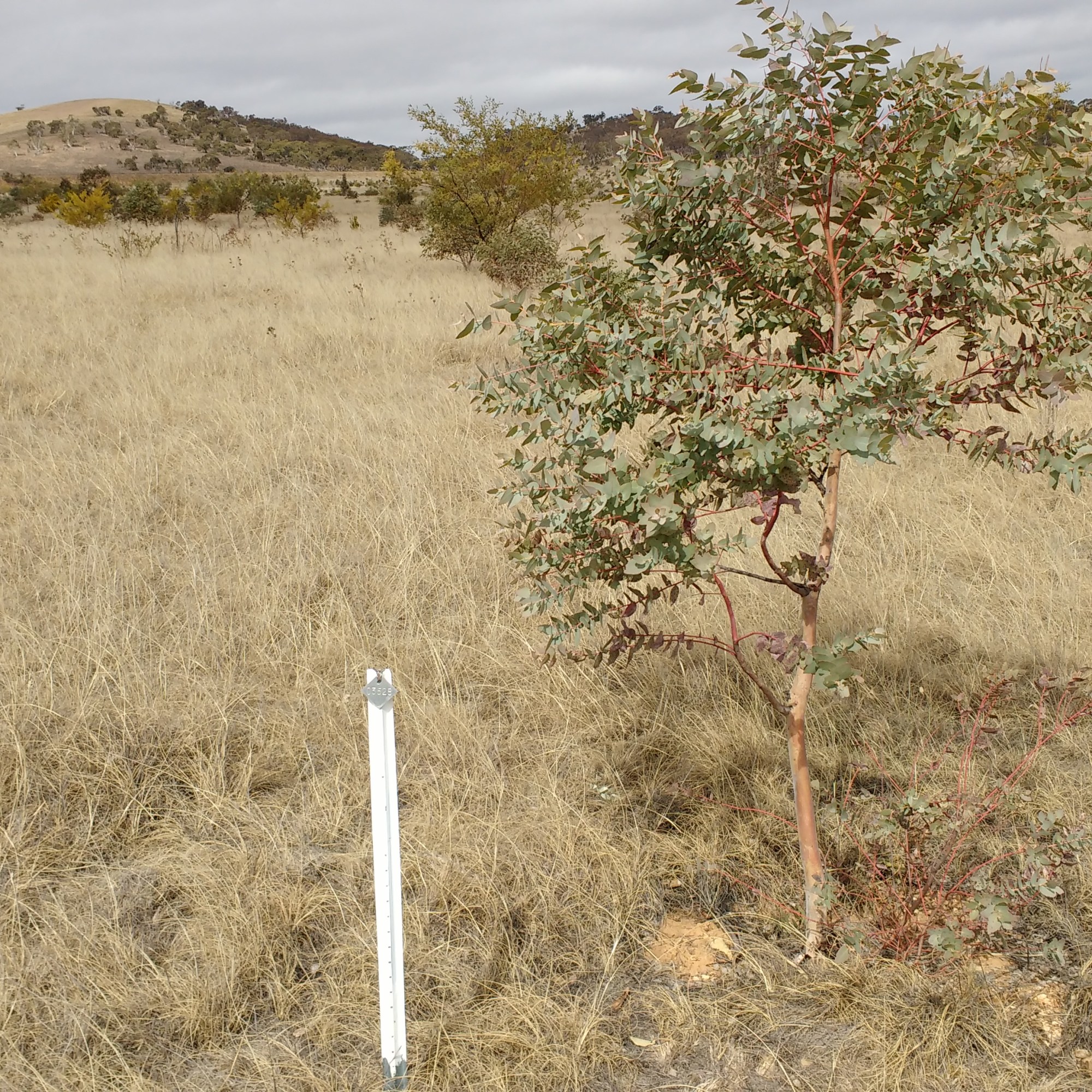
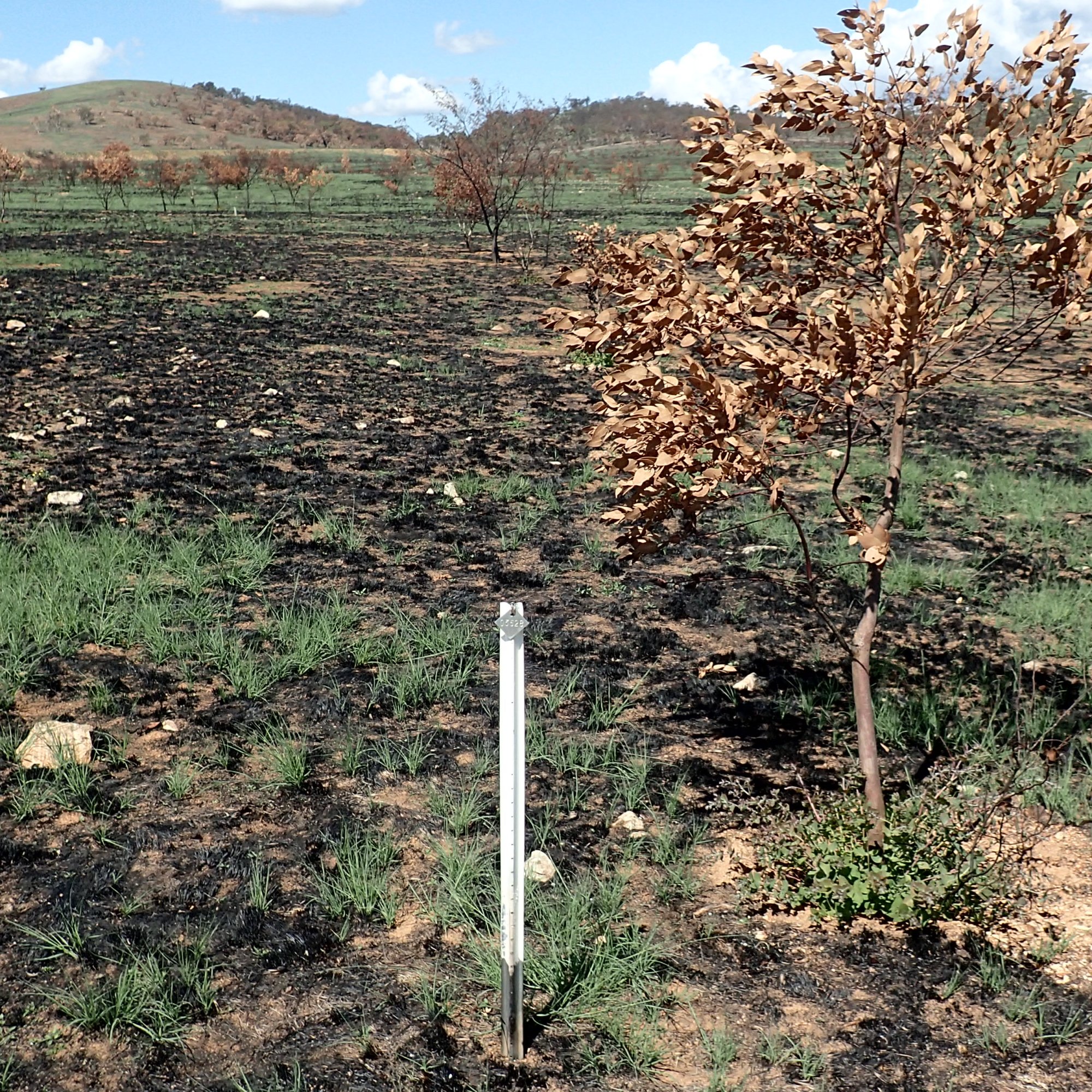
The following photos have been taken at the same transect site in August 2019, then March 2020, and then during this month’s monitoring:    

This image has an empty alt attribute; its file name is image-9.jpeg

August 2019 – the dried grass is the invasive African Lovegrass (Egrogrostic curvula) 

March 2020 – African Lovegrass greening up… 

This image has an empty alt attribute; its file name is image-11.jpeg

October 2020 – Dried seedheads of Arican Lovegrass Photos David Freudenberger  

The photos reveal the invasive, but highly functional, African lovegrass (Egrogrostic curvula), which was introduced as fodder and has dominated ground cover.  Whilst its thatch does eliminate erosion and provide a safe habitat for a high diversity of reptiles, it has been targeted for control at Scottsdale with effective herbicide – though its elimination is not possible and small patches will always remain.   

Did some seedlings survive?   

And, could those 6 year old plants who did, have survived last summer’s fires when 73% of Scottsdale burnt?   David’s initial analysis is that >90% of the seedlings may have survived!  Little research has been published on seedling survival rates (see Hnatiuk, S. et al The survival of native seedlings planted by volunteers: The Lower Cotter, ACT case study).   Even less on post-fire survival rates (see Pickup, M. et al Post-fire recovery of revegetated woodland communities in south-eastern Australia).  And this is only the second data set to record both pre and post-fire health scores of seedlings where every plant was burnt.   

Regeneration photos from Scottsdale:   

This image has an empty alt attribute; its file name is image-8.jpeg

Acacia Dealabata regenerating at the root photo David Freudenberger 

This image has an empty alt attribute; its file name is image-12.jpeg

Dead burnt tussock grass, other weed species filling newly vacant spaces photo David Freudenberger 

This image has an empty alt attribute; its file name is image-16.jpeg

A different transect site displaying abundant native regrowth photo David Freudenberger 

Native grassland candles photo David Freudenberger 

This image has an empty alt attribute; its file name is image-10.jpeg

Native paper daisies photo David Freudenberger 

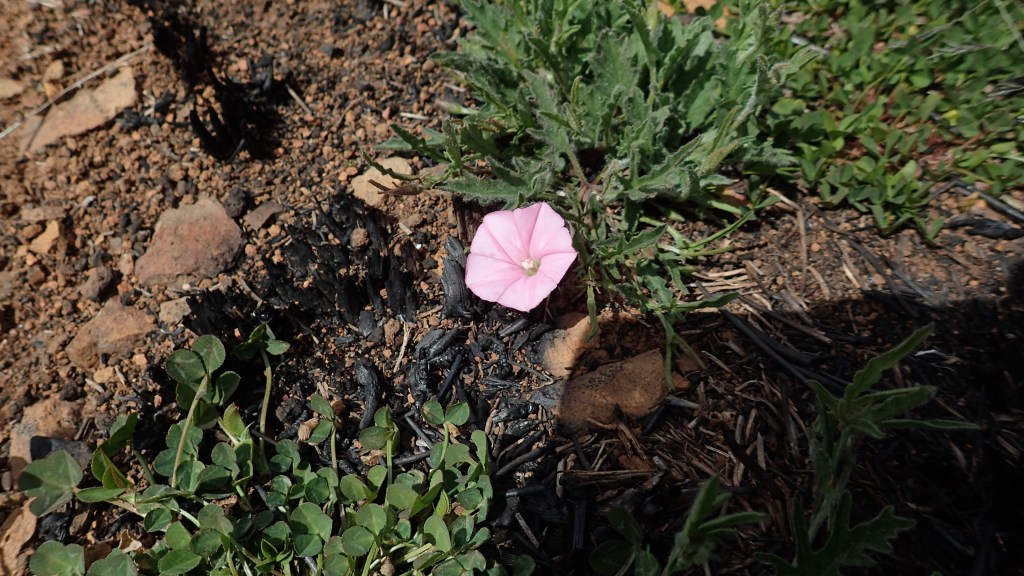
This image has an empty alt attribute; its file name is native-morning-glory.jpg

Australian Bindweed photo David Freudenberger 

All biodiversity in Australia, and not just the threatened species list, is in actuality, critically endangered.  There are so few places left to grow and thrive safely amidst massive ongoing landclearing, habitat disturbance and uncaring in a climate of anthropocentrism and climate change.  Every off reserve haven is critical and Scottsdale is one such haven for the temperate grasslands ecosystem.   

More lovely photos from Scottsdale from the bush heritage website 

The Murrumbidgee River from Scottsdale Reserve. Photo Peter Saunders.

The Murrumbidgee River Photo Peter Saunders.   

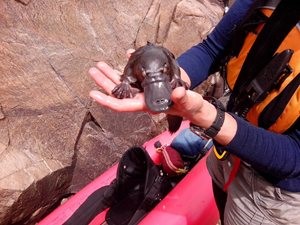
A baby Platypus rescued from a sinkhole by UMDR volunteers controlling willows. Photo Richard Swain.

A baby Platypus rescued from a sinkhole Photo Richard Swain. 

The Murrumbidgee River at Scottsdale Reserve – a favourite haunt of Platypus, the Ngunawal clan totem. Photo Dave Watts.

Photo Dave Watts. 

A Rosenberg's Goanna on Scottsdale. Photo Jeroen van Veen.

Rosenberg’s Goanna Photo Jeroen van Veen 

The Bare-nosed Wombat is a common sight at Scottsdale. Photo Jiri Lochman / Lochman Transparencies.

The Bare-nosed Wombat Photo Jiri Lochman  

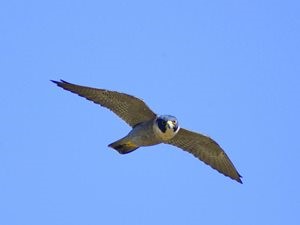
A Peregrine Falcon in flight. Photo Wayne Lawler / EcoPix.

Peregrine Falcon Photo Wayne Lawler  

Volunteers and revegetation at Scottsdale. Photo Annette Ruzicka.

 Photo Annette Ruzicka. 

Posted in Uncategorized | Leave a comment

How to (try and) catch a possum

Harry Logus – u6381875

I volunteered by helping an honours student, Tay Yee Seng, with his project researching brustail possums (Trichosurus vulpecula) on the ANU campus. Tay’s research involved fitting radio tracking collars to several possums, allowing them to be tracked and monitored. This can help understand possums’ behaviour and denning locations, which include buildings and infrastructureas well as trees, since possums adapt to urban environments better than many other species – because of this, possums cost the ANU over $1 million in damages each year.

A toy possum with a radio tracking collar

Although possums are not formally classified as a an invasive species in Australia, although they are considered invasive in New Zealand where they cause similar issues to those in Australia, including competing with other species for tree hollows, damaging food crops and causing damage to buildings.

Possum Trapping

Tay is now approaching the end of his research process so I was able help him trap possums to remove their tracking collars. This is necessary for animal welfare reasons, and because the collars are expensive.

Our task was to capture four possums with collars on the ANU campus: one near the Research School of Biology (RSB), one at the Chancellery building, one near the Law building and one at the ANU Security building.

Map of the possums with collars on the ANU campus

Trapping possums

On two separate nights, we set up two to three traps at each of the sites, baited with a piece of apple that we poured fish oil onto to create a strong smell to attract the possums. There are some limitations to when the traps can be set, since possums are less likely to come out in the rain, and more likely to on warmer nights.

Possum traps laid out near the RSB buildings

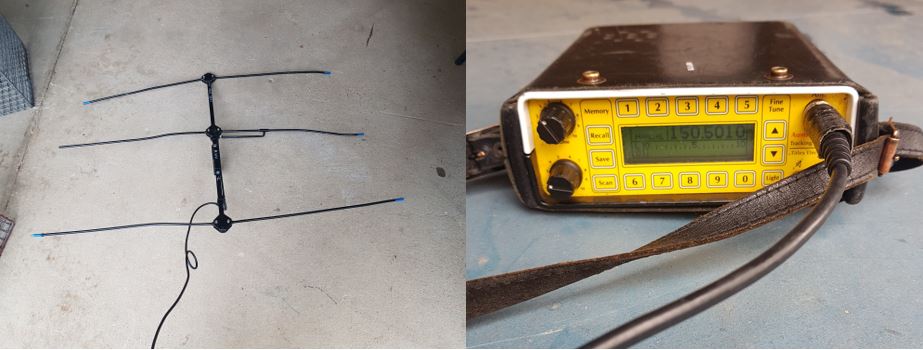
We also radio-tracked each possum before setting traps, to ensure it was where we expected it to be. This is done using a directional antenna set to the frequency of each possum’s collar.

Radio tracking equipment – the display on the device shows the signal strength to indicate how close the possum is

Once the traps were set, we returned to them after a few hours in the hope of having caught our possums with the collars. This was also a good opportunity to track the possums again, to see if they had moved. On the first night, we caught only one possum, near the Chancellery building, although it had no collar. We also saw a possum with its joey in a tree.

A possum with its joey

On the second night we caught no possums, but made some progress by seeing our collared possum in a tree near Chancellery.

We also came very close to catching the RSB possum, which we spotted in a tree. Enticing it with pieces of apple, it came within a couple of centimetres of the trap, but it didn’t seem hungry enough to venture into the trap and after an hour of waiting, it ran away.

The possum eating some apple we tried to entice it with

Reflections

In undertaking this task, I came to realise how labour intensive ecologically focussed projects can be. I spent over 10 hours without making any significant progress, so I can only imagine how much time Tay must have invested over the year. Tay also spoke about the fact that if he was not doing this project, the ANU would face considerable expenses paying contractors to do the work, which highlights the extent to which budgets and financial constraints can have an impact on how effective ecological management can be.

Posted in Uncategorized | Leave a comment

What doesn’t kill you makes you stronger: the potential for regeneration following fire

Lauren Schenk- u6663583

Following a postponement due to rainy weather conditions, we set off for Scottsdale Reserve, Bredbo on Friday October 9th. Our group included Dr David Freudenberger, his team and two fellow students. After a pleasant hour drive, we arrived at Scottsdale where we were greeted by a decked-out volunteer hub. We then set off into the field to start our work on measuring the regeneration of seedlings following fire. 

So, what is Scottsdale Reserve?

Seedling plantations at Scottsdale following the Orroral Valley Fire (Photo by Lauren Schenk 2020).

Scottsdale Reserve was purchased in 2006 by Bush Heritage Australia, a non-profit organisation, to prevent the subdivision of this land for housing. Covering an area of 1,328 hectares, this property had previously been used for agricultural purposes, and as such, around 300 ha had been extensively cleared. Scottsdale Reserve has a strong volunteer community who help in restoration efforts.

What’s being done at Scottsdale Reserve?

Several projects at Scottsdale have been set up to monitor the potential of recovering the endangered box-gum grassy woodlands that once dominated this region. In 2014-15 Dr Freudenberger and several of his students planted thousands of tubestock trees and shrubs native to the site. This included several eucalyptus, acacia and shrub species.

Tubestock plantings can be seen in the distant hill at Scottsdale (Photo by Lauren Schenk 2020)

Previous years were spent observing how well the seedlings survive in regards to both: 1) the landscape and, 2) the influence of volunteers maintaining them. However, the Orroral Valley fire that swept through this part of Australia during January 2020 in what is now known as the ‘Black Summer’ presented a new question: to what extent can the seedlings survive and regenerate following fire?

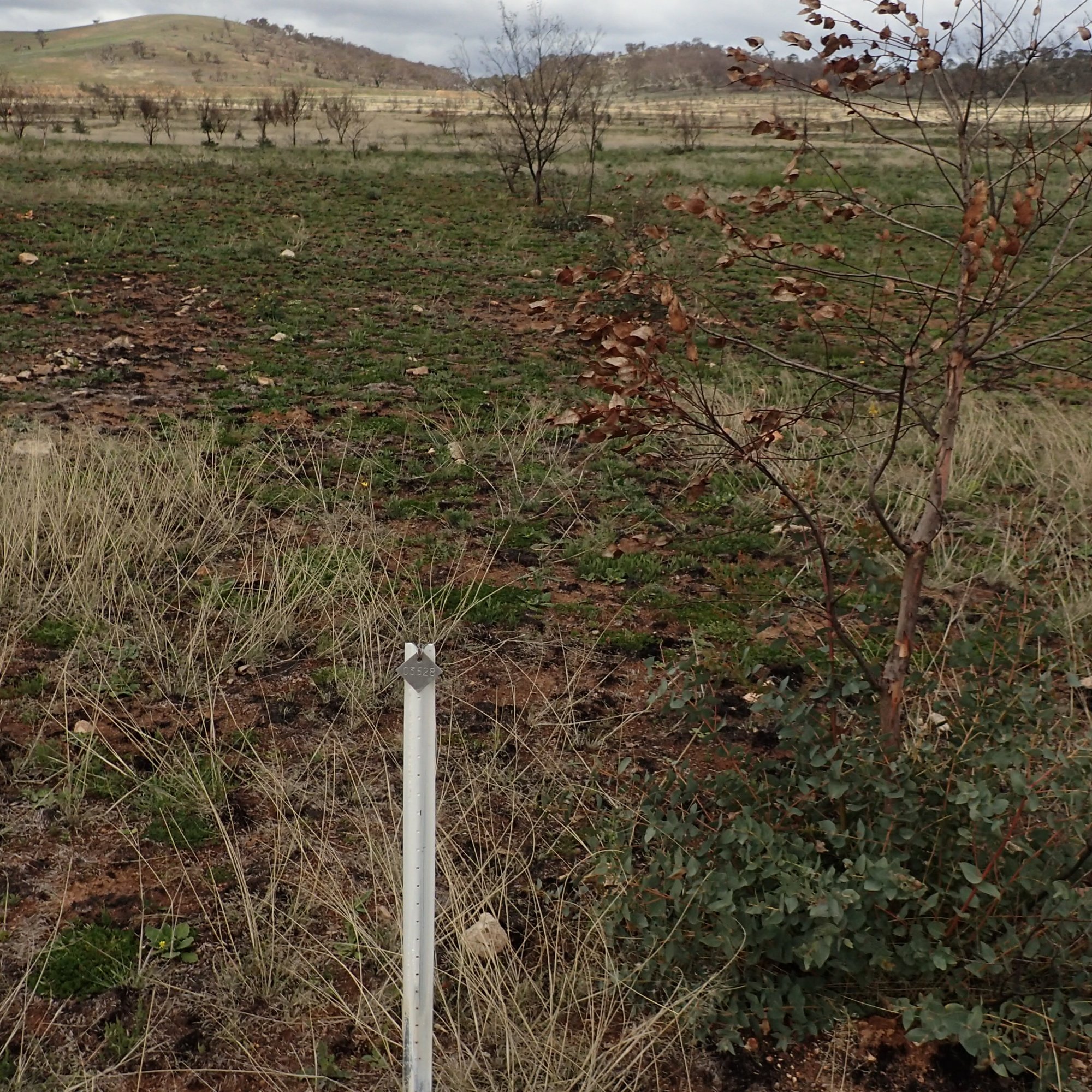
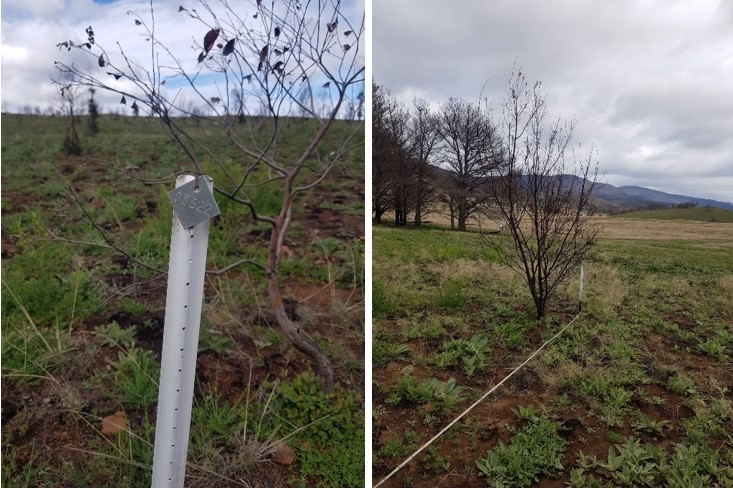
Image depicting the same individual over time. From left to right, Aug 2019, March 2020, and Oct 2020 (Photos by Dr David Freudenberger)

Our Role

Transect marker (left), tape measure showing transect line (right) (Photo by Lauren Schenk 2020)

Armed with a trusty 100 m measuring tape and a clip board, we set out along the various transects where the seedlings had been planted. Each 100m-transect had been assigned a number which correlated to a datasheet.

Datasheet depicting criteria measured (Photo by Lauren Schenk 2020)

On this datasheet, the specific species and its position was listed. Our role was to observe two components; the health of the individual, and the degree of regrowth/resprouting. For both health and regrowth/resprouting, this was given on a scale of 0 to 2, where 0 is dead/regrowth absent, and 2 is robust health/vigorous regrowth. Regrowth/resprouting was further classified into epicormic, lignotuber, seeding and root plates.

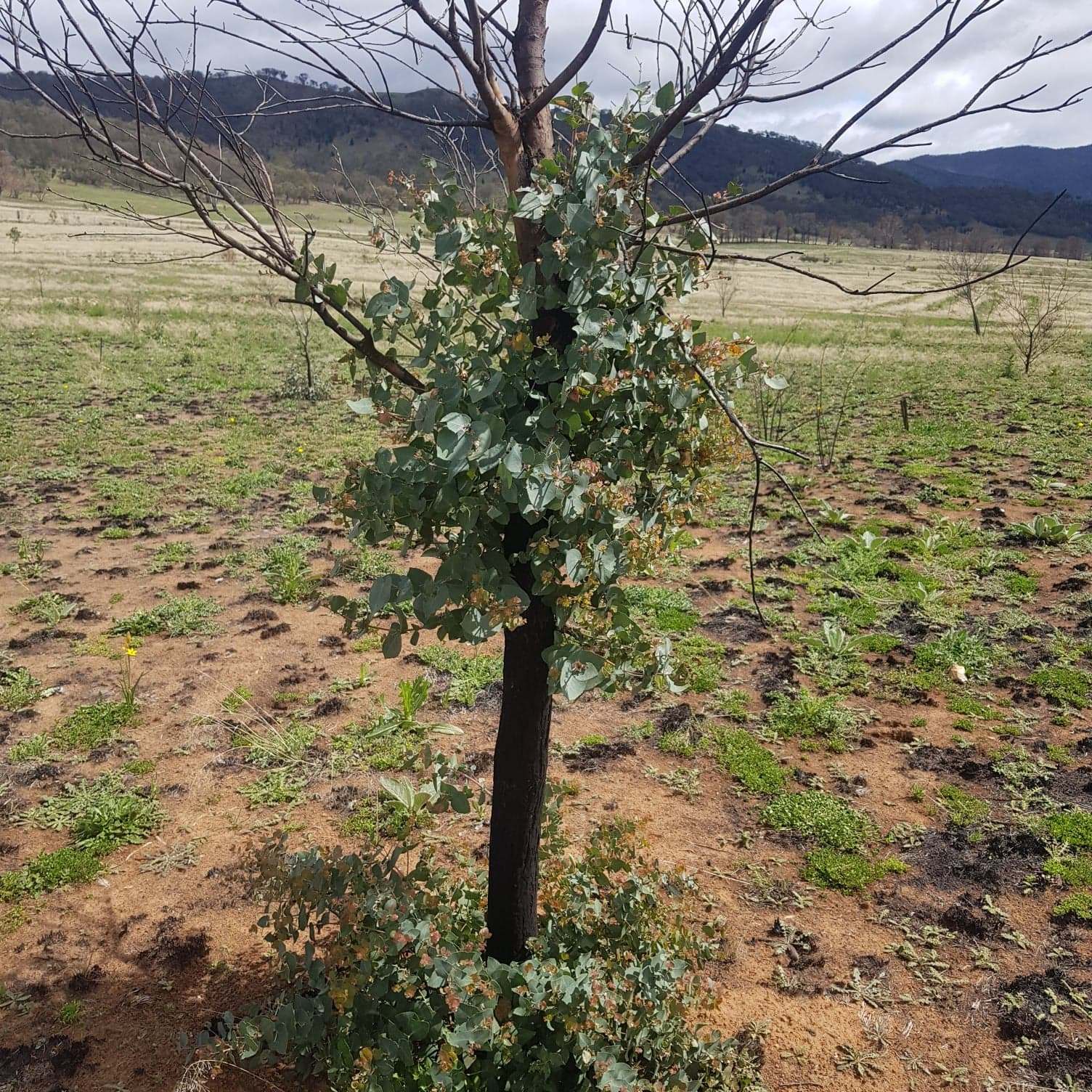
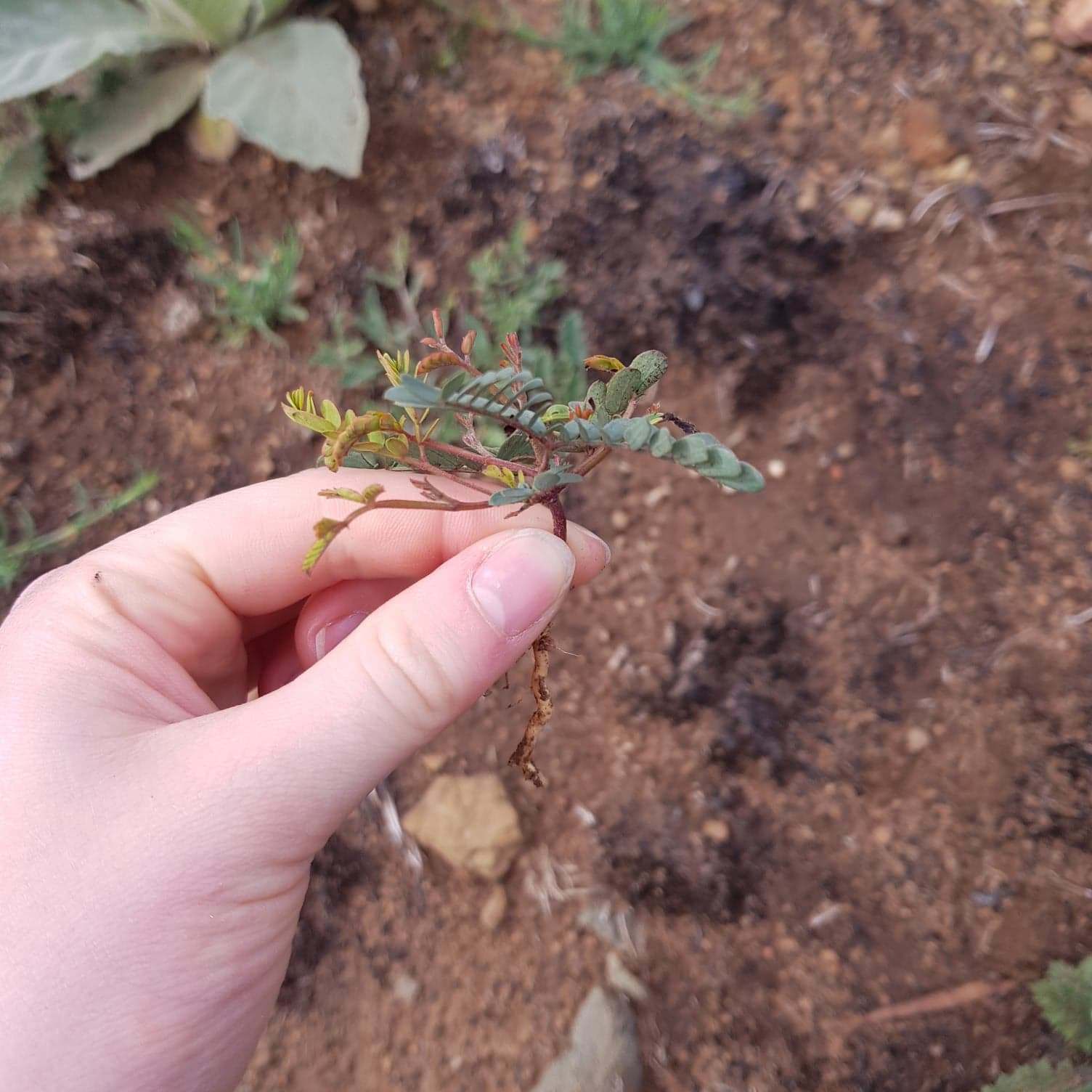
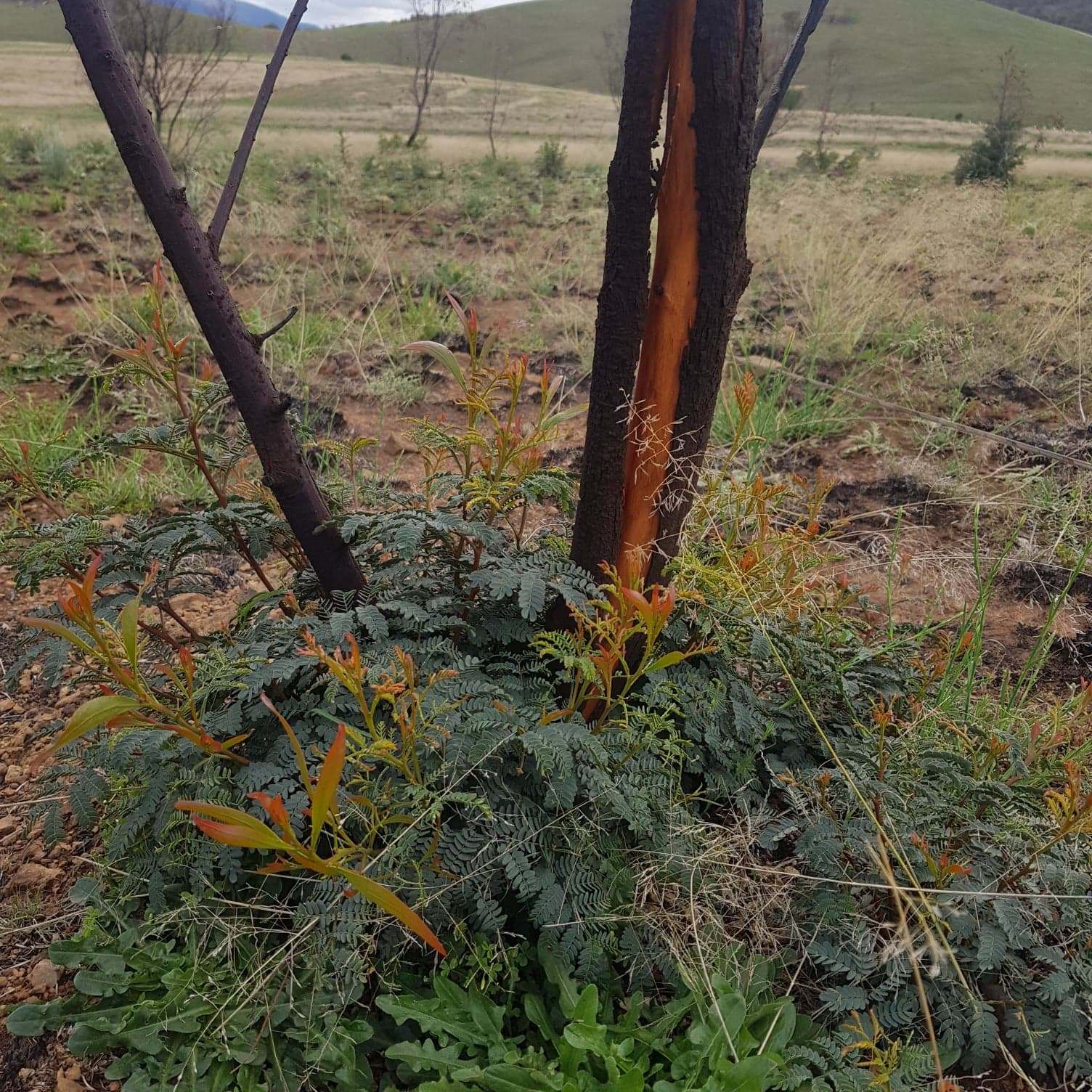
Top left: epicormic growth on a eucalyptus tree. Top right: lignotuber growth on Eucalyptus melliodora. Bottom left: seedling resprout of Acacia rubida. Bottom right: root plate resprouting of Acacia rubida. (Photos by Lauren Schenk 2020)

What’s the verdict?

From the general trends in the data we collected, Dr Freudenberger estimated a survival rate of over 90%! A high proportion of the Eucalyptus and Acacia seedlings were repouting/regrowing. This is incredible considering how damaged and bleak the landscape looked following the fire.

While some natives fared well against the fire others, such as the native shrub Cassinia were not so fortunate. Moving along the transect, cassinia was consistently absent. This shows the variation in survival from species to species following a natural disturbance. As our climate continues to change and frequency of fires increases, this resilience will become more and more important. Therefore, it is vital for us to understand how communities, both native and restored respond to these disturbances. The work done at Scottsdale could be crucial to enabling this understanding.

Scottsdale presents an amazing opportunity to volunteer and make a difference in a community not too far from home. I would highly recommend looking into being a volunteer here.

Word count: 500

Acknowledgements

I would like to thank Dr David Freudenberger for organising this trip and all his amazing insight into the work done at Scottsdale. I would also like to that the other members of his team, Shoshana and Peter, as well as my other fellow students for making this trip so enjoyable.

References

BUSH HERITAGE AUSTRALIA. Scottsdale [Online]. Available: https://www.bushheritage.org.au/places-we-protect/new-south-wales/scottsdale [Accessed].

DEPARTMENT OF ENVIRONMENT CLIMATE CHANGE AND WATER NSW 2011. National Recovery Plan for White Box – Yellow Box – Blakely’s Red Gum Grassy Woodland and Derived Native Grassland. Department of Environment, Climate Change and Water NSW. Available at: https://www.environment.gov.au/system/files/resources/386f395f-b2c6-4e10-8fc3-e937ad277bfe/files/white-and-yellow-box.pdf

HNATIUK, S., RAYNER, I., BROOKHOUSE, M. & FREUDENBERGER, D. 2020. Survival of native seedlings planted by volunteers: The Lower Cotter, ACT case study. Ecological Management & Restoration, 21, 151-154. Available at: https://onlinelibrary.wiley.com/doi/full/10.1111/emr.12410

MAGUIRE, O. & MULVANEY, M. 2011. BOX-GUM WOODLAND IN THE ACT. Conservation Planning and Reserach Policy Division. Available at: https://www.environment.act.gov.au/__data/assets/pdf_file/0011/576848/Box-Gum_Woodland_Technical_Report_25_Cover.pdf

PICKUP, M., WILSON, S., FREUDENBERGER, D., NICHOLLS, N., GOULD, L., HNATIUK, S. & DELANDRE, J. 2013. Post‐fire recovery of revegetated woodland communities in south‐eastern Australia. Austral Ecology, 38. Available at: https://onlinelibrary-wiley-com.virtual.anu.edu.au/doi/epdf/10.1111/j.1442-9993.2012.02404.x

Posted in Uncategorized | Leave a comment

Connecting Habitat for Biodiversity

I recently sat down (virtually!) to chat with Lori Gould from GrassRoots Environmental about her work with Land for Wildlife and Rivers of Carbon. Lori has over 20 years of experience in Natural Resource Management in Australia, specialising in riparian restoration, and she works to engage communities in biodiversity conservation.

Biodiversity

Biodiversity simply means the variety of life on Earth. Humanity is highly dependent on biodiversity, because a diversity of flora and fauna supports healthy ecosystems, which provides humanity with services such as fresh water, soil health, pollination, and food, fibre and fuel production. The loss of biodiversity through global and local extinctions can compromise the provisions of these services. Unfortunately, global biodiversity loss is already occurring at unprecedented rates resulting from significant human alteration of the natural environment. The current rates of biodiversity loss are at least 10-100 times greater than historic averages, with around 1 million species already facing extinction.

Habitat for wildlife is essential to biodiversity

For terrestrial species, habitat loss and fragmentation represent the primary threats to biodiversity. In Australia, the loss of biodiversity is particularly prominent since European colonisation, with dramatic land clearing occurring since the late 1980’s for development, including agricultural use. One of the most effective ways to conserve biodiversity is to protect habitat for wildlife such as through National Reserve Systems (NRS). Considering that Australia’s NRS is inadequate to properly protect biodiversity and that current global resourcing for biodiversity protection falls grossly short, there is a clear need for alternative means of biodiversity conservation. Organisations such as Bush Heritage Australia are taking this problem into their own hands by buying land for conservation purposes. These investments are typically pursued in areas containing species or ecological communities that are under-represented in the NRS.

Lori’s work with Land for Wildlife achieves a similar goal of improving biodiversity on non-NRS land. However, Lori partners with existing landholders who volunteer to improve the biodiversity values of their land without legally committing to exclusive conservation land uses. An important aim of the program is to connect existing habitats like remnant vegetation patches, roadside vegetation and shelterbelts by adding features like wildlife corridors and stepping stones to the landscape, and revegetating riparian zones. These agri-environment schemes represent an effective and important way to conserve biodiversity, whilst allowing the productivity values of a landscape to be maintained.

Image 1. Source: The Nature Conservancy. Restoring habitat connectivity is important for aiding species’ abilities to adapt to changes in their ecological niches, especially in light of climate change pressures. The image shows how species can move between patches that are connected.

Humans are not just the cause of biodiversity loss, they are also part of the solution

In discussions with Lori, I was struck by the importance of the social dimension of biodiversity conservation. Engaging with landowners to blend their business with biodiversity outcomes by finding win-win solutions is key. At the most basic level, Lori said that sustainable agriculture is all about “being able to produce from your land as well as being able to look after it”. Farming systems are diverse, and each farm has different biodiversity values and land management priorities, so environmental conservation can be undertaken in a variety of ways. That’s why Lori’s approach is to equip farmers with a ‘toolbox’ of information and resources they can draw upon to implement conservation efforts according to which sustainability issues are most relevant and pressing to them.

Image 2. Source: Richard Snashal. Lori is involved in restoring degraded rivers like this, so that they can become a biodiverse corridor that can support habitat for aquatic and terrestrial wildlife.

At the end of the interview, I asked Lori “Why do you do what you do?” and her response was rather moving.

“Apart from enjoying my work, I hate the thought of losing it. People ask me ‘why would you save that little fish?’. It’s because I am not willing to lose it. It’s about not accepting the loss of things just because I can’t be bothered to save it. It’s about giving the environment equal value.”

With people like Lori working on biodiversity conservation, there’s certainly hope for our future.

Montana de Meillon; U6403620

Word Count: 539

Posted in biodiversity conservation, Restoration ecology | Leave a comment

Faction Wars: Social Behaviour Dynamics in White-winged Choughs

By Marvin Jin (u6599031)

Behavioural Ecology

White-winged choughs (Corcorax melanorhamphus) are a communal species that congregate together to form social groups. These highly territorial birds carry out obligatory cooperative breeding where a single pair dominates the group and produce offspring, while the others serve as helpers to the brood.

Like a scene straight out of a movie, birds of different groups engage in gang fights and kidnapping, all to strengthen the stability of the social group. They do so by abducting fledgelings and destroying the eggs and nests of rival groups. These complex behaviours do not stop there as even within social groups, deception is commonplace for White-winged Choughs when resources are scarce.

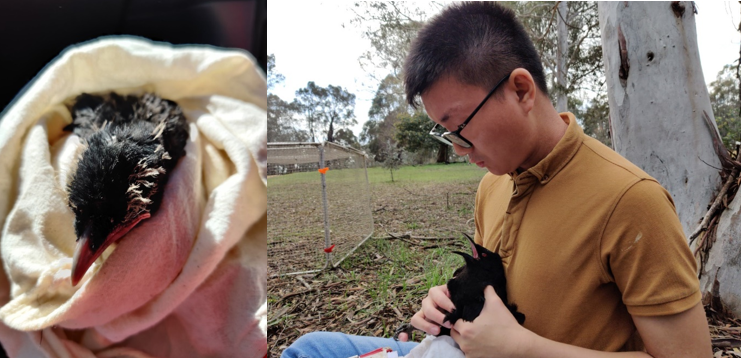
A fallen nestling (left) compared to an adult White-winged Chough (right).

Bird banding work

Studying their complex social behaviour is an ongoing endeavour for Professor Robert Heinsohn from the Fenner School. Assisting on this work is Dr Constanza Leon, who I first heard of this work from over last summer. Professor Heinsohn and his colleagues have refined techniques and methods used to study individual-based social behaviour and cognition in these birds and translate them into approaches in conservation biology.

“Each bird possess a personality unique to the individual”, echoed Dr Constanza, who spent a considerable amount of time during her PhD mapping the relationships of every bird within social groups. This perspective is often important in reintroduction and monitoring projects whereby the study of individuals tell a story about the population dynamics that could inform management strategies.

My role as a scribe was to help with luring, trapping and recording the birds’ measurements while Dr Constanza took measurements and put on identification bands on their tarsus. However, being a professional bander in Australia takes a lot of commitment and skills as required by the Australian Bird and Bat Banding Scheme (ABBBS). You can imagine the state of wonderment I was in when Dr Constanza recognised an individual just by their behaviour.

Dr Constanza measuring the weight of the captured bird (left) and a manual swing panel trap baited with shredded cheese in it (right).

Climate change and urbanisation

After several banding trips, I sat down with Professor Heinsohn for a casual interview on his perspective on his work. Of which, he shared the consequences of urbanisation on biodiversity. Using White-winged choughs as examples, he noted that as biological invasions into urbanised areas become more prevalent, there is a trade-off between urban and non-urban populations. Urban populations tend to experience lower fledgeling survival but more stable food resources, compared to their non-urban counterparts.

Under climate change, droughts may become more widespread and chough populations may be destabilised, causing a reshuffling of social groups. Individuals may choose to reside in more urbanised settings to secure more stable resources. Perhaps we should consider giving attention somewhere closer to home and think more about ecological planning in cities. The concept of ‘habitecture’ immediately came into my mind as I wonder how cities can integrate ecological values to enhance biodiversity conservation.

Acknowledgements

Thank you Professor Robert Heinsohn and Dr Constanza Leon for providing the opportunity to learn more about this charismatic species.

(490 words)

References

Beck, N.R. and Heinsohn, R., 2006. Group composition and reproductive success of cooperatively breeding white‐winged choughs (Corcorax melanorhamphos) in urban and non‐urban habitat. Austral Ecology31(5), pp.588-596.

Heinsohn, R., Dunn, P., Legge, S. and Double, M., 2000. Coalitions of relatives and reproductive skew in cooperatively breeding white-winged choughs. Proceedings of the Royal Society of London. Series B: Biological Sciences267(1440), pp.243-249.

Dai, A., 2013. Increasing drought under global warming in observations and models. Nature climate change3(1), pp.52-58.

Baker, G.B., Dettmann, E.B., Scotney, B.T., Hardy, L.J. and Drynan, D.A.D., 1997. Report on the Australian bird and bat banding scheme, 1995–96. Environment Australia, Canberra.

Barrueto, C.L., 2019. Social structure, individual fitness and the effect of climate in an obligate cooperatively breeding bird, the white-winged chough (Corcorax melanorhamphos).

Boland, C.R., Heinsohn, R. and Cockburn, A., 1997. Deception by helpers in cooperatively breeding white-winged choughs and its experimental manipulation. Behavioral Ecology and Sociobiology41(4), pp.251-256.

Heinsohn, R.G., 1988. Inter-group ovicide and nest destruction in cooperatively breeding White-winged Choughs. Animal behaviour36(6), pp.1856-1858.

Heinsohn, R.G., 1991. Kidnapping and reciprocity in cooperatively breeding white-winged choughs. Animal Behaviour.

Heinsohn, R.G., 1992. Cooperative enhancement of reproductive success in white-winged choughs. Evolutionary Ecology6(2), pp.97-114.

Posted in Uncategorized | Leave a comment