
u6535405 – See Cheng
Unlike other bloggers, I did my work experience indoor as I have experienced a knee injury. Therefore, I have chosen the online work experience opportunity for my work experience in Atlas of Living Australia (ALA), where they provide platform for different organization for citizen science job opportunities. Citizen science are usually performed by citizens that helps scientist on data collection and analysis in relation to the natural world. Although the impression of citizen science are usually boring and repetitive, I actually enjoy this experience and surprisingly convenient. Moreover, this experience make me realise the importance of citizen science, where the general public can contribute their own frames and knowledge while exchanging knowledge from the scientific research. Furthermore, Citizen scientists can give out different feedback from the project which can improve the measures and contribute ideas of a scientific research.
There are 3 types of expedition in ALA, which is collection labels, historical documents and wildlife spotter. In this work experience I have chosen collection labels an wildlife spotter. As I am an international student, I am not too familiar with cursive writing so I didn’t choose historical documents for part of my job experience.
Wildlife Spotting
How many Emus are in the picture below?
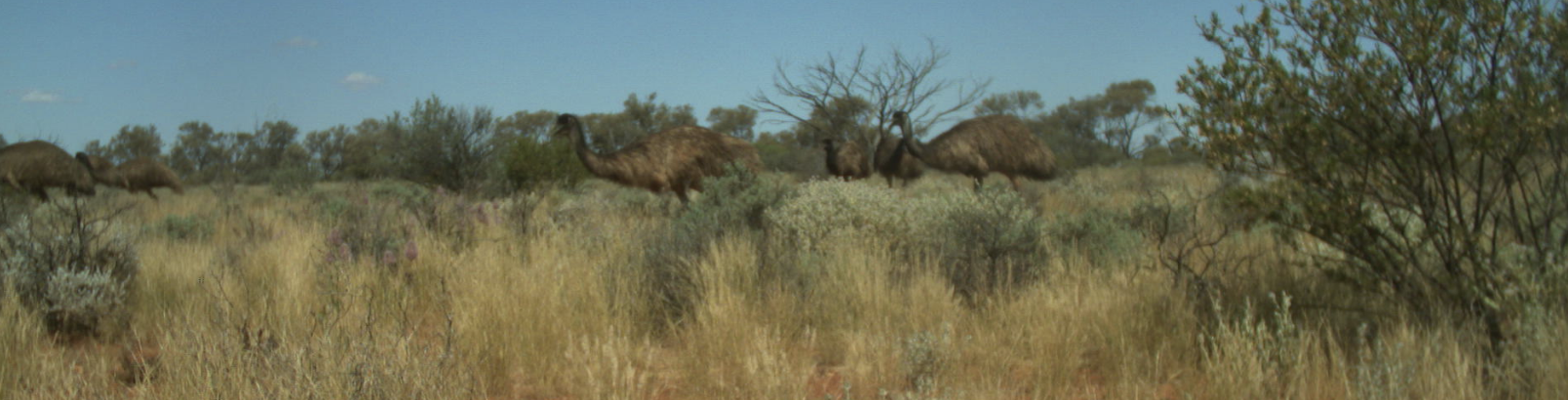
I have participated the Bush Heritage Australia (BHA) Bon Bon Core 41 programme. The BHA uses camera to record animal activities, citizen scientists are required to assist with the identification of the key species . DigiVol is a tool to identify species by providing image from wild camera and manually tick on the indicates animals appear in the image.
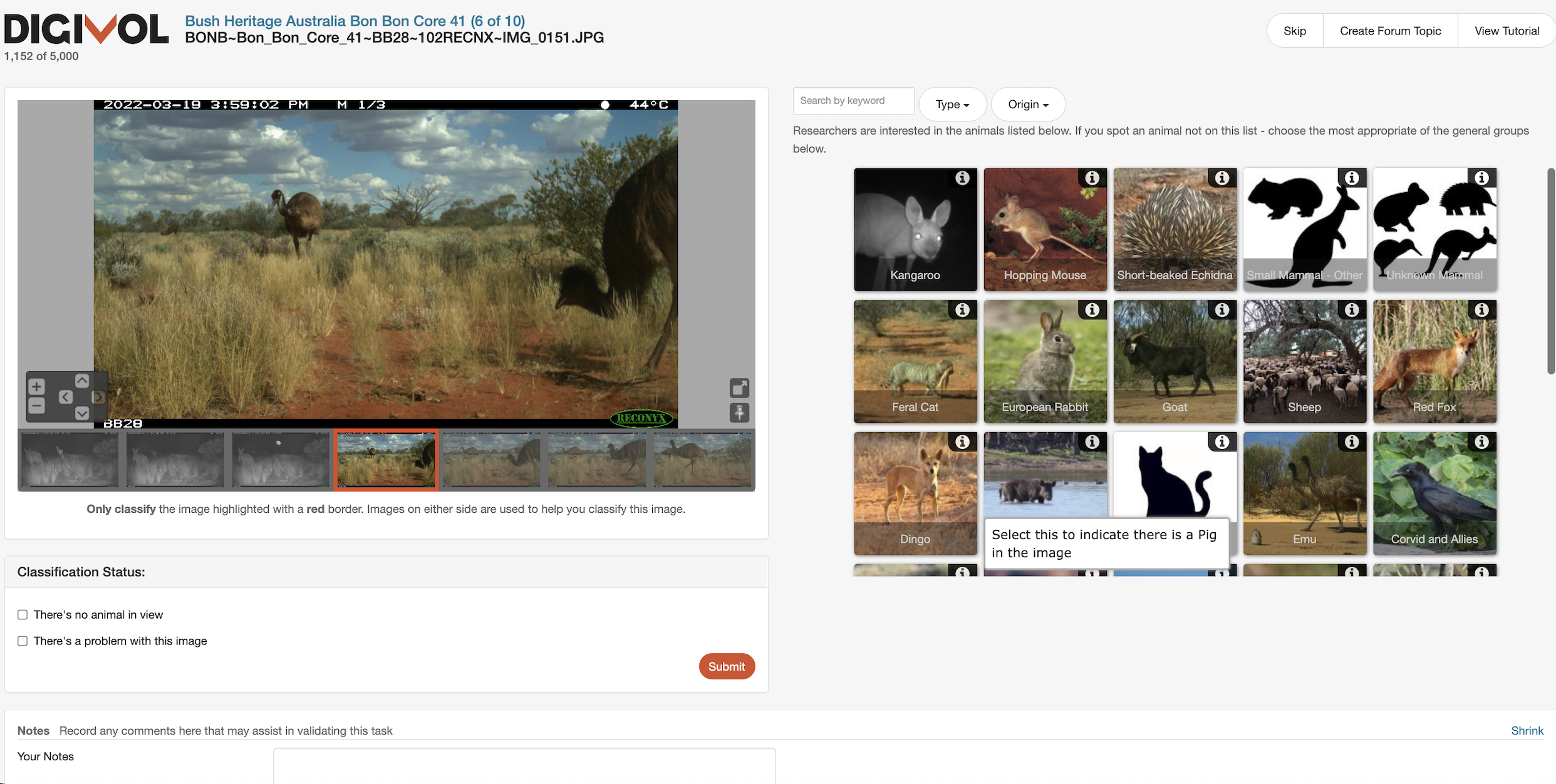
I have monitored over 500 wildlife camera shots and cost me around 3 hours which is captured in Bon Bon Station Reserve. DigiVol is a application that provide user interface for citizen science while giving me different challenges like the photo above or like a completely dark photos. In order to provide an accurate result, we have to go through frames from back and forward.
This experience makes me feel like a puzzle game where we need to go through the picture carefully while choosing the correct species. Although there are no endangered animal appeared during the experience, I still find it interesting and sometimes challenging.
Collection Labels
Transcribing the information from the original label into digital data for the Victorian School of Forestry (VSF) is our expedition for collection labels. Multiple samples of small branch or flowers from Eucalypts trees, which is collected back in the 60,70s, will be access and transcribe into data. Information will be available on Australian’s Virtual Herbarium and Atlas of Living Australia.
I have transcribed 5 if the collections. The most interesting part of this expedition is when I had come across a collection that were sampled in Dec 1944. I am really glad as the documents are full of historical values. Moreover, I have realise how technology intervene science as most of the samples data may include GPS locations while the sample from 40s only gives out approximate locations.

 Biodiversity Conservation