
Removing Burgan plants on Black Mountain
by Siobhan Allpress, u6650891
It’s a box-gum world, and we’re just living in it
Box-gum grassy woodland is one of the most threatened ecosystems in Australia, with only 10% remaining since pre-colonisation. It is home to many important and iconic Australian species, such as the Pink-Tailed Worm Lizard and Superb Parrot, which are at risk because of the removal of their natural habitat.
As part of box-gum grassy woodland restoration, the Australian National Botanic Gardens and Friends of Black Mountain have been restoring areas around Black Mountain in which regrowth and re-establishment may happen.
Black Mountain is an ecologically unique landscape, with hundreds of species of fauna and flora, including some orchid species that are found nowhere else in Australia (you can have that fun fact for free!)
Baa baa Black Mountain
Black Mountain is a familiar site to all Canberrans, with Telstra tower standing stark against the sky, like a beacon guiding the way home. But before the iconic rocket-ship structure was constructed, parts of the mountain were privately owned and were home to many flocks of sheep between the 1920s to 1940s.
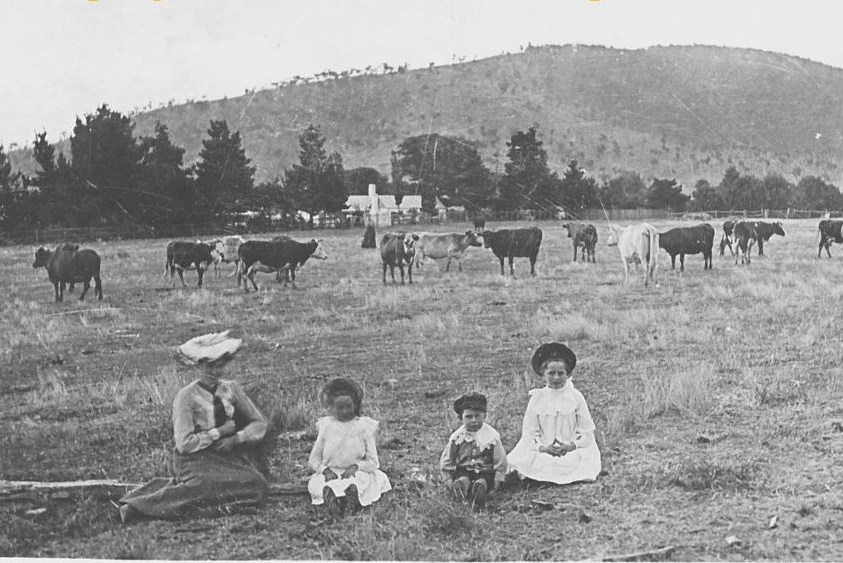

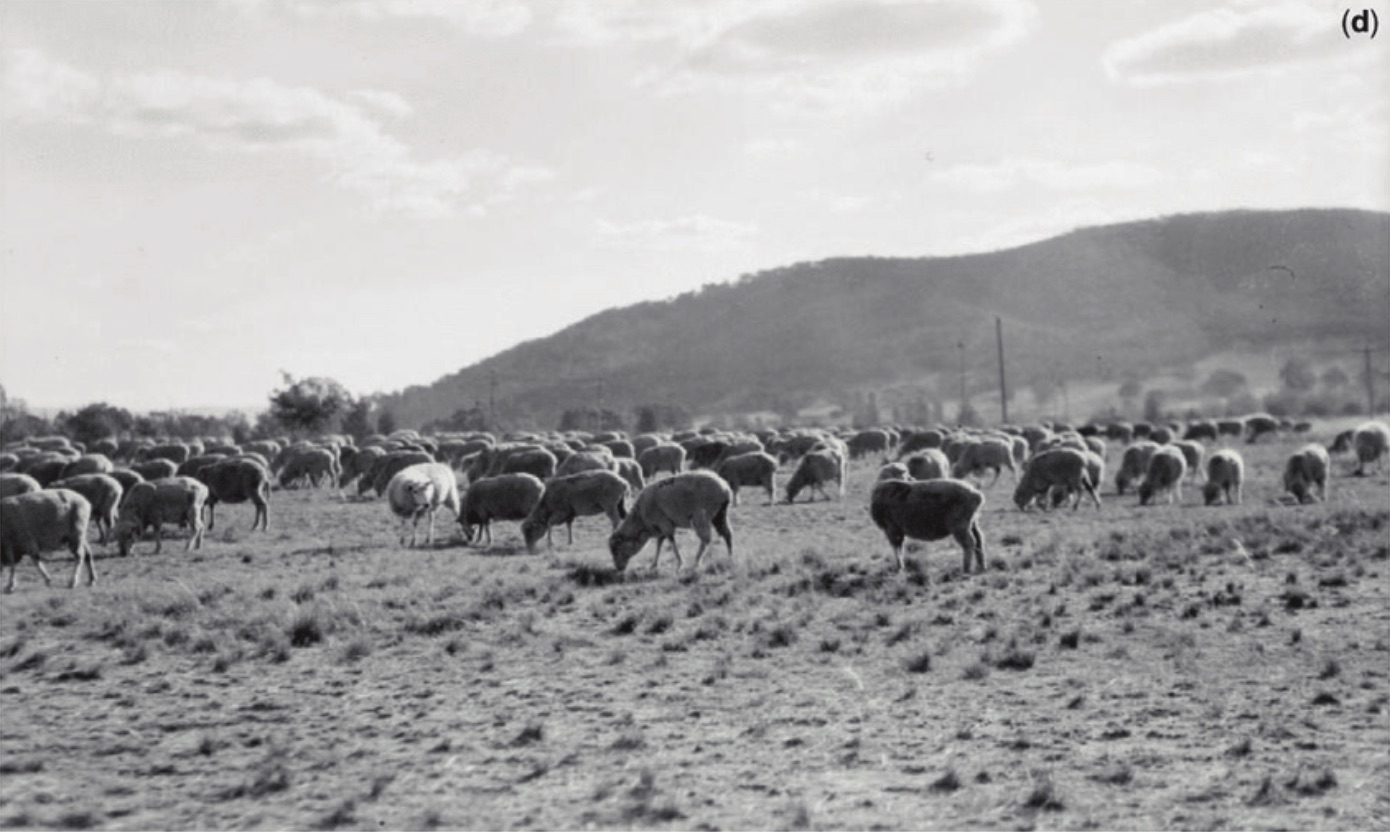
Burgan (scientific name Kunzea ericoides) is a native plant from the tea tree family found along the southeast coast of Australia, from Queensland to Victoria. Burgan is presently a problem on many post-agricultural lands because it spreads fast, is difficult to remove and loves the condition of soil after livestock has grazed it. As such, Burgan is a problem in the Black Mountain Nature Reserve because the soil is highly fertilised, courtesy of the sheep.
The goal of restoration has been to remove the Burgan to restore the field to its natural grassy state. This begs the question; why is removing a native plant a good thing? And the answer is that while Burgan is a native species, its growth has been accelerated beyond normal rates because of human activity and agricultural impact on the land. Burgan does not usually spread this fast and because of this spread, it’s intruding on other natural landscapes.
The Battle of Box-gum versus the Big, Bad, Burgan
The site chosen is on the southwest side of Black Mountain. This site was originally one of those which was a sheep paddock, and was called Smith’s Paddock.
Burgan is a hardy plant and is difficult to remove using usual methods; bulldozing and burning simply don’t work. The plants create shoots from the base of the trunk which spread outwards quickly. Because of this, by removing just the foliage or the shrub cover, the plant can still regenerate. So we got down to it, put in some good, old elbow grease and cut the plants out at their roots.

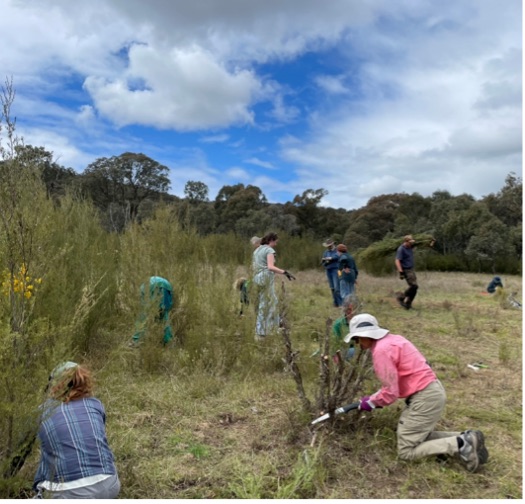
Shouldering the Burgan together
And boy, was it a hard day’s work! With lots of sweat (thankfully no blood or tears), we managed to uproot many of the Burgan plants and clear more of the paddock. With some fuelling from an excellent morning tea (as if anyone needed more reasons to join in) morale was soaring. As you can see, there’s plenty of work still to be done, and we’ll be back removing Burgan for a few more weeding parties at least to restore the paddock.
A special thanks to Linda Beveridge and Rosemary Purdie for providing and organising this working group, and all their knowledge of Black Mountain and passion to preserve it.

 Biodiversity Conservation