
Madeleine Bessell-Koprek (u7132499)

What is common mullein and why is it a problem?
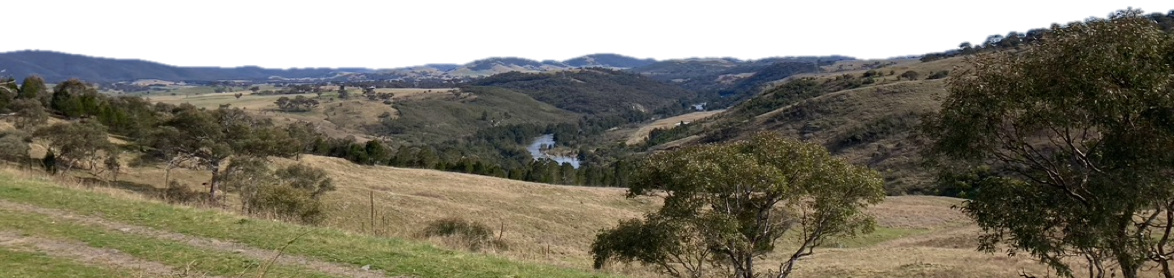
Walking through the Ginninderry Conservation Corridor, looking over the Murrumbidgee river and across to the mountains, you could be forgiven for happily thinking you are in a beautiful, healthy ecosystem. But right under your feet is one of the greatest threats to Australian biodiversity: weeds. Indeed, in NSW weeds are the second greatest threat to biodiversity after land clearing/habitat loss. Here we will examine one introduced weed species: common mullein (Verbascum thapsus)- the spreading, soft, leafy plant that abounds the slopes of the conservation corridor.
Common mullein, native to North Africa, Europe and Asia, was introduced to Australia in the late 1800s as a garden plant. The introduced species is highly problematic because its large, spreading leaves smother native plants and grasses, restricting their access to nutrients, rain and sun. Additionally, common mullein is a prolific seeder, each plant producing between 180,000 and 240,000 seeds. The seeds remain in the seed bank for prolonged periods of time, sometimes retaining their germinative powers for 100 years.

When is a weed a weed?
We have established that common mullein is a weed, and a problem to the Ginninderry region. But what, exactly, is a weed? This question is more complex and divisive than it might first appear. “Weediness” is not a specific, ecological trait or inherent characteristic, but rather a human-imposed judgement call. Many might consider a weed to be a plant that is encroaching beyond its native range, but as ecosystems shift (particularly in the context of climate change) many species spread beyond their historic ranges. Does this mean they are necessarily weeds? Other definitions of weeds state that they are species that cause problems to the environment or humans. This can quickly become highly subjective. So, does this mean the concept of a “weed” is too subjective and human-centric to be of use? Not necessarily. It does mean we need to be careful of how we use the term, and realise that it is not a universal, ‘scientific’ concept, and means different things in different environmental and social contexts.

Managing common mullein- what can you do?
Regardless of your exact definition of a weed, common mullein is clearly a problem to native species in Ginninderry, and requires active management. Current management of the common mullein in Ginninderry is centred around the manual removal of the weed. This is overseen by the Ginninderry Conservation Trust, who’s employees manually remove the weed with a mattock. Additionally, community work groups of volunteers, armed with enthusiasm and mattocks are critical in managing the weed.
Furthermore, the Ginninderry Conservation Trust employers encourage anyone walking through the conservation to corridor to, quite literally, kick out common mullein when you see it. So, to conclude, if you feel like blowing off some steam and helping in the conservation of Ginninderry, take a stroll and kick out some common mullein.
All images taken by author
References
Alba, C. and Hufbauer, R. (2012). Exploring the Potential for Climatic Factors, Herbivory, and Co-occurring Vegetation to Shape Performance in Native and Introduced Populations of Verbascum thapsus. Biological Invasions, 14(12), pp.2505–2518. doi:10.1007/s10530-012-0247-4.
Atlas of Living Australia (n.d.). Species: Verbascum thapsus (Aaron’s Rod). [online] Atlas of Living Australia. Available at: https://bie.ala.org.au/species/https://id.biodiversity.org.au/node/apni/7027305 [Accessed 22 Oct. 2022].
Ginninderry Conservation Trust. (n.d.). Ginninderry Conservation Trust. [online] Available at: https://www.ginninderry.org/ [Accessed 21 Oct. 2022].
IUCN (2018). Guidelines for Invasive Species Planning and Management on Islands. doi:10.2305/iucn.ch.2018.15.en.
NSW Department of Planning and Environment (n.d.). Widespread Weeds. [online] NSW Environment, Energy and Science. Available at: https://www.environment.nsw.gov.au/topics/animals-and-plants/pest-animals-and-weeds/weeds/widespread-weeds [Accessed 21 Oct. 2022].

 Biodiversity Conservation