
(By U6951026)
The combination of increased environmental degradation and biodiversity decline along with population growth and increased demands on housing requires us to try balance these by developing suburbs and building new houses in a way that is sustainable and not overly detrimental to natural habitats and landscapes. An example of this occurring is in the ACT, in an area called Ginninderra. Ginninderra is a new area in Canberra, ACT, which is currently being developed on, with a design in mind to create a space that balances both the needs of people, the environment, and animals. As a part of this development, a large area of almost 600 hectares is being set aside for conservation, called the ‘Ginninderry Conservation Corridor’. This site serves as an offset for a number of species whose habitat is being cleared for development, including Pink-Tailed Worm Lizard and Box-Gum Grassy Woodland.
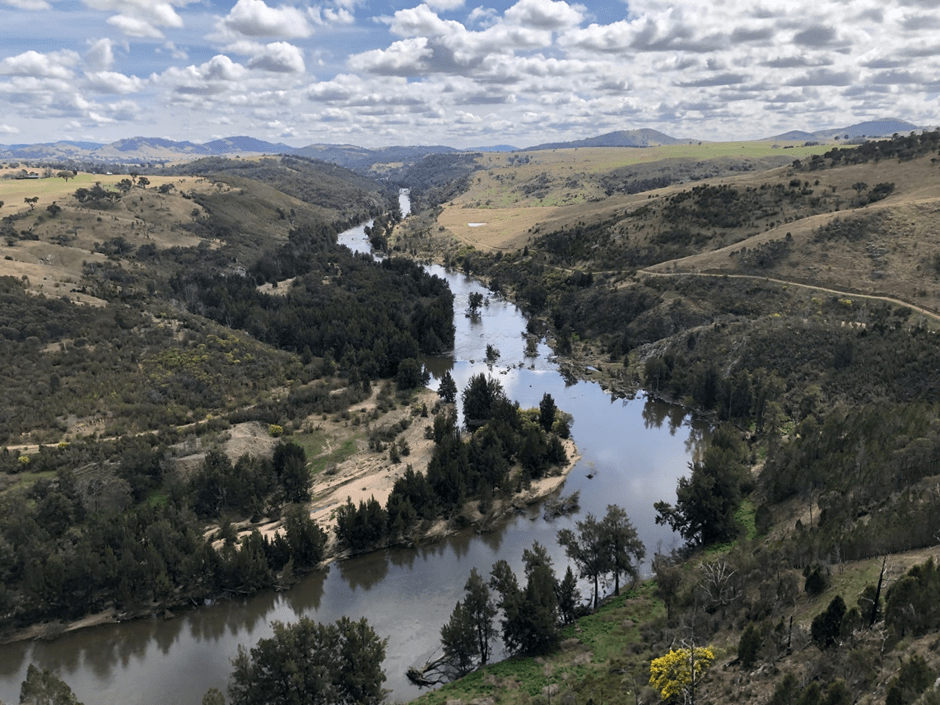
Part of Ginninderry Conservation Corridor: A view from Shepherds Lookout in Canberra, looking out at the Murrumbidgee River. Source: Krajina, 2022
To manage this conservation effort, the Ginninderry Conservation Trust was established, through which many actions are organised to maintain the area, as well as to promote and support the biodiversity in the area. One important action carried out is…weeding!
Weeding is an essential conservation action to help achieve biodiversity goals and outcomes. Weeds are typically species that are non-native and invasive, which take up the habitats and resources which native species would occupy and use. Many of them create what is known as ‘monocultures’ wherein the diversity of the vegetation in an area is reduced and becomes overpowered by a few select species; those which are able to survive and out-compete the others. This is bad as community structure diversity is important for ecosystem function. Thus, weeding is necessary to remove unwanted species, so native plants can better grow and flourish.
The weeding that was performed by us student volunteers in Ginninderry was on Verbascum Thapsus (commonly known as the Great Mullein).
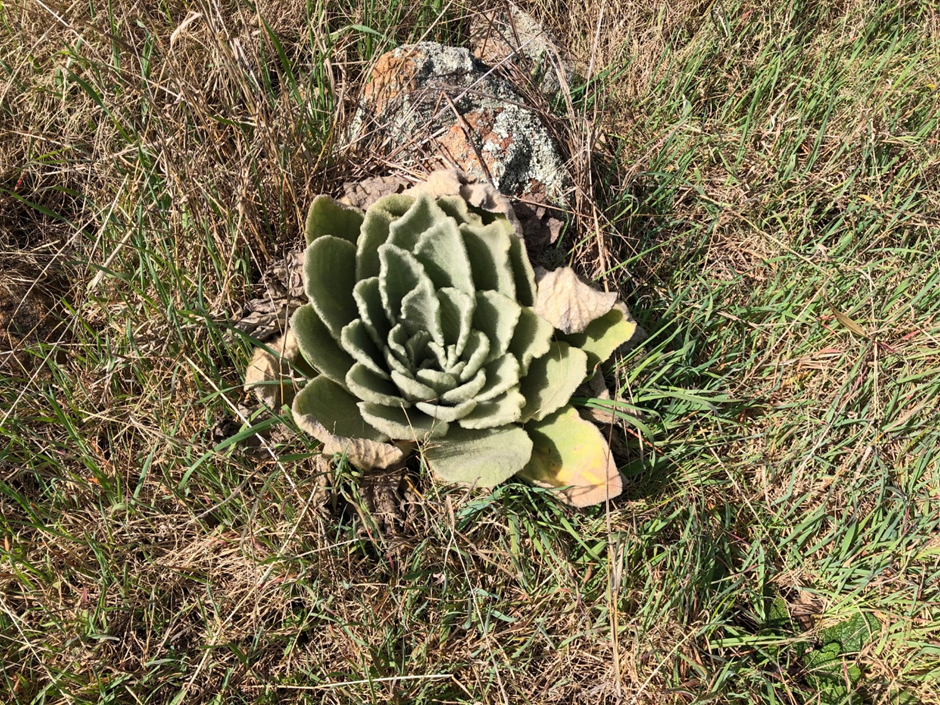
An image of Verbascum Thapsus in Ginninderry Corridor. Source: Krajina, 2022
Originally from Europe and Asia, the plant has thrived and overtaken many areas in the trust corridor, as well as in other places around ACT and Australia broadly. The plants take advantage of the resources available and spreads to create a predominantly monoculture environment, not allowing for the growth of native plants which help to improve and increase biodiversity, as well as to support native species.
Although tiresome work, the weeding we did was very important to helping conservation efforts. The spread of these plants is overwhelmingly wide and as they say, many hands make light work. The rangers we worked with said that the amount of weeding we managed to get done would have taken them alone many hours more time.
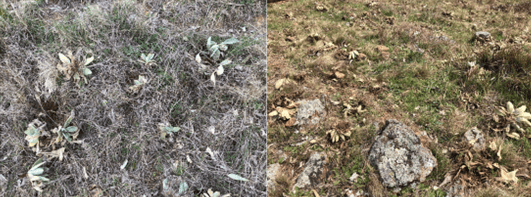
A hard day’s work of pulled up weeds! Image credit: Krajina, 2022.
If anyone is interested, there are many other reserves and areas around Canberra which also need weeding and appreciate the time and efforts of volunteer to help. Here are a few links for projects if anyone would like to get involved in these 😊
https://app.betterimpact.com/PublicOrganization/f0ee66c1-d99a-476f-be7e-dfe3bca62fe5/1
References
Adams, J., 2018. Ginninderry Development: Offset Management Plan, Canberra: Riverview Projects (ACT).
Eland, R., 2021. Weed Management Plan Ginninderry Conservation Corridor, Canberra: Ginninderry Conservation Trust.
Environmental Weeds of Australia, 2016. Verbascum thapsus. [Online]
Available at: https://keyserver.lucidcentral.org/weeds/data/media/Html/verbascum_thapsus.htm
[Accessed 29 October 2022].
Ginninderry Conservation Trust, 2022. Conserving land through outreach, restoration and research. [Online]
Available at: https://www.ginninderry.org/
[Accessed 29 October 2022].
Ginninderry, 2022. Inspiring a new way of living. [Online]
Available at: https://ginninderry.com/
[Accessed 29 October 2022].
National Housing Finance and Investment Corporation, 2020. State of the Nation’s Housing 2020. [Online]
Available at: https://www.nhfic.gov.au/media/1587/state-of-housing-demand-chapter.pdf
[Accessed 29 October 2022].
Shooshtarian, S. et al., 2021. Australia’s push to make residential housing sustainable – Do end-users care?. Habitat International, Volume 114, pp. 1-11.
Wilbur, H. D. & Hufbauer, R. A., 2012. Timing Control Efforts to Limit Seed Set of Common Mullein (Verbascum thapsus). Invasive Plant Science and Management, 5(3), pp. 390-394.

 Biodiversity Conservation