
To Tree or not to Tree: how Bush Heritage is playing its part to repair Australia’s landscape
“The current extinction has its own novel cause: not an asteroid or a massive volcanic eruption but “one weedy species.” Elizabeth Kolbert, The Sixth Extinction: An Unnatural History
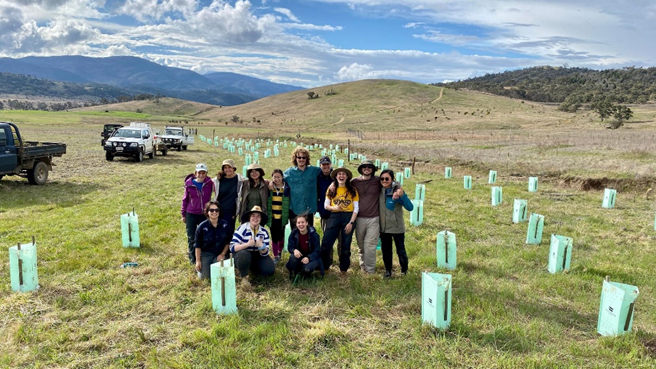
Though it’s always nice to be world number 1, there are some lists you don’t want to top. Leading the global mammal extinction count, Australia has lost 100 known species. Human impact on the landscape is one of the main drivers of this change. As land continues to be cleared and modified, plant and animal species are finding it more and more difficult to survive. One potential solution proposed to reduce this rapid rate of species decline is revegetation. We’ll take a look at some of the work Bush Heritage Australia is doing at the Scottsdale Reserve to revegetate the landscape.
What is revegetation anyway?

Though we often think of re-vegetation as just planting trees, it’s a lot more than that. As habitats are cleared for housing, roads, farmland, and other human uses, the landscape loses a multitude of things. Animals lose their habitat, weeds and pests can outcompete natives, and even lose in aesthetic value (plants just look nice). In Australia, revegetation restoration is often focused on restoring environments to pre-European landscapes.
This process can include planting trees, understory shrubs and forbs, or replacing invasive species with native ones. Doing this not only replaces habitat for species but it also helps with connectivity between landscapes, increasing both population diversity and ability to recover from impacts (such as fires).
It is important to recognize that revegetation has its associated issues. Juvenile trees don’t fill the same ecosystem services as mature or hollow trees do. The process also requires lots of labor and land in order to be effective, and valuations about landscape usage need to be made. This is not to say revegetation is a bad thing, just that we need to consider the consequences of altering a landscape.
Our team had a hands-on look at some of these re-vegetation efforts at the Bush Heritage Reserve in Scottsdale.
Revegetation in action
Bush Heritage Australia are an example of an NGO seeking to restore biodiversity through private land ownership. By buying land, often heavily degraded pastoral land, the organization is able to put in place landscape restoration efforts across a wide range of approaches (including revegetation).
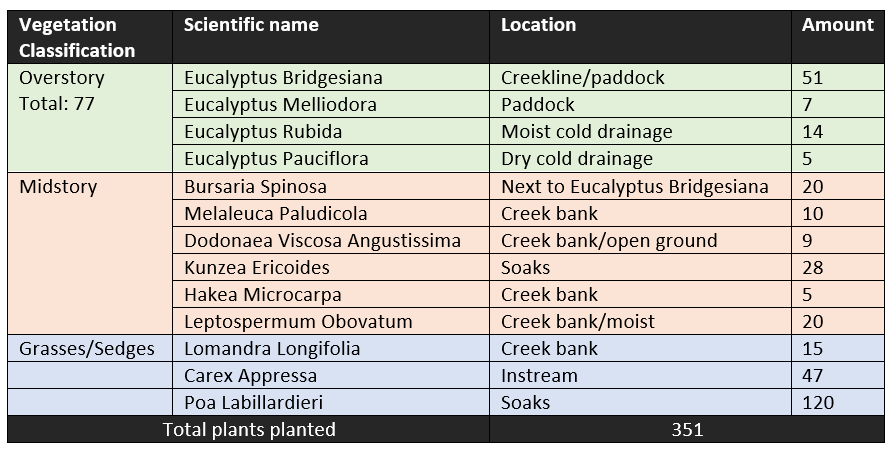
During our time at Scottsdale, our team was able to learn some of the impacts that years of grazing, land clearing, and the take-over of invasive species had had on the site. In early 2020, Scottsdale saw firsthand the effect bushfires can play on a landscape and the resulting importance of connectivity to be able to support species migration. Our efforts focused on planting native trees, shrubs, and grasses with aims of revegetating the endangered Yellow Box–Blakely’s Red Gum Grassy Woodland.
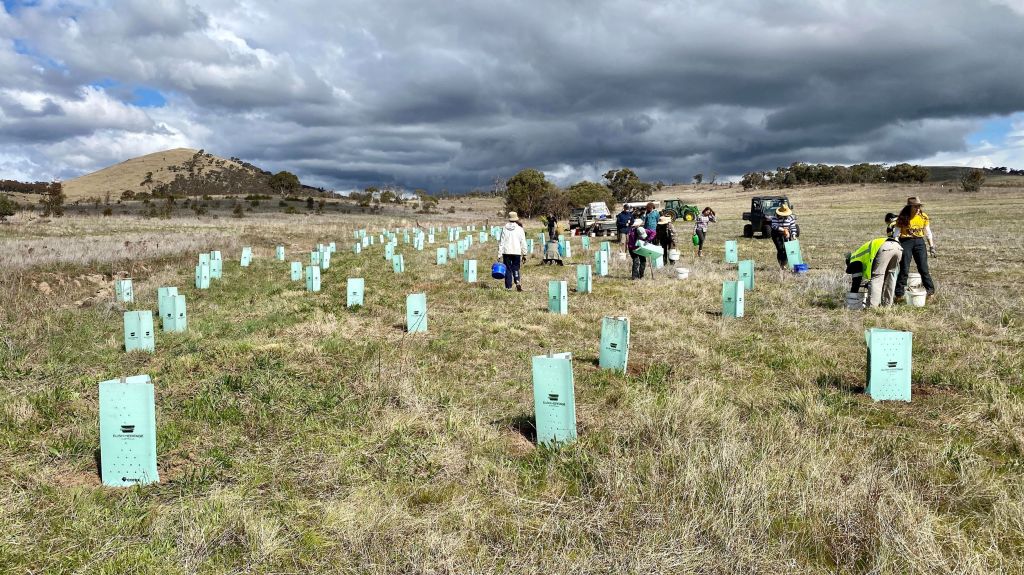
This revegetation focused on planting grasses along Apple-Box Creek to slow water runoff and reduce sediment loss in the environment as well as create species habitat cover. Understory shrubs and larger trees were planted further off the creek for species habitat, as well as bank stabilization. A complete list of species planted (created by Scottsdale staff) can be found below. Staking with fire-retardant covers aimed to protect the juvenile trees until they can develop further.
Gallery on right image description: Images of the revegetation efforts and materials used at the Apple-Box Creek Site.

Revegetation efforts at Scottsdale help to highlight some of the amazing work done around Australia to help the landscape (and the species within them) recover and adapt to Anthropocene impacts. Though we are far from fixing the extinction crisis, it’s certainly a step in the right direction.
Ashy Kinsella (u6372647)

 Biodiversity Conservation