
Written by u6956104 Word Count: 462
Climate change is no longer a potential threat to global biodiversity – it is here. So how can conservationists adapt their methods to ensure their work doesn’t go to waste?
The more things change: Ecosystem futures under climate change
Climate change does exactly what it says on the tin, shifting patterns of heat and rainfall across the world. As this process ramps up, entire ecosystems may not be able to survive where they exist today. So how do conservationists make sure that the trees they plant today will actually make a difference?
The great debate: tricky choices about the future of conservation
Some people advocate a radical approach – artificially transplanting populations to their predicted future range. Most people rebuff this strategy, insisting that maintaining ecosystems where they currently exist has a greater likelihood of success. Some, however, have seen the merits of both groups, and proposed an alternative. Instead of trying to move entire species, why not select the most resilient provenances of a species to be used in plantings across their range? This is the approach being taken by the Upper Snowy Landcare Network at Gegedzerick Travelling Stock Reserve (TSR).

Measuring up: student science and seedling survival
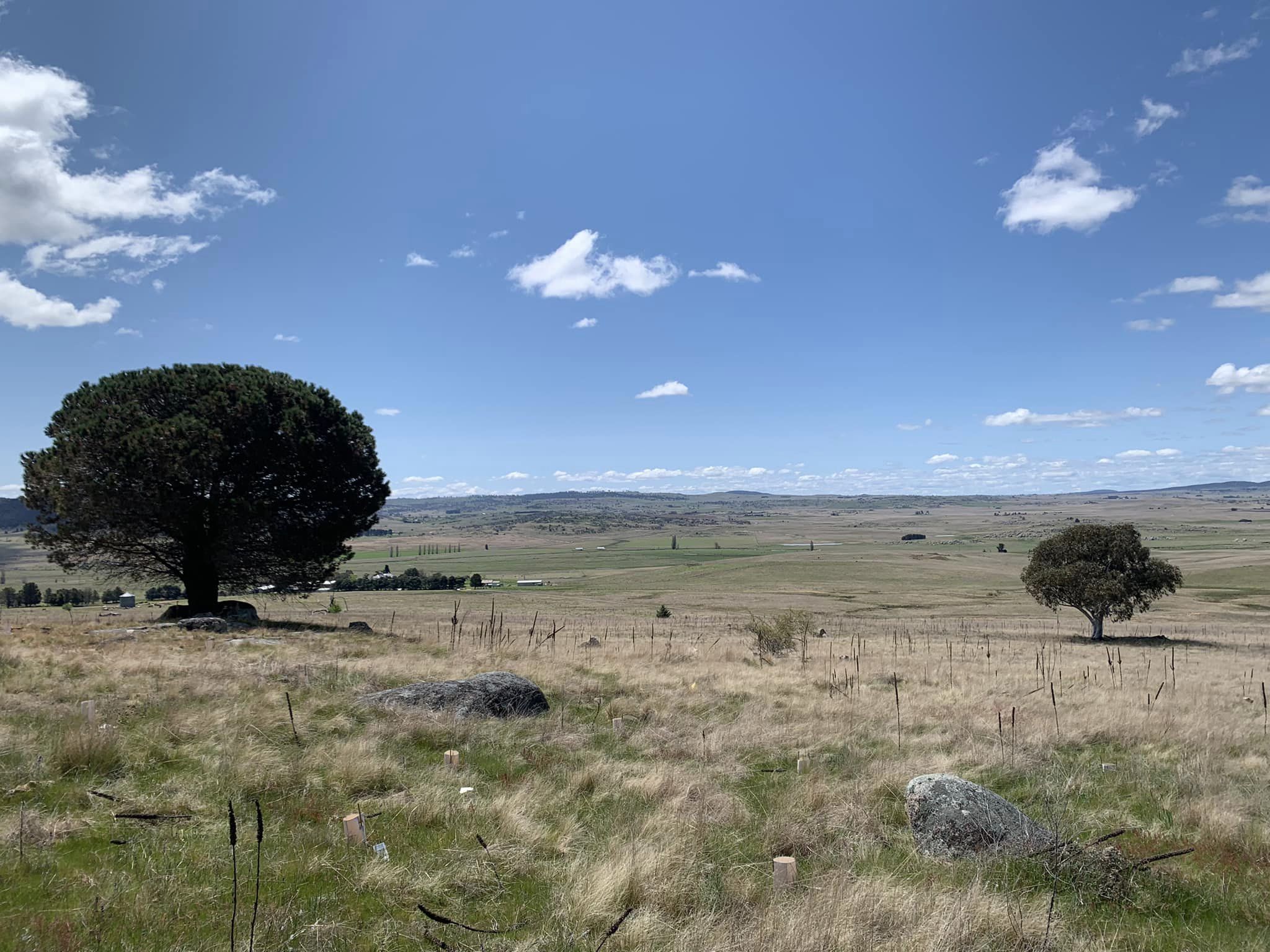
On the 15th of October 2022, I travelled with ANU Landcare to Gegedzerick TSR to help out with the monitoring of eucalypt seedling growth rates. The seedlings, planted in collaboration with the ANU Research School of Biology in February, were grown from seeds from all across southern New South Wales. By finding out which ones grow best, future plantings in the Monaro region can use the varieties most likely to succeed despite the changing climate. A long morning of tramping around with rulers and clipboards in hand was well worth it in the end – despite the sunburn I received for my troubles.


Sunburnt plains: biodiversity threats on the Monaro
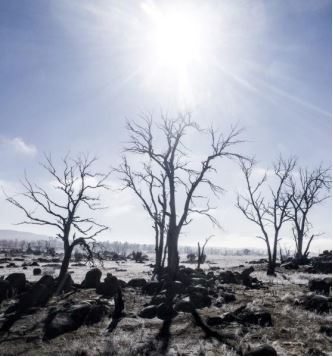
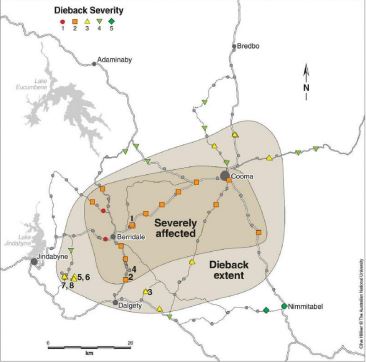
The Monaro plains are a large region of grasslands and forested hills just south of Canberra in the lands of Ngarigo people. Used for grazing for the past century and a half, the region is facing numerous threats to biodiversity, including the prospect of reduced rainfall, introduced species, habitat fragmentation, and increasing cropping. The site of a well-documented ribbon gum dieback in 2019 due to the combined effects of drought and infestations of native weevils, the efforts of organisations like the Upper Snowy Landcare Network have been vital in raising awareness of biodiversity issues in the region.
Forward thinking: The future of conservation in a changing world
Time is of the essence when it comes to biodiversity conservation. Every action taken or not taken today could have drastic effects on the future of planet. Helping out in one small way, like joining a local Landcare group on a trip to a beautiful corner of this country, can make all the difference.
References
Aitken, S.N. et al. (2008) “Adaptation, migration or extirpation: Climate change outcomes for tree populations,” Evolutionary Applications, 1(1), pp. 95–111. Available at: https://doi.org/10.1111/j.1752-4571.2007.00013.x.
Dorrough, J. et al. (2015) “Identifying and testing conservation decision thresholds in temperate montane grasslands,” Ecological Indicators, 118, p. 106710. Available at: https://doi.org/10.1016/j.ecolind.2020.106710.
Kremer, A. et al. (2012) “Long‐distance gene flow and adaptation of forest trees to rapid climate change,” Ecology Letters, 15(4), pp. 378–392. Available at: https://doi.org/10.1111/j.1461-0248.2012.01746.x.
Ross, C. (2016) “A Landscape Transformed: Mass Tree death on the Monaro,” Wildlife Australia, pp. 42–44.

 Biodiversity Conservation