Lauren Pay u7120532
“I love a sunburnt country,
A land of sweeping plains,
Of ragged mountain ranges,
Of drought and flooding rains.”
Dorothea Mackellar wrote her famous poem ‘My Country’ in 1906. Now, 116 years later, her words have adopted a new meaning.
In the wake of one of Australia’s worst bushfire seasons, our country has endured events much worse than sunburn. In the last 10 years alone, millions of trees have been blackened, and ash has fallen over much of our sweeping plains. Surges of rain have destroyed livelihoods, with floods and cyclones leaving a path of havoc.
As MacKellar eludes, Australia is no stranger to natural disasters. However, the global climate crisis we are now facing has amplified their frequency and intensity.
Climate change is exacerbating Australia’s bushfire regime. Record breaking heat and droughts have catapulted Australia into unprecedented fire conditions.

Farming in the face of adversity
Cattle farmers have been battling the ugly fire front for decades. The 2019/20 Black Summer Bushfires destroyed large regions of south-eastern Australia, and caused the death of tens of thousands of livestock. We are still understanding the effects of extensive burn wounds, smoke inhalation and decreased immune fitness for those that survived.
The fires didn’t just affect cattle. Pastures for feeding went up in flames, and vital infrastructure was destroyed.
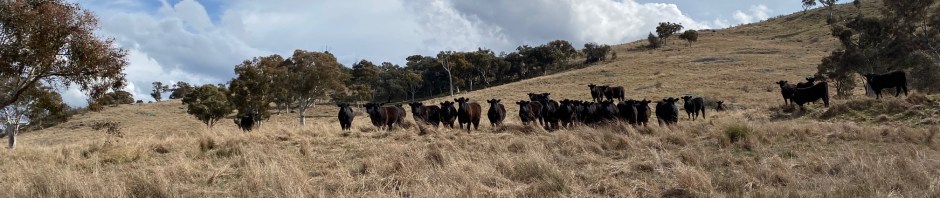
Last month, I visited the Environa cattle farm. Speaking with the manager David Larcombe, it was clear that fire is, and likely always will be, a source of great stress for cattle farmers around Australia.

A new frontier on the fire front
Aside from the constant threat of a bad bushfire season, 2022 brought a new concern for cattle farmers. Australia has been free from Foot and Mouth Disease (FMD) for 150 years, but it’s presence in Indonesia causes concern.
Not only would its spread in Australia have a devastating impact on the Australian economy, costing $50 billion over ten years, it’s likely to have a catalytic effect on bushfire management.
David Larcombe, an environmentalist, and cattle farmer at Environa, explains that a spread of FMD could cause a more disastrous bushfire season.
If FMD blights Australia, it would mean culling most of his cattle. This is obviously a great financial and management loss, but that’s not where the problems stop.
Larcombe explains that with no cattle, farmers face the challenge of keeping paddock growth under control without the aid of constant grazing.
Being unable to maintain a safe grass height during an Australian bushfire season places an extra burden on farmers. If their grazing paddocks are untamed, they could quickly face an uncontrollable fire front.
Not only could FMD cause great financial losses, but it would greatly limit bushfire mitigation strategies. The indiscriminate nature of fire means that regions of biodiversity conservation, and any further efforts for native grass re-introduction would also be lost.
The Australia that Dorothea Mackellar wrote about 116 years ago is vastly different. However, the beauty and the terror still remains.
“I love her far horizons,
I love her jewel-sea,
Her beauty and her terror –
The wide brown land for me!”

 Biodiversity Conservation