
By Mitch Trueman u6663746
To preserve Australia’s biodiversity, the commitments from the Commonwealth and State governments are simply not enough. Climate change, habitat destruction, ocean acidification and extinction continue to worsen due to our colonial history of land exploitation… It’s sad, right. Well, NGOs like Bush Heritage Australia are tackling some of these issues and playing a crucial role in protecting Australia’s future biodiversity.
Sorry who?
Bush Heritage Australia is a grassroots NGO currently managing 42 reserves across Australia. They focus on areas that are overlooked within the National Reserve System due to past agricultural uses which cleared the natural habitat. Conservation methods require innovative approaches to rebuild the ecosystems function, that can be monitored and applied globally.
To build a better understanding on how Bush Heritage Australia are tackling underrepresented areas, I ventured to Scottsdale Reserve on the 27th September 2022 to learn from the property manager Phil Palmer and the Bush Heritage Australia team. Phil has an extensive knowledge in land management and biodiversity conservation which has been integral to the success within the reserve.
Why Scottsdale Reserve?
Located 75km South of Canberra, Scottsdale Reserve was once dominated by the critically endangered Yellow-Box Gum Grassy Woodland (YBGGW) and temperate grasslands. A history of European farming practices has resulted in invasive species such as the African Lovegrass and impacts of erosion and tree removal, breaking down the ecosystems resilience and habitat. Replanting key species of the YBGGW to encourage its natural regeneration has slowly encouraged the restoration of the Woodland within Scottsdale Reserve. This process requires ongoing adaptive management that is critical to protecting its biodiversity.
Restoring a site.
To showcase their ongoing approach to restoring the biodiversity of Scottsdale Reserve I was invited to replant a fragmented site with a group of ANU students. The site selected was upon a riparian zone, which was identified for its habitat connectivity between restored patches of YBGGW. Phil explained to us how recording the tree plantings since the establishment of the reserve allowed the team to identify the habitat patches and develop corridors for native wildlife.
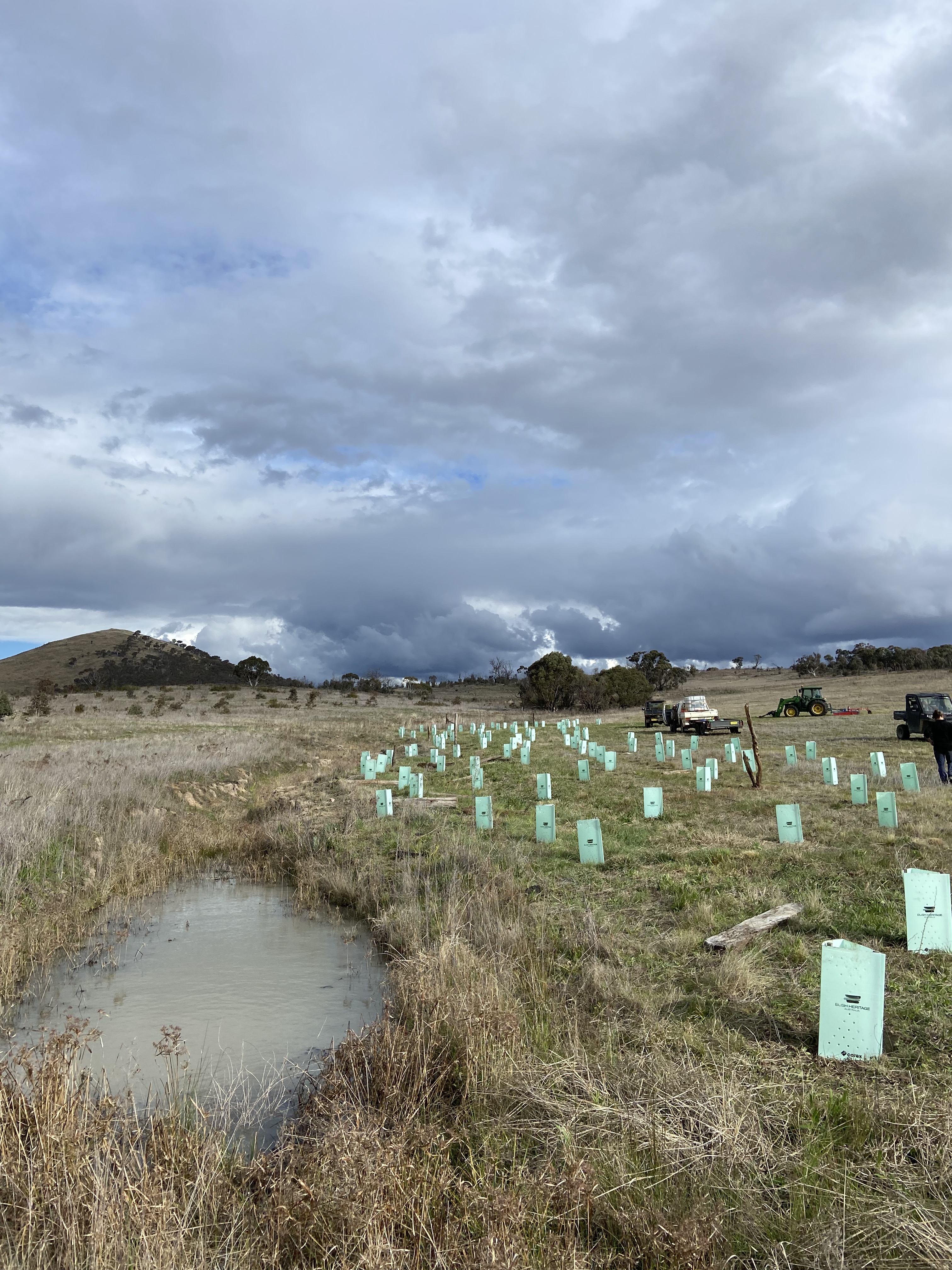
Key species of the YBGGW were grown within the reserve’s nursery and were gathered for relocation to a predetermined site. This method of transplanting improves the resilience of the native plants against invasive species which is a common problem. Tree guards, fertiliser tablets and topsoil removal were also utilised to improve the resilience of the woodland.

An innovative approach.
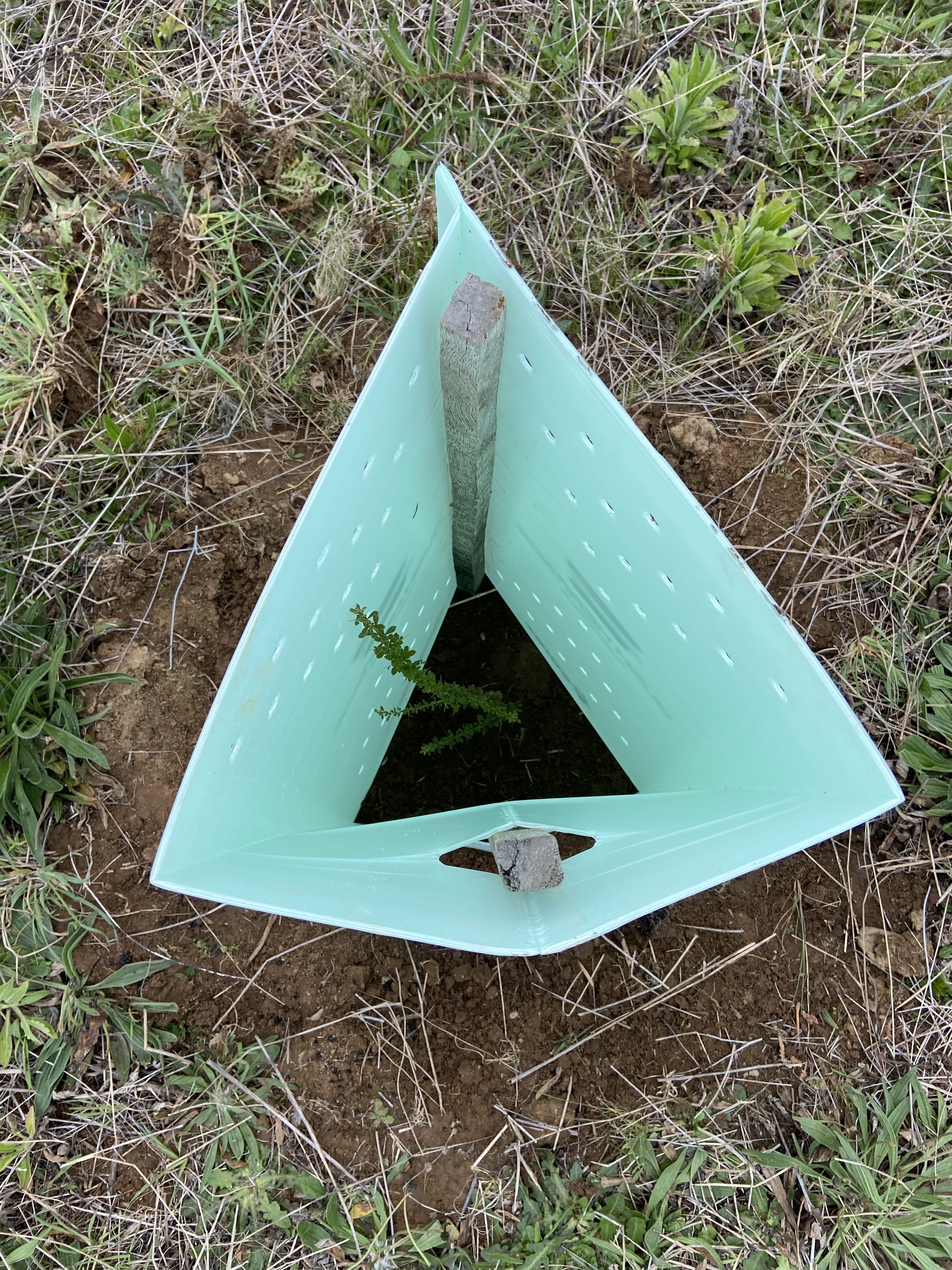
I was constantly intrigued by the innovative approaches implemented by the team at Scottsdale Reserve. For example, they had developed their own tree guard designs which were made from recyclable materials. They also had a far higher heat protection and UV stabilisation in comparison with other alternatives on the market. This example stuck with me as I was able to reflect on the wider benefit that these designs would have for future ecological management in Australia.
What a day!
My trip to Scottsdale Reserve helped me to understand the important role that NGOs are playing in conserving Australia’s biodiversity. The commitment to restore a critically endangered ecosystem within a grazed reserve is truly inspiring. I will definitely be returning to volunteer and I’d encourage anyone who can to do the same!

 Biodiversity Conservation