
Tianna Clarkson – U7524109
Meet the Lizard

To an outside observer, it might come as a surprise that the unassuming grasslands of the Australian Capital Territory are rich with diversity of life. One of the species to call these areas home is the Striped Legless Lizard (Delma impar). Despite being snake-like in appearance, the Striped Legless Lizard is a type of gecko, having lost its legs throughout its evolution.
Found only in south-eastern Australia, this lizard is listed as endangered on a global scale by the IUCN. Unfortunately, the species is threatened by large-scale habitat loss. Since European settlement in Australia, much of their grassland habitat has been lost, with only 0.05% remaining of what once was. Now, native temperate grassland is a critically endangered habitat nationally and endangered in the ACT.

As if it wasn’t concerning enough that the lizard’s habitat is so threatened, there are also many direct threats to the lizard. In the ACT, urban development is a major threat to the species. Road networks and housing developments increasingly divide the landscapes in which the lizard lives, limiting movement between populations. On top of this, grazing, both by livestock and kangaroos, degrades the quality of the grassland that the lizard depends on.
So, what’s being done about it?
This is where ACT Parks and Conservation comes in. They run a yearly tile-check monitoring program throughout the spring, keeping an eye on the lizard’s population sizes.
This is part of two government initiatives: The Striped Legless Lizard action plan and the ACT Native Grassland Conservation Strategy which lay out goals to conserve the Striped Legless Lizard and native temperate grassland respectively.
In the field
Lizard populations are monitored across the ACT, from Gungahlin to Jerrabomberra, using artificial shelters, which in this case, are roofing tiles. The idea behind this is that the lizards will choose to shelter underneath the tiles, making them easier to find and count.
I joined Emily and Emma from ACT Parks and Conservation to help set up the monitoring sites in late August and early September. Our job was to arrange tiles into 3 x 3 grids, the outer 8 of which would be turned over during tile checks.
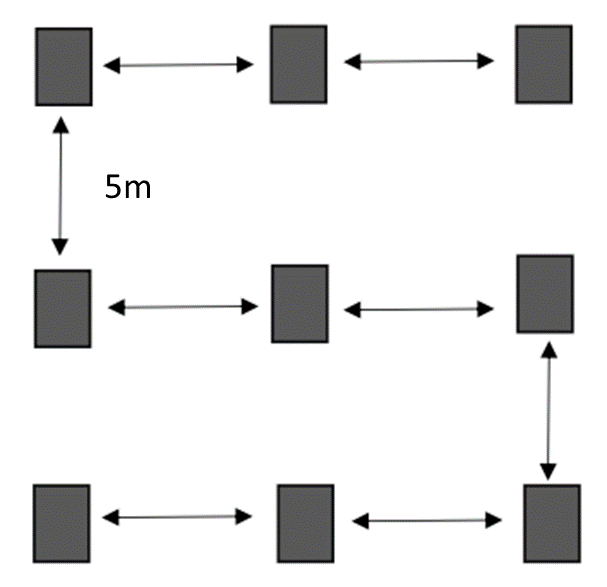
Roofing tile layout design 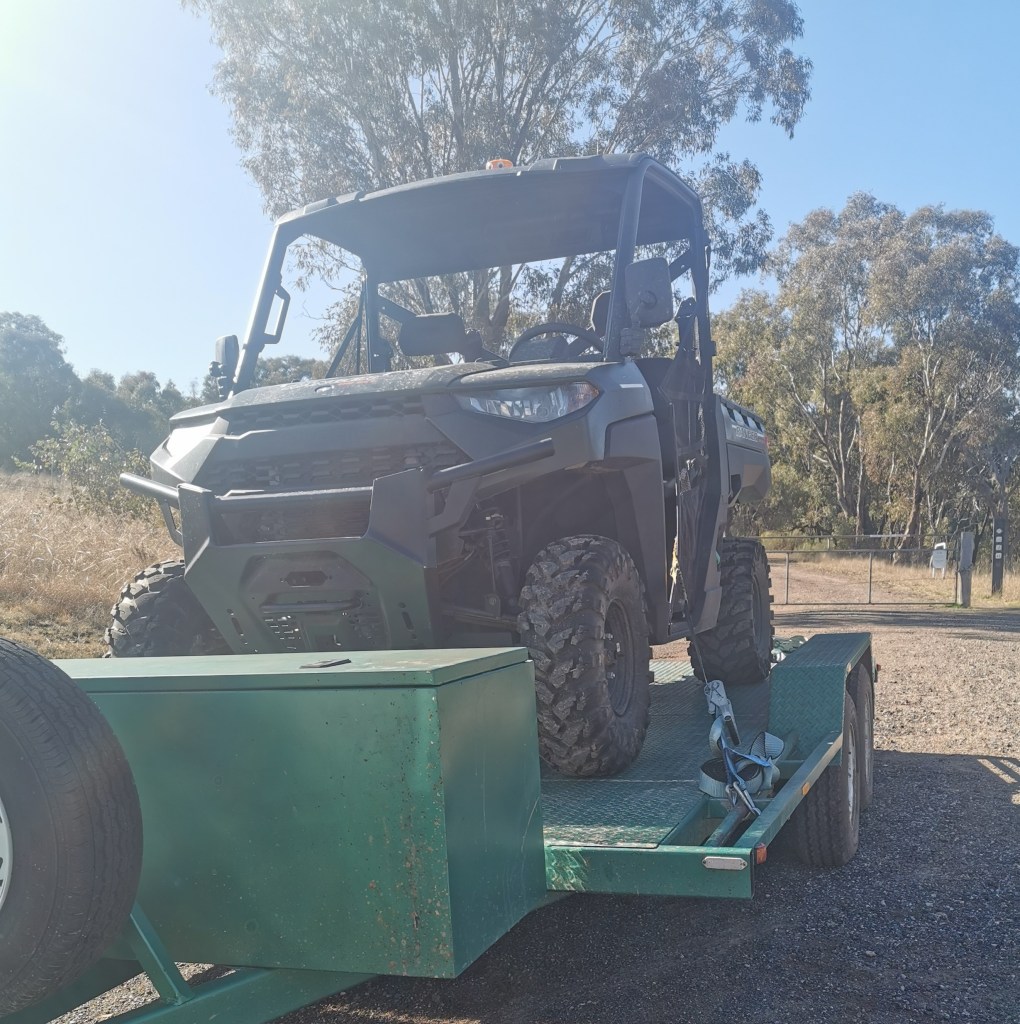
Our ride out to the sites!
Photo: T. Clarkson
Making the most of the opportunity, the tile checks also involved counting any other species that hid underneath the tiles. Even when just moving the tiles we saw species like the Delicate Skink (Lampropholis delicata) and Spotted Marsh Frog (Limnodynastes tasmiensis) who had decided to make the stacks of tiles their home!

Delciate Skink (L. delicata)
Photo: T. Clarkson
Spotted Marsh Frog (L. tasmiensis)
Photo: T. Clarkson
Why does this matter?
This monitoring not only helps to conserve the Striped Legless Lizard, but also helps to protect their grassland habitat by making sure that conservation of the whole ecosystem is more well-informed. This means that this project can also benefit other threatened grassland-dwellers such as the Perunga Grasshopper (Perunga orachea), Golden Sun Moth (Synemon plana), and the Grassland Earless Dragon (Tympanocryptis pinguicolla). That’s a win-win!

 Biodiversity Conservation