
By Liam MacLeod (u7288792)
Earlier this year, I was fortunate enough to have the opportunity to observe and work on some different greenspaces within the Ginnninderry development, situated in West Belconnen, ACT. A short description of these treatments is outlined below:
Treatment 1: Traditional ‘park-like’ management
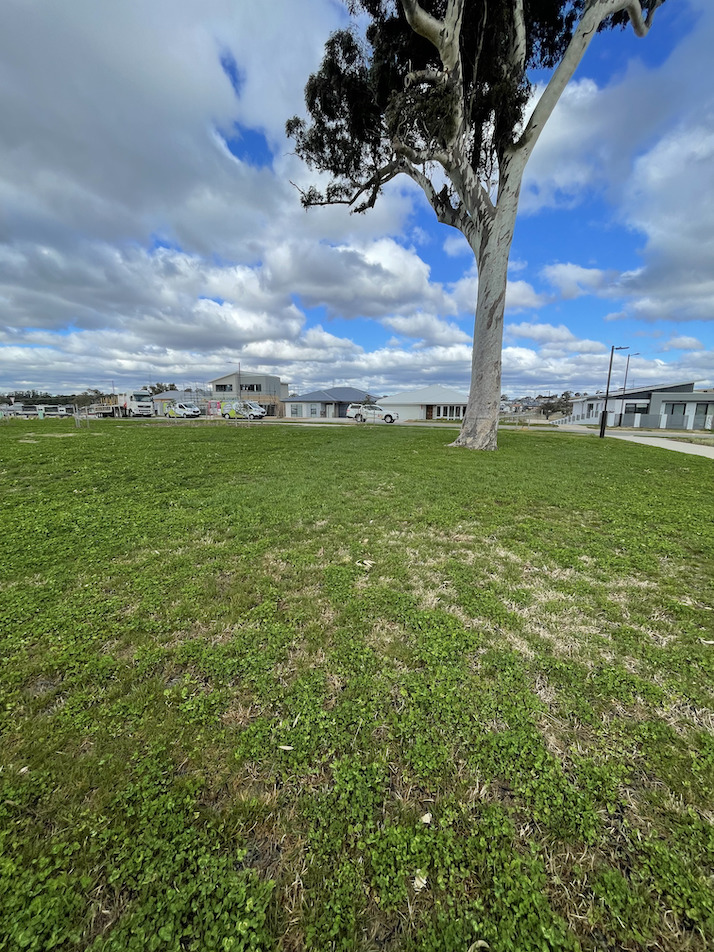
This treatment involves a modified box-gum grassy woodland environment, with an intact mature eucalypt surrounded by a ground layer almost entirely comprised of exotic weeds and grasses. The trees are trimmed, and dead limbs removed for public safety. Grasses are mown as needed, and there is no planting or sowing of native grasses/ground-cover species.
Treatment 2: Mulching and mass planting
This treatment involved extensive mulching around an existing mature eucalypt. Mid-storey shrubs were then strategically planted in high-density clumps surrounding the large tree, as to create a “protected” area, with minimal foot traffic. These shrubs create a dense, complex habitat for birds. Logs are also introduced to the mulched area, and fallen branches are retained within the area.

Treatment 3: ‘Best-practice’ community restoration
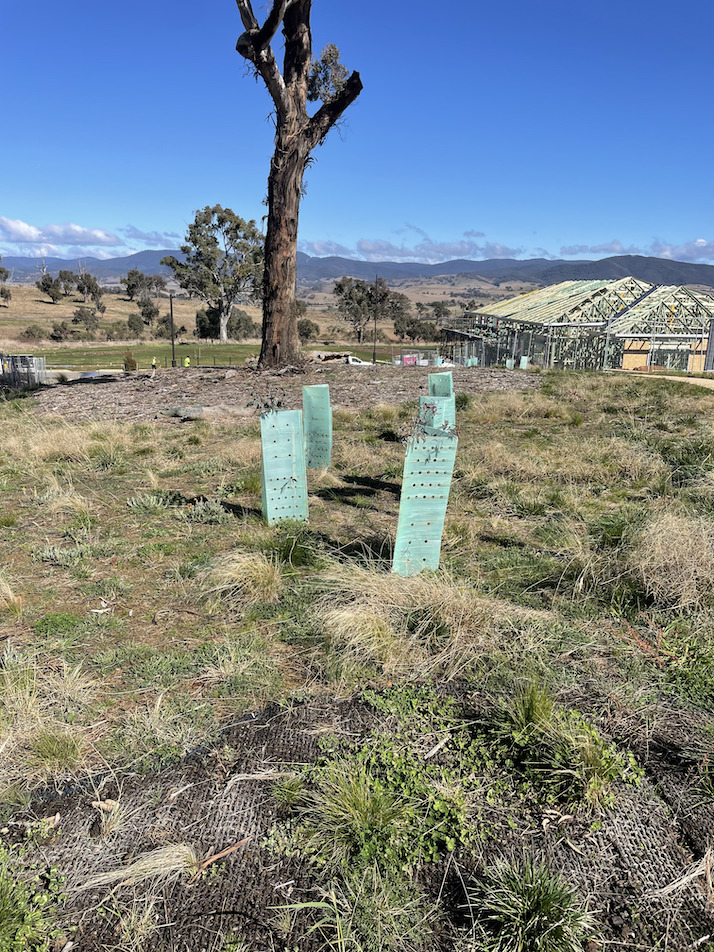
This treatment involves significant management and restoration of box-gum grassy woodland. Topsoil is removed until an adequate phosphorus level is achieved, with specific conditions required for this soil removal. The grounds are then seeded with numerous native shrub and grass species, such as Australian fingergrass and kangaroo grass, and mid-storey trees such as the Coastal Tea Tree. The goal of this resource-intensive treatment is to completely restore the box-gum woodland habitat within an urban greenspace.
What are the treatment goals?
These treatments have different goals and desired outcomes. A ‘park-like’ treatment of a greenspace aims to maintain an area for recreational and community use with minimal resources, keeping it safe and easy to maintain.
The mulching and mass planting treatment aims to increase biodiversity, attracting different species with dense mid-layer shrubs. This treatment is considered a middle-ground, whereby biodiversity goals are considered, as well as creating an aesthetic and easily maintained space.
Lastly, a full community restoration aims to create an in-tact box gum grassy woodland environment within an urban greenspace. This treatment requires significant resources and maintenance, with weeding, planting and seeding all required to maintain native ground and mid layers.
What did I do to help?
I spent the day assisting members from the Riverview Development group maintain a ‘best-practice’ full restoration greenspace. This involved a number of activities, including the weeding of exotic, invasive weeds such as the White Clover and Paterson’s curse. After extensive hand weeding, we planted some Coastal Tea Trees, with the hope of restoring some mid-layer cover and creating some more complex habitats for bird species.
This treatment is an uphill battle, with a way to go before these greenspaces are completely restored. However, even just one full day of weeding and planting made a noticeable difference, with the hope of increased biodiversity within these greenspaces.
Note: all photos were taken on 30/08/2022 by me
References:
- Cole, I., Prober, S., Lunt, I., & Koen, T. (2017). Establishment of native grasses and their impact on exotic annuals in degraded box gum woodlands. Austral Ecology, 42(6), 632-642.
- Le Roux, D. S., Ikin, K., Lindenmayer, D. B., Blanchard, W., Manning, A. D., & Gibbons, P. (2014). Reduced availability of habitat structures in urban landscapes: implications for policy and practice. Landscape and Urban Planning, 125, 57-64.
- MacKenzie, A., & Gibbons, P. (2019). Enhancing biodiversity in urban green space; An exploration of the IAD framework applied to ecologically mature trees. Urban Science, 3(4), 103

 Biodiversity Conservation