

David and Tanya Larcombe with students from Biodiversity Conservation class
Photo provided by David Larcombe, 7 Sept 2022
1. The Past
In the early 20th century, the Sydney-born developer Henry Halloran drafted grand plans for a new suburb to be built with more than a thousand new plots. He called it Environa. However, before his grand plans could come to fruition, the Great Depression struck, and his plans went bust. Now, nearly one hundred years later, Halloran’s descendants manage the land.
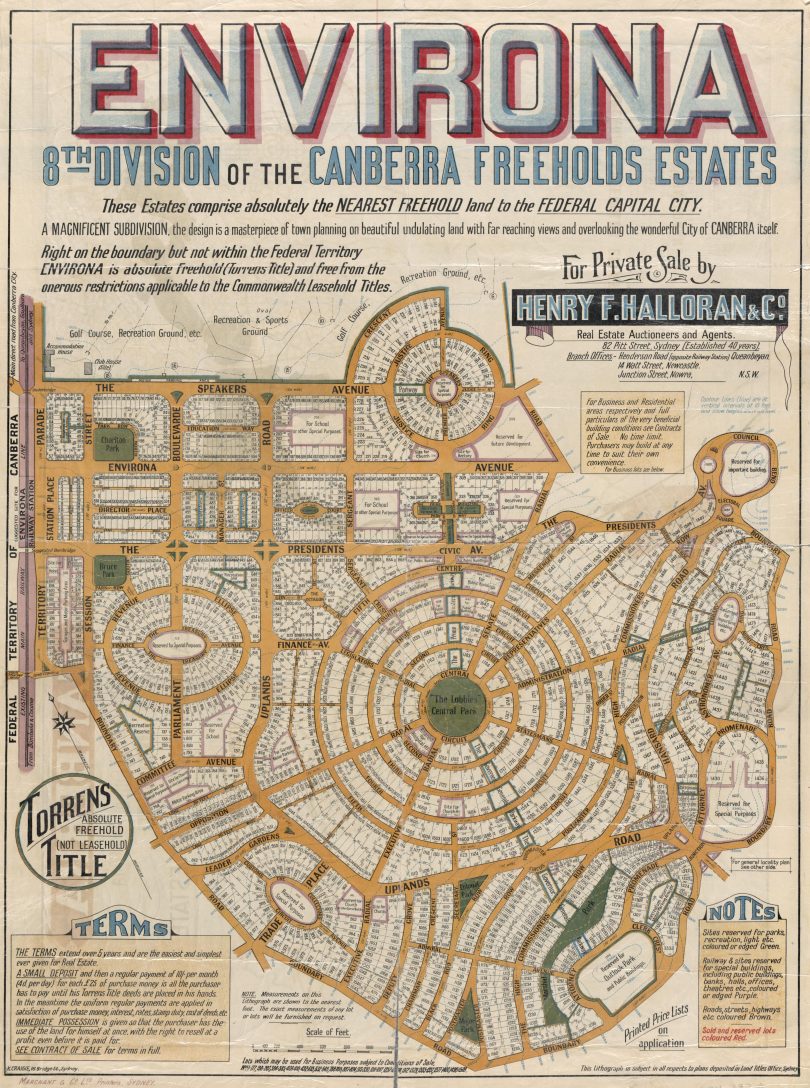
Source: Australian National Library via RiotACT
2.1 The Present: Work Experience
When we arrived, we were greeted by David Larcombe, one of the proprietors of the land. On this property, he, his sister, and the rest of their family oversee the management the 400-ha Wandiyali-Environa Conservation Area and multiple other pieces of remnant vegetation along with a cattle herd 200-head strong. During our work experience trip, we helped remove plastic tree guards from native shrubs in one of the remnant patches of vegetation. They had been planted to establish a midstory to provide habitat to small birds within one of the protected vegetation patches. However, the conservation efforts are much more complex than this. To finance the Wandiyali-Environa Restoration Trust, they have sold bits of the original swaths of the property to developers, including the suburb development that we had gotten lost in previously and the Poplar innovation precinct. The conservation is also financed through biodiversity offsets credits financed by these developments. They were also able to create a predator-proof fence around the conservation area, due to grant from the Commonwealth government, with the hopes of making it a biodiversity haven

Photo by Maeve Heard, 7 Sept 2022
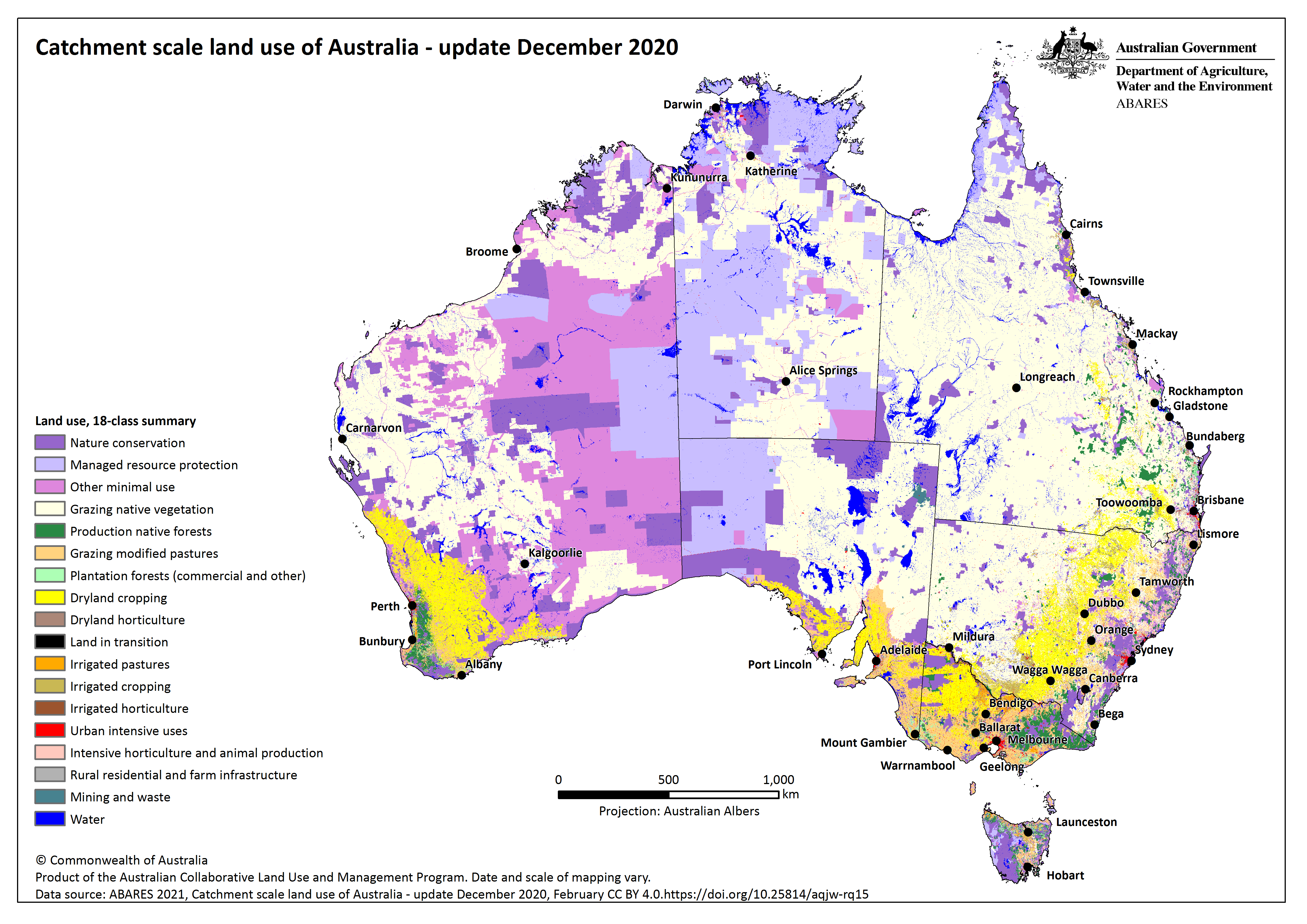
Source: ABARES, 2016
2.2 The Present: A Status Update
To prevent precipitous decline of biodiversity, researchers have found that we need to ensure that 44 percent of terrestrial land is ecologically sound. Considering that more than 60 percent of Australia is privately owned, it becomes clear that protecting public lands is not enough. The most recent IPBES report emphasizes that multilevel governance initiatives that incorporate private landholders are key in the fight to protect biodiversity. What we do in our backyards matters just as much as the management done in the national parks. We cannot create a conservation system that adequately protects biodiversity without working with private landholders. The report also outlines that economic pressures are one of the biggest indirect drivers of biodiversity loss. This site is an interesting case study of how economic development can fund biodiversity conservation

Photo by Maeve Heard, 7 Sept 2022
What we do in our backyards matters just as much as the management done in our national and state parks
3. The Future
At the top of a hill, Larcombe showed us his grand project during the covid lockdown: a large living sculpture of fallen debris that wrapped around the base of a grand eucalyptus tree and connected it to its offspring that stood less than a metre tall. David asked us to take a moment to breath and take it all in. From that spot, it was easy to see Canberra and the surrounding bushland sprawling beneath.
In some ways Larcombe is realising the all-encompassing goals of his ancestor, but in other ways he is not. It is very likely that biodiversity conservation was one of the last things on Halloran’s mind. Faced with the ecological crises of today, we find that sociocultural values which have previously fuelled biodiversity decline are changing and economic development can be used to benefit biodiversity.
By u7243052

 Biodiversity Conservation