
Eric Kitazato-Mu – u7129226
Did you know that since European settlement, more than 80% of koala habitat has been lost? Habitat destruction, bushfires, and road accidents are only some of the major drivers of significant population decline of the koala species. Since February 2022, the koala species has been listed as ‘ENDANGERED’ in ACT under the EPBC Act and many organisations now aim to conserve the iconic Australian species.
IMPORTANCE OF MONITORING KOALAS

Other ANU students and I were very fortunate to work with the park rangers at the Tidbinbilla Nature Reserve to care and monitor for some of the remaining koalas in Australia. About 100ha in size, the reserve is home to a wide range of animal species including kangaroos, wallabies, potoroos, platypus, and of course the endangered koalas. The reserve is enclosed with an animal proof fence to allow for a feral-predator free habitat where the park rangers aim to monitor and conserve the habitat of these animals.
During my experience at the Tidbinbilla Nature reserve, I learnt a lot of things. Surveying koalas is not an easy task. Keeping a record of how many koalas there are in the reserve is a very important in order to keep track of koala presence and distribution. Ensuring that the population of koalas in the reserve does not exceed the carrying capacity is very important as this could lead to catastrophic consequences including the decline of the koala population. Unfortunately, finding these koalas are very difficult as they tend to lie very high up in the trees. Therefore, detecting koala manure and tracks is a very big indication of where they are. During my time inside the reserve, I was only able to find one koala!
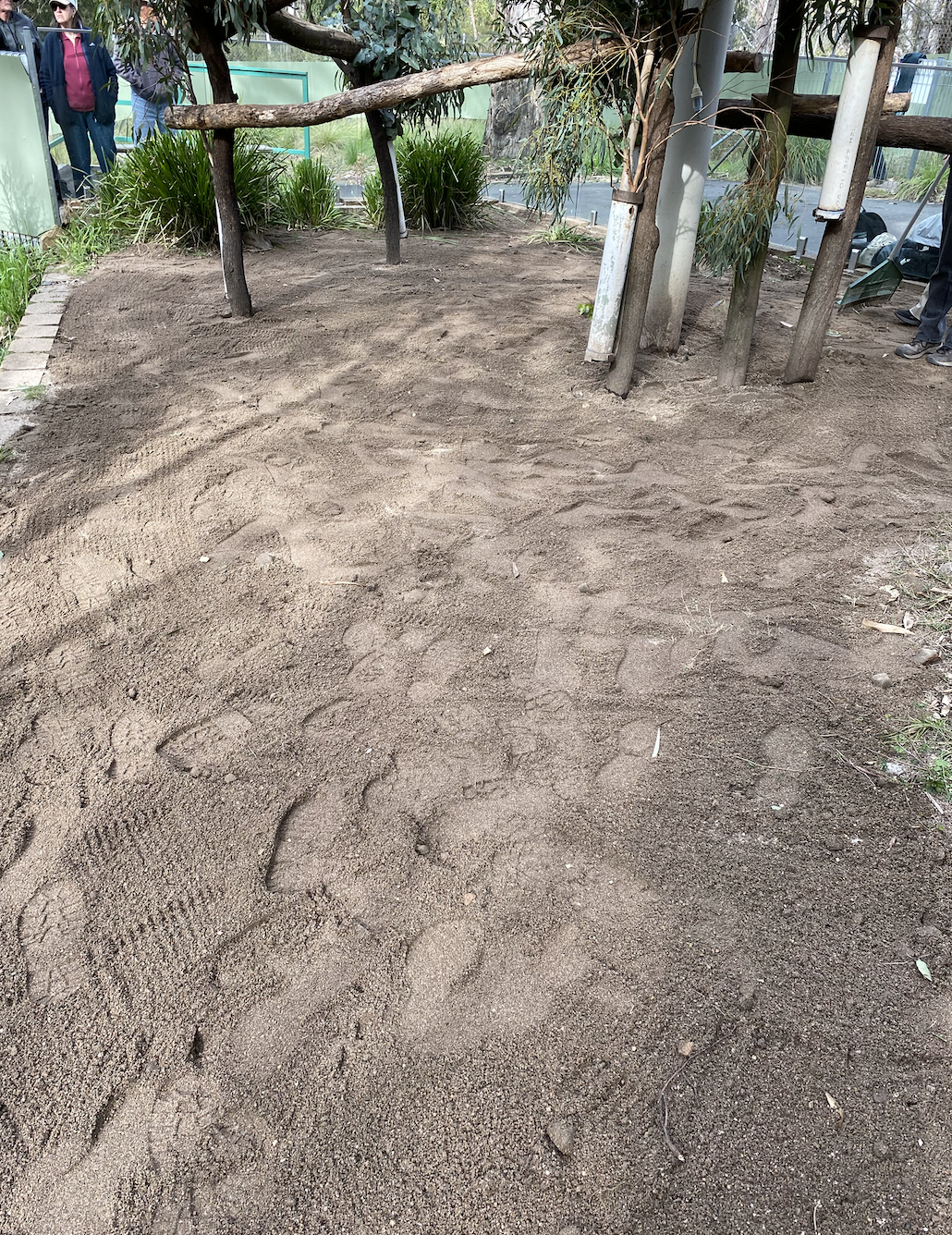
We also helped clean the koala enclosure inside the reserve. It was to my shock that koalas are very picky eaters, as they only eat 50 of the 800 eucalypt plant species. We were responsible for changing the plants inside the enclosure, as well as cleaning up the manure and other debris on the ground. It was such hard work; it just shows how much the rangers care for the koalas in the reserve.
WHAT YOU CAN DO TO HELP
The Tidbinbilla Nature Reserve are always looking for people of all ages, backgrounds, and abilities to help take part in conservation activities inside the reserve. Known as ParkCare, it is also a great way to meet people and be out in the natural environment.
CONCLUSION
After my wonderful experience surveying and taking care of the koalas at the Tidbinbilla Nature Reserve, I have broadened my understanding of the importance of conserving biodiversity and the hard work that is put into taking care of endangered animals.
ACKNOWLEDGEMENTS
A big thank you to the park rangers at the Tidbinbilla Nature Reserve that took time out of their day to facilitate this amazing experience.
WORD COUNT: 507

 Biodiversity Conservation
It’s good to hear that the koalas are well looked-after at Tidbinbilla. Phil