
Around 55% of the Australian land mass is used for agriculture, resulting in a vastly modified landscape. Images such as the one below are a common sight across Australia, vast plains of land used for cropping or livestock with not much evidence of what the land once looked like.
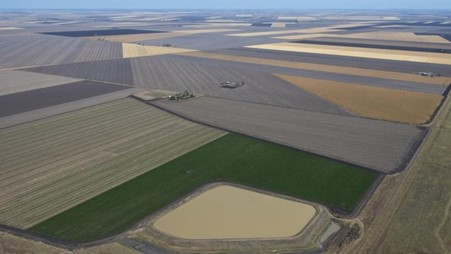
The modification in both land management and the physical landscape has resulted in degradation of biodiversity. This degradation has occurred through management practices such as land clearing, resulting in fragmentation of vegetation. Land clearing has resulted in increased soil salinity, greater impacts of edge effects and introduction of weeds.
What is Scottsdale?
With such a large amount of Australia’s land being highly modified how can we work to restore and repair the damage that has been done to biodiversity? This is the work that Bush Heritage Australia is working on.
Specifically, in Australia’s south-eastern temperate grazing zone around 80-95% of land has been cleared for production. It is in this region where Bush Heritage Australia has Scottsdale Reserve – a 1,328-hectare property about an hour South from Canberra. Scottsdale Reserve was purchased by Bush Heritage Australia in 2006 where it at the time was used for grazing livestock. As a result of this the site has experienced around 300 hectares of land clearing resulting in introduction of weeds such as African Lovegrass. Further, the location of the site is significant as it is critically endangered yellow box woodland, further highlighting the importance of restoring the landscape.
What is done there?
In order to regenerate the landscape from a highly modified agricultural land Scottsdale conduct a number of activities. These activities range from tree-planting, weed and pest control, monitoring and research. Through undertaking these activities Scottsdale Reserve plays a wider role in providing a biodiversity corridor between Kosciusko and the coast known as K2C.
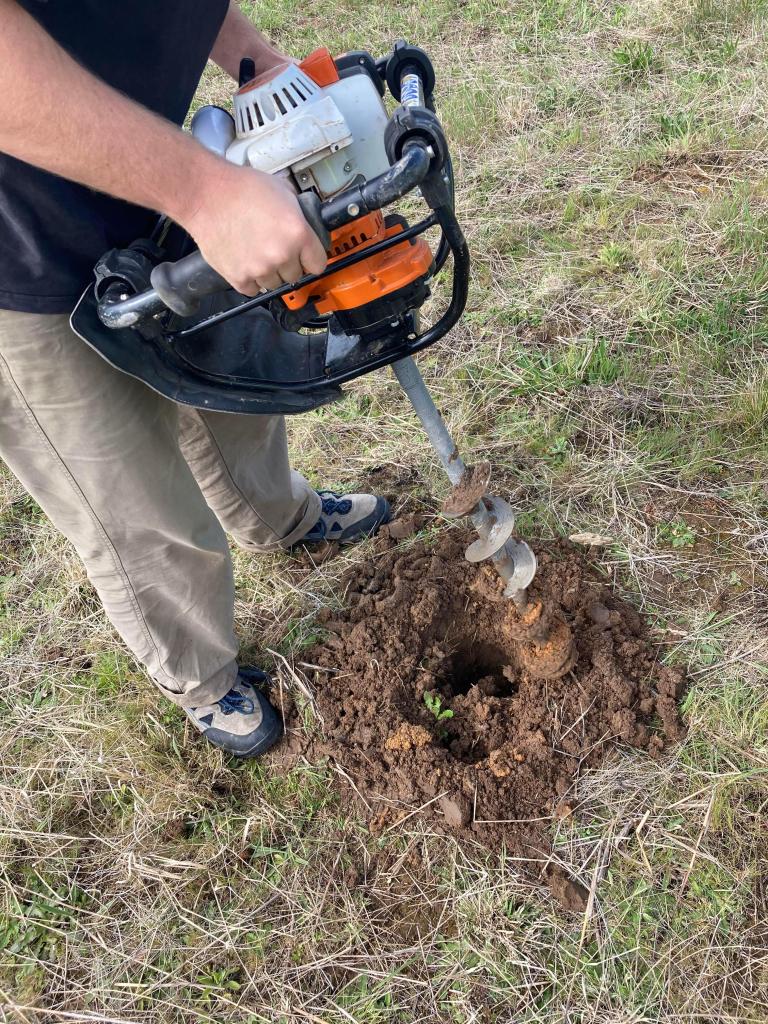
When we visited the reserve we took part in riparian restoration, this involved planting key species of the yellow box woodland such as Apple Box, Red Box, Wallaby grass, Poa Tussock and even some Snow Gums. Further, some course woody debris made up of old fences were scattered around the site to provide a number of ecosystem services. These include; slowing water down to increase the amount absorbed into the soil and creating habitat allowing for movement of insects and birds. The images below display the process of auguring and the area planted.


Sites such as Scottsdale Reserve and organizations like Bush Heritage Australia are playing essential roles in regenerating Australia’s highly degraded and modified landscape. This work is highly reliant on labour and as a result a large portion of land regeneration work is reliant on volunteers. This is something that both brings community together and as well as providing opportunity to educate the wider public. However, this reliance on volunteers is also a vulnerability in the operations of NGO’s where circumstances such as COVID-19 seeing a volunteer reduction of 65.9% across Australia can significantly impact efficiency of work. However, moving forward the process of restoring Australia’s landscape is long and will require many helping hands but with the help of groups such as Bush Heritage Australia it is bright.
Many thanks to Phil Palmer and Bush Heritage Australia for having us.
u7120722
509 words

 Biodiversity Conservation