
Words: 527
U7526015
Despite the huge housing crisis that residents in and around Canberra are currently facing which is only getting worse surprisingly this was not the area of focus for my work experience. Instead I was looking at what artificial refuge could provide the best habitat for small mammals and reptiles in the aftermath of fires, thus they have their own housing crisis, only the consequences for varied species could be considered to be just a *little* (or a lot) more severe.
A day out in the sun
My day involved travelling to Namadgi National Park with fellow ENVS3039 students led by phD candidate Heather Burns in order to help with any tasks for her research project. Heather explained what exactly the point of her project was and took us to several of her 20 different blocks located across Namadgi. Monitoring of the wildlife cameras that are stationed at each treatment site makes up a large portion of Heathers work, and luckily for us her cameras did not need collecting up for monitoring at this day. This meant we avoided a long day of hard labour, but instead we learnt about Heathers project, seeing a variety of the blocks, searching for reptiles and quite literally just enjoying the sun.


What’s the problem?
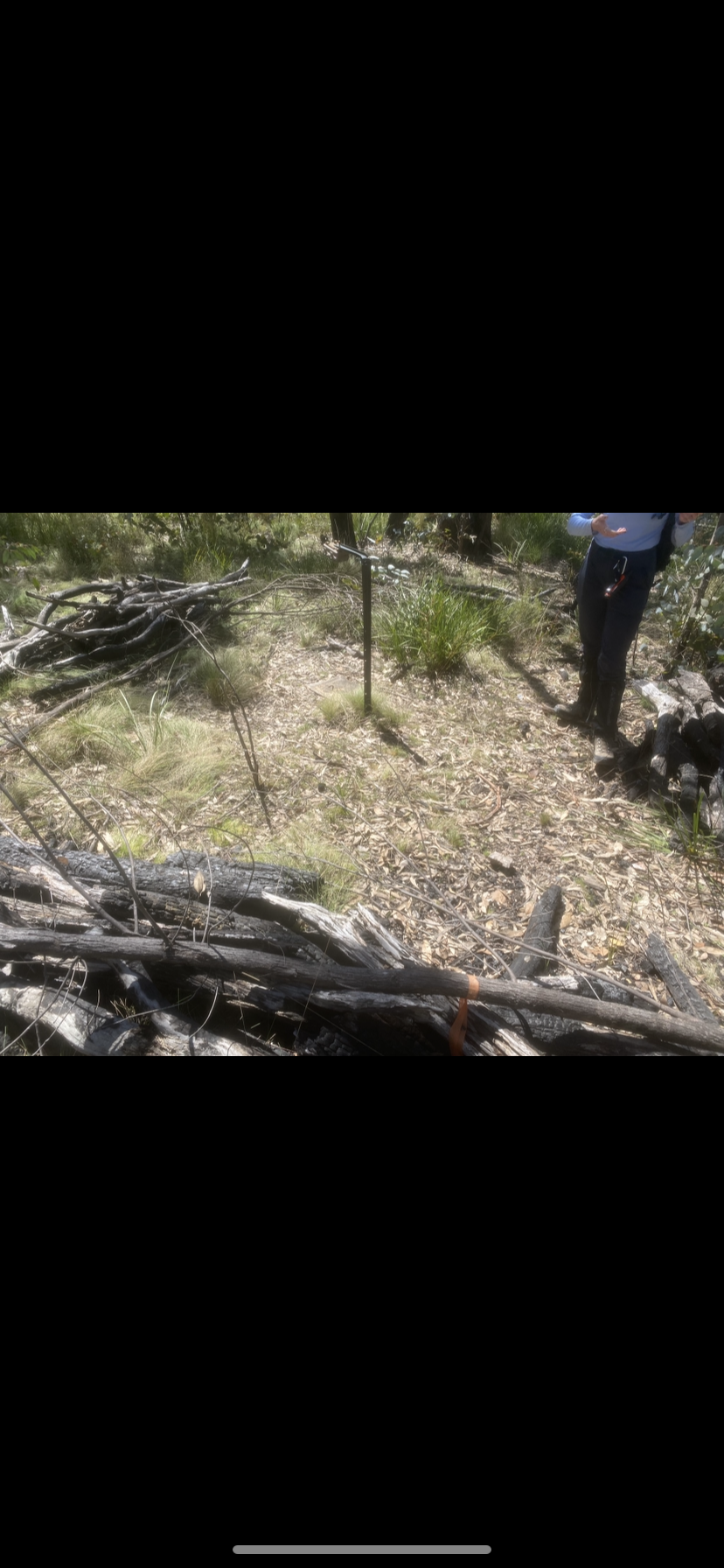
A fire event will often remove the majority of key resources that are necessary for many species to exist, such as food, nesting sites and woody debris. Specifically focusing on habitat and nesting sites here, they will regularly be destroyed leaving small mammals and reptiles especially exposed to predators, as vegetation cover which will be burned down provides protection from predators. Increased frequency of fires means more and more habitats are being destroyed. Therefore, Heather’s work trials the implementation of different nesting sites to see what may work and what may not.
Outcomes?
Whilst Heather is still undertaking her project, she has almost collected enough data and monitored enough wildlife cameras to make clear conclusions. This information will turn out to be very valuable; it will allow for planned strategy and management of these areas when devastation from fire occurs. Parks and conservation services can take the useful information on board to ensure the survival of as many of these animals as possible.
How can you help?
This is where you, the reader can come in and actually take on board the findings of this project to help contribute to ensure that populations of small mammals and reptiles do not decline to a dangerous level. How might you do that? Well in truth the strategies employed by Heather are very simple, the only equipment needed to create these artificial refuges are chicken wire and woody debris. Local communities which are often impacted by bushfires could easily implement such things, and if you want to be able to have an impact, you could get involved.
Acknowledgements
Big thanks to Heather Burns for providing background on the project as well as taking us out to Namadgi.
I would also like to acknowledge the Traditional Custodians of the land on which I carried out my research, and pay my respect to Elders past, present and emerging.
References
Images: Benge, Ryan. 25th September, 2022.

 Biodiversity Conservation