
By Juliet Stevens (u6104119)
The BIG Issue: Drivers of Biodiversity Loss
Biodiversity plays an important role in regulating environmental processes and enabling ecosystems to provide services which underpin human health and wellbeing. Although it is essential for all life on Earth, current patterns of urban expansion driven by anthropogenic worldviews are causing biodiversity to decline at a rapid rate.
The process of urbanisation alters ecosystems through transformative land use change and causes habitat destruction, degradation, and fragmentation. The remnant patches within and around cities are often isolated, disconnected, and small. These properties mean patches are vulnerable to edge effects and human disturbance, which further reduces their capacity to support biodiversity. This leads to localised losses of species richness and abundance, and consequently impacts the values ecosystems provide to humans.
Urban Greenspaces: Addressing Habitat Loss
The loss of biodiversity and essential ecosystem services can be reduced by incorporating urban greenspaces into city designs. Urban greenspaces are interconnected networks of natural habitat within cities that aim to restore and retain critical ecosystems and associated structures. This conservation action provides many benefits to biodiversity and human wellbeing. It plays a critical role in mitigating the impacts of habitat degradation, loss, and fragmentation associated with urban expansion.

Framework adapted from: WWF (2018) Living planet report 2018: Aiming Higher, World Wildlife Fund. Available at: https://www.worldwildlife.org/pages/living-planet-report-2018 (Accessed: October 28, 2022).
The Biota Tree Research Program
Within the new residential development of Ginninderry (ACT), the Biota Tree Research Project (ANU) in collaboration with Riverview Projects Pty Ltd. has worked to restore, manage, and monitor urban greenspaces. The ongoing experiment applies three different management treatments around mature eucalypts and aims to evaluate the costs and benefits to socioeconomic values and overall outcomes to biodiversity. The project works to restore the quality and interconnectedness of remnant habitat that has been lost during the development process. This improves the environment’s capacity to support biodiversity and has many beneficial flow-on effects to the community.
Greenspace Treatments for Successful Outcomes
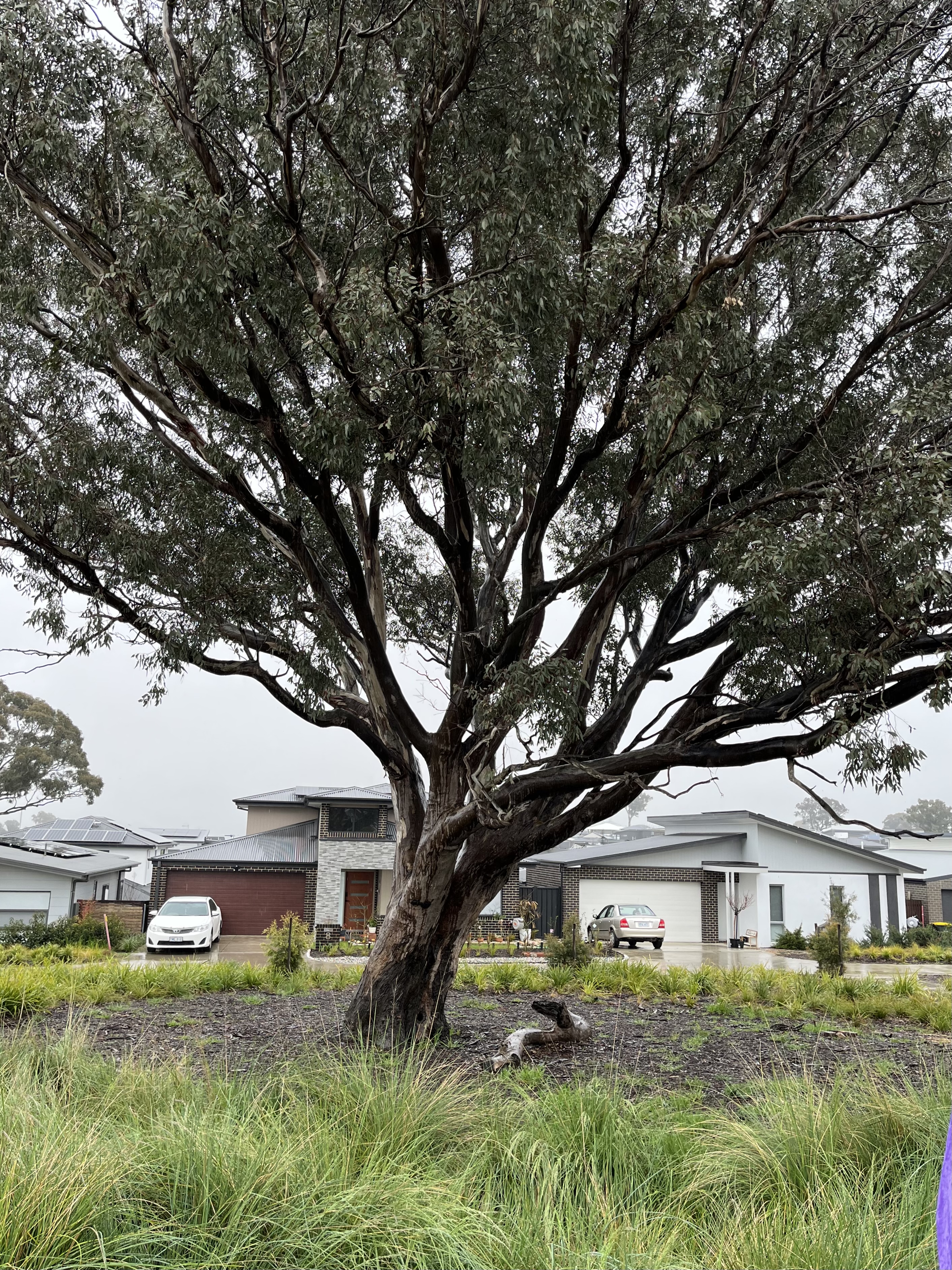
Within the study, Treatment 2 (mulching and mass-planting) delivered the most successful outcomes. This typology involves managing threats (weeding / fox control) and recreating the structural diversity needed to accommodate a diverse range of species.
hhhh
This was achieved by introducing logs, retaining coarse woody debris, and planting non-endemic native grasses, flowering plants, shrubs, and eucalypts. It was preferred over the other treatments as it is cost effective, low maintenance, and has resulted in increased species diversity.
dddddd
hhhhhh
Take Away Lessons from the Biota Tree Research Project
By monitoring sites in line with the project goals, data can be used by Ginninderry to inform adaptive management and guide best practice conservation. These actions have been supported through community education and stakeholder engagement throughout the development process. As a result, there have been improvements to local native bird, bee, and small mammal populations and ongoing benefits to community wellbeing from enhanced ecosystem function.
Greenspace construction within urban areas is a simple yet effective conservation action. Through this typology study, Biota Tree Research Project has provided an evidence-based management approach that can be applied to future developments to mitigate the impacts of urbanisation and prevent further biodiversity losses. These actions reflect an understanding of the interdependent role ecological systems play in human survival and ensure the continuity of natural values for generations to come.

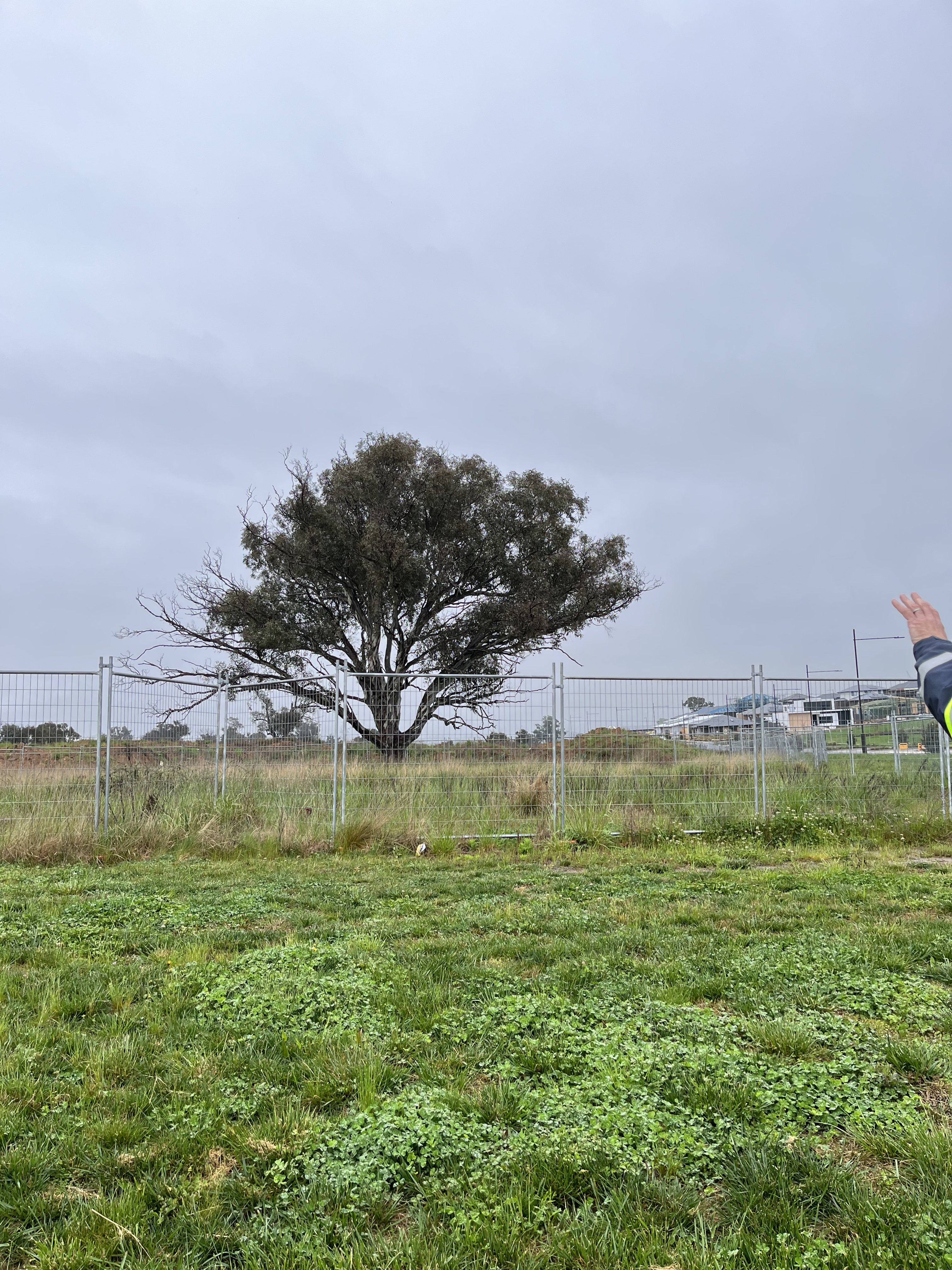
Biota Tree Research Program work experience day in Ginninderry. Mature tree conservation during the development process is the first step in the construction of urban greenspaces.
Word Count: 498

 Biodiversity Conservation