
Maddy Saunders – U7114895
Setting
Citizen Scientists, you and I, are the future of data processing. Recently I spent a few hours being part of a team of superheros tasked with scrolling through picture after picture of koalas, birds and everything in between. Intrigued? Let me tell you how to get involved!
Your Mission, should you choose to accept…
DigiVol is a citizen science website which brings together a global community of volunteers who work to analyse and identify information from data samples, records or photographs. Citizen Scientists have been critical in processing an abundance of information which has gone on to populate and inform policy and research. DigiVol publishes a range of expeditions for public participation, I chose to participate in Koala surveying for the NSW Department of Environment and Heritage.
This project involved identifying mammals from photographs taken by camera traps to help develop a robust portfolio of species in Kosciuszko national park. Photos would be sorted into categories of either: koalas, wombats, bird, other mammal, other animal or human/artefact. This analysis helped understand the size of koala populations in this environment and to help identify threats to koalas in the same environment.
The Superpower you have been given!
Citizen Science allows data and research to be more accessible and more abundant. You get early access to research results for public projects. I found it so interesting to see just how many kangaroos were being caught on the cameras from the photos I was identifying. Even more so, how few koalas were showing up!
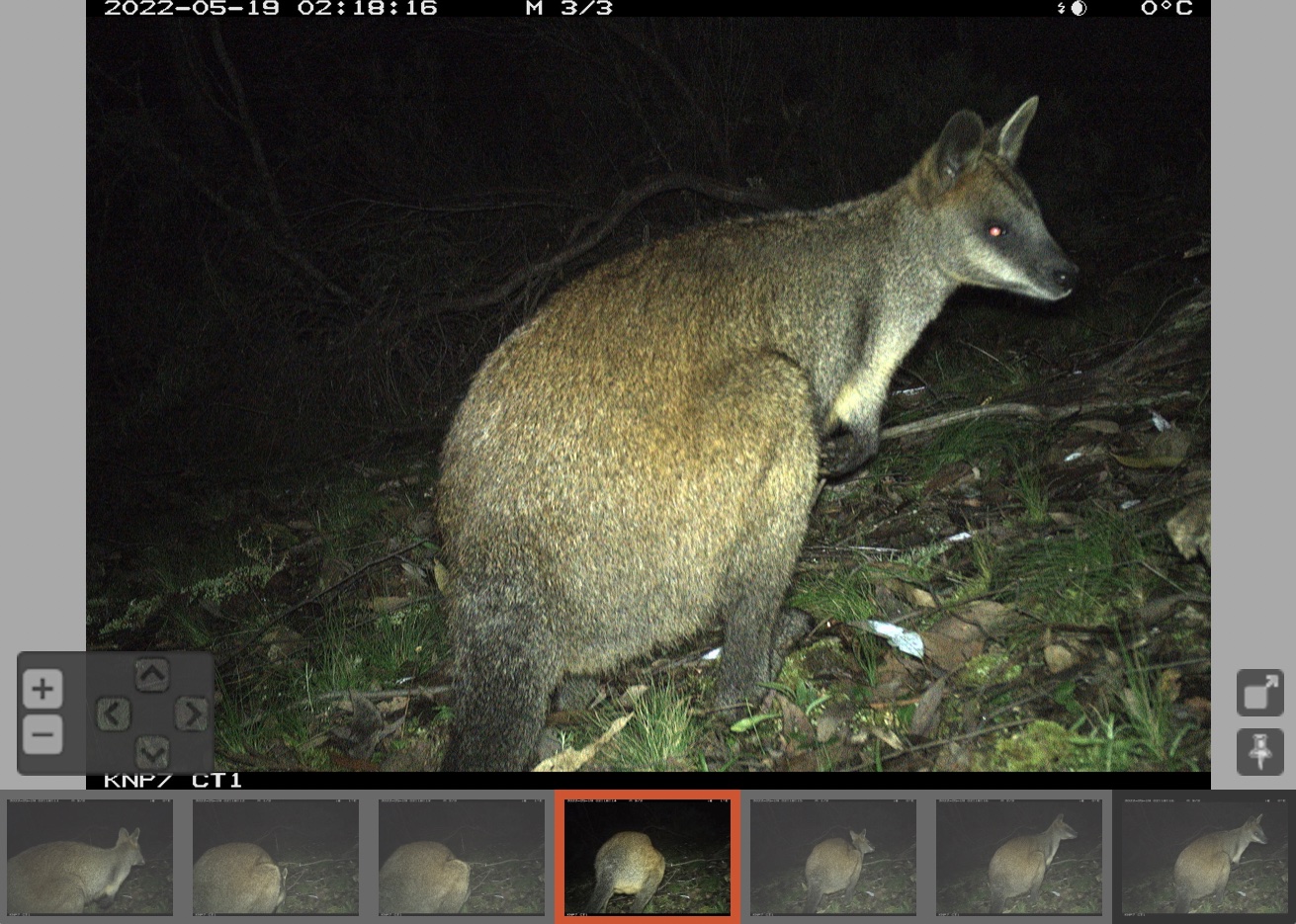
One of the friendly Kangaroos we got to ‘virtually’ meet!
Recently citizen science has also been used to revive historical samples and data records to further inform research. We are able to contribute to decades of research past by providing resources which previous teams may not have had the funding or time to allocate!
Most importantly, DigiVol provides a platform for like-minded people to pick up and share new skills as a community. Citizen science projects have been loved by school-aged children with an interest in the field and retirees with a passion for this work.
No quest is without its challenges.
Camera traps are designed to blend into the surroundings and as such, the quality of images is not prioritised. Images can sometimes be unfocused, the wildlife may be out of site, or there may be some blockage in the way. However, DigiVol has your back. DigiVol provides a series of photos which capture the animals’ movements and different angles to assist in identification. There are also reference images in each sorting category to help appropriately match images.
Author’s Reflection
Data and information are becoming more rapidly accessible as time moves forward. We have been given an incredible opportunity to access and contribute to significant scientific research GLOBALLY! It is incredibly fulfilling and exciting to be involved in such endeavours! David Attenborough once said:
“It’s surely our responsibility to do everything within our power to create a planet that provides a home not just for us, but for all life on Earth.”
So next time you have a spare 10 minutes, log onto DIgiVol, lend a helping hand to scientific research that’s making a difference!

 Biodiversity Conservation