
U7117233 – Lucy Stuart
Biodiversity conservation in urban environments is a growing area of concern for environmentalists. Ongoing global population growth and the housing affordability crisis are driving new housing developments into biodiversity hotspots, creating questions around how to best manage competing land uses. On the 7th of October (after one reschedule ironically due to weather!), myself and some peers from ANU headed out to Ginninderry for work experience. Although wet, we trudged out to the West of Belconnen to the housing development ready and keen to participate in the planting of mid-story habitat in the development.
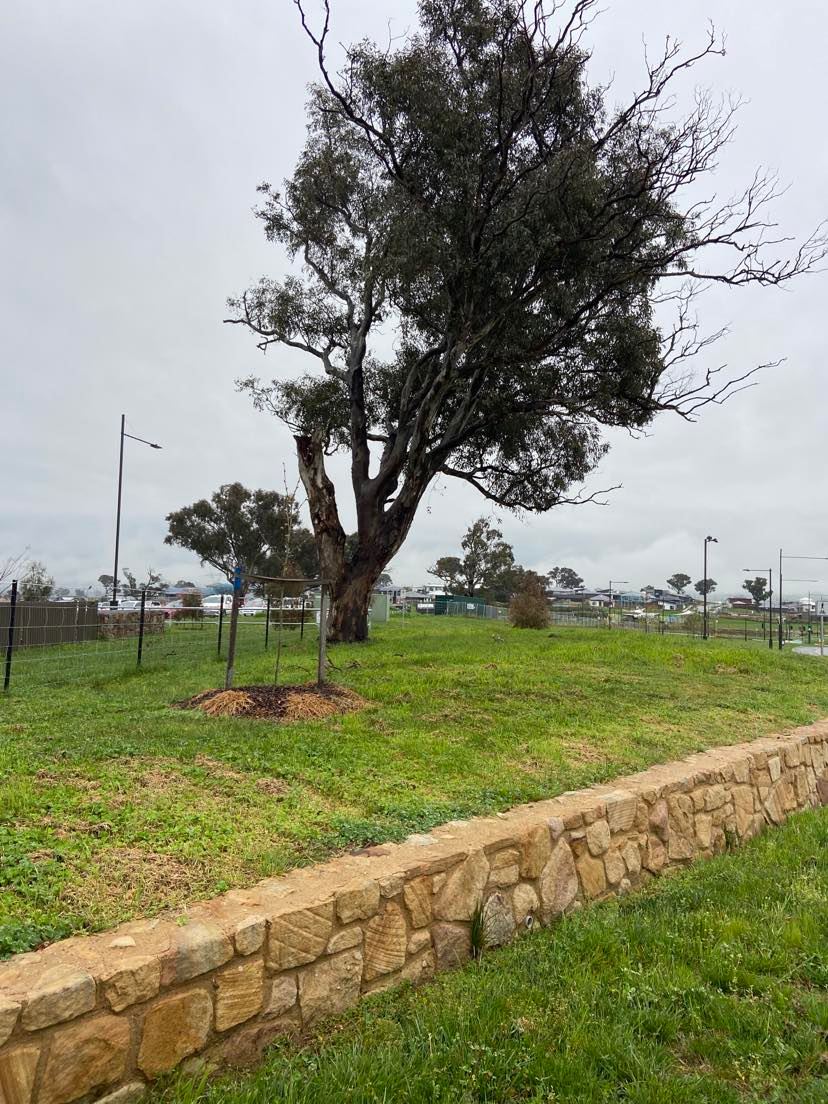

Two examples of Ginninderry’s remnant trees with a stark lack of mid-story habitat.
Why is this important?
The developing suburb of Ginninderry boasts a ‘sustainable community of international significance’, prioritising the conservation of old remnant trees. It is known that remnant trees provide valuable habitat for a variety of species within their hollows. In order to conserve these trees, the space of about 3 house blocks must be spared. Ginninderry has achieved maintaining 80% of remnant trees for biodiversity through the efforts of environmental consultants, partners, and developers within this project. Although this is a sacrifice of about $200 000 per tree in favour of environmental outcomes, it means that there is a lack of complex environmental structure in the urban landscape as older trees were prioritised. Complex vertical and horizontal habitat is particularly important for bird diversity, changing the patterns of bird behaviour. Additionally, there is also a target to achieve 30% tree cover within the development, however, this figure currently sits around 21%. Thus, the need to revegetate urban areas with smaller shrubs and trees is apparent for greater biodiversity benefits.

So what happened?
Unfortunately, upon our arrival at Ginninderry the rain got heavier and eagerness levels rapidly decreased! We decided aginst planting the tubestock and instead walked through the development with Matthew Frawley, the Urban Design and Landscape Manager. As we walked, Matthew was able to point out different urban design features implemented to benefit biodiversity outcomes. This included the conservation of remnant trees, water senstive design and specific housing regulations. This was still a vaulable learning experience, higlighting the need to balance differing land values in the face of population growth.
Interestingly, upon returning to the site at the end of the month, the mid-story revegetation was still unfinished. I am very intrigued to see how this development plays out in the long term and I wish the team all the best in completing and maintaining their biodiversity targets.


 Biodiversity Conservation