
Trees.
We plant them, we chop them down.
We build our houses from them.
We get our food from them.
We sit under them and contemplate the meaning of life.
We complain about them.
Trees do a lot for us, as individuals and as a society. But how often do we stop and ask ourselves what we can do for them?

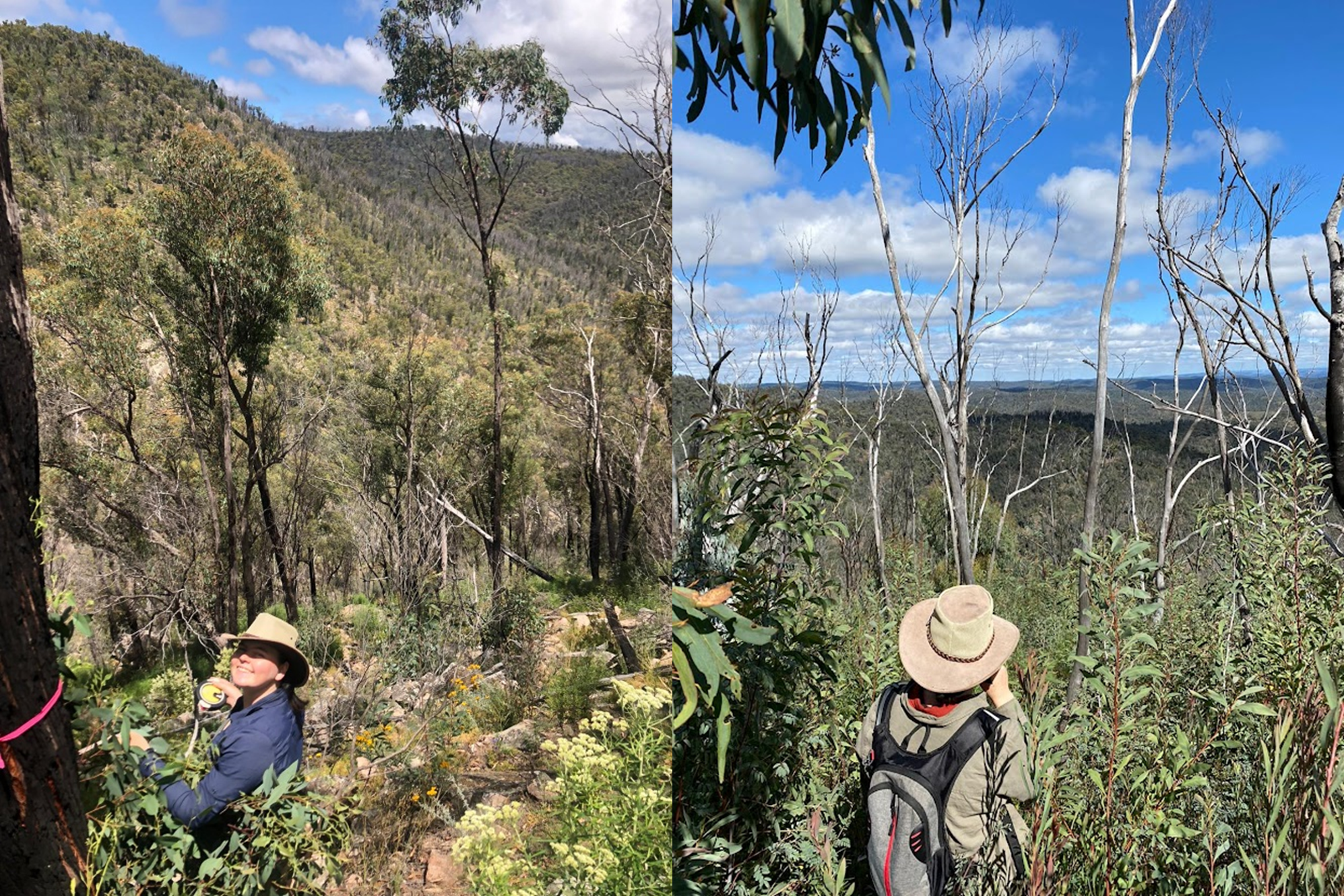
I have always loved trees (so it’s unsurprising that I now study environmental science). I’ve climbed them (see image above), photographed them, written stories about them, planted them, and generally enjoyed their existence at every chance I’ve had. I spent my last summer measuring trees and collecting leaves in the NSW Southern Tablelands as part of an ANU PhD student’s project on Koala conservation, so I was excited to see what other aspect of tree conservation I could learn about through my work experience in this course.
Having planted enough trees to last a lifetime, I decided to reach out to the Australian National Seed Bank (NSB) to see if I could get involved with seed conservation for my work experience.
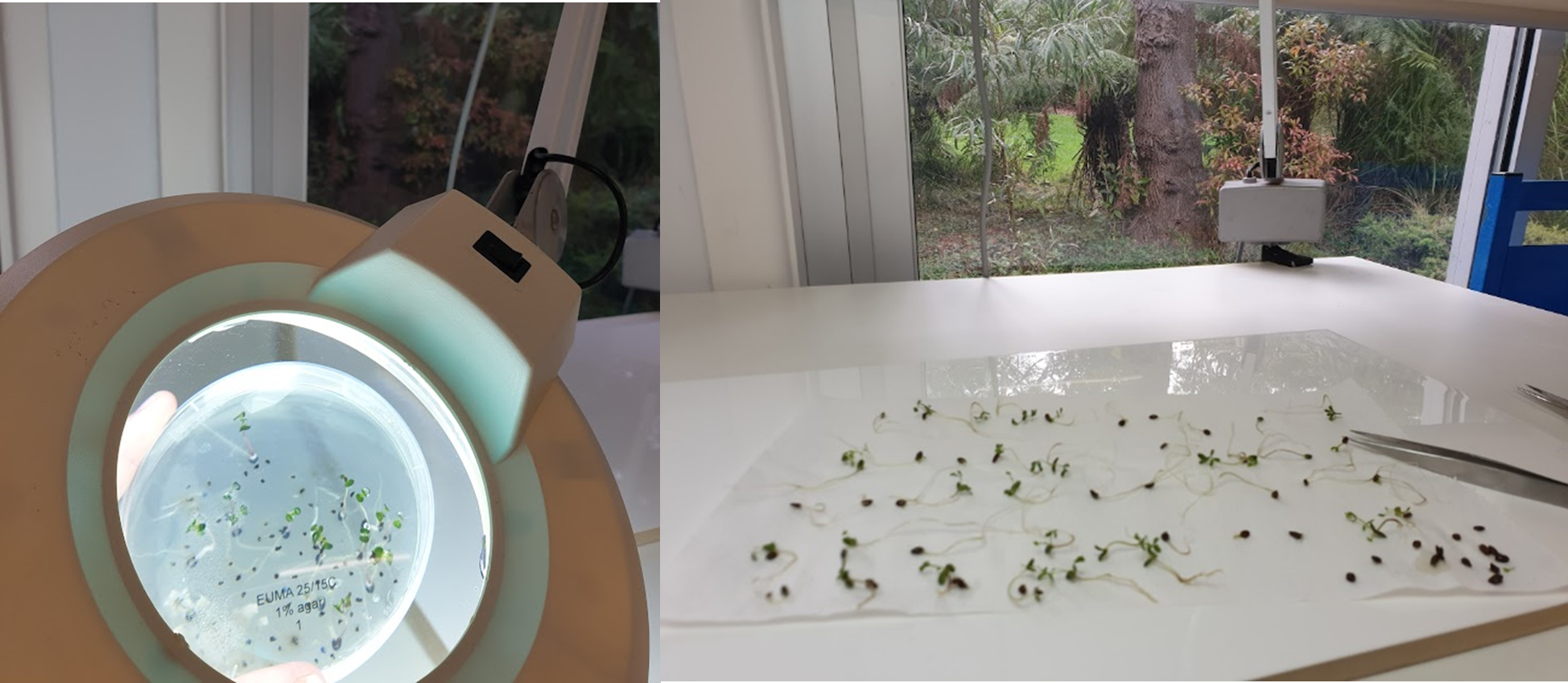
As such, I have spent this semester going into the NSB once a week to spend a few hours counting germinated seeds. Some of the seeds are for trees, but there are also grasses, daisies, bushes, and more; together they represent a wide variety of plant species present in native temperate grasslands in South Eastern Australia. My work is part of a longevity trial, where seeds are subjected to artificial aging conditions and then monitored for germination over about 10 weeks. Studies like this help determine how well seeds of different species will survive in storage.
Why count seeds?
Believe it or not, counting seeds is more than a fun time: it is also critical for conservation. Habitat loss is a key driver of biodiversity loss, especially in Australia. This is particularly true of temperate grasslands, which are often considered good agricultural land and so are disproportionately targeted by clearing. Further habitat loss should be prevented and lost and degraded habitats must subsequently be restored.
As my classmates have explained, replanting is a key restoration activity in ecosystems like the temperate grasslands. Projects like mine, which contribute to improved understanding of seed storage, are important so that seeds can be collected, stored, propagated, and ultimately planted to restore habitats.
The seeds pictured above are from the species Eucalyptus mannifera, which is also one of the dominant species in the area where I measured trees over the summer. One of the most meaningful parts of this work experience was seeing those tiny seeds germinate and contemplating how they could one day become the massive trees I am so familiar with – and support all kinds of biodiversity in the process. It has been amazing to see two sides of research for one tree species, and to consider all the other ways research can be done on that same species, not to mention the millions of other species in the world. There’s lots of work to do to conserve our planet’s amazing biodiversity and as students in this course, we’re just getting started.
If there’s one thing I’ve learned from these two experiences, it’s that there will be lots of excel spreadsheets involved in the process.
Riley Guyatt (u7118565)

 Biodiversity Conservation