
Aarij Ahmed – u6949731

Private land, government incentives, a shifted vision, and a sprinkle of bad luck: these were the ingredients that led to the current establishment of Environa and the Wandiyali-Environa Wildlife Sanctuary. Located south of Jerrabomberra, just outside of the ACT border, Environa was purchased in the early 20th century by Henry Ferdinand Halloran in the 1920s who envisioned his property to be a booming urban centre. This was, however, followed by a century of financial issues, namely slowed economic growth following the Great Depression, as well as legal issues concerning the flight path of the Canberra airport. The current owners, the Larcombes, told our work experience group about how their grandfather’s plans could not be realised, and that they had to shift their vision towards environmental restoration.
Environa
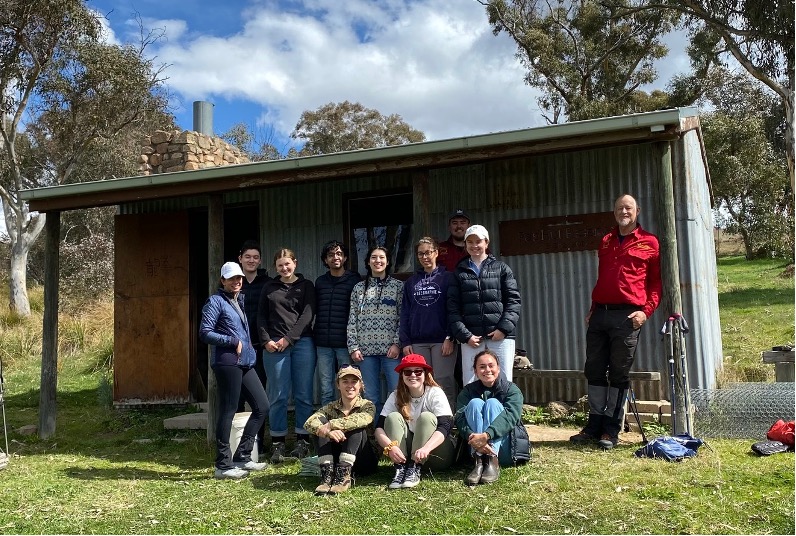
A group of 9 students from the Australian National University visited Environa for work experience and were taken on a day-long tour of the property guided by one of the owners, David Larcombe. Environa is a working cattle farm and has been for many decades. The property is also on the critically endangered ecological community, the box-gum grassy woodland.
Conservation
The owners began restoration by reducing the number of cattle and using rotational grazing to minimise the damage on the landscape. Additionally, native vegetation was planted to help restore the understorey and midstorey, which were able to survive in cattle-exclusion zones. Of course, trees were also being planted, and the ‘work’ part of our work experience involved helping remove tree guards around trees that no longer needed them. Although essential, it would be many years before these trees grow and support the native fauna.
The wildlife sanctuary
The conservation also included the formation of the Wandiyali-Environa Wildlife Sanctuary, 400 hectares of private land dedicated to the restoration of mammals that have disappeared from south-eastern Australia, such as the eastern bettong (Bettongia gaimardi) or the eastern quoll (Dasyurus viverrinus). This would only be achievable using a fence that is able to prevent rabbits, cats, and foxes, which are some of the biggest threats to the flora and fauna that need protection in the sanctuary. After the completion of the fence, the invasive mammals were cleared out. The fence is similar to the one that surrounds Mulligan’s Flat Nature Reserve, another wildlife sanctuary for bettongs and quolls.
This sanctuary receives funding under the Environment Restoration Fund from the Commonwealth Government.

What can we learn?
Environa is an excellent example of private landowners doing their bit to help conserve biodiversity, where certain practices can be undertaken to run a cattle farm, while simultaneously protecting the land. Our work experience highlighted the importance of financially and socially supporting such projects as they are difficult and can require a multitude of resources. Hopefully, the Larcombes’ new vision is upheld, and we can witness bettongs bouncing around in the sanctuary soon.

 Biodiversity Conservation
David is certainly a passionate person and I’m sure you learnt a lot at his property.