
U7515137
On the 20th of September, I partook in a volunteer work experience project run by the ACT government programme ‘Waterwatch’. The project focuses on water quality in the streams and rivers of the ACT and NSW catchment area. In my role as a volunteer, I was tasked with analyzing and identifying the different water bug species in the sample of water which was taken from the site.
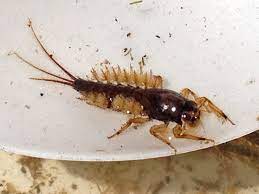
Water bug photographed by Waterwatch ACT
Who are Waterwatch?
The aim of the project, as defined by Waterwatch themselves, is to ‘engage the community’, ‘raise awareness in schools’ and use the data collected to ‘inform policy’ in the catchment (https://www.act.waterwatch.org.au/about-us ). They engage with schools in the catchment and offer out volunteer positions to the public. There is little prior knowledge required to help out as the water watch team provide a water identification chart (https://www.act.waterwatch.org.au/__data/assets/pdf_file/0009/1447137/water-bug-detective-guide.pdf) and all the essential equipment.
The results
The results of the data collected during the survey is used to compile a report of scores for each site. The report has years of data from since the Waterwatch programme first came about. This data is extremely important from a biodiversity conservation standpoint as the type of water bug present and the proportion of each species directly correlates to river health. Some species are tolerant to pollution however, others like the mayfly, caddisfly and stonefly, are extremely intolerant so it is these species we were particularly looking out for when we carried out our survey. Pollution, particularly anthropogenic pollution heavily impacts the chemistry of the water making it inhospitable to many water bug species resulting in a large issue of habitat loss and changing species diversity.
Why do we care?
The Murrumbidgee River catchment where Waterwatch is based, is an extremely valuable ecosystem and the ACT government has many plans in place to maintain its status as a key habitat including using the man-made lakes and ponds of Canberra and surrounding areas as a method to trap nutrients and encourage plants to thrive. In fact, the ACT government manages and maintains 116 ponds and wetlands in urban areas which also act as an important factor in community lifestyle and leisure. (https://www.environment.act.gov.au/act-nrm/biodiversity/rivers-and-wetlands). Therefore, resources like Water watch’s report are hugely valuable. Another important issue of biodiversity conservation that Waterwatch addresses in conservation on private land. On a ‘continental scale’ it is acknowledge that traditional protected areas are not enough to achieve the level of biodiversity needed. 70% of Australia is in ‘private hands’ and most of the continents endangered ecosystems occur within this bracket of l owned land (https://parksjournal.com/wp-content/uploads/2017/07/parks_15_2.pdf#page=21), hence the necessity to include this land in protection schemes. The first of the three sites we visited during our survey was a piece of privately owned land in New South Wales. It is a very important thing that sites like this one are included in the survey because it allows the ACT government to have a complete overview of river health in the catchment without gaps and allows monitoring and mitigation to be adapted to protect as many habitats as possible.
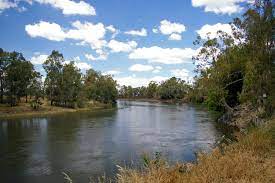
Murrumbrigee river (Bidgee, CC BY 3.0 https://creativecommons.org/licenses/by/3.0)

 Biodiversity Conservation