
Dakota Comino – U6940213
In 2022 Phascolarctos cinereus (koalas) were officially declared endangered in ACT, however, hope is not lost with Tidbinbilla Nature Reserve still conducting some breeding of koalas in an enclosure with open access to the public. In September 2022, myself and other ANU students worked with the Parks and Conservation Service staff to complete koala audits and enclosure rehabilitation at Tidbinbilla Nature Reserve. These tasks are necessary for the continuation of the koala conservation and public education efforts.
The ROOT of the issue…
Since European settlement in Australia koala numbers have plummeted. As European settlement expanded, so too did the koala-skin trade. In response, koala hunting was banned in Australia in 1927. Since then, land clearing as a result of urban development, climate change and the Chlamydia outbreak have been major drivers of koala population decline. With viable breeding koalas now scarce, finding genetically viable individuals for breeding to repopulate wild populations is a challenge.
Cute, fluffy and Protected!
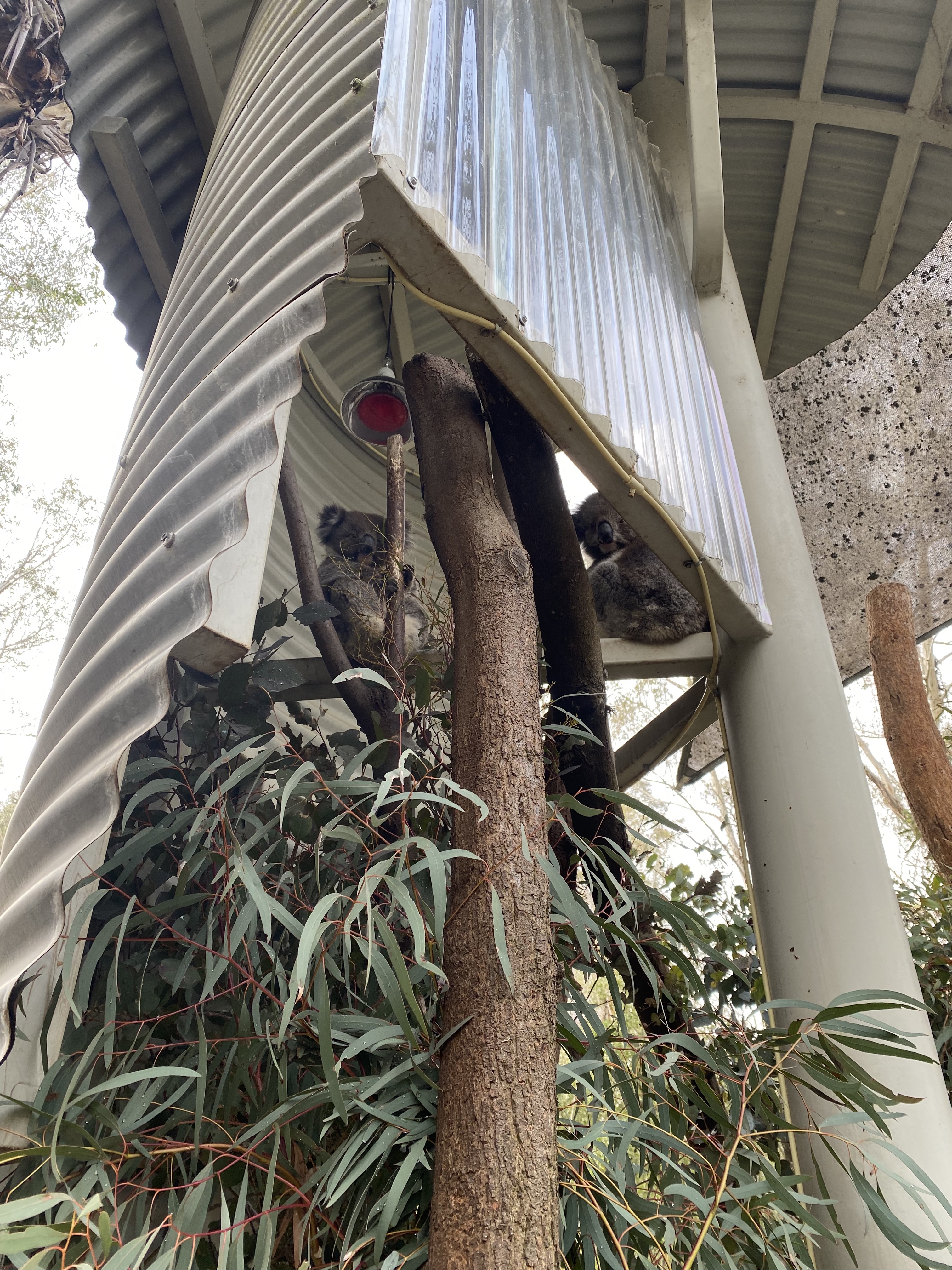
The Eucalypt Forest is a 40 acre area of Tidbinbilla Nature Reserve that is enclosed with a fence to protect the inhabitants from predators such as cats and foxes. These inhabitants include a few species such as wallabies, koalas, and the threatened long-nosed potoroos. Inside this enclosure is an additional enclosure for the koalas used for breeding; Yellow, Scully and their offspring. Breeding programs are necessary for repopulation of koalas and rely on up to date information about the current population in the enclosure. Therefore the audits and weighing of the koalas in the enclosure that we helped with are vital to the program’s continuation as well as tracking the health of the koalas. Further, the habitat restoration that we completed is important for koala safety as it removes fallen debris and faecal waste and adds new eucalyptus cuttings for the specialised feeders to eat. Additionally, a clean enclosure helps the education outcomes of the park as it makes the koalas easier to see and therefore enhances the experience.


A place to educate and appreciate…
The Eucalypt Forest gives the public the chance to see koalas in their natural habitat. Immersive education experiences like this have been shown to yield the best outcomes for visitor education. By combining education, recreation and conservation, visitors can learn and build empathy for the animals while achieving conservation goals.
The future is YOU(calyptus)
Since koala populations are predicted to be extinct in NSW by 2050, the breeding program at Tidbinbilla is set to expand in the future. However, education and breeding at low levels are the main priorities of the program. Public attendance to the Eucalypt Forest allows programs like this to continue running while also spreading awareness for conservation issues. Koalas’ role in the ecosystem is important as their scat is vital for regeneration of vegetation and enhancing biodiversity of forests. They also have cultural significance to Indigneous Peoples and are a tourist icon. If this species’ population is not regrown, the services they provide will be lost.
To get involved in conservation programs like this you can go to: https://www.tidbinbilla.act.gov.au/get-involved. Koalas need YOUR help.
Acknowledgements
Thank you to the team at Tidbinbilla Nature Reserve for facilitating this experience and teaching us the importance of the program.
Word count: 549

 Biodiversity Conservation